
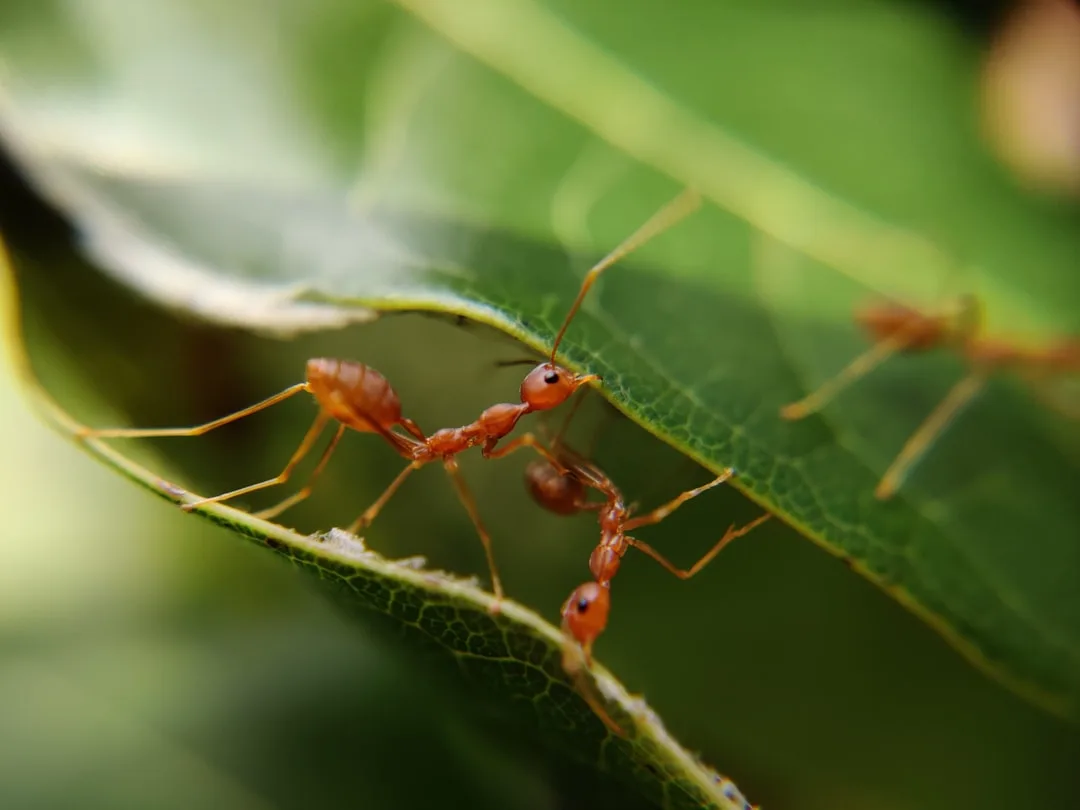
The red imported fire ant is a small reddish-brown insect that has reshaped ecosystems on four continents and cost the United States economy more than one hundred billion dollars in cumulative damage since its accidental arrival in the 1930s. Solenopsis invicta is not the largest ant, not the fastest, and not the most cunning.
What makes this species extraordinary is a combination of aggressive swarm defence, a potent alkaloid venom that produces burning pustules, an adaptable colony structure that can carry one queen or hundreds, and a survival trick unheard of in most terrestrial animals - when floods come, the entire colony links bodies to form a living raft that floats for weeks.
This guide covers every aspect of red imported fire ant biology and ecology: taxonomy, size and anatomy, venom chemistry, colony organisation, mound construction, rafting behaviour, invasion history, agricultural and medical impacts, control methods, and the strange facts that distinguish Solenopsis invicta from every other ant species on Earth. It is a reference entry, not a summary - so expect specifics: millimetres, milligrams, mound densities, infestation maps, and verified economic figures.
Etymology and Classification
The genus name Solenopsis comes from the Greek solen (a pipe or channel) and opsis (appearance), referring to the ants' narrow, channel-like form. The species epithet invicta is Latin for "unconquered" or "invincible" - a name assigned by entomologist William F. Buren in 1972 after it became clear that American efforts to eradicate the species had failed.
The common name "fire ant" describes the sting, not the colour. Victims consistently compare the sensation to a lit match held against skin, and the burning often outlasts the actual stinging event by several minutes.
Fire ants belong to the subfamily Myrmicinae, the largest ant subfamily, which includes harvester ants, leafcutter ants, and more than seven thousand other described species. Within the genus Solenopsis, roughly twenty species are recognised as "true fire ants".
The red imported fire ant is distinguished from native North American relatives such as Solenopsis geminata (the tropical fire ant) and Solenopsis xyloni (the southern fire ant) by subtle differences in worker size distribution, mound architecture, and mitochondrial DNA.
Genetic studies place the origin of S. invicta in the Pantanal floodplains of northern Argentina, Paraguay, and southern Brazil. The Pantanal is one of the largest tropical wetlands on Earth and floods seasonally to depths of several metres - conditions that favoured the evolution of rafting behaviour long before humans helped spread the species worldwide.
Size and Physical Description
Red imported fire ants are polymorphic, meaning a single colony contains workers of multiple sizes working different roles. This polymorphism is one of the key identification features separating S. invicta from similar native species.
Workers:
- Minor workers: 2-3 mm long, reddish-brown head and thorax, darker gaster
- Media workers: 3-5 mm long, same colour pattern
- Major workers: 5-6 mm long, larger heads relative to body, used for defence and seed processing
- All workers: two-segmented waist (petiole plus postpetiole), a diagnostic feature of Myrmicinae
Queens:
- Length: ~9 mm
- Colour: darker reddish-brown to almost black gaster
- Wings: present before mating flight, shed afterwards
- Ovaries: massive; egg-laying queens swell to nearly twice their virgin mass
Males (alates):
- Length: ~7 mm
- Colour: black
- Wings: always present; males die shortly after mating flights
- Role: genetic contribution only, no work inside the colony
Fire ant bodies are built around the sting. The gaster contains a venom sac holding approximately 0.04 microlitres of fluid per worker, which sounds trivial until the colony-scale arithmetic catches up - a single mound of 100,000 workers can deliver four millilitres of venom in a coordinated swarm. Mandibles are curved and sharp, used for gripping skin while the sting is driven in. The antennae are 10-segmented with a 2-segmented club, and the eyes are small but functional.
Venom and the Fire Ant Sting
Fire ant venom is chemically unlike most other ant venoms. Common ants such as carpenter ants or wood ants spray formic acid or related short-chain acids. Fire ant venom is roughly 95 per cent solenopsin, a family of piperidine alkaloids that are oily, non-soluble in water, and cytotoxic. The remaining 5 per cent consists of proteins and peptides responsible for the immune response and allergic reactions.
The sting sequence is mechanically distinctive. A fire ant first bites with its mandibles, anchoring itself to the skin. It then arches its gaster, drives its sting into the tissue, and pumps venom. Because the bite and sting are separate actions, a single ant can sting multiple times by pivoting around its mandibular anchor.
Workers emit an alarm pheromone when disturbed, recruiting nestmates within seconds. This is why a person standing on a mound for five seconds can end up with hundreds of stings before feeling anything.
Sting progression in humans:
| Time after sting | Symptoms |
|---|---|
| 0-10 seconds | Sharp burning pain at each sting site |
| 1-30 minutes | Red welt, local swelling, intense itching |
| 6-24 hours | Classic white pustule forms at each sting site |
| 2-10 days | Pustule dries, may rupture, scab, and heal; scarring possible |
| Variable | Systemic reaction (hives, vomiting, throat swelling) in sensitised individuals |
Anaphylaxis occurs in somewhere between 0.6 and 6 per cent of stung people, depending on the study and the population. Fatalities are rare but documented. Deaths typically occur in elderly nursing home residents stung in bed, agricultural workers stung many hundreds of times at once, or already-sensitised individuals with prior severe reactions. Livestock deaths from mass stinging are far more common, especially in newborn calves, lambs, and poultry.
Small wild vertebrates are routinely killed. Fire ants have been documented overwhelming ground-nesting bird chicks, newborn fawns, lizards, snakes, and amphibians. Ecological studies from Texas and Florida show measurable declines in horned lizards, bobwhite quail, and several ground-nesting songbirds in heavily infested areas.
Colony Structure and Social Forms
Red imported fire ant colonies come in two distinct social forms determined by a single genetic locus called Gp-9. This is unusual in biology - a fundamental organisational difference driven by one gene - and it is central to understanding why fire ants are so destructive in the United States compared with their native range.
Monogyne colonies:
- A single queen
- Mature colony: 80,000-250,000 workers
- Territorial: neighbouring colonies fight lethal border wars
- Typical density: 20-50 mounds per hectare
- Dominant form in the species' native South American range
Polygyne colonies:
- Multiple queens, often dozens, sometimes hundreds
- Workers tolerate queens and workers from neighbouring colonies
- No territorial defence between nearby mounds
- Typical density: 200-400+ mounds per hectare
- Now dominant across much of the US invasive range
The polygyne form emerged in the United States after introduction, apparently because the genetic founder population was freed from competing native species and from specialised parasites present in South America. Without those checks, multi-queen colonies that would be outcompeted at home can flourish. The ecological consequence is a landscape saturated with mounds at densities ten times or more above natural levels.
Inside a mature colony the population breaks down approximately as follows. Adult workers make up the visible majority - anywhere from 50,000 to 250,000 depending on colony age and social form. Brood (eggs, larvae, pupae) typically matches or exceeds worker numbers. A mature colony produces winged reproductive males and future queens seasonally, with several thousand alates emerging for nuptial flights in spring and early summer after warm rains.
Mound Architecture
The classic fire ant mound is a smooth, dome-shaped soil structure 30-45 cm tall and up to 60 cm across the base. The mound has no visible central opening - an important identification feature that distinguishes S. invicta from harvester ants and native fire ants, whose nests typically have a conspicuous hole. Workers enter and exit through lateral tunnels that radiate outward just beneath the soil surface, sometimes extending several metres from the mound itself.
Mound function:
- Solar heating: the dome raises internal temperature several degrees above ambient, speeding brood development
- Flood protection: elevation above grade keeps brood dry during heavy rain
- Humidity control: interior chambers maintain near-saturation humidity
- Defence: no central entrance means no single target to attack
- Queen protection: the queen sits in a deep chamber near soil level, well below the visible mound
Mounds are built by worker teams excavating soil from chambers below ground and carrying particles to the surface. A large colony can move several kilograms of soil in a single day after rain softens the substrate. Mound position is not random - fire ants prefer sunny, disturbed, open habitats. Roadsides, pastures, golf courses, playgrounds, and suburban lawns provide near-perfect conditions. Forested and heavily shaded areas are rarely colonised.
When a mound is disturbed - by a footstep, a mower, or a grazing hoof - workers boil out of hidden tunnel mouths within seconds. This swarm defence response is dramatic enough that many people encountering fire ants for the first time are stung dozens of times before they realise what is happening.
Rafting Behaviour
Few insect behaviours are as visually striking as a fire ant raft. When water rises faster than the colony can tolerate, workers abandon defence of the mound, climb over each other, and begin linking legs and mandibles. Within minutes the colony assembles into a floating pancake-shaped mass, typically several centimetres thick and up to a metre across. The queen, larvae, pupae, and eggs are carried in the centre, buffered from the water.
Mechanical properties of a fire ant raft (research findings, Georgia Tech and others):
| Property | Value |
|---|---|
| Typical raft thickness | 2-5 ant-body layers |
| Buoyancy source | Hydrophobic cuticle + trapped air bubbles |
| Survival time afloat | Up to 2 weeks documented |
| Behaviour class | Both solid and fluid (viscoelastic) |
| Rate of position rotation | Outer ants cycle to the interior periodically |
The raft is not a rigid structure. Individual ants rotate in and out of exposed outer positions, ensuring no single worker drowns. When the raft encounters an obstacle, the structure deforms around it and reforms on the other side. Researchers have dunked rafts underwater and watched them resurface intact, queen alive.
Rafting is why floods are the single most effective fire ant dispersal mechanism in North America. The 2011 Mississippi River floods produced enormous drifting rafts that were photographed and tracked by researchers at the University of Mississippi. Rafts came ashore at new sites downstream and founded fresh colonies on dry ground.
Hurricanes in the Gulf of Mexico produce similar effects on a regional scale. Humans working in flooded areas regularly report being stung when rafts wash against boats, legs, or floating debris.
Diet and Foraging
Fire ants are aggressive omnivores. Almost nothing organic is refused.
Animal prey and carrion:
- Other insects (beetle grubs, caterpillars, termites, other ants)
- Spiders, centipedes, ticks
- Earthworms
- Bird eggs and nestlings (especially ground-nesters)
- Reptile and amphibian eggs, hatchlings, and adults
- Newborn mammals (documented in calves, fawns, piglets, rabbits)
- Vertebrate carrion of any size
Plant material:
- Seeds (especially oily ones; fire ants can displace native seed-eating ants)
- Seedlings and soft new growth
- Fruit, sap, and plant exudates
- Nectar from flowers and extrafloral nectaries
Anthropogenic resources:
- Pet food, birdseed, picnic leftovers
- Sugar in any form
- Grease inside electrical equipment
- Plastic insulation (chewed to access cavities, not for food)
Foraging is primarily conducted by minor and media workers at temperatures between about 22 and 36 degrees Celsius. Foragers lay pheromone trails from food sources back to the colony, recruiting nestmates quickly. Recruitment is so efficient that a piece of dropped food can be blanketed with ants within minutes in heavily infested areas.
Life Cycle and Reproduction
Fire ant reproduction is triggered by warm spring and summer weather, especially the day after a warm rain. Mature colonies produce winged males and virgin queens (alates) by the thousand. On favourable afternoons, alates climb to the top of the mound and launch into the air for the nuptial flight.
Nuptial flight sequence:
- Warm, windless day following rain (air temperature 24 degrees Celsius or higher).
- Workers open mound exits in the morning; alates emerge and climb to the highest point.
- Alates take off between roughly noon and late afternoon.
- Males and females mate in mid-air at altitudes of 90-300 metres.
- Mated queens descend to the ground up to several kilometres from the mound.
- Queens shed wings, dig a small starter chamber, and begin laying eggs.
- Males die within hours of mating.
A newly mated queen uses stored body fat and her now-useless flight muscles as energy sources while she raises her first brood of workers alone. Once the first workers mature (roughly a month later), they take over foraging and brood care, and the queen's role narrows to egg production. Peak egg-laying queens produce up to 1,500 eggs per day.
Life stages (development times at 25-30 degrees Celsius):
- Egg: 8-10 days
- Larva: 6-12 days across four instars
- Pupa: 9-16 days
- Adult worker: emerges ready to work
Worker ants live approximately 60 days under field conditions, though laboratory colonies with stable food and no predators extend worker lifespan to several months. Queens live two to six years, with the upper end typical under favourable conditions. Over her lifetime a single productive queen can generate several million offspring plus many thousands of winged reproductives.
Colonies mature 3-5 years after founding and continue producing alates for the remainder of the queen's life. When the queen dies, a monogyne colony either adopts a daughter queen from the next nuptial flight or dwindles over several months. Polygyne colonies with surviving queens simply continue.
Invasion History and Global Spread
Solenopsis invicta entered the United States through the port of Mobile, Alabama, between 1933 and 1945, most likely in ballast soil unloaded from South American cargo ships. The population expanded rapidly across Alabama, Georgia, Florida, Mississippi, and Louisiana in the 1950s and reached Texas in the 1970s, California in the 1990s, and parts of the Carolinas and Virginia since. The contemporary US range covers roughly 140 million hectares across 14 states.
Major international invasions:
| Country / region | Year of first detection | Current status |
|---|---|---|
| United States | 1930s | Widely established across southern and western states |
| Puerto Rico | 1981 | Established |
| Australia (QLD) | 2001 | Ongoing national eradication program; contained but not eliminated |
| New Zealand | 2001 | Multiple incursions; all declared eradicated to date |
| Taiwan | 2003 | Established |
| Mainland China | 2004 | Rapid spread through southern provinces; now present in 12+ provinces |
| Mexico | 1990s-2000s | Established in several states |
| Caribbean basin | 1980s onward | Widely established |
| Southern Europe | 2023-2024 | First self-sustaining nests confirmed in Sicily (Italy) in 2023 |
The Italian detection confirmed long-standing scientific concern that southern Europe provides climatically suitable habitat for the species. Spain, Portugal, Greece, and southern France are considered at risk. Early-stage eradication, if attempted, is the only realistic response.
Economic and Ecological Impact
The US Department of Agriculture and independent economists estimate fire ant damage in the United States at six billion US dollars or more per year. The figure is assembled from many categories:
- Medical costs: sting treatment, allergic reaction treatment, school and workplace absenteeism
- Agricultural losses: seedling predation, cattle weight loss, crop equipment damage
- Livestock medical costs: veterinary care for stung animals
- Electrical damage: ants chew insulation, short out equipment, cause traffic signal and pump failures
- Household control: retail pesticide sales, pest control services
- Public control programs: federal, state, and local eradication or suppression efforts
- Property value effects: lawns, golf courses, parks
- Tourism effects: less quantified but real in affected areas
Ecologically, fire ants displace most native ant species in infested habitat, often cutting native ant diversity by fifty per cent or more. Ground-nesting birds, reptiles, and amphibians decline. A study of horned lizards in Texas, which depend on harvester ants for food, showed populations crashing in counties where fire ants displaced the harvesters. Indirect effects cascade through invertebrate food webs in ways that are still being mapped.
Control and Management
Fire ant control has become a regulated industry in the infested United States. Complete eradication of established populations has never succeeded on a large scale - the 1957 federal program using heptachlor and mirex was abandoned in the 1970s after serious non-target wildlife damage without eliminating the ants. Modern control relies on integrated approaches.
Current control methods:
- Bait insecticides. Slow-acting toxicants (hydramethylnon, fipronil, indoxacarb, methoprene) mixed with soybean oil on corn grit. Workers carry the bait into the colony and feed it to the queen. Can suppress mounds for months.
- Contact insecticides. Drench treatments (bifenthrin, permethrin) kill workers quickly but do not reliably reach the queen.
- Biological control. Phorid flies (Pseudacteon species) imported from Argentina lay eggs in fire ant heads, where larvae decapitate the worker as they develop. The microsporidian pathogen Thelohania solenopsae reduces colony vigour.
- Regulatory quarantine. The US Imported Fire Ant Quarantine restricts movement of soil, sod, nursery plants, and hay from infested counties to non-infested ones.
- Early detection and rapid response. The Australian national program demonstrates that newly detected populations can be contained or eliminated if attacked within a few years of arrival.
Related Reading
- Ant Colonies: How Insect Societies Outperform Human Systems
- Invasive Species: How Small Animals Reshape Continents
- Stings and Venoms: Insect Chemistry That Can Kill
- Ants of the World: Diversity in the Formicidae
References
Relevant peer-reviewed and governmental sources consulted for this entry include the USDA Animal and Plant Health Inspection Service technical reports, the Texas A&M AgriLife Extension fire ant program, peer-reviewed research published in Annual Review of Entomology, Proceedings of the National Academy of Sciences, Nature, Insectes Sociaux, and Journal of Economic Entomology, and national surveillance reports from Biosecurity Queensland (Australia) and the Chinese Academy of Agricultural Sciences.
Specific economic figures draw on USDA and state extension estimates published between 2018 and 2024.
See also: Bullet Ant vs Asian Giant Hornet
Frequently Asked Questions
How big are red imported fire ants?
Red imported fire ants (Solenopsis invicta) are polymorphic, meaning a single colony contains workers of multiple sizes. Minor workers measure 2-3 mm, majors reach 5-6 mm, and the queen is roughly 9 mm long. Males, which appear only during nuptial flights, are about 7 mm. This size variation is one of the features separating S. invicta from similar native North American Solenopsis species, whose colonies tend to contain more uniformly sized workers.
Despite their small size, fire ants are aggressive out of proportion to their bodies and coordinate attacks that can overwhelm animals thousands of times larger.
What does a fire ant sting feel like and is it dangerous?
A fire ant sting causes immediate burning pain - the source of the common name - followed within hours by a white pus-filled pustule that can persist for up to ten days. The venom is solenopsin, a piperidine alkaloid that is roughly 95 per cent oily compound and only 5 per cent protein allergen.
Most healthy adults experience only local discomfort, but between 0.6 and 6 per cent of stung people develop systemic allergic reactions, and a smaller fraction progress to anaphylaxis. Verified fatalities have occurred in the United States each year since monitoring began, typically in elderly, immobile, or severely allergic individuals. Children and pets are at higher risk due to body size and less ability to escape a swarm.
Where do red imported fire ants live?
The species is native to the Pantanal floodplains of northern Argentina, Paraguay, and southern Brazil. Accidentally introduced into Mobile, Alabama in the 1930s through ship ballast soil, fire ants have since spread across the southern United States from Texas to Virginia and westward into California.
Major invasive populations now exist in China (since 2004), Taiwan, Australia (Queensland, since 2001), New Zealand, the Caribbean, and emerging populations in Spain, Italy, and Sicily. They thrive in open, sunny habitats such as pastures, lawns, roadsides, and agricultural fields, and avoid dense forest. Urban and suburban landscapes suit them almost perfectly.
Why do fire ants form floating rafts?
When rising water threatens a colony, workers interlock legs and mandibles with each other to form a buoyant living raft that protects the queen, eggs, larvae, and pupae in the centre. The raft exploits hydrophobic cuticle chemistry and trapped air bubbles to stay afloat - research at Georgia Tech showed that a fire ant raft behaves like both a solid and a fluid, surviving on water for weeks.
Rafting is why Mississippi River floods and Gulf hurricanes spread fire ants geographically. The 2011 Mississippi floods produced well-documented rafts that drifted for miles and established new colonies on dry ground once the water receded. Humans working in flooded areas are regularly stung when rafts wash against boats or legs.
What is the difference between monogyne and polygyne fire ant colonies?
Fire ants exist in two distinct social forms. Monogyne colonies have a single egg-laying queen and defend a territory aggressively against neighbouring colonies - this is the ancestral form. Polygyne colonies contain multiple queens, sometimes hundreds, and workers do not defend territorial boundaries. The social form is determined by a single genetic locus known as Gp-9.
Polygyne populations reach much higher mound densities, often 400 or more mounds per hectare, roughly ten times the density of monogyne populations. Polygyne spread is a key reason fire ants are so damaging in the United States compared with their native South American range.
Why do fire ants cost so much economic damage?
Estimates place red imported fire ant damage in the United States at six billion US dollars or more per year. The losses come from many small categories that add up. Agricultural losses include seedling predation, reduced cattle weight gain from harassment, and crop equipment damage.
Electrical and mechanical losses come from ants nesting inside junction boxes, air conditioners, transformers, traffic signals, and irrigation pumps, where they chew insulation and trigger short circuits. Medical costs include emergency treatment of stings and allergic reactions. Quarantine, inspection, and chemical control programs add further public and private spending.
Ecological losses - native ant displacement, ground-nesting bird decline, reptile and amphibian predation - are harder to price but are substantial.
How long do fire ant queens live and how many offspring do they produce?
A mature fire ant queen lives two to six years, with the upper end typical under favourable conditions. During her peak egg-laying period she produces up to 1,500 eggs per day. Over her lifetime a single queen can generate several million worker ants, plus many thousands of winged reproductives (alates) that leave the colony on mating flights. Workers in contrast live about 60 days under field conditions, though laboratory workers can last several months.
This vast difference between worker and queen lifespan is typical of social insects and is why removing all queens is the only way to eliminate a colony - killing workers without the queen simply empties the mound temporarily.
Can red imported fire ants be eradicated?
Eradication of established populations has never succeeded on a large scale. The US Department of Agriculture launched a federal eradication program in 1957 using heptachlor and mirex, two chlorinated pesticides. Both campaigns failed and caused serious collateral damage to wildlife.
Modern control relies on a mix of bait insecticides (hydramethylnon, fipronil, indoxacarb), biological control agents (phorid decapitating flies imported from Argentina, the pathogen Thelohania solenopsae), and strict quarantine rules on soil movement. Newly detected populations in Australia and China have had more success with early, aggressive response, suggesting that eradication is possible if invasions are caught within a few years of arrival.
Once entrenched, the goal shifts from elimination to suppression.