
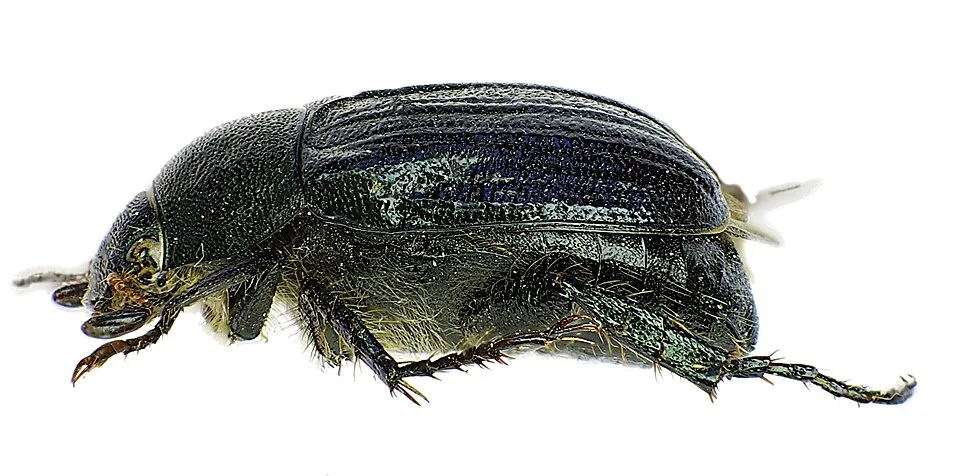
How many species of beetles exist on Earth?
Scientists have described over 400,000 species of beetles, making Coleoptera the largest order in the entire animal kingdom. Beetles represent roughly 25% of all known animal species and about 40% of all insect species. Estimates suggest the true number, including undescribed species, could exceed 1 million.
When the British geneticist J.B.S. Haldane was reportedly asked what his studies of nature had revealed about the Creator, he replied with what has become one of the most quoted lines in biology: "An inordinate fondness for beetles." Whether Haldane actually spoke those exact words has been debated for decades, but the underlying truth is beyond dispute.
Beetles - order Coleoptera - are the single most species-rich group of animals ever to evolve on this planet. They outnumber every other order of insects. They outnumber all mammals, birds, reptiles, amphibians, and fish combined. They inhabit every continent except Antarctica, every terrestrial habitat from Saharan sand dunes to Andean cloud forests, and they have been doing so for roughly 300 million years.
Understanding beetles is not a niche pursuit. It is, in a very real sense, understanding what life on Earth chose to become.
The Scale of Beetle Diversity
The numbers are staggering. As of current estimates, taxonomists have formally described more than 400,000 species of beetles. That figure represents approximately 25% of all known animal species and roughly 40% of all described insect species. For every species of mammal on Earth, there are approximately 60 species of beetle. For every species of bird, there are roughly 40.
Yet described species represent only a fraction of the total. Tropical canopy fogging studies conducted by the entomologist Terry Erwin in Panamanian rainforests during the 1980s suggested that the global number of beetle species could exceed 1.5 million, though more conservative modern estimates place the figure closer to 800,000 to 1 million [1]. New species are described at a rate of several hundred per year, and entire beetle faunas of major tropical regions remain largely unexplored.
"If we were to lose all beetles tomorrow, the terrestrial ecosystems of this planet would collapse within a generation. They are pollinators, decomposers, predators, seed dispersers, and soil engineers. No other single order of animals performs so many ecological functions simultaneously." - E.O. Wilson, reflecting on insect diversity in The Diversity of Life (1992)
The order Coleoptera is divided into four suborders: Adephaga (ground beetles, diving beetles), Archostemata (a small, ancient group), Myxophaga (minute aquatic beetles), and Polyphaga, which contains over 90% of all beetle species and includes the weevils, scarabs, longhorns, ladybugs, and fireflies. The evolutionary radiation of Polyphaga is closely linked to the diversification of flowering plants during the Cretaceous period, roughly 100 to 145 million years ago [2].
What Makes a Beetle a Beetle
All beetles share a defining anatomical feature: elytra, the hardened forewings that form a protective shell over the membranous hindwings and the soft abdomen beneath. Elytra do not function in flight. Instead, they serve as armor, shielding the delicate flight wings and body from desiccation, predation, and physical damage.
This innovation - essentially a built-in suit of armor - is widely considered one of the key factors behind beetle evolutionary success, allowing them to exploit burrowing, soil-dwelling, and under-bark niches that are inaccessible to soft-bodied insects.
Other universal beetle characteristics include:
- Complete metamorphosis (egg, larva, pupa, adult) with larval forms that often occupy entirely different ecological niches than adults
- Chewing mouthparts adapted for an enormous range of diets, from wood and fungi to live prey and carrion
- Antennae in a remarkable variety of forms - filiform, clubbed, serrate, lamellate, pectinate - each adapted to specific sensory needs
- Body sizes ranging from Scydosella musawasensis at 0.325 mm (the smallest known free-living insect) to the titan beetle (Titanus giganteus) at 167 mm in body length
Dung Beetles: Navigating by Starlight
Among the 30,000 or so species of scarab beetles (family Scarabaeidae), the dung beetles stand out as one of the most ecologically important and behaviorally extraordinary groups in the entire insect world. These beetles locate, collect, and bury the dung of herbivorous mammals, performing an ecological service that underpins the health of grassland and savanna ecosystems across every inhabited continent.
Dung beetles fall into three behavioral categories: rollers, which shape dung into balls and roll them away from the dung pat to bury in a remote location; tunnelers, which dig directly beneath the dung pat and pull material underground; and dwellers, which live and breed within the dung pat itself.
The Milky Way Navigation Study
In 2013, a team of researchers led by Marie Dacke at Lund University in Sweden published a landmark paper in Current Biology that demonstrated something previously unknown in the animal kingdom: the African dung beetle Scarabaeus satyrus navigates using the Milky Way [3].
The experiment was elegantly designed. Dacke and colleagues placed dung beetles in an outdoor arena under natural night skies and observed that the beetles rolled their dung balls in remarkably straight lines - a behavior essential for escaping competitors at the dung pat as quickly as possible.
When the researchers fitted the beetles with tiny cardboard caps that blocked their view of the sky, the beetles wandered in aimless circles. When the experiment was repeated inside the Johannesburg Planetarium, beetles could orient under a full starry sky projection but lost their bearings when only the brightest stars (without the Milky Way band) were displayed.
This made dung beetles the first known animals to use the galactic plane for orientation. The discovery was awarded an Ig Nobel Prize in 2013 - one of the rare instances where an Ig Nobel honored research that was simultaneously humorous in conception and profoundly important in its implications for our understanding of animal cognition.
Ecological and Economic Value
The ecological services provided by dung beetles are worth billions of dollars annually to the agricultural industry. In the United States alone, dung beetles save the cattle industry an estimated $380 million per year by burying cattle dung, which reduces pasture fouling, recycles nutrients into the soil, suppresses parasitic flies and nematodes, and improves water infiltration [4].
In Australia, the deliberate introduction of African dung beetle species beginning in the 1960s - the CSIRO Dung Beetle Project - was one of the most successful biocontrol programs in history, transforming pastures that had been smothered under the dung of introduced cattle.
Fireflies: Cold Light in the Darkness
Fireflies (family Lampyridae) are not flies at all but soft-bodied beetles, and their ability to produce light remains one of the most captivating phenomena in the natural world. Roughly 2,000 species of firefly have been described, distributed across every continent except Antarctica, though they are most diverse in tropical and subtropical regions.
The Chemistry of Bioluminescence
Firefly light is produced in specialized cells called photocytes, located in the ventral segments of the abdomen. The chemical reaction involves four components: the substrate luciferin, the enzyme luciferase, adenosine triphosphate (ATP), and molecular oxygen. Luciferase catalyzes the oxidation of luciferin in the presence of ATP and oxygen, producing oxyluciferin and releasing photons of light.
What makes this system extraordinary is its efficiency. Firefly bioluminescence converts nearly 100% of chemical energy into light, with almost no energy lost as heat. By comparison, a standard incandescent light bulb converts only about 10% of electrical energy into visible light, with the remaining 90% lost as heat.
This "cold light" has attracted intense interest from biomedical researchers: luciferase is now one of the most widely used reporter enzymes in molecular biology, used to track gene expression, monitor tumor growth, and test drug efficacy in living organisms.
Flash Patterns and Species Recognition
Each firefly species produces a unique flash pattern - a species-specific combination of flash duration, interval, color, and flight path that functions as a mating signal. Males typically fly through the air producing their coded pattern, while females perch on vegetation and respond with a precisely timed answering flash if they recognize a conspecific male.
The delay between the male's flash and the female's response is often the critical species-recognition cue, measured in fractions of a second.
This system has a dark side. Females of the genus Photuris, known as "femmes fatales," mimic the flash responses of other firefly species to lure males of those species close enough to capture and eat them. The predatory females gain not only a meal but also defensive chemicals called lucibufagins, which they cannot synthesize themselves, that protect them from predators such as spiders and birds.
Synchronous Fireflies of the Great Smoky Mountains
One of the most spectacular natural phenomena in North America occurs each June in the Great Smoky Mountains National Park in Tennessee, where populations of Photinus carolinus engage in synchronous flashing. Thousands of males flash in unison - six to eight rapid flashes followed by a period of complete darkness lasting roughly six seconds - creating waves of light that ripple through the forest.
This is one of only a handful of firefly species worldwide known to synchronize their flashes, and the mechanism remains only partially understood. Researchers believe synchrony may help females locate males against the visual noise of a dense swarm, or it may be an emergent property of males competing to flash first [5].
The annual display draws thousands of visitors and is now managed through a lottery system by the National Park Service. However, firefly populations worldwide face mounting threats from light pollution, which interferes with flash-based communication; habitat loss, which destroys the moist, wooded environments fireflies require; and pesticide use, which kills larvae that develop in soil over one to two years.
Rhinoceros Beetles: The Strongest Animals Alive
The rhinoceros beetles (subfamily Dynastinae) include some of the most physically powerful animals on Earth when measured relative to body size. The Hercules beetle (Dynastes hercules), which can reach 180 mm including its horn, and the Atlas beetle (Chalcosoma atlas) are among the largest beetles in the world. But it is their strength that truly sets them apart.
Laboratory studies have demonstrated that some rhinoceros beetle species can lift objects weighing 850 times their own body mass. To put this in human terms, that would be equivalent to a 90 kg person lifting approximately 76,500 kg - roughly the weight of a fully loaded semi-truck with its trailer. This extraordinary strength is driven by the hydraulic mechanics of their exoskeleton and the dense arrangement of muscle fibers within their compact bodies.
The massive horns of male rhinoceros beetles are products of sexual selection. Males use their horns in combat over females, grappling with rivals and attempting to pry them off tree branches or log surfaces. Larger-horned males win the majority of contests and gain preferential access to mates.
However, the production of large horns comes at a developmental cost: resources allocated to horn growth are diverted from other structures, including eyes and wings, creating a classic evolutionary trade-off.
Bombardier Beetles: Chemical Warfare
Few defensive mechanisms in nature rival the bombardier beetle's explosive chemical spray. Species in the genera Brachinus and Stenaptinus possess a unique internal reaction chamber in the tip of the abdomen that functions as a biological cannon.
The chemistry is remarkable. Bombardier beetles store two separate chemical precursors - hydrogen peroxide and hydroquinones - in a reservoir in the abdomen. When threatened, the beetle forces these chemicals through a valve into a hardened reaction chamber lined with catalytic enzymes (catalases and peroxidases).
The resulting exothermic reaction is nearly instantaneous: the hydroquinones are oxidized to benzoquinones, the hydrogen peroxide decomposes, and the mixture reaches temperatures of approximately 100 degrees Celsius (212 degrees Fahrenheit). The boiling, caustic liquid is expelled from the abdomen with an audible pop, directed with remarkable accuracy at the attacker.
High-speed photography has revealed that the spray is delivered in a rapid series of pulses - roughly 500 pulses per second - rather than as a continuous stream. This pulsed delivery prevents the beetle from being propelled backward by the force of its own blast and allows it to regulate the spray direction. The chemical burns and repels predators as large as frogs, birds, and rodents.
Researchers studying the bombardier beetle's reaction chamber have drawn parallels to pulse-jet engine design, and the system has inspired biomimetic engineering research into microscale propulsion and drug delivery systems [6].
Ladybugs: The Farmer's Best Friend
Ladybugs (family Coccinellidae), also known as ladybirds in British English, are among the most recognized and economically important beetles on Earth. The approximately 6,000 described species are overwhelmingly predatory, feeding primarily on aphids, scale insects, mealybugs, and mites - all major agricultural pests.
A single seven-spotted ladybug (Coccinella septempunctata) can consume up to 5,000 aphids over its lifetime, and a single larva may eat 300 to 400 aphids before pupating. This voracious appetite has made ladybugs the cornerstone of biological pest control programs worldwide.
The deliberate release of ladybugs as biocontrol agents dates back to 1888, when the Australian vedalia beetle (Rodolia cardinalis) was introduced to California to combat the cottony cushion scale that was devastating the citrus industry. The program was spectacularly successful and is often cited as the founding event of modern biological control.
| Beetle Group | Notable Feature | Number of Species | Key Ecological Role |
|---|---|---|---|
| Dung beetles (Scarabaeidae) | Milky Way navigation | ~30,000 | Nutrient cycling, soil aeration |
| Fireflies (Lampyridae) | Bioluminescence | ~2,000 | Predator of soft-bodied invertebrates |
| Rhinoceros beetles (Dynastinae) | Lift 850x body weight | ~1,500 | Decomposition of rotting wood |
| Bombardier beetles (Brachininae) | 100C chemical spray | ~500 | Predator control through chemical defense |
| Ladybugs (Coccinellidae) | Biocontrol agents | ~6,000 | Aphid and pest population control |
| Jewel beetles (Buprestidae) | Iridescent elytra | ~15,500 | Wood decomposition, pollination |
| Stag beetles (Lucanidae) | Mandible combat | ~1,200 | Dead wood decomposition |
| Bark beetles (Scolytinae) | Tree-killing outbreaks | ~6,000 | Forest succession and nutrient cycling |
Jewel Beetles: Living Gemstones
The jewel beetles (family Buprestidae) are arguably the most visually stunning insects on Earth. Their common name derives from the brilliant iridescent coloration of their elytra, which shimmer in metallic greens, blues, coppers, and golds.
Unlike pigment-based color, jewel beetle iridescence is structural - produced by multiple thin layers within the exoskeleton that reflect light at different wavelengths through thin-film interference, the same physical principle that produces rainbow colors in soap bubbles and oil slicks.
With roughly 15,500 described species, Buprestidae is a large and globally distributed family. Many species are associated with dead or stressed trees, where their larvae bore through wood. Several species are notable for their attraction to fire: Melanophila beetles possess specialized infrared receptors on their thorax that can detect forest fires from distances of up to 80 kilometers.
The beetles fly toward the fire and lay their eggs in freshly burned wood, exploiting a resource that is temporarily free from competition and fungal colonization. This fire-seeking behavior has attracted the attention of engineers developing infrared sensor technology.
The cultural significance of jewel beetles is considerable. In Thailand, Japan, and India, their elytra have been used for centuries in decorative arts, textiles, and jewelry - a practice known as beetlewing art. The 19th-century "Beetlewing Dress" in London's Victoria and Albert Museum is adorned with hundreds of iridescent elytra from the species Sternocera aequisignata.
Stag Beetles: Mandible Warfare
Stag beetles (family Lucanidae) are named for the enormously enlarged mandibles of the males, which bear a striking resemblance to the antlers of male deer. These mandibles are not used for feeding - they are weapons of sexual selection, employed in ritualized combat between males competing for access to females.
Male stag beetle fights follow a predictable pattern. Two males face each other on a tree branch or log, rear up, and attempt to grasp their opponent with their mandibles. The goal is to lift the rival off the substrate and throw or drop him. Fights can last several minutes and result in serious injury, including the loss of legs or punctured elytra.
Larger males with longer mandibles win the majority of contests, but the relationship is not absolute - smaller males sometimes adopt "sneaker" strategies, mating with females while dominant males are occupied with fighting.
The European stag beetle (Lucanus cervus) has become a flagship species for invertebrate conservation in the United Kingdom, where it is protected under the Wildlife and Countryside Act 1981. Its decline has been linked to the removal of dead wood from forests and parks - the rotting logs and stumps that stag beetle larvae require for the three to seven years of their larval development.
Bark Beetles: Tiny Destroyers of Forests
No beetle group has had a more visible and devastating impact on human-managed landscapes in recent decades than the bark beetles (subfamily Scolytinae). These small beetles - most species measure between 2 and 8 mm - bore through the bark of trees to lay their eggs in the nutrient-rich phloem layer beneath. The larvae feed on the phloem, carving characteristic gallery patterns that eventually girdle and kill the tree.
Under normal conditions, bark beetles play a vital ecological role in forest succession, attacking weakened or senescent trees and accelerating nutrient cycling. But rising temperatures driven by climate change have fundamentally altered the dynamics. Warmer winters allow higher beetle survival rates; hotter, drier summers stress trees and reduce their resin-based defenses; and shorter generation times allow beetle populations to produce additional broods per year.
The consequences have been catastrophic. The mountain pine beetle (Dendroctonus ponderosae) killed an estimated 18 million hectares of forest across British Columbia between 1999 and 2015 - an area roughly the size of Cambodia. In the American West, bark beetle outbreaks driven by drought and warmth have killed billions of trees across Colorado, Wyoming, Montana, and other states, turning vast swaths of green forest into grey, standing deadwood that dramatically increases wildfire risk [7].
"The bark beetle outbreak in western North America is the largest insect infestation in recorded history. It is not a natural cycle in any meaningful sense - it is a direct consequence of a warming climate enabling beetle populations to overwhelm forest defenses on a continental scale." - Diana Six, forest entomologist, University of Montana
The Sacred Scarab: Beetles in Mythology
The relationship between humans and beetles stretches back to the earliest civilizations. Nowhere was this connection more profound than in ancient Egypt, where the scarab beetle (Scarabaeus sacer) was venerated as a symbol of the sun god Khepri and the concept of rebirth and transformation.
The Egyptians observed scarab beetles rolling balls of dung across the ground and saw in this behavior a mirror of Khepri rolling the sun across the sky each day. The beetle's emergence from the dung ball after its larval development was interpreted as spontaneous creation - life arising from inert matter.
Scarab amulets were among the most common objects placed in Egyptian tombs, often inscribed with spells from the Book of the Dead and placed over the heart of the mummy to ensure safe passage to the afterlife.
The heart scarab was particularly important. Chapter 30B of the Book of the Dead was frequently inscribed on large stone scarabs placed on the chest of the deceased, imploring the heart not to testify against its owner during the weighing of the heart ceremony before the god Osiris. Thousands of these objects survive in museum collections worldwide, and the scarab remains one of the most recognizable symbols of ancient Egyptian civilization.
Conservation and the Future
Despite their extraordinary diversity and ecological importance, beetles face the same threats that imperil insects globally: habitat destruction, pesticide use, climate change, and light pollution. The global insect decline documented in multiple long-term studies - including the widely cited 2017 Krefeld study showing a 75% decline in flying insect biomass in German nature reserves over 27 years - almost certainly includes massive but poorly quantified beetle losses.
The challenge with beetle conservation is the sheer scale of unknown diversity. Formal IUCN conservation assessments exist for only a small fraction of described beetle species, and the biology of the vast majority remains essentially unknown.
Protecting beetles therefore requires broad-spectrum conservation strategies: preserving diverse habitats, reducing pesticide use, maintaining dead wood in managed forests, and addressing the light pollution that disrupts firefly mating and nocturnal beetle activity.
Beetles have survived five mass extinction events. They endured the Permian-Triassic catastrophe that wiped out 90% of marine species. They weathered the asteroid impact that ended the Cretaceous. They adapted to ice ages, continental drift, and the rise and fall of entire biomes. Whether they can survive the Anthropocene - the age of human dominance - remains an open question, but their track record suggests they should not be underestimated.
References
[1] Erwin, T.L. (1982). "Tropical forests: their richness in Coleoptera and other arthropod species." The Coleopterists Bulletin, 36(1), 74-75.
[2] McKenna, D.D., et al. (2019). "The evolution and genomic basis of beetle diversity." Proceedings of the National Academy of Sciences, 116(49), 24729-24737.
[3] Dacke, M., et al. (2013). "Dung beetles use the Milky Way for orientation." Current Biology, 23(4), 298-300.
[4] Losey, J.E., & Vaughan, M. (2006). "The economic value of ecological services provided by insects." BioScience, 56(4), 311-323.
[5] Faust, L.F. (2017). Fireflies, Glow-worms, and Lightning Bugs: Identification and Natural History of the Fireflies of the Eastern and Central United States and Canada. University of Georgia Press.
[6] Arndt, E.M., et al. (2015). "Mechanistic origins of bombardier beetle (Brachinini) explosion-induced defensive spray pulsation." Science, 348(6234), 563-567.
[7] Bentz, B.J., et al. (2010). "Climate change and bark beetles of the western United States and Canada: direct and indirect effects." BioScience, 60(8), 602-613.
Frequently Asked Questions
How many species of beetles exist on Earth?
Scientists have described over 400,000 species of beetles, making Coleoptera the largest order in the entire animal kingdom. Beetles represent roughly 25% of all known animal species and about 40% of all insect species. Estimates suggest the true number, including undescribed species, could exceed 1 million.
How do dung beetles navigate using the Milky Way?
A landmark 2013 study published in Current Biology demonstrated that the African dung beetle Scarabaeus satyrus uses the Milky Way as a navigational compass. Researchers fitted beetles with tiny cardboard caps to block their view of the sky, which caused them to wander in circles instead of rolling their dung balls in straight lines. This made dung beetles the first known animals to orient themselves using the galactic plane.
How does firefly bioluminescence work?
Fireflies produce light through an enzyme called luciferase, which catalyzes the oxidation of a molecule called luciferin in specialized light-producing organs in the abdomen. This chemical reaction is remarkably efficient, converting nearly 100% of chemical energy into light with almost no heat. Each firefly species has a unique flash pattern, which serves as a species-specific mating signal.