
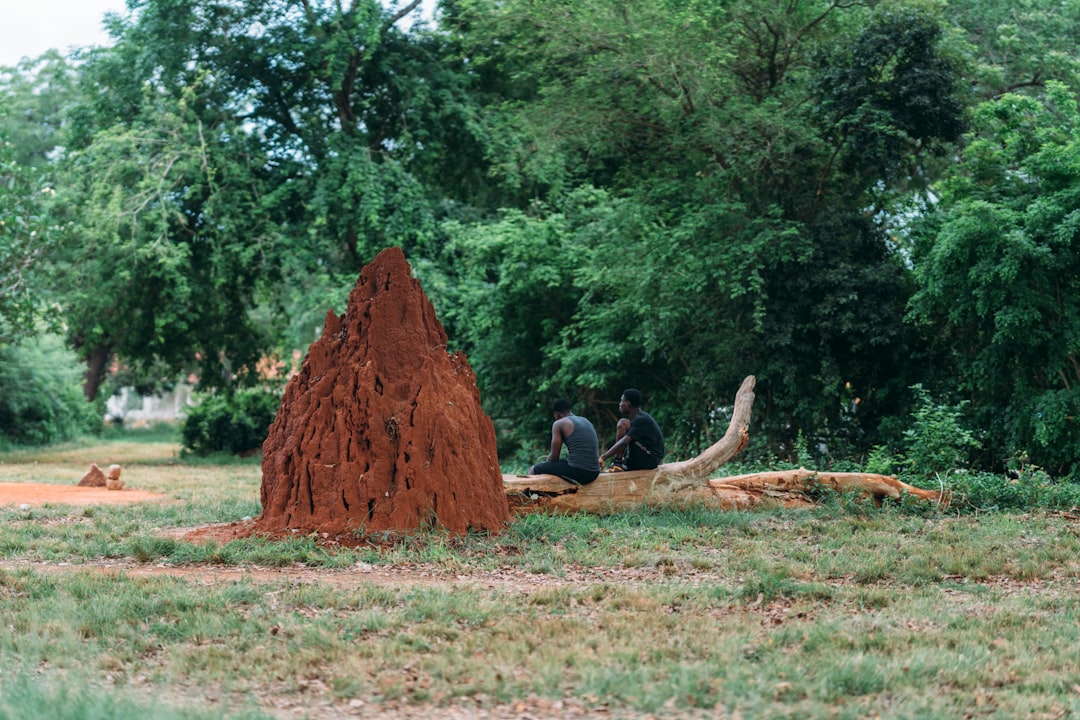
Rising from the plains of Africa, Australia, and other warm regions, towering termite mounds stand as some of the most impressive structures built by any animal. Constructed by insects no bigger than a grain of rice, these earthen towers can reach remarkable heights and endure for many years. What makes them truly astonishing is not just their size but their function.
Termite mounds are sophisticated climate-control systems, engineered to keep the colony’s interior stable despite the scorching heat outside. Understanding how they work reveals one of nature’s greatest feats of collective engineering.
Tiny Builders, Enormous Structures
Termites are small, soft-bodied insects that live in enormous colonies organized around a queen, a king, workers, and soldiers. Certain species, often called mound-building termites, construct elaborate towers of soil, saliva, and waste. Worker termites gather tiny particles of earth, mix them with their own secretions, and cement them into place, gradually raising a structure that dwarfs the individual insects thousands of times over.
These mounds are not where the termites actually live. In many species, the true nest lies underground or at the base of the mound, while the towering structure above functions primarily as part of the colony’s ventilation and temperature-regulation system. In effect, the mound is a giant piece of climate-control infrastructure built by a superorganism.
The Challenge of Life Inside a Colony
A termite colony faces a serious environmental problem. Millions of insects, along with the fungus that many species cultivate for food, generate heat and consume oxygen while producing carbon dioxide. In the enclosed space of a nest, this can quickly lead to dangerous conditions: too much heat, too little fresh air, and a buildup of harmful gases.
For the colony to survive, it must maintain relatively stable internal conditions. The temperature and gas balance need to stay within a workable range regardless of the fierce heat of day or the cooler nights outside. This is where the architecture of the mound becomes crucial. The structure is designed to manage airflow and temperature almost like a living building.
How the Mound Regulates Air and Temperature
The genius of the termite mound lies in how it moves air. The mound is riddled with a network of channels, tunnels, and porous walls. As the sun heats the outer surfaces and the colony’s activity warms the interior, air inside the mound rises and circulates. Meanwhile, the porous walls allow gases to exchange with the outside environment, letting fresh air seep in while carbon dioxide escapes.
Throughout the day, the temperature difference between the sunlit and shaded sides of the mound, along with the daily cycle of heating and cooling, drives air movement through the structure. This constant circulation helps flush out stale air and bring in fresh air, while also moderating temperature swings. The result is an interior environment far more stable and livable than the harsh conditions outside would suggest.
Some mounds are even oriented in specific ways relative to the sun. Certain termite species build tall, flattened mounds aligned so that the broad faces catch the gentler morning and evening sun while minimizing exposure to the intense midday heat. This orientation is a remarkable example of instinctive engineering that helps regulate the mound’s temperature.
Termite Mound Features at a Glance
The table below summarizes some general features of mound-building termites and their structures.
| Feature | Description |
|---|---|
| Builders | Worker termites |
| Materials | Soil, saliva, and waste |
| Purpose of mound | Ventilation and temperature control |
| Nest location | Often underground or at base |
| Airflow | Driven by heat and porous walls |
| Notable trait | Stable interior despite outside heat |
Fungus Farmers Underground
Many mound-building termites are also farmers. Deep within their nests, they cultivate special fungus in carefully tended gardens. The termites gather plant material, process it, and use it to grow the fungus, which in turn breaks down tough plant matter into a form the termites can digest. This partnership between termite and fungus is a striking example of mutual dependence in nature.
Maintaining these fungus gardens requires stable temperature and humidity, which makes the mound’s climate-control function even more important. The elaborate ventilation of the mound is not only about keeping the insects comfortable but also about protecting the delicate fungus crops that feed the colony. In this way, the mound serves as both a home and a greenhouse.
Ecological Importance
Termites and their mounds play a significant role in their ecosystems. By breaking down dead plant material, termites recycle nutrients and enrich the soil. Their tunneling aerates and mixes the earth, improving its structure and helping water penetrate the ground. Abandoned mounds can become habitats for other animals and hotspots of fertility in the landscape.
Because of these effects, termites are often described as ecosystem engineers. Far from being mere pests, mound-building termites shape their environments in ways that benefit many other species. Their industrious activity influences soil, vegetation, and the broader web of life around them.
A Colony That Acts as One
To appreciate the termite mound fully, it helps to understand the colony as a kind of superorganism. No single termite designs the mound or understands its purpose. Instead, each insect follows simple instinctive rules, responding to local cues such as moisture, airflow, and the presence of building material. Out of these countless small actions, an enormous and highly functional structure emerges.
This phenomenon, in which complex order arises from simple individual behaviors, is one of the most fascinating aspects of social insects.
The colony’s members are divided into castes, each with a specific role. Workers build, forage, and tend the young and the fungus gardens. Soldiers defend the colony against threats such as ants. The queen, often far larger than the other termites, lays the eggs that sustain the population, while the king remains with her.
This division of labor allows the colony to function smoothly, with each termite contributing to the survival of the whole. The mound is, in a very real sense, the product of the entire colony working as a single coordinated body.
Mounds Around the World
Not all termite mounds look alike. In different regions and among different species, mounds take on distinctive shapes suited to local conditions. Some are tall and chimney-like, others are broad and dome-shaped, and some are the thin, blade-like structures oriented toward the sun. Each form represents a different solution to the same basic challenges of ventilation, temperature control, and protection.
This diversity is a testament to how flexible and adaptive termite building behavior can be, shaped over long stretches of time by the demands of each environment.
Lessons From the Termite Architects
The termite mound stands as a powerful reminder that intelligence and engineering are not limited to large-brained animals. Through the collective, instinct-driven labor of countless tiny insects, termites produce structures that regulate their own climate with impressive precision. Human designers have even studied termite mounds for inspiration in creating buildings that stay cool with minimal energy.
In the humble termite and its towering mound, we find a masterclass in cooperation, adaptation, and natural design, a small creature building on a scale and with a sophistication that continues to astonish.
Frequently Asked Questions
How do termite mounds stay cool inside?
Termite mounds are riddled with channels, tunnels, and porous walls that control airflow. As the sun heats the outer surface and colony activity warms the interior, air rises and circulates through the structure, while porous walls let fresh air in and carbon dioxide out. The daily cycle of heating and cooling and the difference between sunlit and shaded sides drive this circulation.
The result is a stable interior far more livable than the harsh conditions outside.
Do termites actually live inside the mound?
In many mound-building species, the termites do not live in the towering mound itself. The true nest is often located underground or at the base of the mound, while the tall structure above functions mainly as part of the colony’s ventilation and temperature-regulation system. In effect, the mound acts like a giant piece of climate-control infrastructure. This design keeps the underground nest and its inhabitants comfortable.
Why do some termites grow fungus?
Many mound-building termites cultivate fungus in underground gardens as a food source. They gather plant material, process it, and use it to grow the fungus, which breaks down tough plant matter into a form the termites can digest. This partnership requires stable temperature and humidity, which makes the mound’s climate control even more important. The mound serves as both a home and a kind of greenhouse for these fungus crops.
Are termites good for the environment?
Yes, mound-building termites are often called ecosystem engineers because of their beneficial effects. By breaking down dead plant material, they recycle nutrients and enrich the soil, and their tunneling aerates and mixes the earth while helping water penetrate the ground. Abandoned mounds can become habitats for other animals and fertile hotspots. Far from being just pests, these termites shape their environments in ways that help many other species.