
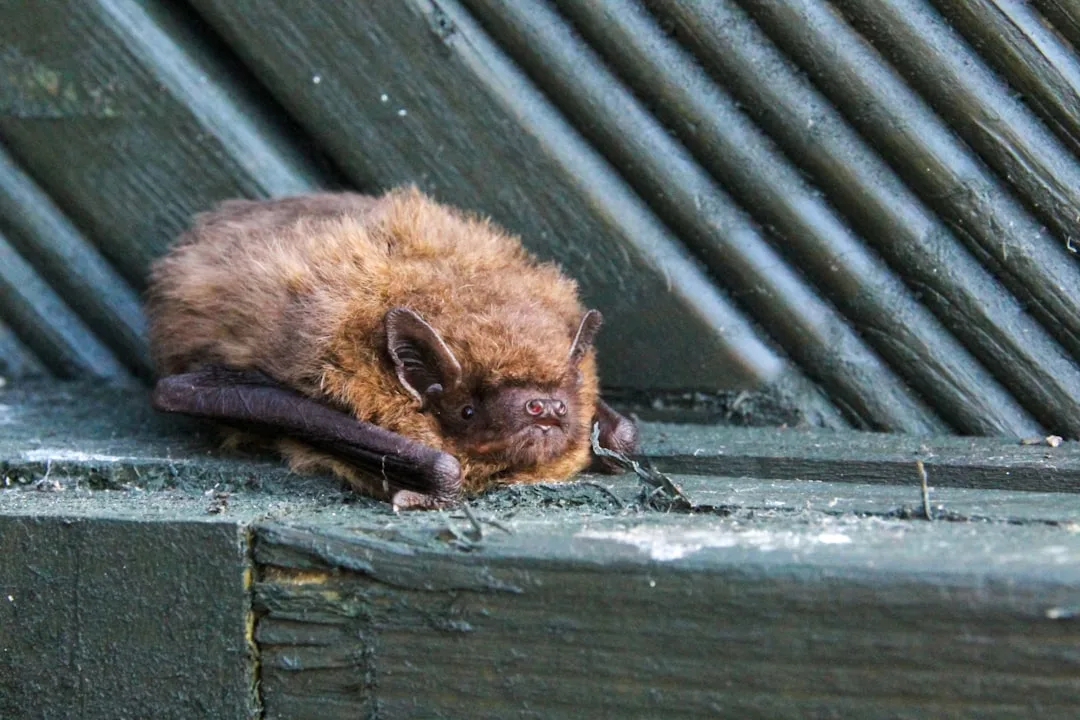
The little brown bat is one of the most common and widely distributed mammals in North America - or, more accurately, it used to be. Weighing less than three US pennies and small enough to hide comfortably inside a cupped human palm, Myotis lucifugus once blanketed the continent from central Alaska to central Mexico in numbers so large that single caves held colonies of 300,000 or more hibernating individuals.
Since 2006 that picture has changed faster than any documented collapse of a mammal species in modern history, driven by a single invasive fungus. The little brown bat is now both a textbook example of how remarkable small-mammal biology can be and a live case study in how fragile abundant species actually are.
This guide covers every aspect of little brown bat biology and ecology: size, echolocation, diet, reproduction, hibernation, maternity colonies, conservation status, and the relationship between little brown bats and the humans whose barns, attics, and church steeples they share. It is a reference entry, not a summary - so expect specifics: grams, kilohertz, hibernation temperatures, colony counts, and verified records.
Etymology and Classification
The scientific name Myotis lucifugus was given by French naturalist Georges-Frederic Cuvier's student Palisot de Beauvois in 1796. Myotis comes from Greek and means 'mouse-eared', which captures both the rounded ears and the general impression a small bat gives at rest. Lucifugus is Latin for 'light-fleeing', a reference to the species' strict nocturnal habits and preference for dark roosts.
English speakers have used the name 'little brown bat' since at least the nineteenth century; it distinguishes the species from the slightly larger big brown bat (Eptesicus fuscus), with which it often shares roosts.
Genetic and morphological analysis places the little brown bat firmly inside Vespertilionidae, the vesper bat family, which is the largest family of bats in the world with over 400 species. Within that family it belongs to Myotis, a genus of more than 100 mouse-eared bats distributed across every continent except Antarctica.
Closely related North American species include the Indiana bat (Myotis sodalis), the northern long-eared bat (Myotis septentrionalis), and the Yuma myotis (Myotis yumanensis). Several of these relatives are themselves endangered, and all have been affected by the same fungal disease that has driven the little brown bat's decline.
Within Myotis lucifugus itself, biologists traditionally recognised several subspecies based on geographic variation in skull size and fur colour. Recent genetic work suggests some of these subspecies may actually represent distinct species. Taxonomy at this level remains under active revision.
Size and Physical Description
Little brown bats are small even by bat standards. Adults fall into a narrow size band with only modest sexual dimorphism.
Adult measurements:
- Total body length: 6-10 centimetres
- Forearm length: 34-41 millimetres
- Wingspan: 20-27 centimetres
- Weight: 5-14 grams (average around 8 grams)
- Ear length: 14-16 millimetres
Females are slightly larger than males on average, a reversal of the typical mammalian pattern. The reason is energetic: pregnancy and lactation impose heavy nutritional demands, and larger females produce and rear pups more reliably. In bats this pattern is widespread.
Fur on the back is glossy and brown, varying from pale yellowish-brown in dry-climate populations to dark chocolate in humid eastern forests. Underparts are paler and duller. The flight membranes (wings, tail membrane, and the skin stretched between the hind legs) are dark brown to black, naked, and remarkably thin - about 20 micrometres, which is thinner than a latex glove and thinner than a standard sheet of paper.
These membranes are richly supplied with blood vessels, nerves, and elastic fibres that allow them to stretch during the wingbeat and recoil instantly.
The skull is short and delicate, with 38 teeth arranged for shearing small chitinous insects. The canines are sharp but small, and the molars carry sharp cusps that slice moth wings and mosquito bodies like tiny scissors. The tragus - a projection inside the ear that shapes incoming sound - is narrow and pointed, an important field mark for species identification.
Pups at birth:
- Length: roughly 2-2.5 centimetres
- Weight: around 2 grams - about a quarter of the mother's body mass
- Furless, pink, with sealed eyes and ears
- Able to cling to the mother using specialised milk teeth
Echolocation and Flight
Little brown bats are obligate echolocators. They cannot hunt flying insects in darkness by sight, so they rely entirely on a biological sonar system that ranks among the most sophisticated sensory adaptations in the animal kingdom.
Echolocation parameters:
- Call frequency: 40-80 kilohertz (well above the human hearing limit of about 20 kHz)
- Peak energy frequency: around 45 kHz
- Call duration: 1-5 milliseconds in search mode
- Call repetition: 5-20 per second in search, rising to 200 per second during the final prey capture
- Detection range: around 5 metres for a mosquito-sized target
- Resolution: can discriminate objects thinner than a human hair
The bat produces calls in the larynx and emits them through the mouth. Each call sweeps down in frequency - a frequency-modulated or FM sweep - which allows the auditory cortex to time returning echoes with micro-second precision. The bat judges distance from the time delay, direction from differences between ears, and target shape from the echo's fine structure. A moth has a different echo signature from a falling leaf, and the bat's nervous system processes the difference in milliseconds.
As the bat closes on prey, the call repetition rate accelerates dramatically into a feeding buzz of up to 200 pulses per second. This buzz is so distinctive that field researchers use it to score successful hunts from acoustic recordings.
Flight in the little brown bat is agile rather than fast. Typical cruising speed is 8 to 15 kilometres per hour, with short bursts higher. The wing is shorter and broader than in high-speed open-air bats, which sacrifices speed for manoeuvrability in cluttered environments like forest edges and over ponds.
A little brown bat can turn within its own body length and reverse direction in a fraction of a second. It can also drink on the wing by dipping its mouth to the surface of still water without ever landing.
Diet and Foraging
Little brown bats are strict insectivores. Their diet shifts with insect availability but is always built around soft-bodied flying insects caught in the air.
Primary prey:
- Mosquitoes and midges (Diptera)
- Mayflies (Ephemeroptera)
- Caddisflies (Trichoptera)
- Small moths (Lepidoptera)
- Leafhoppers (Hemiptera)
- Small beetles (Coleoptera)
Foraging performance:
- Peak capture rate: up to 1,000 mosquito-sized insects per hour
- Nightly intake (non-breeding adult): roughly half of body mass in insects
- Nightly intake (lactating female): more than full body mass in insects
- Foraging session: typically 2-5 hours, split between dusk and pre-dawn
The numbers deserve attention. A single little brown bat can, under favourable conditions, clear a thousand mosquitoes from a backyard in an hour. A colony of a thousand bats can remove several million insects per night. This makes the species one of the most effective natural insect controllers in North America, with measurable economic benefits to agriculture.
A 2011 study in Science estimated that insectivorous bats, led by species like Myotis lucifugus, save US farmers between 3.7 and 53 billion dollars per year in avoided pesticide and crop damage.
Foraging techniques include:
- Open-air hawking. The bat flies a repeatable loop through an insect-rich airspace, typically over ponds, meadows, or forest edges, snatching prey out of the air with its mouth.
- Wing scooping. For larger prey like moths, the bat curls its wing membrane or tail membrane into a pouch, tips the insect into the pouch, and transfers it to the mouth mid-flight.
- Gleaning. Occasionally bats will pick insects directly off leaves or bark, though little brown bats do this far less than some relatives.
Digestion is astonishingly fast. A little brown bat can process an insect from capture to excretion in about 20 minutes. This rapid turnover keeps body mass low enough for flight efficiency.
Hibernation
Hibernation is central to little brown bat biology. It enables the species to survive an insect-free northern winter and it is directly responsible for the bat's remarkable longevity. It is also the vulnerability that white-nose syndrome exploits.
Pre-hibernation preparation:
- Late August to early October: adults enter a period of hyperphagia, eating more than their body weight in insects each night
- Body fat rises from baseline around 5 per cent to 20-30 per cent of body mass
- Mating occurs at cave entrances during autumn swarming events
- Swarms can involve thousands of bats from dozens of summer roosts mixing at a single hibernaculum entrance
Hibernation physiology:
- Core body temperature drops to match ambient cave temperature, often as low as 2 degrees Celsius
- Heart rate falls from around 1,000 beats per minute in flight to as low as 10 in deep torpor
- Breathing can pause for up to 48 minutes between inhalations
- Metabolic rate drops by more than 95 per cent
- Duration: approximately 6 months, October through April depending on latitude
Hibernating bats are not asleep in the usual sense. They rouse every 12 to 20 days for short arousal periods, during which they warm up, move around the roost, urinate, sometimes drink condensation, and occasionally mate. Each arousal burns a substantial share of stored fat - one arousal can cost as much energy as several weeks of torpor. A bat that arouses too often runs out of fat before spring and dies.
Ideal hibernaculum conditions:
- Air temperature: 2-10 degrees Celsius, stable
- Humidity: above 90 per cent (prevents dehydration during torpor)
- Airflow: slow, steady, with multiple entrances
- Structure: deep caves and abandoned mines offer the best conditions
Classic hibernacula, historically, held extraordinary numbers of bats. Single cave chambers could house more than 300,000 individuals packed shoulder to shoulder on the ceiling. Some hibernacula in West Virginia and New York once supported hundreds of thousands of little brown bats. Today many of the same sites hold a few dozen or a few hundred.
Reproduction and Life Cycle
Little brown bat reproduction runs on a schedule stretched across three seasons, linked together by one of the most unusual tricks in mammalian biology.
Reproductive cycle:
| Period | Event |
|---|---|
| August to October | Swarming and mating at hibernacula |
| November to March | Sperm storage in female reproductive tract during torpor |
| April | Ovulation and fertilisation as bats emerge from hibernation |
| May to June | Gestation (50-60 days) |
| Early to mid-summer | Birth of a single pup |
| Summer (3-4 weeks) | Pup nursing and first flight |
| Late summer | Pups foraging independently |
Mating occurs in autumn at cave entrances during mass swarming events. Bats gather from large areas to mate and socialise; these swarms mix individuals from many summer colonies, which prevents inbreeding. Females store the resulting sperm in their reproductive tract through the entire winter in a process called delayed fertilisation - a reproductive trick that decouples mating from pregnancy and ensures pups are born when insects are abundant.
Males will occasionally attempt to mate with torpid, unconscious females during early hibernation, a behaviour called passive mating. The evolutionary significance is debated.
Ovulation occurs as females warm up and emerge in spring. Fertilisation happens almost immediately, and gestation lasts 50 to 60 days. Females gather into maternity colonies of hundreds to thousands of pregnant individuals, typically in warm attics, barns, or tree cavities. Warm roosts accelerate fetal and pup development. Males are excluded and roost alone or in small bachelor groups elsewhere.
Each female gives birth to a single pup - twins are rare. The pup is born naked and almost blind but clings immediately to the mother's belly fur using specialised milk teeth. For the first two weeks the mother carries the pup with her on foraging flights or leaves it clustered with other pups in a 'creche' on the roof of the roost.
Pups fly for the first time at about 3 weeks and reach adult size within 4 to 6 weeks. Juvenile mortality is high in the first winter of hibernation because young bats enter with lower fat reserves. Females reach sexual maturity at 1 year; males at 2. Each female produces only one pup per year thereafter, which makes population recovery after any decline extraordinarily slow.
Maternity Colonies and Social Behaviour
Little brown bat maternity colonies are striking not only for their size but for the sophistication of their social behaviour. Colonies of several thousand mothers and pups can fit into an attic space smaller than a living room. Inside, the temperature can reach 40 degrees Celsius from bat body heat alone - and this warmth is precisely the point, because rapidly developing pups grow faster in warm roosts.
The most remarkable social feat in these colonies is individual mother-pup recognition. When a mother returns from foraging, she has to find her own pup among thousands. She does it using a two-stage system:
- The mother emits an isolation call with an acoustic signature unique to her pup.
- The pup answers with its own signature call.
- On close approach, both confirm identity using scent.
Errors are rare. Experiments where pups were swapped between mothers show that mothers strongly prefer their own offspring and will reject unrelated pups. The same vocal recognition system is found in several other bat species and represents one of the most sophisticated mother-offspring communication systems documented outside of primates and cetaceans.
Outside maternity colonies, little brown bats are loosely social. They roost communally but do not form long-term pair bonds, territorial groups, or cooperative foraging parties. Autumn swarming is social in a different sense - it brings together bats from many summer populations for mating and orientation to hibernacula.
Longevity - The 34-Year Bat
Average wild lifespan is 6 to 7 years. The documented maximum is 34 years - a male little brown bat banded as an adult in Ontario and recaptured alive decades later. That figure is biologically astonishing.
For context, the usual mammalian pattern is that small animals live short lives. A house mouse of similar body mass to a little brown bat lives on average one year and rarely exceeds three. Shrews can barely reach two. By this rule, a 34-year little brown bat should not exist.
Bat longevity appears tied to hibernation. During torpor, metabolism slows by more than 95 per cent, which dramatically reduces oxidative damage and cellular wear. The bat effectively pauses its ageing clock for half of every year. Over 34 years, that means roughly 17 years of biological 'pause'. Studies of telomere dynamics in bats find extraordinarily low telomere shortening rates - some species may even maintain or extend telomeres with age.
Low annual mortality reinforces this effect. Once past the first winter, adult little brown bats face few predators, maintain roost fidelity, and rarely die of disease outside of white-nose syndrome. The life history strategy is the opposite of mice: slow reproduction, slow ageing, long life.
White-Nose Syndrome
White-nose syndrome (WNS) is the single most important threat to the species and the reason the IUCN reclassified Myotis lucifugus from Least Concern to Endangered in 2019.
Disease profile:
- Cause: Pseudogymnoascus destructans, a cold-loving fungus
- Origin: Eurasia; bats there carry it without significant mortality
- First North American detection: Howe Cave, New York, 2006
- North American spread: 40 US states and 8 Canadian provinces by 2024
- Mortality in affected hibernacula (little brown bat): up to and exceeding 90 per cent
The fungus grows on the muzzle, ears, and wings of hibernating bats in the humid cold of the hibernaculum. It invades the thin wing membranes, disrupts water balance, and forces the bat to arouse more often than normal. Each extra arousal burns critical fat reserves. Bats emerge from hibernation emaciated, dehydrated, and with deeply damaged wings. Many die in the cave; others die in the following weeks.
The decline has been catastrophic. Pre-WNS surveys of northeastern hibernacula often recorded 10,000 to 300,000 little brown bats per site. Post-WNS surveys of the same sites often record a few dozen to a few hundred. Total North American population estimates are difficult, but a 2010 analysis projected regional extinction in parts of the northeast within two decades if mortality continued at observed rates.
Some populations appear to be stabilising at very low numbers. Surviving individuals may have partial immunity, behavioural resistance (choosing drier or warmer roost microsites), or genetic traits that limit fungal growth.
Research into treatments - probiotics, cave fumigation with volatile organic compounds, UV exposure, vaccines - is ongoing but no large-scale intervention has yet succeeded. Recovery, if it occurs, will be measured in decades because each surviving female can produce only one pup per year.
Other Threats
Beyond white-nose syndrome, little brown bats face several compounding pressures:
- Wind turbines. Migratory and even resident bats are killed by turbine blade strike and barotrauma (rapid pressure change in the lung) at wind farms. Little brown bats are less heavily affected than long-distance migrants like the hoary bat, but mortality is documented and regionally significant.
- Habitat loss. Removal of large hollow trees, conversion of wetlands, and sealing of mine entrances reduce both summer roosts and winter hibernacula.
- Pesticides. Neonicotinoid insecticides reduce insect prey availability across agricultural landscapes. Direct toxicity to bats has also been reported.
- Disturbance. Hibernating bats woken by human visitors burn critical fat reserves. Single winter disturbances can reduce survival to spring. Cave closures and gating of key hibernacula are now standard conservation practice.
- Climate change. Warmer winters shorten hibernation, but also reduce the reliability of cold conditions bats depend on. Warmer, wetter caves can favour fungal growth. Shifts in insect emergence may desynchronise pup-rearing from prey peaks.
- Predation. Owls (especially barred owls and great horned owls), raccoons, snakes, and domestic cats all take bats. Cats in particular kill large numbers of bats at emergence sites and suburban roosts.
Little Brown Bats and Humans
Few mammals have as close and complicated a relationship with human infrastructure as the little brown bat. The species readily roosts in attics, barns, church steeples, sheds, and behind shutters. Warm, dry, and secure, human buildings are often better maternity roosts than natural tree cavities, and colonies in buildings can persist for decades.
This closeness creates tension. Bat droppings (guano) accumulate over years and can damage wood. In very rare cases, bats transmit rabies to humans, almost always through unnoticed bites during direct handling or bites to sleeping people. Public health authorities strongly discourage direct handling and recommend post-exposure rabies treatment for any known or possible bat contact.
Rabies prevalence in bat populations is low - usually well under 1 per cent - but the consequence of an untreated bite is lethal, so caution is warranted.
Exclusion - not extermination - is the recommended approach for unwanted colonies. Bats are installed with one-way exit devices that allow them to leave but not return, and roosts are sealed only after the colony has left. Exclusions must be timed to avoid leaving flightless pups trapped inside, which is both inhumane and illegal in many jurisdictions.
Bat houses - purpose-built roost boxes installed on poles or buildings - can give excluded colonies a nearby alternative and are widely used by homeowners and conservation groups to support local populations.
Culturally, bats have long been misread. Western folklore cast them as sinister; modern biology and Indigenous traditions across North America have rebuilt the picture as something closer to reality - quiet, highly social, economically important, and astonishingly long-lived small mammals that do most of their work while humans sleep.
Related Reading
- Bats of the World: Echolocation, Flight, and Survival
- How Bats Hibernate
- White-Nose Syndrome: A Fungal Catastrophe
- Big Brown Bat: North America's Other Common Bat
References
Relevant peer-reviewed and governmental sources consulted for this entry include IUCN Red List assessments (2018-2019) for Myotis lucifugus, U.S. Fish and Wildlife Service white-nose syndrome status updates, Canadian Wildlife Service population surveys, and published research in Science, Journal of Mammalogy, Conservation Biology, and Proceedings of the National Academy of Sciences.
Specific longevity records, white-nose syndrome mortality figures, and hibernation physiology data reflect the most recent peer-reviewed literature through 2024.
Frequently Asked Questions
How big is a little brown bat?
The little brown bat (Myotis lucifugus) is a small North American vesper bat. Adults measure 6 to 10 centimetres from nose to tail and weigh just 5 to 14 grams - less than the weight of three US pennies. The wingspan stretches 20 to 27 centimetres, roughly the width of an open paperback book. Females are slightly larger than males, a reversal of the usual mammalian pattern, because pregnancy and lactation place heavier energy demands on females.
Forearm length is 34 to 41 millimetres, the standard measurement bat biologists use for identification. Newborn pups weigh about 2 grams, close to a quarter of their mother’s body mass, and are born almost naked with eyes sealed shut.
What do little brown bats eat?
Little brown bats are obligate insectivores. Their diet centres on soft-bodied flying insects captured in mid-air using echolocation. Mosquitoes, midges, mayflies, caddisflies, moths, leafhoppers, and small beetles dominate the prey list, with composition shifting by region and season. A single foraging bat can capture up to 1,000 insects per hour during peak activity, consuming roughly half its body weight in prey each night.
Nursing mothers eat more than their own body weight nightly to support milk production. This makes little brown bats some of the most effective natural insect controllers in North America, with a single colony removing millions of insects from the landscape each summer. They drink by flying low over still water and skimming the surface with their mouths.
Where do little brown bats live?
Little brown bats are one of the most widely distributed bats in North America, ranging from central Alaska and the Yukon south through almost all of Canada and the United States into parts of central Mexico. They occupy forests, wetlands, meadows, and suburban landscapes wherever flying insects and roost sites are abundant.
Summer roosts include tree cavities, loose bark, rock crevices, barns, church attics, and house eaves - the species has adapted remarkably well to human structures. Winter hibernacula are caves and abandoned mines with high humidity and stable temperatures between 2 and 10 degrees Celsius. A single hibernaculum can host anywhere from 1,000 to more than 300,000 bats clustered tightly together for warmth and humidity.
Are little brown bats endangered?
Yes. The IUCN uplisted Myotis lucifugus from Least Concern to Endangered in 2018-2019 after white-nose syndrome devastated eastern North American populations. White-nose syndrome is caused by the cold-loving fungus Pseudogymnoascus destructans, which invades hibernating bats and disrupts water balance, fat metabolism, and arousal cycles.
Since its 2006 detection in a New York cave, the disease has spread across 40 US states and 8 Canadian provinces, killing more than 90 per cent of little brown bats in some affected hibernacula. The species was once one of the most common mammals in North America. Several regional populations have collapsed by more than 99 per cent. Recovery, if it occurs, will likely take decades because each surviving female produces only one pup per year.
How long do little brown bats live?
Little brown bats live an average of 6 to 7 years in the wild, but some individuals survive far longer. A male banded in Ontario was recaptured alive at 34 years old, making him one of the longest-lived small mammals ever documented. This record is remarkable because small body size is normally correlated with short lifespan - a mouse of similar weight rarely survives past 3 years.
Bat longevity appears tied to hibernation physiology: slowing metabolism dramatically each winter reduces oxidative stress and cellular damage, effectively pausing the ageing clock. The species also has low annual mortality once adult, low reproductive rate, and strong fidelity to safe hibernacula. White-nose syndrome has compressed modern lifespans significantly in affected regions.
How does little brown bat echolocation work?
Little brown bats hunt in near-total darkness using echolocation, a biological sonar system. They produce short, high-frequency calls through the larynx and emit them from the mouth or nose at frequencies between 40 and 80 kilohertz - well above the human hearing limit of 20 kilohertz. The returning echoes are processed by an auditory cortex tuned to micro-second timing differences.
This allows the bat to resolve objects thinner than a human hair, distinguish a moth from a falling leaf, and judge the exact moment to snap its prey out of the air. Calls speed up into a feeding buzz of 200 pulses per second during the final approach to prey. The whole system is fast enough to catch a mosquito in total darkness while flying at 10 kilometres per hour.
How do little brown bats hibernate?
Little brown bats hibernate for roughly six months, typically October through April depending on latitude. They gather in caves or abandoned mines called hibernacula where temperatures remain between 2 and 10 degrees Celsius and humidity stays above 90 per cent. Before entering, adults build up 20 to 30 per cent body fat, mostly from late-summer insect binges.
During hibernation their body temperature drops to match ambient cave temperature - sometimes as low as 2 degrees Celsius - heart rate falls from around 1,000 beats per minute in flight to as few as 10, and breathing can pause for 48 minutes at a stretch. They rouse every 12 to 20 days for brief periods of activity, which is when white-nose syndrome causes the most damage by forcing extra, fat-burning arousals.
How do mother bats find their pups in crowded colonies?
Female little brown bats gather into maternity colonies of hundreds to thousands of mothers and pups. Each pup is born in early summer, cannot fly for about three weeks, and clings to rafters or cave walls while its mother leaves to forage. When she returns, she has to locate her own pup among thousands that look, smell, and sound broadly similar. She does it using a two-stage recognition system.
First, she calls an isolation call in a signature pattern unique to her pup, and the pup answers with its own signature call. Second, she confirms identity by scent at close range. Errors are rare. This individual vocal recognition is one of the most sophisticated mother-offspring communication systems documented outside of primates and cetaceans.