
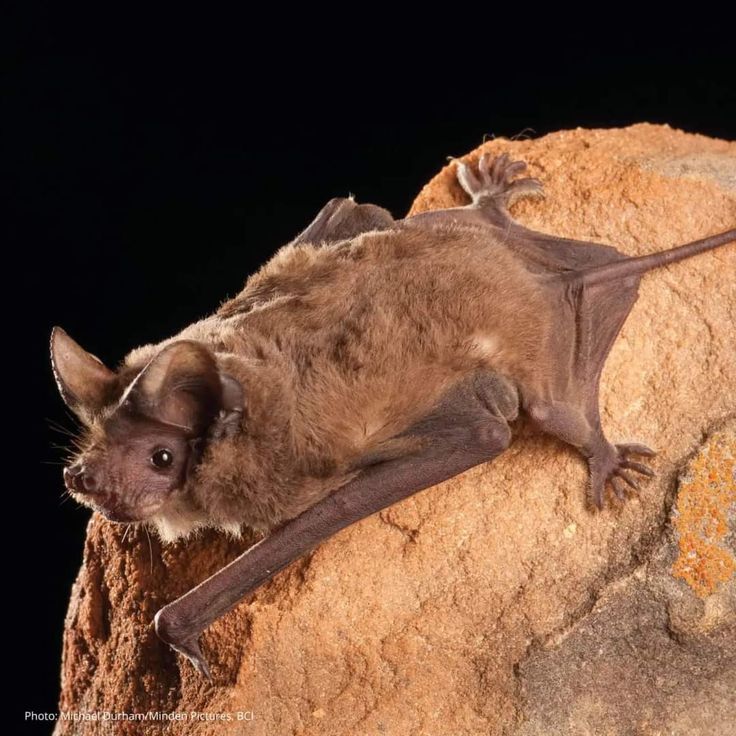
The Mexican free-tailed bat is the fastest bat in the world in level flight - and, as far as any peer-reviewed measurement has shown, the fastest horizontally flying animal on the planet. It is also the mammal that forms the largest known aggregations on Earth, with single caves in Texas holding more than 15 million individuals.
A colony that size can turn the evening sky over a hill country ridge into a living river and show up on Doppler weather radar. Despite all this, Tadarida brasiliensis is a palm-sized, 12-gram insectivore that most people have never seen up close.
This guide covers the Mexican free-tailed bat in full detail: anatomy, flight performance, echolocation, hunting, mega-colonies, migration, maternity behaviour, ecological value to agriculture, and the strange facts that have turned this unassuming species into a subject of serious scientific attention. It is a reference entry rather than a teaser - so expect specific numbers: grams, kilohertz, kilometres, kilometres per hour, and dollars.
Etymology and Classification
The scientific name Tadarida brasiliensis was established in 1824 from specimens collected in Brazil, which is why the species is also called the Brazilian free-tailed bat. In the United States the common name Mexican free-tailed bat is preferred because the largest known colonies sit along the US-Mexico border and populations winter in central Mexico. The two common names refer to the same species.
The genus Tadarida sits within the family Molossidae, a global family of roughly 120 species collectively called free-tailed bats. They are named for an anatomical feature shared across the family: a mouse-like tail that extends well beyond the edge of the tail membrane instead of being fully enclosed by it. That free tail is not decorative - it functions as a sensor and stabiliser during high-speed flight.
Within Tadarida brasiliensis, biologists recognise multiple subspecies across the Americas. The one most studied scientifically is T. b. mexicana, the strongly migratory subspecies that forms the giant maternity caves of Texas and the desert southwest. Other subspecies inhabit Florida, the Caribbean, Central America, and the southern cone of South America. Molecular work suggests the species complex may eventually be split, but current IUCN taxonomy treats them as one.
Size and Physical Description
Mexican free-tailed bats are small, aerodynamic, and built for sustained high-speed flight over open country.
Adult measurements:
- Total length: roughly 9 cm from nose to the tip of the tail
- Forearm length: 36-46 mm
- Wingspan: 27-32 cm
- Weight: 11-14 g, with females slightly heavier during pregnancy
Proportions:
- Wings: long, narrow, and pointed - an aerodynamic profile associated with fast, straight flight rather than tight manoeuvring
- Tail: roughly one third of the animal's length, with about half of that length projecting freely beyond the tail membrane
- Ears: large, forward-tilted, and wrinkled at the edges, with a characteristic horizontal crease across the forehead that joins the two ears
Their fur is short, dense, and typically a dark chocolate brown to dusty grey on the back, paler on the belly. The face is almost hairless and distinctly dog-like in profile - the family name Molossidae actually comes from Molossus, an ancient Greek breed of mastiff, because early naturalists thought these bats' faces looked like tiny dogs'.
Their hind feet are fringed with stiff, sensory bristles. These bristles appear to help the bat detect insects and possibly airflow, and they are considered a diagnostic Molossid feature. The skull is elongated, the jaw muscles powerful for their size, and the dental formula is adapted for shearing moth wings and beetle elytra.
Flight Performance
Flight is the single most remarkable feature of this species.
In November 2016 a team led by Gary McCracken at the University of Tennessee published a paper in the Royal Society journal Royal Society Open Science reporting radio-tracked ground speeds of Mexican free-tailed bats foraging in Texas. The fastest individual they measured was moving at 160 kilometres per hour (roughly 100 mph). Several other individuals crossed 130 km/h.
These measurements sparked scrutiny, primarily because they exceeded every previously measured level-flight speed in any animal, including swifts and ducks.
Critics argued tailwinds could have inflated the ground speeds. The authors responded with wind-corrected data and showed that air speeds were still extraordinary - consistently 60 to 100 km/h, with peaks that could not be explained by wind alone. As of 2024 the measurements remain the fastest documented level flight in any vertebrate.
Why so fast?
- Wing shape. Long, narrow, high-aspect-ratio wings are the aerodynamic equivalent of a glider or jet fighter wing. They minimise drag and allow efficient cruising at speed.
- Body drag. A sleek, tapered body with the hind legs swept back and the free tail acting as a stabiliser reduces turbulence.
- Muscle mass. Pectoral muscles make up a larger share of body weight than in most bats, producing high power per gram.
- Foraging ecology. Free-tailed bats chase fast-moving, high-flying insects - especially migratory moths - rather than picking prey off foliage. Speed is a direct adaptation to that prey.
Peregrine falcons famously reach 300+ km/h - but only during dives, assisted by gravity. In self-powered horizontal flight no bird has ever been measured approaching a Mexican free-tailed bat.
Echolocation and Sensory World
Mexican free-tailed bats are highly vocal, producing ultrasonic echolocation calls and a remarkably varied repertoire of social calls.
Echolocation:
- Frequency: 25-40 kHz for cruising, sweeping up to nearly 100 kHz in closer pursuit
- Call duration: 6-15 milliseconds in search mode, shortening to under 1 millisecond in attack mode
- Call rate: roughly 10 per second while cruising, climbing to over 200 per second in the final stages of a chase, producing the characteristic 'feeding buzz'
These bats use different calls for different tasks. In open air at speed they emit long, narrowband calls that maximise detection distance. As they close on a target, calls shorten and sweep more widely to improve spatial precision.
Research by Aaron Corcoran and colleagues has shown that free-tailed bats even emit deliberate jamming calls - calls timed to interfere with a competitor's feeding buzz and cause it to miss its target. This is one of the clearest documented examples of acoustic sabotage in any animal.
Their social calls are equally interesting. Pups emit individually distinctive isolation calls that help mothers locate them in crowded creche colonies. Adult males produce territorial songs with syllable-level structure that researchers compare to birdsong and early hominid speech patterns. The songs have been recorded, archived, and analysed in detail and remain an active area of research into the evolution of vocal communication in mammals.
Hunting and Diet
Mexican free-tailed bats are obligate insectivores. They hunt almost exclusively while flying and take a wide variety of airborne prey, with moths making up the largest share of the diet by mass.
Typical prey:
- Noctuid moths (corn earworm, cotton bollworm, fall armyworm)
- Beetles
- Flying ants and winged termites
- Leafhoppers, planthoppers, and other true bugs
- Mosquitoes (a smaller share than folk wisdom suggests)
A foraging adult consumes roughly its own body weight in insects every night - 10 to 15 grams per individual. Scaled up, a maternity colony the size of Bracken Cave takes 100 to 200 tonnes of insects per night from local airspace during peak summer. Studies using molecular gut-content analysis have confirmed that a significant fraction of those insects are the most damaging agricultural pests in North America.
High-altitude hunting:
Free-tailed bats routinely climb above 3,000 metres and have been detected at more than 3,200 metres using aircraft-mounted radar. Many noctuid moth species migrate on high-altitude winds, and the bats intercept them in the jet-fast air layer where the insects are concentrated and unable to evade. This behaviour is rare among bats, which typically forage close to the ground or at canopy height.
Ecological value:
A 2011 paper in Science by Boyles and colleagues estimated the total economic value of insect-eating bats to US agriculture at $3.7 billion per year at minimum and up to $53 billion at the upper bound. A subsequent focused study of Tadarida brasiliensis estimated its pest-control service specifically at roughly $23 billion per year, driven largely by protection of the US cotton and corn crop. That is among the largest dollar values ever attributed to a single wild species' ecosystem service.
Life Cycle and Reproduction
Free-tailed bats have a tightly seasonal reproductive cycle timed to the warm season in their maternity range.
Mating: Occurs on the wintering grounds in late winter or early spring. Males produce complex songs to attract females and defend small roost territories. Mating is brief and fertilisation follows immediately - unlike many temperate-zone bats, free-tailed bats do not use sperm storage as a primary reproductive strategy.
Gestation: Roughly 11-12 weeks. Pregnant females migrate north to maternity caves, arriving in March and April.
Birth: Mid to late June in the US, slightly earlier in Mexico. Each mother typically gives birth to a single pup; twins are rare. Pups weigh around 3 grams at birth - roughly a quarter of the mother's body mass, one of the largest relative pup-to-mother ratios in any mammal.
Nursing: Pups are deposited on a ceiling nursery area called a creche. In Bracken Cave, creches can hold up to 5,000 pups per square metre. Mothers fly out at dusk and return several times each night to nurse their own pup. Milk is approximately 25 percent fat. Pups gain weight rapidly and begin to fly within five weeks of birth.
Independence: By the end of the summer pups are fully volant, self-feeding, and ready to join the autumn migration. Many females will reproduce for the first time at age 1, males at age 2.
Lifespan reaches up to roughly 18 years in the wild, based on banding recoveries, though typical adult survival averages lower. Captive longevity records are similar.
Migration and Movements
The US population of T. b. mexicana is strongly migratory. Bats summering in Texas, New Mexico, Oklahoma, Arkansas, and Arizona leave maternity caves in late September and October and travel south across northern Mexico to central and southern Mexican wintering grounds. Individual recovery records show migrations of up to 1,500 kilometres in a single direction.
Migration data:
| Metric | Value |
|---|---|
| Longest one-way migration | ~1,500 km |
| Peak autumn departure | Late September to mid-October |
| Spring return to maternity cave | March to April |
| Cruising altitude during migration | Up to 3,000+ m |
| Typical cruising ground speed | 40-60 km/h, rising in favourable winds |
Populations in Florida, coastal California, and much of South America are largely sedentary. Why the continental subspecies migrates while others do not appears linked to winter prey availability: in places where insects remain active year-round, migration has less fitness value.
Navigation during migration is not fully understood, but evidence supports a combination of visual landmarks, star compass use, and possibly magnetic orientation. Bats migrate at night, often in loose streams rather than tight flocks.
Mega-Colonies
The Mexican free-tailed bat is famous for forming the largest mammal aggregations ever documented.
Significant roosts:
| Site | Approximate population |
|---|---|
| Bracken Cave, Texas | ~15 million |
| Frio Cave, Texas | ~10 million |
| Eagle Creek Cave, Arizona (peak) | ~25 million (pre-1960 crash) |
| Congress Avenue Bridge, Austin | ~1.5 million |
| Carlsbad Caverns, New Mexico | ~400,000 |
Bracken Cave in Bexar County, Texas - protected by Bat Conservation International - currently holds the title of the single largest known mammal gathering on Earth. A full evening emergence can last three hours, and the departing column is thick enough to register as a radar echo for dozens of kilometres. Inside the cave, densities on the ceiling can exceed 1,800 bats per square metre.
The Congress Avenue Bridge colony in downtown Austin has become an urban tourism icon. The bridge was renovated in the early 1980s, and engineers unintentionally created the perfect crevice dimensions for free-tailed bats. Within a few seasons 1.5 million bats took up residence. Rather than evicting them, the city embraced the colony, and the evening emergence now draws tens of thousands of visitors each summer. Austin markets itself as the 'Bat Capital of America'.
Conservation Status
The IUCN Red List classifies Tadarida brasiliensis as Least Concern because of its enormous range, population size, and ability to use human structures. The species is not federally listed in the United States, though some states provide protection for roost sites.
That does not mean the species is safe. Several mega-colonies have experienced dramatic collapses.
Documented declines:
- Eagle Creek Cave, Arizona: from approximately 25 million bats in the 1960s to fewer than 30,000 within a decade, with DDT and other persistent pesticides strongly implicated.
- Carlsbad Caverns, New Mexico: historical estimates above 8 million have fallen to roughly 400,000 today.
Current threats:
- Wind-turbine mortality. Free-tailed bats are among the most common bat species killed at US wind farms, particularly during autumn migration.
- Roost disturbance. Caving, tourism, and guano mining at inadequately protected sites can cause roost abandonment or pup mortality.
- Pesticide exposure. Bats carry concentrated loads of agrochemicals from their insect prey, with sublethal effects on reproduction and immune function.
- Habitat change. Conversion of insect-rich farmland to intensive monoculture or urban development can reduce foraging quality.
- Climate change. Shifts in insect emergence timing and in the temperature of maternity caves (which must stay warm enough to incubate pups) can affect reproductive success.
Rabies is a frequent topic around free-tailed bats. Prevalence in wild bats is low - under 0.5 percent on average - but because of the species' abundance around human settlements, it is responsible for a meaningful share of bat-to-human rabies exposures in the United States. Public-health advice is simple: never handle a bat that is grounded or active during the day, and seek medical evaluation if direct contact occurs.
Cultural and Economic Significance
Free-tailed bats have touched human history in some unexpected ways.
Guano mining. Bat guano is a potent fertiliser and a natural source of potassium nitrate. During the 19th century, Bracken Cave and other Texas caves were mined commercially. Bracken Cave guano supplied saltpetre for Confederate gunpowder during the American Civil War, and large-scale mining continued into the 20th century before conservation status stopped it.
World War II and Project X-Ray. In one of the stranger chapters of military history, the US government attempted during World War II to weaponise free-tailed bats by attaching miniature incendiary devices to them and dropping them over Japanese cities.
The so-called 'bat bomb' programme consumed roughly two million dollars before being cancelled in favour of the Manhattan Project. Test drops demonstrated the concept worked well enough to burn down a mock Japanese village - and an American airbase.
Tourism. Austin's Congress Avenue Bridge emergence is the most famous example of bat tourism anywhere, drawing an estimated 100,000 visitors per year. Carlsbad Caverns runs formal evening emergence programmes, and Bat Conservation International offers limited seasonal access to Bracken Cave itself. Done responsibly, bat tourism provides a direct economic argument for cave protection.
Agriculture. Modern US agriculture depends quietly but significantly on insectivorous bats. A 2020 experiment in Texas corn fields excluded bats from test plots and documented measurable increases in corn earworm damage, supporting the $23-billion-per-year pest-control estimate for Tadarida brasiliensis.
Related Reading
- Bats of the Americas: Flight, Echolocation, and Ecology
- How Echolocation Works
- Bracken Cave and the World's Largest Bat Colony
- Bat Conservation: Threats and Solutions
References
Relevant peer-reviewed and governmental sources consulted for this entry include McCracken et al. (2016) Royal Society Open Science on flight speed; Boyles et al.
(2011) Science on the economic value of insectivorous bats; Corcoran & Conner (2014) Science on acoustic jamming; IUCN Red List assessment for Tadarida brasiliensis; US Fish and Wildlife Service species profiles; Bat Conservation International technical reports on Bracken Cave and the Congress Avenue Bridge; and published research in the Journal of Mammalogy and Acta Chiropterologica. Population figures and colony estimates reflect the most recent published assessments as of the early 2020s.
Frequently Asked Questions
How fast can a Mexican free-tailed bat fly?
The Mexican free-tailed bat holds the record for the fastest horizontal flight ever documented in any animal. A 2016 paper in the Royal Society journal by Gary McCracken and colleagues tracked individual bats over open farmland in Texas using airplane-mounted radio telemetry and clocked peak ground speeds of roughly 160 kilometres per hour. Peregrine falcons dive faster than that, but only in gravity-assisted stoops.
In true level, self-powered flight no bird has ever been measured moving nearly as fast. The bat achieves this with extremely long, narrow wings, a streamlined body, a stiff free tail, and a muscle-to-mass ratio tuned for sustained high-speed cruising rather than tight aerial manoeuvring.
Where do Mexican free-tailed bats live?
Tadarida brasiliensis has one of the widest ranges of any bat, stretching from the southern United States through every country in Central America and deep into South America as far as northern Argentina and Chile. Across this range they roost in limestone caves, volcanic lava tubes, rock crevices, highway overpasses, road bridges, attics, and abandoned mines.
Maternity colonies favour warm, humid caves that incubate pups, while bachelor males often occupy smaller satellite roosts. The species is closely associated with semi-arid and agricultural landscapes where flying insects are abundant, and has expanded into urban habitats wherever human structures provide stable crevices.
Why are they called free-tailed bats?
The name comes from an anatomical quirk unique to the family Molossidae. In most bats the tail is fully enclosed by a thin membrane called the uropatagium that stretches between the hind legs. In free-tailed bats, roughly half the tail extends beyond the edge of that membrane, so the last several vertebrae stick out as a bare, mouse-like tail. That free tail is not merely cosmetic.
It acts as a sensor and control surface during high-speed flight, with a dense array of touch receptors that appear to detect airflow and help the bat adjust its flight posture, much like a stabiliser on a fast aircraft. Every member of Molossidae shares this feature.
How big are the colonies?
Mexican free-tailed bat colonies are among the largest aggregations of mammals on Earth. Bracken Cave near San Antonio, Texas, holds an estimated 15 million individuals during the summer maternity season, which makes it the single largest known mammal gathering anywhere.
Other significant sites include Frio Cave in Texas (around 10 million), Eagle Creek Cave in Arizona (historically up to 25 million before a crash in the 1960s), and the Congress Avenue Bridge in downtown Austin (about 1.5 million). Densities inside roosts can exceed 1,800 bats per square metre of ceiling. Emergences at dusk can take more than three hours for a colony to fully exit, and the departing column is sometimes visible on weather radar.
What do Mexican free-tailed bats eat?
Mexican free-tailed bats are strict insectivores. They target flying insects and specialise in moths - especially noctuid moths such as corn earworm, cotton bollworm, and fall armyworm that are major agricultural pests. A single colony at Bracken Cave consumes an estimated 100 to 200 tonnes of insects every night during peak summer. Other prey includes beetles, flying ants, leafhoppers, true bugs, and winged termites.
Studies have shown free-tailed bats will climb above 3,000 metres to intercept migrating moth swarms carried on high-altitude winds. Economists at the University of Tennessee and US Geological Survey estimated the total pest-control value of the species to US agriculture at roughly 23 billion dollars per year.
Do Mexican free-tailed bats migrate?
Yes, though migration patterns vary by population. The US subspecies Tadarida brasiliensis mexicana is strongly migratory, with maternity colonies in Texas, New Mexico, Oklahoma, Arizona, and northern Mexico emptying each autumn and the bats travelling up to 1,500 kilometres south into central and southern Mexico to overwinter. They return in spring, typically arriving at maternity caves in March and April.
Populations in Florida, coastal California, and much of South America are largely non-migratory or make only short local movements. Bats navigate using a combination of landmarks, star patterns, and possibly Earth’s magnetic field, and they fly at night at altitudes that help them ride favourable winds.
How do mothers find their pups in a colony of millions?
Maternity caves pose one of the hardest parent-recognition challenges in biology. At Bracken Cave, roughly 15 million mothers and pups share one cave, with pups clustered in creches on the ceiling at densities of up to 5,000 babies per square metre. When a mother returns from a foraging flight she must find and nurse her own pup among this sea of nearly identical infants.
Research has shown she does it using three cues in combination: spatial memory of where she last left the pup, the pup’s individual ultrasonic isolation call, and a unique scent signature. Experimental work confirms mothers nurse their biological pup roughly 83 percent of the time - remarkable accuracy given the density involved.
Are Mexican free-tailed bats dangerous or endangered?
The IUCN lists Tadarida brasiliensis as Least Concern thanks to its enormous range and population size, but several colonies have experienced dramatic declines. Eagle Creek Cave in Arizona collapsed from roughly 25 million bats to under 30,000 within a decade during the 1960s, possibly driven by pesticide exposure. Modern threats include wind-turbine collisions, cave disturbance, loss of foraging habitat, and climate shifts that alter insect availability.
Rabies occurs in the species at low prevalence (under 0.5 percent of wild bats) but is the main public-health concern, so handling grounded bats should always be avoided. Free-tailed bats are otherwise beneficial neighbours, and conservation groups actively protect key colonies at Bracken Cave and the Congress Avenue Bridge.