
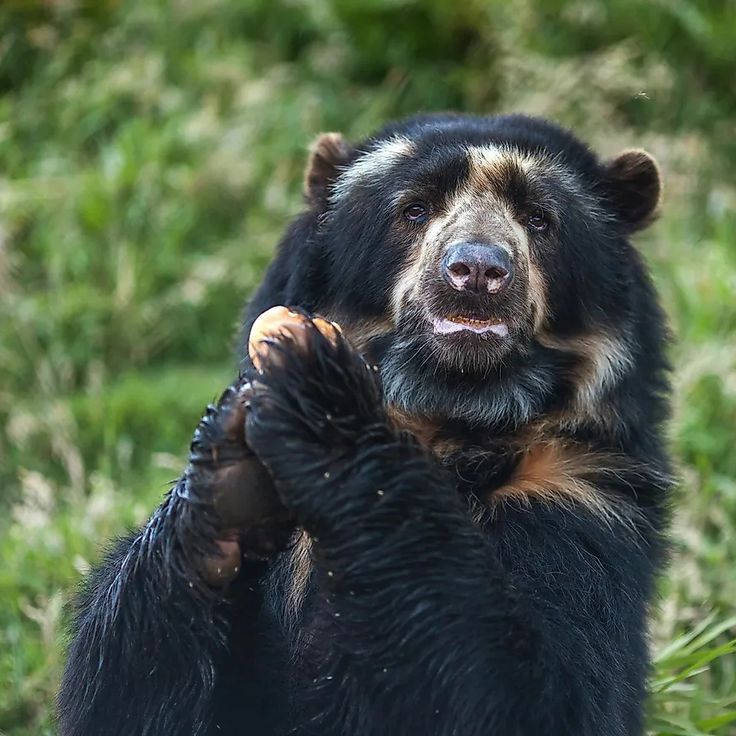
The red panda is a small, russet-furred, tree-climbing mammal that lives in the cool bamboo forests of the eastern Himalayas and southwestern China. Despite the name and the file location, the red panda is not a bear and is not closely related to the giant panda.
It is the sole surviving member of its own family - Ailuridae - and its nearest living relatives are weasels, raccoons, and skunks rather than the great black-and-white bears of Sichuan. This entry sits under the site's "bears" navigation purely for convenience. Scientifically, Ailurus fulgens occupies a branch of the tree of life entirely its own.
This guide covers every major aspect of red panda biology and ecology: naming history, anatomy, bamboo-driven physiology, behaviour, reproduction, range, subspecies, conservation status, and the strange cultural afterlife of the species - from nineteenth-century zoological naming fights to the Mozilla Firefox logo. It is a reference entry with specifics: grams, metres, percentages, and verified records rather than vague generalities.
Etymology, Classification, and a Naming Dispute
The red panda was scientifically described and named Ailurus fulgens in 1825 by French zoologist Frederic Cuvier, who worked from a single specimen collected in the Himalayas. The genus name Ailurus is Greek for "cat", and fulgens is Latin for "shining" or "bright" - a direct nod to the animal's vivid red-orange coat. Cuvier called it "quite the most handsome mammal in existence".
The common English name "panda" arrived with that 1825 description. Its ultimate origin is uncertain but most linguists trace it to the Nepali word nigalya ponya, roughly "bamboo footed" or "bamboo eater", by way of the related Sino-Tibetan term poonya. Regardless of the exact route, one thing is clear: the word "panda" meant red panda first.
The giant panda (Ailuropoda melanoleuca) was not scientifically described until 1869, more than forty years later, when Western naturalists encountered a second bamboo-eating animal in the Sichuan mountains and borrowed the existing name. The "original" panda is the small red one; the giant panda is - by naming history - a latecomer.
Taxonomically, the red panda has been a problem for nearly two centuries. It has been placed in Ursidae (bears), Procyonidae (raccoons), and even its own subfamily inside various larger families. Molecular evidence finally settled the question in the late twentieth century: the red panda is the sole species in its own family, Ailuridae.
That family sits within the superfamily Musteloidea alongside mustelids (weasels, otters, badgers), procyonids (raccoons, coatis), and mephitids (skunks). The lineage split from the rest of Musteloidea an estimated 25 to 40 million years ago. The red panda is therefore an evolutionary relic - the last survivor of a formerly diverse group known from fossil genera such as Parailurus and Simocyon.
The full classification:
- Kingdom: Animalia
- Phylum: Chordata
- Class: Mammalia
- Order: Carnivora
- Superfamily: Musteloidea
- Family: Ailuridae
- Genus: Ailurus
- Species: A. fulgens
One Species or Two? The 2020 Proposal
For most of its history the red panda has been treated as a single species with two subspecies: A. f. fulgens (the Himalayan red panda) and A. f. styani (the Chinese red panda, also called Styan's red panda).
In 2020 a genetic study published in Science Advances analysed genome-wide data from wild individuals across the range and argued that the two subspecies are genetically distinct enough, and have been separated long enough, to qualify as full species. The study proposed splitting Ailurus into:
- Ailurus fulgens - the Himalayan red panda, found west of the Yalu Zangbu (Brahmaputra) river in Nepal, India, Bhutan, and parts of southern Tibet
- Ailurus styani - the Chinese red panda, found east and north of that river in Myanmar and southwestern China
The proposed split dates to roughly 250,000 years ago, with the upper Yalu Zangbu river gorge acting as a geographic barrier. The Chinese species is slightly larger, has a more intensely red face, and shows distinct cranial proportions. Not every taxonomic authority has accepted the split yet, and many conservation bodies still treat Ailurus as a single species pending further review.
If the split stands, it has major consequences - each population is smaller, more isolated, and more vulnerable than the combined species was previously thought to be.
For the rest of this entry, "red panda" refers to Ailurus fulgens in the traditional broad sense.
Size and Physical Description
Red pandas are small and low-slung, roughly the size of a large domestic cat, with a long bushy tail that nearly doubles their total length.
Adult dimensions:
- Head and body length: 50-64 cm
- Tail length: 28-59 cm
- Shoulder height: around 25 cm
- Weight: 3-6 kg (males slightly heavier than females)
Newborn cubs:
- Length: around 15 cm
- Weight: 100-130 g - comparable to a small apple
The coat is the species' most recognisable feature. The upper body is rich chestnut to deep red-orange, the underparts and legs are glossy black, and the face is white with bold reddish-brown "tear streaks" running from each eye to the corners of the mouth. The tail carries six to eight alternating rings of lighter and darker red.
The double coat is thick and dense - an outer layer of coarse guard hairs sheds water and snow, while a soft woolly undercoat traps warm air against the skin. Even the soles of the feet are covered in fur, providing insulation and grip on cold bark and icy branches.
This colouring is excellent camouflage in the red panda's actual habitat. Himalayan fir and hemlock forests are draped in reddish-brown moss and lichen, and the bamboo understory is full of russet leaf litter. A motionless red panda curled into the crook of a mossy branch is almost invisible from below, which is useful when the main predators - snow leopards and martens - hunt from above and beside.
The Pseudo-Thumb and Climbing Anatomy
The red panda shares one of the most famous examples of convergent evolution in mammals with the giant panda: both species have a pseudo-thumb. This is not a true thumb. It is an enlarged and elongated radial sesamoid bone - a small wrist bone that in most mammals is irrelevant, but in pandas has been stretched and reshaped into a functional sixth digit.
When the animal closes its hand around a bamboo stem, the pseudo-thumb presses from the opposite side like an opposable thumb, producing a power grip.
Red pandas and giant pandas evolved this trait independently. Their lineages split tens of millions of years ago and do not share a bamboo-gripping common ancestor. The structural solution - repurpose the radial sesamoid - was arrived at twice, in two unrelated animals, because bamboo selects strongly for it.
Fossil evidence suggests the red panda lineage may have evolved its pseudo-thumb millions of years before becoming a committed bamboo specialist, possibly first using it for arboreal climbing rather than feeding.
The red panda is also a specialist tree climber. Key adaptations include:
- Sharp, semi-retractable curved claws for gripping bark
- Flexible ankle joints that rotate almost 180 degrees, allowing head-first descent down tree trunks
- A low centre of gravity and a long bushy tail for balance on narrow branches
- Fur-covered foot pads for grip and insulation
- A pseudo-thumb that doubles as a climbing aid on slender stems
The head-first descent is particularly distinctive. Most arboreal mammals have to back down tree trunks because their joints do not rotate far enough. The red panda joins a short list - including margays and squirrels - that can climb straight down face-first. This is possible because of that 180-degree ankle rotation, which allows the hind feet to turn fully backwards and grip the bark while the front feet walk down.
Bamboo and a Carnivore's Gut
Red pandas are classified under order Carnivora and retain most of the anatomy of a carnivore - a simple short gut, canine teeth, and a relatively meat-adapted skull. Yet more than 95% of the wild diet is plant matter, most of it bamboo leaves and tender shoots. This is one of the most severe dietary mismatches in mammalian ecology.
Bamboo is a poor food. It is low in calories, low in protein, and high in indigestible fibre. True herbivores handle bamboo with long, fermentation-heavy gut systems that extract energy over many hours. Red pandas do not have that system. They have a carnivore's gut. As a result, they digest only about 24% of the bamboo they eat - the rest passes through almost unchanged. Studies of captive red pandas show food transit times of 2 to 4 hours, far too short for efficient fermentation.
The red panda compensates through sheer volume and long feeding sessions.
| Feeding metric | Approximate value |
|---|---|
| Daily feeding time | 10-13 hours |
| Bamboo leaves consumed per day | 1.5-4 kg |
| Shoots in season | up to 20,000 individual shoots per day |
| Digestive efficiency | around 24% |
| Proportion of diet that is bamboo | 85-95% in most populations |
During early summer the red panda targets new bamboo shoots, which are more digestible and higher in protein than mature leaves. This shoot-eating window is when animals gain fat and body condition for the rest of the year. Outside the shoot season they rely on leaves, which can drop their calorie intake close to subsistence levels. Periodic mass bamboo die-offs - bamboo species flower and die synchronously every few decades - can trigger localised red panda starvation events.
Supplementary foods include:
- Wild fruits and berries (especially ripe mountain ash and bilberry)
- Acorns and hard mast
- Lichens and mosses
- Bird eggs and nestlings
- Insects, grubs, and occasionally small rodents
- Carrion from snow leopard kills
Red pandas have a relatively sweet tooth. Laboratory work has found that, unlike many true carnivores, they retain functional sweet-taste receptors and readily accept artificial sweeteners. This is consistent with a long dietary history of sugary fruit and tender shoots.
Behaviour and Social Life
Red pandas are mostly solitary outside the breeding season. Adults maintain home ranges that overlap somewhat between sexes but are defended against same-sex intruders. Males typically hold ranges of around 1.7 to 11 square kilometres; female ranges are smaller, usually 1 to 4 square kilometres.
The species is crepuscular - most active around dawn and dusk - with a secondary activity peak in the middle of the night during summer. In winter, when calorie demands rise and daylight is scarce, activity can extend through more of the daytime. During the hottest part of the day (which is still cool at 3,000 metres) red pandas sleep curled up in the forks of large trees, tails wrapped over the face like a blanket.
Communication relies heavily on scent. Each foot carries a scent gland between the pads, so every branch a red panda walks along receives a light chemical signature. In addition, both sexes use anal scent glands to mark prominent rocks, logs, and trunks. These marks convey identity, sex, reproductive state, and territory boundaries.
Vocalisations are limited but distinctive - a low whistle ("twitter"), a bleat-like squeal, a huff-quack alarm call, and a high-pitched distress cry from cubs. The huff-quack in particular is unmistakable and has even become an Internet meme under the label "red panda quack".
Red pandas are generally peaceful but can defend themselves effectively. A cornered animal rears up on its hind legs with front paws raised, hisses, and swipes with sharp claws. They can also puff up the fur and tail to appear considerably larger than they are - a display mostly used against forest-floor predators.
Reproduction and Cubs
Red panda reproduction is tightly seasonal and carefully timed. Mating takes place from mid-January to early March, when females enter oestrus for only 1 to 3 days. Males may travel several kilometres through snowy forest to find a receptive female, navigating by scent trail. Courtship is brief, consisting of mutual scent-marking and short bouts of chasing, before a few hours of repeated mating.
Females show a form of delayed implantation. The fertilised egg does not implant in the uterine wall immediately; implantation and true gestation begin weeks later and last around 112 to 158 days depending on body condition and latitude. This variable timing allows cubs to be born in June or July, synchronising birth with the seasonal peak of bamboo shoots and warm weather.
A few weeks before giving birth, the female builds a nest - usually in a hollow tree, a rock crevice, or a dense thicket - and lines it with leaves, grass, and moss. Litters typically contain 1 to 2 cubs, occasionally up to 4. Cubs are born blind, helpless, covered in dense grey-brown fur, and almost silent - an anti-predator adaptation for animals that will spend their first months unattended for hours at a time.
Cub development milestones:
- Birth: 100-130 g, blind, ears closed
- Week 2-3: ears open, dark fur begins to redden
- Week 4-6: eyes open
- Month 3: first emergence from nest, tentative climbing
- Month 5-6: weaning begins, solid bamboo introduced
- Month 12: nearly adult size
- Month 18-24: sexual maturity, dispersal from mother
The mother alone raises the cubs; males play no role in rearing. Mortality in the first year of life is severe. Estimates from wild populations range from 30% to over 50% mortality before cubs reach independence. Causes include predation (martens, large birds of prey, and snow leopards), starvation during bamboo shortages, and exposure in exposed or disturbed nests.
Combined with slow reproduction - one litter per year at best, often less in lean years - this pattern leaves the species vulnerable to any increase in habitat disturbance.
Range, Habitat, and Elevation
The red panda lives in one of the most demanding mammal habitats on Earth: the middle-elevation temperate forests of the eastern Himalayas and the mountain spine of southwestern China.
Range by country:
| Country | Range details |
|---|---|
| Nepal | Central and eastern mountain ranges including Langtang and Kanchenjunga |
| India | Sikkim, West Bengal (Darjeeling), Arunachal Pradesh |
| Bhutan | Forested middle hills across most of the country |
| Myanmar | Northernmost Kachin State, in a narrow high-elevation strip |
| China | Yunnan, Sichuan, and parts of Xizang (Tibet) |
Preferred habitat is cool, moist, old-growth temperate forest with:
- Elevation between 2,200 and 4,800 metres
- Overstory of fir, hemlock, spruce, or oak
- Dense bamboo understory (primarily Bashania, Fargesia, Yushania)
- Abundant mossy fallen logs and old hollow trees for denning
- Year-round access to water
- Winter temperatures commonly below zero but rarely below minus 25 degrees Celsius
Red panda distribution is naturally fragmented because the required combination of elevation, temperature, bamboo, and forest structure occurs only in specific bands along mountain slopes. Modern human land use - terraced farming, road cutting, timber harvest, and pastoralism - has further fragmented what was already patchy habitat. Many remaining populations now live in small isolated pockets of forest that are too small to support long-term gene flow.
Predators and Mortality
Adult red pandas have relatively few predators because they spend most of their time high in trees in cold, remote forest. Documented predators include:
- Snow leopard (primarily in Nepal and China)
- Common leopard (at lower elevations)
- Yellow-throated marten (especially on cubs)
- Golden eagle and other large raptors (on cubs)
- Domestic dogs (in human-disturbed areas)
Cub mortality from marten and raptor predation is probably the single largest natural mortality source. Dogs are a growing and less natural problem, particularly in disturbed habitat mosaics near villages where free-ranging domestic dogs kill both cubs and adults and also transmit canine distemper virus. Disease - distemper, parasitic infections, and tick-borne illnesses - has emerged as a significant threat to captive and wild populations in recent decades.
Conservation Status and Threats
The IUCN Red List classifies red pandas as Endangered with a decreasing population trend. Current estimates place the global wild population at fewer than 10,000 mature individuals, with some more pessimistic estimates as low as 2,500. The species is listed on CITES Appendix I, banning most international trade, and is protected nationally in all range countries.
Primary threats:
- Habitat loss and fragmentation. Logging, agricultural expansion, road-building, and hydropower development have cleared or isolated huge areas of red panda habitat. Remaining forest patches are often too small to support viable populations.
- Poaching. Red pandas are killed for their distinctive red fur, used in hats and clothing, and for the illegal international pet trade. Cubs are especially targeted because they can be sold to private collectors. Poaching has increased in some regions despite international bans.
- Bycatch. Snares set for musk deer and wild boar frequently catch and kill red pandas as unintended bycatch.
- Climate change. Bamboo zones shift upslope as temperatures rise. In many parts of the range the upward shift is faster than forests can follow, producing a shrinking habitat envelope squeezed between warming lower forests and treeless high alpine terrain.
- Disease. Canine distemper virus, spread largely through free-ranging domestic dogs, has caused significant mortality in some areas and is a major concern for small isolated populations.
- Genetic fragmentation. Small isolated populations accumulate deleterious alleles and lose adaptive variation, compounding the other threats.
Conservation measures include protected areas across the range (Langtang and Kanchenjunga in Nepal, Singalila in India, Jigme Dorji in Bhutan, various reserves in China), community-based forestry programmes, anti-poaching patrols, and a coordinated international captive breeding programme managed through regional zoo associations.
Nepal in particular has invested heavily in community forestry, which has produced measurable recovery in some local populations. Captive breeding now maintains a genetically managed assurance population of several hundred red pandas in zoos worldwide, though captive animals cannot easily be reintroduced to the wild because of the complex bamboo-specific skills they must learn from a mother.
Red Pandas in Culture
The red panda is a recent arrival in global popular culture, but has quickly become one of the most recognisable small mammals on the planet. Two cultural connections stand out.
The word "panda" itself. Because the red panda was named first, every subsequent use of "panda" for other bamboo-eating mammals traces back to this small Himalayan species. When the giant panda was scientifically described in 1869, European naturalists reached for the existing word - the red panda's word - and applied it to the new species.
The giant panda was originally called the parti-coloured bear in English; "giant panda" came later, by analogy with the red panda, not the other way around. The red panda is, in a real linguistic sense, the original panda.
The Firefox logo. "Firefox" is an old English common name for Ailurus fulgens, alluding to the animal's fox-like red coat and bushy tail. It is not a Mozilla invention. When the Mozilla Foundation rebranded its browser from Phoenix to Firebird to Firefox in 2004, the naming team deliberately chose a word that was both available as a trademark and evocative.
The official project mascot is a stylised fire-coloured animal that most casual users assume is a flaming fox - but the actual namesake is the red panda. Mozilla has leaned into the connection, partnering with red panda conservation organisations and using the species in outreach materials.
Beyond these two cases, the red panda is a frequent star of Himalayan folklore (particularly in Nepal, where it is called habre or nigalya ponya), Chinese watercolour painting, and an ever-expanding list of internet memes built around its facial expressions, quack-like alarm call, and stand-on-hind-legs defensive posture.
Red Pandas in Captivity
Roughly 800 to 1,000 red pandas live in accredited zoological institutions worldwide, managed as a coordinated genetic population through regional species survival plans. Captive red pandas live 14 to 15 years on average, with several documented individuals surpassing 18 years of age.
Husbandry requirements are demanding. Captive red pandas need:
- A cool climate (or air-conditioned enclosures in warm regions)
- Constant access to fresh bamboo (adult consumption: up to 4 kg per day)
- Vertical space with climbing structures and hollow-tree-like retreats
- Low-stress enclosures with visual barriers from visitors
- Careful veterinary monitoring for canine distemper, parasites, and heart disease
Breeding in captivity is reasonably reliable but cub survival remains a challenge. First-year mortality in some institutions still exceeds 30%, and keepers have learned that leaving first-time mothers undisturbed in the first two weeks after birth is critical. Many zoos use remote nest-box cameras rather than direct observation to minimise disturbance.
Reintroduction has been attempted on a small scale, mostly in Nepal and China. Results are mixed. Captive-born individuals often struggle to identify suitable bamboo species, find wild food sources, and avoid predators. Most conservation biologists now treat captive populations primarily as an assurance against wild extinction, with in-situ protection of wild habitat as the core strategy.
Related Reading
- Giant Panda (Ailuropoda melanoleuca)
- Polar Bear (Ursus maritimus)
- Brown Bear
- Bears of the World: Power, Intelligence, and Survival
References
Relevant peer-reviewed and governmental sources consulted for this entry include the IUCN Red List assessment for Ailurus fulgens, the Red Panda Network technical reports, Hu Y. et al. (2020) Science Advances on genomic evidence for two red panda species, Glatston A.R.
(ed.) Red Panda: Biology and Conservation of the First Panda (2nd ed., 2021), and the coordinated studbook publications of the European Association of Zoos and Aquaria (EAZA) and the Association of Zoos and Aquariums (AZA) red panda species survival plans.
Specific population figures reflect the most recent available surveys from Nepal's Department of National Parks and Wildlife Conservation, the Wildlife Institute of India, and Chinese mammal monitoring programmes.
Frequently Asked Questions
Are red pandas actually pandas, or bears?
Neither. Despite the shared common name, red pandas (Ailurus fulgens) are not closely related to giant pandas, and they are not bears. They are the sole living species of family Ailuridae, a lineage that split from the rest of Carnivora roughly forty million years ago. Their closest surviving relatives are the mustelid-procyonid-mephitid cluster - weasels, raccoons, and skunks - not pandas or bears.
The two ‘pandas’ share a name, a bamboo diet, and a pseudo-thumb, but that is convergent evolution, not common ancestry. This animal is filed under the ‘bears’ navigation on this site only because no dedicated Ailuridae category exists yet.
How big are red pandas?
Red pandas are small - roughly the size of a domestic cat with a much longer tail. Head and body length ranges from 50 to 64 centimetres, tail length from 28 to 59 centimetres, and adult weight from 3 to 6 kilograms. Males are slightly larger than females but sexual dimorphism is modest. Shoulder height is about 25 centimetres.
The species looks considerably bigger than it is because of the dense red-orange double coat and the huge bushy tail, both of which are survival adaptations for cold high-altitude forests rather than indicators of body mass.
Where do red pandas live?
Red pandas live in a narrow band of temperate broadleaf and coniferous forest along the eastern Himalayas and the mountains of southwestern China, at elevations between 2,200 and 4,800 metres. Their range crosses five countries: Nepal, northern India (Sikkim, West Bengal, Arunachal Pradesh), Bhutan, northern Myanmar, and southwestern China (Yunnan, Sichuan, Xizang).
They require specific conditions - cool temperatures, dense bamboo understory, old trees with moss and lichen for cover, and reliable water. This habitat is naturally fragmented and is being further fragmented by logging, road-building, and agricultural expansion.
What do red pandas eat?
Red pandas are classified by anatomy as carnivores but behave as bamboo specialists. Roughly ninety-five per cent of their wild diet is bamboo leaves and tender shoots, supplemented by fruit, acorns, roots, lichens, bird eggs, small mammals, and insects when available.
Because their digestive tract is still that of a carnivore - a simple short gut without the fermentation chambers of a true herbivore - they extract only about a quarter of the nutrients from the bamboo they eat. To compensate they spend thirteen hours a day feeding, eating roughly twenty to thirty per cent of their body weight in bamboo every day during peak seasons.
Are red pandas endangered?
Yes. The IUCN Red List classifies red pandas as Endangered with a decreasing population trend. Current estimates place the wild population at fewer than 10,000 mature individuals, possibly as low as 2,500, split across fragmented Himalayan and Chinese subpopulations.
Primary threats include deforestation for agriculture and timber, habitat fragmentation from roads and settlements, poaching for the fur and pet trade, bycatch in snares set for other animals, and climate change shifting bamboo zones upslope faster than forests can follow. Conservation efforts include protected areas, anti-poaching patrols, community forestry programmes in Nepal, and coordinated captive breeding in zoos worldwide.
How long do red pandas live?
Wild red pandas typically live 8 to 10 years, limited by predation, starvation during bamboo die-offs, and disease. In captivity they routinely reach 14 to 15 years, with several documented individuals passing 18 years under good zoo care. Sexual maturity arrives at about 18 months, though females rarely breed successfully before age 2 to 3.
Reproduction is slow - roughly one litter per year at best, with 1 to 4 cubs per litter, and first-year cub mortality in the wild can exceed 50 per cent. This combination of slow reproduction and high juvenile mortality makes the species extremely vulnerable to habitat loss.
How are red pandas related to giant pandas?
They share a name and not much else. Giant pandas (Ailuropoda melanoleuca) are bears, family Ursidae. Red pandas (Ailurus fulgens) are the sole living members of family Ailuridae, a separate lineage within the carnivoran superfamily Musteloidea. The two species last shared a common ancestor roughly forty million years ago.
Both evolved a bamboo diet and an extended wrist sesamoid bone that works like an opposable thumb, but they evolved these traits independently - a classic example of convergent evolution. Ironically, the red panda carried the name ‘panda’ first; the giant panda inherited the label only after Western scientists described it in 1869.
Why is there a red panda in the Firefox logo?
The Mozilla Firefox browser is named after an older English common name for the red panda: ‘firefox’ or ‘fire fox’, referring to the animal’s bright fox-like red fur and bushy tail. When Mozilla renamed its browser in 2004, designers worked with a stylised version of the red panda rather than a true fox to reflect that etymology.
The name ‘firefox’ is not Mozilla’s invention - it has been used intermittently for Ailurus fulgens since at least the nineteenth century. So the Firefox logo is an endangered Himalayan bamboo specialist, not a fox.