
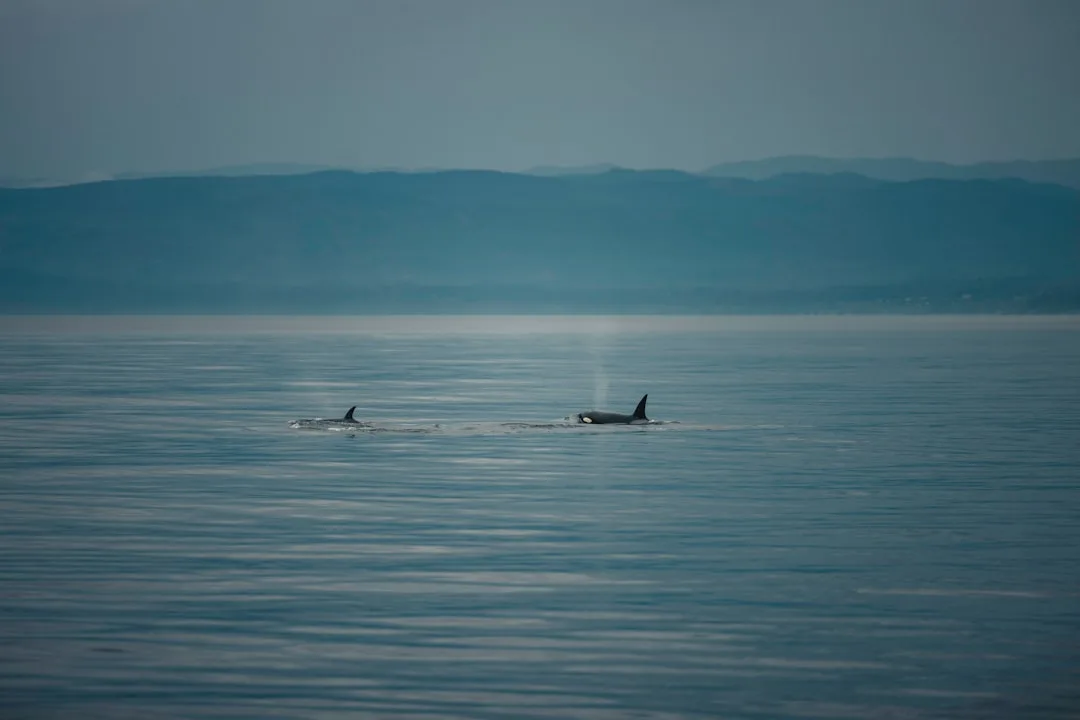
The orca, better known by its centuries-old common name 'killer whale', is the largest member of the dolphin family and the apex predator of every ocean on Earth. Despite the forbidding label, Orcinus orca is not a whale in the strict taxonomic sense. It is a gigantic dolphin - fast, intelligent, socially intricate, culturally complex, and, in the wild, essentially harmless to humans.
No other predator on the planet hunts such a wide range of prey, from schooling herring to blue whales, and none has adapted so successfully to every marine environment from the Arctic pack ice to the tropics.
This guide covers every aspect of orca biology and behaviour: size and physical features, global distribution, ecotypes and dialects, diet and hunting strategies, reproduction and matrilineal society, intelligence, menopause, conservation threats, and the complicated relationship between orcas and humans. It is a reference entry, not a summary - so expect specifics: measurements, populations, hunting records, and documented cultural traditions.
Etymology and Classification
The scientific name Orcinus orca derives from the Latin Orcus, a Roman god of the underworld, and orca, meaning 'barrel' or 'large-bellied vessel'. The combination reflects both the species' size and the fearsome reputation Europeans projected onto it from earliest encounters.
The common name 'killer whale' is older than it looks - Basque whalers called them asesina ballenas or 'whale killers' after seeing coordinated orca pods attack and kill large baleen whales. Sailors eventually swapped the word order and the label 'killer whale' stuck in English.
Orcas sit firmly inside the toothed whale suborder Odontoceti, inside the family Delphinidae - the oceanic dolphins. Of the roughly thirty-eight dolphin species alive today, orcas are by far the largest. The genus Orcinus was erected in 1860 by John Edward Gray and currently contains only one universally recognised species, though the question of whether that single species should be split into several is one of the most active debates in marine mammal taxonomy.
Taxonomic placement:
- Kingdom: Animalia
- Phylum: Chordata
- Class: Mammalia
- Order: Cetacea
- Suborder: Odontoceti
- Family: Delphinidae
- Genus: Orcinus
- Species: O. orca
Size and Physical Description
Orcas are the largest dolphins and among the largest active predators on Earth. Sexual dimorphism is pronounced - adult males are substantially larger than females and carry radically different dorsal fins.
Males:
- Length: 6-8 metres typical, up to 9.8 m recorded
- Weight: 6,000-10,000 kg
- Dorsal fin: 1.2-1.8 m tall, straight and triangular
- Pectoral flippers: up to 2 m long, paddle-shaped
Females:
- Length: 5-7 metres
- Weight: 3,000-4,000 kg
- Dorsal fin: 0.6-0.9 m tall, curved and falcate
- Longer adult lifespan than males
Calves at birth:
- Length: 2.0-2.6 metres
- Weight: approximately 180 kg
- Orange-tinted pigmentation on the white patches, fading to clean white within the first year
The body plan is unmistakable: glossy black on top, bright white on the underside and flanks, with a white oval eye patch and a grey 'saddle' behind the dorsal fin. The exact shape of the saddle and eye patch varies by ecotype and is used by researchers to identify individual animals. Combined with distinctive nicks, scars, and fin profiles, photo-identification allows scientists to track individual orcas across decades.
Orcas are built for speed and power rather than deep diving. They can accelerate to 56 kilometres per hour in short bursts - faster than any other marine mammal over comparable distances - and sustain 11 to 13 kilometres per hour over long travel. Typical dives last 1 to 4 minutes, though dives of more than 10 minutes and depths beyond 250 metres have been recorded.
Global Distribution and Habitat
Orcas are the most widely distributed mammal on Earth after humans. They occupy every ocean, from the edge of the Antarctic ice shelf to the Arctic pack ice, and every latitude between. They appear off Iceland, Norway, Alaska, British Columbia, Patagonia, New Zealand, South Africa, the Gulf of California, the Azores, Hawaii, and almost anywhere else one cares to look.
Density is highest in cold, productive waters. The Norwegian Sea, the North Pacific, the Southern Ocean, and the waters off eastern Russia and the Aleutian Islands host the largest populations. In tropical seas orcas are rarer but present - transient sightings occur off the coasts of the Philippines, Brazil, and Papua New Guinea.
Home ranges differ enormously by population. Resident killer whales in the North Pacific occupy ranges of a few thousand square kilometres and return to the same summer feeding grounds year after year. Offshore orcas wander tens of thousands of kilometres across open ocean. Global estimates place the total population at roughly 50,000 individuals, though this figure carries significant uncertainty because offshore and ice-edge populations remain poorly surveyed.
Ecotypes - One Species or Several?
One of the central mysteries of orca biology is whether Orcinus orca should be considered a single species at all. Across different regions, orcas display such distinct body plans, diets, vocalisations, and genetics that many biologists argue they represent multiple species in the process of separating. More than thirty ecotypes have been described worldwide. Three are defined in the North Pacific, at least four in Antarctic waters, and several more in the North Atlantic and elsewhere.
North Pacific ecotypes:
| Ecotype | Diet | Group size | Key behaviour |
|---|---|---|---|
| Resident | Fish - mainly Chinook salmon | 10-40 | Stable matrilineal pods, chatty vocal repertoire |
| Transient (Bigg's) | Marine mammals | 2-6 | Quiet while hunting, wide-ranging |
| Offshore | Sharks and fish | 20-75 | Smaller body, worn teeth from shark skin |
Antarctic ecotypes:
| Type | Primary prey | Notable feature |
|---|---|---|
| A | Minke whales | Largest Antarctic orca, open-water hunter |
| B | Seals on ice floes | 'Pack ice' orca, uses coordinated wave-washing to unseat seals |
| C | Fish, especially toothfish | Smallest ecotype, Ross Sea |
| D | Fish and squid | Sub-Antarctic, bulbous melon and tiny eye patch - likely a separate species |
Residents and transients share overlapping waters for millennia without interbreeding. Their mitochondrial DNA diverged an estimated 750,000 years ago. Their vocal repertoires are entirely different - transients are largely silent while hunting, while residents are prolific vocalists. Field biologists can reliably tell them apart on sight.
Diet and Hunting
Orcas are the most versatile hunters in the ocean. Individual ecotypes specialise narrowly - residents will starve rather than eat seals, and transients will pass through schools of salmon without feeding - but the species as a whole eats almost everything in the sea.
Documented prey:
- Fish: salmon, herring, mackerel, cod, tuna, halibut, toothfish
- Marine mammals: seals, sea lions, porpoises, dolphins, otters
- Whales: minke, grey, humpback, sperm, blue (calves especially)
- Sharks: great white, mako, sleeper shark, blue shark, sevengill
- Rays and skates
- Seabirds: penguins, cormorants
- Sea turtles
- Cephalopods: squid and octopus
Hunting techniques vary by ecotype and are often culturally transmitted - parents and aunts teach calves specific strategies that persist within a lineage across generations.
- Carousel feeding. Norwegian orcas circle herring schools, driving them into tight balls near the surface, then slap the ball with their tail flukes to stun dozens of fish at once.
- Intentional beaching. At Peninsula Valdes in Argentina and the Crozet Islands in the southern Indian Ocean, orcas surf onto shingle beaches to snatch sea lion or elephant seal pups, then wriggle back into the surf. The technique requires years of training and is known to only a handful of individuals per population.
- Wave-washing. Antarctic Type B orcas swim shoulder to shoulder in a coordinated line to produce a surge wave that lifts seals off drifting ice floes. Multiple attempts are often required, and juveniles observe carefully before participating.
- Shark liver extraction. Off South Africa, a pair of orcas - nicknamed Port and Starboard - have been filmed pinning great white sharks upside down to induce tonic immobility, then making a surgical cut behind the pectoral fin to remove only the calorie-dense liver. Carcasses wash up on Gansbaai beaches with identical wounds and no livers.
- Whale pursuit. Transient and Antarctic Type A orcas hunt large baleen whales by isolating calves from mothers, then drowning the calf by preventing it from surfacing to breathe. Hunts can last hours.
An adult orca consumes 45 to 180 kilograms of food per day. Residents specialising in Chinook salmon are among the most selective predators known - Chinook make up over 95 percent of Southern Resident diet despite being less abundant than other salmon species.
Social Structure - Matriarchs and Menopause
Resident orca society is organised around the matriline: a mother, her adult sons and daughters, and the daughters' offspring. Sons and daughters do not disperse at maturity. They remain with their mother for her entire life, which can be eight or nine decades. Several related matrilines form a pod; several pods form a clan defined by a shared vocal dialect; and several clans form a community that shares overlapping range and occasional social contact.
Killer whales are one of only five confirmed mammal species in which females undergo true menopause - alongside humans, short-finned pilot whales, beluga whales, and narwhals. Female orcas stop reproducing around age 40 but often live another 30 to 50 years.
The evolutionary explanation, backed by decades of field observation by Center for Whale Research and University of Exeter biologists, is the 'grandmother hypothesis': post-reproductive females accumulate ecological knowledge - where salmon are in lean years, when to avoid certain waters - and share it with their descendants, raising the survival odds of grandchildren.
The data support this directly. When a matriarch dies, her adult sons are between two and eight times more likely to die within the following year. Adult daughters see a smaller but still measurable increase in mortality. No comparable effect appears for more distant kin.
Resident pod structure:
- Matriarch: post-reproductive female, knowledge holder
- Adult sons: remain lifelong, travel with mother
- Adult daughters: remain lifelong, produce next generation
- Grandchildren: form core of the pod's future
- Temporary male visitors for mating from other pods
Vocal Dialects and Culture
Resident orca pods produce a repertoire of 7 to 17 discrete pulsed calls that are stable across decades and unique to that matriline. Calves learn the calls from their mothers and older relatives during the first two years of life. Related matrilines share some calls; unrelated pods share none. Acoustic biologists can identify an individual pod simply from a short audio recording.
This is one of the most thoroughly documented examples of non-human culture in any species. The calls are not genetic - they are socially transmitted, they change slowly over generations in ways analogous to human linguistic drift, and entire call repertoires can disappear when a matriline goes extinct. Researchers working in Iceland, Norway, the North Pacific, and Kamchatka have each built dialect libraries that allow them to track social structure from recordings alone.
Orcas also show remarkable vocal flexibility outside their native dialects. Captive orcas have been recorded mimicking human words, dog barks, and the calls of dolphins they share pools with. Wild orcas in mixed-species groups sometimes produce sea lion and dolphin vocalisations, apparently deliberately. This kind of cross-species vocal learning is rare in mammals and otherwise documented mainly in parrots and some songbirds.
Reproduction and Life Cycle
Orcas are slow reproducers. Females reach sexual maturity around age 10 to 15. First-time mothers often lose their calves - inexperience is costly - and calf mortality in the first year can exceed 40 percent. Mature females produce one calf every three to ten years, with an average birth interval of around five years.
Gestation lasts 15 to 18 months - among the longest of any cetacean. Calves are born tail-first in open water and nursed for at least a year, often two or more. Weaning is gradual, and young orcas continue to travel with their mothers for life even after they can feed independently.
Life stages:
- Calf: 0-2 years, fully dependent on mother's milk
- Juvenile: 2-10 years, learning hunting techniques and dialect
- Subadult: 10-15 years, females reach first ovulation, males approach sexual maturity
- Adult: 15-40 years, reproductive peak
- Post-reproductive female: 40-80+ years, matriarch role
- Adult male: 20-60 years, rarely survives his mother by long
Males reach sexual maturity around 15 but do not reach full physical size - with the towering dorsal fin - until their mid-twenties. The massive dorsal only grows after maturity, which is why juvenile males are often mistaken for females at first sighting.
Intelligence and Brain Biology
Orcas have the second-largest brain of any animal on Earth, averaging around 6.8 kilograms - about four times the mass of a human brain. Sperm whales hold the top spot. The encephalisation quotient is lower than a human's but comparable to that of great apes. What stands out on neuroanatomical examination is the elaboration of the limbic system, the emotional and social processing region.
The paralimbic cortex is proportionally larger and more folded than in humans, which some researchers take as evidence of an unusually rich emotional and social life.
Behavioural studies support the hardware. Orcas exhibit:
- Tool use (some populations strip kelp blades to scratch themselves)
- Cooperative hunting with role specialisation
- Cultural transmission of hunting techniques and vocalisations
- Evidence of self-recognition in mirror tests
- Long-term memory of individual humans (research divers recognised decades later)
- Grief-like behaviour (the 2018 J35 'Tahlequah' incident, where a mother carried her dead calf for 17 days across 1,600 kilometres)
Conservation Status and Threats
The IUCN lists Orcinus orca globally as Data Deficient. The designation reflects both the species' wide distribution and the growing possibility that it represents several distinct species with very different conservation statuses. Specific populations face severe threats.
Populations of concern:
| Population | Status | Approximate count |
|---|---|---|
| Southern Resident (US/Canada) | Endangered | ~75 |
| Strait of Gibraltar / Iberian | Critically Endangered | ~40 |
| Mediterranean | Functionally extinct | <10 |
| AT1 Transients (Alaska) | Functionally extinct | 7 |
| Scottish west coast | Functionally extinct | 8 |
Primary threats:
- Persistent organic pollutants. Orcas accumulate PCBs, PBDEs, and PFAS at among the highest levels of any marine animal because they sit at the very top of the food chain. PCB levels in some populations exceed thresholds known to impair reproduction and immune function, and contaminated mothers pass enormous loads to calves through milk.
- Prey depletion. Southern Residents rely overwhelmingly on Chinook salmon, which have declined across their range due to habitat loss, hatchery effects, dams, and fishing pressure. Population recovery tracks salmon abundance almost year by year.
- Vessel noise and disturbance. Orcas rely on echolocation to hunt. In high-traffic areas, engine noise masks the clicks and disrupts hunting success. Modelling studies suggest Southern Residents lose significant foraging time to vessel noise in the summer.
- Entanglement and ship strike. Increasing shipping and fishing activity in Arctic and Antarctic waters raises both collision and bycatch risk.
- Climate change. Melting sea ice opens new orca ranges in the Arctic, which pressures beluga and narwhal populations historically protected from orca predation by ice cover.
- Live capture history. Between 1961 and the late 1970s, at least 166 orcas were captured for aquariums, and at least 53 died during capture. The Southern Resident population has still not recovered demographically from those losses.
Orcas and Humans
Orcas and humans have one of the most lopsided predator-prey relationships on the planet. No wild orca has ever verifiably killed a person. Meanwhile humans have hunted orcas for centuries, shot them from fishing boats as competition, captured them for display, polluted their prey, and driven several populations to functional extinction.
Why wild orcas do not attack humans is one of the genuine puzzles of marine biology. Leading hypotheses include cultural transmission of prey preferences (humans are simply not on any pod's menu), the possibility that orcas recognise humans as fellow sentient beings, and the fact that humans are neither energetically efficient prey nor common encounters.
Captive orcas, under the psychological strain of confinement, have killed four trainers and injured dozens more - a pattern unknown in wild populations.
The 2020 through 2023 interactions between Iberian orcas and sailing boats off the Iberian Peninsula produced global headlines. Juvenile orcas repeatedly rammed and sometimes disabled rudders, leading to a handful of boat sinkings. No humans were harmed. The behaviour appears to be a socially transmitted game or possibly a response to an earlier traumatic vessel encounter, not aggression in any meaningful sense.
Indigenous peoples across the Pacific Northwest, Arctic, and Pacific have relationships with orcas that long predate Western science. Tlingit, Haida, Kwakwaka'wakw, and Maori traditions treat orcas as kin, guardians, or ancestral figures, and many Indigenous hunters historically refused to kill them even when commercial whalers paid bounties.
Related Reading
- Marine Mammals: Giants of the Ocean
- Bottlenose Dolphin
- Orca: The Apex Predator of the Oceans
- Animal Intelligence: Minds Beyond Ours
References
Sources consulted for this entry include the IUCN Red List assessment for Orcinus orca, publications from the Center for Whale Research (Friday Harbor), the University of Exeter killer whale menopause research programme, NOAA Southern Resident Killer Whale Recovery Plan documents, peer-reviewed research in Current Biology, Animal Behaviour, Marine Mammal Science, and Proceedings of the Royal Society B, and ongoing survey work by the Far East Russia Orca Project and the North Atlantic Killer Whale ID Project. Population figures reflect the most recent published estimates as of 2024.
Frequently Asked Questions
How big are orcas?
Adult male orcas (Orcinus orca) reach 6 to 8 metres long and weigh 6,000 to 10,000 kilograms. Females are smaller at 5 to 7 metres and 3,000 to 4,000 kilograms. The largest verified male measured 9.8 metres and weighed around 10,000 kilograms. A mature male’s dorsal fin alone can stand 1.8 metres tall - taller than most humans. Calves are born 2.0 to 2.6 metres long and weigh about 180 kilograms.
Despite the common name ‘killer whale’, orcas are the largest member of the dolphin family Delphinidae, not true whales.
What do orcas eat?
Diet depends almost entirely on ecotype. Resident orcas in the North Pacific specialise in salmon, particularly Chinook, and will ignore marine mammals even when surrounded by them. Transient or Bigg’s orcas eat almost nothing but marine mammals - seals, sea lions, porpoises, dolphins, and occasionally large whales. Offshore orcas target sharks, including sleeper sharks, and their teeth are worn flat from shark skin.
Antarctic ecotypes specialise variously in minke whales, seals, or fish. Some populations hunt great white sharks for their calorie-dense livers. A typical orca consumes 45 to 180 kilograms of food per day depending on body size and activity.
Where do orcas live?
Orcas are the most widely distributed mammal on Earth after humans. They inhabit every ocean, from the Arctic pack ice to Antarctic waters and every latitude in between. They are most abundant in cold, productive waters such as the North Pacific, Norwegian Sea, Southern Ocean, and waters off Iceland, Alaska, and Patagonia. They also appear in tropical and equatorial seas, though in lower densities.
Individual populations often occupy narrowly defined ranges - Southern Resident killer whales, for example, use only a few thousand square kilometres off the Pacific Northwest coast, while oceanic transients can cover hundreds of thousands.
How long do orcas live?
Wild female orcas typically live 50 to 80 years, with verified records of individuals reaching into their nineties. ‘Granny’ (J2), matriarch of the Southern Residents, was estimated at over 90 years old when she died in 2016, though the exact figure is disputed. Males have dramatically shorter lives, averaging 29 to 60 years, because their survival depends heavily on their mother’s continued presence.
Captive orcas generally live far shorter lives than wild counterparts, with many dying before 25. Cub mortality in the first year can exceed 40 percent, particularly for first-time mothers.
Are orcas dangerous to humans?
There are no verified records of a wild orca ever killing a human, despite orcas being the ocean’s top predator and sharing habitats with swimmers, surfers, divers, kayakers, and sailors worldwide. A handful of incidents involve curious bumps, investigatory mouthings, or the 2020 and 2023 Iberian orca boat interactions, none of which injured people.
Captive orcas, by contrast, have killed four trainers and injured many more - a reflection of the stresses of captivity rather than natural behaviour. Why wild orcas do not target humans remains an open question, with leading hypotheses including that orcas culturally transmit prey preferences and humans simply fall outside the list of known food items.
What are orca ecotypes?
Ecotypes are genetically, culturally, and behaviourally distinct populations of orcas that look similar but rarely interbreed. In the North Pacific three ecotypes are recognised: Resident (fish-eating, stable pods), Transient or Bigg’s (mammal-eating, smaller groups), and Offshore (shark-eating, poorly studied). In Antarctic waters, Types A through D differ in size, prey, and sometimes eye-patch shape.
Type D orcas off Sub-Antarctic islands look so different - bulbous forehead, tiny eye patch - that some scientists suspect they may be a separate species. Worldwide more than 30 ecotypes have been described. The IUCN has flagged the species as Data Deficient partly because it may eventually be split into multiple species.
Why do pods have different dialects?
Each resident orca pod produces a repertoire of 7 to 17 discrete pulsed calls that are stable across generations and unique to that matriline. Calves learn the calls from their mothers and aunts during the first two years of life. Pods that share a recent common ancestor share more calls - a pattern biologists treat as acoustic evidence of kinship, similar to dialect similarity in human languages.
Dialects are one of the clearest examples of non-human culture ever documented: the sounds are not genetic, they are socially transmitted and they persist long after the individuals who taught them die. Researchers in Iceland, Norway, and the North Pacific can identify a pod by its dialect alone.
Are orcas endangered?
Globally the IUCN lists Orcinus orca as Data Deficient, meaning worldwide population trends cannot be reliably assessed. The global population is estimated at 50,000 individuals but with wide uncertainty. Several specific populations face severe threats. The Southern Resident killer whales off the Pacific Northwest are listed as Endangered under the U.S.
Endangered Species Act with only around 75 individuals remaining, driven by Chinook salmon decline, vessel noise, and persistent organic pollutants. Mediterranean and Strait of Gibraltar orcas are Critically Endangered. Contaminants such as PCBs concentrate in orca blubber to among the highest levels measured in any marine animal, affecting immune and reproductive function.