
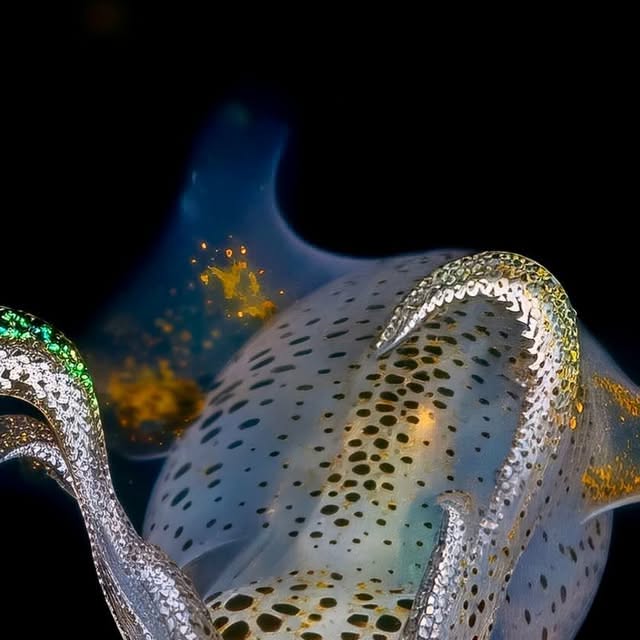
Quick Answer: Promachoteuthis sulcus is a rare deep-sea squid species distinguished by its unique mouthparts that resemble human teeth. Discovered in the South Atlantic Ocean, only one specimen has ever been collected. This cephalopod’s unusual appearance has sparked scientific curiosity and public fascination, but much about its biology, behavior, and ecological role remains unknown due to its extreme rarity and deep-sea habitat.
Promachoteuthis sulcus stands out among deep-sea creatures for its strikingly peculiar appearance. The single known specimen was collected from the South Atlantic Ocean at a depth of approximately 1,750 meters, a realm where sunlight never penetrates and pressures are immense. Its most notable feature, the so-called “human-like teeth,” has led to widespread intrigue and speculation, both in scientific circles and popular media.
The deep-sea environment where Promachoteuthis sulcus was found is home to some of the planet’s most enigmatic and poorly understood animals. Life at such depths requires extraordinary adaptations, and cephalopods in particular have evolved a variety of specialized traits to thrive in these conditions. The discovery of this squid offered a rare glimpse into the diversity and complexity of deep-sea ecosystems, highlighting how much remains to be discovered beneath the ocean’s surface.
Despite the attention it has received, Promachoteuthis sulcus is known only from a single juvenile specimen, making it one of the least understood cephalopods. Its anatomy, ecology, and evolutionary relationships are still largely a mystery, and researchers continue to debate its place within the broader context of squid diversity. The fascination with its “teeth” underscores the power of unusual morphology to capture the imagination and drive scientific inquiry.
Discovery and Taxonomy of Promachoteuthis sulcus
The Promachoteuthis sulcus is a species of deep-sea squid first described in 2007 after a single specimen was collected by a German research vessel in the South Atlantic Ocean. This specimen was found at a depth of roughly 1,750 meters, an environment characterized by perpetual darkness and high hydrostatic pressure. The collection site, located near Tristan da Cunha, is part of a region known for its unique marine biodiversity and challenging research conditions.
Promachoteuthis sulcus belongs to the family Promachoteuthidae, a little-known lineage within the order Oegopsida, which includes many open-ocean squids. The genus Promachoteuthis itself is rarely encountered, and sulcus is the only species in the genus for which a specimen has been thoroughly described.
The formal description was published in the journal American Malacological Bulletin, providing detailed morphological analysis and taxonomic placement. The species name “sulcus” refers to a groove-like feature present in the squid’s anatomy.
The discovery of Promachoteuthis sulcus is significant for several reasons. First, it adds to the growing list of deep-sea cephalopods, a group that remains underrepresented in scientific collections due to the logistical challenges of deep-sea sampling. Second, its unusual oral morphology has prompted questions about the evolutionary pressures that shaped its development.
The single specimen, a juvenile female, measures only 25 mm in mantle length, yet displays distinctive features that set it apart from other known squids.
Key Insight: The classification of Promachoteuthis sulcus is based on a combination of unique morphological traits, including its “toothed” beak, funnel structure, and fin shape, which collectively distinguish it from related taxa.
The rarity of Promachoteuthis sulcus in scientific collections highlights the vast unexplored diversity of deep-sea life. Many cephalopod species are known from only a handful of specimens, and some, like P. sulcus, from just one. This scarcity complicates efforts to understand their biology and evolutionary relationships, making each new discovery particularly valuable. For more on cephalopod taxonomy, the Wikipedia page on Cephalopoda provides an accessible overview.
Anatomy and the Mystery of Human-Like Teeth
The most striking feature of Promachoteuthis sulcus is its mouth, which appears to be lined with human-like teeth. In reality, these are not true teeth but specialized structures called cirri and beak components. The cirri are fleshy appendages that surround the beak, and in this species, they are unusually prominent and arranged in a way that mimics the appearance of a human dental arch.
This illusion is enhanced by the pale coloration and rounded shape of the cirri, which contrast sharply with the dark background of the squid’s oral cavity.
Cirri in cephalopods are typically used for manipulating prey and may have sensory functions. In Promachoteuthis sulcus, the exaggerated development of these structures is unique among known squids. The actual beak, a hard, chitinous structure used for cutting and consuming prey, is hidden behind the cirri. The function of the cirri in this species remains speculative, as the only available specimen is a juvenile and may not represent the full adult morphology.
The resemblance to human teeth is purely coincidental and does not indicate any evolutionary relationship to mammals. Instead, it reflects the diverse range of adaptations seen in deep-sea organisms, many of which have evolved unusual morphologies to cope with the challenges of their environment.
The mouthparts of Promachoteuthis sulcus may play a role in prey capture, camouflage, or even communication, but without additional specimens or behavioral observations, these hypotheses remain untested.
Key Takeaway: The “teeth” of Promachoteuthis sulcus are actually soft, fleshy cirri that create an illusion of dentition, a feature unparalleled among other cephalopods.
The anatomy of Promachoteuthis sulcus is further distinguished by its funnel structure, fin shape, and arrangement of suckers on the arms. These characteristics, along with its unique oral morphology, are used to differentiate it from other deep-sea squids. For a detailed discussion of cephalopod anatomy, see the Britannica entry on cephalopods.
Deep-Sea Habitat and Adaptations
The habitat of Promachoteuthis sulcus is the deep ocean, specifically the bathyal zone, which ranges from 1,000 to 4,000 meters below the surface. This environment is characterized by complete darkness, near-freezing temperatures, and immense pressure. Organisms that inhabit these depths must possess a suite of adaptations to survive, including specialized physiology, unique sensory systems, and often, bioluminescence.
Deep-sea cephalopods like Promachoteuthis sulcus are adapted to these harsh conditions in several ways. Their bodies are soft and flexible, allowing them to withstand high pressure without injury. Many deep-sea squids have reduced or absent ink sacs, as the utility of ink as a defensive mechanism is limited in the absence of light.
The eyes of deep-sea squids are often large relative to body size, maximizing the amount of available light that can be detected, though in the case of P. sulcus, the single juvenile specimen provides limited information on adult eye morphology.
Feeding strategies in the deep sea are diverse and often opportunistic. Cephalopods may prey on small fish, crustaceans, or other invertebrates, using their arms and tentacles to capture and manipulate food. The unique oral structures of Promachoteuthis sulcus suggest a potentially specialized diet or feeding method, though this remains speculative. The scarcity of food at these depths means that many deep-sea animals are adapted to slow metabolisms and infrequent meals.
Deep-sea environments are among the least explored ecosystems on Earth, and each new species discovered contributes to our understanding of life under extreme conditions.
The bathyal zone is home to a remarkable diversity of cephalopods, many of which are known only from a handful of specimens. The challenges of deep-sea exploration mean that much of this diversity remains undocumented. The IUCN Red List catalogs the conservation status of marine species, though Promachoteuthis sulcus is currently listed as Data Deficient due to the lack of information.
The Role of Cephalopods in Deep-Sea Ecosystems
Cephalopods are among the most important predators and prey in marine food webs, particularly in the deep sea. Their ability to occupy a variety of ecological niches makes them key players in nutrient cycling and energy transfer. Squids, octopuses, and cuttlefish are known for their intelligence, adaptability, and rapid growth rates, traits that allow them to exploit a range of food sources and evade predators.
In the deep ocean, cephalopods often serve as both predators and prey for larger animals such as deep-sea fish, marine mammals, and even other cephalopods. Their soft bodies and lack of heavy armor make them vulnerable, but their agility, camouflage abilities, and sometimes bioluminescence provide effective defenses. The unique morphology of Promachoteuthis sulcus may reflect a specialized ecological role, though without more specimens, its precise function in the ecosystem remains unknown.
The presence of cephalopods in deep-sea environments has significant implications for the structure and function of these ecosystems. Their predatory activities help regulate populations of smaller invertebrates and fish, while their own populations are influenced by the abundance of prey and the presence of larger predators. The adaptability of cephalopods is evident in their ability to colonize a wide range of habitats, from shallow coastal waters to the deepest ocean trenches.
The ecological importance of cephalopods is underscored by their role as both consumers and prey, shaping the dynamics of marine communities at multiple trophic levels.
For further reading on the ecological roles of cephalopods, the Smithsonian National Museum of Natural History provides an overview of their diversity and significance in marine ecosystems.
Evolutionary Relationships and Phylogeny
The evolutionary relationships of Promachoteuthis sulcus within the cephalopod lineage are not fully resolved. Molecular and morphological analyses have placed it within the order Oegopsida, a group that includes many pelagic squid species. However, its unique combination of traits, particularly the arrangement of cirri and the structure of the funnel, complicate efforts to determine its closest relatives.
Phylogenetic studies of cephalopods rely on both genetic data and detailed morphological comparisons. In the case of Promachoteuthis sulcus, the lack of additional specimens and genetic material limits the ability to conduct comprehensive analyses. The unusual features of this species may represent either a highly specialized adaptation to deep-sea life or a more basal characteristic retained from ancestral forms.
The discovery of Promachoteuthis sulcus has prompted reevaluation of certain cephalopod classification schemes. Its distinct morphology challenges existing definitions of family-level relationships within Oegopsida. Some researchers have suggested that Promachoteuthis sulcus may represent a relict lineage, surviving in deep-sea refugia while related forms have gone extinct or remain undiscovered.
The enigmatic nature of Promachoteuthis sulcus highlights the limitations of current phylogenetic frameworks and the need for continued exploration and specimen collection.
For a comprehensive overview of cephalopod evolution and classification, the Tree of Life Web Project offers detailed phylogenetic trees and discussions of major lineages.
The Impact of Rare Specimens on Scientific Knowledge
The discovery of a single specimen, as in the case of Promachoteuthis sulcus, presents both opportunities and challenges for science. On one hand, such finds expand our understanding of biodiversity and reveal previously unknown evolutionary pathways. On the other, the lack of multiple specimens limits the ability to study variation, behavior, and ecological interactions.
Rare specimens often become the focus of intense study, with researchers using every available technique to extract information. This may include detailed morphological analysis, imaging, and, if possible, genetic sequencing. However, the inability to observe living individuals or populations means that many aspects of their biology remain speculative. The importance of rare deep-sea finds is magnified by the difficulty and expense of deep-ocean exploration.
Each rare specimen collected from the deep sea serves as a reminder of the vast unknown diversity that remains to be discovered in Earth’s oceans.
The case of Promachoteuthis sulcus underscores the need for continued investment in deep-sea research and the development of new technologies for sampling and observation. Advances in remotely operated vehicles (ROVs) and deep-sea submersibles have already begun to yield new discoveries, but much of the deep ocean remains unexplored.
Common Misconceptions About Promachoteuthis sulcus
Public fascination with Promachoteuthis sulcus has led to several misconceptions, particularly regarding its “human-like teeth.” One common misunderstanding is the belief that this squid actually possesses true teeth similar to those of mammals. In reality, the structures in question are soft, fleshy cirri that only resemble teeth in appearance. This distinction is important for understanding both the biology of the species and the diversity of cephalopod adaptations.
Another misconception is that Promachoteuthis sulcus is a dangerous or predatory animal because of its unusual mouthparts. There is no evidence to suggest that this species poses any threat to humans or other large animals. Its small size and deep-sea habitat make encounters with humans exceedingly unlikely. The dramatic appearance of its oral structures is more likely an adaptation for feeding or camouflage than for aggression.
Misinterpretations of rare species often arise from sensationalized media coverage, which can obscure the true scientific significance of these discoveries.
Clarifying these misconceptions is essential for accurate public understanding of deep-sea biodiversity and the processes that drive morphological innovation. For more on cephalopod biology, the Wikipedia article on squid offers a broad overview of their diversity and adaptations.
Conservation and the Future of Deep-Sea Exploration
The conservation status of Promachoteuthis sulcus is currently listed as Data Deficient by the IUCN, reflecting the lack of information about its population size, distribution, and ecological role. This is a common situation for deep-sea species, many of which are known from only a handful of specimens. The challenges of deep-sea research, including high costs and technical limitations, have historically limited our ability to assess the conservation needs of these organisms.
Deep-sea ecosystems are increasingly threatened by human activities such as deep-sea mining, bottom trawling, and climate change. These impacts can have far-reaching effects on species that are already rare or poorly understood. Protecting deep-sea biodiversity requires international cooperation and the development of conservation strategies that account for the unique vulnerabilities of these habitats.
The future of deep-sea exploration holds promise for the discovery of new species and the advancement of scientific knowledge. Technological innovations, including improved submersibles and autonomous vehicles, are making it possible to access previously unreachable depths. Each new discovery, like that of Promachoteuthis sulcus, serves as a reminder of the importance of preserving the ocean’s hidden diversity for future generations.
The Enduring Fascination With the Human-Teeth Squid
Promachoteuthis sulcus continues to captivate scientists and the public alike, thanks to its bizarre appearance and mysterious origins. The image of a squid with “human-like teeth” has fueled widespread curiosity, inspiring discussions about the limits of adaptation and the wonders of deep-sea life. This fascination speaks to a broader human interest in the unknown and the extraordinary forms that life can take under extreme conditions.
The story of Promachoteuthis sulcus is a testament to the power of discovery in driving scientific inquiry and expanding our understanding of the natural world. Each rare specimen, no matter how small or incomplete, has the potential to reshape our views of evolution, adaptation, and biodiversity. The ongoing search for new specimens and observations will be essential for unraveling the mysteries of this remarkable squid.
The allure of Promachoteuthis sulcus lies not only in its appearance but also in the questions it raises about life in Earth’s most inaccessible environments.
As deep-sea research advances, the possibility of encountering new and even stranger species remains high. The legacy of Promachoteuthis sulcus will endure as a symbol of the ocean’s capacity to surprise and inspire, reminding us of the vast unexplored frontiers that still await beneath the waves.
Frequently Asked Questions
Why does Promachoteuthis sulcus appear to have human-like teeth?
The squid’s ‘teeth’ are actually soft cirri around its beak, not true teeth, creating the illusion of a human dental arch.
How many Promachoteuthis sulcus specimens have been found?
Only one specimen of Promachoteuthis sulcus has ever been collected and described by scientists.
Is Promachoteuthis sulcus dangerous to humans?
No, Promachoteuthis sulcus is a small, deep-sea squid with no evidence of being dangerous to humans.
What is the conservation status of Promachoteuthis sulcus?
Promachoteuthis sulcus is listed as Data Deficient by the IUCN due to insufficient information about its population.
Where was Promachoteuthis sulcus discovered?
The only known specimen was collected in the South Atlantic Ocean near Tristan da Cunha at about 1,750 meters depth.
What family does Promachoteuthis sulcus belong to?
Promachoteuthis sulcus belongs to the family Promachoteuthidae within the order Oegopsida.