
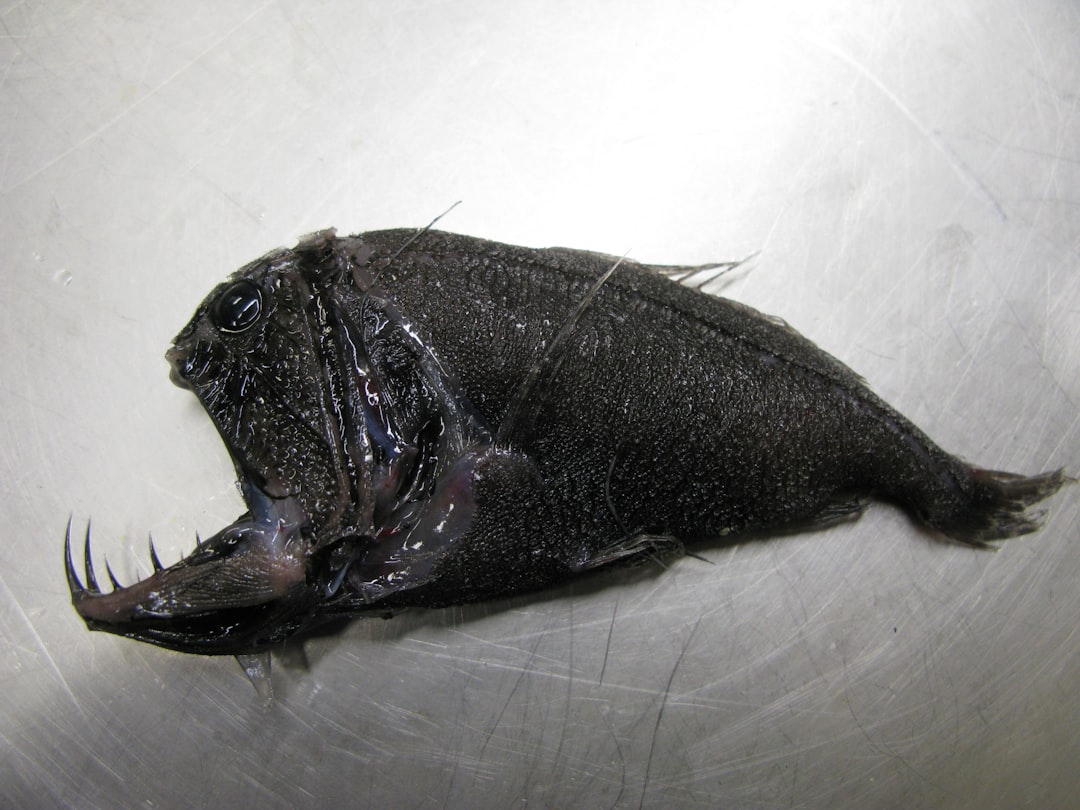
Quick Answer: The viperfish (genus Chauliodus) is a deep-sea predator renowned for its extremely long, fang-like teeth and bioluminescent organs. Adapted to life in the ocean’s twilight and midnight zones, viperfish use their glowing photophores to lure prey in near-total darkness. Their unique jaw structure and hunting strategies make them one of the most formidable predators of the deep sea.
The viperfish stands out as one of the most striking examples of deep-sea adaptation. Its elongated body, metallic sheen, and disproportionately large teeth immediately distinguish it from other oceanic creatures. Living at depths where sunlight never penetrates, the viperfish has evolved a suite of anatomical and behavioral traits that enable it to thrive in extreme darkness and pressure.
Few marine animals inspire as much fascination and intrigue as the viperfish. With a mouth that can open wide enough to accommodate prey nearly half its own size, and a body lined with light-producing organs, the viperfish embodies the alien nature of the deep ocean. Encounters with this species are rare, as their habitat lies thousands of meters below the surface, making direct observation challenging for scientists.
Despite their fearsome appearance, viperfish are relatively small, typically measuring between 30 and 60 centimeters in length. Their role as mid-level predators in the deep-sea ecosystem is crucial, as they help regulate populations of smaller fish and invertebrates. The combination of anatomical innovation and behavioral specialization has cemented the viperfish’s reputation as an apex hunter of the abyss.
Anatomy and Adaptations of the Viperfish
The viperfish is a member of the genus Chauliodus, a group of deep-sea fish known for their elongated bodies, large heads, and enormous, needle-like teeth. These teeth are so long that the viperfish cannot close its mouth completely; instead, the fangs fit into special grooves on either side of the head. This adaptation allows the viperfish to impale and secure slippery prey in the darkness of the deep sea.
The skeletal structure of the viperfish is both robust and flexible, enabling it to withstand the immense pressures found at depths ranging from 200 to over 4,000 meters. The lower jaw is hinged and can be dropped downward, increasing the gape of the mouth. This feature allows the viperfish to consume prey much larger than its head would suggest possible.
A defining characteristic of the viperfish is its bioluminescent photophores, organs that produce light through chemical reactions. These photophores are arranged in rows along the sides of the body and on an elongated dorsal fin ray, which acts as a lure. The ability to produce light is essential for both hunting and communication in the perpetual darkness of the deep ocean.
The viperfish’s eyes are large and adapted for low-light vision, maximizing the detection of faint glimmers produced by other organisms. The skin is typically metallic silver or greenish-blue, providing camouflage against the limited ambient light that filters down from above. The combination of these anatomical features makes the viperfish a formidable and efficient predator in its environment.
Key Insight: The viperfish’s fang-like teeth and bioluminescent organs are specialized adaptations for capturing prey and surviving in the deep sea’s extreme conditions.
For further anatomical details, see the Chauliodus Wikipedia page and the Britannica entry on viperfish.
The Deep-Sea Environment: Life in the Midnight Zone
The deep-sea habitat of the viperfish, known as the bathypelagic zone or “midnight zone,” extends from roughly 1,000 to 4,000 meters below the ocean surface. In this region, sunlight is completely absent, temperatures hover just above freezing, and pressures reach hundreds of times greater than at sea level. These harsh conditions have driven the evolution of unique physiological and behavioral traits in deep-sea organisms.
Oxygen levels in the midnight zone are low, and food is scarce, arriving mostly as “marine snow”, a slow drift of organic particles from upper layers. Predators like the viperfish must be opportunistic, consuming whatever prey they can catch. The scarcity of food resources has led to the development of large mouths and expandable stomachs in many deep-sea fish, including the viperfish.
The absence of light has also shaped the sensory systems of deep-sea animals. Many species, viperfish included, rely on enhanced vision, mechanoreception, and bioluminescence to navigate, find food, and avoid predators. The viperfish’s photophores are a direct response to this environment, serving both as camouflage (counter-illumination) and as a lure for prey.
The deep-sea ecosystem is characterized by low population densities and slow metabolic rates. Many species exhibit slow growth and long lifespans, as energy conservation is critical in an environment where food is unpredictable. The viperfish’s adaptations reflect the challenges and opportunities of life in one of Earth’s most extreme habitats.
For a comprehensive overview of the deep-sea environment, consult Britannica’s article on the deep sea and the Woods Hole Oceanographic Institution’s resources.
Feeding Strategies and Hunting Behavior
The viperfish’s reputation as a deep-sea predator is built on its highly specialized hunting techniques. Unlike many fish that actively pursue their prey, viperfish often employ a sit-and-wait strategy, remaining motionless in the water column and using their bioluminescent lure to attract unsuspecting victims. The elongated dorsal fin ray, tipped with a luminous organ, dangles in front of the viperfish’s mouth, mimicking the appearance of small prey animals.
When a potential meal approaches, the viperfish strikes with lightning speed, snapping its jaws shut with enough force to impale prey on its needle-like teeth. The prey is then swallowed whole, aided by the viperfish’s expandable stomach. This ambush strategy is highly effective in the deep sea, where energy conservation is vital and prey encounters are infrequent.
Viperfish primarily feed on small fish, crustaceans, and cephalopods. Their diet may include lanternfish, bristlemouths, shrimp, and squid. The ability to consume large prey relative to body size is a crucial adaptation, as it allows the viperfish to capitalize on rare feeding opportunities. The teeth are not only used for impaling but also for preventing escape, as the prey is often still alive when swallowed.
The viperfish’s hunting behavior demonstrates the importance of both anatomical specialization and behavioral flexibility in deep-sea predators.
Occasionally, viperfish are observed making vertical migrations toward shallower depths at night, following prey species that rise in the water column. This behavior, known as diel vertical migration, enables the viperfish to exploit different food sources while minimizing exposure to predators. Such complex feeding strategies underscore the adaptability of this species within its challenging habitat.
Bioluminescence: Light in the Darkness
Bioluminescence is the ability of living organisms to produce light through a chemical reaction, typically involving the enzyme luciferase and the molecule luciferin. In viperfish, bioluminescent organs called photophores are distributed along the body and on the dorsal fin ray, serving multiple ecological functions.
The primary role of bioluminescence in viperfish is predation. The glowing lure attracts prey close enough to be captured, a strategy similar to that used by anglerfish. The pattern and intensity of light produced by the photophores can be modulated, allowing the viperfish to adapt its signaling to different situations. Some researchers suggest that bioluminescence may also play a role in mate attraction and species recognition.
Bioluminescence provides camouflage through counter-illumination, where the light emitted matches the faint glow from above, making the viperfish less visible to predators and prey below. This adaptation is particularly effective in the mesopelagic and bathypelagic zones, where even minimal light can create silhouettes detectable by other organisms.
Key Takeaway: Bioluminescence in viperfish is a multifunctional adaptation, enabling both effective predation and concealment in the deep sea.
For more on bioluminescence in marine organisms, see the Wikipedia article on bioluminescence and the MBARI deep-sea bioluminescence resource.
Reproduction and Life Cycle
The reproductive biology of the viperfish remains poorly understood due to the inaccessibility of its deep-sea habitat. However, available evidence suggests that viperfish are broadcast spawners, releasing eggs and sperm into the water column where fertilization occurs externally. The eggs are buoyant, rising to shallower depths where the larvae develop in relatively warmer and more food-rich waters.
Larval viperfish differ significantly from adults, with proportionally larger eyes and shorter teeth. As they mature, they gradually descend into deeper waters, undergoing morphological changes that prepare them for life in the bathypelagic zone. The transition from larva to adult involves the development of bioluminescent organs and the dramatic elongation of the jaw and teeth.
The lifespan of viperfish is not well documented, but deep-sea fish often exhibit slow growth and extended longevity compared to their shallow-water counterparts. The reproductive output of viperfish is likely low, with survival rates dependent on the availability of food and the absence of predation during the vulnerable early life stages.
The life cycle of the viperfish reflects the challenges of reproduction in the deep sea, where encounters with potential mates are rare and offspring must survive in a harsh environment.
Ecological Role and Predators
Within the deep-sea food web, viperfish occupy the role of mid-level predators. They exert top-down control on populations of smaller fish and invertebrates, helping to maintain ecological balance. By preying on a variety of species, viperfish contribute to the cycling of nutrients and energy throughout the deep ocean ecosystem.
Despite their formidable appearance, viperfish are not immune to predation. Larger deep-sea fish, such as dragonfish and certain species of sharks, may prey upon them. Marine mammals, including sperm whales, are also known to consume deep-sea fish like viperfish during deep dives. The scarcity of direct observations makes it difficult to quantify predation rates, but the presence of viperfish remains in the stomachs of these predators confirms their role as prey.
The ecological significance of viperfish extends beyond their immediate interactions. As part of the vertical migration community, they play a role in the transfer of organic matter between ocean layers. Their feeding activities help shape the structure of deep-sea communities, influencing the abundance and distribution of other species.
For more on deep-sea food webs, refer to the Encyclopedia of Life’s deep-sea page and the Smithsonian Ocean Portal’s deep ocean section.
Evolutionary Origins and Diversity
The evolutionary history of the viperfish and its relatives in the family Stomiidae is marked by adaptation to the unique challenges of the deep sea. Fossil evidence suggests that deep-sea fish lineages diverged from their shallow-water ancestors millions of years ago, evolving specialized features such as bioluminescence, elongated jaws, and extreme dentition.
The genus Chauliodus includes several recognized species, each with subtle differences in morphology and distribution. These species are found in deep waters of the Atlantic, Pacific, and Indian Oceans, with some exhibiting global ranges. The diversity within the group reflects the wide variety of ecological niches available in the deep sea.
Genetic studies have revealed that deep-sea fish like viperfish possess unique adaptations at the molecular level, including proteins that function under high pressure and low temperature. The evolution of bioluminescence has occurred independently in multiple deep-sea lineages, highlighting its importance as a survival strategy.
Deep-sea fish evolution demonstrates the power of natural selection in shaping organisms for extreme environments.
Conservation Status and Human Impact
The conservation status of the viperfish is currently listed as “Least Concern” by the International Union for Conservation of Nature (IUCN), primarily due to its wide distribution and the inaccessibility of its habitat. However, deep-sea ecosystems are increasingly threatened by human activities such as deep-sea mining, pollution, and climate change, which can alter ocean chemistry and disrupt food webs.
While viperfish are not targeted by commercial fisheries, they may be affected indirectly through changes in prey availability and habitat quality. The slow reproductive rates and specialized adaptations of deep-sea species make them particularly vulnerable to environmental disturbances. Protecting the deep ocean requires international cooperation and the development of conservation strategies that account for the unique challenges of these environments.
The resilience of viperfish populations depends on the preservation of deep-sea habitats and the careful management of human impacts.
For more information on deep-sea conservation, visit the IUCN Red List and the Marine Conservation Institute.
Common Misconceptions About Viperfish
A frequent misconception is that viperfish are giant monsters of the deep, capable of attacking humans. In reality, viperfish are relatively small, rarely exceeding 60 centimeters in length, and pose no threat to people. Their fearsome appearance is an adaptation for hunting small prey, not for aggression toward larger animals.
Another misunderstanding concerns their visibility. Viperfish are not commonly encountered by divers or fishermen because they inhabit depths far below the reach of standard equipment. Most specimens are collected using deep-sea trawls or remotely operated vehicles, making live observations rare.
Some believe that bioluminescence in viperfish is used solely for hunting. While predation is a primary function, bioluminescence also aids in camouflage and may play a role in communication. The complexity of bioluminescent signaling in deep-sea organisms continues to be an active area of research.
Key Point: Viperfish are specialized deep-sea predators, not dangerous monsters, and their adaptations reflect the demands of their environment rather than aggression.
The Viperfish’s Place in Deep-Sea Biodiversity
The viperfish exemplifies the extraordinary diversity of life in the deep ocean. Its combination of anatomical, physiological, and behavioral adaptations illustrates the ingenuity of evolution in overcoming environmental challenges. As one of many unique deep-sea predators, the viperfish contributes to the complexity and resilience of oceanic ecosystems.
Deep-sea biodiversity remains one of the least explored frontiers on Earth. The discovery of new species and the study of their interactions are ongoing, with each finding adding to our understanding of life’s possibilities. The viperfish serves as a reminder of the remarkable forms that life can take in the planet’s most inhospitable regions.
The study of viperfish and other deep-sea organisms enhances our appreciation for the interconnectedness and fragility of marine ecosystems.
Appreciating the Alien World of the Viperfish
Observing the viperfish, even through remotely operated vehicles or preserved specimens, offers a glimpse into a world that is almost entirely inaccessible to humans. The adaptations that enable survival in the deep sea, bioluminescence, extreme dentition, and specialized physiology, are products of millions of years of evolution. These traits challenge our perceptions of what is possible in the animal kingdom.
The viperfish’s role as both predator and prey highlights the delicate balance that sustains deep-sea ecosystems. As scientific exploration advances, our knowledge of these remarkable creatures will continue to grow, revealing new insights into the complexity of life beneath the waves.
The viperfish remains a symbol of the mysteries and marvels that await discovery in the ocean’s depths. Its existence underscores the importance of preserving marine biodiversity and understanding the intricate relationships that define Earth’s largest habitat.
Frequently Asked Questions
How deep do viperfish live in the ocean?
Viperfish typically inhabit depths from 200 to over 4,000 meters, with most found in the bathypelagic or ‘midnight zone’ where sunlight does not reach.
What do viperfish eat in the wild?
Viperfish primarily feed on small fish, crustaceans, and cephalopods, using their bioluminescent lure to attract and capture prey in the deep sea.
Are viperfish dangerous to humans?
No, viperfish are not dangerous to humans. They are relatively small deep-sea fish and pose no threat outside their natural environment.
How do viperfish use bioluminescence?
Viperfish use bioluminescent organs to lure prey, camouflage themselves, and possibly communicate with other members of their species.
Are viperfish endangered or threatened?
Viperfish are currently listed as ‘Least Concern’ by the IUCN due to their wide distribution and deep-sea habitat, which offers some protection.
How do viperfish reproduce?
Viperfish are broadcast spawners, releasing eggs and sperm into the water column for external fertilization, with larvae developing in shallower waters.
Why are viperfish rarely seen by humans?
Viperfish live at extreme ocean depths, far below the reach of divers or standard fishing gear, making direct encounters with humans extremely rare.