
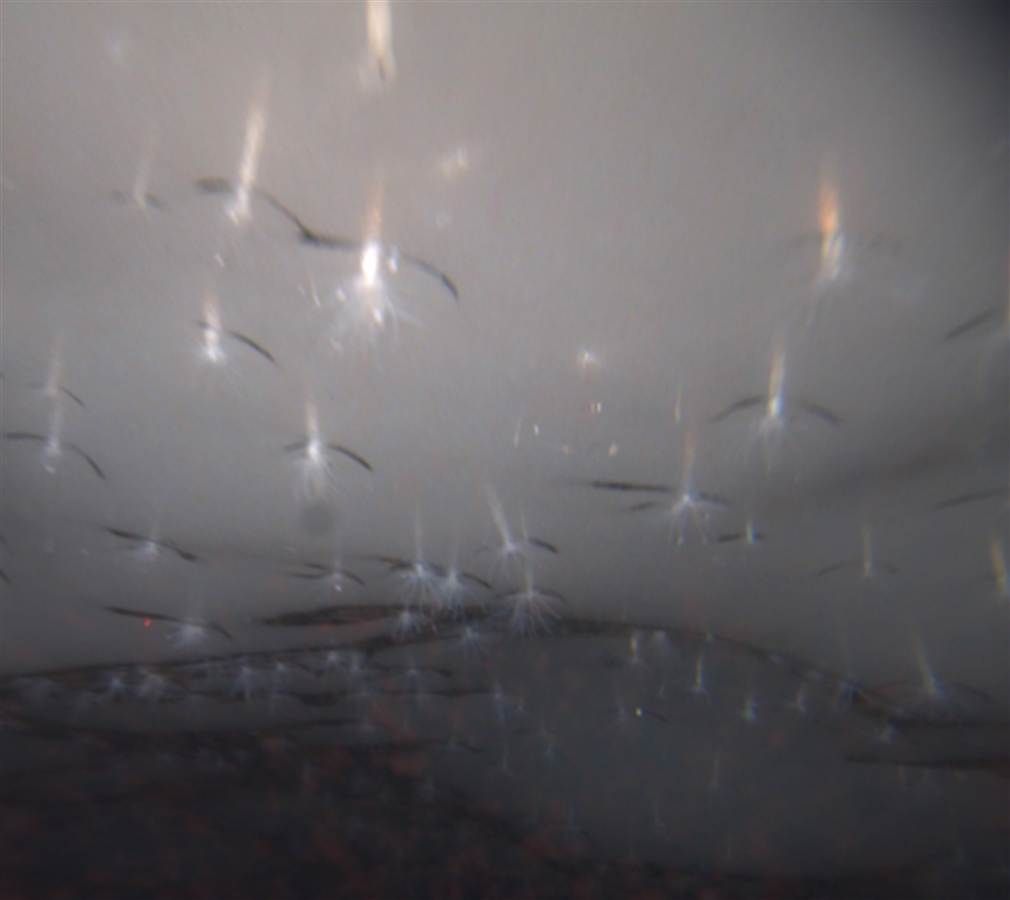
Quick Answer: Edwardsiella andrillae is a unique species of sea anemone discovered living embedded in the ice of the Ross Ice Shelf in Antarctica. Unlike other anemones, it survives within the solid ice, extending its tentacles into the water below. This adaptation makes E. andrillae the only known anemone to inhabit such an extreme, frozen environment, providing new insights into the resilience and ecological diversity of Antarctic marine life.
Edwardsiella andrillae challenges our understanding of animal survival in extreme environments. Discovered beneath the Ross Ice Shelf, this remarkable anemone spends its life embedded in the solid ice, with only its tentacles exposed to the frigid seawater below.
Its existence was revealed during a sub-ice exploration, surprising scientists who previously believed that such habitats were inhospitable to multicellular life. The discovery of E. andrillae has prompted a reevaluation of the limits of animal adaptation and the potential for life in other icy worlds.
The ice anemone’s presence in Antarctica highlights the region’s hidden biodiversity. While the Antarctic is often associated with penguins and seals, its underwater ecosystems remain largely unexplored. E. andrillae demonstrates that life can persist in places previously considered barren, raising questions about undiscovered species and evolutionary innovations beneath the ice.
The study of this anemone offers a window into the complex interactions between biology and the harsh Antarctic environment.
Researchers continue to investigate how E. andrillae manages to survive the constant cold, low light, and limited food supply. Its unique lifestyle provides clues about the physiological and molecular adaptations necessary for life in extreme cold. The discovery also fuels interest in the potential for similar organisms in other icy environments, such as the subsurface oceans of Jupiter’s moon Europa.
The ice anemone stands as a testament to the resilience of life and the importance of continued exploration in the world’s most challenging habitats.
Discovery and Habitat of Edwardsiella andrillae
The story of Edwardsiella andrillae began with an unexpected scientific breakthrough. During an expedition to the Ross Ice Shelf, researchers deployed a remotely operated vehicle (ROV) beneath the ice to study the sub-ice marine environment. To their astonishment, they observed small, white anemones embedded within the solid ice ceiling, with only their tentacles dangling into the dark water below.
This finding contradicted prior assumptions that the ice-water interface in Antarctica was devoid of complex life forms.
Edwardsiella andrillae is a species of sea anemone in the family Edwardsiidae, characterized by its elongated, worm-like body and numerous tentacles. Unlike most sea anemones, which anchor themselves to rocks or sediment, E. andrillae burrows into the ice itself.
The body remains almost entirely within the ice, while the tentacles extend downward, capturing plankton and organic particles drifting in the water. This adaptation allows the anemone to exploit a niche with minimal competition from other benthic organisms.
The Ross Ice Shelf, where E. andrillae was discovered, is one of the largest floating ice shelves on Earth. It covers an area of approximately 500,000 square kilometers and presents a unique environment where ice meets ocean. The temperature beneath the shelf remains consistently below freezing, and the absence of sunlight limits primary productivity.
Despite these challenges, E. andrillae has established a stable population, suggesting specialized adaptations for survival in this extreme habitat.
Key Insight: Edwardsiella andrillae is the only known sea anemone species to inhabit solid ice, making it a biological outlier among cnidarians.
The discovery of E. andrillae has significant implications for Antarctic ecology. It demonstrates that even the most inhospitable environments can harbor complex life forms. The presence of this anemone suggests the existence of unique ecological interactions beneath the ice, potentially involving specialized food webs and symbiotic relationships. For more on the Ross Ice Shelf and its environment, see the Wikipedia entry.
Morphology and Unique Adaptations
The physical structure of Edwardsiella andrillae sets it apart from other sea anemones. Its body is elongated and slender, allowing it to burrow deeply into the ice. The tentacles, numbering between 20 and 24, are translucent and flexible, optimized for capturing food in the nutrient-poor Antarctic waters. The anemone’s coloration is typically white or pale, an adaptation to the low-light conditions beneath the ice.
One of the most remarkable features of E. andrillae is its ability to survive within solid ice. The anemone secretes a specialized mucus that prevents ice crystals from damaging its tissues. This mucus may also play a role in anchoring the animal within the ice matrix, providing stability in a dynamic environment. The body wall is highly flexible, allowing the anemone to adjust its position as the ice shifts or melts.
Physiologically, E. andrillae exhibits adaptations to extreme cold. Its cellular membranes contain high concentrations of unsaturated fatty acids, maintaining membrane fluidity at subzero temperatures. The anemone also produces antifreeze proteins, which inhibit the formation of ice crystals within its cells. These biochemical strategies are crucial for preventing cellular damage and ensuring survival in a habitat where temperatures rarely rise above -2°C.
| Feature | Edwardsiella andrillae | Typical Sea Anemone |
|---|---|---|
| Habitat | Embedded in Antarctic ice | Attached to rocks/sand |
| Tentacle Count | 20–24 | Varies (often >24) |
| Body Color | White/pale | Wide range |
| Adaptations | Antifreeze proteins, mucus | Few cold-specific |
| Feeding Strategy | Suspension feeding | Suspension/predatory |
The reproductive biology of E. andrillae remains poorly understood. However, it is likely to employ both sexual and asexual reproduction, as seen in other members of Edwardsiidae. The ability to reproduce asexually would be advantageous in the isolated, resource-limited environment beneath the ice, allowing the population to persist even when mates are scarce.
Takeaway: The unique adaptations of Edwardsiella andrillae illustrate the remarkable plasticity of animal physiology in response to extreme environments.
Ecological Role and Food Web Dynamics
Edwardsiella andrillae occupies a distinctive ecological niche within the Antarctic sub-ice ecosystem. As a suspension feeder, it captures plankton and organic detritus from the water column using its tentacles. This feeding strategy enables the anemone to exploit the limited resources available in the nutrient-poor environment beneath the ice shelf.
The presence of E. andrillae introduces a new dimension to the Antarctic food web. By filtering particulate matter from the water, the anemone contributes to nutrient cycling and energy flow within the ecosystem. Its tentacles provide habitat for microorganisms, potentially fostering microbe-anemone interactions that enhance nutrient availability. The anemone may also serve as prey for specialized predators, although no such interactions have been directly observed.
The Antarctic sub-ice ecosystem is characterized by low primary productivity due to the absence of sunlight. Most energy input comes from organic material transported from open waters or produced by chemosynthetic bacteria. E. andrillae’s ability to thrive in this environment suggests a high degree of efficiency in capturing and assimilating scarce resources. The species may also benefit from episodic pulses of nutrients associated with ice melt or seasonal changes in ocean currents.
Key Point: The ecological role of Edwardsiella andrillae extends beyond its own survival, influencing nutrient dynamics and community structure beneath the Antarctic ice.
The discovery of E. andrillae has prompted new questions about the resilience of Antarctic ecosystems. Its presence indicates that sub-ice communities may be more complex and interconnected than previously assumed. For further reading on Antarctic marine food webs, see Britannica’s article on Antarctic ecosystems.
Evolutionary Significance and Phylogenetic Placement
Edwardsiella andrillae belongs to the family Edwardsiidae, a group of sea anemones known for their burrowing behavior and elongated bodies. Phylogenetic analysis places E. andrillae within the genus Edwardsiella, which includes several species adapted to soft substrates in temperate and cold waters. However, E. andrillae is unique in its exclusive association with ice, a habitat not exploited by any other known anemone.
The evolutionary origins of E. andrillae are the subject of ongoing research. Genetic studies indicate that the species diverged from its closest relatives relatively recently, suggesting a rapid adaptation to the Antarctic ice environment. The presence of antifreeze proteins and other cold-adapted traits may have evolved through gene duplication and selection for survival in subzero temperatures.
| Taxonomic Rank | Classification |
|---|---|
| Kingdom | Animalia |
| Phylum | Cnidaria |
| Class | Anthozoa |
| Order | Actiniaria |
| Family | Edwardsiidae |
| Genus | Edwardsiella |
| Species | Edwardsiella andrillae |
The adaptation of E. andrillae to an ice-bound lifestyle provides a compelling example of convergent evolution. Similar antifreeze proteins have evolved independently in Antarctic fish and other cold-adapted organisms. This convergence underscores the powerful selective pressures imposed by extreme environments and the limited set of molecular solutions available to animals facing such challenges.
Key Takeaway: The evolutionary trajectory of Edwardsiella andrillae highlights the rapid and innovative responses of life to environmental extremes.
For additional details on the taxonomy and evolutionary relationships of sea anemones, consult the Wikipedia entry on Actiniaria.
Physiological Mechanisms for Ice Survival
Survival in the Antarctic ice requires a suite of physiological adaptations. Edwardsiella andrillae demonstrates several mechanisms that enable it to withstand freezing temperatures and osmotic stress. The production of antifreeze proteins is central to its survival strategy. These proteins bind to ice crystals, inhibiting their growth and preventing cellular damage. The expression of antifreeze proteins is a well-documented adaptation in polar organisms, including fish and invertebrates.
In addition to antifreeze proteins, E. andrillae maintains high levels of unsaturated fatty acids in its cellular membranes. This composition preserves membrane fluidity at low temperatures, ensuring proper cellular function. The anemone’s metabolic rate is likely reduced, minimizing energy requirements in an environment where food is scarce.
Mitochondrial efficiency and enzyme kinetics are also optimized for cold conditions, allowing the animal to carry out essential biochemical processes despite the harsh environment.
Osmoregulation presents another challenge for organisms living in ice. E. andrillae must balance the influx and efflux of water and solutes to prevent dehydration or swelling. Specialized ion channels and transporters in the cell membrane help maintain osmotic balance. The secretion of protective mucus further insulates the anemone from direct contact with ice crystals and stabilizes its position within the ice matrix.
Insight: The physiological toolkit of Edwardsiella andrillae exemplifies the convergence of multiple adaptations necessary for life in extreme cold.
For an overview of antifreeze proteins and their role in animal survival, see the Encyclopedia Britannica entry on antifreeze proteins.
Methods of Scientific Study and Discovery
The discovery and study of Edwardsiella andrillae required innovative scientific approaches. Traditional sampling methods are ineffective beneath thick ice shelves, necessitating the use of remotely operated vehicles (ROVs) and specialized drilling equipment. Researchers deployed ROVs through boreholes in the Ross Ice Shelf, enabling direct observation and sampling of sub-ice communities.
High-resolution cameras and manipulator arms allowed scientists to document the anemones in situ and collect specimens for laboratory analysis. Genetic sequencing techniques were employed to confirm the species’ identity and explore its evolutionary relationships. Histological studies provided insights into the structure and function of its tissues, while biochemical assays revealed the presence of antifreeze proteins and other cold-adapted molecules.
| Method | Application |
|---|---|
| ROV observation | In situ documentation, habitat mapping |
| Genetic sequencing | Species identification, phylogenetics |
| Histology | Tissue structure, adaptation analysis |
| Biochemical assays | Protein and enzyme characterization |
The multidisciplinary nature of this research highlights the importance of technological innovation in polar biology. The ability to access and study sub-ice environments has expanded our understanding of Antarctic biodiversity and the limits of animal adaptation. For more information on polar research techniques, visit the US Antarctic Program.
Implications for Astrobiology and Extreme Life
The existence of Edwardsiella andrillae in the Antarctic ice has profound implications for the search for life beyond Earth. The anemone’s ability to survive in perpetual darkness, extreme cold, and limited nutrient availability mirrors the conditions believed to exist on icy moons such as Europa and Enceladus. These moons possess subsurface oceans beneath thick ice shells, raising the possibility of analogous life forms.
Astrobiologists study extremophiles like E. andrillae to understand the potential for life in extraterrestrial environments. The molecular adaptations observed in the ice anemone, including antifreeze proteins and cold-tolerant enzymes, provide models for the types of biochemical strategies that might evolve elsewhere.
The discovery of complex multicellular life in Antarctic ice challenges assumptions about the boundaries of habitability and expands the range of environments considered suitable for life.
Perspective: The study of Edwardsiella andrillae informs the design of future missions to icy worlds, guiding the search for biosignatures and life-supporting conditions beyond Earth.
For more on the connection between Antarctic biology and astrobiology, see the Wikipedia article on astrobiology.
Conservation Status and Future Research
Edwardsiella andrillae is not currently listed on the IUCN Red List, and its conservation status remains undetermined due to limited data. The remote and inaccessible nature of its habitat provides a degree of protection from direct human impact. However, climate change poses a potential threat to the stability of Antarctic ice shelves, with unknown consequences for sub-ice communities.
Future research will focus on understanding the population dynamics, reproductive biology, and ecological interactions of E. andrillae. Long-term monitoring is needed to assess the effects of environmental change on its survival. Advances in remote sensing and molecular biology will facilitate the discovery of additional ice-dwelling species and clarify the evolutionary history of this remarkable anemone.
The continued exploration of Antarctica’s hidden ecosystems promises to reveal new insights into the resilience and diversity of life on Earth. The study of E. andrillae exemplifies the value of interdisciplinary research and international collaboration in advancing scientific knowledge.
The Broader Significance of Edwardsiella andrillae
Edwardsiella andrillae stands as a symbol of life’s tenacity in the face of extreme adversity. Its discovery has reshaped scientific perspectives on the limits of animal adaptation and the potential for biodiversity in the most unlikely places. The ice anemone’s unique biology offers a wealth of opportunities for research in physiology, evolution, and astrobiology.
By expanding the known boundaries of habitable environments, E. andrillae encourages a reexamination of where life might exist on Earth and beyond. Its presence beneath the Antarctic ice shelf underscores the importance of continued exploration and the need to protect fragile polar ecosystems from environmental change. The lessons learned from this species will inform future studies of extremophiles and guide the search for life in the universe.
Final Reflection: The story of Edwardsiella andrillae reminds us that the natural world still holds many secrets, waiting to be uncovered by curiosity and scientific ingenuity.
Frequently Asked Questions
How does Edwardsiella andrillae survive being frozen in ice?
Edwardsiella andrillae produces antifreeze proteins and specialized mucus, preventing ice crystals from damaging its tissues and enabling survival in subzero temperatures.
What makes Edwardsiella andrillae different from other sea anemones?
Edwardsiella andrillae is the only known sea anemone that lives embedded in Antarctic ice, rather than attaching to rocks or sediment like most anemones.
Could similar life forms exist on icy moons like Europa?
Yes, Edwardsiella andrillae’s adaptations suggest that multicellular life could survive in the subsurface oceans of icy moons, informing astrobiology research.
Is Edwardsiella andrillae endangered or threatened?
Edwardsiella andrillae’s conservation status is currently undetermined, but its remote habitat offers some protection from direct human impacts.
How was Edwardsiella andrillae discovered?
Scientists discovered Edwardsiella andrillae using remotely operated vehicles beneath the Ross Ice Shelf, observing the anemones embedded in the ice ceiling.
What role does Edwardsiella andrillae play in the Antarctic ecosystem?
Edwardsiella andrillae acts as a suspension feeder, filtering plankton and organic particles, and contributes to nutrient cycling beneath the Antarctic ice shelf.