
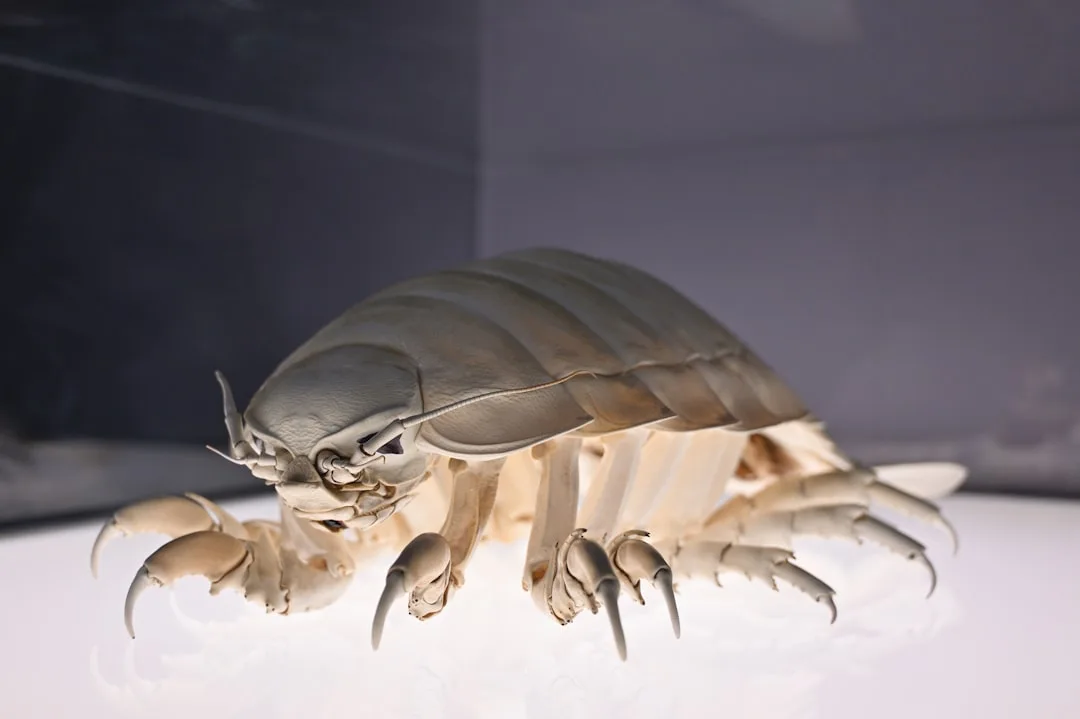
How fast is a mantis shrimp's punch, and how does it generate such extreme force?
The mantis shrimp delivers the fastest punch in the animal kingdom, with its raptorial appendages accelerating at over 10,000 times the force of gravity and reaching speeds of approximately 50 miles per hour (80 km/h). The strike is so rapid - completing in roughly 3 milliseconds - that it generates cavitation bubbles in the surrounding water.
Beneath the waves, along rocky shorelines, in the silted bottoms of freshwater rivers, and even in the canopies of tropical forests, there exists a group of animals so diverse, so ancient, and so ecologically essential that the oceans as we know them could not function without them. Crustaceans - the armored arthropods of the aquatic world - are everywhere.
They are the krill that sustain the largest animals ever to live. They are the crabs that patrol coral reefs and mangrove roots. They are the barnacles encrusting every pier, hull, and whale on the planet.
And they include some of the most extraordinary organisms that evolution has ever produced: a shrimp that punches with the force of a bullet, a crab that can crack open a coconut with its bare claws, and a barnacle that so obsessed Charles Darwin that he spent eight years of his life studying nothing else.
With more than 70,000 described species - and thousands more awaiting formal classification - the subphylum Crustacea represents one of the most successful animal lineages on Earth. Crustaceans range in size from microscopic water fleas less than a millimeter long to the Japanese spider crab, whose leg span exceeds 3.6 meters (12 feet).
They inhabit every ocean at every depth, every continent, and nearly every freshwater system on the planet. Some have colonized land. A few live in deserts. Their evolutionary history stretches back over 500 million years to the Cambrian period, making them contemporaries of the trilobites.
This is the story of the armored wonders of the ocean - and beyond.
Crustacean Diversity: An Evolutionary Empire
The sheer scope of crustacean diversity is difficult to overstate. The 70,000-plus known species are distributed across multiple classes and orders, occupying ecological niches that range from planktonic drifters to apex predators of the seafloor.
The major groups include the Malacostraca (the largest class, containing crabs, lobsters, shrimp, krill, and isopods), the Branchiopoda (brine shrimp, water fleas), the Copepoda (copepods, arguably the most abundant multicellular animals on Earth), the Cirripedia (barnacles), and the Ostracoda (seed shrimp).
What unites this staggering variety is a shared body plan built around a chitinous exoskeleton - a suit of armor made from chitin, a tough polysaccharide polymer - combined with biramous appendages (limbs that branch into two) and a developmental life cycle that typically includes a free-swimming larval stage called a nauplius.
The exoskeleton provides protection and structural support but imposes a critical constraint: to grow, a crustacean must periodically shed its entire exoskeleton in a process called molting (ecdysis). During and immediately after a molt, the animal is soft, vulnerable, and essentially defenseless - a dangerous window that every crustacean must survive repeatedly throughout its life.
"The Crustacea are so diversified in form, so rich in species, and so varied in their habits and modes of life that they may well be regarded as representing in the waters what the Insecta represent on land." - William Thomas Calman, The Life of Crustacea (1911)
Mantis Shrimp: The Fastest Punch in Nature
The mantis shrimp is not a shrimp. It is not a mantis. It is a stomatopod - a member of the order Stomatopoda - and it possesses what is almost certainly the most devastating weapon in the invertebrate world.
There are approximately 450 species of mantis shrimp, divided into two functional groups based on their raptorial appendages: smashers and spearers. Spearers use barbed, spear-like appendages to impale soft-bodied prey such as fish. Smashers - the group that has captured scientific and public imagination - use club-shaped appendages to deliver strikes of extraordinary violence.
The Physics of the Punch
The peacock mantis shrimp (Odontodactylus scyllarus), the most studied smasher species, delivers strikes that accelerate at over 10,000 times the force of gravity, reaching velocities of approximately 50 miles per hour (80 km/h). The entire strike unfolds in roughly 3 milliseconds - faster than the blink of an eye, which takes approximately 300 to 400 milliseconds. For an animal that rarely exceeds 18 centimeters (7 inches) in length, this is a staggering output of mechanical power.
The secret lies in a spring-loaded mechanism rather than pure muscular force. The mantis shrimp contracts muscles to compress a saddle-shaped structure made of a bioceramic material with properties similar to both bone and rubber. When a latch releases, the stored elastic energy is discharged instantaneously, catapulting the club forward with a force vastly exceeding what the muscles alone could produce.
This biological spring mechanism is so efficient that engineers at Harvard and Duke University have studied it as inspiration for micro-robotic actuators.
The strike is so fast that it generates cavitation bubbles - pockets of vacuum created when the water cannot move aside quickly enough to fill the space behind the accelerating club. When these cavitation bubbles collapse, they release a secondary shockwave with temperatures momentarily reaching approximately 4,700 degrees Celsius and producing tiny flashes of light, a phenomenon called sonoluminescence.
The prey is struck twice in rapid succession: once by the physical club and once by the collapsing bubble. The combined force is sufficient to shatter crab shells, crack clam valves, and - notoriously - break aquarium glass.
Vision Beyond Human Comprehension
Mantis shrimp possess the most complex visual system in the animal kingdom. Their compound eyes contain 16 types of photoreceptor cells, compared to just 3 in humans (red, green, and blue). Twelve of these receptors are dedicated to color vision, spanning the visible spectrum and extending into the ultraviolet and infrared ranges. Their eyes can also detect circularly polarized light, a capability unknown in any other animal group, which may function in species-specific signaling.
Each eye moves independently on a mobile stalk and is divided into three regions, giving the mantis shrimp trinocular vision with a single eye - meaning it can perceive depth without needing two eyes. The overall visual system processes color differently from human vision, using a rapid scanning and categorization system rather than the comparative processing our brains employ.
Lobsters: Indeterminate Growth and the Immortality Myth
The American lobster (Homarus americanus) has become the unlikely subject of one of the most persistent myths in popular science: that lobsters are biologically immortal. The truth is more nuanced and, in many ways, more interesting.
Indeterminate Growth and Telomerase
Lobsters exhibit what biologists call indeterminate growth - they do not reach a fixed adult size and stop growing, as humans and most mammals do. Instead, lobsters continue to grow with each successive molt throughout their lives. A lobster that has been alive for 50 years is larger than one alive for 20, and there is no evidence of a genetically programmed maximum size or age limit comparable to the Hayflick limit in human cells.
Part of the mechanism behind this ongoing vitality appears to involve telomerase, an enzyme that repairs and extends the telomeres - the protective caps at the ends of chromosomes. In most animal cells, telomeres shorten with each cell division, eventually triggering cellular senescence and contributing to aging. Lobster cells express telomerase in most tissues throughout their lives, which appears to delay or partially circumvent this form of cellular aging.
However, lobsters are emphatically not immortal. The molt-and-grow cycle that sustains them also ultimately limits them. As lobsters grow larger, the energy required to produce a new exoskeleton and survive the molting process increases dramatically.
Very large, old lobsters can die from exhaustion during molting, from infections that enter through the soft post-molt shell, or from shell disease - a bacterial condition that erodes the exoskeleton. The largest American lobster ever recorded, caught off Nova Scotia in 1977, weighed approximately 44 pounds (20 kilograms).
Age estimates for the oldest known lobsters range from 100 to over 140 years, though precise aging is difficult because lobsters shed the calcified structures typically used for age determination in other marine animals.
Crabs: From Coconut Crushers to Living Fossils
The infraorder Brachyura - the true crabs - contains approximately 7,000 species, making crabs one of the most species-rich groups within the Crustacea. But the broader category of crab-like organisms is even larger, because evolution has independently produced the crab body form multiple times in a process called carcinisation - a convergent evolutionary trend so persistent that it has become a subject of study in its own right.
The Coconut Crab: Strongest Grip in the Animal Kingdom
The coconut crab (Birgus latro), also known as the robber crab, is the largest terrestrial arthropod on Earth. Adults routinely weigh 4 kilograms (9 pounds) and can reach body lengths of 40 centimeters (16 inches), with a leg span exceeding one meter. They are found on islands across the Indian and Pacific Oceans and are so large and powerful that they have been reliably documented hunting and killing seabirds.
Research published in PLOS ONE by Shin-ichiro Oka and colleagues in 2016 measured the pinching force of coconut crab claws and found maximum forces of 3,300 newtons - exceeding the bite force of most terrestrial predators and placing coconut crabs among the strongest grippers in the animal kingdom relative to body mass. This force is sufficient to crack coconut shells, which the crabs climb palm trees to obtain.
The study concluded that if coconut crabs scaled to the size of a large mammal, their grip force would exceed that of any known animal.
The Japanese Spider Crab: Longest Legs in the Arthropod World
The Japanese spider crab (Macrocheira kaempferi) holds the record for the largest leg span of any living arthropod. Adults can have a leg span exceeding 3.6 meters (approximately 12 feet) from claw tip to claw tip, though their bodies are comparatively modest at roughly 40 centimeters across. They inhabit deep waters around Japan, typically at depths of 200 to 300 meters, and can live for up to 100 years.
Despite their intimidating size, Japanese spider crabs are slow-moving scavengers and omnivores that feed on dead organisms, algae, and small invertebrates on the seafloor. Their long, spindly legs are adapted for walking across soft, silty substrates rather than for speed or predation.
Horseshoe Crabs: Living Fossils with Blue Blood
Horseshoe crabs are not true crabs - they are more closely related to spiders and scorpions - but they are inextricably linked to the crustacean story through their shared marine habitats and their extraordinary contribution to modern medicine.
The four living species of horseshoe crabs (family Limulidae) have remained virtually unchanged for approximately 450 million years, making them among the most iconic "living fossils" on the planet. The Atlantic horseshoe crab (Limulus polyphemus) possesses copper-based blood (hemocyanin rather than the iron-based hemoglobin of vertebrates), giving it a distinctive blue color.
More critically, horseshoe crab blood contains a clotting agent called Limulus amebocyte lysate (LAL), which reacts to bacterial endotoxins with extreme sensitivity.
Since the 1970s, LAL has been the global standard for testing the sterility of medical devices, injectable drugs, and vaccines. Every dose of injectable medication approved by the FDA - including the COVID-19 vaccines - has been tested using horseshoe crab blood or its synthetic equivalent, recombinant Factor C (rFC).
The pharmaceutical industry harvests approximately 600,000 Atlantic horseshoe crabs annually, drawing roughly 30% of each animal's blood before returning them to the ocean. Mortality rates from this process are estimated at 10 to 30%, raising significant conservation concerns for a species already under pressure from habitat loss and overharvesting for fishing bait.
| Crustacean | Notable Record | Key Measurement |
|---|---|---|
| Mantis shrimp | Fastest punch in nature | 50 mph (80 km/h), 10,000g acceleration |
| American lobster | Largest recorded specimen | 44 lbs (20 kg), Nova Scotia, 1977 |
| Coconut crab | Strongest grip (terrestrial arthropod) | 3,300 newtons pinching force |
| Japanese spider crab | Largest arthropod leg span | 12+ feet (3.6+ meters) |
| Horseshoe crab | Oldest unchanged body plan | 450 million years |
| Antarctic krill | Largest biomass aggregation | Estimated 400 million metric tons |
| Barnacle | Highest penis-to-body ratio | Up to 8x body length |
| Pistol shrimp | Loudest biological sound | 218 decibels at source |
Hermit Crabs: The Shell Economy
Hermit crabs (superfamily Paguroidea) are among the most behaviorally fascinating crustaceans. Unlike true crabs, hermit crabs have a soft, asymmetrical abdomen that offers no protection on its own. To survive, they must find and occupy the empty shells of gastropods (snails), carrying these borrowed houses wherever they go and retreating inside when threatened.
Vacancy Chains: Synchronized Shell Trading
The dependence on shells has produced one of the most remarkable examples of social resource allocation in the animal kingdom. When a desirable empty shell appears in a hermit crab population - typically one left by a dead snail - it triggers a behavior sequence called a vacancy chain.
Multiple hermit crabs of varying sizes gather around the new shell. Rather than competing through aggression, the crabs organize themselves into a line from largest to smallest, each waiting for the shell exchange to cascade down. The largest crab that fits the new shell claims it, abandoning its old shell. The next largest crab then moves into that vacated shell, leaving its own for the next in line.
This chain can involve a dozen or more individual crabs, with a single new shell triggering a cascade of upgrades that benefits the entire group.
Research by Mark Laidre at Dartmouth College has revealed that some species of terrestrial hermit crabs go further, actively remodeling their shells by hollowing out the interior to create more living space - a behavior that makes the modified shell useless to the original snail species but highly valuable to other hermit crabs. Laidre's work demonstrates that hermit crabs have, in effect, created a secondary market for modified shells that depends entirely on social inheritance.
Krill: The Foundation of the Antarctic Food Chain
Krill are small, shrimp-like crustaceans of the order Euphausiacea, and they are among the most ecologically important animals on the planet. There are approximately 85 species of krill, but one dominates the global stage: Antarctic krill (Euphausia superba), a species that forms the foundation of the entire Antarctic marine ecosystem.
The Largest Biomass Aggregation on Earth
Individual Antarctic krill are modest animals - translucent, roughly 6 centimeters (2.4 inches) long, weighing about 2 grams. But they gather in swarms of such staggering density and extent that their collective biomass is estimated at approximately 400 million metric tons, making them one of the largest biomass aggregations of any multicellular species on Earth. Individual swarms can stretch for kilometers and reach densities of 10,000 to 30,000 individuals per cubic meter.
This biomass supports virtually every large predator in the Southern Ocean. Blue whales - the largest animals ever to live - consume up to 3,600 kilograms (8,000 pounds) of krill per day during the feeding season.
Humpback whales, fin whales, crabeater seals (which, despite their name, feed almost exclusively on krill), Adelie penguins, and numerous seabird species all depend directly on krill for survival. The removal of krill from the Antarctic food web would trigger an ecosystem collapse of almost unimaginable scale.
Krill also play a critical role in the biological carbon pump. By feeding on phytoplankton near the surface and producing fecal pellets that sink to the deep ocean, krill transport an estimated 12 billion metric tons of carbon from the atmosphere to the deep sea annually, making them significant players in global climate regulation.
Barnacles: Darwin's Eight-Year Obsession
Barnacles (infraclass Cirripedia) are crustaceans that most people do not recognize as crustaceans. Encased in calcareous plates and cemented permanently to rocks, piers, ship hulls, and even the skin of whales, adult barnacles look more like mollusks than relatives of crabs and lobsters. It took scientific analysis of their larval stages - which are unmistakably crustacean nauplii - to confirm their true identity.
Darwin and the Barnacles
No account of barnacles is complete without the story of Charles Darwin's barnacle obsession. In 1846, fresh from his voyage on HMS Beagle and already formulating the theory of natural selection that would reshape biology, Darwin began what he expected to be a brief study of an unusual barnacle specimen he had collected in Chile. That "brief study" consumed the next eight years of his life.
Between 1846 and 1854, Darwin produced four exhaustive monographs on barnacles - two on living species and two on fossil species - totaling over 1,400 pages. He dissected and described every known barnacle species, corresponding with collectors worldwide, and became the undisputed global authority on the group. His children reportedly assumed that all fathers spent their days studying barnacles; one of his sons, visiting a friend's house, asked, "Where does your father do his barnacles?"
The work was not a diversion from his evolutionary thinking but a deliberate deepening of it. By studying the full range of barnacle variation - including species with dwarf males permanently attached to larger females, species that had lost almost all recognizable crustacean features, and species that parasitized other barnacles - Darwin developed the detailed understanding of variation, adaptation, and homology that underpinned On the Origin of Species, published in 1859.
The Highest Penis-to-Body Ratio in the Animal Kingdom
Barnacles present a unique reproductive challenge: they are sessile (permanently attached) yet must achieve cross-fertilization. Their solution is an organ of remarkable proportions. Acorn barnacles possess a penis that can extend up to eight times their body length, the highest penis-to-body ratio in the animal kingdom.
This extensible organ allows them to reach neighboring barnacles within range for sperm transfer. Research has shown that barnacles in areas of high wave action develop shorter, thicker penises optimized for strength, while those in calm waters develop longer, thinner ones optimized for reach - a demonstration of phenotypic plasticity in reproductive anatomy.
Shrimp: Cleaners, Sonic Warriors, and Symbiotic Partners
The term "shrimp" encompasses thousands of species across multiple families, but two groups stand out for behaviors that border on the extraordinary: cleaner shrimp and pistol shrimp.
Cleaner Shrimp: The Dentists of the Reef
Several species of shrimp - most notably the Pacific cleaner shrimp (Lysmata amboinensis) and the banded coral shrimp (Stenopus hispidus) - operate "cleaning stations" on coral reefs. These shrimp advertise their services by waving their long white antennae, attracting fish that would normally prey on shrimp-sized animals.
The fish present themselves - often opening their mouths and gill covers wide - and the cleaner shrimp crawl over and inside their bodies, removing parasites, dead tissue, and mucus.
This is a genuine mutualistic symbiosis: the fish receive parasite removal that improves their health, and the shrimp receive a meal. The trust involved is remarkable - large moray eels, groupers, and even sharks have been observed holding perfectly still while tiny shrimp work inside their mouths, millimeters from teeth that could crush them instantly.
Experimental removal of cleaner shrimp from reef patches results in measurable increases in parasite loads and decreases in fish diversity, demonstrating that these small crustaceans play a structural role in reef community health.
Pistol Shrimp: The Sonic Weapon
The pistol shrimp (family Alpheidae), also called snapping shrimp, possess one of the most unusual weapons in nature. One claw is dramatically enlarged and modified to produce a violent snapping action. When the claw snaps shut, it ejects a jet of water at speeds exceeding 100 kilometers per hour, creating a cavitation bubble that collapses with a loud crack reaching 218 decibels at the source - louder than a gunshot.
The collapsing bubble generates a shockwave that stuns or kills small prey at close range, and the momentary temperatures within the collapsing bubble reach approximately 4,700 degrees Celsius - the same phenomenon seen in mantis shrimp strikes but produced by a completely different mechanism.
Colonies of snapping shrimp produce such persistent noise that they create a continuous crackling sound on tropical and subtropical reefs, interfering with sonar systems and submarine detection. During World War II, the United States Navy reportedly identified snapping shrimp noise as a significant source of underwater acoustic interference.
"The snapping shrimp is a creature that has essentially weaponized the laws of physics. It has turned fluid dynamics into a projectile." - Sheila Patek, biomechanics researcher, Duke University
Some pistol shrimp species maintain a mutualistic relationship with gobies - small fish that share the shrimp's burrow. The nearly blind shrimp maintains and excavates the burrow while the goby serves as a lookout, signaling danger with tail flicks that the shrimp detects through constant antennal contact with the fish's body.
Crayfish and Freshwater Crustaceans
While marine environments harbor the majority of crustacean diversity, freshwater systems support their own rich assemblage. Crayfish (also known as crawfish or crawdads, depending on regional dialect) are the most prominent freshwater crustaceans, with approximately 640 described species found on every continent except Africa and Antarctica.
North America alone is home to over 400 crayfish species, making it the global center of crayfish diversity. The southeastern United States - particularly the river systems of Alabama, Tennessee, and Mississippi - contains the highest concentration of crayfish species of any region on Earth. Many of these species are micro-endemics, found in a single cave system, spring, or stream reach and nowhere else.
Crayfish play critical roles as ecosystem engineers in freshwater habitats. Their burrowing activity aerates sediments and influences water flow, their feeding on detritus accelerates nutrient cycling, and they serve as prey for fish, birds, raccoons, and otters.
The introduction of invasive crayfish species - particularly the signal crayfish (Pacifastacus leniusculus) in Europe and the red swamp crayfish (Procambarus clarkii) globally - has caused severe ecological damage, including the displacement of native crayfish species and the spread of crayfish plague (Aphanomyces astaci), a water mold disease devastating to European native species.
Freshwater systems also support an extraordinary diversity of copepods, amphipods, isopods, and ostracods that form the base of food webs in rivers, lakes, and groundwater systems. Cave-adapted crustaceans are of particular scientific interest, having evolved in total darkness over millions of years, losing pigmentation and eyes while developing enhanced chemical and tactile sensory systems.
Crustacean Aquaculture: Feeding the World
The global appetite for crustaceans has driven one of the fastest-growing sectors of aquaculture. The farmed shrimp industry alone is worth an estimated $45 billion annually, with the majority of production concentrated in Southeast Asia - particularly Thailand, Vietnam, Indonesia, Ecuador, and India. Whiteleg shrimp (Litopenaeus vannamei) and giant tiger prawn (Penaeus monodon) are the dominant farmed species.
The expansion of shrimp farming has brought significant environmental costs. The conversion of mangrove forests to shrimp ponds has been particularly devastating - an estimated 38% of global mangrove loss has been attributed to aquaculture, primarily shrimp farming. Mangroves serve as nursery habitats for countless marine species, as coastal storm buffers, and as carbon sinks, meaning their destruction has cascading ecological consequences far beyond the immediate footprint of the ponds.
Lobster aquaculture remains commercially limited due to the animals' slow growth rates, territorial aggression, and cannibalistic tendencies in high-density confinement. Crab aquaculture - particularly mud crab (Scylla serrata) farming in Southeast Asia and Chinese mitten crab (Eriocheir sinensis) farming in China - has expanded rapidly, with the Chinese mitten crab industry alone valued at over $10 billion annually.
Crayfish farming, particularly of the red swamp crayfish in Louisiana and China, represents another major sector. Louisiana produces approximately 90% of the farmed crayfish in the United States, with the industry supporting thousands of rural livelihoods. China has rapidly expanded crayfish production since the 2000s, driven by the enormous domestic demand for spicy crayfish dishes that have become a cultural phenomenon.
The future of sustainable crustacean aquaculture lies in recirculating aquaculture systems (RAS), integrated multi-trophic aquaculture (IMTA), and selective breeding programs that improve growth rates and disease resistance while reducing environmental impact. Advances in shrimp genetics and disease management - particularly against white spot syndrome virus (WSSV) and early mortality syndrome (EMS) - remain critical research priorities for an industry that feeds hundreds of millions of people.
References
Patek, S. N., & Caldwell, R. L. (2005). "Extreme impact and cavitation forces of a biological hammer: strike forces of the peacock mantis shrimp Odontodactylus scyllarus." Journal of Experimental Biology, 208(19), 3655-3664.
Sheehy, M. R. J., Bannister, R. C. A., Wickins, J. F., & Shelton, P. M. J. (1999). "New perspectives on the growth and longevity of the European lobster (Homarus gammarus)." Canadian Journal of Fisheries and Aquatic Sciences, 56(10), 1904-1915.
Oka, S., Tomita, T., & Miyamoto, K. (2016). "A mighty claw: pinching force of the coconut crab, the largest terrestrial crustacean." PLOS ONE, 11(11), e0166108.
Laidre, M. E. (2012). "Homes for hermits: temporal, spatial, and structural dynamics as transportable homes are incorporated into a population." Journal of Zoology, 288(1), 33-40.
Atkinson, A., Siegel, V., Pakhomov, E. A., & Rothery, P. (2004). "Long-term decline in krill stock and increase in salps within the Southern Ocean." Nature, 432(7013), 100-103.
Stebbing, T. R. R. (1893). A History of Crustacea: Recent Malacostraca. D. Appleton and Company.
Nolan, M. W., & Smith, S. A. (2009). "Clinical evaluation, common diseases, and veterinary care of the horseshoe crab, Limulus polyphemus." In Biology and Conservation of Horseshoe Crabs (pp. 479-499). Springer.
Frequently Asked Questions
How fast is a mantis shrimp's punch, and how does it generate such extreme force?
The mantis shrimp delivers the fastest punch in the animal kingdom, with its raptorial appendages accelerating at over 10,000 times the force of gravity and reaching speeds of approximately 50 miles per hour (80 km/h). The strike is so rapid - completing in roughly 3 milliseconds - that it generates cavitation bubbles in the surrounding water.
When these bubbles collapse, they produce a secondary shockwave with temperatures momentarily reaching approximately 4,700 degrees Celsius (nearly as hot as the surface of the Sun) and flashes of light called sonoluminescence. This means the prey is effectively hit twice: once by the physical strike and once by the collapsing cavitation bubble.
The force generated is proportionally among the strongest in the animal kingdom, sufficient to shatter aquarium glass and crack the shells of heavily armored snails and crabs.
Are lobsters truly immortal, and how long can they actually live?
Lobsters are not biologically immortal, despite the popular claim. What lobsters do exhibit is indeterminate growth, meaning they continue to grow throughout their lives and do not appear to slow down or weaken with age in the way most animals do. This is partly attributed to their expression of telomerase, an enzyme that repairs the protective caps (telomeres) on chromosomes - a process linked to aging in many organisms.
However, lobsters do eventually die. Larger, older lobsters can succumb to shell disease, exhaustion during molting (the energy required to shed and regrow increasingly large exoskeletons eventually becomes unsustainable), and accumulated bacterial infections. The largest American lobster ever recorded weighed approximately 44 pounds (20 kg) and was caught off Nova Scotia in 1977.
Age estimates for the oldest lobsters range from 100 to over 140 years, though precise aging remains difficult because lobsters shed the hard structures typically used for age determination.
How do hermit crabs find and exchange shells, and what is a vacancy chain?
Hermit crabs do not grow their own shells but instead depend on finding empty gastropod (snail) shells to protect their soft, vulnerable abdomens. When a desirable empty shell appears - often one left by a deceased snail - hermit crabs engage in a remarkable social behavior called a vacancy chain. Multiple hermit crabs of different sizes gather around the new shell and arrange themselves in a line from largest to smallest.
The largest crab that fits the new shell claims it, leaving its old shell vacant. The next largest crab then moves into that vacated shell, leaving its own shell for the next crab, and so on down the line. This synchronized shell exchange can involve a dozen or more crabs and ensures that a single new shell entering the population benefits multiple individuals simultaneously.
Research by Mark Laidre at Dartmouth College has documented that some hermit crab species actively evict other crabs from desirable shells, and that social information about shell availability spreads rapidly through populations.