
How far can flying fish glide?
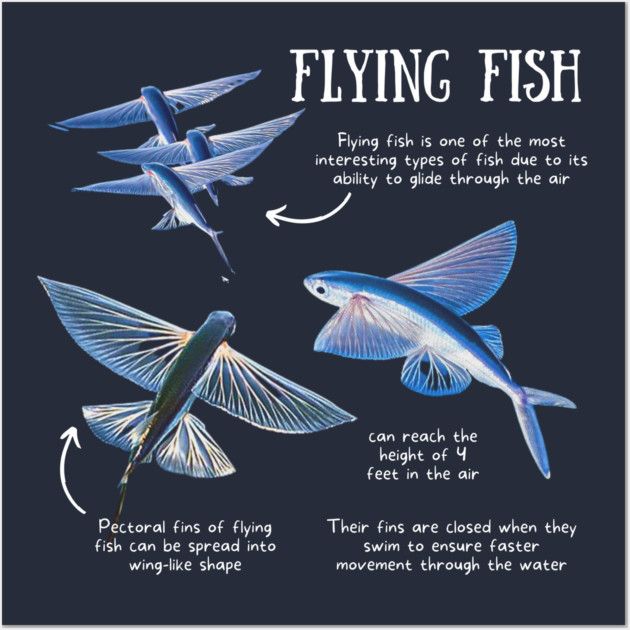
Flying fish can glide up to 200 meters (650 feet) in a single flight, with speeds of 35-70 km/h (20-45 mph). They actually glide rather than truly fly - they use their enlarged pectoral fins as wings for aerial gliding rather than flapping like birds. Their flights typically last 5-15 seconds.
200 Meters Through the Air
A boat cruises across Caribbean waters. Suddenly, a fish launches from beside the boat, spreads wing-like fins, and glides 50 meters across the ocean surface before splashing down. Within seconds, another fish launches behind it. Then a third. A school of flying fish is passing through the area.
These are flying fish (family Exocoetidae), bony fish that have evolved the ability to escape underwater predators by launching into the air and gliding distances up to 200 meters. They're not truly flying (no flapping), but they've mastered aerial gliding.
The Animal
Flying fish are specialized marine gliders.
Physical features:
- Length: 15-45 cm typically
- Body shape: streamlined, torpedo-like
- Pectoral fins: enormously enlarged (wing-like)
- Pelvic fins: also large (some species)
- Tail fin: lower lobe bigger
- Color: silver-blue above, white below
Wing-like fins:
- Pectoral fins modified as wings
- Up to 1/3 body length
- Stiff and supportive
- Essential for gliding
Body design:
- Aerodynamic when airborne
- Streamlined in water
- Compromise between both
- Evolution of flight adaptations
40+ species:
- Multiple flying fish species
- Different glide capabilities
- Various sizes
- Geographic variations
The Gliding Process
Flying fish launch into aerial glides.
Takeoff sequence:
- Accelerate underwater (55 km/h)
- Approach surface
- Tail provides final thrust
- Launch at steep angle
- Spread pectoral fins as wings
- Enter gliding phase
Aerial phase:
- Ride momentum from launch
- Body rigid and streamlined
- Wings generate lift
- Gradually lose altitude
- Re-enter water when speed drops
Flight characteristics:
- Distance: up to 200 meters
- Speed: 35-70 km/h in air
- Duration: 5-15 seconds typical
- Height: 1-2 meters above water
Return flights:
- Can re-launch immediately after landing
- Multiple glides in sequence
- Chain flights possible
- Extended escape distances
Why They Glide
Primary purpose: escape from predators.
Underwater predators:
Flying fish escape from:
- Tuna: fast (70+ km/h)
- Mahi-mahi: pursuers
- Dolphins: high-speed hunters
- Marlin: sprint hunters
- Other predators
The advantage:
Underwater hunters cannot:
- Follow into air
- Maintain pursuit through medium change
- Predict aerial trajectory
- Intercept quickly
Flying fish benefits:
- Faster in air than water (for short distances)
- Escape pursuit
- Put distance between predator and self
- Surprise element
Alternative uses:
- Occasionally catching airborne prey
- Social schooling behavior
- Communication among fish
- Cultural learning in groups
How Far They Can Fly
Different species achieve different ranges.
Distance records:
- Standard flying fish: 100-150 meters typical
- Long-finned flying fish: 200+ meters
- Some species: capable of chained glides
- Research documented: 1,300+ meter continuous with multiple glides
Factors affecting distance:
Launch speed:
- Faster = further glide
- Maximum speed matters
- Species capabilities vary
- Individual variation
Wave conditions:
- Favorable waves help
- Strong waves disrupt
- Positioning matters
- Energy from waves
Wind:
- Tailwind extends flights
- Headwind shortens
- Crosswind affects stability
- Weather dependent
Fin condition:
- Damaged fins reduce distance
- Regular molting affects
- Age influences
- Individual differences
Species differences:
- Some species naturally glide further
- Wing design varies
- Body streamlining differs
- Evolutionary specialization
Anatomical Details
Specialized biology for aerial gliding.
Pectoral fins:
- Elongated significantly
- Stiff support
- Wing-like cross-section
- Generate lift
Tail structure:
- Lower lobe larger
- Creates upward thrust
- Essential for launch
- Different from typical fish
Body rigidity:
- Becomes rigid during flight
- Maintains aerodynamic shape
- Reduces drag
- Maximizes efficiency
Pelvic fins:
- In some species also enlarged
- Secondary gliding surface
- Help stability
- Provide lift
Bone structure:
- Lightweight
- Reduces flight weight
- Allows aerial movement
- Evolutionary adaptation
Where They Live
Flying fish inhabit warm oceans globally.
Range:
Tropical and subtropical:
- Atlantic (Caribbean, Gulf of Mexico)
- Pacific (tropical zones)
- Indian Ocean (warm waters)
- Mediterranean (some populations)
Common regions:
- Caribbean Sea
- Gulf of Mexico
- Japanese waters
- Indonesian seas
- Tropical Pacific
- Hawaiian waters
Habitat:
- Open ocean preferred
- Surface waters primarily
- Warm water (20-30°C)
- Areas with predators (driving evolution)
Depth:
- Most time at surface
- Short dives for food
- Rarely deep
- Pelagic lifestyle
Diet and Behavior
Flying fish feed on plankton and small organisms.
Diet:
- Plankton (primary)
- Small crustaceans
- Fish larvae
- Occasionally floating plant material
- Surface-associated food
Feeding behavior:
- Active at surface
- Filter-feed continuously
- School with others
- Opportunistic
Social structure:
- Form large schools
- Cooperative vigilance
- Group escape behavior
- Safety in numbers
Predator alert:
When one fish detects danger:
- Others notice
- School responds
- Mass launching possible
- Coordinated escape
Schooling benefits:
- Early predator detection
- Coordinated defense
- Social learning
- Reduced individual risk
Reproduction
Flying fish breeding varies by species.
Reproduction:
- External fertilization
- Spawn in surface waters
- Eggs attached to floating debris
- Some species attach to seaweed
Larvae:
- Develop in planktonic form
- Drift with currents
- Gradually develop adult features
- Wings develop last
Development:
- Juveniles unable to fly initially
- Gradually gain gliding ability
- Adults fully capable
- Some species faster developers
Life span:
- 5-7 years typical
- Individuals vary
- Captive potentially longer
- Wild mortality high
Flying Fish Fisheries
Commercial fishing targets some species.
Major fisheries:
Japan:
- Significant flying fish fishery
- Roe (tobiko) for sushi
- Large commercial industry
- Cultural food item
Barbados:
- National dish features flying fish
- Traditional preparation
- Cultural significance
- Important local fishery
Other areas:
- Caribbean countries
- Asian Pacific
- Various Pacific islands
- Local consumption
Tobiko (flying fish roe):
- Common sushi ingredient
- Bright colors
- Crunchy texture
- Mild flavor
Fishing methods:
- Nets for flying fish
- Light attraction at night
- Boat-based fishing
- Traditional and modern
Sustainability:
- Generally well-managed
- Regional regulations
- Research ongoing
- Cultural importance factors
Landing on Boats
Common occurrence in certain waters.
Why it happens:
- Disturbance from boats
- Predator escape gone wrong
- Nighttime light attraction
- Wave conditions
Night phenomenon:
- Flying fish attracted to boat lights
- Multiple arrivals possible
- Historic sailor experiences
- Caribbean traditions
Boat safety:
- Not dangerous to boats
- Can startle crew
- Require handling
- Often returned to water
Cultural significance:
- Caribbean folklore
- Fishermen's traditions
- Boat-based fishing method
- Tourism entertainment
Historic accounts:
Sailors reported:
- Fish landing on deck
- Breakfast catches
- Supernatural attributions (historically)
- Navigational aids possibly
Barbados and Flying Fish
Barbadian national dish.
Cultural importance:
- National dish: cou-cou and flying fish
- Cultural identity
- Traditional preparation
- Tourism draw
Preparation:
Traditional dish:
- Flying fish cleaned and seasoned
- Served with cou-cou (cornmeal dish)
- Sometimes fried, baked, or steamed
- Cultural celebration food
Fishing community:
- Important economic activity
- Traditional skills
- Sustainable practices
- Cultural preservation
International recognition:
- Well-known Barbadian dish
- Tourism attraction
- Export product
- Cultural ambassador
Flying Fish in Culture
Cultural presence worldwide.
Caribbean culture:
- Economic importance
- Folklore references
- Culinary traditions
- Cultural heritage
Japanese culture:
- Sushi ingredient (tobiko)
- Commercial fishery
- Traditional presence
- Culinary identity
Pacific cultures:
- Various traditional uses
- Cultural knowledge
- Fishing traditions
- Cultural significance
Modern culture:
- Nature documentaries
- Internet videos
- Sport fishing subjects
- Tourism attractions
Aerial Photography
Flying fish are popular photography subjects.
Photographic challenges:
- Quick aerial phase
- Unpredictable launches
- Challenging lighting
- Fast action
Best opportunities:
- Morning light
- Calm conditions
- Following boats
- During escape events
Equipment needs:
- Fast shutter speed
- Good tracking
- Stable platforms
- Patience
Famous photos:
Many iconic images:
- Schools escaping predators
- Multiple fish mid-flight
- Close-up details
- Sunset/sunrise flights
Sport Fishing
Flying fish attract sport fishing interest.
Techniques:
- Light attraction at night
- Surface-swimming fishing methods
- Traditional Caribbean techniques
- Modern variations
Tournament fishing:
- Various tournaments worldwide
- Catch-and-release encouraged
- Conservation awareness
- Economic benefits
Recreational:
- Fishing for sport
- Catch and release
- Personal records
- Cultural activity
Conservation
Flying fish face various pressures.
Status:
- Most species: Least Concern
- Some regional concerns
- Monitoring ongoing
- Fishing pressure varies
Threats:
Fishing pressure:
- Commercial fisheries significant
- Tourism fishing
- Traditional harvesting
- Need management
Climate change:
- Ocean warming affects prey
- Distribution shifts
- Population impacts uncertain
- Research ongoing
Pollution:
- Plastic in ocean
- Chemical contamination
- Habitat degradation
- Indirect effects
Protection:
- Regional fishery management
- Catch quotas in some areas
- Research and monitoring
- International cooperation
Research
Flying fish support scientific research.
Research topics:
Biomechanics:
- Gliding efficiency
- Launch mechanics
- Wing design
- Aerodynamic analysis
Ecology:
- Predator-prey relationships
- Food web participation
- Climate response
- Population dynamics
Evolution:
- How gliding evolved
- Species diversification
- Wing development
- Body modifications
Conservation:
- Population assessment
- Habitat requirements
- Sustainable fishing
- Climate adaptation
Why They Matter
Flying fish represent remarkable biology.
Biological uniqueness:
- Fish that glide
- Air-water transitions
- Evolutionary adaptation
- Escape strategy example
Ecological role:
- Surface food web participant
- Prey for pelagic predators
- Plankton processor
- Ecosystem connector
Cultural significance:
- Multiple cultural traditions
- National dish of Barbados
- Sushi ingredient
- Tourism value
Scientific value:
- Biomechanics research
- Evolutionary studies
- Ecology research
- Climate change indicators
The Aerial Schools
Every flying fish gliding over ocean waves represents one of nature's most successful escape strategies.
Their ancestors faced relentless underwater predators. Evolution responded by developing the ability to leave the water entirely, escape through a medium predators couldn't follow, and return safely to the water when danger passed.
The result: pectoral fins became wings, bodies became aerodynamic, tails developed thrust for launch, and entire schools coordinate escape flights.
In Caribbean waters, Pacific seas, and tropical oceans worldwide, they continue this ancient pattern. Predators pursue. Flying fish launch. Wings spread. Glides carry them to safety. Schools coordinate. Life continues.
They represent evolutionary solutions no one would have designed intentionally - fish that escape by flying. Their biology demonstrates that evolution finds surprising answers to pressure. They're not birds but they fly. They're not truly airborne but they glide. They're still fish but they've mastered aerial transit.
Schools of hundreds of flying fish launching into coordinated gliding patterns remain among the ocean's most spectacular sights. Tourist boats in flying fish regions witness this daily. Sailors for centuries have marveled at it. Scientists continue studying the biomechanics.
The flying fish continues its distinctive existence - not quite bird, not just fish, but something in between. Its unique solution to survival pressures makes it one of the ocean's most fascinating creatures.
Species Diversity in the Family Exocoetidae
The flying fish family Exocoetidae contains approximately 64 species across 7 genera, distributed across the world's tropical and subtropical seas. Species differ significantly in wing morphology, body size, and gliding performance. Two-winged species use only enlarged pectoral fins, while four-winged species also use enlarged pelvic fins for additional lift.
| Genus | Species Count | Wing Type | Typical Length | Distribution |
|---|---|---|---|---|
| Exocoetus | 5 | Two-winged | 20-30 cm | Global tropics |
| Cypselurus | 17 | Four-winged | 25-40 cm | Indo-Pacific, Atlantic |
| Cheilopogon | 30 | Four-winged | 20-35 cm | Pacific dominant |
| Hirundichthys | 6 | Four-winged | 20-30 cm | Atlantic and Pacific |
| Prognichthys | 4 | Four-winged | 18-28 cm | Tropical seas |
| Fodiator | 2 | Two-winged | 15-20 cm | Eastern Pacific |
| Parexocoetus | 3 | Two-winged | 10-18 cm | Indo-Pacific shallows |
The four-winged species achieve significantly longer glides than two-winged species, and ichthyologists interpret the evolution of pelvic-fin enlargement as a secondary adaptation that built on the ancestral pectoral-fin gliding capability.
The Biomechanics of Flight
A 2010 study by Haecheon Choi and colleagues at Seoul National University, published in The Journal of Experimental Biology, used wind tunnel measurements on preserved flying fish specimens to calculate aerodynamic performance. The researchers found that flying fish achieve lift-to-drag ratios of approximately 4.1 to 4.6, comparable to swifts and superior to typical insect flight [1].
"The flying fish body plan is a genuinely optimized aerodynamic form. Their wing loading and glide ratios fall within the performance envelope of dedicated bird gliders such as albatrosses, which is an extraordinary convergent result for a fish whose ancestors did not leave the water." - Professor Haecheon Choi, Seoul National University [1]
High-speed cinematography of launch events reveals that the caudal fin vibrates at approximately 50 Hz during the taxi phase, with the lower lobe of the tail remaining in the water to provide thrust while the body is already airborne. This mixed-phase propulsion allows flying fish to accelerate to launch speeds of 16 meters per second, among the highest aquatic-to-aerial transition speeds documented in any vertebrate.
Ecology and Trophic Position
Flying fish occupy a middle trophic level in open-ocean ecosystems, feeding primarily on copepods, amphipods, and small fish larvae while serving as key prey for tuna, dolphinfish (mahi-mahi), marlin, sailfish, and seabirds. Stomach content analyses of yellowfin tuna in the eastern tropical Pacific have found flying fish composing 15 to 30 percent of prey biomass by weight, highlighting their ecological importance.
"Flying fish are one of the most important mid-trophic forage species in the tropical pelagic ocean. Their abundance directly drives the productivity of fisheries targeting dolphinfish and tunas, and any ecological shift that reduces flying fish populations will cascade immediately up the food chain." - Dr. Hampton Ramon, International Commission for the Conservation of Atlantic Tunas [2]
Frigatebirds, tropicbirds, and shearwaters time their foraging to coincide with tuna feeding events, exploiting the fact that tuna drive flying fish schools to the surface and into the air. This three-way trophic interaction between pelagic fish predators, flying fish prey, and aerial seabird predators represents one of the most dynamic tropical ocean ecosystems.
Climate and Ocean Warming Effects
Long-term survey data from the eastern Caribbean show that flying fish populations have shifted northward by approximately 120 kilometers since the 1980s, tracking isotherms as sea surface temperatures have risen. The Caribbean Regional Fisheries Mechanism (CRFM) has documented the resulting economic impact on Barbadian fisheries, which historically fished flying fish grounds southeast of the island that now fall outside national exclusive economic zone boundaries [3].
Increased stratification of tropical surface waters under climate change is predicted to reduce productivity in the upper 100 meters, potentially limiting flying fish food availability. Conversely, reductions in oxygen minimum zone depths may concentrate predators near the surface, increasing predation pressure on flying fish schools.
References
- Park, H., & Choi, H. (2010). Aerodynamic characteristics of flying fish in gliding flight. The Journal of Experimental Biology, 213(19), 3269-3279. DOI: 10.1242/jeb.046052
- Oxenford, H. A., & Hunte, W. (1999). Feeding habits of the dolphinfish (Coryphaena hippurus) in the eastern Caribbean. Scientia Marina, 63(3-4), 303-315. DOI: 10.3989/scimar.1999.63n3-4303
- Mahon, R., Oxenford, H. A., & Hunte, W. (2013). Eastern Caribbean flyingfish fishery: biology, ecology, and management. Caribbean Regional Fisheries Mechanism Special Publication, 8, 1-68.
- Davenport, J. (1994). How and why do flying fish fly? Reviews in Fish Biology and Fisheries, 4(2), 184-214. DOI: 10.1007/BF00044128
Related Articles
- Sailfish: The Ocean's Fastest Fish
- Mako Shark: The Ocean's Fastest Shark
- Archerfish: The Aquatic Sharpshooter
Frequently Asked Questions
How far can flying fish glide?
Flying fish can glide up to 200 meters (650 feet) in a single flight, with speeds of 35-70 km/h (20-45 mph). They actually glide rather than truly fly - they use their enlarged pectoral fins as wings for aerial gliding rather than flapping like birds. Their flights typically last 5-15 seconds.
To take off: they gain speed underwater (55 km/h), launch themselves from water surface, spread pectoral fins as wings, glide using momentum, and re-enter water when speed drops. Successful glides require: accelerating to sufficient speed, optimal launch angle, stable aerodynamics, and correct body positioning. They can chain multiple glides - landing briefly, then launching again for another glide. Continuous glides can cover substantial distances.
Their longest verified glide was documented at 200+ meters. Different species show variable capabilities: larger species generally glide further, pectoral fin shape affects performance, body design optimized for gliding. Their gliding is essential for escape from underwater predators - specifically tuna, dolphins, and mahi-mahi that hunt them.
Why do flying fish fly?
Flying fish evolved gliding ability primarily as an escape mechanism from underwater predators. When threatened, they can quickly launch into the air and glide to safety, a tactic that allows them to: escape fast underwater predators (tuna, mahi-mahi, dolphins), fly to new areas when danger appears, surprise pursuing predators with sudden change of medium, and escape at higher speed in air than water.
Their predators are also fast swimmers (up to 100+ km/h) but cannot follow into the air. The combination of underwater speed and aerial gliding gives them escape options few fish have. Their gliding is: defensive (escape), occasionally offensive (catching airborne prey), and social (schooling behavior). They rarely glide voluntarily - usually in response to predator threats or disturbance from boats/waves.
Their evolution into gliders represents one of nature’s most successful escape strategies. The pressure from efficient underwater predators drove their development of aerial capabilities. Different flying fish species show variations in gliding efficiency - likely reflecting different predator pressures in their habitats.
How do flying fish glide?
Flying fish glide using enlarged pectoral fins as wings and a specialized body design for aerial efficiency. Their anatomy includes: extremely elongated pectoral fins (up to 1⁄3 body length), lower lobe of tail larger than upper (for thrust), streamlined body shape, rigid body during flight, and lightweight skeleton.
The gliding process: fish accelerate underwater (reaching 55+ km/h), launch at steep angle, lower tail pushes strongly during launch, pectoral fins spread wide, body becomes aerodynamic, glides on momentum, re-enters water when speed drops, can launch again for continuous gliding. Their fin design: lift-generating pectorals, stabilizing pelvic fins (smaller, helping balance), streamlined body, and specific angle of attack.
They can adjust: gliding distance, flight angle, aerial maneuvers (limited), and landing position. Launch success depends on wave conditions, speed, fin positioning, and angle. Their gliding uses momentum from underwater acceleration rather than active flapping flight. This passive gliding is energy-efficient for short distances. They cannot sustain flight indefinitely - running out of momentum and re-entering water.
Where do flying fish live?
Flying fish inhabit warm ocean waters worldwide, with approximately 40 species distributed across tropical and subtropical regions. Their global range includes: Atlantic Ocean (Caribbean, Gulf of Mexico, Brazilian coast), Indian Ocean (tropical waters), Pacific Ocean (tropical to subtropical), Mediterranean Sea (some populations), and various seas with appropriate conditions.
They prefer: warm open ocean waters (20-30°C), areas with abundant plankton, surface waters (where they spend most time), regions where flying is beneficial (predator-rich), and shallow coastal areas where applicable. Major populations exist in: Caribbean and Gulf of Mexico (famous for flying fish), Japanese waters (significant populations), Indian Ocean tropical regions, Pacific tropical areas, and Indonesian waters.
They are commercially fished in some areas - flying fish roe (especially Japanese populations) is a delicacy for sushi. Barbados has the national dish ‘cou-cou and flying fish’ featuring these fish. Their global distribution makes them accessible to fishermen, tourists, and nature observers. Climate change is affecting their populations - some expanding, others shifting.
Do flying fish really land on boats?
Yes, flying fish occasionally land on boats - a phenomenon that has been documented for centuries. This happens: when disturbed by passing boats (motors, wakes), during dangerous predator escapes, when conditions favor unusual flights, and at night when attracted to lights.
Historical records include: sailors reporting fish in their beds, dawn arrivals of multiple flying fish on decks, traditional fishermen using lights to attract them, and modern observations of nighttime landings. When they land: they can be quite startling to people, often flop helplessly on decks, may be returned to water or caught for food, and don’t cause damage.
Night time is particularly eventful - flying fish are attracted to boat lights like many other fish, sometimes landing in significant numbers during transit.
Cultural awareness: experienced boaters in flying fish areas know to expect occasional arrivals, some Caribbean and Pacific communities have traditional practices around boat-landed fish, fishermen sometimes use lights to encourage flying fish for catch, and tourist boats may feature ‘flying fish encounters’ as entertainment.
While startling when it happens, flying fish landing on boats is a natural phenomenon related to their escape behavior and attraction to lights.