
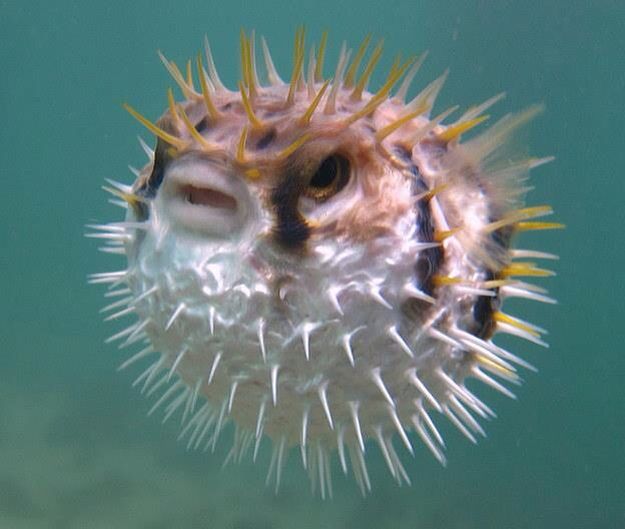
Why are pufferfish so deadly?
Pufferfish contain tetrodotoxin (TTX), a neurotoxin approximately 1,200 times more toxic than cyanide by weight. A single pufferfish contains enough TTX to kill 30 adult humans. TTX is produced by symbiotic bacteria in the fish's tissues, primarily concentrated in: liver, ovaries, intestines, skin, and some muscles.
Deadly Toxin and Sand-Castle Artists
A chef in Tokyo carefully slices paper-thin pieces of pufferfish flesh, arranging them into intricate patterns on a plate. If she makes a mistake and some toxic tissue contaminates the meat, a diner could die within hours. She's one of only 1,000 licensed fugu chefs in all of Japan.
Meanwhile, on a sandy bottom in the Pacific Ocean, a male white-spotted pufferfish spends 9 days creating an elaborate geometric pattern in the sand, a two-meter-wide work of art that will attract a female to mate.
Pufferfish are remarkable creatures. They contain some of the most lethal toxins in the animal kingdom. They're consumed as delicacies despite killing thousands historically. They create beautiful art. And they can triple their size in seconds when threatened.
The Animal
Pufferfish are a diverse group of ~200 species.
Physical features:
- Size: varies greatly (5 cm to 1 meter)
- Body: compact, rounded
- Skin: rough or spiny
- Inflation ability: can triple in size
- Color: varied patterns and species
- Teeth: four fused teeth (like a beak)
Species variations:
- Northern puffer
- Smooth puffer
- Dogface puffer
- Mbu puffer (freshwater)
- Japanese fugu species
- Many others
Common features:
- Defensive inflation
- Toxic tissues (most species)
- Slow swimmers
- Territorial behavior
- Unique teeth
Tetrodotoxin
Pufferfish carry one of nature's deadliest toxins.
Tetrodotoxin (TTX):
- 1,200 times more toxic than cyanide
- Found in liver, ovaries, intestines, skin
- Produced by bacteria in their tissues
- No antidote exists
Lethal dose:
- Single fish: can kill 30 adults
- Minute amount: potentially lethal
- Varies by species and season
- Unpredictable in untrained hands
How TTX works:
Blocks sodium channels in nerve cells:
- Prevents nerve signal transmission
- Paralysis spreads through body
- Respiratory muscles stop working
- Death from respiratory failure
- Consciousness remains
Treatment:
Supportive care only:
- Artificial respiration
- Cardiac monitoring
- 24-48 hours hospital care
- Wait for body to metabolize toxin
Fatality rate:
- Untreated: 50% mortality
- With immediate care: 5% or less
- Most victims survive with proper treatment
- Children more vulnerable
Fugu: Japanese Delicacy
Japanese cuisine features pufferfish as a luxury.
Cultural significance:
- Consumed for centuries
- Royal dish historically
- Banned for emperors (too risky)
- Modern delicacy
- Cultural tradition
Fugu chefs:
Strict regulation:
- 2-3 year apprenticeship
- Strict examinations
- Government licensing
- Annual recertification
- Only ~1,000 licensed chefs in Japan
Preparation process:
Careful sequence:
- Species identification
- Remove toxic organs
- Multiple rinsing
- Thin slicing for aesthetics
- Multi-person inspection
- Final quality check
Traditional dishes:
- Fugu sashimi: raw, thinly sliced
- Fugu hotpot: cooked with vegetables
- Fugu karaage: deep-fried
- Fugu zosui: rice porridge
- Tessa: wafer-thin sashimi
Cost:
- Very expensive
- $100-200+ per serving
- Premium restaurants only
- Seasonal pricing
Death rate:
Improved dramatically:
- 1950s: 100+ deaths annually
- Recent: fewer than 10 annually
- Licensed restaurants: near-zero deaths
- Unlicensed preparation: most deaths
The Inflation Defense
Pufferfish inflate using water, not air.
How it works:
Elastic stomach mechanism:
- Sense threat
- Rapidly gulp water
- Expand specialized stomach
- Skin stretches massively
- Spines protrude (some species)
- Become 3x normal size
- Deter predator
- Deflate when safe
Timing:
- Inflation: 5-6 seconds
- Maximum size: triple normal
- Can swim inflated (poorly)
- Deflation: 10-30 seconds
Why water, not air:
- More efficient underwater
- Water readily available
- No problem with pressure changes
- Better pressurization
Spines:
Some species have:
- Sharp spines all over body
- Extended when inflated
- Additional deterrent
- Combined defense
Cost:
- Energy-expensive process
- Reserves depleted
- Need recovery time
- Last resort defense
Sand Art
Some pufferfish create elaborate sculptures.
White-spotted pufferfish art:
Male white-spotted pufferfish:
- Spend 7-9 days sculpting
- Create 2-meter diameter patterns
- Geometric circular designs
- Add shells and coral fragments
- Maintain against currents
Discovery:
- First documented 1995 by divers
- Confirmed pufferfish as creators 2011
- Published scientific research
- Viral nature photography
Purpose:
- Attract females
- Demonstrate fitness
- Create safe egg-laying area
- Protect eggs from currents
- Visual mating signals
Intelligence implications:
Suggests:
- Planning behavior
- Aesthetic choices
- Tool use (using body to sculpt)
- Maintenance capability
- Persistence
Each species' style:
Different pufferfish species create:
- Different patterns
- Unique designs
- Cultural variations
- Species-specific art
Other Species
Various pufferfish have distinctive features.
Giant pufferfish (Mbu):
- Freshwater Amazonian species
- Largest pufferfish
- Up to 80 cm long
- Popular in aquariums
Spotted puffer:
- Indo-Pacific distribution
- Spotted patterns
- Aquarium pets
- Coral reef dwellers
Dogface puffer:
- Distinctive facial expressions
- Personality-filled pets
- Aquarium favorite
- Active behavior
Various reef puffers:
- Colorful coral reef species
- Territorial behavior
- Active daytime
- Popular for diving
Freshwater species:
- Amazon river system
- African rivers
- Asian freshwater
- Adapted to rivers
Where They Live
Pufferfish inhabit diverse environments.
Marine habitats:
- Coral reefs
- Rocky shorelines
- Shallow sandy bottoms
- Estuaries
- Open coastal waters
Freshwater habitats:
- Some species only
- Amazon River system
- African rivers
- Southeast Asian rivers
- Warm fresh water
Geographic distribution:
- Tropical oceans: major populations
- Subtropical waters: substantial
- Temperate zones: limited species
- Worldwide: common in appropriate habitat
Japanese waters:
- Particular pufferfish diversity
- Center of fugu industry
- Cultural significance
- Economic importance
Population status:
- Most species abundant
- Some regional concerns
- Overfishing impacts
- Habitat loss affects some
Aquarium Pets
Pufferfish are popular aquarium fish.
Popular species:
- Dogface puffers
- Spotted puffers
- Saddle back puffers
- Porcupine puffers
- Various freshwater species
Care requirements:
- Specialized care
- Species-specific needs
- Water quality critical
- Appropriate tankmates
- Experienced hobbyists recommended
Temperament:
- Often intelligent
- Recognize owners
- Interactive behavior
- Individual personalities
Challenges:
- Can bite humans
- Need correct diet
- May kill tankmates
- Specific water needs
Popular misconception:
- Aquarium pufferfish often non-toxic
- Captive-bred species less dangerous
- Still require knowledge
- Not for beginners
Diet
Pufferfish eat varied prey.
Typical diet:
- Small crustaceans
- Mollusks
- Sea urchins
- Small fish
- Invertebrates
- Coral polyps
- Algae occasionally
Hunting technique:
- Slow patient stalking
- Use beak-like teeth to crush prey
- Can handle hard-shelled prey
- Specialized for specific foods
Unique abilities:
- Can crack sea urchin shells
- Specialized jaw strength
- Eat toxic prey (some species)
- Adapt diet to habitat
Maintenance:
- Teeth continue growing
- Must wear down through eating
- Overgrowth can prevent eating
- Natural diet essential
Reproduction
Pufferfish breeding is varied.
Reproductive strategies:
Different approaches:
- External fertilization (most)
- Internal fertilization (some)
- Egg scattering
- Egg guarding (some species)
- Sand circle mating (specialized)
Sand circle species:
- Male creates elaborate sculpture
- Female inspects and approves
- Eggs laid in center
- Male may tend eggs
Egg care:
- Varies by species
- Some abandon eggs
- Others actively guard
- Provide oxygen circulation
- Protect from predators
Development:
- Planktonic larvae
- Drift with currents
- Settle when ready
- Develop into juveniles
- Grow to adults
Climate Change
Pufferfish respond to environmental changes.
Range shifts:
- Some populations expanding
- Others declining
- Climate-driven changes
- Thermal preferences shifting
Warming effects:
- Generally favor them (warm water species)
- Some populations growing
- Territory expansion
- Prey availability changes
Bleaching impact:
- Coral reef decline affects them
- Habitat reduction
- Food source changes
- Population stress
Ocean acidification:
- Affects shell-forming prey
- Could reduce food
- Long-term concerns
- Research needed
Conservation
Pufferfish conservation varies.
Species status:
- Most species: Least Concern
- Some species: Near Threatened or Vulnerable
- Specific populations: various
Threats:
Fishing pressure:
- Japanese fugu industry takes substantial numbers
- Sport fishing
- Commercial bycatch
- Depleting some populations
Habitat loss:
- Coral reef decline
- Coastal development
- Pollution impacts
- Climate effects
Aquarium trade:
- Some species overcollected
- Wild-caught specimens
- Sustainability concerns
- Alternative: captive breeding
Protection:
- Various national regulations
- Species-specific protections
- CITES listings for some
- Habitat protection
Cultural Significance
Pufferfish hold diverse cultural positions.
Japanese culture:
- Fugu represents culinary adventure
- Cultural identity element
- Traditional cuisine centerpiece
- Status symbol
Hawaiian culture:
- Native pufferfish species
- Cultural presence
- Traditional significance
Aquarium culture:
- Popular pets
- Subculture following
- Online communities
- Specialized care expertise
Science culture:
- Research subject
- Unique biology study
- Cultural curiosity
- Educational value
Research
Pufferfish support significant research.
Research areas:
Toxin biology:
- TTX mechanism
- Bacterial origin
- Therapeutic potential
- Medical applications
Behavioral ecology:
- Sand circle construction
- Defensive behaviors
- Social interactions
- Intelligence studies
Evolution:
- Inflation mechanisms
- Toxin evolution
- Species diversification
- Adaptive radiation
Medical research:
- TTX pain management applications
- Anesthetic research
- Toxin mechanisms
- Therapeutic compounds
Why They Matter
Pufferfish represent remarkable biology.
Biological uniqueness:
- Unique defensive mechanisms
- Remarkable toxicity
- Surprising intelligence
- Extreme adaptations
Cultural significance:
- Japanese fugu tradition
- Aquarium popularity
- Scientific interest
- Cultural icons
Research value:
- Toxin studies
- Behavioral research
- Medical applications
- Evolutionary insights
Ecological role:
- Coral reef predator
- Prey for larger fish
- Ecosystem participant
- Biodiversity contributor
The Triple Lives
Every pufferfish in tropical waters represents multiple remarkable biological strategies.
They are simultaneously: deadly (tetrodotoxin), artistic (sand sculpture), defensive (inflation), culinary (fugu delicacy), and ecological (reef predator). No other fish combines so many distinctive traits.
In Japan, they feed humans at enormous cost if mistakes are made. In Pacific waters, males spend 9 days sculpting geometric masterpieces. In coral reefs, they defend themselves by tripling in size. In coastal waters, they hunt hard-shelled prey with specialized teeth.
Their toxin has killed thousands throughout history yet continues to be consumed with careful preparation. Their art is among the most complex in the fish world. Their defensive behavior is uniquely adapted. Their intelligence surprises researchers.
They represent evolution producing solutions across multiple survival challenges - toxin for predator avoidance, art for attracting mates, inflation for dramatic defense, and specialized teeth for feeding. Each aspect works independently while together creating complete biological packages.
Pufferfish continue their various existences in oceans and rivers worldwide. Some will be caught and prepared for fugu. Others will create sand sculptures. Others will inflate dramatically when threatened. All will carry their lethal toxins. All will continue being among nature's most biologically unique fish.
Tetrodotoxin Toxicity Compared to Other Neurotoxins
Tetrodotoxin (TTX) is among the most potent non-protein neurotoxins known. Its median lethal dose is between 8 and 20 micrograms per kilogram of body mass in mice, placing it roughly 1,200 times more toxic than cyanide by mass. The toxin blocks voltage-gated sodium channels on nerve cell membranes, halting nerve signal transmission and producing progressive paralysis leading to respiratory failure.
| Toxin | Source | Mouse LD50 (mcg/kg) | Mechanism |
|---|---|---|---|
| Botulinum toxin A | Clostridium botulinum | 0.001 | Blocks acetylcholine release |
| Palytoxin | Palythoa corals | 0.15 | Converts Na/K ATPase to channel |
| Maitotoxin | Dinoflagellates | 0.13 | Activates calcium channels |
| Tetrodotoxin | Pufferfish, newts, octopus | 8-12 | Blocks sodium channels |
| Saxitoxin | Dinoflagellates (PSP) | 8-10 | Blocks sodium channels |
| Cyanide | Industrial, some plants | 10,000 | Inhibits cytochrome oxidase |
| Strychnine | Strychnos nux-vomica | 500 | Blocks glycine receptors |
A single adult tiger pufferfish (Takifugu rubripes) may contain enough tetrodotoxin in its liver to kill 30 adult humans. The toxin is heat-stable and is not neutralized by cooking, which is why preparation requires a licensed fugu chef who must pass Japanese certification exams with pass rates below 35 percent.
The Symbiotic Bacterial Origin of TTX
A major research finding of the 2000s was that tetrodotoxin is not synthesized by the pufferfish itself but is produced by symbiotic bacteria including Vibrio, Pseudomonas, and Actinomyces species living in the fish's tissues. Pufferfish raised in captivity on TTX-free diets develop negligible toxin levels, confirming the dietary and microbial origin.
"The discovery that pufferfish outsource their chemical defense to bacterial symbionts reshapes our understanding of marine toxin ecology. The fish does not manufacture its weapon - it cultivates the microorganisms that do. This opens the door to captive aquaculture of non-toxic fugu, which is now a real commercial industry in Japan." - Dr. Toshio Saito, Kitasato University, Japan [1]
Aquaculture operations in Nagasaki and Oita Prefectures now produce commercially significant volumes of tetrodotoxin-free Takifugu rubripes. Regulatory authorities have approved these fish for sale with liver intact, a preparation historically banned in Japan due to the risk of fatal poisoning.
The Pufferfish Genome and Medical Research
The Japanese pufferfish Takifugu rubripes has the most compact vertebrate genome known - approximately 365 million base pairs, compared to roughly 3.2 billion base pairs for the human genome. This extreme compaction, with minimal repetitive DNA and short introns, made Takifugu a strategic reference genome for comparative vertebrate genomics. The genome was sequenced in 2002, making it the second vertebrate to have its genome fully assembled after humans.
"The fugu genome was a Rosetta Stone for vertebrate gene discovery. Because its introns are small and its repeat content is minimal, gene prediction was vastly easier than in the human genome, and we used it to identify conserved regulatory elements across all vertebrates." - Dr. Sydney Brenner, Nobel Laureate and Takifugu genome project leader [2]
Medical research into TTX has expanded into chronic pain management. Low-dose TTX is being investigated as a non-opioid analgesic in cancer-related pain, with several clinical trials underway as of 2024. The precise sodium-channel blockade that makes TTX lethal at high doses also makes it a targeted pain reliever at microscopic concentrations.
References
- Noguchi, T., & Arakawa, O. (2008). Tetrodotoxin - distribution and accumulation in aquatic organisms, and cases of human intoxication. Marine Drugs, 6(2), 220-242. DOI: 10.3390/md20080011
- Aparicio, S., Chapman, J., Stupka, E., et al. (2002). Whole-genome shotgun assembly and analysis of the genome of Fugu rubripes. Science, 297(5585), 1301-1310. DOI: 10.1126/science.1072104
- Chau, R., Kalaitzis, J. A., & Neilan, B. A. (2011). On the origins and biosynthesis of tetrodotoxin. Aquatic Toxicology, 104(1-2), 61-72. DOI: 10.1016/j.aquatox.2011.04.001
- Hagen, N. A., Lapointe, B., Ong-Lam, M., et al. (2011). A multicentre open-label safety and efficacy study of tetrodotoxin for cancer pain. Current Oncology, 18(3), e109-e116. DOI: 10.3747/co.v18i3.732
Related Articles
- Seahorse: The Fish Where Males Give Birth
- Electric Eel: 600 Volts of Shock
- Blue-Ringed Octopus: The Deadliest Octopus
Frequently Asked Questions
Why are pufferfish so deadly?
Pufferfish contain tetrodotoxin (TTX), a neurotoxin approximately 1,200 times more toxic than cyanide by weight. A single pufferfish contains enough TTX to kill 30 adult humans. TTX is produced by symbiotic bacteria in the fish’s tissues, primarily concentrated in: liver, ovaries, intestines, skin, and some muscles. Toxicity varies by: species (some more toxic than others), season (higher during breeding), individual variations, and diet.
TTX has no antidote - victims receive supportive treatment (artificial respiration, monitoring) until the body metabolizes the toxin over 24 hours. TTX causes: numbness starting at lips/tongue, spreading paralysis through body, respiratory failure while consciousness remains, cardiac complications, and death without treatment. Fatality rate from pufferfish poisoning is approximately 50% without immediate medical care - with care, most victims survive.
Approximately 50-100 people die annually from pufferfish poisoning globally, most in Japan and Southeast Asia where they’re consumed as delicacies. Despite this, pufferfish (fugu) remains a highly regulated delicacy in Japan.
How is fugu prepared safely?
Fugu preparation requires extensive training and licensing in Japan, where it’s consumed as a high-end delicacy. Qualified chefs must: complete 2-3 years apprenticeship, pass strict examinations, obtain government license, be tested on identification and preparation, and maintain ongoing certification.
The preparation process involves: careful species identification (some species less toxic), removing toxic organs (liver, ovaries, intestines, some skin), thorough cleaning, rinsing multiple times, thin slicing for aesthetic display, and inspection by multiple staff. Only approximately 1,000 licensed fugu chefs exist in Japan. Common preparations include: fugu sashimi (raw, thinly sliced), fugu hotpot (nabemono), grilled fugu, and fried dishes.
Some restaurants add trace amounts of toxin for tingling effect - illegal but occasionally practiced. Emperor bans have restricted royal consumption historically. Deaths from fugu poisoning in Japan dropped dramatically with licensing system - from 100+ annually in 1950s to under 10 recently. Most modern deaths involve: unlicensed preparation, home preparation without knowledge, poor species identification, or cultural traditions outside Japan.
The Japanese fugu industry represents one of the world’s most carefully regulated food preparation systems.
How do pufferfish puff up?
Pufferfish inflate themselves as a defensive mechanism against predators, using specialized anatomy to expand dramatically in seconds. The process works through: specialized highly elastic stomach (not air-filled), rapid water intake (not air), internal pressurization, tough outer skin that stretches, and sharp spines that emerge when inflated.
When threatened, pufferfish can: triple their body size in 5-6 seconds, deter most predators with size increase, expose defensive spines (some species), remain inflated for 5-10 minutes, and actively swim while inflated (though awkwardly). The entire process is energy-expensive but highly effective for defense.
Some species add additional defenses: spines become more prominent when inflated, pufferfish appearance becomes intimidating, and chemical toxins serve as backup if eaten. Deflation takes 10-30 seconds. They usually don’t need to actually inflate - their visible readiness often deters predators. This defensive mechanism is so effective that it has evolved independently multiple times in different fish families.
Pufferfish represent one of evolution’s most dramatic defensive adaptations - combining inflation, spines, and chemical toxicity into a coordinated defense system.
Where do pufferfish live?
Pufferfish inhabit warm coastal waters worldwide, with approximately 200 known species across diverse habitats. Their distribution includes: all tropical oceans, some temperate waters, freshwater environments (some species), coral reefs, estuaries, and mangrove systems. Major populations in: Japan (significant numbers, fugu industry), Southeast Asia, Pacific tropical waters, Atlantic coastal regions, Indian Ocean coasts, and various inland waters.
They prefer: warm water (typically 20-30°C), shallow coastal waters, areas with coral or rocky substrates, zones with abundant small prey, and limited strong currents. Some species are freshwater: Amazonian pufferfish, Asian river species, and African freshwater varieties. They cannot easily handle cold temperatures. Climate change is shifting some populations.
They’re popular in: aquarium trade (some species), commercial fisheries (food market), and sport fishing occasionally. Protected species: a few specific pufferfish are protected due to local rarity. Habitat destruction threatens some populations - coastal development reduces breeding areas. Their diverse distribution makes them among the most common fish in shallow tropical waters globally.
How smart are pufferfish?
Pufferfish demonstrate surprising intelligence for fish, including tool use behaviors not commonly seen in their size class. Notable examples include: male pufferfish creating elaborate underwater sand circles for mating, white spotted pufferfish maintaining circular seafloor gardens, spotted pufferfish using specific sculptural arrangements, and various species building elaborate mating displays.
The sand circles are truly remarkable: males spend 7-9 days sculpting perfect geometric patterns on seafloor, using body movements to create ridges and valleys, creating patterns up to 2 meters across, adding shells and coral fragments as decorations, and maintaining patterns against currents. Each species has distinctive designs. These patterns attract females - the more elaborate the pattern, the more likely mating success.
This represents: planning behavior (long construction time), aesthetic decisions (specific designs chosen), tool use (using body to sculpt), and cultural transmission (young learn from observing). Pufferfish also: show personality differences between individuals, recognize their handlers in aquariums, learn to avoid specific dangers, solve problems to find food, and interact socially with other fish.
Their intelligence supports their complex defensive behaviors and reproductive strategies.