
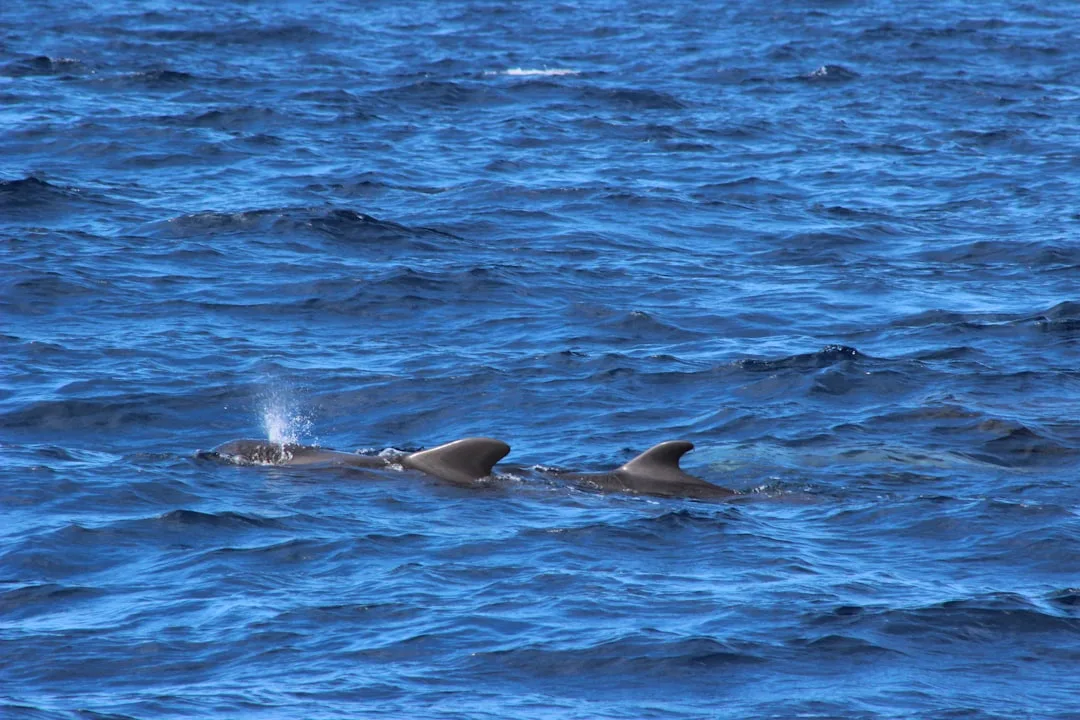
The blue whale is the largest animal ever known to have existed on Earth. Not the largest living animal - the largest animal, full stop. No dinosaur unearthed so far, including the most complete sauropods, matches a mature female blue whale for verified body mass.
At up to 30 metres in length and 150 tonnes in mass, with a heart the size of a small car, a tongue heavier than an elephant, and a voice that carries hundreds of kilometres through deep ocean sound channels, Balaenoptera musculus is biology operating at the upper physical limit for any mobile animal on this planet.
This guide covers every aspect of blue whale biology and ecology: size and anatomy, adaptations to marine life, feeding, migration, reproduction, vocalisations, conservation status, and the relationship between blue whales and the humans who nearly hunted them to extinction in the twentieth century. It is a reference entry, not a summary - so expect specifics: tonnes, metres, decibels, frequencies, populations, and verified records.
Etymology and Classification
The scientific name Balaenoptera musculus was formally applied by Carl Linnaeus in 1758. Balaenoptera means "winged whale", a reference to the species' long pectoral fins, and musculus is a Latin pun meaning both "muscular" and "little mouse" - a joke Linnaeus apparently found amusing when naming the largest animal on Earth.
The common English name "blue whale" comes from the mottled blue-grey appearance of the animal's skin when viewed through seawater, often with pale speckling that makes each individual identifiable like a fingerprint.
Blue whales belong to the order Cetacea (whales, dolphins, and porpoises), the parvorder Mysticeti (baleen whales), and the family Balaenopteridae (rorquals). Their closest relatives are the fin whale, sei whale, Bryde's whale, and the much smaller common minke whale. Genetic work since the 2000s has confirmed that blue whales and fin whales can and do interbreed, producing fertile hybrids. Fin-blue hybrids have been documented in both the North Atlantic and North Pacific.
Taxonomists currently recognise three named subspecies plus one additional population whose status is debated:
- B. m. musculus - the Northern blue whale, found in the North Atlantic and North Pacific
- B. m. intermedia - the Antarctic blue whale, historically the largest population
- B. m. brevicauda - the pygmy blue whale of the Southern Indian Ocean and southwestern Pacific
- an unnamed Northern Indian Ocean population, often proposed as a fourth subspecies
The pygmy blue whale is only "pygmy" in relative terms. Adults still reach 24 metres and 70 tonnes, dwarfing every land animal in history.
Size and Physical Description
Blue whales are built at the upper edge of what biomechanics, buoyancy, and ocean energy budgets allow. Size varies among populations, with Antarctic animals historically largest and pygmy blue whales smallest.
Typical adult size:
- Length: 24-30 metres
- Weight: 100-150 tonnes
- Tongue mass: approximately 2.7 tonnes
- Heart mass: approximately 180 kilograms
Largest verified individuals:
- Length record: 33.58 metres (Antarctic female, 1909)
- Weight record: approximately 180 tonnes (Antarctic female)
Newborn calves:
- Length: approximately 7 metres
- Weight: 2.5-3 tonnes
Blue whales display reverse sexual dimorphism - females are consistently larger than males. Their overall body shape is long, slender, and streamlined, tapering at both ends. The body is mottled blue-grey to grey above and often paler below, with a yellowish cast sometimes produced by diatom growth on the skin during long stays in polar waters. This diatom film earned the Antarctic blue whale the old whaling-era nickname "sulphur-bottom".
The dorsal fin is tiny relative to the body - often only 30 centimetres tall - and set far back on the spine. Pectoral fins (flippers) are long and slim, running up to 4 metres. The flukes (tail fins) can span 7-8 metres tip to tip. Between 60 and 90 throat pleats run from the lower jaw to the navel, allowing the throat to expand massively during lunge feeding.
The mouth houses 270-395 baleen plates per side, each up to a metre long and composed of keratin, the same protein found in human fingernails.
Individual blue whales can be identified from pigmentation patterns on the back, the shape of the dorsal fin, and scarring. Long-term photo-identification studies off California and Sri Lanka have tracked individuals for decades.
Heart, Tongue, and Internal Anatomy
Blue whales illustrate what happens when mammal anatomy scales to extreme size. Their circulatory system alone is a biological record book.
Circulatory specifics:
- Heart mass: approximately 180 kilograms (about the size of a small car)
- Aorta diameter: roughly 23 centimetres
- Heart rate at surface: 25-37 beats per minute
- Heart rate during deep dive: 2-10 beats per minute (as low as 2 bpm recorded)
Measurements published in 2019 from a free-swimming blue whale off California recorded a heart rate as low as 2 beats per minute during deep dives and as high as 37 beats per minute immediately after a surface lunge. Biologists believe blue whales operate near the upper limit of what any mammalian heart can achieve, which may be one reason the species does not grow even larger.
The tongue of an adult blue whale weighs roughly 2.7 tonnes - more than an adult Asian elephant. During lunge feeding the tongue inverts into the throat pouch to create space for the incoming water. The tongue plays no significant role in chewing; blue whales have no teeth and no true mastication. Instead krill is filtered out of seawater by the baleen plates hanging from the upper jaw.
Blue whale lungs hold roughly 5,000 litres of air. A single breath replaces around 80-90 per cent of lung volume - compared with only about 10-15 per cent in humans - allowing efficient gas exchange across extreme dive cycles. Oxygen is stored not just in the lungs but in extraordinarily high concentrations of myoglobin in the muscles, giving the meat its characteristically dark colour.
Feeding and Diet
Blue whales are obligate krill specialists. More than 95 per cent of their diet is made up of small shrimp-like crustaceans from the order Euphausiacea. Their entire biology - throat pleats, baleen, migration schedule, body size - is built around harvesting dense swarms of these centimetre-scale animals.
Principal prey species:
- Antarctic krill (Euphausia superba) - Southern Ocean
- Euphausia pacifica - North Pacific
- Thysanoessa species - North Atlantic and North Pacific
- Nyctiphanes simplex - eastern Pacific
- Copepods and small schooling fish (minor, opportunistic)
Feeding numbers:
| Metric | Value |
|---|---|
| Krill intake at peak season (per day) | 4+ tonnes |
| Krill individuals per day (approx.) | 30-40 million |
| Feeding season length | 4-6 months per year |
| Mouth opening angle during lunge | up to 90 degrees |
| Water volume engulfed per lunge | up to 100,000 litres |
| Successful lunges per dive (typical) | 3-6 |
Blue whales use a feeding strategy called lunge feeding, considered one of the most energetically expensive manoeuvres in the animal kingdom per unit of body mass. The whale first locates a dense krill patch, often at 100-300 metres depth. It then accelerates from below, rotating onto its side or back as it closes in.
At the final moment it opens its mouth to nearly a right angle and engulfs a volume of water that can exceed the whale's own body mass. The ventral throat pleats stretch into a huge expanding pouch - sometimes called a "buccal balloon" - which then contracts, forcing water out through the baleen while the krill remain trapped inside.
Each lunge takes only seconds but burns enormous energy. Blue whales are net energy-positive only when krill density is high enough to justify the cost. Studies estimate they need at least 100 grams of krill per cubic metre in a patch to break even on a lunge - and they target patches several times that density.
Migration and Range
Blue whales cover vast distances. Most populations follow long-distance seasonal migrations between cold feeding grounds and warmer breeding grounds, although individual patterns are more flexible than older textbooks suggested.
General migration pattern:
- Summer: polar and high-temperate feeding grounds, gorging on krill swarms
- Autumn: southward (Northern Hemisphere) or northward (Southern Hemisphere) migration
- Winter: low-latitude breeding and calving grounds with less food
- Spring: return to feeding grounds, often fasting through much of the journey
Regional distribution:
| Region | Subspecies or population | Status |
|---|---|---|
| North Atlantic | B. m. musculus | Recovering, sparse |
| North Pacific | B. m. musculus | Recovering, best-studied |
| Southern Ocean | B. m. intermedia | Slow recovery from 0.1% of pre-whaling numbers |
| Southern Indian Ocean | B. m. brevicauda (pygmy) | Stable, moderately monitored |
| Northern Indian Ocean | unnamed population | Largely non-migratory, small |
The eastern North Pacific population that feeds off California and Oregon in summer migrates south to breeding grounds off Mexico and the Costa Rica Dome in winter. Antarctic blue whales summer around the Antarctic Peninsula and Scotia Sea, then winter in mid-latitudes between 20 and 40 degrees south. The Northern Indian Ocean population around Sri Lanka appears not to undertake long migrations, staying in warm tropical waters year-round - an exception that still puzzles researchers.
Vocalisations and Song
Blue whales produce some of the loudest sustained sounds of any animal on Earth. Their calls are extraordinarily low-frequency, centred between 10 and 40 hertz - mostly below the lower limit of human hearing, which starts around 20 hertz.
Acoustic specifications:
- Source level: up to 188 decibels (re 1 microPascal at 1 metre)
- Frequency range: typically 10-40 Hz (some calls reach 100 Hz)
- Call duration: 15-30 seconds per unit, organised into songs of many minutes
- Propagation range: hundreds of kilometres in deep ocean sound channels
Low-frequency sound propagates enormous distances through the ocean, particularly within the SOFAR channel - a layer at about 600-1200 metres depth where sound becomes trapped by temperature and pressure gradients. Blue whale calls regularly cross entire ocean basins in this layer, though how much of that long-distance sound is actually used for communication versus navigation is still debated.
Males produce most of the long, patterned songs. Structured songs are thought to serve in mate attraction, long-distance social contact, and possibly acoustic mapping of the ocean floor and bathymetric features. Populations have distinct regional "dialects": researchers can often tell which ocean basin a recording comes from by the acoustic signature alone.
One of the strangest phenomena in marine biology is the animal known as the "52-Hertz whale". Since 1989, hydrophone networks originally deployed by the US Navy for submarine tracking have detected a single individual singing at around 52 Hz - well above the 10-40 Hz range of normal blue whale calls.
The animal's movements match blue whale migration patterns, and its song structure resembles blue whale vocalisations. It has never been visually identified. Popular media have called it "the loneliest whale in the world", assuming no other whale can hear it, though newer research suggests it may be a hybrid or may be heard by other species even if blue whales themselves ignore it.
Life Cycle and Reproduction
Blue whale reproduction is slow, which is part of the reason recovery from commercial whaling has been so protracted.
Reproductive timeline:
- Sexual maturity: 5-10 years
- Gestation: 10-12 months
- Nursing period: 6-8 months
- Interval between pregnancies: 2-3 years
- Reproductive lifespan: approximately 40-50 years
- Calves per pregnancy: 1 (twins extremely rare)
Mating occurs in warm low-latitude breeding grounds during winter. Courtship appears to involve pairs or trios of adults travelling together, with males sometimes engaging in high-speed chases and "races" for access to a receptive female. Direct observation is rare, and much of what researchers know about blue whale courtship is inferred from genetic analysis of paternity and from patterns in acoustic song.
Calves are the largest newborns of any animal species on Earth. At birth they measure about 7 metres and weigh 2.5-3 tonnes - already larger than a full-grown hippopotamus. They surface within seconds of birth, guided by the mother, and begin nursing almost immediately.
Blue whale milk is 35-50 per cent fat, among the richest mammalian milks ever measured. A nursing calf gains roughly 90 kilograms per day and consumes up to 600 litres of milk daily. By weaning at 6-8 months, the calf has approximately doubled in length and may weigh 20-25 tonnes. Unlike many social mammals, blue whale mothers provide no post-weaning care. Once the calf can feed itself on krill, it becomes independent.
Life expectancy is estimated at 80-110 years based on ear plug lamination counts. The whaling era removed almost all older individuals from the population, so true maximum longevity may be higher than modern samples suggest.
Threats and Conservation
Blue whales are listed as Endangered by the IUCN Red List. The current global population estimate of 10,000-25,000 individuals is roughly 4-10 per cent of the pre-whaling figure.
Historical whaling impact:
- Estimated 1900 global population: approximately 250,000
- Estimated 1970s global population: approximately 2,000
- Total decline: roughly 99 per cent
- Peak annual kill (Southern Ocean, late 1930s): more than 30,000 blue whales per year
- IWC full protection: 1966 (North Pacific and Atlantic); 1972 (Southern Hemisphere)
Industrial whaling after the 1860s invention of the exploding harpoon and fast steam-driven catcher boats made fast-swimming rorquals, including blue whales, economically viable to hunt for the first time. Production peaked between the two world wars in the Southern Ocean, where factory ships processed whales by the thousand.
The population crash was so severe that some biologists once believed Antarctic blue whales might be functionally extinct. Small groups survived in remote areas and began the long, slow climb back after protection.
Modern threats:
- Ship strikes. Blue whale migration corridors overlap shipping lanes off California, Sri Lanka, and the Azores. Large cargo vessels strike and kill multiple blue whales per year in some regions.
- Entanglement in fishing gear. Vertical lines associated with trap and pot fisheries can wrap around flukes and flippers.
- Ocean noise pollution. Shipping, seismic surveys, and military sonar introduce noise that masks long-distance blue whale calls and can force whales to shift calling frequency and timing.
- Climate change. Warming ocean temperatures are shifting krill distribution, especially Antarctic krill, whose life cycle depends on sea ice. A redistributed krill base changes where blue whales must feed, with uncertain knock-on effects on migration and reproduction.
- Chemical pollution. Persistent organic pollutants, including PCBs and flame retardants, concentrate in blubber and transfer from mothers to calves through milk.
- Krill fisheries. Commercial krill fishing in the Southern Ocean competes directly with blue whales for a specialised food supply.
Recovery is real but slow. The eastern North Pacific population has recovered most visibly, and Antarctic blue whale counts have begun to creep upward since the 1990s. Nevertheless, the species remains far below its historical abundance, and any single disaster in a critical feeding or breeding ground could undo decades of slow gain.
Blue Whales and Humans
For most of human history, blue whales were ecologically invisible to coastal cultures. Too fast to catch from small boats, too large to strand often, and too oceanic to interact with most fisheries, the species appears only rarely in pre-industrial human records. That changed in the late nineteenth century with exploding harpoons and fast catcher vessels. Within seventy years, the largest animal ever to live was reduced by more than ninety-nine per cent.
Today the relationship is cautiously positive. Blue whales support whale-watching industries off California, the Sea of Cortez, Sri Lanka, Iceland, and the Azores, generating meaningful economic value tied to conservation outcomes.
Research programmes use photo identification, satellite tagging, and acoustic monitoring to track individuals and populations across entire ocean basins. International protection has held since 1966, with no significant legal or illegal hunting reported in recent decades.
Public attitudes toward blue whales have shifted from exploitation to fascination. The species now routinely features in science communication, documentaries, and education as a symbol of both the extraordinary scale of the natural world and the speed at which industrial technology can dismantle it. Recovery will take centuries if it is achieved at all, and every blue whale alive today descends from the small remnant left in the 1960s.
Related Reading
- Whales of the World: Giants of the Deep
- How Whales Hold Their Breath: Diving Physiology
- Baleen vs Toothed Whales: Two Ways to Be a Giant
- Humpback Whale: Singer of the Seas
References
Relevant peer-reviewed and governmental sources consulted for this entry include IUCN Red List assessments (2018, updated 2024), International Whaling Commission population reports, NOAA Fisheries Office of Protected Resources blue whale stock assessments, and published research in Nature, Proceedings of the National Academy of Sciences, Marine Mammal Science, and Journal of Experimental Biology.
Specific figures for heart mass, heart rate, and lunge-feeding mechanics reflect the 2019 Goldbogen et al. study of free-swimming blue whales off California and subsequent work by the same group. Population estimates reflect the most recent consolidated figures as of the 2024 IWC Scientific Committee meeting.
Frequently Asked Questions
How big is a blue whale?
Adult blue whales (Balaenoptera musculus) typically measure 24-30 metres in length and weigh 100-150 tonnes. The largest reliably documented individual was a female caught in the Southern Ocean in 1909, measuring 33.58 metres. Another Antarctic female weighed a verified 180 tonnes. Females are consistently larger than males, reversing the sexual dimorphism pattern seen in polar bears and most land mammals.
The heart alone weighs roughly 180 kg, the tongue around 2.7 tonnes, and the main arteries are wide enough that a human could theoretically swim through them. No dinosaur yet discovered, including the largest sauropods such as Argentinosaurus or Patagotitan, matches the blue whale’s confirmed mass.
What do blue whales eat?
Blue whales are obligate krill specialists. Their diet is almost entirely made up of small shrimp-like crustaceans from the order Euphausiacea, especially Antarctic krill (Euphausia superba) in the Southern Hemisphere and various Thysanoessa and Euphausia species in the Northern Hemisphere. During peak feeding season an adult blue whale consumes more than 4 tonnes of krill per day - around 40 million individual animals.
Feeding is highly seasonal and concentrated at high latitudes where upwellings produce dense krill swarms. Blue whales feed using a technique called lunge feeding: they accelerate toward a krill patch, open their mouth to roughly a ninety-degree angle, engulf a volume of seawater larger than their own body, then push the water out through their baleen plates, trapping krill inside.
Where do blue whales live?
Blue whales occur in all of the world’s oceans except the Arctic. Four recognised populations (three named subspecies plus an unnamed Indian Ocean population) inhabit the North Atlantic, the North Pacific, the Southern Ocean, and the northern Indian Ocean. Most populations follow a long-distance seasonal migration between cold polar or temperate feeding grounds in summer and warmer low-latitude breeding grounds in winter.
A few populations - notably in the northern Indian Ocean around Sri Lanka - appear to be largely non-migratory. Blue whales prefer deep open-water habitats and continental shelf edges where upwellings concentrate krill. They rarely approach shorelines except where deep water comes close to the coast, such as off the Santa Barbara Channel, the Sea of Cortez, and parts of Sri Lanka.
Are blue whales endangered?
The IUCN Red List classifies blue whales as Endangered. Commercial whaling during the twentieth century reduced the global population from approximately 250,000 individuals in 1900 to around 2,000 by the early 1970s - a decline of more than 99 per cent. The International Whaling Commission imposed a full ban on blue whale hunting in 1966. Since then numbers have recovered slowly to an estimated 10,000-25,000 individuals. Recovery is uneven.
The North Pacific population appears to have rebounded more strongly than the Antarctic subspecies, which was hit hardest and recovers most slowly. Ongoing threats include ship strikes, entanglement in fishing gear, ocean noise pollution that disrupts long-distance communication, chemical pollution, krill-fishery competition, and climate-driven changes in krill distribution.
How long do blue whales live?
Blue whales typically live 80-110 years. Age estimation in whales relies on ear plug lamination counts, which deposit one or two layers per year, so the upper limit is difficult to pin down precisely. Some researchers estimate that pre-whaling blue whales may have lived past 110 years, but the destruction of older age classes during the whaling era makes modern longevity data biased downward.
Females reach sexual maturity around 5-10 years old and continue reproducing into their fifties or sixties. Each reproductive cycle lasts about two to three years: roughly 10-12 months of gestation, 6-8 months of nursing, and a rest interval before the next pregnancy.
How loud is a blue whale's call?
Blue whales produce some of the loudest sustained sounds of any animal on Earth. Recorded source levels reach 188 decibels in the low-frequency band of 10-40 hertz. For comparison, a jet engine at take-off measures around 150 dB in air, but underwater decibel scales and air decibel scales are not directly comparable because sound propagates differently through the two media.
Even adjusting for the difference, blue whale vocalisations are extraordinarily powerful. Their low-frequency moans and pulses can travel hundreds - and in the right ocean sound channel conditions, over a thousand - kilometres. Males produce most of the long-pattern songs, which are believed to function in both mating display and long-distance navigation.
A famous individual known as the ‘52-Hertz whale’ has been tracked singing at a frequency above the normal blue whale range since 1989, earning it the nickname ‘the loneliest whale in the world’.
How fast can a blue whale swim?
Blue whales cruise at approximately 20 km/h during normal swimming and migration. When alarmed or pursued they can sprint at around 50 km/h for short distances - a remarkable speed for an animal weighing up to 150 tonnes. During lunge feeding they accelerate rapidly over short distances to ram open mouths into krill patches, which is one of the most energetically expensive manoeuvres in the animal kingdom per unit of body mass.
Their streamlined body shape, enormous fluke, and powerful peduncle muscles allow efficient long-distance travel at cruise speed - blue whales routinely migrate thousands of kilometres between feeding and breeding grounds each year.
How big are blue whale calves at birth?
Blue whale calves are the largest newborns of any animal species on Earth. At birth they measure approximately 7 metres in length and weigh 2.5-3 tonnes - already larger than a full-grown hippopotamus. Gestation lasts 10-12 months. Once born, the calf nurses on milk that is 35-50 per cent fat, among the richest mammalian milks ever measured. A nursing calf gains roughly 90 kilograms of body mass per day.
Weaning occurs at about six to eight months, by which time the calf has doubled in length and may weigh 20-25 tonnes. The mother provides no post-weaning care; calves become independent once they can feed themselves on krill.