
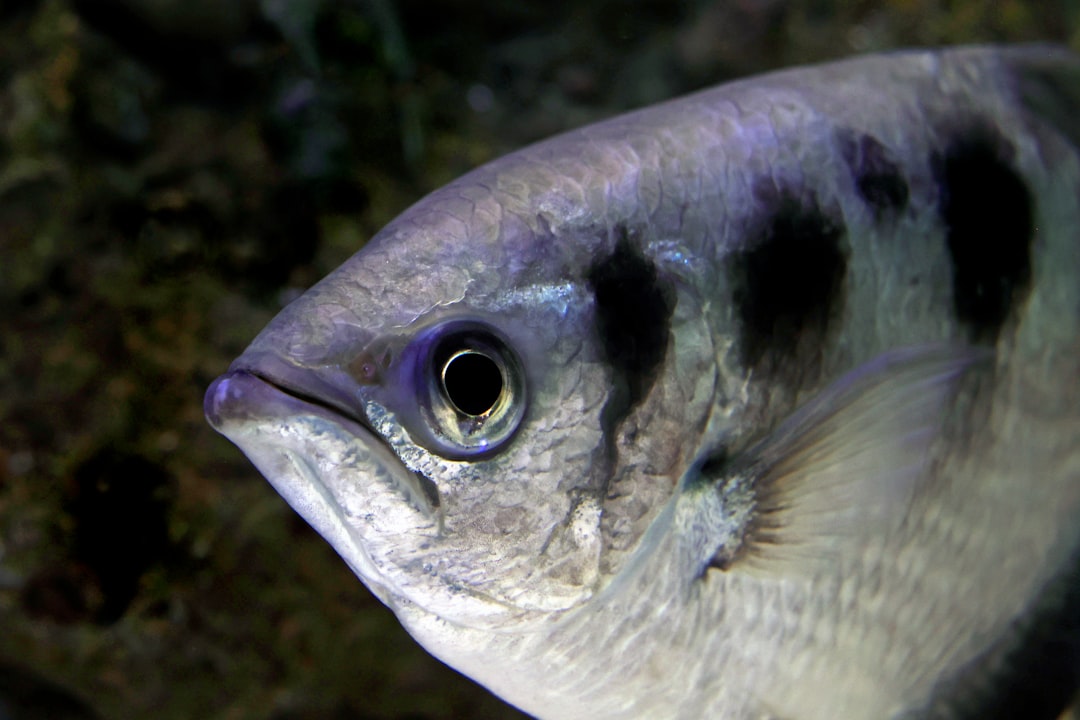
A fish that shoots water at insects. This summary of the archerfish’s most famous behaviour understates what is actually happening. Toxotes jaculatrix, the banded archerfish, shoots precisely calibrated jets of water at targets up to three metres above the surface, compensating automatically for the bending of light at the air-water interface, adjusting jet power for distance, and placing the strike within millimetres of a resting insect on a leaf or branch. Nearby fish that witness the shot immediately calculate where the falling prey will land and race toward that point — not the observed position of the insect, which they cannot see, but the predicted impact point derived from the jet’s trajectory.
This is not simple reflex behaviour. It involves solved physics, motor learning, spatial prediction, and social information use. It occurs in a fish whose entire brain fits in a space smaller than a pea, and it involves no cortex of any kind — archerfish manage their ballistic computations through neural architectures entirely different from those the vertebrate brain textbooks typically associate with sophisticated spatial cognition. The archerfish has become a model system for understanding how much intelligence can be achieved by how little neural machinery, provided that machinery is appropriately organised and that evolutionary pressure has been applied with sufficient consistency.
Etymology and Classification
The genus name Toxotes derives from the Greek toxotes, meaning archer — a direct reference to the shooting behaviour that makes the group recognisable. The species name jaculatrix comes from the Latin jaculari (to throw or shoot), again referencing the projectile behaviour. Both the genus and species names were chosen by Pallas in 1767, predating by more than two centuries the detailed experimental analysis that would eventually quantify what the fish actually achieves when it shoots.
The family Toxotidae was established to contain the archerfish genus and currently recognises seven species, all in the genus Toxotes: T. jaculatrix (the banded archerfish, the most widespread and most studied), T. chatareus (the spotted archerfish of Southeast Asia and Australia), T. blythii (the Burmese archerfish of freshwater rivers in Myanmar and Thailand), T. microlepis (the small-scale archerfish of the Malay Peninsula), T. oligolepis (the primitive archerfish of New Guinea and northern Australia), T. lorentzi (the primitive archerfish of New Guinea), and T. kimberleyensis (the Kimberley archerfish of north-western Australia, described in 2012).
The family Toxotidae was traditionally placed within the order Perciformes. Recent molecular and morphological analyses, including large-scale fish phylogenomics, have supported elevating the family to its own order, Toxotiformes, though placement varies among authorities. Archerfish share morphological features with other perciform fish — spiny dorsal fins, ctenoid scales, the general body plan of a laterally compressed reef fish — but are sufficiently distinct in jaw anatomy and shooting apparatus to be treated as a distinct evolutionary lineage.
Physical Description
The banded archerfish is a laterally compressed, moderately deep-bodied fish with the profile typical of many perciform reef species. Adults reach a maximum total length of approximately 30 cm, though most encountered in the wild measure 15 to 20 cm. Maximum body weight is approximately 400 g. Males and females are similar in external appearance with no reliable field distinction of sex.
The colouration of T. jaculatrix is characterised by a silver-white to pale yellow background on the sides, with a series of 4 to 6 dark, roughly triangular or saddle-shaped bands running down from the dorsal surface. These bands give the species its common name of “banded archerfish” and serve as distinctive field marks that separate it from the spotted archerfish (T. chatareus), which has spots rather than bands. The dorsal surface is darker, creating countershading: the fish appears less conspicuous when viewed from above against the dark bottom, and less conspicuous from below against the bright surface.
The mouth is positioned at a strongly upturned angle — the lower jaw projects noticeably beyond the upper when the mouth is closed — an adaptation for looking and shooting upward toward the overhanging vegetation in which prey rests. The teeth are small and sharp, suitable for grasping prey at the surface. The dorsal fin has 4 to 6 stout spines followed by soft rays; the pectoral fins are large and serve in hovering and fine positional adjustments during the targeting phase before a shot.
The critical internal anatomy for shooting is the palatal groove — a channel approximately 2 to 3 mm wide running along the roof of the mouth toward the front. The tongue fits tightly against this groove when pressed upward, forming a sealed tube. Rapid closure of the opercular chamber (the gill cover system) compresses water through this tube, producing a coherent jet. The tongue position and the degree of opercular contraction jointly control jet power and release timing. The groove geometry ensures the jet emerges as a tight stream rather than dispersing immediately, giving it coherent ballistic properties across metre-scale distances.
Habitat and Range
Toxotes jaculatrix has one of the widest distributions of any archerfish species, ranging from the coasts of India and Sri Lanka in the west through the entire Southeast Asian coastline, the Indonesian archipelago, the Philippine islands, Papua New Guinea, the Solomon Islands, and northern Australia in the east and south. It also occurs in coastal Polynesia. The species is found wherever suitable brackish or estuarine habitat exists within this range, from sea level at the coast to several kilometres inland in tidal river reaches.
Habitat preference is strongly tied to overhanging vegetation. Mangrove forests are the quintessential archerfish habitat: the dense tangle of aerial prop roots, low overhanging branches, and leaf canopy of mangroves creates ideal conditions for the insect and spider prey the fish pursues, while the turbid, shadowed water beneath provides visual cover for the ambushing fish. Coastal streams, tidal rivers, flooded forest margins, and brackish coastal lagoons with riparian vegetation all support populations.
Salinity tolerance is broad. T. jaculatrix is encountered in water ranging from near-fresh (below 1 part per thousand) to fully marine (35 parts per thousand), though populations in coastal mangroves typically experience daily tidal salinity fluctuations and are adapted to this variability. Temperature tolerance spans 22 to 30 degrees Celsius, with the species most abundant in warm tropical shallows. The fish is not migratory in any structured sense but may move seasonally between fresh and brackish zones in response to tidal patterns and salinity gradients.
Within its habitat, the archerfish occupies the water surface layer and the immediate submerged area below overhanging vegetation. It spends most of active daylight hours scanning the vegetation above the water for prey items. The fish hangs at a characteristic angle — body inclined downward from the surface — that positions the eyes to scan the canopy above while the shooting apparatus is directed at the same region. Groups of fish often patrol the same stretch of mangrove bank, with some social structure but no strong territorial behaviour observed in the wild.
Diet and Feeding Behaviour
The archerfish’s diet in the wild consists primarily of insects, spiders, and other small arthropods that rest on overhanging vegetation. Studies of gut contents from wild-caught specimens have identified ants, beetles, flies, spiders, caterpillars, and occasional small frogs and lizards. A substantial portion of feeding occurs without shooting: the fish also feeds on invertebrates that fall onto the water surface naturally, on aquatic insects during emergence, and on aquatic invertebrates in the substrate. Shooting is a specialised technique for obtaining prey that has not yet fallen — a way of converting inaccessible elevated resources into available food.
Shooting behaviour begins with a targeting phase. The fish approaches to within a suitable range of the prey — typically 50 cm to 2 m — and hangs in position below and lateral to the target. During targeting, the fish adjusts its body angle and position through small fin movements, sometimes taking 30 to 60 seconds to settle before shooting. The positioning brings the eyes into optimal relationship with the target, accounting for the refraction correction required.
The refraction problem is substantial. Light passing from air into water bends according to Snell’s law, displacing the apparent position of an object above the surface from its true position. A fish looking up at a target from underwater must aim not at the apparent position but at the true position, which requires computing a correction based on the angle of view and the refractive indices of water and air. Archerfish make this correction automatically and accurately. Whether this is achieved through learned calibration of a fixed neural circuit or through a more flexible computation is debated; experimental studies suggest the correction is at least partially plastic, as fish transferred between experimental tanks with different geometry eventually recalibrate.
The shot itself is brief — typically lasting 30 to 100 milliseconds. The water jet exits the mouth at velocities of approximately 1 to 4 metres per second. Critically, studies by Schlegel and colleagues demonstrated that the jet is not a smooth laminar stream but a pulsed discharge whose back end travels faster than its front; at the moment of impact with the prey, the jet’s mass is therefore concentrated into a brief, force-amplified strike. This hydrodynamic effect amplifies impact force substantially relative to what a smooth-flowing stream of the same mass would deliver.
Neuroscience of Shooting
The archerfish’s shooting behaviour has attracted considerable attention from neuroscientists interested in how the brain implements precise motor programmes. Shooting requires integrating visual information about target position, computing the ballistic trajectory required to intercept the target, selecting the appropriate muscle activation pattern for tongue and opercular pressure, and executing the release with precise timing. This is, in computational terms, a non-trivial sensorimotor problem.
Research by Schuster and colleagues at the University of Bayreuth has been particularly productive in deconstructing the neural computation underlying shooting. One key finding is that archerfish in a group can anticipate the landing position of shot prey with an accuracy comparable to the shooting fish itself, despite not having seen the prey and having access only to the jet’s trajectory as information. The bystanders compute landing position in approximately 100 milliseconds — faster than any conscious deliberate calculation — implying a hardwired or heavily automatised predictive computation.
Electrophysiological studies of the archerfish optic tectum — the primary visual processing area in the fish midbrain — have revealed responses to looming stimuli and direction of motion consistent with a system capable of computing object trajectories. The archerfish optic tectum is proportionally large relative to brain mass, reflecting the visual dominance of the species’ sensory ecology. Higher-brain involvement in shooting initiation and targeting has also been suggested by the observation that shooting frequency and accuracy change with experience — a plasticity more typically attributed to higher processing centres than to the optic tectum alone.
Reproduction and Life Cycle
Reproductive biology of T. jaculatrix in the wild is not comprehensively documented. The species is believed to be a batch spawner, releasing multiple small clutches of eggs across a breeding season rather than a single large clutch. Spawning has been observed in captive populations, where it occurs in open water rather than on substrate. Eggs are small, pelagic, and non-adhesive. Fertilisation is external.
Larval archerfish are very small at hatching and pass through a pelagic phase before settling to the benthos. Juveniles begin to show shooting behaviour at very small sizes — within a few weeks of adopting the benthic juvenile form — but accuracy at this stage is poor. Growth rate in captivity at 28 degrees Celsius is approximately 2 to 3 cm per month during the first year, decelerating thereafter. Sexual maturity is estimated at approximately 2 years of age. Wild lifespan is estimated at 5 to 8 years; captive individuals have survived to 10 years or more.
Parental care appears absent. Eggs are released into the water and subsequently receive no protection or provisioning from either parent. Mortality in the larval and early juvenile phases is presumably high, as is typical for broadcast spawners without parental investment.
Conservation Status
Toxotes jaculatrix is listed as Least Concern by the IUCN, reflecting its broad range and apparent abundance across most of its Indo-Pacific distribution. The species is not commercially fished for food at significant scale, though it is collected for the ornamental aquarium trade. This collection pressure appears to remain below levels that threaten wild populations in most regions, though trade volumes are not systematically tracked.
Mangrove loss is the most significant threat to archerfish habitat across the Indo-Pacific. Coastal development, conversion to aquaculture ponds (particularly for shrimp farming), and timber harvesting have reduced mangrove extent substantially across Southeast Asia, the region of greatest archerfish diversity and abundance. Indonesia, Malaysia, and the Philippines — countries with both high archerfish diversity and high rates of historical mangrove loss — are the regions of greatest concern. Water pollution from agricultural runoff, industrial discharge, and urban waste reduces prey insect availability and water quality throughout estuarine habitats.
Related Reading
- Dolphins: Self-Awareness and Consciousness in the Sea
- Crows and Ravens: Cognitive Abilities That Rival Primates
- Pistol Shrimp: Loudest Animal
- Painted Frogfish (Antennarius pictus)
References
Schuster, S., Wohl, S., Griebsch, M., & Klostermeier, I. (2006). Animal cognition: how archer fish learn to down rapidly moving targets. Current Biology, 16(4), 378–383. https://doi.org/10.1016/j.cub.2005.12.037
Newport, C., Wallis, G., Reshitnyk, Y., & Siebeck, U. E. (2016). Discrimination of human faces by archerfish (Toxotes chatareus). Scientific Reports, 6, 27523. https://doi.org/10.1038/srep27523
Schlegel, T., Schmid, C. J., & Schuster, S. (2006). Archerfish shots are evolutionarily matched to prey adhesion. Current Biology, 16(19), R836–R837. https://doi.org/10.1016/j.cub.2006.08.082
Timmermans, P. J. A. (2001). Catching prey from a water surface: a field study of the archerfish (Toxotes jaculatrix) in different biotopes. Netherlands Journal of Zoology, 51(2), 225–240.
Ben-Simon, A., Ben-Shahar, O., Vasserman, G., Ben-Tov, M., & Segev, R. (2012). Visual acuity in the archerfish: behavior, anatomy, and neurophysiology. Journal of Vision, 12(12), 18. https://doi.org/10.1167⁄12.12.18
Burnett, J. A., Boersma, A., & Bhatt, D. (2019). Ballistic computation in the archerfish: precision biomechanics and neuro-optics. Journal of Experimental Biology, 222(4), jeb176859. https://doi.org/10.1242/jeb.176859
Frequently Asked Questions
How does the archerfish spit water so accurately?
The archerfish creates its water jet by pressing the tongue tightly against a specialised groove running along the roof of the mouth, forming a tube. The gill covers (opercula) close rapidly, compressing water through this tube under pressure. The tongue can modulate the release, producing a pulsed jet rather than a smooth stream. The pulsation is critical: the back of the jet travels faster than the front, so the jet is actually accelerating as it travels — the force at impact is concentrated into a brief intense pulse rather than distributed along the entire jet. This increases striking force. The fish compensates for light refraction at the water surface through sensory mechanisms not yet fully decoded, shooting at the correct angle to intercept prey that appears displaced by the bending of light at the interface.
Can archerfish really recognise human faces?
Yes. A 2016 study by Newport, Wallis, Reshitnyk, and Siebeck published in Scientific Reports trained archerfish to spit at a target human face displayed on a monitor above the tank. When presented with novel faces, the fish selected the previously trained face with greater than 80% accuracy. This held even when images were converted to greyscale and standardised for overall brightness, ruling out simple colour or luminance cues. The finding was significant because archerfish lack the neocortex region that is often assumed necessary for face discrimination in mammals. The experiment demonstrated that sophisticated individual recognition is achievable through other neural architectures.
How far can an archerfish shoot?
Archerfish have been documented shooting accurately at distances up to approximately 3 metres above the water surface. The maximum recorded shot, under laboratory conditions with minimal wind and optimal positioning, has been reported at close to 5 metres, though accuracy declines substantially beyond 3 metres. At 1 metre range, accuracy in the most studied species (T. jaculatrix) approaches 90% for experienced adult fish. The force of the jet at typical hunting distances is sufficient to knock insects cleanly off vegetation and stun them on contact. Accuracy is affected by wind, the angle of the water surface, and whether the fish is shooting from directly below the target or from an oblique angle.
Where do archerfish live?
Archerfish are predominantly mangrove and estuarine species, inhabiting the brackish water zones where freshwater rivers meet saltwater coasts across the Indo-Pacific region. Toxotes jaculatrix ranges from India and Sri Lanka through Southeast Asia, the Indonesian archipelago, the Philippines, Papua New Guinea, and northern Australia. It tolerates a wide salinity range from fresh water to full marine conditions and is also found in coastal streams and flooded forest margins. Habitat preference is strongly associated with overhanging vegetation that shelters insects and other prey and provides shade; dense mangrove stands with complex aerial root systems and canopy overhang represent optimal habitat.
Do archerfish learn to shoot, or is it instinctive?
Both instinct and learning are involved. Young archerfish are born with the neurological equipment and physical anatomy required for shooting, and will attempt to shoot at prey instinctively from their earliest weeks. However, shot accuracy in juveniles is poor: the jets are weak, poorly aimed, and inconsistent in power delivery. Over several weeks to months, accuracy improves substantially through a process that appears to be motor learning — the fish adjust their shooting behaviour based on the outcomes of previous attempts. Adult fish that have been shooting for years demonstrate markedly superior accuracy and power delivery compared with juveniles, and the social learning component may also be significant: juveniles that can observe successful shooting by adults appear to improve more rapidly.
What happens when an archerfish shoots prey off a branch?
When a successful shot knocks prey off overhanging vegetation, the prey falls toward the water surface. Nearby archerfish — including individuals that did not make the shot — immediately begin swimming at speed toward the predicted landing point. Studies by Schuster et al. have shown that bystander fish correctly predict the landing location using only information from the water jet trajectory (they cannot see the prey directly), computing the interception point almost instantaneously. This predictive behaviour requires rapid processing of ballistic information and is considered evidence of sophisticated spatial cognition. The first fish to the landing point typically secures the prey, creating strong selective pressure for fast and accurate prediction.
Is the archerfish endangered?
Toxotes jaculatrix is listed as Least Concern by the IUCN, and the species is considered common across most of its range. Mangrove habitat loss from coastal development, aquaculture pond construction, and logging represents the most significant threat to local populations. The species is also collected for the aquarium trade, though at levels that have not demonstrably impacted wild populations. Several other Toxotes species with more restricted ranges may be under greater pressure from habitat loss, though IUCN assessments for all species in the genus list them at Least Concern. Pollution of estuarine habitats by agricultural runoff and industrial discharge reduces prey insect availability and water quality in ways that could locally reduce population density.
Can archerfish be kept in an aquarium?
Yes. Archerfish are kept in public aquaria and in the private aquarium trade. They require a covered tank with a significant air gap above the water surface so they can practise shooting, which they will do at insects placed on the glass or objects floating at the surface. Water conditions for T. jaculatrix ideally include some brackish salinity (5 to 10 parts per thousand), though captive populations can adapt to fresh water. The fish are social and do best in groups of three or more. They can be fed with live insects — flies, crickets — dropped onto the water surface or placed above it, which maintains their natural hunting behaviour and provides the environmental enrichment appropriate for a cognitively active fish. Water temperature should be maintained at 24 to 30 degrees Celsius.