
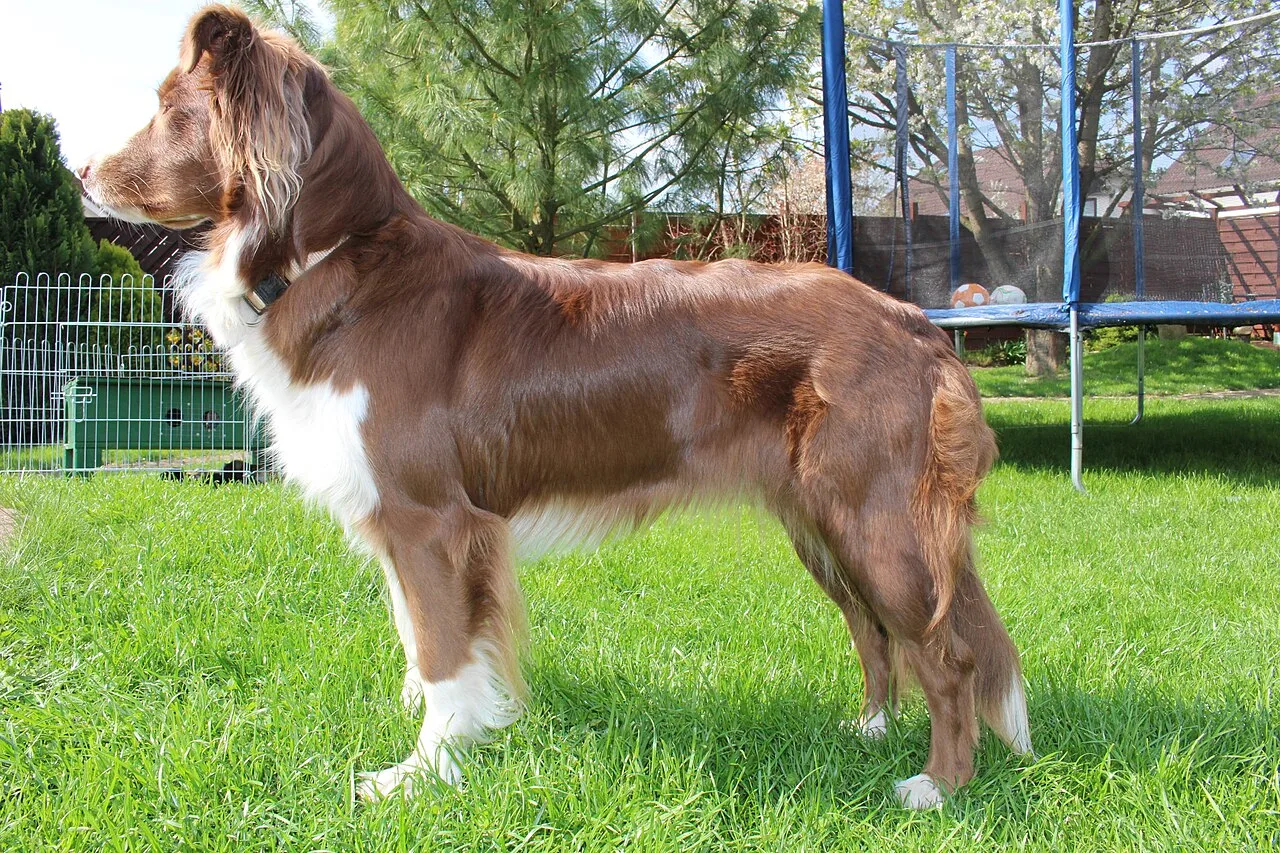
The Australian Shepherd is one of the most capable, energetic, and demanding working dog breeds commonly kept as a companion animal, and also one of the most misunderstood. The breed's name suggests an Australian origin, but the Australian Shepherd was developed in the American West, on the ranches and sheep stations of California and the surrounding region, in the 19th century.
The "Australian" connection likely traces to Basque shepherd dogs brought to the American West via Australia in the mid-1800s, but the breed as it exists today is thoroughly American in its development, refined by generations of working ranch dogs selected for their ability to herd livestock all day in demanding conditions.
The Australian Shepherd's widespread popularity as a companion dog; it has ranked in the AKC top 20 most registered breeds for years, and consistently higher in recent surveys, is, from a welfare perspective, both a testament to the breed's qualities and a cause for concern.
The qualities that make an Australian Shepherd a supreme working dog, intensity, drive, high energy, the need for constant mental engagement, and a compulsion to herd anything that moves, are not qualities that translate automatically to apartment living or ownership by people who want a dog that is content with a daily 20-minute walk.
This guide covers the Australian Shepherd completely and honestly: origins, the merle genetics, health conditions including the critical MDR1 mutation, training requirements, exercise needs, and the realistic picture of what Aussie ownership involves.
Origins and History
The Australian Shepherd's actual genetic ancestry is complex and partially speculative. The prevailing account holds that Basque shepherds from the Pyrenean region of Spain and France, who had historically used a distinctive type of working herding dog, emigrated to Australia in the 19th century as part of the global wool industry expansion.
When Basque shepherds subsequently emigrated from Australia to California, bringing their dogs with them, American ranchers assumed the dogs were Australian because that was where their handlers had come from immediately before arrival. The dogs were called "Australian Shepherds" from this association, not from any Australian breed development.
In California and the broader American West, these Basque herding dogs were bred to other working herding dogs, the exact combinations are not documented, and refined through the practical, performance-based selection of ranching life.
A dog that could not work, that could not run all day, herd cattle and sheep in demanding terrain, respond to commands at distance, and handle complex livestock behaviour, was not kept. The intense selection pressure of working ranch life over several generations produced a dog of extraordinary physical endurance, acute intelligence, and tireless herding drive.
Jay Sisler, an Idaho rodeo performer, popularised the Australian Shepherd in the United States through trick dog and rodeo performances in the 1950s and 1960s, introducing the breed to audiences across North America through television and live performance. The breed's agility, intelligence, and biddability were on clear display in Sisler's performances, and public interest in the breed grew substantially.
The AKC recognised the Australian Shepherd in 1991, late for a well-established working breed, reflecting the breed community's ambivalence about conformation show registration in a breed defined primarily by working ability. The Australian Shepherd Club of America (ASCA) was founded in 1957 and maintains its own registry for performance competition independently of the AKC.
Physical Characteristics
The Australian Shepherd is a medium-sized working dog with a lean, muscular build designed for speed, agility, and sustained endurance.
| Measurement | Male | Female |
|---|---|---|
| Height at withers | 51-58 cm (20-23 in) | 46-54 cm (18-21 in) |
| Weight | 25-32 kg (55-70 lb) | 16-25 kg (35-55 lb) |
| Build | Slightly longer than tall, rectangular proportion |
The coat is medium length, straight to wavy, with a coarser outer coat and a denser, soft undercoat. Shedding is moderate to heavy year-round with two seasonal heavy moults. Feathering is present on the backs of the legs and on the chest. The coat is weather-resistant.
The merle coat pattern is strongly associated with the Australian Shepherd and is one of the breed's most distinctive visual features. Merle creates a mottled, marbled effect by causing partial pigment loss in random areas of the coat.
Australian Shepherds are found in four base colours: black, red (liver), blue merle (black-based merle), and red merle (red-based merle), all with or without white markings and copper (tan) points. The combination of these patterns creates the extraordinary visual variety characteristic of the breed.
Eye colour in Australian Shepherds is highly variable and often merle-related: eyes can be brown, blue, amber, or combinations (partial heterochromia), often with speckled or marbled patterns. All of these eye colour variants are normal in the breed.
The natural bobtail (NBT) gene occurs in a proportion of Australian Shepherds, producing puppies born with naturally shortened or absent tails. Australian Shepherds have traditionally been docked in working and show contexts; where docking is prohibited (most of Europe), natural bobtails are particularly valued in show lines.
The Merle Gene and Double Merle Risk
The merle gene (M locus) in Australian Shepherds is a critically important topic for anyone purchasing a puppy from this breed. The merle allele causes partial pigment loss in the coat and eyes; a single copy of the merle allele (Mm genotype) produces the standard merle pattern without associated health risks.
Double merle occurs when two merle dogs are bred together, producing offspring with a 25 percent probability of inheriting two copies of the merle allele (MM genotype). Homozygous merle (MM) dogs are born predominantly white, because the double dose of pigment-reducing gene causes extensive depigmentation. The same depigmentation affects the eyes and the inner ear, where melanocytes are required for cochlear development. Double merle dogs have significantly elevated rates of:
- Microphthalmia (abnormally small, non-functional eyes)
- Incomplete eye development and structural eye defects
- Congenital deafness (unilateral or bilateral)
- Combinations of eye and hearing deficits
"Breeding two merle dogs together, regardless of breed, is an established genetic risk for producing offspring with severe eye and hearing deficits. The Australian Shepherd, as the breed most strongly associated with the merle pattern, has the highest incidence of double merle production, and it remains a welfare concern in poorly educated breeding programs." Strain, G. M. (2012). Deafness prevalence and pigmentation and gender associations in dog breeds at risk. The Veterinary Journal, 193(2), 429-433. https://doi.org/10.1016/j.tvjl.2011.11.030
Responsible breeders do not breed merle to merle. DNA testing for the merle gene is available and allows breeders to make informed breeding decisions. Prospective buyers of Australian Shepherd puppies should ask specifically whether both parents are merle; a "merle to merle" breeding is a significant welfare red flag. BAER testing should be performed on all Australian Shepherd puppies, particularly those with white markings.
Temperament
The Australian Shepherd's temperament is defined by its working history: intensity, intelligence, drive, and a compulsive need to be doing something. These traits coexist with genuine affection for people and an eagerness to work with a handler that makes the breed highly trainable when that energy is properly channelled.
Aussies are typically described as "velcro dogs" they are deeply attached to their people and follow their owners attentively. They are not independent dogs that are happy to entertain themselves; they want to be engaged, to be given tasks, to be working.
Without sufficient mental and physical engagement, the herding drive that makes the Australian Shepherd remarkable in the field manifests as herding children, other pets, bicycles, joggers, and anything else that moves, often with the characteristic nipping at heels that is the herd-driving behaviour of a working dog with nothing appropriate to herd.
The breed's intense observation and responsiveness to environmental stimuli means Australian Shepherds can be noise-sensitive and may develop anxiety or reactivity in environments with insufficient positive early exposure. Thorough, varied socialisation during the critical puppy period (3 to 16 weeks) is particularly important in this breed.
"The Australian Shepherd's herding instinct is not metaphorical; it is a genuine behavioural drive that exists regardless of whether livestock are present. Owners who do not understand this and do not provide structured outlets for the herding and chase drive will find that the drive finds its own outlet, frequently in ways they did not anticipate." Australian Shepherd Club of America, Breed Education Resources, 2022.
The breed is typically good with children it has been raised with, though its herding instinct toward running children can be startling to parents who have not been warned. The nipping and circling of a young child who is running is not aggression; it is herding behaviour, but it requires active training management to redirect.
Health: MDR1 and Key Conditions
The most distinctive and medically critical health issue in the Australian Shepherd is the MDR1 gene mutation, which has direct consequences for veterinary drug choices throughout the dog's life.
MDR1 (Multi-Drug Resistance Gene 1) Mutation: The MDR1 gene encodes a protein (P-glycoprotein) that functions as a drug efflux pump in the blood-brain barrier, actively preventing certain drugs from entering the brain in toxic concentrations. A deletion mutation in the MDR1 gene (also designated ABCB1-1Delta) causes the P-glycoprotein to be non-functional.
Dogs with two copies of the mutation (homozygous, MDR1/MDR1) have severe impairment of this drug protection mechanism; dogs with one copy (heterozygous, MDR1/normal) have partial impairment.
Drugs that cross the blood-brain barrier at toxic levels in MDR1-affected dogs include:
- Ivermectin (common antiparasitic): causes neurological toxicity in MDR1-affected dogs at doses used routinely in farm animals (but not in standard dog heartworm prevention doses, standard heartworm prevention doses of ivermectin are safe even in MDR1-affected dogs)
- Milbemycin, moxidectin, selamectin (antiparasitics)
- Loperamide (Imodium, over-the-counter anti-diarrhoeal): causes severe neurological symptoms at standard doses in affected dogs
- Certain chemotherapy agents (vincristine, doxorubicin)
- Acepromazine (sedative): prolonged sedation in affected dogs
- Butorphanol (opiate analgesic)
The MDR1 mutation is present in approximately 50 percent of Australian Shepherds in the United States. DNA testing is commercially available through the Washington State University Veterinary Diagnostic Laboratory and other laboratories. Testing is strongly recommended before any veterinary prescription involving the drug list above.
| Health Condition | Prevalence | Notes |
|---|---|---|
| MDR1 gene mutation | ~50% of US Australian Shepherds | DNA test essential; affects drug choices |
| Hip dysplasia | ~20% of evaluated dogs | OFA breed statistics, highest among herding breeds |
| Epilepsy / idiopathic epilepsy | Elevated breed prevalence | May have genetic component |
| Collie eye anomaly (CEA) | Significant breed prevalence | DNA test available |
| Hereditary cataracts | Present in breed | DNA test available |
| Progressive retinal atrophy (PRA) | Present in breed | DNA test available |
| Double merle visual/hearing deficits | Depends on breeding practices | See merle genetics section |
Hip dysplasia at approximately 20 percent (OFA data) is the highest rate among herding breeds, a striking statistic for a breed known for athletic capability. This reflects the reality that hip radiograph screening is voluntary and OFA-submitted dogs are often preselected, meaning true population prevalence may differ, but the recorded rate is nonetheless significant. Reputable breeders provide OFA or PennHIP hip clearances.
Collie eye anomaly (CEA) is a developmental condition affecting retinal and choroidal development. Mild cases may cause no functional vision impairment; severe cases (choroidal hypoplasia combined with coloboma or retinal detachment) can cause significant vision loss. A DNA test identifies carriers and affected dogs, allowing breeding decisions that eliminate the condition from lines.
See Australian Shepherd Health Problems for the complete health reference.
Training
The Australian Shepherd is among the most trainable breeds in existence when provided with structured, consistent positive reinforcement training. It is also among the most challenging to manage when training requirements are not met, because its intelligence and drive find their own outlets in the absence of appropriate channelling.
Key training considerations for Australian Shepherds:
Start early and maintain consistency: Training should begin at 8 weeks and continue throughout the dog's life. The Aussie's intelligence means it learns what is reinforced very quickly, both the behaviours you want and the behaviours you inadvertently reinforce by inconsistent response.
Mental stimulation is as essential as physical exercise: An Aussie that has run 5 kilometres but received no mental engagement is not a satisfied dog. Structured training sessions, nosework, herding practice or sports (even without livestock), and puzzle work engage the working brain that physical exercise alone does not reach.
Address herding behaviour immediately: Nipping at children's heels, circling joggers, and chasing bikes are all expressions of herding drive. These behaviours require immediate, consistent redirection, not punishment, which increases anxiety and can worsen reactive behaviour, but active training to redirect the drive into appropriate outlets.
Recall is critical and requires sustained training: The Aussie's drive and reactivity to movement means recall under distraction requires extensive, systematic training on a long line before any off-lead freedom is granted.
See also: Australian Shepherd Training Guide, How to Train a Puppy, and Best Dogs for Families with Kids.
Exercise
The Australian Shepherd's exercise requirements are among the highest of any breed commonly kept as a companion dog. It was bred to run and herd livestock all day across demanding terrain, and its energy output must be matched by its exercise provision.
Minimum exercise for an adult Australian Shepherd: 2 hours of vigorous activity daily. This should include sustained aerobic exercise, running alongside a cyclist, extended off-lead running in a securely fenced area, organised herding work, or dog sport training, rather than just leash walks. Leash walks are inadequate as the primary exercise source for this breed.
Mental exercise must accompany physical exercise. A consistent recommendation from Australian Shepherd owners and behaviourists is this: an Aussie that has received both intensive physical exercise and a meaningful training or mental work session is calm, content, and pleasant to live with. An Aussie that has received only physical exercise, or only leash walks, will not be.
Activities that suit Australian Shepherds exceptionally well:
- Herding work with livestock (or herding-instinct evaluation with sheep)
- Agility (the Aussie is one of the top agility competition breeds)
- Flyball, disc dog (Frisbee), and other high-speed sports
- Competitive obedience and rally
- Nosework and scent detection
- Canicross and bikejoring
See Exercise Needs by Dog Breed for comparison with other demanding breeds.
Grooming
The Australian Shepherd's medium-length double coat requires regular but not intensive grooming. Shedding is moderate to heavy year-round with two pronounced seasonal moults.
Brushing: 2 to 3 times weekly minimum; daily during seasonal moults. A slicker brush and metal comb work through the feathering and undercoat. The areas most prone to matting are behind the ears, in the armpit areas, and in the hindquarter feathering.
Bathing: Every 4 to 6 weeks or as needed. The weather-resistant outer coat repels some dirt, and the Aussie typically does not develop strong body odour between baths. A high-velocity dryer after bathing significantly reduces undercoat and accelerates drying.
Professional grooming: Optional. Many Aussie owners manage all grooming at home. Professional grooming every 8 to 12 weeks is helpful for owners who prefer trimming of the foot hair, ear fringe, and tail.
Ears, nails, and teeth: Weekly ear inspection, nail trimming every 3 to 4 weeks, and daily dental brushing complete the maintenance routine.
Never shave an Australian Shepherd's double coat. The undercoat provides protection from solar radiation and thermal regulation in both heat and cold; shaving disrupts both functions and may cause permanent coat texture changes.
Feeding
Australian Shepherds require a diet that supports their high energy output and significant muscle mass. Medium-breed formulas from AAFCO-compliant manufacturers are appropriate.
| Life Stage and Activity | Approximate Daily Calories |
|---|---|
| Adult Aussie (27 kg, moderate activity) | 1,200-1,500 kcal/day |
| Active/working Aussie | 1,600-2,200 kcal/day |
| Senior Aussie (reduced activity) | 1,000-1,200 kcal/day |
| Puppy (8-16 weeks) | 900-1,200 kcal/day in 3 meals |
Active Australian Shepherds in sport or working roles have genuinely high caloric requirements. Performance dog nutrition, with higher protein and fat density, is appropriate for dogs in sustained high-intensity work. Standard maintenance formulas are appropriate for companion Aussies with moderate exercise levels.
Puppies should eat a large breed puppy formula or all life stages formula with appropriate calcium-phosphorus ratios; the breed's hip dysplasia risk (20% OFA rate) means avoiding excessive calcium supplementation during growth is a sensible precaution.
References
Mealey, K. L., Bentjen, S. A., Gay, J. M., & Cantor, G. H. (2001). Ivermectin sensitivity in collies is associated with a deletion mutation of the mdr1 gene. Pharmacogenetics, 11(8), 727-733. https://doi.org/10.1097/00008571-200111000-00012
Strain, G. M. (2012). Deafness prevalence and pigmentation and gender associations in dog breeds at risk. The Veterinary Journal, 193(2), 429-433. https://doi.org/10.1016/j.tvjl.2011.11.030
Orthopedic Foundation for Animals. (2023). Australian Shepherd Hip Dysplasia Statistics. Retrieved from https://ofa.org
Australian Shepherd Club of America. (2022). Health and Genetics Committee: MDR1, CEA, and Eye Testing Resources. Retrieved from https://asca.org/health/
Kijas, J. W., Cideciyan, A. V., Aleman, T. S., et al. (2002). Naturally occurring rhodopsin mutation in the dog causes retinal dysfunction and degeneration mimicking human dominant retinitis pigmentosa. Proceedings of the National Academy of Sciences, 99(9), 6328-6333. https://doi.org/10.1073/pnas.082714499
Coren, S. (1994). The Intelligence of Dogs. New York: Free Press. [Australian Shepherd ranked highly in obedience and working intelligence]
Frequently Asked Questions
What is the MDR1 mutation in Australian Shepherds?
The MDR1 mutation (also called ABCB1-1Delta) is a deletion in the gene encoding P-glycoprotein, a drug efflux pump that normally prevents certain drugs from accumulating to toxic levels in the brain. Dogs with this mutation cannot effectively exclude specific drugs from crossing the blood-brain barrier, making them sensitive to neurological toxicity from drugs that are routinely safe in other dogs.
Approximately 50 percent of Australian Shepherds in the United States carry at least one copy of the mutation. Affected drugs include ivermectin at high doses, loperamide (Imodium), certain antiparasitic drugs, acepromazine, and some chemotherapy agents. DNA testing before any veterinary procedure or prescription involving this drug list is strongly recommended.
Are Australian Shepherds good family dogs?
Australian Shepherds can be outstanding family dogs for active families who understand the breed’s requirements. Their intelligence, trainability, and loyalty make them deeply connected family companions. The challenges specific to families are: the breed’s herding instinct, which causes them to chase and nip at running children; their very high exercise requirements (2 hours of vigorous activity daily); and their need for consistent mental engagement.
Families with young children should be prepared to actively manage the herding behaviour and to train redirect commands consistently. Australian Shepherds in families that provide adequate exercise, structured training, and mental engagement are among the most rewarding working breed companions.
What is double merle and why is it a problem?
Double merle occurs when two merle-patterned dogs are bred together, producing a 25 percent probability that each offspring will inherit two copies of the merle gene (MM genotype). The double merle gene interaction causes extensive depigmentation, producing predominantly white dogs. The same depigmentation process affects the eyes and inner ear, where pigment-producing melanocytes are required for normal development.
Double merle dogs have significantly elevated rates of microphthalmia (abnormally small eyes), structural eye defects, and congenital deafness. Responsible breeders never breed merle to merle. Prospective Australian Shepherd buyers should ask whether both parents are merle-patterned, and should avoid breeders who produce merle-to-merle litters.
How much exercise does an Australian Shepherd need?
Adult Australian Shepherds require a minimum of 2 hours of vigorous activity daily, and this should include sustained aerobic exercise that elevates heart rate, running, agility training, fetch, or herding work, not just leash walking. Leash walking is inadequate as the primary exercise for this breed.
The Aussie’s working heritage means it was bred to run and work all day; a companion Aussie that receives insufficient exercise develops destructive behaviours, anxiety, and intensified herding drive directed at household members. Mental stimulation through training sessions, nosework, and enrichment activities is equally important alongside physical exercise.
Why is the Australian Shepherd called Australian if it was developed in America?
The name Australian Shepherd reflects an association, not an origin. The prevailing account holds that Basque shepherds from the Pyrenean region of Europe emigrated first to Australia as part of the 19th-century wool industry, bringing their herding dogs with them. When these shepherds subsequently moved to the American West, primarily California, American ranchers associated the dogs with where their handlers had most recently come from: Australia.
The breed was then refined on American ranches through generations of working selection, and the AKC did not recognise it until 1991. The Australian Shepherd is an American breed with a Basque/European herding dog foundation and an Australian naming accident.
What health tests should an Australian Shepherd have?
The recommended health testing for Australian Shepherds addresses their most significant hereditary conditions. MDR1 gene test: essential, identifies whether the dog carries the drug-sensitivity mutation, informing safe veterinary drug choices for the dog’s entire life. Hip evaluation: OFA or PennHIP radiograph, given the 20% OFA hip dysplasia rate. Eye testing: CAER eye examination by a board-certified ophthalmologist.
DNA tests: Collie eye anomaly (CEA), hereditary cataracts, and progressive retinal atrophy (PRA) are all testable. Epilepsy screening has no current DNA test but family health history is relevant. Reputable breeders provide documentation of MDR1 status, hip clearances, and eye and DNA test results for both parents.