
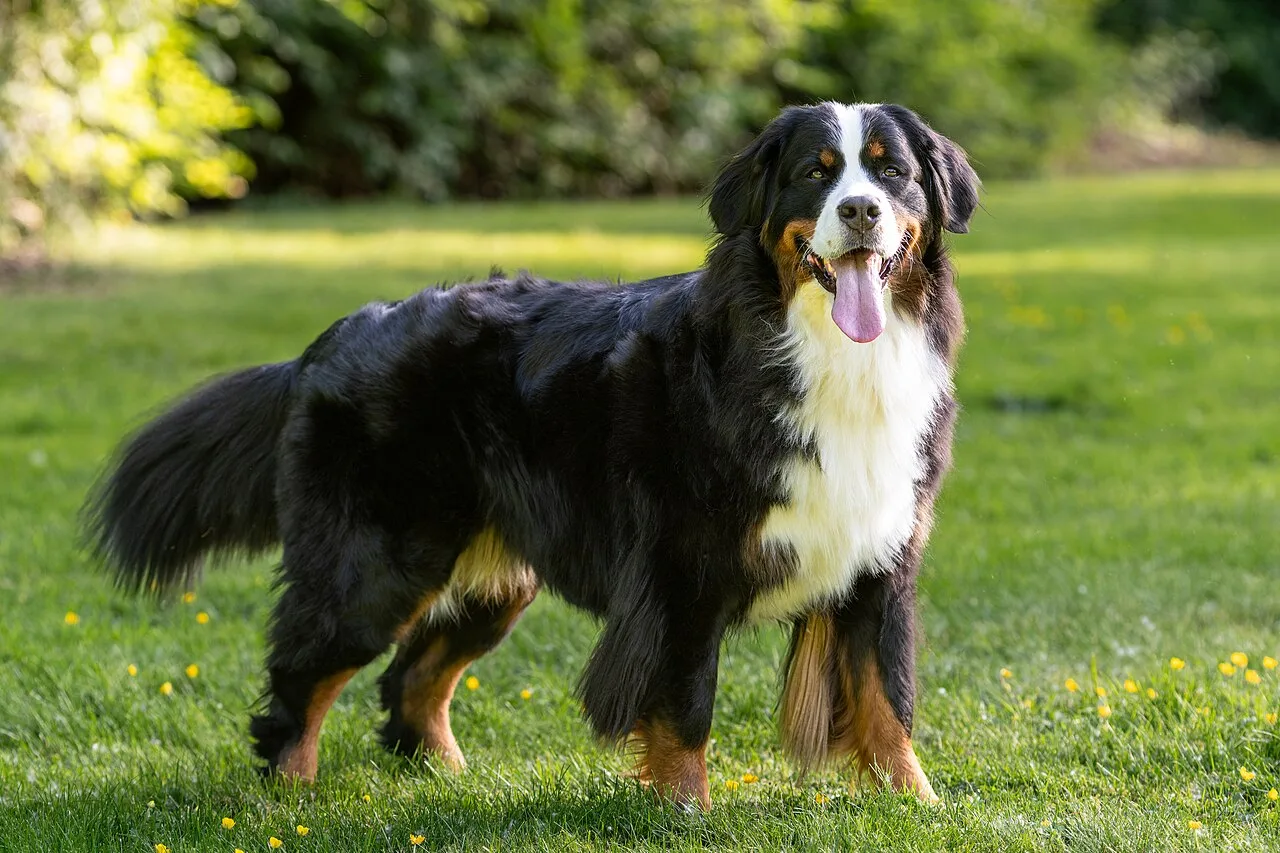
The Bernese Mountain Dog is among the most instantly recognizable and beloved large breeds in the world. With its striking tricolor coat of black, white, and rust, its calm and affectionate temperament, and its substantial, well-muscled frame, the Berner commands admiration wherever it goes.
Yet this breed comes with a sobering reality that prospective owners must understand: the Bernese Mountain Dog has one of the shortest lifespans of any purebred dog, and cancer, particularly an aggressive form called histiocytic sarcoma, is the breed's leading cause of death.
Swiss Alpine Heritage
The Bernese Mountain Dog is one of four Swiss Mountain Dog breeds, collectively known as Sennenhunde, which translates roughly as "Alpine herders' dogs." The four breeds are the Greater Swiss Mountain Dog, the Appenzeller Sennenhund, the Entlebucher Mountain Dog, and the Bernese Mountain Dog. Of the four, the Bernese is the only one with a long silky coat.
The breed takes its name from the canton of Bern in Switzerland, where it was used as a farm working dog, pulling carts of milk and cheese to market, driving cattle over mountain passes, and guarding farms and farmyards. These were genuine working tasks in the Swiss agricultural economy of the 19th century, and the Bernese Mountain Dog's substantial size, strength, and calm temperament made it well suited to all of them.
By the latter half of the 19th century, the breed was in decline, increasingly replaced by other means of transport and by crossbreeding with imported mastiffs and other dogs. Professor Albert Heim, a Swiss geologist and dog enthusiast, took up the cause of preserving and standardizing the Swiss Mountain Dogs. Through his efforts and those of the Bernese Mountain Dog Club (founded 1907), the breed was formally established and its population stabilized.
The breed reached the United States in 1926 when a Kansas farmer imported a breeding pair. The American Kennel Club recognized the Bernese Mountain Dog in 1937, placing it in the Working Group where it remains.
Physical Characteristics
The Bernese Mountain Dog is a large, sturdy, and well-balanced dog. The breed is slightly longer than it is tall, with a broad, flat skull, a strong muzzle, and medium-sized triangular ears. The overall impression is of strength, agility, and intelligence combined with gentleness.
| Physical Characteristic | Males | Females |
|---|---|---|
| Height | 64-70 cm (25-27.5 in) | 58-66 cm (23-26 in) |
| Weight | 38-50 kg (84-110 lbs) | 36-48 kg (80-105 lbs) |
| Chest depth | Deep, reaching to elbows | Deep, reaching to elbows |
| Coat type | Long, slightly wavy or straight, silky | Same |
| Coat pattern | Tricolor: jet black base, white chest, rust markings | Same |
| Tail | Bushy, carried low | Same |
| Lifespan | 7-10 years | 7-10 years |
The tricolor coat pattern is fixed and distinctive: the base color is jet black covering the back, sides, and top of the head; white appears on the chest (ideally forming an inverted Swiss cross), the blaze on the face, and the feet; rust (reddish-brown) markings appear above the eyes, on the cheeks, on the sides of the muzzle, and on the legs between the black and white. Symmetry of these markings is valued in the show ring but does not affect the dog's character or health.
The coat is beautiful but requires significant maintenance. It sheds heavily, particularly in spring and fall seasonal shedding periods, and requires regular brushing, at minimum two to three times per week, to prevent matting and keep it clean.
Temperament: The Gentle Giant
The Bernese Mountain Dog is widely regarded as one of the gentlest and most family-friendly of the large breeds. The breed's temperament is typically calm, patient, affectionate, and good-natured. Berners form strong bonds with their families and are particularly well-suited to households with children, with whom they are characteristically patient and tolerant.
"The Bernese Mountain Dog represents one of the classic examples of what selective breeding for temperament can achieve. Generations of selection for working calmly with farmers, children, and livestock have produced a breed with a remarkably stable and gentle disposition." Dr. Benjamin Hart, Professor Emeritus, School of Veterinary Medicine, University of California Davis, in Canine and Feline Behavioral Therapy (2012)
One important characteristic is the Bernese Mountain Dog's slow maturation. These dogs do not reach full emotional and behavioral maturity until around three years of age, meaning that a two-year-old Berner is still, in many respects, a puppy despite its adult size. This extended juvenile period means that owners must be patient with energy levels and training responsiveness well into the dog's third year.
Berners are intelligent enough to learn commands readily but can be willful and easily distracted, particularly outdoors. Positive reinforcement training from puppyhood is essential. Their size means that leash manners and basic obedience are not optional: an undertrained 45-kilogram dog that pulls, jumps, or does not reliably come when called poses genuine safety and management challenges.
The Lifespan Crisis and Cancer
The most difficult aspect of Bernese Mountain Dog ownership is the breed's short lifespan and high cancer burden. The average lifespan for the breed is 7-8 years, with some studies reporting medians as low as 7 years for males. A few individuals live to 10-12 years, but this is exceptional. This is notably shorter than the average for large breeds generally, and dramatically shorter than breeds of similar size such as the Labrador Retriever (10-12 years) or Standard Poodle (12-15 years).
Cancer is responsible for approximately 50-60% of Bernese Mountain Dog deaths, making it far and away the leading cause of mortality in the breed. Within cancer deaths, histiocytic sarcoma deserves special attention.
Histiocytic sarcoma is an aggressive malignant tumor arising from histiocytes (a type of immune system cell). It can occur as localized tumors in individual organs (particularly the spleen, liver, lungs, and bone marrow) or as disseminated (systemic) disease affecting multiple sites simultaneously. In its disseminated form, it progresses rapidly and carries a very poor prognosis.
Studies have found that histiocytic sarcoma affects approximately 25% of Bernese Mountain Dogs, a rate dramatically higher than in any other breed. A study by Abadie et al. (2009) found that in Bernese Mountain Dogs in France, the breed-specific incidence of histiocytic sarcoma was approximately 25.7%, compared with less than 1% in other breeds studied. The disease has a strong hereditary component in Berners, with particular chromosomal regions implicated in genome-wide association studies.
| Cancer Type | Approximate Share of Cancer Deaths in Berners |
|---|---|
| Histiocytic sarcoma | ~25% of all Berners affected; leading cancer cause |
| Lymphoma | Second most common |
| Osteosarcoma | Elevated in large breeds |
| Mast cell tumor | Present |
| Other carcinomas/sarcomas | Various |
For a comprehensive discussion of canine lifespan factors see How Long Do Dogs Live.
Other Health Conditions
Hip dysplasia: The Orthopedic Foundation for Animals database shows hip dysplasia prevalence of approximately 20% in Bernese Mountain Dogs evaluated, elevated compared to many large breeds. Elbow dysplasia affects approximately 24% of Berners evaluated (OFA data), making it one of the most prevalent breeds for this condition.
Both conditions cause pain and reduced mobility and may require surgical intervention. Responsible breeding requires OFA or equivalent hip and elbow evaluation of all breeding dogs.
von Willebrand disease (vWD): A hereditary bleeding disorder caused by deficiency or dysfunction of von Willebrand factor, a blood clotting protein. Berners can carry type I vWD; DNA testing is available.
Bloat (Gastric Dilatation-Volvulus, GDV): Like all large, deep-chested breeds, Bernese Mountain Dogs are at elevated risk for bloat, in which the stomach fills with gas and may rotate on its axis, cutting off blood supply. GDV is a life-threatening emergency. Preventive gastropexy (surgical tacking of the stomach to the body wall) is increasingly recommended at the time of spaying or neutering for high-risk breeds. Timing of spay/neuter is discussed at Spaying and Neutering Dogs Explained.
Progressive retinal atrophy: Present in some breed lines. DNA testing is available for certain forms.
Exercise, Nutrition, and Care
Bernese Mountain Dogs need daily exercise appropriate for a large working breed, typically 45-60 minutes of moderate activity per day. However, during the first two years of life, high-impact exercise (sustained running on hard surfaces, jumping, and strenuous activity) should be limited to protect developing joints. A puppy exercise guideline commonly used is five minutes of formal exercise per month of age, twice daily, until the growth plates close at 18-24 months.
"Joint protection in large breed puppies is one of the most impactful things we can do for their long-term quality of life. The Bernese Mountain Dog, with its high rates of hip and elbow dysplasia, is a breed where this recommendation carries particular weight." Dr. Steven Dow, DVM, PhD, Professor of Comparative Immunology, Colorado State University
Nutrition should be appropriate for large breed puppies, specifically formulated large-breed puppy foods that control growth rate to protect developing bones and joints. Rapid growth increases the risk of developmental orthopedic conditions. For senior Berners, appropriate dietary adjustments become necessary; see Senior Dog Nutrition Guide.
Grooming the Bernese Mountain Dog requires commitment. The long, silky coat sheds throughout the year with peak shedding twice annually. Daily brushing during heavy shedding seasons and two to three times weekly maintenance prevents matting and significantly reduces the volume of hair deposited around the home. Professional grooming is optional but many owners find it helpful for trimming feet and managing the coat in warmer weather.
Bernese Mountain Dogs and Families
Despite the health challenges, the Bernese Mountain Dog remains an extraordinary family companion. Their combination of gentleness, patience, calm energy, and deep loyalty makes them well-suited to households with children of all ages. They are characteristically not aggressive and are rarely difficult to handle around strangers or other animals, though early socialization is always beneficial.
Berners also perform well as therapy dogs. Their large, comforting presence and natural gentleness make them effective in hospitals, care homes, and schools. Their calm temperament allows them to tolerate the unpredictable environments these roles involve.
For those considering the breed, the critical preparation is emotional and financial readiness for likely health challenges. Working with a veterinarian experienced in the breed from puppyhood, maintaining vigilant monitoring for signs of cancer, and understanding that the dog's life may be shorter than expected are all part of the full picture of Bernese Mountain Dog ownership.
Full details on health management at Bernese Mountain Dog Health Problems and practical ownership guidance at Bernese Mountain Dog Care Guide.
Summary
The Bernese Mountain Dog is a magnificent breed, large, beautiful, gentle, and deeply affectionate, that has earned its place as one of the most beloved working breeds turned companions in the world.
However, ownership of this breed comes with a clear-eyed understanding of its health challenges: a short lifespan, very high cancer prevalence (particularly histiocytic sarcoma), significant hip and elbow dysplasia rates, and bloat risk.
For those prepared to embrace this reality and commit to proactive health management, the Bernese Mountain Dog offers the rare combination of majestic presence and exceptional gentleness that few breeds can match.
References
Abadie, J., Hedan, B., Elion-Litterais, A., et al. (2009). Epidemiology, pathology, and genetics of histiocytic sarcoma in the Bernese Mountain Dog breed. Journal of Heredity, 100 (Suppl 1), S19-S27. https://doi.org/10.1093/jhered/esp039
Breur, G.J., Lust, G., & Todhunter, R.J. (2003). Genetics of canine hip dysplasia and other orthopedic traits. In Ruvinsky & Sampson (Eds.), The Genetics of the Dog. CABI Publishing.
Bonnett, B.N., Egenvall, A., Hedhammar, A., & Olson, P. (2005). Mortality in over 350,000 insured Swedish dogs from 1995-2000: I. Breed-, gender-, age- and cause-specific rates. Acta Veterinaria Scandinavica, 46(3), 105-120. https://doi.org/10.1186/1751-0147-46-105
Moore, P.F. (2014). A review of histiocytic diseases of dogs and cats. Veterinary Pathology, 51(1), 167-184. https://doi.org/10.1177/0300985813510413
Orthopedic Foundation for Animals. (2023). Hip and elbow dysplasia statistics, Bernese Mountain Dog. https://www.ofa.org/diseases/hip-dysplasia/statistics/
Frequently Asked Questions
How long do Bernese Mountain Dogs live?
The average lifespan is 7-8 years, which is shorter than many large breeds. Some individuals reach 10-12 years but this is uncommon. Cancer, particularly histiocytic sarcoma, is the leading cause of death in the breed and accounts for the shortened lifespan.
What is histiocytic sarcoma and why does it affect Berners so much?
Histiocytic sarcoma is an aggressive cancer arising from immune system cells. It affects approximately 25% of Bernese Mountain Dogs, far higher than any other breed. The disease has a strong hereditary component in the breed and progresses rapidly, particularly in its disseminated form.
Are Bernese Mountain Dogs good with children?
Yes. Bernese Mountain Dogs are renowned for their gentle, patient nature with children. They are calm, tolerant, and rarely aggressive, making them one of the most child-friendly large breeds. Their large size means supervision with very young children is still advisable.
How much exercise does a Bernese Mountain Dog need?
Adult Berners need 45-60 minutes of moderate daily exercise. Puppies should have limited impact exercise to protect developing joints until around 18-24 months. Sustained hard running and jumping on hard surfaces should be avoided in growing dogs.
Do Bernese Mountain Dogs drool?
Bernese Mountain Dogs are moderate droolers. They are less prone to heavy drooling than some other large breeds like Bloodhounds or Saint Bernards, but owners should expect some drooling, particularly around food and water and in warm weather.
What health tests should Bernese Mountain Dog breeders perform?
Responsible Berner breeders should perform OFA or equivalent hip and elbow evaluations on all breeding dogs, test for von Willebrand disease, and screen for progressive retinal atrophy. Given the breed’s cancer burden, breeding from dogs with long-lived relatives reduces but does not eliminate cancer risk.