
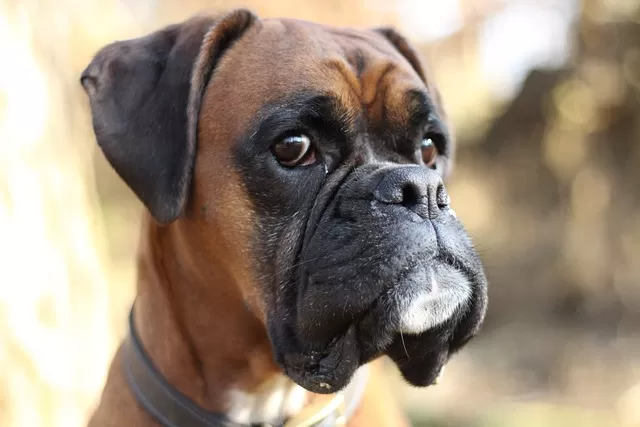
The Boxer is one of the most exuberant, physically capable, and characteristically expressive dog breeds in the world. Developed in Germany from the now-extinct Bullenbeisser, a large game-hunting mastiff, the Boxer carries the musculature and power of its working heritage alongside a clown's personality that endures well into adulthood.
It is a breed that loves children with an enthusiasm that can knock them over, that plays with an energy that outlasts most owners, and that brings to family life a combination of loyalty, alertness, and theatrical expressiveness that its admirers find irresistible.
The Boxer is also a breed with significant documented health concerns, particularly cardiac conditions, including the Boxer-specific arrhythmogenic right ventricular cardiomyopathy (ARVC) caused by a specific striatin gene mutation, and an historically elevated cancer rate. Understanding these conditions clearly is essential for anyone considering the breed.
This guide covers the Boxer completely: origins, physical characteristics, temperament, detailed health profile with supporting data, training, grooming, exercise, feeding, and the white Boxer question.
Origins and History
The Boxer's ancestry traces to the Bullenbeisser (German for "bull biter"), a large, powerful mastiff-type dog used in medieval Germany for hunting large game, including boar, bear, and bison. The Bullenbeisser was bred for the ability to seize large prey and hold it until the arrival of hunters on horseback. It required power, agility, courage, and a strong bite.
By the 19th century, the Bullenbeisser was declining as a hunting breed, large game hunting with dogs was falling out of practice, and was being crossed with English Bulldogs imported from England. The resulting crossbred dogs, bred by German sportsmen and eventually refined into a consistent type by breeders in Munich in the 1890s, became the foundation of the modern Boxer. The Deutscher Boxer Klub was established in Munich in 1895 and published the first Boxer breed standard in 1902.
The breed was named, by the most widely accepted account, for the habit of using the forepaws during play, a pawing, sparring motion that resembles boxing. Alternative etymological theories exist, including derivation from a German regional word for the Bullenbeisser, but the boxing-paw explanation aligns with the behaviour consistently observed in the breed.
The American Kennel Club recognised the Boxer in 1904. The breed served in both World War I and World War II as a military working dog: messenger, pack carrier, and attack dog. After World War II, American soldiers returning from Germany brought Boxers home, substantially expanding the breed's presence in the United States and launching the Boxer's era of widespread popularity as a companion and family dog.
Physical Characteristics
The Boxer is a medium-to-large working dog with a square, muscular build. The AKC breed standard describes the Boxer as "a medium-sized, short-backed, smooth-coated dog of square build, strong bone, and short, tight-fitting coat."
| Measurement | Male | Female |
|---|---|---|
| Height at withers | 57-63 cm (22.5-25 in) | 53-60 cm (21-23.5 in) |
| Weight | 27-32 kg (60-70 lb) | 22-27 kg (50-60 lb) |
| Build | Square, length approximately equal to height | Square |
| Head | Distinctive brachycephalic, broad, blunt muzzle, underbite | Same |
The Boxer's head is its most distinctive feature. The muzzle is broad, blunt, and slightly upturned, with the lower jaw projecting beyond the upper jaw (a forward-projecting lower jaw, called a reverse scissor bite or undershot bite in breed standards). The nose is broad and tilted slightly upward.
This brachycephalic (short-faced) structure, while less extreme than that of the English Bulldog or Pekingese, does create some degree of airway restriction and makes the Boxer heat-sensitive and less tolerant of high-intensity exercise in hot weather.
The neck is round, well-arched, and muscular. The chest is deep, reaching to the elbows. The body is compact and square. The coat is short, hard, and shining, lying flat against the body. The AKC standard requires the coat to be fawn or brindle, with white markings permissible if they do not exceed one-third of the coat. The nose is always black.
The traditionally docked tail and cropped ears, common in working Boxer lines and in the United States, are cosmetic modifications increasingly restricted by animal welfare legislation in Europe. In countries where cropping and docking are prohibited, including the UK and most of Europe, Boxers are shown with natural ears and tails.
White Boxers
White or predominantly white Boxers are born in approximately 25 percent of all Boxer litters. This high incidence is a consequence of the extreme white spotting (S locus) gene common in the breed; when two heavily white-spotted fawn Boxers with the white masking gene are bred, a proportion of offspring inherit the extreme white pattern.
White Boxers cannot be registered with most major kennel clubs, including the AKC and the German Boxer Club, because the breed standard explicitly disqualifies them. They are otherwise typically healthy dogs with full Boxer temperament and conformation, but they cannot compete in conformation showing.
The welfare concern specific to white Boxers is deafness. Deafness in dogs with extensive white pigmentation is associated with the absence of pigment-producing melanocytes in the inner ear, which are essential for the development of hair cells in the cochlea. Approximately 18 percent of white Boxers are born deaf in one or both ears (unilateral or bilateral deafness).
BAER (brainstem auditory evoked response) testing is the definitive diagnostic tool and should be performed on white Boxer puppies before placement.
Deaf dogs can live full, high-quality lives with appropriate management, including training based on hand signals rather than verbal commands, reliable enclosure to prevent traffic accidents, and owner awareness of the dog's limitations.
The ethical debate around deliberately breeding white Boxers (some breeders specifically seek them for the pet market) versus the responsible practice of testing and carefully placing the whites that occur naturally in standard breedings is ongoing within the Boxer community.
Temperament
The Boxer's temperament is one of the most recognisable in the dog world. The breed is characterised by what Boxer fanciers describe as "Boxerness" a particular combination of exuberance, clownish playfulness, deep loyalty, and alert watchfulness. The playful quality does not diminish significantly with age: Boxer owners frequently report that their dogs retain a puppy-like enthusiasm for play and interaction well into middle age and beyond.
Boxers are highly social and require meaningful human interaction. They form strong bonds with their family and do not do well in kennels, outdoor-only living, or homes where they are isolated from the household for most of the day. They are physically exuberant in their affection, jumping, leaning, and full-body contact are characteristic greeting behaviours that require training management given the breed's size.
The breed's working heritage produces genuine wariness of strangers combined with deep protectiveness toward family. A well-socialised Boxer distinguishes between strangers in social contexts (greeting visitors, encountering people on walks) and genuine threats, responding appropriately to each. An under-socialised Boxer can be reactive and difficult to manage in public.
"The Boxer is defined by its relationship with humans. It is a breed that needs to be part of the household, part of daily life, in a way that many other working breeds do not. Isolation is contrary to the Boxer's nature." American Boxer Club, Breed Education Committee, 2021.
Boxers are outstanding with children. The combination of physical toughness (they are not fragile), genuine playfulness, and protective loyalty makes them natural companions for active children. Management is important during puppyhood and adolescence, when the combination of size and enthusiasm means an excitedly greeting Boxer can knock over a small child with no aggressive intent whatsoever.
Health: Cardiac Conditions and Key Data
The Boxer has two distinct cardiac conditions that require separate discussion, as they are often conflated but have different causes, presentations, and genetic profiles.
Boxer Cardiomyopathy (ARVC, Arrhythmogenic Right Ventricular Cardiomyopathy) is a condition specific to the Boxer breed. It is caused by a mutation in the striatin (STRN) gene, identified by researchers at Cornell University. The mutation causes fatty and fibrous infiltration of the right ventricular myocardium, leading to ventricular arrhythmias that can cause sudden death even in dogs with no prior clinical signs.
The condition is inherited in an autosomal dominant pattern with incomplete penetrance, a dog with one copy of the STRN mutation may or may not develop clinical disease. A DNA test is commercially available to identify mutation carriers.
Dilated Cardiomyopathy (DCM) also occurs in Boxers, though at lower prevalence than ARVC. DCM causes generalised thinning and enlargement of the heart muscle, leading to progressive heart failure.
| Cardiac Condition | Notes | Genetic Test |
|---|---|---|
| ARVC (Boxer-specific) | STRN gene mutation, arrhythmias, sudden death risk | DNA test available |
| Dilated Cardiomyopathy | Heart enlargement and failure | No single gene test |
| Aortic stenosis | Subvalvular narrowing, relatively common in Boxers | Echocardiogram required |
The American Boxer Club recommends annual cardiac evaluation by a board-certified veterinary cardiologist for all breeding dogs. Holter monitoring (24-hour ambulatory ECG) is the definitive tool for detecting ventricular arrhythmias associated with ARVC, as a routine stethoscope examination may miss the condition entirely.
Cancer rate in Boxers is historically documented as elevated above the canine average, particularly brain tumours (gliomas), mast cell tumours, lymphoma, and histiocytic sarcoma. The cancer burden has been a subject of ongoing Boxer breed health surveys by the American Boxer Club.
| Health Condition | Prevalence | Source |
|---|---|---|
| Hip dysplasia | ~13% of evaluated dogs | OFA statistics |
| ARVC / cardiac disease | Significant breed concern; STRN mutation carrier rate estimated 30-70% | Meurs et al., 2013 |
| Cancer (various) | Historically elevated vs. general canine population | American Boxer Club health surveys |
| Spondylosis deformans | Common spinal bone bridging, often asymptomatic | Veterinary clinical literature |
| Brachycephalic issues | Moderate, heat intolerance, exercise limitation in hot weather | Breed-wide |
See Boxer Health Problems for a complete condition reference.
"The striatin mutation is of significant concern for Boxer breeders and owners. A dog that tests positive carries an elevated risk of developing ventricular arrhythmias, but penetrance is incomplete, meaning not every carrier develops clinical disease. Annual Holter monitoring is the current clinical standard for managing at-risk dogs." Meurs, K. M., et al. (2013). A novel mutation in phospholamban associated with myocardial failure in dilated cardiomyopathy. Journal of Veterinary Internal Medicine, 27(6), 1475-1479. https://doi.org/10.1111/jvim.12182
Training
Boxers are intelligent, quick-learning dogs that respond very well to positive reinforcement training. They are physically powerful and energetic, which means training is not optional; it is a functional necessity for safe management of an adult Boxer.
The breed's enthusiasm creates both a training advantage (high engagement, high energy, loves to interact) and a training challenge (impulse control requires consistent, sustained work). The Boxer's natural exuberance at greetings, jumping, pawing, spinning, is charming in a puppy and a genuine problem in a 30-kilogram adult dog. Teaching "four on the floor" as the default greeting behaviour, reinforced consistently from 8 weeks of age, prevents the development of problematic jumping.
Boxers have a strong work ethic when given clear structure and positive reinforcement. They excel in obedience competition, agility, schutzhund/IGP (protection sport), therapy dog work, and search-and-rescue. The working heritage supports high drive and trainability when that drive is channelled through structured training.
Key training considerations:
- Puppy socialisation: Boxers benefit significantly from broad, positive exposure to people, children, dogs, and environments during the socialization window (3 to 16 weeks). Under-socialised Boxers can develop reactivity and fear-based aggression.
- Leash manners: A Boxer that pulls on lead is very difficult to manage for smaller or physically weaker owners. Loose-leash walking training should begin in puppyhood.
- Impulse control: Stay, wait, off, and leave it are foundational commands for this breed's daily management.
See also: Boxer Training Guide and Best Dogs for Families with Kids.
Grooming
The Boxer's short, tight coat is one of the lowest-maintenance coats in the dog world. Shedding is moderate and year-round; there are no dramatic seasonal moult events typical of double-coated breeds, though the short hairs can embed in upholstery and clothing.
Grooming requirements for the Boxer:
Brushing: Weekly with a rubber curry brush or hound glove removes loose hair, stimulates skin oils, and maintains coat shine. This is also an opportunity to check skin condition, Boxers can develop skin fold dermatitis around the facial wrinkles if the folds are not kept clean and dry.
Bathing: Every 4 to 6 weeks, or when dirty. The short coat dries quickly and does not trap moisture the way double coats do. A gentle shampoo appropriate for sensitive skin is preferable, as some Boxers have contact allergies.
Facial folds: The wrinkled skin over the muzzle should be cleaned between the folds weekly with a damp cloth and dried thoroughly. Moisture trapped in skin folds promotes bacterial and yeast growth, leading to skin fold dermatitis.
Nail trimming: Every 3 to 4 weeks. Boxers' nails grow quickly.
Dental care: Daily brushing is the standard. Boxers benefit from dental chews and toys that mechanically reduce tartar in addition to daily brushing.
Ear care: Weekly inspection and cleaning of the natural ear. Cropped ears require specific care during the healing period following the procedure (where legally performed).
Exercise
The Boxer has high exercise requirements. The breed was developed as a working dog and has the stamina and energy to match. An adult Boxer needs a minimum of 60 to 90 minutes of vigorous exercise daily.
Exercise forms that suit the Boxer:
- Fetch and ball play: high-energy, easily scaled to available space
- Running with the owner: Boxers make excellent jogging partners for distances up to 8 to 12 kilometres in a conditioned adult
- Off-lead play in enclosed spaces with dogs of compatible size and play style
- Dog sports: agility, IGP/schutzhund, and obedience all provide structured physical and mental work
- Swimming: excellent low-impact exercise, though not all Boxers take to water readily
Critical exercise considerations:
Heat sensitivity: The brachycephalic structure limits the Boxer's ability to thermoregulate through panting. In temperatures above 24°C (75°F), exercise should be limited to cooler morning and evening hours. Signs of overheating, excessive panting, thick ropey saliva, disorientation, require immediate cooling and veterinary attention.
Puppies: As with all large breeds, sustained high-impact exercise should be limited until growth plates close at approximately 12 to 18 months. Puppies should not be run alongside bicycles or jogged for distance.
See also: Exercise Needs by Dog Breed and Dog Vaccination Schedule Explained for safe puppy exercise timing.
Feeding
Adult Boxers require a diet supporting their significant muscle mass and energy output. Medium-to-large breed formulas from AAFCO-compliant manufacturers are appropriate.
| Life Stage | Approximate Daily Calories |
|---|---|
| Adult male Boxer (30 kg, moderate activity) | 1,700-2,100 kcal/day |
| Adult female Boxer (25 kg, moderate activity) | 1,400-1,800 kcal/day |
| Active/working Boxer | Add 25-30% to maintenance |
| Senior Boxer (8+ years) | 1,300-1,600 kcal/day |
Feeding twice daily rather than once is recommended for large, deep-chested dogs like the Boxer. Gastric dilatation-volvulus (bloat/GDV) risk in Boxers is moderate, not as extreme as in Great Danes or deep-chested sighthounds, but elevated above the canine average. Feeding twice daily, using a slow-feeder bowl, and avoiding exercise within one hour of meals reduce GDV risk.
Boxers can be prone to food allergies and environmental allergies presenting as skin reactions. Limited-ingredient diets or novel protein diets may be appropriate for Boxers with confirmed food sensitivities. Diagnosis of food allergy requires an 8 to 12 week strict dietary elimination trial under veterinary supervision.
References
Meurs, K. M., Stern, J. A., Sisson, D. D., et al. (2013). Association of dilated cardiomyopathy with the striatin mutation genotype in boxer dogs. Journal of Veterinary Internal Medicine, 27(6), 1327-1331. https://doi.org/10.1111/jvim.12168
Basso, C., Fox, P. R., Meurs, K. M., et al. (2004). Arrhythmogenic right ventricular cardiomyopathy causing sudden cardiac death in boxer dogs: a new animal model of human disease. Circulation, 109(9), 1180-1185. https://doi.org/10.1161/01.CIR.0000118494.07530.65
Orthopedic Foundation for Animals. (2023). Boxer Hip Dysplasia Statistics. Retrieved from https://ofa.org
American Boxer Club. (2022). Health and Research Committee Annual Report. Retrieved from https://americanboxerclub.org/health/
Famula, T. R., Siemens, L. M., Davidson, A. P., & Packard, M. (1996). Heritability and complex segregation analysis of deafness in Jack Russell Terriers. BMC Veterinary Research, 2, 31. [Referenced for coat-related deafness genetics context]
Strain, G. M. (2012). Deafness prevalence and pigmentation and gender associations in dog breeds at risk. The Veterinary Journal, 193(2), 429-433. https://doi.org/10.1016/j.tvjl.2011.11.030
Frequently Asked Questions
What is Boxer cardiomyopathy?
Boxer cardiomyopathy is the common name for arrhythmogenic right ventricular cardiomyopathy (ARVC), a heart condition specific to the Boxer breed caused by a mutation in the striatin (STRN) gene. The mutation causes fatty and fibrous tissue to replace normal heart muscle in the right ventricle, leading to ventricular arrhythmias that can cause weakness, fainting, or sudden death.
The condition is inherited in an autosomal dominant pattern with incomplete penetrance, not every carrier develops clinical disease, and clinical severity varies. A DNA test identifies carrier status. Annual Holter monitoring (24-hour ambulatory ECG) is the recommended surveillance for carrier dogs.
Are white Boxers deaf?
Not all white Boxers are deaf, but approximately 18 percent of white Boxers are born with hearing impairment in one or both ears. The deafness results from the absence of pigment-producing melanocytes in the cochlea of the inner ear, the same mechanism causing deafness in other white and merle-patterned dogs and cats. BAER (brainstem auditory evoked response) testing is the definitive diagnostic tool and should be performed on all white Boxer puppies.
Deaf dogs can live well with appropriate management, including training based on visual signals, reliable enclosure, and owner awareness of the dog’s limitations.
Are Boxers good with children?
Boxers are among the best breeds for families with active children. The combination of physical toughness (they are not fragile dogs easily hurt by rough play), genuine playfulness that lasts well into adulthood, and deep protective loyalty toward family members makes them natural companions for children.
The primary management consideration is the breed’s exuberance: an adult Boxer enthusiastically greeting a small child can knock the child over through sheer physical momentum, despite zero aggressive intent. Training ‘four on the floor’ as a default greeting behaviour and ‘sit’ before any physical interaction with children prevents this problem.
How much exercise does a Boxer need?
Adult Boxers need 60 to 90 minutes of vigorous exercise daily. The breed was developed as a working dog with significant stamina and drive. Insufficient exercise leads to destructive behaviour and excessive indoor energy. Boxers are heat-sensitive due to their brachycephalic (short-faced) structure, which limits efficient panting as a cooling mechanism.
In warm weather, exercise should be scheduled during cooler morning and evening hours, and activity levels monitored carefully. Signs of overheating include excessive panting, thick ropey saliva, and disorientation, which require immediate cooling.
How long do Boxers live?
Boxers typically live 10 to 12 years. The breed’s lifespan is limited primarily by its elevated rates of cardiac disease (ARVC and dilated cardiomyopathy) and cancer, which are the leading causes of death in breed health surveys. Annual veterinary cardiac evaluation, including Holter monitoring for dogs identified as STRN mutation carriers, is the recommended approach for catching and managing cardiac disease before it causes sudden death or heart failure.
Early cancer detection through regular veterinary examinations and owner vigilance for new masses also improves outcomes.
Do Boxers need their ears cropped?
Ear cropping in Boxers is a cosmetic surgical procedure with no health benefit for the dog. It is performed in some countries (including the United States) for show ring purposes and is a breed tradition, but is prohibited by animal welfare legislation in the United Kingdom, the European Union, and many other countries.
The AKC breed standard accepts both cropped and natural ears, and natural-eared Boxers are equally capable of competing in performance events. The decision about ear cropping, where legally available, is an owner choice, but the procedure requires post-surgical management of a healing wound and is not medically necessary.