
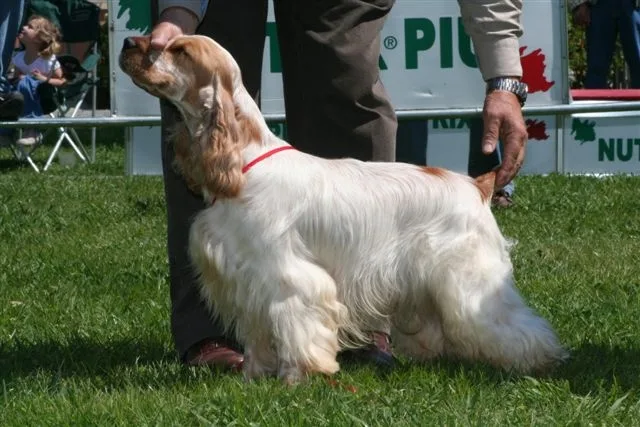
The American Cocker Spaniel is the smallest breed in the AKC's Sporting Group and one of the most recognizably beautiful dogs in existence, with its silky, abundant coat, soulful dark eyes, and long, expressive ears. Developed from English Cocker Spaniel lines in the United States over several generations, the American Cocker Spaniel became a distinct breed in its own right, formally separated by the AKC in 1946.
Affectionate, gentle, and eager to please, it has long been among the most popular dogs in America, but its beauty conceals several significant health conditions that owners must understand.
Cocker Spaniel Origins and Development
The word "spaniel" itself derives from the Old French "espagneul," pointing to a presumed Spanish origin for the spaniel family, though the exact historical path from medieval hunting dogs to the modern Cocker Spaniel is complex.
Spaniels were used in England for flushing game birds from undergrowth for centuries, and the name "Cocker Spaniel" specifically references the bird known as the woodcock (Scolopax rusticola), a woodland game bird that English Cocker Spaniels were particularly skilled at hunting.
English Cocker Spaniels were brought to America in the 19th century, and American breeders began selecting for somewhat different characteristics, a rounder head, more domed skull, shorter muzzle, and more profuse coat, than the English type. By the 1930s and 1940s, the two types had diverged sufficiently that the AKC formally recognized them as separate breeds in 1946.
The dog referred to simply as the "Cocker Spaniel" in the United States is the American Cocker Spaniel; in the United Kingdom, "Cocker Spaniel" refers to the English type.
The American Cocker Spaniel was the most popular breed registered by the AKC for an extended period during the 1940s through the 1960s and again in the 1980s, partly fueled by the success of the 1955 Disney film Lady and the Tramp, in which the female lead is a Cocker Spaniel. This extreme popularity, while flattering to the breed, also led to indiscriminate breeding that had lasting negative consequences for genetic health.
Cocker Spaniel Physical Characteristics
The American Cocker Spaniel is a compact, sturdy, well-proportioned dog. Its most immediately striking features are the long, low-set, heavily feathered ears; the large, round, dark eyes with an expression described in the breed standard as "appealing"; and the flowing, silky coat with heavy feathering on the ears, chest, abdomen, and legs.
| Physical Characteristic | Measurement |
|---|---|
| Height (males) | 36-39 cm (14.5-15.5 inches) |
| Height (females) | 34-37 cm (13.5-14.5 inches) |
| Weight | 11-14 kg (25-30 lbs) |
| Head | Rounded skull, clearly defined stop |
| Muzzle | Broad, deep, well-cushioned |
| Coat | Silky, medium-length; wavy or flat |
| Coat colors | Black, ASCOB (Any Solid Color Other than Black), parti-color |
| Ears | Long, lobular, heavily feathered |
| Tail | Docked in some countries; natural in others |
| Lifespan | 12-15 years |
The three coat color categories recognized by the AKC, black (including black-and-tan), ASCOB (any solid color other than black, including buff, red, chocolate, and cream), and parti-color (two or more solid, well-broken colors, one of which must be white), encompass a wide spectrum of individual appearances. The parti-color category includes roans, which are ticked (finely spotted) patterns overlaying a white base.
Temperament and Character
The American Cocker Spaniel is characteristically described as merry, an old word that perfectly captures the breed's joyful, playful, enthusiastic nature. Cockers wag their tails almost constantly, approach strangers with friendly interest, and engage with their families with cheerful affection. They are among the most people-pleasing spaniel breeds, deeply attuned to their owners' moods and responsive to gentle guidance.
Cockers are excellent family dogs, well-suited to families with children of all ages. Their gentle, tolerant nature makes them patient companions for children, though as with all dogs, interactions should be supervised with very young children. They typically coexist harmoniously with other dogs and, when socialized early, with cats.
"The American Cocker Spaniel has been described by behavioral researchers as one of the most cooperative and people-oriented of the sporting breeds. Their combination of moderate energy, responsiveness to training, and affectionate nature makes them exceptionally compatible family companions." Dr. Deborah Goodwin, Anthrozoology Institute, University of Southampton
The "rage syndrome" historically associated with certain Cocker Spaniel lines is worth addressing: this condition, characterized by sudden, unprovoked aggression from an otherwise calm dog, was documented particularly in solid-colored (especially golden) Cockers during the height of their popularity in the 1970s-80s. It has been attributed to poor breeding practices during the period of extreme popularity.
Well-bred Cockers today from reputable breeders should not exhibit this behavior; it should not be considered typical of the breed.
Health Concerns: Eyes and Vision
The American Cocker Spaniel is prone to several serious eye conditions:
Progressive Retinal Atrophy (PRA): The PRCD (progressive rod-cone degeneration) form of PRA, in which photoreceptors in the retina progressively degenerate, leading to night blindness followed by complete blindness, affects American Cocker Spaniels. A DNA test for PRCD-PRA is available, allowing breeders to avoid producing affected dogs by testing all breeding stock.
Carriers (dogs with one normal and one mutant gene) do not develop the disease themselves but can pass it to offspring if bred with another carrier.
Cataracts: Hereditary cataracts, including juvenile-onset cataracts that develop in young dogs, occur in the breed. Some forms of hereditary cataracts can be tested for via DNA; regular ophthalmological examination of breeding stock is recommended.
Glaucoma: Elevated pressure within the eye can cause irreversible damage to the optic nerve and retina if not treated promptly. Primary glaucoma (inherited predisposition) occurs in American Cocker Spaniels. Signs include redness, pain, corneal cloudiness, and an enlarged, hard eye. Glaucoma is a veterinary emergency.
Cherry eye: Prolapse of the third eyelid gland, presenting as a red mass in the inner corner of the eye, is more common in Cocker Spaniels than in many other breeds. Surgical repositioning is the recommended treatment; removal of the gland increases dry eye risk and is now generally discouraged.
Health Concerns: Ear Infections
The American Cocker Spaniel's beautiful long, pendulous ears come at a health cost: the anatomy that produces those ears, long ear flaps that droop close to the side of the head, densely haired inner ear canal surfaces, and a reduced airflow environment, creates ideal conditions for chronic otitis externa (ear infections). Ear infections are among the most common veterinary presentations for Cocker Spaniels.
The combination of moisture, reduced ventilation, and hair in the ear canal allows yeast (particularly Malassezia pachydermatis) and bacteria to proliferate. Affected dogs display head shaking, ear scratching, a distinctive odor from the ears, and discharge. Chronic infections can cause progressive changes to the ear canal structure (stenosis, calcification) that eventually require surgical intervention (total ear canal ablation).
Prevention and management require:
- Regular ear cleaning with appropriate veterinary-recommended solutions
- Regular removal of hair from the ear canal by a groomer or veterinarian
- Prompt treatment of any infection
- Keeping ears dry after swimming or bathing
For guidance on grooming and ear care see How to Groom a Dog at Home and Cocker Spaniel Grooming Guide.
Additional Health Conditions
| Health Condition | Description | DNA Test |
|---|---|---|
| PRCD-PRA | Progressive rod-cone degeneration leading to blindness | Yes |
| Familial nephropathy | Severe inherited kidney disease in some lines | Limited testing available |
| Phosphofructokinase deficiency | Inherited enzyme deficiency affecting red blood cells | Yes |
| IMHA | Immune-mediated hemolytic anemia | No |
| Hip dysplasia | Approx. 14% OFA prevalence | OFA/BVA X-ray |
| Otitis externa | Chronic ear infections | No |
Familial nephropathy (FN): A severe, progressive inherited kidney disease that causes renal failure, typically in young dogs between 6 months and 2 years of age. FN is caused by defects in type IV collagen, which forms part of the kidney's filtering membrane. DNA testing has been developed in some countries and is recommended for breeding stock.
Phosphofructokinase (PFK) deficiency: An inherited enzyme deficiency affecting red blood cells and muscle cells. In red blood cells, PFK deficiency causes hemolytic anemia (destruction of red blood cells); in muscle, it causes exercise intolerance. DNA testing is available and can prevent the production of affected dogs.
Immune-mediated hemolytic anemia (IMHA): The American Cocker Spaniel appears to be overrepresented in IMHA case series, suggesting a breed predisposition to this condition in which the immune system attacks the dog's own red blood cells. IMHA can be rapidly life-threatening and requires aggressive treatment.
"The Cocker Spaniel's representation in our IMHA cases is consistent with a genuine breed predisposition. Owners should be aware that any sudden signs of weakness, pale or yellow gums, or collapse warrant immediate veterinary evaluation." Dr. Michael Stone, DVM, DACVIM, Cummings School of Veterinary Medicine, Tufts University
Grooming: A Significant Commitment
The American Cocker Spaniel's coat is one of its most admired features but also one of its most demanding maintenance requirements. Without regular, thorough grooming, the long, silky coat mats rapidly, particularly in the feathering on the ears, legs, and chest. Matting is not merely cosmetic; severe matting pulls the skin, causes discomfort, and creates warm, moist environments ideal for skin infections.
Most pet owners have their Cocker Spaniels professionally groomed every 6-8 weeks, with at-home brushing two to three times weekly between appointments. Show dogs require far more intensive grooming. Many pet owners choose a "puppy clip" a shorter, more practical trim that reduces daily maintenance while preserving the breed's characteristic silhouette. See Cocker Spaniel Health Problems for health monitoring guidance.
Exercise and Training
American Cocker Spaniels are moderately active dogs with a genuine sporting heritage that comes through in their love of outdoor activity. They enjoy regular walks, off-leash play in secure areas, swimming, and nose work activities that engage their hunting instincts. Most do well with 30-45 minutes of exercise per day, though they are adaptable to more or less activity depending on age and individual temperament.
Training is typically enjoyable with Cocker Spaniels. They are responsive, food-motivated, and eager to please their handlers. They are sensitive dogs that respond poorly to harsh methods; positive reinforcement creates the best results. Early socialization is important, as some Cocker Spaniels can be timid if insufficiently exposed to varied environments and people.
They are well-suited to being considered among Best Dogs for Families with Kids and their vaccination schedule should follow Dog Vaccination Schedule Explained.
Summary
The American Cocker Spaniel is a breed of great beauty, gentle temperament, and genuine affection for its people. Its merry, eager-to-please nature has made it beloved across generations.
Prospective owners must be prepared for a significant grooming commitment, diligent ear care, and awareness of the breed's health challenges, particularly eye conditions, ear infections, and the inherited conditions for which DNA testing is available. Choosing a breeder who health-screens their stock for PRA, PFK deficiency, and familial nephropathy dramatically reduces the risk of preventable disease.
References
Petersen-Jones, S.M., Entz, D.D., & Sargan, D.R. (1999). cGMP phosphodiesterase-alpha mutation causes progressive retinal atrophy in the Cardigan Welsh Corgi dog. Investigative Ophthalmology and Visual Science, 40(8), 1637-1644. https://pubmed.ncbi.nlm.nih.gov/10393028/
Nash, A.S., Kelly, D.F., & Gaskell, C.J. (1984). Progressive nephropathy in soft-coated wheaten terriers: A possible homologue of hereditary nephritis in man. Journal of Small Animal Practice, 25(8), 479-488. https://doi.org/10.1111/j.1748-5827.1984.tb01934.x
Giger, U., Harvey, J.W., Yamaguchi, R.A., et al. (1985). Inherited phosphofructokinase deficiency in dogs with hyperventilation-induced hemolysis: Increased in vitro and in vivo alkaline fragility of erythrocytes. Blood, 65(2), 345-351. https://doi.org/10.1182/blood.V65.2.345.345
Carr, A.P., Panciera, D.L., & Kidd, L. (2002). Prognostic factors for mortality and thromboembolism in canine immune-mediated hemolytic anemia: A retrospective study of 72 dogs. Journal of Veterinary Internal Medicine, 16(5), 504-509. https://doi.org/10.1111/j.1939-1676.2002.tb02378.x
American Kennel Club. (2023). American Cocker Spaniel breed standard. https://www.akc.org/dog-breeds/cocker-spaniel/
Frequently Asked Questions
Are Cocker Spaniels prone to ear infections?
Yes. The long, pendulous ears of the American Cocker Spaniel restrict airflow to the ear canal, creating warm, moist conditions ideal for yeast and bacterial growth. Regular ear cleaning, hair removal from the ear canal, and prompt treatment of infections are essential ongoing care tasks for this breed.
What is PRA and does it affect Cocker Spaniels?
Progressive Retinal Atrophy (PRA) is a hereditary condition causing progressive degeneration of the retina, leading to blindness. The PRCD form affects American Cocker Spaniels. A DNA test is available that allows breeders to avoid producing affected dogs by screening all breeding stock.
How much grooming does an American Cocker Spaniel need?
Cocker Spaniels require significant grooming. Most pet owners have them professionally groomed every 6-8 weeks with home brushing 2-3 times per week between appointments. Without regular brushing, the long, silky coat mats quickly, especially on the ears, legs, and chest.
Are Cocker Spaniels good family dogs?
Yes. American Cocker Spaniels are excellent family dogs. They are gentle, patient, affectionate, and characteristically merry. They get along well with children and other pets. Their moderate energy level and eager-to-please nature make them adaptable to a variety of family situations.
What is familial nephropathy in Cocker Spaniels?
Familial nephropathy is a severe inherited kidney disease that causes progressive renal failure in young dogs, typically between 6 months and 2 years of age. It results from defects in type IV collagen in the kidney’s filtering membranes. DNA testing is available in some countries and is recommended for breeding stock.
How much exercise does a Cocker Spaniel need?
American Cocker Spaniels are moderately active and typically need 30-45 minutes of exercise per day. They enjoy walks, play sessions, swimming, and activities that engage their scent-tracking instincts. They are adaptable and suit both active and less active households.