
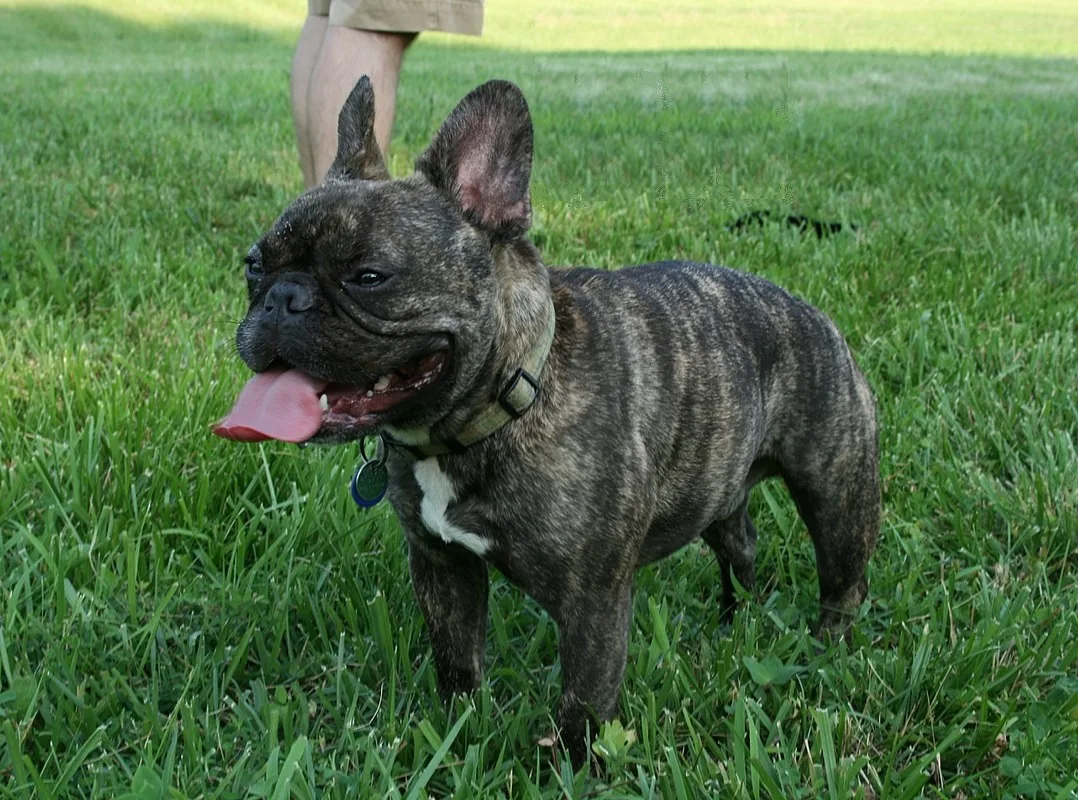
French Bulldog health problems have scaled with its popularity. The breed's rise to the most registered in the United States (surpassing the Labrador Retriever in 2022) has coincided with a growing body of veterinary evidence documenting the significant health costs paid by these dogs for their extreme conformation.
French Bulldogs are a brachycephalic breed, meaning their skulls have been compressed so dramatically that many cannot breathe, sleep, exercise, or thermoregulate effectively without difficulty. A 2018 study in PLOS ONE found that French Bulldogs were more likely than non-brachycephalic dogs to receive veterinary attention for 20 specific health conditions.
This article covers the full spectrum of health problems documented in French Bulldogs, the genetic and conformational causes, available interventions, and guidance for prospective owners.
Summary Health Table
| Condition | Estimated Prevalence | Category | Screening / Test |
|---|---|---|---|
| Brachycephalic obstructive airway syndrome (BOAS) | >50% have clinical signs | Conformational | Respiratory assessment; BOAS-I grading |
| Spinal disease (IVDD, hemivertebrae) | Very high; up to 45% have spinal anomalies on imaging | Conformational/genetic | Spinal radiograph or MRI |
| Atopic dermatitis / skin fold dermatitis | 17-23% in surveys | Multifactorial | Dermatological examination |
| Ear infections (otitis externa) | ~14% annual prevalence | Conformational | Otoscopic examination |
| Eye conditions (corneal ulcers, entropion, distichiasis) | Elevated breed risk | Conformational | Ophthalmic examination |
| Hip dysplasia | 37-40% (OFA data) | Conformational/genetic | OFA radiograph |
| Patellar luxation | Elevated breed risk | Conformational | Orthopaedic examination |
| Heat stroke | Extreme susceptibility | Physiological | Prevention; emergency cooling |
Brachycephalic Obstructive Airway Syndrome
Brachycephalic obstructive airway syndrome (BOAS) is not a single abnormality but a complex of multiple anatomical defects, each limiting airflow.
In French Bulldogs these include stenotic nares (narrowed nostrils), elongated soft palate (the soft palate extends so far into the pharynx that it obstructs the airway during inhalation), everted laryngeal saccules (tissue folds pulled into the airway by negative pressure created by the other obstructions), hypoplastic trachea (a windpipe narrower than normal for body size), and nasopharyngeal turbinates (aberrant bony projections inside the nasal cavity further blocking airflow).
The combined effect is that affected French Bulldogs must work harder for every breath. This causes chronic sleep apnoea, exercise intolerance, loud snoring, stridor (high-pitched breathing noises), regurgitation (due to negative pressure in the oesophagus), and inability to regulate body temperature effectively (dogs cool themselves by panting; dogs that cannot breathe freely cannot pant efficiently).
"French Bulldogs had significantly higher odds of BOAS, regurgitation, skin fold dermatitis, corneal ulceration, and difficulty whelping compared to non-brachycephalic breeds, and the degree of brachycephaly, measured as craniofacial ratio, correlated significantly with BOAS severity." Packer RMA et al., PLOS ONE, 2015 (DOI: 10.1371/journal.pone.0137496)
The BOAS Functional Grading system (BOAS-I to BOAS-III) developed at Cambridge University Veterinary School grades respiratory function from no clinical signs to severe compromise. Grade III dogs require surgical intervention before living a reasonable quality of life.
Surgical correction, widening the nostrils (nares resection), shortening the soft palate (staphylectomy), removing everted laryngeal saccules, significantly improves airflow and quality of life when performed early in life (before 2 years of age). However, it cannot fully normalise airway anatomy. Dogs with hypoplastic tracheas have a poorer surgical prognosis.
"Brachycephalic dog owners significantly underestimate respiratory compromise; 58% of owners of dogs scoring BOAS grade II or III described their dog's breathing as 'normal' or 'satisfactory'." Roedler FS, Pohl S, Oechtering GU, Veterinary Journal, 2013 (DOI: 10.1016/j.tvjl.2013.01.009)
This underestimation of disease severity is a significant welfare concern. French Bulldog owners should familiarise themselves with objective BOAS assessment tools rather than normalising the snoring, snorting, and gasping that many owners accept as characteristic of the breed.
Spinal Disease: Hemivertebrae and IVDD
French Bulldogs have an extremely high prevalence of congenital spinal vertebral malformations. Hemivertebrae, wedge-shaped vertebral bodies that cause the spine to deviate, are common throughout the thoracic spine. Studies using MRI have found that up to 45% of French Bulldogs have at least one spinal cord compression site, many of which are clinically silent in young dogs but progress over time.
Intervertebral disc disease (IVDD) is a parallel and related problem. Chondrodystrophic breeds like French Bulldogs undergo premature calcification (chondroid metaplasia) of the disc nucleus pulposus, making discs brittle and prone to extrusion into the spinal canal. Hansen Type I IVDD, in which calcified disc material herniates explosively, is the dominant form; it can cause sudden paralysis.
The French Bulldog's characteristic screw tail (a tightly curled, kinked tail bred for aesthetics) reflects the same developmental abnormality as thoracic hemivertebrae, the genetic pathway controlling tail development also influences vertebral formation throughout the spine. Breeders who select for tighter screw tails are inadvertently selecting for more severe vertebral malformations.
Diagnosis of spinal cord compression requires MRI or CT. Plain radiographs can identify hemivertebrae but underestimate cord compression. Treatment depends on severity: mild cases with pain only may respond to strict cage rest and NSAIDs; moderate to severe cases causing weakness or paralysis require emergency spinal surgery (hemilaminectomy or fenestration) to decompress the cord.
Skin Conditions
French Bulldogs have multiple sources of skin disease. Skin fold dermatitis, maceration and secondary infection in the deep facial skin folds, tail fold, vulvar fold (in females), and body folds, is a direct consequence of selective breeding for exaggerated skin folds. The folds create warm, moist environments ideal for bacterial (Staphylococcus pseudintermedius) and yeast (Malassezia) overgrowth.
Treatment requires daily fold cleaning with appropriate antiseptic products; chronic cases may require surgical fold removal (skin fold resection).
Atopic dermatitis (environmental allergy) is also significantly elevated in the breed. French Bulldogs may present with facial rubbing, paw licking, perianal itching, and recurrent secondary infections on the skin and ears.
Management involves allergen identification (intradermal or serum allergy testing), avoidance of identified allergens, immunotherapy (allergy shots or sublingual drops), and medical management with ciclosporin, oclacitinib (Apoquel), or dupilumab-class biologicals where available.
Eye Conditions
Several eye conditions are elevated in French Bulldogs due to their shallow orbits and reduced facial length:
Corneal ulcers: The combination of prominent, poorly protected eyes, reduced blink reflex (due to the degree of exophthalmos), and facial skin folds that can rub the cornea create significant risk for corneal damage. French Bulldogs require prompt veterinary attention for any eye discharge, squinting, or cloudiness.
Entropion: Inward rolling of the eyelid (most often the lower lid) causes eyelashes and skin to rub the cornea continuously. Surgical correction (entropion repair) is curative.
Distichiasis: Aberrant eyelashes growing from the meibomian gland openings may contact the cornea. Management includes electrolysis, cryotherapy, or surgical excision of aberrant lashes.
Annual ophthalmic examination is recommended for breeding French Bulldogs.
Hip Dysplasia
French Bulldogs have the highest hip dysplasia rate in OFA data for any common breed: approximately 37-40% of evaluated dogs are rated dysplastic. Given that many animals with poor radiographs are never submitted for evaluation, the true prevalence is likely even higher. The exaggerated pelvic conformation bred into French Bulldogs, wide hips relative to the body, combined with extreme lordosis (curvature) of the lumbar spine, contributes to abnormal hip joint development.
Many French Bulldogs tolerate hip dysplasia better than comparably affected large breeds because their lower body weight reduces joint loading. However, obesity (which is common in the breed given owner tendencies to limit exercise due to breathing difficulties) accelerates progression significantly.
Heat Stroke
French Bulldogs cannot tolerate heat. Their inability to pant effectively, combined with high metabolic demand from breathing effort, makes them acutely vulnerable to heat stroke at ambient temperatures that would not affect most dogs. Deaths from heat stroke during transport (particularly in the cargo holds of aircraft, where French Bulldogs have the highest mortality rate of any breed) and in cars and outdoor environments are disproportionately common.
"French Bulldogs and English Bulldogs together account for the majority of brachycephalic dog deaths reported to airlines, with a mortality rate more than 40 times higher than non-brachycephalic dogs." American Veterinary Medical Association Transportation Guidelines, 2018.
Practical guidelines for French Bulldog owners: never exercise outdoors when the temperature exceeds 20°C (68°F), never leave the dog in a vehicle, provide constant access to cool water, use cooling mats and fans in the home during summer, and recognise early signs of heat stroke (excessive panting, drooling, disorientation, brick-red gums) as an emergency requiring immediate cooling and veterinary care.
Whelping Difficulties
The French Bulldog's large skull and narrow maternal pelvis mean that approximately 80% of French Bulldog litters are delivered by planned caesarean section. This is among the highest rates of any breed and represents a significant welfare and economic consideration. Breeders must budget for routine caesarean costs; natural whelping carries high risk of fetal and maternal death.
Screening Recommendations for Breeding Stock
| Test | Method | Minimum Age | Governing Body |
|---|---|---|---|
| BOAS grading | Respiratory assessment (Cambridge/BOAS-I) | 1-2 years | Breed club / BOAS scheme (UK) |
| Hip evaluation | OFA radiograph or PennHIP | 24 months | OFA / PennHIP |
| Spinal assessment | MRI or CT | 2 years | Specialist centres |
| Eye examination | ACVO ophthalmoscopy | Annual | OFA Eye Registry |
| Cardiac auscultation | Auscultation by cardiologist | Before each breeding | OFA Cardiac |
Several national kennel clubs have introduced mandatory health testing schemes for French Bulldogs in response to welfare concerns. In the UK, the Kennel Club's Assured Breeders must comply with BOAS assessment requirements before registering litters from affected breeding pairs.
What to Ask a Breeder
Prospective French Bulldog buyers should understand that this breed requires extraordinary veterinary engagement. Specific questions to ask:
- Have both parents had BOAS respiratory assessment? What grade?
- Have both parents had OFA hip evaluation? If not, why not?
- Has either parent had spinal MRI or CT? Any hemivertebrae or cord compression identified?
- What is the average veterinary cost per year for dogs from this breeder's lines?
- Has the breeder had any puppies from previous litters require BOAS surgery?
- What is the caesarean section history for the dam?
Reputable breeders working toward healthier French Bulldog conformation may participate in health-conscious breeding schemes that select for longer muzzle length, wider nostrils, and less screw-tail curvature. The French Bulldog Club of America and equivalent UK bodies publish health testing recommendations.
Longevity
UK VetCompass data (2020) reported a median lifespan of 4.5 years for French Bulldogs, substantially shorter than most other popular breeds. A subsequent analysis using larger datasets reported somewhat higher figures around 9-10 years, with significant variation depending on data source and population.
Regardless of exact figures, French Bulldogs have one of the highest veterinary cost burdens of any breed, and prospective owners should budget for surgical interventions, dermatological management, and chronic condition management throughout the dog's life.
For related reading on selecting an appropriate dog for different lifestyles, see best dogs for apartments and best dogs for first-time owners.
Urinary and Reproductive Conditions
French Bulldogs have elevated rates of urinary conditions including urinary tract infections and, in some lines, urethral obstruction related to urethral hypoplasia or concurrent pelvic narrowing. Cryptorchidism (failure of one or both testes to descend into the scrotum) is also elevated in the breed and requires surgical correction (orchidectomy) to prevent torsion and seminoma development in retained testes.
Neurological Conditions Beyond IVDD
In addition to IVDD and hemivertebrae, French Bulldogs have elevated risk for degenerative myelopathy (the same SOD1 mutation identified in German Shepherd Dogs and other breeds affects some French Bulldogs), spinal arachnoid diverticula (cerebrospinal fluid-filled cysts within the spinal canal), and, rarely, Chiari-like malformation and syringomyelia, the latter more commonly associated with Cavalier King Charles Spaniels but documented in French Bulldogs due to their similarly compressed skulls.
Dogs with unexplained neck pain, limb weakness, or signs of central nervous system involvement should have MRI evaluation.
Patellar Luxation
Patellar luxation (slipping kneecap) is elevated in French Bulldogs compared to many other breeds of similar size. Most cases are Grade I or II and cause only intermittent skipping gait. Grade III or IV cases causing persistent lameness or progressive stifle arthritis require surgical correction. OFA patella evaluation is included in the CHIC program for the French Bulldog.
Dental Disease
French Bulldogs have significantly compressed dental arcade due to skull foreshortening, resulting in severe dental crowding and malocclusion. Teeth that cannot erupt normally (unerupted teeth), teeth rotated in the jaw, and severe overcrowding all accelerate periodontal disease.
Dental radiographs, professional dental cleaning, and in some cases extraction of retained or crowded teeth are essential to manage oral health. For guidance on maintaining dental health at home, see the dog dental care guide.
Understanding Veterinary Costs
French Bulldog ownership involves veterinary costs significantly above the average for companion dogs. A 2021 VetCompass study confirmed that French Bulldogs received veterinary attention for significantly more health conditions than non-brachycephalic dogs of similar size. Common expenses unique to or elevated in the breed include:
- BOAS surgery: typically $1,500-4,000 USD depending on procedures required
- IVDD spinal surgery: $3,000-8,000+ USD at specialist centres
- Caesarean section (for breeding females): $1,000-3,000 USD per litter
- Dermatological management: ongoing; variable cost depending on severity
- Orthopaedic management: progressive in affected dogs
Pet health insurance with generous annual limits and ideally no breed exclusions is strongly recommended for French Bulldog owners before health conditions are diagnosed (pre-existing conditions are typically excluded). Many insurers apply elevated premiums for brachycephalic breeds or exclude respiratory conditions; reading policy terms carefully before purchase is essential.
Anaesthesia Risk
Every surgical or dental procedure requiring general anaesthesia poses elevated risk to French Bulldogs. The combination of stenotic nares, elongated soft palate, hypoplastic trachea, and predisposition to airway oedema after intubation means that even routine procedures carry significant anaesthetic risk.
A 2018 study published in Veterinary Anaesthesia and Analgesia documented substantially higher complication rates during and after anaesthesia in brachycephalic dogs compared to non-brachycephalic controls, with post-operative airway obstruction as the most common serious complication.
French Bulldog owners should ensure all procedures are performed at a veterinary facility experienced in brachycephalic anaesthetic protocols: pre-oxygenation before induction, early intubation, active monitoring through recovery, delayed extubation until the dog is fully responsive, and sternal positioning throughout recovery. Owners should always disclose the breed to any emergency or out-of-hours clinic unfamiliar with the dog.
References
- Packer RMA, Hendricks A, Tivers MS, Burn CC. Impact of facial conformation on canine health: brachycephalic obstructive airway syndrome. PLOS ONE. 2015;10(10):e0137496. DOI: 10.1371/journal.pone.0137496
- Roedler FS, Pohl S, Oechtering GU. How does severe brachycephaly affect dog's lives? Results of a structured preoperative owner questionnaire. Veterinary Journal. 2013;198(3):606-610. DOI: 10.1016/j.tvjl.2013.01.009
- Packer RMA, O'Neill DG, Fletcher F, Farnworth MJ. Great expectations, inconvenient truths, and the paradoxes of the dog-owner relationship for owners of brachycephalic dogs. PLOS ONE. 2019;14(7):e0219918. DOI: 10.1371/journal.pone.0219918
- Liu NC, Adams VJ, Kalmar L, Ladlow JF, Bhatt S. Whole-body barometric plethysmography characterizes upper airway obstruction in 3 brachycephalic breeds of dogs. Journal of Veterinary Internal Medicine. 2016;30(3):853-865. DOI: 10.1111/jvim.13933
- Orthopedic Foundation for Animals. French Bulldog Breed Statistics. ofa.org. Accessed 2025.
- O'Neill DG, Sahota J, Brodbelt DC, et al. Health of French Bulldogs vs non-brachycephalic dogs under primary veterinary care in the UK: a VetCompass study. Canine Medicine and Genetics. 2021;8:13. DOI: 10.1186/s40575-021-00113-3
- Inglez de Souza SS, Duque FP, Borges CAF et al. Prevalence of hemivertebrae, spinal cord compression, and transitional lumbosacral vertebrae in French Bulldogs. Journal of Veterinary Internal Medicine. 2020.
- American Veterinary Medical Association. Air Transportation of Pets. avma.org. 2018.
- French Bulldog Club of America. FBDCA Health Committee. frenchbulldogclub.org. Accessed 2025.
- Fawcett A, Barrs V, Awad M, et al. Consequences and management of canine brachycephaly in veterinary practice. Veterinary Sciences. 2019;6(1):28. DOI: 10.3390/vetsci6010028
Frequently Asked Questions
What is BOAS and how serious is it in French Bulldogs?
Brachycephalic obstructive airway syndrome (BOAS) is a complex of anatomical defects including stenotic nares, elongated soft palate, everted laryngeal saccules, and hypoplastic trachea that obstruct breathing. In French Bulldogs, over 50% have clinically significant airway compromise. The condition causes exercise intolerance, heat intolerance, sleep apnoea, regurgitation, and in severe cases can be life-threatening.
Surgical correction (nares widening, palate shortening) performed before age 2 improves quality of life significantly but cannot fully normalise airway anatomy.
Why do French Bulldogs have so many spinal problems?
French Bulldogs are a chondrodystrophic breed with screw-tail conformation. The same genetic pathway that produces the characteristic kinked tail also causes wedge-shaped vertebral malformations (hemivertebrae) throughout the spine. Studies have found spinal cord compression sites in up to 45% of French Bulldogs on MRI imaging, many clinically silent in young dogs but capable of causing progressive paralysis.
Intervertebral disc disease (IVDD) is also elevated because chondrodystrophic breeds undergo premature disc calcification, making discs prone to explosive herniation.
Can French Bulldogs live in hot climates?
French Bulldogs are poorly suited to hot or humid climates. Their inability to breathe and pant efficiently means they cannot thermoregulate effectively, making them acutely vulnerable to heat stroke at temperatures that would be comfortable for most dogs.
In regions where summer temperatures regularly exceed 25-30°C, French Bulldogs must be kept in air-conditioned environments, exercised only early morning or late evening, and monitored closely for signs of heat stress: excessive panting, hypersalivation, disorientation, brick-red gums, or collapse.
What skin problems do French Bulldogs commonly get?
French Bulldogs are prone to skin fold dermatitis (bacterial and yeast infections in deep facial, tail, body, and vulvar folds), atopic dermatitis (environmental allergy causing itching and secondary infection), and ear infections. Skin fold dermatitis requires daily cleaning with antiseptic wipes or solutions; chronic or severe cases may require surgical fold removal.
Atopic dermatitis is managed with allergen identification, immunotherapy, and medications such as oclacitinib (Apoquel) or ciclosporin.
Should I buy a French Bulldog given all the health problems?
Prospective French Bulldog owners should be aware that the breed carries significant veterinary costs and welfare concerns that are directly related to its conformation. Annual veterinary expenses for French Bulldogs are among the highest of any breed.
If you choose to purchase a French Bulldog, seek breeders who participate in BOAS health assessment schemes, provide OFA health clearances, and breed toward less extreme conformation (longer muzzle, wider nostrils, less tightly curled tail). Budget for potential BOAS surgery, dermatological management, and emergency care throughout the dog’s life.
How do I check if a French Bulldog breeder is responsible?
A responsible French Bulldog breeder should provide: BOAS respiratory assessment results for both parents (ideally grade I or grade II at worst), OFA hip evaluation documentation, spinal assessment if available, annual eye examination clearances, and evidence of cardiac auscultation. In the UK, Kennel Club Assured Breeders are required to comply with BOAS assessment requirements.
In the US, the French Bulldog Club of America publishes health testing recommendations. All OFA results can be verified publicly at ofa.org.