
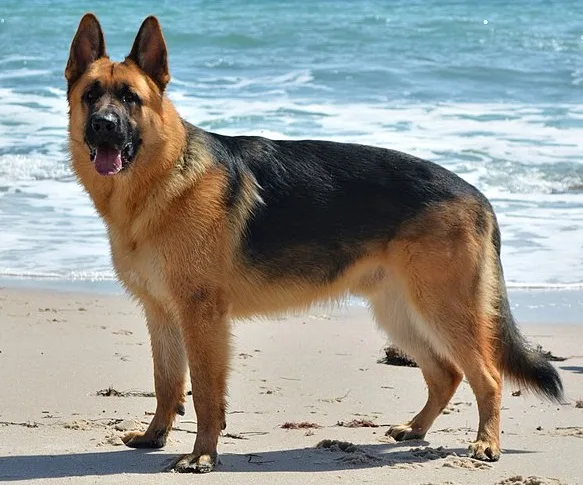
German Shepherd health problems form one of the most complex profiles among popular dog breeds. Decades of selection for an extreme sloped rear topline in the show ring, combined with a closed gene pool and high breeding volumes, have produced a breed vulnerable to a cluster of musculoskeletal, gastrointestinal, immune-mediated, and degenerative conditions.
Understanding these conditions, their prevalence, genetic basis, and clinical management, is essential for anyone considering owning or breeding a German Shepherd Dog.
Summary Health Table
| Condition | Estimated Prevalence | Screening / Genetic Test | OFA Database |
|---|---|---|---|
| Hip dysplasia | 19-20% (OFA data) | OFA/PennHIP or SV/a-stamp | Yes |
| Elbow dysplasia | 19-20% (OFA data) | OFA elbow radiograph | Yes |
| Degenerative myelopathy | ~2-5% affected; 14-18% carriers | DNA test (SOD1 gene) | Yes |
| Exocrine pancreatic insufficiency | Breed predisposition; estimated 1-3% | TLI serum test | No |
| Gastric dilatation-volvulus (GDV) | High relative risk (large, deep-chested) | Risk reduction measures | No |
| Haemophilia A | Rare; X-linked | DNA test / factor VIII assay | No |
| Perianal fistulas | ~5% lifetime risk | Clinical diagnosis | No |
| Degenerative spinal stenosis | Elevated breed risk | Advanced imaging (MRI/CT) | No |
Hip and Elbow Dysplasia
German Shepherd Dogs have among the highest rates of hip and elbow dysplasia of any breed in the OFA database. Approximately 19-20% of evaluated dogs are rated hip dysplastic, and a similar proportion show elbow dysplasia. These rates are made more striking by the fact that breeders who do not submit radiographs for evaluation are excluded from OFA statistics, the true population prevalence is likely higher.
The extreme sloped rear topline cultivated by some show-line breeding programs places abnormal mechanical stress on the hip joints and lumbosacral junction throughout the dog's life. The SV (Verein fur Deutsche Schaferhunde), the German parent club, has required radiographic hip evaluations (the "a-stamp" or Rontgennachweis) since 1966, and this longitudinal screening program represents one of the longest continuous breed health databases in existence.
"Despite over five decades of mandatory hip radiograph screening in the SV breed registry, the prevalence of hip dysplasia in German Shepherd Dogs has not substantially declined, suggesting that selection pressure from working ability and temperament criteria may partially counteract selection against dysplasia, or that the condition is more polygenic than early models assumed." Malm S et al., Animal. 2010;4(4):616-629. DOI: 10.1017/S1751731109991248
Management of hip and elbow dysplasia follows the same principles applicable to other large breeds: weight control at lean body condition, controlled low-impact exercise, physiotherapy, NSAID pain management, and surgical intervention for severe cases. Total hip replacement is available at specialist centres and can restore near-normal function in selected patients.
Degenerative Myelopathy
Degenerative myelopathy (DM) is a progressive, fatal neurological disease of the spinal cord caused primarily by a recessive mutation in the SOD1 gene (the same gene implicated in some forms of human amyotrophic lateral sclerosis). The German Shepherd Dog, along with the Pembroke Welsh Corgi and Boxer, is among the breeds most extensively studied for DM.
The condition typically begins between 8 and 14 years of age with progressive hindlimb weakness and ataxia (unsteady gait). Dogs develop dragging of the hind paws, worn nails, and difficulty rising. Within 6-12 months, dogs typically become non-ambulatory in the hindquarters. The disease progresses anteriorly, ultimately affecting thoracic limb function, swallowing, and respiratory muscles. DM is not painful, but the progression is relentless.
"The canine SOD1:c.118G>A (Gly40Ser) mutation was identified as a major risk factor for degenerative myelopathy across multiple breeds, including the German Shepherd Dog, and was demonstrated to produce a loss-of-function phenotype consistent with a toxic gain-of-function mechanism." Awano T et al., Proceedings of the National Academy of Sciences, 2009 (DOI: 10.1073/pnas.0812297106)
A DNA test identifies at-risk (homozygous AA) and carrier (AG) dogs. Not all dogs homozygous for the mutation develop clinical DM, penetrance is incomplete, and other genetic and environmental modifiers likely exist. However, the OFA recommends testing all breeding stock and exercising caution in breeding two at-risk dogs together.
There is no disease-modifying treatment. Rehabilitation therapy, including underwater treadmill hydrotherapy, supportive walking harnesses (like the Help-Em-Up harness), and cart mobility aids, can maintain quality of life significantly. Physical rehabilitation slows functional decline in affected dogs.
Exocrine Pancreatic Insufficiency
Exocrine pancreatic insufficiency (EPI) results from progressive loss of the enzyme-producing acinar cells of the pancreas, leading to failure to digest fats, proteins, and carbohydrates adequately. German Shepherd Dogs have a genetic predisposition to EPI, accounting for the majority of cases in most referral populations. The condition is inherited as an autosomal recessive trait in the GSD, though the specific gene mutation has not been published.
Clinical signs are dramatic and distinctive: copious, pale, fatty, foul-smelling stools (steatorrhoea), extreme weight loss despite a voracious appetite, flatulence, and borborygmi (gut sounds). Dogs may eat their own faeces (coprophagia) due to nutrient desperation. Without treatment, affected dogs deteriorate rapidly.
Diagnosis is confirmed by a single serum test: trypsin-like immunoreactivity (TLI). A TLI below 2.5 micrograms/litre is diagnostic for EPI. Treatment is highly effective: dried pancreatic enzyme powder (from porcine pancreatic extract) mixed with food restores digestion reliably. Most dogs require lifelong supplementation.
Cobalamin (vitamin B12) deficiency secondary to EPI is common and requires parenteral or oral supplementation. Concurrent small intestinal bacterial overgrowth (SIBO) is frequently present and responds to antibiotic therapy.
Gastric Dilatation-Volvulus
German Shepherd Dogs, as a large, deep-chested breed, are at elevated risk for gastric dilatation-volvulus (GDV). In GDV, the stomach fills with gas and rotates on its axis, trapping the gas and cutting off blood supply to the stomach wall and adjacent organs. Without emergency surgical correction, GDV is fatal within hours.
A 1994 Purdue University study that remains a foundational reference for GDV risk identified breed, deep chest conformation, once-daily feeding, and eating from elevated bowls as significant risk factors. German Shepherds were among the breeds with the highest relative risk.
Prophylactic gastropexy, surgical attachment of the stomach wall to the right abdominal wall to prevent rotation, can be performed at the time of spay or neuter in young dogs and dramatically reduces the risk of GDV (though not of simple dilatation). Risk reduction measures include feeding twice daily rather than once, avoiding vigorous exercise within 1-2 hours of meals, and feeding from a floor-level bowl.
Monitoring for signs of bloat (unproductive retching, distended abdomen, hypersalivation, restlessness, collapse) and treating as a veterinary emergency is critical.
Perianal Fistulas
Perianal fistulas (also called anal furunculosis) are a painful, debilitating condition primarily affecting German Shepherd Dogs. The condition causes tunnelling, ulcerating tracts around the anus, with odour, haematochezia, pain on defaecation, and progressive tissue destruction. The precise aetiology is incompletely understood, but immune dysregulation, possibly involving abnormal T-cell activation, is strongly implicated, and an association with inflammatory bowel disease is documented.
"Perianal fistulas in German Shepherd Dogs show a response to ciclosporin (cyclosporine) consistent with an immune-mediated pathogenesis, and ciclosporin is now the accepted first-line medical treatment, achieving complete resolution in approximately 85% of treated dogs." Patricelli AJ, Matthiesen DT, Auer JA. Perianal fistulas. Journal of the American Animal Hospital Association. 2002.
Ciclosporin at 5-7.5 mg/kg/day produces remission in most cases within 8-16 weeks. Some cases relapse after treatment discontinuation and require long-term low-dose maintenance. Dietary management (hydrolysed or novel protein diet) can be a valuable adjunct if concurrent inflammatory bowel disease is present. Surgical debridement was the historical treatment but has largely been supplanted by medical management due to significantly better outcomes and fewer complications.
Degenerative Lumbosacral Stenosis
Degenerative lumbosacral stenosis (DLSS), also called cauda equina syndrome, is a condition in which degenerative changes at the lumbosacral junction (L7-S1) compress the cauda equina nerve roots. German Shepherd Dogs have an elevated breed prevalence, likely linked to their characteristic angulated pelvic conformation and the resulting biomechanical stresses on the caudal spine.
Clinical signs include low back pain, hindlimb weakness, difficulty rising and climbing stairs, reluctance to jump, tail held low, and sometimes faecal or urinary incontinence in advanced cases. The condition progresses over months to years. Diagnosis requires MRI or CT (plain radiographs have low sensitivity for soft tissue compression).
Conservative management includes rest, controlled activity, physiotherapy, and epidural corticosteroid injections for pain control. Surgical decompression (dorsal laminectomy) is indicated in non-responsive or progressive cases.
Autoimmune Conditions
German Shepherd Dogs have an elevated predisposition to several immune-mediated conditions including pemphigus (immune-mediated skin blistering), immune-mediated haemolytic anaemia (IMHA), and chronic superficial keratitis (also called Uberreiter's syndrome or pannus).
Pannus is a progressive immune-mediated inflammation of the cornea causing pigmentary and vascular infiltration that, if untreated, leads to blindness. It is strongly associated with ultraviolet light exposure and is managed with topical ciclosporin ophthalmic solution and tacrolimus.
Haemophilia A
Haemophilia A (Factor VIII deficiency) is an X-linked recessive bleeding disorder; affected dogs experience prolonged bleeding from minor wounds, spontaneous haematomas, and potentially fatal haemorrhage. German Shepherd Dogs are among the breeds in which haemophilia A has been most extensively documented, particularly in the United States following an inadvertent founder effect in mid-20th century US breeding.
A DNA test for the specific GSD mutation is available. Carrier females (X^N X^H) are clinically normal but pass the mutation to 50% of sons.
Screening Recommendations for Breeding Stock
| Test | Method | Minimum Age | Governing Body |
|---|---|---|---|
| Hip evaluation | OFA radiograph, PennHIP, or SV a-stamp | 24 months (OFA); 16 weeks (PennHIP) | OFA / PennHIP / SV |
| Elbow evaluation | OFA radiograph | 24 months | OFA |
| DM DNA test | Cheek swab (SOD1 mutation) | Any age | OFA, Embark, GenSol |
| Haemophilia A DNA test | Cheek swab (males) | Any age | Specialised labs |
| Annual eye examination | ACVO ophthalmoscopy (for pannus) | Annual | OFA Eye Registry |
What to Ask a Breeder
Prospective buyers should ask for documentation of:
- OFA hip score of Good or Excellent for both parents (or SV a-stamp normal), or PennHIP DI below breed median
- OFA elbow Normal for both parents
- DM DNA test results for both parents (ideally both N/N clear or at minimum one N/N mated to N/A)
- Working titles or temperament evaluations (for working-line dogs)
- SV breed survey (Korung) or equivalent assessment if available
For working-line vs. show-line German Shepherds, health profiles differ. Show-line (Hochzucht) dogs bred to extreme sloped rear conformation tend to have worse hip scores on average. Working-line (Arbeitslinie) dogs maintained by police, military, and Schutzhund registries typically have flatter toplines and better orthopedic health statistics, though DM risk is consistent across lines.
Longevity
German Shepherd Dogs have a median lifespan of approximately 10-13 years in population studies, with larger males typically at the lower end. UK VetCompass data reported a median of 10.3 years. Degenerative myelopathy, cancer (particularly haemangiosarcoma and osteosarcoma, though at lower rates than Golden Retrievers), and GDV are among the leading causes of death.
For general guidance on caring for a dog prone to joint problems, see how to groom your dog at home and the related health-care articles covering exercise and nutrition management. For breed comparisons, see best dogs for families with kids.
Degenerative Disc Disease and Lumbosacral Instability
Beyond the frank lumbosacral stenosis described above, German Shepherd Dogs commonly develop disc degeneration at multiple thoracolumbar levels.
Unlike the explosive Type I disc herniations common in chondrodystrophic breeds (Dachshunds, French Bulldogs), GSDs more frequently show Type II disc protrusions, gradual, fibrous bulging of the disc annulus into the spinal canal, consistent with their straight conformation and large body mass.
These lesions accumulate over years and produce progressive myelopathy or radiculopathy that may be difficult to distinguish clinically from early degenerative myelopathy without advanced imaging.
MRI remains the gold standard for evaluating spinal cord compression and distinguishing degenerative myelopathy (which shows no cord signal change on MRI) from compressive disc disease (which shows cord compression or signal change). Distinguishing these conditions is critically important because compressive disc disease is surgically treatable whereas DM is not.
Chronic Superficial Keratitis (Pannus)
Chronic superficial keratitis (CSK), commonly called pannus or Uberreiter's syndrome, is an immune-mediated inflammatory condition of the cornea with strong breed predisposition in German Shepherd Dogs and GSD crosses. The condition causes bilateral pigmentary and vascular infiltration of the corneal surface, progressing from the lateral limbic region inward. Untreated, it leads to vision impairment or blindness.
UV radiation triggers and accelerates disease progression; dogs at high altitude or in high-UV environments are more severely affected. Management is lifelong and consists of topical ciclosporin ophthalmic ointment or tacrolimus 0.03% applied once to twice daily.
The condition is controlled, not cured, treatment suppresses progression but does not restore damaged corneal tissue. Annual or biannual ophthalmic examination to monitor treatment response and adjust medication frequency is recommended.
"German Shepherd Dogs are over-represented in canine chronic superficial keratitis at a rate suggesting a breed-specific immune dysregulation. The strong association with UV exposure explains the higher prevalence and more severe clinical presentations in high-altitude working dog populations." Gilger BC, Veterinary Ophthalmology, 5th ed., 2013.
Degenerative Valve Disease and Cardiac Health
While not as significantly over-represented in German Shepherd Dogs as in some other breeds, cardiac conditions including aortic stenosis and dilated cardiomyopathy have been reported with breed predisposition. Annual cardiac auscultation as part of routine veterinary examination is appropriate for all middle-aged to older GSDs. Dogs showing exercise intolerance, syncope, or respiratory signs should have echocardiographic evaluation.
Working-Line vs. Show-Line Health Differences
A practical consideration for prospective German Shepherd Dog owners is the significant health difference between working-line and show-line dogs. Show-line GSDs (bred to the extreme sloped topline standard common in international conformation shows, particularly from certain German show lines) have measurably worse hip statistics in population studies compared to working-line dogs bred by police, military, protection sport, and herding organisations.
Working-line organisations such as the WUSV, IPO/IGP trial registries, and herding associations have historically maintained selection pressure on functional movement and working ability, which is incompatible with extreme hindquarter angulation. Buyers seeking a GSD with the best available orthopaedic health prognosis should ask specifically about the line type and request OFA or SV hip scores for multiple generations if possible.
References
- Awano T, Johnson GS, Wade CM, et al. Genome-wide association analysis reveals a SOD1 mutation in canine degenerative myelopathy that resembles amyotrophic lateral sclerosis. Proceedings of the National Academy of Sciences. 2009;106(8):2794-2799. DOI: 10.1073/pnas.0812297106
- Malm S, Sanden E, Abelin P, et al. Genetic change in hip and elbow dysplasia in German Shepherd Dogs and Labrador Retrievers. Animal. 2010;4(4):616-629. DOI: 10.1017/S1751731109991248
- Glickman LT, Glickman NW, Schellenberg DB, et al. Incidence of and breed-related risk factors for gastric dilatation-volvulus in dogs. Journal of the American Veterinary Medical Association. 1994;204(10):1465-1473.
- Patricelli AJ, Matthiesen DT, Auer JA. Perianal fistulas. Journal of the American Animal Hospital Association. 2002;38(2):182-189.
- Orthopedic Foundation for Animals. German Shepherd Dog Breed Statistics. ofa.org. Accessed 2025.
- O'Neill DG, Church DB, McGreevy PD, Thomson PC, Brodbelt DC. Longevity and mortality of owned dogs in England. Veterinary Journal. 2013;198(3):638-643. DOI: 10.1016/j.tvjl.2013.09.020
- Wiberg ME. Exocrine pancreatic insufficiency in dogs: prevalence, diagnosis, and treatment. Journal of Veterinary Internal Medicine. 2004.
- German Shepherd Dog Club of America Health Committee. GSDCA Health Survey. gsdca.org. Accessed 2025.
- Dorn CR. Epidemiology of canine and feline tumors. Journal of the American Animal Hospital Association. 1976.
- Verein fur Deutsche Schaferhunde (SV). Hip and Elbow Evaluation Statistics. schaeferhunde.de. Accessed 2025.
Frequently Asked Questions
What is the most serious hereditary disease in German Shepherd Dogs?
Degenerative myelopathy (DM) is widely considered the most serious hereditary neurological disease in German Shepherd Dogs. Caused by a recessive mutation in the SOD1 gene, DM produces progressive, fatal spinal cord degeneration beginning in middle to old age (8-14 years). There is no treatment to halt the disease. A DNA test identifies at-risk (homozygous) and carrier dogs, allowing breeders to make informed decisions.
Physical rehabilitation can maintain quality of life but cannot stop progression.
Why do German Shepherd Dogs have so many hip problems?
German Shepherd Dogs have approximately 19-20% dysplasia rates in OFA data, among the highest of any large breed. Contributing factors include the polygenic nature of hip dysplasia (difficult to eliminate by screening alone), decades of selection for an extreme sloped rear topline in show-line breeding that places abnormal mechanical stress on the hip joints, and a large, closed breed population.
The German breed club (SV) has required hip radiographs since 1966, yet prevalence has not substantially declined, suggesting complex genetic architecture and competing selection pressures.
What is exocrine pancreatic insufficiency in German Shepherds?
EPI is a condition in which the enzyme-secreting cells of the pancreas are destroyed, preventing normal food digestion. Signs include copious pale fatty stools, extreme weight loss despite voracious appetite, flatulence, and coprophagia. German Shepherd Dogs are genetically predisposed; EPI in this breed is inherited as an autosomal recessive. Diagnosis is by serum TLI test (below 2.5 micrograms/litre is diagnostic).
Treatment with dried pancreatic enzyme powder mixed into food is effective and most dogs respond well.
What are perianal fistulas in German Shepherd Dogs?
Perianal fistulas are painful tunnelling ulcerations around the anus affecting primarily German Shepherd Dogs. The condition involves immune dysregulation and may overlap with inflammatory bowel disease. Ciclosporin (cyclosporine) at 5-7.5 mg/kg/day is the accepted first-line treatment, achieving complete resolution in approximately 85% of cases within 8-16 weeks. A hydrolysed protein diet can help if concurrent IBD is present.
Surgical treatment has largely been replaced by medical management due to better outcomes.
How can I prevent bloat (GDV) in my German Shepherd?
Prophylactic gastropexy, which surgically attaches the stomach to the abdominal wall to prevent it from rotating, can be performed at the time of spay or neuter and is the most effective prevention for GDV (stomach torsion). Other risk reduction measures include feeding twice daily instead of once, avoiding vigorous exercise within 1-2 hours of meals, and not using elevated food bowls.
GDV is a veterinary emergency: if your dog is retching unproductively, has a distended abdomen, or collapses, seek emergency veterinary care immediately.
What health tests should I ask for when buying a German Shepherd puppy?
Ask for documented OFA or PennHIP hip evaluations (Good or Excellent) and OFA elbow evaluations (Normal) for both parents. Request SOD1 degenerative myelopathy DNA test results. For show-line dogs, verify the SV a-stamp rating. Check that results are registered and publicly verifiable at ofa.org.
In addition, ask about temperament evaluations such as BH (Begleithundpruefung) or IPO titles for working-line dogs, as temperament and structure are both important considerations.