
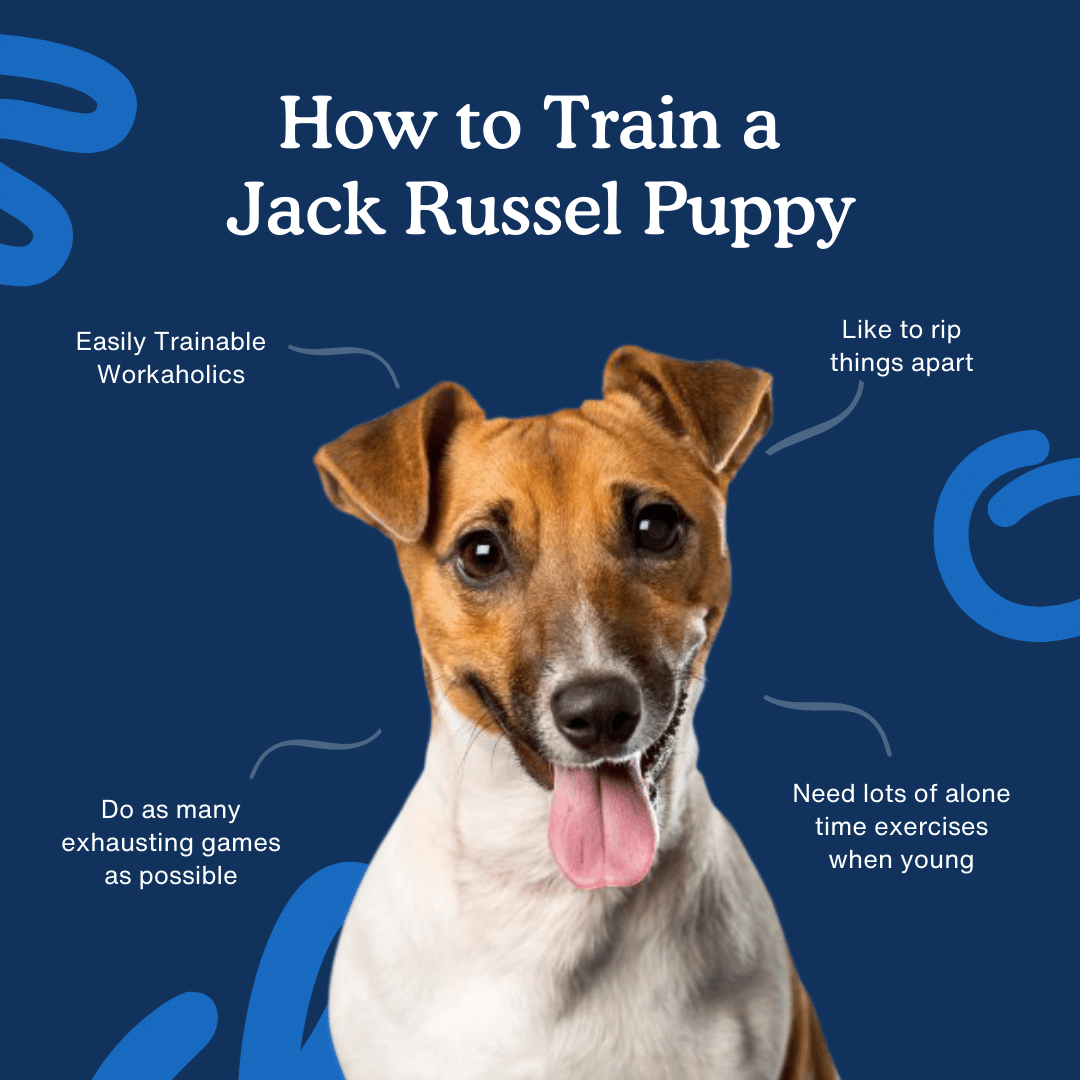
The Jack Russell Terrier is one of the most energetic, most intelligent, and most demanding terrier breeds, a small dog with a very large personality, exceptional athleticism, and a work ethic calibrated for a purpose that has not changed in over 150 years.
The breed was created by Reverend John Russell of Swimbridge, Devon, in the mid-19th century, specifically to produce a dog small enough to follow a fox into its earth (burrow) and to bolt the fox back out for the mounted hunting party above ground.
The dog that Reverend Russell, known among his contemporaries as the Sporting Parson, spent his life developing is essentially unchanged in character from the dog that does the same job in the English countryside today.
That purpose-built character is the key to understanding the Jack Russell Terrier as a companion animal. This is not a dog that evolved toward domestic ease. It is a dog whose every instinct, the independence, the boldness, the extraordinary energy, the willingness to work alone underground without handler guidance, the vocal insistence, was selected and refined for a specific working function.
Owners who understand and appreciate this character find the Jack Russell Terrier endlessly rewarding. Owners who expected a manageable, biddable small dog are commonly unprepared.
Origins and History
Reverend John Russell (1795-1883) was a Devon clergyman, dedicated foxhunting enthusiast, and one of the founding members of the Kennel Club. The breed he developed was not intended for the show ring; it was a working dog, assessed entirely on its ability to perform the demanding work of bolting foxes from their underground earths.
Russell's breeding philosophy centred on a specific combination of characteristics: a body small enough and flexible enough to navigate fox earths (tunnels typically 30 to 45 centimetres in diameter), a chest small enough to enter and work in these tunnels (Russell specified that the dog's chest should be spanned by two hands), a white coat that allowed the dog to be distinguished from the fox in the field, and the courage, gameness, and stamina to work independently underground for extended periods.
The founding dog of the breed is typically identified as Trump, a female terrier purchased by Russell in 1819. From Trump and subsequent additions, Russell developed a strain of working terrier that became influential throughout Devon and the West Country.
After Russell's death in 1883, the breed developed along two somewhat divergent paths: working type dogs maintained by hunt terrier men for fox bolting, and show-oriented development that eventually produced the Parson Russell Terrier (longer-legged, more standardised conformation) and the Jack Russell Terrier (shorter-legged, broader conformation variation allowed).
The American Kennel Club recognised only the Parson Russell Terrier until 2012, when the Jack Russell Terrier, as a distinct breed with shorter legs and greater conformation variation, was added to the Terrier Group.
Physical Characteristics
The Jack Russell Terrier's defining physical requirement is the small, flexible chest, the feature that makes earth work possible. The chest must be spannable by an average person's hands. This size constraint produces a compact but athletic dog that belies its actual physical capability with its modest dimensions.
| Characteristic | Measurement |
|---|---|
| Height | 25-38 cm (10-15 in) |
| Weight | 6-8 kg (13-17 lb) |
| Chest span | Small enough to be spanned by two hands |
| Lifespan | 13-16 years |
| AKC Group | Terrier |
| Coat types | Smooth, broken, and rough |
Three coat types are recognised: smooth (short, flat), broken (a mixture of smooth and rough), and rough (longer, harsh, wiry). All three coat types are weather-resistant and require minimal grooming, weekly brushing for smooth coats, occasional hand-stripping for rough and broken coats to maintain proper texture.
White must predominate in the coat, the functional requirement for distinguishing the dog from the quarry in underground work. Tan, black, and brown markings are permissible on the head and body in limited quantity.
The Jack Russell's most important physical characteristic beyond the chest size is the overall expression of balance and fitness: this should be a dog that looks capable of a full day of hard work, with no exaggerations of conformation that would impair working ability.
Temperament
The Jack Russell Terrier's temperament is described by aficionados with the adjective "game" a hunting term meaning courageous, tenacious, and willing to tackle any challenge regardless of size or difficulty. In practice, this translates to a dog that is bold to the point of foolhardiness, independent, extremely energetic, vocal, and absolutely convinced of its own capabilities and opinions.
The breed's independence is a product of working function. A dog that works underground without handler direction must make its own decisions about how to confront, hold, and bolt a fox. The result is a terrier that thinks for itself, acts on its own judgment, and is not particularly interested in waiting for human confirmation before proceeding.
This quality, which is an asset in an earth dog, is a challenge in a companion dog that lives in a house with rules, scheduled meals, and neighbours who may not appreciate the 6 am vocalization.
"The terrier temperament, courage, tenacity, the tendency to bark and dig, the independence from handler instruction, is not a personality defect in the Jack Russell Terrier. It is the authentic expression of a carefully selected working character.
Owners who try to suppress these characteristics through correction-based training are fighting the animal's fundamental nature; owners who channel these characteristics through appropriate outlets are working with one of the most capable and engaging small dog breeds." Coppinger, R., & Coppinger, L. (2001). Dogs: A New Understanding of Canine Origin, Behavior and Evolution. Scribner.
The Jack Russell Terrier is notably not a dog for first-time owners, for inactive owners, or for households that cannot provide consistent, structured activity. See Best Dogs for First-Time Owners for alternatives.
Health Conditions
The Jack Russell Terrier is generally a healthy breed, with the exceptional longevity (13 to 16 years) characteristic of small, functionally selected terrier breeds. However, several serious hereditary conditions require specific attention.
| Health Condition | Prevalence / Notes |
|---|---|
| Patellar luxation | Common in the breed; ranges from Grade I (occasional skip) to Grade IV (permanent displacement) |
| Primary lens luxation (PLL) | Serious hereditary eye condition, lens detaches from its supporting ligaments, causing glaucoma and blindness; DNA test available (ADAMTS17 mutation) |
| Deafness | Present in white-coated individuals, same piebald gene mechanism as Dalmatian |
| Legg-Calve-Perthes disease | Avascular necrosis of the femoral head, affects small breeds; causes hip pain and lameness |
| Late-onset ataxia | Neurological condition affecting hindlimb coordination; DNA test available |
Primary lens luxation (PLL) is the most serious hereditary eye condition in the Jack Russell Terrier and the terrier group more broadly. The lens of the eye is held in position by ciliary zonules (ligaments).
In PLL, a genetic mutation in the ADAMTS17 gene causes premature degeneration of these ligaments, causing the lens to detach and displace into the front of the eye (anterior lens luxation) or the back (posterior luxation). Anterior lens luxation causes acute glaucoma, a rapid-onset, extremely painful condition that causes permanent blindness within hours if not treated as an emergency.
A DNA test for the ADAMTS17 mutation is commercially available and should be performed on all breeding animals. Carriers can be identified and bred only to clear animals.
"Primary lens luxation in terrier breeds represents one of the clearest examples of a breed-specific hereditary disease for which population-level elimination is achievable through mandatory DNA testing in breeding programmes. The ADAMTS17 mutation has been identified and the test validated; the only barrier to elimination is consistent implementation by breed clubs and breeders." Farias, F. H., et al. (2010).
An ADAMTS17 splice donor site mutation in dogs with primary lens luxation. Investigative Ophthalmology and Visual Science, 51(9), 4716-4721. https://doi.org/10.1167/iovs.09-5142
Any Jack Russell Terrier showing sudden eye redness, pain (pawing at the eye), corneal cloudiness, or a changed appearance of the eye should be treated as a veterinary emergency, as these signs may indicate acute anterior lens luxation with secondary glaucoma.
See also Jack Russell Terrier Training Guide, Rat Terrier, and West Highland White Terrier for related terrier comparisons.
Training
Training a Jack Russell Terrier is a project that requires significant patience, consistency, experienced handling, and a realistic understanding of what training can and cannot achieve. The breed is intelligent, very intelligent, but intelligence in the Jack Russell is deployed in the service of the dog's own objectives, not automatically in the service of the owner's.
Effective training for this breed involves:
Finding the right motivators: Jack Russells are typically food-motivated, but food reward effectiveness varies. High-value treats (meat, cheese) are more effective than dry biscuit rewards. Play reward (a brief, exciting tug game) can be extremely motivating for many individuals.
Keeping sessions short: Jack Russells have good attention when engaged, but boredom tolerance for repetitive drilling is low. Five to 10 minute sessions multiple times daily achieve more than a single 45-minute session.
Accepting imperfect compliance: A Jack Russell that understands a command may still choose not to perform it if the motivation is insufficient. This is not failure; it is the breed's authentic independence. Consistency in asking, and consistently rewarding compliance, improves the compliance rate over time.
Managing prey drive: Recall near moving animals or interesting scents is the most challenging aspect of Jack Russell training. Long-line recall training in varied environments, over many months, produces the most reliable recall. Off-lead access in unfenced areas should not be assumed safe regardless of training history.
See How to Train a Puppy for foundational training guidance.
Exercise
Jack Russell Terriers need vigorous daily exercise, a minimum of 1 hour, with some individuals requiring significantly more. The breed's extraordinary energy, if not consistently channelled, produces a dog that will create its own entertainment through digging, barking, escaping, and generally dismantling whatever is available.
Structured exercise, agility, earthdog trials, flyball, long walks in varied environments, is more effective than repetitive exercise in a single location. The combination of physical exercise and mental stimulation (scent work, problem-solving, learning new skills) produces the most settled, manageable Jack Russell Terrier.
References
Farias, F. H. G., Johnson, G. S., Taylor, J. F., et al. (2010). An ADAMTS17 splice donor site mutation in dogs with primary lens luxation. Investigative Ophthalmology and Visual Science, 51(9), 4716-4721. https://doi.org/10.1167/iovs.09-5142
Orthopedic Foundation for Animals. (2023). Breed Health Statistics: Jack Russell Terrier. Retrieved from https://ofa.org
Jack Russell Terrier Club of America. (2023). Breed Health: Primary Lens Luxation. Retrieved from https://www.therealjackrussell.com/health
Plummer, D. B. (1978). The Working Terrier. Boydell & Brewer.
American Kennel Club. (2023). Russell Terrier (Jack Russell Terrier) Breed Standard. Retrieved from https://www.akc.org/dog-breeds/russell-terrier/
The Kennel Club (UK). (2022). Breed Health Survey: Jack Russell Terrier. Retrieved from https://www.thekennelclub.org.uk
Frequently Asked Questions
What is the difference between a Jack Russell Terrier and a Parson Russell Terrier?
The Jack Russell Terrier and the Parson Russell Terrier are related but distinct breeds that developed from the same foundational dogs created by Reverend John Russell. The Parson Russell Terrier is the longer-legged type, with a standardised conformation closer to Russell’s original working dogs, approximately equal in height to length, with a chest sized for active fox earth work.
The Jack Russell Terrier permits a broader range of leg length (including shorter legs) and more variation in body proportions. The AKC recognised the Parson Russell Terrier first and added the Jack Russell Terrier in 2012. In temperament and working character, the two types are essentially identical.
What is primary lens luxation in Jack Russell Terriers?
Primary lens luxation (PLL) is a hereditary eye condition in which the zonular ligaments holding the lens in position degenerate prematurely, causing the lens to displace. When the lens moves into the front of the eye (anterior luxation), it blocks the drainage of ocular fluid, causing acute glaucoma, a rapid-onset, extremely painful emergency that causes permanent blindness within hours if not treated.
The mutation causing PLL in Jack Russell Terriers (and several other terrier breeds) is in the ADAMTS17 gene. A DNA test is available for breeding stock. Any Jack Russell showing sudden eye redness, pain, cloudiness of the eye, or a changed eye appearance should be treated as a veterinary emergency.
How much exercise does a Jack Russell Terrier need?
Jack Russell Terriers need a minimum of 1 hour of vigorous exercise daily, and many individuals require significantly more. The breed’s energy level is genuinely exceptional, calibrated for a working dog that spent full days of intense physical and mental activity in the field. Walks alone are insufficient; the breed needs varied, stimulating activity that engages both body and mind.
Agility, earthdog trials, flyball, long hikes in varied terrain, and structured play all meet the breed’s needs more effectively than repetitive walks. An under-exercised Jack Russell Terrier will find its own outlets, typically digging, barking, escaping, or dismantling household objects.
Are Jack Russell Terriers good for first-time owners?
Jack Russell Terriers are not recommended for first-time dog owners. The combination of exceptional energy, strong-willed independence, vocal temperament, significant prey drive, and the need for consistent experienced handling creates challenges that are best navigated by owners with prior dog experience, ideally with terrier breeds specifically.
First-time owners who acquire a Jack Russell Terrier frequently find the experience overwhelming and the dog’s behaviour difficult to manage. The breed is deeply rewarding for owners who understand its character and can provide appropriate structure and outlets, but it is a poor match for owners expecting a manageable, easily trained small dog.
Can Jack Russell Terriers live in apartments?
Jack Russell Terriers can technically live in apartments, but the combination of the breed’s energy level, vocal tendencies, and high activity requirements makes apartment life genuinely challenging for the dog and potentially problematic for neighbours. An apartment-dwelling Jack Russell Terrier needs at least 1 hour of vigorous exercise daily, not just walks, but real physical exertion, plus mental stimulation.
The breed’s tendency to bark (as alert, at sounds, from boredom) is a significant consideration in multi-unit housing. Owners in apartments who are highly active, committed to the exercise requirement, and experienced with the breed can succeed; casual owners in apartments are likely to find the experience unsatisfactory for both dog and owner.
What is 'gameness' in a Jack Russell Terrier?
Gameness is a hunting dog term meaning the courage, tenacity, and determination to engage with quarry without backing down, regardless of the difficulty or danger of the situation. In the context of the Jack Russell Terrier, gameness describes the working character that allowed the breed to pursue a fox underground through narrow tunnels, engage and hold or bolt the fox in close quarters, and sustain this work for extended periods.
In the domestic context, this same characteristic manifests as boldness, tenacity in play and interaction, willingness to confront larger dogs without apparent concern for the size differential, and the persistence in pursuing any goal the dog has set itself. Gameness is an asset in working dogs and a character quality that owners of Jack Russells must manage rather than suppress.