
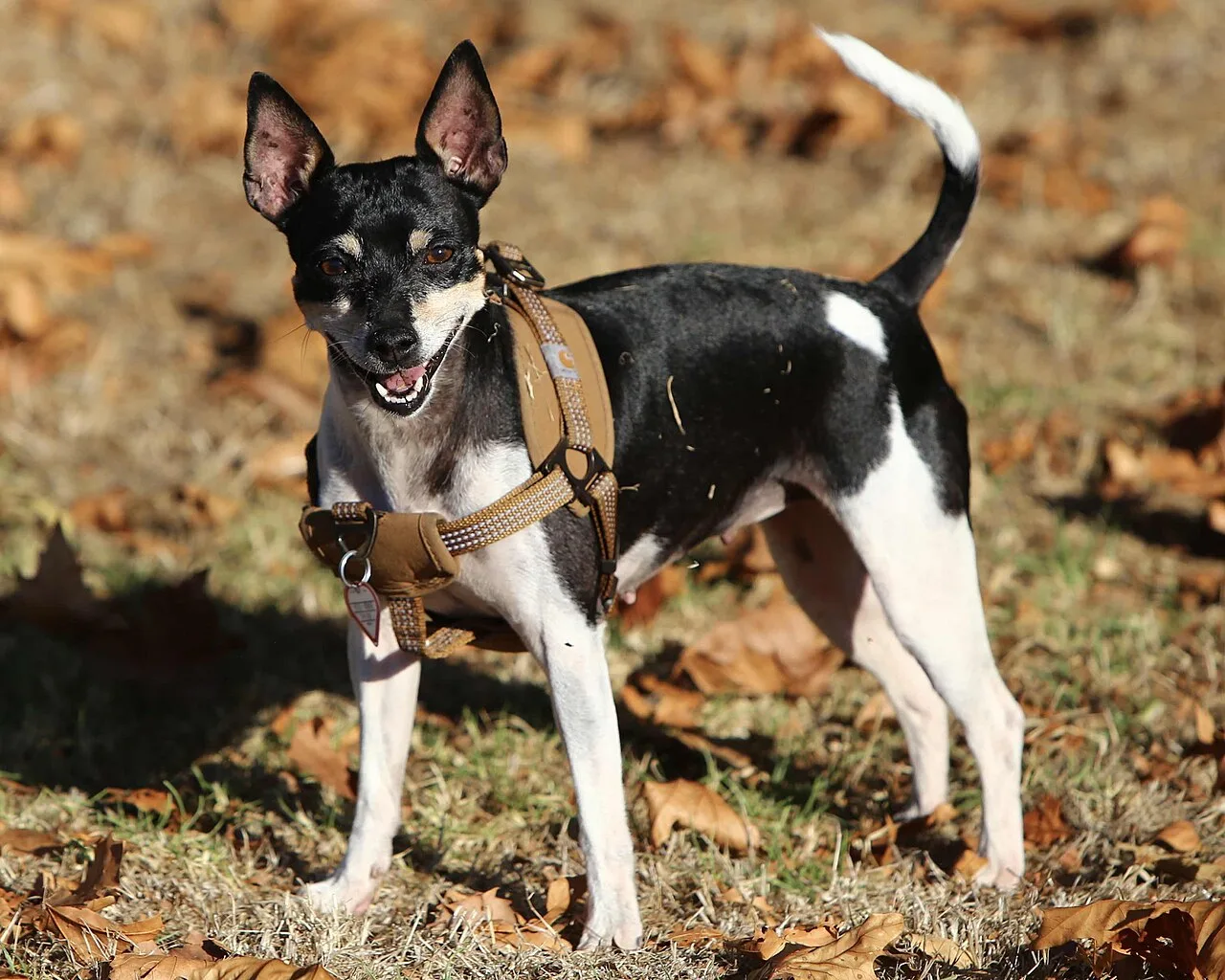
The Rat Terrier is an American breed with a character shaped by over a century of practical farm work: compact, athletic, intelligent, and with a work ethic that distinguishes it from nearly every other terrier.
The breed was developed in the late 19th and early 20th centuries as a farm rat-catcher and small game hunter, and its exceptional longevity, the breed commonly lives 15 to 18 years, making it among the longest-lived of any dog breed, reflects the selection pressure that favoured physically sound, hardworking dogs over many generations.
President Theodore Roosevelt is commonly credited with naming the breed. Roosevelt reportedly kept Rat Terriers in the White House and praised their effectiveness at controlling vermin, a practical attribute that resonated with a president known for his direct, no-nonsense approach to life's challenges. Whether Roosevelt coined the name or simply popularised it, his association with the breed is part of its American heritage.
The Rat Terrier differs from most terrier breeds in a quality that endears it to owners and trainers: it is notably more willing to cooperate with humans than the average terrier. The stubbornness and independence that characterise many terrier breeds are present but moderated in the Rat Terrier, producing a dog that is easier to train, more responsive to its owner, and more amenable to the give-and-take of domestic life.
Origins and History
The Rat Terrier's ancestry is a reflection of practical American farm breeding, not the controlled pedigree development of European kennel club breeds, but the functional mixing of whatever working stock produced the best vermin-hunter. The foundational dogs were brought by European (particularly English) immigrants and included working smooth Fox Terriers, Manchester Terriers, Bull Terriers, and probably Italian Greyhounds for additional speed.
As the breed developed across different regions of the United States in the late 19th and early 20th centuries, local breeders added other breeds to address specific needs. Whippet blood was added in some regions to increase speed. Beagle blood improved the scenting ability. Miniature Pinscher blood was incorporated in some lines. The result was a functionally diverse gene pool that contributed to the breed's health and longevity.
Before the development of commercial pesticides in the mid-20th century, Rat Terriers were working dogs with genuine economic importance on American farms. A good Rat Terrier could kill hundreds of rats in a single day, a documented statistic from the farm accounts of the early 20th century. As commercial rat control chemicals became widely available after World War II, the working role of the Rat Terrier diminished rapidly, and the breed's population declined.
The American Kennel Club recognised the Rat Terrier in 2013 as a member of the Terrier Group, one of the later recognitions among established American breeds, reflecting the breed's working-dog rather than show-dog origins.
Physical Characteristics
The Rat Terrier is a compact, balanced, athletic dog that exists in two sizes. The size distinction is significant and affects some practical aspects of ownership.
| Variety | Height | Weight |
|---|---|---|
| Miniature | 20-35 cm (8-14 in) | 4.5-6.8 kg (10-15 lb) |
| Standard | 35-56 cm (14-22 in) | 5-16 kg (11-35 lb) |
| Lifespan | Both sizes | 15-18 years |
| AKC Group | Both | Terrier |
The coat is short, dense, and smooth, easy to maintain with weekly brushing. Shedding is moderate year-round. Coat colours are varied: the breed comes in particolour combinations of white with any of several colours including black, tan, chocolate, blue, red, apricot, lemon, and sable. Solid white, solid black, and fully tan individuals also occur. The variety of colours is a reflection of the breed's diverse genetic ancestry.
The Rat Terrier's body is lean and muscular, with a wedge-shaped head, upright ears (though button ears are also permissible), and an expression of sharp, alert intelligence. The breed looks what it is: a versatile, capable, practical working dog in a compact package.
Temperament
The Rat Terrier's temperament is one of its greatest assets for companion life. The breed combines the terrier's natural alertness, intelligence, and fearlessness with a notably stronger cooperative orientation toward humans than most terrier breeds possess. This is not a coincidence, the breed's working role required not just independent rat-killing but also cooperative work with farmers, and dogs that were difficult to work with were replaced.
The result is a dog that is smart, engaged, and genuinely interested in its owner, without the single-minded independence that makes many terriers a training challenge. Rat Terriers learn quickly, retain training well, and generally show a willingness to participate in the training process that sets them apart from breeds like the Jack Russell Terrier or the Scottie.
"The Rat Terrier's development across a broad geographical range and functional gene pool produced a dog with a more versatile temperament than most purpose-bred terrier lines. The incorporation of hound, sight hound, and toy breed genetics moderated the typical terrier independence toward a more bidable working temperament, one that proved to be a significant advantage in the breed's transition from farm worker to companion dog." American Kennel Club. (2023). Rat Terrier Breed Standard and History. Retrieved from https://www.akc.org/dog-breeds/rat-terrier/
The prey drive is genuine and significant; this is, fundamentally, a dog bred to catch and kill small animals. Small pets (hamsters, gerbils, pet rats, guinea pigs) are not safe with a Rat Terrier without strict supervision. Small cats may also trigger the chase response. Outdoor gardens will be investigated thoroughly. Squirrels and rabbits will be pursued with dedication.
Despite the prey drive, Rat Terriers are typically excellent with children and good with other dogs when socialised appropriately. The breed is energetic and playful, matching well with the active play style of children, and is patient enough to be a safe child's companion.
Health Conditions
The Rat Terrier is one of the healthiest dog breeds, with an exceptionally long lifespan that reflects the diverse genetic heritage and consistent selection for functional soundness. The breed's mixed genetic background has prevented the accumulation of severe inherited defects that characterise more intensively inbred lines.
| Health Condition | Prevalence / Notes |
|---|---|
| Patellar luxation | Present, grade varies; monitoring recommended |
| Dental disease | Common in smaller individuals, crowded teeth in small jaws |
| Hip dysplasia | Rare in this breed, significantly lower prevalence than most breeds |
| Demodectic mange | Present in young dogs with immature immune systems |
| Cardiac disease | Some lines show elevated heart disease prevalence |
| Lifespan | 15-18 years, among the longest of any breed |
The exceptional longevity of the Rat Terrier, consistently cited as 15 to 18 years, with many individuals reaching the upper end of this range, is one of the breed's most remarkable characteristics. This longevity reflects the practical selection history of the breed: dogs that lasted longer were dogs that continued to earn their keep on the farm. Metabolic disease, cancer, and orthopedic decline that reduce lifespan in other breeds are less prevalent in the Rat Terrier population.
See also Signs of a Healthy Dog for routine health monitoring guidance.
Training
Training a Rat Terrier is genuinely enjoyable for owners accustomed to more stubborn terrier breeds. The breed's combination of intelligence, food motivation, and cooperative temperament makes it one of the most responsive terriers to train. Basic obedience, trick training, and canine sports are all areas where Rat Terriers can excel.
The prey drive requires management in training contexts. A Rat Terrier that has spotted a squirrel or sensed a rodent is difficult to redirect. Reliable recall must be practised consistently before any off-lead access, and off-lead exercise in unfenced areas should not be trusted regardless of training history.
Positive reinforcement using food rewards is the most effective approach. The breed is food-motivated and learns quickly. Training sessions can be longer than with less tolerant terriers, the Rat Terrier's engagement with the training process sustains attention for longer periods.
See also Rat Terrier Training Guide, Jack Russell Terrier, Best Dogs for Families with Kids, and Exercise Needs by Dog Breed.
Exercise
Rat Terriers are active dogs with moderate-to-high exercise needs. An adult Rat Terrier needs 45 to 60 minutes of exercise daily, including off-lead running in a secure area if possible. The breed enjoys varied, mentally stimulating exercise, nose work, tracking, fetch, and agility are all well-suited to the Rat Terrier's physical and mental abilities.
The breed adapts well to apartment living if exercise needs are met consistently. The small-to-medium size, manageable energy levels (compared to larger working breeds), and quiet indoor temperament make the Rat Terrier a practical urban companion. The critical requirement is that the exercise commitment be genuine and consistent, a Rat Terrier that is under-exercised becomes restless and may use its intelligence to find entertainment that the owner does not appreciate.
References
American Kennel Club. (2023). Rat Terrier Breed Standard. Retrieved from https://www.akc.org/dog-breeds/rat-terrier/
Orthopedic Foundation for Animals. (2023). Breed Health Statistics: Rat Terrier. Retrieved from https://ofa.org
Rat Terrier Club of America. (2023). Breed History and Health. Retrieved from https://www.ratterrierclub.com
Bellumori, T. P., Famula, T. R., Bannasch, D. L., Belanger, J. M., & Oberbauer, A. M. (2013). Prevalence of inherited disorders among mixed-breed and purebred dogs: 27,254 cases. Journal of the American Veterinary Medical Association, 242(11), 1549-1555. https://doi.org/10.2460/javma.242.11.1549
O'Neill, D. G., et al. (2013). Longevity and mortality of owned dogs in England. Veterinary Journal, 198(3), 638-643. https://doi.org/10.1016/j.tvjl.2013.09.020
Scott, J. P., & Fuller, J. L. (1965). Genetics and the Social Behavior of the Dog. University of Chicago Press.
Frequently Asked Questions
How long do Rat Terriers live?
Rat Terriers are among the longest-lived of all dog breeds, with a typical lifespan of 15 to 18 years. Many individuals reach 16 to 18 years in good health, and occasional individuals live beyond 20 years. This exceptional longevity reflects the breed’s diverse genetic heritage, developed from multiple working breeds without the intensive inbreeding that concentrates inherited diseases in more narrowly developed lines.
The selection pressure of working life on American farms over more than a century consistently favoured physically sound, hardy individuals, and this foundation is reflected in the breed’s remarkable health statistics.
Are Rat Terriers good apartment dogs?
Rat Terriers adapt well to apartment life if their exercise and mental stimulation needs are consistently met. The breed’s small-to-medium size, relatively quiet indoor temperament, and manageable energy levels (compared to larger working breeds) make them practical urban companions.
Key requirements for apartment-dwelling Rat Terriers are: 45 to 60 minutes of daily exercise; off-lead running opportunities in secure areas; mental stimulation through training, nose work, or puzzle toys; and consistent company, as the breed prefers not to be left alone for extended periods. Without adequate exercise and stimulation, the Rat Terrier’s intelligence and energy find less desirable outlets.
Are Rat Terriers easy to train?
Rat Terriers are notably easier to train than most terrier breeds. The combination of intelligence, food motivation, and a cooperative temperament that is unusual among terriers makes the breed highly responsive to positive reinforcement training. They learn quickly, retain training well, and generally approach training sessions with genuine engagement rather than the selective participation characteristic of more independent terriers.
Basic obedience and trick training are accessible for most Rat Terrier owners, and the breed excels in canine sports including agility, flyball, and earthdog trials. The prey drive must be managed with reliable recall training before any off-lead access.
What is the history of the Rat Terrier name?
The name Rat Terrier is commonly associated with President Theodore Roosevelt, who reportedly kept the breed in the White House and used the name in reference to the dogs’ ability to rid the premises of rats. Whether Roosevelt coined the term or simply popularised an existing name is debated by breed historians, but his documented ownership of and enthusiasm for the breed contributed to its identity as an American working dog.
The breed’s development was not centrally organised through a kennel club; it evolved across American farms through practical breeding decisions, with the name reflecting the breed’s primary function: catching and killing rats.
Can Rat Terriers live with cats?
Rat Terriers have a genuine prey drive directed at small animals, a drive that is fundamental to the breed’s working function. Whether a Rat Terrier can safely coexist with cats depends on the individual dog’s prey drive intensity, whether the animals were raised together from a young age, and the cat’s behaviour. Rat Terriers raised alongside cats from puppyhood often recognise them as household members rather than prey.
Adult Rat Terriers introduced to cats require careful managed introductions with the dog on lead. Cats that run unpredictably trigger the chase response more reliably than confident cats that hold their ground. Supervised cohabitation is advisable until the relationship is clearly established.
Do Rat Terriers shed a lot?
Rat Terriers shed moderately year-round, with somewhat heavier shedding in spring and autumn. The short, dense, smooth coat is easy to maintain, weekly brushing with a hound mitt or rubber grooming tool removes dead hair and keeps the coat in good condition. Shedding is less heavy than in double-coated breeds and is manageable with regular grooming. The short coat does not mat or require trimming.
Bathing when needed (every 4 to 6 weeks, or when dirty) with a gentle dog shampoo completes the coat care routine.