
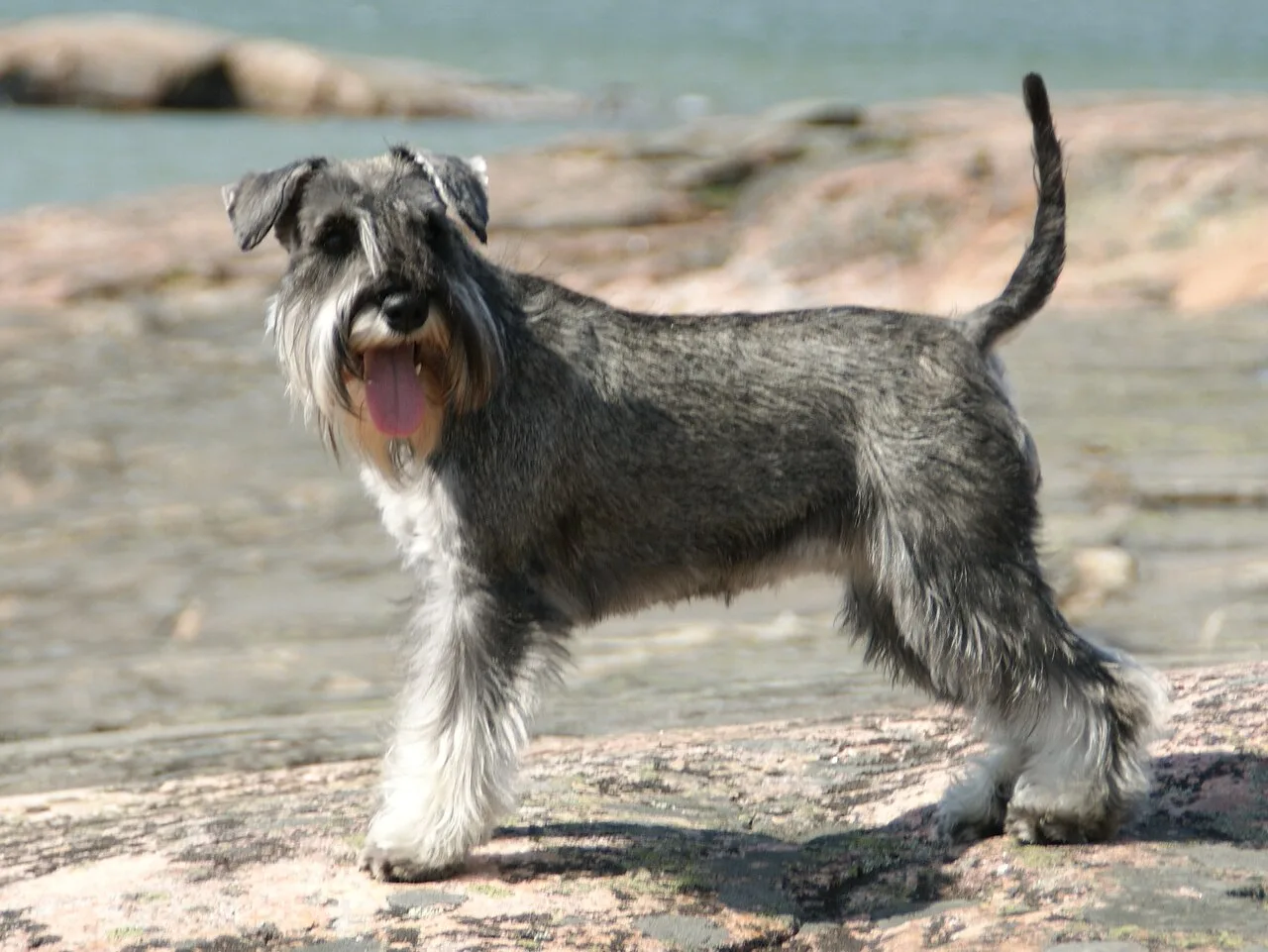
The Miniature Schnauzer is the most popular of the three Schnauzer sizes and one of the most distinctive-looking dogs in existence. With its trademark bushy eyebrows, prominent beard and mustache, wiry double coat, and spirited personality, the Miniature Schnauzer manages to look simultaneously elegant and comical. This intelligent, adaptable breed suits a wide range of households but comes with specific health considerations that owners should understand from the outset.
Origins and Development
The Miniature Schnauzer was developed in Germany during the second half of the 19th century, created by crossing the Standard Schnauzer with smaller breeds. The most commonly cited contributors are the Poodle and the Affenpinscher, though some sources also mention the Miniature Pinscher. The goal was to create a smaller version of the Standard Schnauzer, a capable working dog in a more practical size for ratting in barns and small farms where a larger dog would be cumbersome.
The breed's name comes from the German word "Schnauze," meaning snout or muzzle, a reference to the characteristic beard and mustache that is the breed's most recognizable feature. The first recorded Miniature Schnauzer was a black female named Findel, registered in 1888 in Germany.
Miniature Schnauzers were recognized by German studbooks in the 1890s and the breed arrived in the United States in 1924. The American Kennel Club recognized the breed in 1926, placing it in the Terrier Group despite the Miniature Schnauzer not having terrier ancestry.
This classification difference between countries is one of the breed's more interesting quirks: in the United Kingdom, the Kennel Club places Miniature Schnauzers in the Utility Group rather than the Terrier Group, reflecting a more accurate assessment of the breed's working heritage. The Schnauzer, in all its sizes, is classified in the Working Group or Utility Group in most European countries.
Physical Characteristics
The Miniature Schnauzer is a small, square-proportioned dog, its height and length are approximately equal. The characteristic head is long and rectangular, with flat cheeks, a strong muzzle, and the defining eyebrows and beard. The body is compact and muscular, with a straight back and deep chest.
| Physical Characteristic | Measurement |
|---|---|
| Height | 30-36 cm (12-14 inches) |
| Weight | 5.4-9.1 kg (12-20 lbs) |
| Body type | Square, muscular, compact |
| Coat type | Wiry outer coat, soft undercoat |
| Standard colors | Salt-and-pepper, black, black-and-silver, white |
| Ear type | V-shaped, folding forward (natural); erect (cropped) |
| Tail | High set, docked in some countries |
| Lifespan | 12-15 years |
The wiry double coat is one of the breed's defining characteristics. The outer coat is harsh and wiry; the undercoat is soft and dense. The classic "salt-and-pepper" color pattern is the most common, with individual hairs banded in white and dark, creating the distinctive grizzled effect. Black, black-and-silver (black with silver markings in the eyebrow and beard areas), and solid white are also recognized by major kennel clubs, though white is not recognized in all countries.
Temperament and Personality
The Miniature Schnauzer has a bold, spirited, and alert personality that belies its small size. It combines the intelligence and trainability associated with German working breeds with a watchdog alertness that makes it an excellent home guardian. Unlike many terriers, which can be stubborn and independent to the point of frustration, the Miniature Schnauzer is generally more biddable and responsive to training.
Miniature Schnauzers are energetic, curious, and highly social. They bond closely with their families and are typically good with children. They can be reserved with strangers initially, reflecting their watchdog heritage, but they warm up readily once they establish that a newcomer is welcome. Most Miniature Schnauzers get along reasonably well with other dogs, though they can be assertive given their terrier classification.
Barking is a behavioral tendency to be aware of: Miniature Schnauzers are vocal dogs and will alert their owners to anything unusual. With appropriate training and mental stimulation, excessive barking can be managed, but it is a trait inherent to the breed's character.
"The Miniature Schnauzer occupies an interesting behavioral position; it has the intelligence and trainability of a herding breed combined with the alertness and vocalness of a terrier. This combination makes them highly responsive training partners but also dogs that require consistent mental engagement." Dr. Stanley Coren, Professor Emeritus, Department of Psychology, University of British Columbia, author of The Intelligence of Dogs
Key Health Concern: Hyperlipidemia and Pancreatitis
The most distinctive health issue in Miniature Schnauzers is hyperlipidemia, abnormally elevated levels of blood triglycerides and cholesterol. This condition is significantly more common in Miniature Schnauzers than in any other breed, with some studies suggesting that idiopathic hyperlipidemia (elevated triglycerides without an obvious underlying cause such as hypothyroidism or Cushing's disease) affects 30-50% of the breed.
The clinical consequence of hyperlipidemia in Miniature Schnauzers is primarily pancreatitis. The pancreas, when exposed to chronically elevated fat levels in the blood, becomes inflamed. Pancreatitis can range from mild (presenting as lethargy, reduced appetite, and mild abdominal discomfort) to life-threatening (acute severe pancreatitis with vomiting, severe pain, systemic inflammation, and organ involvement).
Dietary management is the cornerstone of treating hyperlipidemia: a low-fat diet substantially reduces circulating triglyceride levels and dramatically reduces pancreatitis risk. Miniature Schnauzer owners should avoid feeding high-fat table scraps, fatty treats, and rich commercial foods. Regular blood panels to monitor triglyceride levels are advisable, particularly from middle age onward. For guidance on appropriate foods see What Can Dogs Eat Safe and Unsafe Foods.
Additional Health Conditions
Urolithiasis: Miniature Schnauzers are prone to bladder and kidney stones, particularly calcium oxalate uroliths (stones). They are overrepresented in clinical studies of urinary stone disease. Management includes dietary modification (low-oxalate, moisture-rich diets) and regular urinalysis. Some stones require surgical removal.
Mycobacterium avium complex (MAC) susceptibility: Miniature Schnauzers have a documented genetic susceptibility to disseminated MAC infection, a bacterial disease caused by environmental mycobacteria that rarely affect healthy dogs of other breeds. In genetically susceptible Schnauzers, the immune system fails to contain the infection. This is a serious condition with a grave prognosis.
Progressive retinal atrophy (PRA): Miniature Schnauzers are affected by a form of PRA that causes gradual photoreceptor degeneration and eventually blindness. DNA testing is available.
Cataracts: Both juvenile and adult-onset hereditary cataracts occur in Miniature Schnauzers. DNA testing for some forms is available.
Schnauzer Bumps (Comedone Syndrome): A skin condition unique to and essentially universal in Miniature Schnauzers. Small, blackhead-like bumps (comedones) develop along the back, often with secondary infection. Management includes medicated shampoos and, in stubborn cases, vitamin A or retinoid therapy.
| Health Condition | Estimated Prevalence in Breed | DNA Test Available |
|---|---|---|
| Hyperlipidemia | 30-50% (idiopathic) | No |
| Urolithiasis | High (overrepresented) | No |
| Comedone syndrome | Very common | No |
| Progressive retinal atrophy | Present in breed lines | Yes |
| Hereditary cataracts | Present in breed lines | Yes |
| MAC susceptibility | Reported, uncommon | Research stage |
Grooming Requirements
The Miniature Schnauzer's wiry double coat requires regular professional grooming. Show dogs are hand-stripped, a process of removing dead outer coat by hand to maintain the characteristic harsh, wiry texture. Pet dogs are typically clipped, which is easier but softens the coat texture over time.
At home, owners should brush the beard and leg furnishings (the longer hair on the legs and face) every two to three days to prevent matting. The body coat in clipped dogs typically needs professional attention every 6-8 weeks. Regular ear cleaning is important, and the hair inside the ear canal is often plucked as part of professional grooming to reduce infection risk. For complete guidance see Miniature Schnauzer Grooming Guide.
Dental care is particularly important in Miniature Schnauzers, as in most small breeds. Daily tooth brushing and regular professional dental cleanings help prevent periodontal disease, which is linked to systemic health issues including kidney and heart disease. Dog Dental Care Complete Guide covers dental hygiene practices in detail.
Exercise and Training Needs
Miniature Schnauzers are active dogs that require daily exercise, typically 30-60 minutes of brisk walking plus play sessions. They enjoy a wide variety of activities including fetch, agility, rally obedience, earthdog trials, and nose work. Mental stimulation is as important as physical exercise for this intelligent breed; a bored Miniature Schnauzer will find its own entertainment, usually in ways its owners disapprove of.
Training Miniature Schnauzers is generally a rewarding experience. They are quick learners, food-motivated, and responsive to positive reinforcement. They can be willful and will test boundaries if training is inconsistent, but they do not require harsh methods. Early socialization, exposure to a variety of people, dogs, and environments during the puppy period, is important to develop a confident, well-adjusted adult.
Many Miniature Schnauzer owners find their dogs have an unexpected scent-tracking ability. The breed was originally developed partly for ratting, and this hunting heritage can be channeled productively into nose work and tracking activities.
Suitability for Allergy Sufferers
The Miniature Schnauzer is sometimes promoted as hypoallergenic. While no dog is truly hypoallergenic (all dogs produce the Can f 1 allergen that triggers most dog allergies), Miniature Schnauzers shed relatively little and produce lower quantities of shed hair that distributes dander around the home. Some individuals with mild dog allergies report tolerating Miniature Schnauzers better than heavy-shedding breeds. For a full discussion of this topic see Best Dogs for Allergy Sufferers.
Finding a Healthy Miniature Schnauzer
Responsible Miniature Schnauzer breeders screen their breeding stock for progressive retinal atrophy and hereditary cataracts using available DNA tests, maintain detailed health records across generations, and are aware of pancreatitis and hyperlipidemia in their lines. They should be able to discuss these conditions openly and explain what steps they take to minimize health risks in their puppies.
Health concerns to ask about specifically include the triglyceride history of parent dogs, any documented urinary stone history in the lines, and eye testing results. See Miniature Schnauzer Health Problems for a comprehensive health reference.
Summary
The Miniature Schnauzer is a spirited, intelligent, and highly adaptable dog that suits a wide range of owners and living situations. Its distinctive appearance, watchdog alertness, and loyal character make it enduringly popular.
Key health challenges, particularly hyperlipidemia and its pancreatitis consequences, can be managed effectively with dietary care and regular veterinary monitoring. With appropriate grooming, exercise, and healthcare, the Miniature Schnauzer is a robust and long-lived companion.
References
Xenoulis, P.G., & Steiner, J.M. (2010). Lipid metabolism and hyperlipidemia in dogs. Veterinary Journal, 183(1), 12-21. https://doi.org/10.1016/j.tvjl.2008.10.011
Furrow, E., Atzingen, C.H., & Berent, A.C. (2013). Noncalcium phosphate uroliths in dogs. Veterinary Medicine and Science, 11(2), 41-52. https://www.ncbi.nlm.nih.gov/pmc/articles/PMC3587693/
Hartmann, K., Greene, C.E. (2003). Diseases caused by systemic bacterial infections. In Ettinger & Feldman (Eds.), Textbook of Veterinary Internal Medicine (6th ed.). Elsevier.
Coren, S. (2006). The Intelligence of Dogs. Free Press. ISBN 9780743280877.
American Kennel Club. (2023). Miniature Schnauzer breed standard. https://www.akc.org/dog-breeds/miniature-schnauzer/
Frequently Asked Questions
Are Miniature Schnauzers prone to pancreatitis?
Yes. Miniature Schnauzers are significantly predisposed to hyperlipidemia (elevated blood triglycerides), which is a major risk factor for pancreatitis. A low-fat diet and regular blood lipid monitoring are important for managing this risk throughout the dog’s life.
Do Miniature Schnauzers shed much?
Miniature Schnauzers are low-shedding dogs. Their wiry double coat does not shed extensively, making them a better choice for households concerned about dog hair. However, their coat does require regular professional grooming every 6-8 weeks.
Are Miniature Schnauzers good apartment dogs?
Yes, with some caveats. Miniature Schnauzers are compact and adaptable, but they can be vocal, which may cause issues in apartments with thin walls. With appropriate training to manage barking and daily exercise, they can live happily in apartments.
How much exercise does a Miniature Schnauzer need?
Miniature Schnauzers are energetic and need 30-60 minutes of exercise per day, plus mental stimulation through training or interactive play. They enjoy varied activities and do well in dog sports such as agility and nose work.
Are Miniature Schnauzers good with children?
Generally yes. Miniature Schnauzers are robust, energetic, and playful, making them well-suited to families with children. They are sturdy enough to withstand the energy of children while being small enough to be manageable. Supervision is always recommended with very young children.
What is Schnauzer Bumps (comedone syndrome)?
Comedone syndrome is a skin condition essentially unique to Miniature Schnauzers, causing small blackhead-like bumps (comedones) along the back. It is usually a cosmetic issue managed with medicated shampoos, though secondary bacterial infections sometimes require antibiotic treatment.