
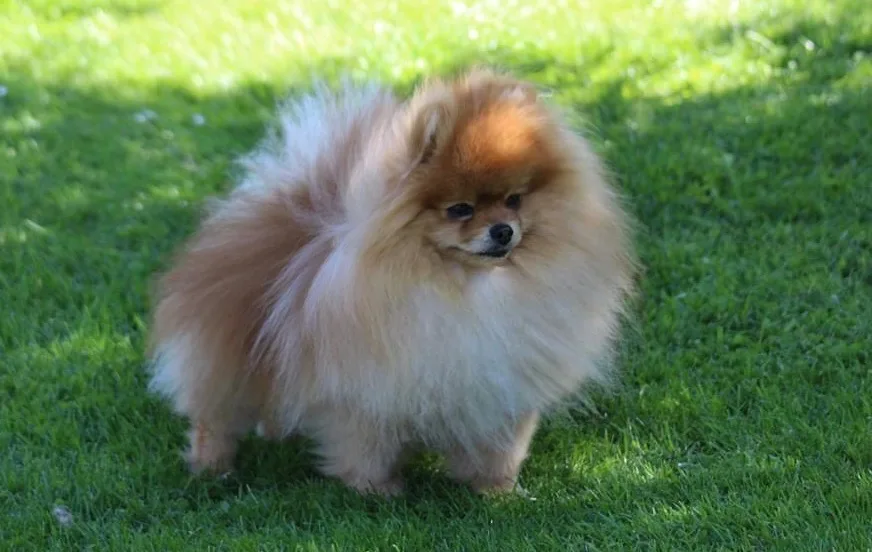
The Pomeranian is one of the most popular toy breeds in the world, a tiny dog with a lion's heart, a fox's face, and an enormous profusion of double coat that makes it appear two to three times its actual size.
Alert, curious, and bold in a way that surprises many first-time owners expecting a placid lap dog, the Pomeranian is a Spitz-type dog in miniature, descended directly from the large working sled dogs of the Arctic and sharing their assertive, spirited character in a package weighing under four kilograms.
From Arctic Sled Dogs to Royal Drawing Rooms
The Pomeranian's ancestry lies with the large Spitz-type dogs of northern Europe, closely related to the Norwegian Elkhound, Samoyed, and other Arctic breeds that were used for drafting, herding, and hunting in the far north. The breed takes its name from Pomerania, a historical region now divided between modern Poland and Germany along the Baltic coast, though it did not necessarily originate there, the region was simply where the breed was well-known before it spread further.
Early Pomeranians were significantly larger than the modern breed, original 18th-century specimens weighed 13-14 kg or more, and their working heritage was still evident in their structure and type.
The transformation to the tiny toy dog of today was largely the project of Queen Victoria of England, who became fascinated with the smaller type after bringing back several Pomeranians from a visit to Florence, Italy, in 1888. One of her dogs, Marco, is said to have weighed only 5 kg, small even then. Victoria showed her Pomeranians, and the smaller, more compact type became fashionable.
Through the late Victorian era and into the Edwardian period, breeders on both sides of the Atlantic competed to produce ever-smaller dogs. By 1915, the AKC breed standard had been revised to favor the smaller type, and the larger "throwback" puppies born occasionally in Pomeranian litters were sometimes surrendered as pets rather than shown.
The AKC formally recognized the Pomeranian in 1888, placing it in the Toy Group where it remains. The breed has been consistently popular across the 20th and 21st centuries, with its profile boosted by celebrity ownership and heavy social media presence.
Physical Characteristics
The Pomeranian is a square-proportioned dog, its body length approximately equal to its height at the shoulder. The head is foxy in appearance: a wedge-shaped skull, small, upright, pointed ears set high, and bright, dark, almond-shaped eyes with an intelligent, alert expression. The muzzle is proportionate and fine.
| Physical Characteristic | Measurement |
|---|---|
| Height | 18-30 cm (7-12 inches) |
| Weight | 1.9-3.5 kg (4-7.7 lbs) |
| Body type | Square, compact |
| Coat type | Double coat: profuse, stand-off outer; soft, dense undercoat |
| Coat colors | 23+ recognized, including orange, sable, black, white, cream, blue, parti |
| Ears | Small, high-set, erect |
| Tail | Heavily plumed, curling flat over the back |
| Lifespan | 12-16 years |
The coat is the breed's most spectacular feature. The outer coat is long, straight, and harsh-textured, standing off from the body to create the characteristic puffball silhouette. The undercoat is so dense that it pushes the outer coat upward and outward. The tail is carried flat over the back, completely hidden under the long, plumed tail hair. The mane and frill around the neck and chest are particularly abundant.
The Pomeranian is recognized in more color varieties than almost any other breed. The AKC recognizes over 23 colors and patterns, ranging from the classic bright orange (one of the most popular) to sable (where each hair has a dark tip over a lighter base), solid black, solid white, cream, blue (a dilute black), chocolate (brown), beaver (a dilute chocolate), beaver sable, parti-color (white with colored patches), and merle. This variety gives the breed extraordinary visual diversity.
Temperament and Character
The Pomeranian's temperament is often a revelation to people who expect a gentle, quiet lap dog based on its small size. Pomeranians are bold, assertive, alert, and energetic; they are Spitz dogs in every behavioral respect, simply miniaturized. They are curious about everything in their environment and investigate new people, objects, and sounds with confident interest rather than timid retreat.
This confidence occasionally shades into what dog owners describe as "small dog syndrome" a willingness to challenge much larger dogs, bark at strangers and perceived threats, and generally behave as if unaware of their actual size. While this characteristic assertiveness is part of the breed's charm, it also represents a genuine safety risk: a Pomeranian that runs toward a large dog or a moving vehicle needs reliable owner management.
Pomeranians are social and affectionate with their families. They form strong bonds with their primary caregivers and enjoy being involved in household activity. They can be one-person dogs or adapt to multi-person households. They are generally good with children who are old enough to be gentle, but their small size makes them vulnerable to accidental injury by young children and they should never be left unsupervised with very young children.
"The Pomeranian's behavioral profile is consistent with its Spitz ancestry. Despite the enormous size reduction from ancestral forms, the alertness, vocalness, confidence, and independence characteristic of Spitz-type dogs are fully preserved. This mismatch between size and behavioral self-perception is a distinctive characteristic of the breed." Dr. Adam Miklosi, Head of the Department of Ethology, Eotvos Lorand University, Budapest, in Dog Behaviour, Evolution, and Cognition (2007)
Health Concerns: Tracheal Collapse
Tracheal collapse is one of the most important health conditions in the Pomeranian, shared with many other toy breeds including the Yorkshire Terrier, Chihuahua, and Toy Poodle. The trachea (windpipe) is supported by rings of cartilage that normally maintain its round cross-section during breathing. In tracheal collapse, these cartilage rings weaken and flatten, particularly during inhalation, causing the tracheal walls to collapse inward and obstruct airflow.
The characteristic sign is a "goose honk" cough, a distinctive harsh, high-pitched cough triggered by excitement, exercise, eating, drinking, or pressure on the neck. In mild cases, the condition is managed medically with cough suppressants and anti-inflammatory drugs. In severe cases, surgical placement of a tracheal stent or extraluminal prosthetic rings may be necessary.
Critically, using a collar (particularly a standard neck collar) in Pomeranians and other small breeds prone to tracheal collapse worsens the condition by placing direct pressure on the trachea whenever the leash is pulled or the dog strains. Harnesses, which distribute pressure across the chest and shoulders rather than the neck, are strongly recommended for all small breeds.
Additional Health Conditions
Patellar luxation: The kneecap slipping out of its groove is very common in toy and small breeds, including the Pomeranian. Grades range from 1 (intermittent luxation causing no obvious lameness) to 4 (permanent luxation with significant mobility impairment requiring surgery).
Alopecia X: Also called black skin disease, or growth hormone/castration responsive dermatosis, alopecia X is a poorly understood cosmetic condition causing sudden, symmetrical, non-inflammatory hair loss in Pomeranians (and some other Nordic breeds). The skin darkens to a dark grey-black as it is exposed to light. The coat loss is distressing to owners but does not appear to cause the dog physical discomfort.
Spaying or neutering often causes partial or complete regrowth in some dogs; melatonin supplementation is sometimes effective.
Hypothyroidism: The thyroid gland producing insufficient hormone is common in many breeds and causes weight gain, lethargy, cold intolerance, and coat changes. It is treatable with daily oral thyroid hormone replacement therapy.
Dental disease: Like most small breeds, Pomeranians are prone to dental overcrowding and periodontal disease due to the large number of teeth in a small mouth. Daily tooth brushing and regular professional dental cleanings are important. For guidance see Dog Dental Care Complete Guide.
Heart disease: Pomeranians can develop cardiac disease, including patent ductus arteriosus (a congenital defect) and mitral valve disease (particularly in older dogs). Regular cardiac auscultation as part of routine veterinary checkups is recommended.
| Health Condition | Description | Management |
|---|---|---|
| Tracheal collapse | Cartilage ring weakness causing airway obstruction | Harness (not collar); medical/surgical therapy |
| Patellar luxation | Kneecap dislocation | Medical or surgical depending on severity |
| Alopecia X | Sudden symmetrical hair loss | Cosmetic; spay/neuter may help |
| Hypothyroidism | Underactive thyroid gland | Daily oral levothyroxine |
| Dental disease | Overcrowding, periodontal disease | Daily brushing, professional cleanings |
| Heart disease | MVD, PDA | Regular monitoring, cardiac medication |
Grooming Requirements
The Pomeranian's spectacular double coat requires regular, thorough grooming to maintain. Without regular brushing, the undercoat mats, particularly in areas of friction such as behind the ears, under the forearms, and in the groin area. Matting is uncomfortable for the dog and, if severe, requires clipping rather than brushing to remove.
Pomeranians shed their undercoat heavily twice a year (typically spring and fall), periods called "blowing coat" when the volume of shed hair can be alarming. Daily brushing is needed during these periods; otherwise, two to three times per week is usually sufficient. Many owners have their Pomeranians professionally groomed every 6-8 weeks.
One important note: a Pomeranian puppy undergoes a transitional coat phase called the "puppy uglies" at around 3-6 months of age, when the puppy coat is shed and replaced by the adult double coat. During this period, the dog looks distinctly ragged and patchy, which alarms many first-time owners. This is completely normal and resolves on its own as the adult coat grows in over several months. See Pomeranian Grooming Guide for full grooming guidance.
Exercise and Living Requirements
Despite their small size, Pomeranians are active dogs that require daily exercise. Short daily walks and play sessions are usually sufficient, the breed's small stride length means a 20-30 minute walk covers appropriate distance for the dog. They are well-suited to apartment living given their small size, compact exercise requirements, and adaptability to indoor play. See Best Dogs for Apartments for a comprehensive comparison of apartment-friendly breeds.
However, Pomeranians are vocal dogs and can bark excessively if not trained and managed. This can be a significant issue in apartment buildings with thin walls. Training a "quiet" command and providing sufficient mental and physical stimulation reduces barking substantially but will not eliminate it entirely; some degree of alerting behavior is inherent to the breed.
Mental stimulation through training is valuable for Pomeranians. They are intelligent dogs capable of learning tricks, basic obedience, and even competitive rally obedience. Their Spitz-type independence means they respond best to positive reinforcement rather than repetitive, drill-style training.
For health monitoring and more detail on breed-specific problems see Pomeranian Health Problems and Yorkshire Terrier for comparison with a closely related toy breed.
Summary
The Pomeranian is a bold, beautiful, and devoted companion with a long and distinguished history stretching back to Arctic working dogs and royal drawing rooms alike. It is one of the most visually striking of the toy breeds and its personality is significantly more assertive and energetic than its size might suggest.
Key health considerations, tracheal collapse (managed with harness use and medical therapy), patellar luxation, and dental disease, are manageable with appropriate care. For owners who appreciate an alert, active, highly responsive small dog with spectacular good looks and a confident personality, the Pomeranian is an exceptional choice.
References
Johnson, L.R., & Pollard, R.E. (2010). Tracheal collapse and bronchomalacia in dogs: 58 cases (7/2001-1/2008). Journal of Veterinary Internal Medicine, 24(2), 298-305. https://doi.org/10.1111/j.1939-1676.2009.0451.x
Cerundolo, R., Lloyd, D.H., Persechino, A., Evans, H., & Cauvin, A. (2004). Treatment of canine Alopecia X with trilostane. Veterinary Dermatology, 15(5), 285-293. https://doi.org/10.1111/j.1365-3164.2004.00414.x
Miklosi, A. (2007). Dog Behaviour, Evolution, and Cognition. Oxford University Press. https://doi.org/10.1093/acprof:oso/9780199295852.001.0001
Roush, J.K. (2002). Canine patellar luxation. Veterinary Clinics of North America: Small Animal Practice, 23(4), 855-868. https://doi.org/10.1016/S0195-5616(93)50087-4
American Kennel Club. (2023). Pomeranian breed standard. https://www.akc.org/dog-breeds/pomeranian/
Frequently Asked Questions
Why should Pomeranians wear harnesses instead of collars?
Pomeranians are prone to tracheal collapse, where the cartilage rings supporting the windpipe weaken. Standard neck collars place direct pressure on the trachea and worsen tracheal collapse. Harnesses distribute pressure across the chest and shoulders instead, protecting the airway. This applies to all small breeds prone to the condition.
What is Alopecia X in Pomeranians?
Alopecia X (also called black skin disease) is a cosmetic condition causing sudden, symmetrical hair loss and darkening skin in Pomeranians. It does not appear to cause physical discomfort. Spaying or neutering sometimes causes regrowth. The underlying cause is not fully understood and there is no definitive treatment.
What are the Pomeranian puppy uglies?
The puppy uglies is a normal coat transition phase at around 3-6 months of age when the puppy coat is shed before the adult double coat fully grows in. The dog looks patchy and ragged during this period, which alarms many first-time owners. It is completely normal and resolves as the adult coat develops over several months.
Are Pomeranians good apartment dogs?
Yes, generally. Pomeranians are small, have modest exercise needs, and adapt well to apartment living. However, they can be vocal and their barking may cause issues in apartments with thin walls. Training a quiet command and providing appropriate mental stimulation significantly reduces barking.
How often do Pomeranians need grooming?
Pomeranians require brushing 2-3 times per week normally and daily during heavy seasonal shedding. Professional grooming every 6-8 weeks is typical for pet dogs. Without regular brushing, the dense undercoat mats, particularly behind the ears and in areas of friction.
Are Pomeranians related to sled dogs?
Yes. Pomeranians are a miniaturized form of Spitz-type dogs, which share ancestry with Arctic working breeds including the Samoyed, Norwegian Elkhound, and early sled dogs. Queen Victoria’s preference for smaller specimens in the 1880s drove selective breeding toward the tiny toy dog of today, but the behavioral traits of the ancestral Spitz, alertness, boldness, vocalness, are fully preserved.