
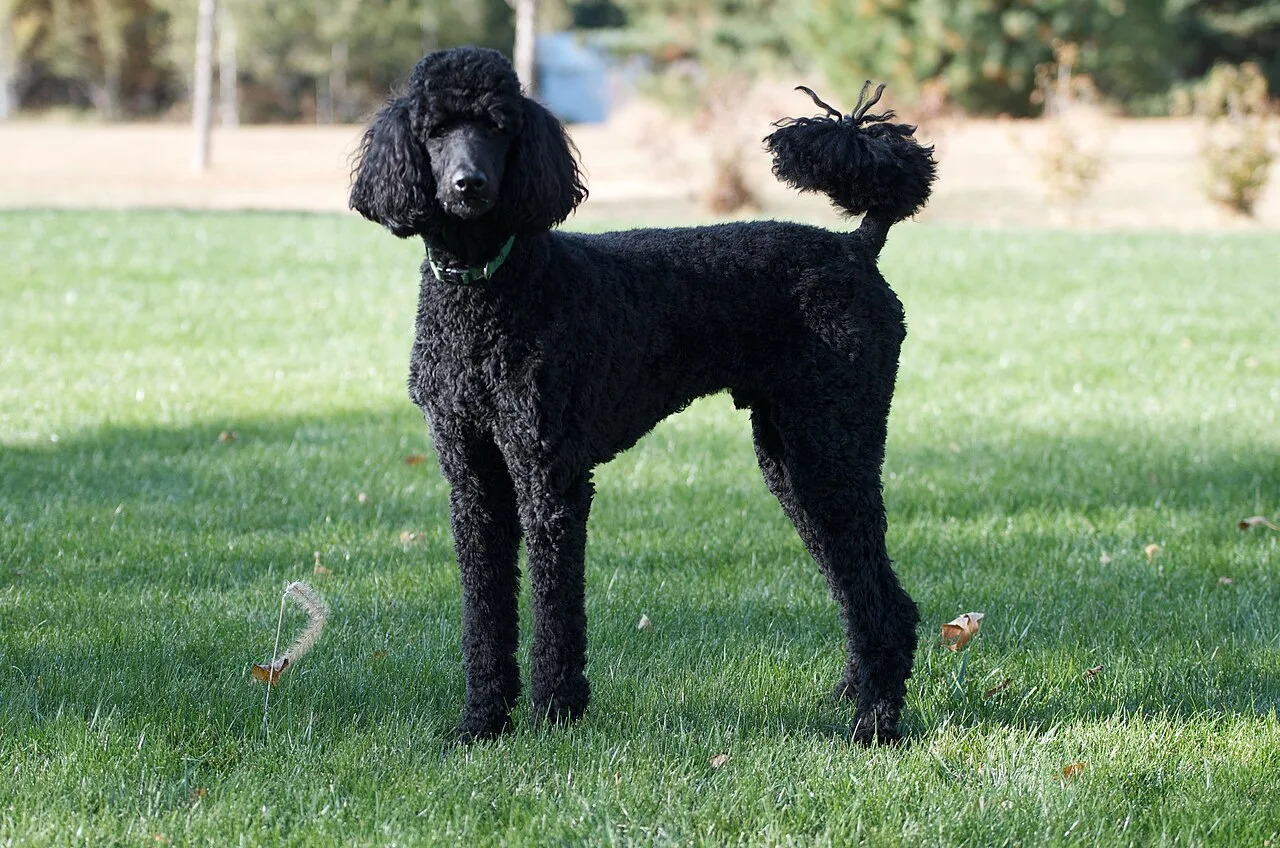
The Poodle, in its Standard, Miniature, and Toy varieties, is frequently cited as one of the healthiest popular breeds, yet it carries a distinct set of heritable conditions that prospective owners, breeders, and veterinarians need to understand. This article covers the most common and clinically significant health problems in Poodles, the genetic tests available, screening recommendations from major health organisations, what to ask a breeder, and how to manage affected dogs.
For a full overview of the breed's history, temperament, and care requirements, see Poodle.
Why Poodle Health Matters
The three Poodle varieties share most of the same heritable conditions but differ in prevalence for some disorders. Standard Poodles, being the largest, carry the highest risk for certain orthopaedic and cardiac diseases. Miniature and Toy Poodles share a slightly different risk profile with elevated rates of patellar luxation and Progressive Retinal Atrophy.
The 2014 UK Kennel Club/British Small Animal Veterinary Association Poodle Health Survey and OFA (Orthopedic Foundation for Animals) breed statistics both provide the clearest quantitative picture currently available.
"In the 2014 UK Kennel Club Pure Breed Health Survey for the Standard Poodle, the most frequently reported conditions were skin disorders (15.9% of dogs), orthopaedic problems (13.1%), and eye conditions (8.2%), with Addison's disease consistently highlighted by breeders as the most concerning systemic illness in the breed." (Kennel Club/BSVA Breed Health Survey, 2014)
Summary Health Table
| Condition | Affected Variety | Estimated Prevalence | OFA/Genetic Test Available |
|---|---|---|---|
| Sebaceous adenitis | Standard | 5-10% (some surveys higher) | OFA registry; skin biopsy diagnosis |
| Addison's disease (hypoadrenocorticism) | Standard primarily | ~3-4% reported in surveys | No definitive gene test; ACTH stimulation test |
| Hip dysplasia | Standard | OFA fair/good rate ~70%; ~7% dysplastic | OFA/PennHIP radiograph |
| Progressive Retinal Atrophy (prcd-PRA) | All varieties | Miniature/Toy higher | DNA test (Optigen/Embark) |
| Neonatal Encephalopathy with Seizures (NEWS) | Standard | Low; recessive | DNA test (OFA) |
| Von Willebrand's disease type I | Standard (rare) | Low | DNA test |
| Patellar luxation | Miniature, Toy | Toy: 10-15% affected | OFA orthopaedic evaluation |
| Epilepsy (idiopathic) | Standard | ~3-5% | No single gene test; OFA database |
| Gastric dilatation-volvulus (bloat) | Standard | Elevated lifetime risk in deep-chested dogs | No test; management-based prevention |
| Thyroid disease (hypothyroidism) | Standard | ~3% | OFA thyroid panel |
Progressive Retinal Atrophy
Progressive Retinal Atrophy (PRA) encompasses a group of inherited degenerative eye diseases in which the photoreceptor cells of the retina gradually degenerate, leading to progressive vision loss and eventual blindness. In Poodles, the dominant form is prcd-PRA (progressive rod-cone degeneration), caused by a recessive mutation in the PRCD gene.
A dog must inherit two copies of the mutant allele (homozygous recessive) to be clinically affected. Dogs with one copy (carriers) are not affected but can pass the allele to offspring. Because the condition is recessive, two carrier dogs bred together have a 25% chance of producing an affected puppy.
The prcd-PRA mutation has been identified across multiple breeds, and Poodles are one of the breeds with the highest studied prevalence. DNA testing at commercial laboratories (Embark, Wisdom Panel, Optigen, and the OFA CHIC program) can definitively classify dogs as clear, carrier, or at risk/affected.
Responsible breeding practice is to test all breeding candidates and avoid pairing two carriers. A carrier bred to a clear dog produces 50% carriers and 50% clears, but no affected dogs - this allows carriers of otherwise excellent breed quality to remain in the gene pool without producing affected offspring.
Clinical signs of prcd-PRA typically appear in Miniature Poodles between 3 and 5 years of age and in Standard Poodles somewhat later. Initial signs include night blindness (reduced vision in dim light), followed by day blindness as cone photoreceptors also degenerate. Owners often first notice the dog becoming hesitant in unfamiliar low-light environments. The condition progresses over years to total blindness. There is no treatment; management focuses on environmental stability and enrichment.
Sebaceous Adenitis
Sebaceous adenitis (SA) is an inflammatory skin disease in which the immune system attacks and destroys the sebaceous glands (oil glands) in the skin. It is one of the most distinctive and well-documented breed-specific conditions in Standard Poodles.
The OFA sebaceous adenitis registry for Poodles shows that among dogs submitted for evaluation, a substantial proportion have subclinical or clinical disease - the OFA reported 57% of evaluated Standard Poodles showing some degree of abnormality on skin biopsy in early registry data, though this number is affected by ascertainment bias (affected dogs are more likely to be submitted). Prevalence in the general Standard Poodle population is estimated at 5-10% for clinical disease.
"Sebaceous adenitis in Standard Poodles is inherited in an autosomal recessive or polygenic pattern; breeders have made progress through registry-based screening, but the condition remains prevalent because mild or subclinical forms are easily missed without biopsy." (Gross TL et al., Veterinary Dermatology, 2005)
Clinical signs vary with disease severity. Mild cases present as scaling, dandruff-like flaking along the dorsal midline (top of the back, neck, and head), often with loss of the characteristic curly coat texture - affected areas develop a dull, matted, or wavy appearance. Moderate-to-severe cases show alopecia (hair loss), silver-white scaling adherent to hair shafts, musty odour, and secondary bacterial infections in the compromised skin barrier. The face and ears are frequently affected.
Diagnosis is confirmed by skin biopsy showing characteristic destruction of sebaceous glands with a granulomatous or lymphocytic infiltrate. The OFA maintains a voluntary registry where biopsy results can be recorded.
Treatment is not curative. Management involves: oil-based treatments (cyclosporine-rich sprays, baby oil soaks, or evening primrose oil supplementation) to compensate for reduced sebum production; antiseborrhoeic shampoos; cyclosporine (an immunosuppressant) which reduces inflammation and can stabilise the condition; and regular monitoring for secondary infections. Most affected dogs live normal lifespans with attentive management.
Addison's Disease
Addison's disease (hypoadrenocorticism) results from the destruction of the adrenal cortex, causing deficiency of both glucocorticoid (cortisol) and mineralocorticoid (aldosterone) hormones. Standard Poodles have one of the highest breed-specific prevalences of Addison's disease of any dog breed, estimated at 3-4% in surveys but possibly higher in lines with heavy occurrence.
The condition is thought to be immune-mediated in most cases, meaning the immune system attacks the adrenal cortex. A genetic predisposition has long been recognised in Poodles, and genome-wide association studies have identified candidate loci, though a reliable single-gene test does not yet exist.
Addison's disease is notoriously difficult to diagnose because symptoms are vague, episodic, and mimic many other conditions - earning the nickname "the great pretender" in veterinary medicine. Signs include: episodic lethargy or weakness, vomiting, diarrhoea, weight loss, poor appetite, muscle wasting, and shaking.
Many dogs are mildly affected for months to years before acute adrenal crisis (Addisonian crisis), which presents as collapse, severe weakness, bradycardia (slow heart rate), hypothermia, and shock, representing a life-threatening emergency.
Diagnosis is by the ACTH stimulation test, which measures the adrenal gland's cortisol response to stimulation. Treatment is lifelong hormone replacement with a desoxycorticosterone pivalate (DOCP) injection (every 25-30 days) for mineralocorticoids, and oral prednisolone (or equivalent) for glucocorticoids. Dogs on lifelong treatment live normal healthy lives. Additional glucocorticoid supplementation is required during physical stress (surgery, illness, injury) to prevent crisis.
Hip Dysplasia
Hip dysplasia (HD) is an abnormal development of the hip joint in which the femoral head does not fit correctly in the acetabulum, leading to joint laxity, cartilage degradation, and osteoarthritis. In Standard Poodles, OFA data (based on radiographs submitted for evaluation as of 2023) shows approximately 7.2% of evaluated dogs have some degree of hip dysplasia.
"The OFA 2022 breed statistics for the Standard Poodle show 7.2% dysplastic hips among evaluated dogs, with a distribution of 2.1% mild, 2.9% moderate, and 2.2% severe dysplasia. The breed's overall pass rate of approximately 70% fair or better compares favourably with many large breeds but still represents a significant health burden in absolute numbers given the breed's popularity." (OFA Breed Statistics, 2022)
Risk factors include genetics, rapid growth, excess weight during puppyhood, and exercise type during skeletal development. Breeding dogs should be OFA-certified (rated fair, good, or excellent) or have a PennHIP distraction index below 0.3 (indicating low laxity). Both parents must be evaluated before breeding.
Clinical signs include rear limb lameness, reluctance to climb stairs or jump, a bunny-hopping gait at trot or canter, and reduced activity. Diagnosis is by radiograph. Mild cases are managed with weight control, appropriate exercise (swimming is ideal), joint supplements (omega-3 fatty acids, glucosamine/chondroitin), and NSAIDs as needed.
Severe cases in young dogs can benefit from surgical intervention: triple pelvic osteotomy (TPO) in puppies or total hip replacement in skeletally mature dogs.
Gastric Dilatation-Volvulus
Gastric dilatation-volvulus (GDV), commonly called bloat, is one of the most serious acute emergencies in veterinary medicine and one for which Standard Poodles have elevated lifetime risk. GDV occurs when the stomach fills with gas and then rotates on its long axis (volvulus), trapping gas and cutting off blood supply to the stomach and spleen. Without emergency surgery, GDV is fatal within hours.
Risk factors identified in the literature include: deep and narrow chest conformation (the Standard Poodle's conformation increases risk), large body size, eating speed (rapid consumption of large meals), single large meals versus multiple smaller meals, and genetic predisposition. The lifetime risk for Standard Poodles has been estimated at 3-6%.
"A prospective study of 1,637 large and giant breed dogs found that the use of a raised food bowl, which was previously recommended to reduce GDV risk, was actually associated with significantly increased risk (OR 1.27 for large breeds), reinforcing that feeding management recommendations for bloat prevention should be evidence-based." (Glickman LT et al., Journal of the American Animal Hospital Association, 2000)
Prophylactic gastropexy (surgically tacking the stomach to the abdominal wall) is strongly recommended for Standard Poodles, particularly when spaying or neutering, as it essentially eliminates volvulus risk while dilatation can still occur. Owners should be familiar with the early signs of GDV: unproductive retching, a distended or drum-tight abdomen, restlessness, drooling, and pale gums. This is always a veterinary emergency.
Neonatal Encephalopathy with Seizures
Neonatal Encephalopathy with Seizures (NEWS) is a recessively inherited neurological condition unique to Standard Poodles. Affected puppies appear normal at birth but within the first weeks of life develop progressive neurological signs including severe ataxia, abnormal gait, and tonic-clonic seizures. Affected puppies do not survive or are humanely euthanised due to severity of signs.
A DNA test is available through multiple commercial laboratories. As with prcd-PRA, two carriers bred together produce 25% affected offspring. Because affected puppies die before weaning, breeders may occasionally produce affected litters without knowing they were breeding two carriers. All Standard Poodle breeding candidates should be tested.
Screening Recommendations by Variety
| Variety | Recommended Screening | Issuing Body |
|---|---|---|
| Standard Poodle | Hip radiograph (OFA/PennHIP), eye examination (CAER annual), sebaceous adenitis (OFA skin biopsy), thyroid panel, prcd-PRA DNA, NEWS DNA, vWD DNA | OFA CHIC Program |
| Miniature Poodle | Eye examination (CAER annual), prcd-PRA DNA, patellar evaluation (OFA), hip radiograph | OFA CHIC Program |
| Toy Poodle | Eye examination (CAER annual), prcd-PRA DNA, patellar evaluation (OFA) | OFA CHIC Program |
The OFA Canine Health Information Center (CHIC) issues a CHIC number to dogs that have completed all breed-specific required health tests and whose results are publicly available, regardless of outcome. CHIC certification means the tests have been done - it does not mean the dog passed all tests.
What to Ask a Poodle Breeder
Before purchasing a Poodle puppy, prospective owners should request documentation for the following:
- OFA hip evaluation (fair, good, or excellent) or PennHIP results for both parents - for Standard and Miniature
- OFA/CAER ophthalmologist eye examination performed within the past 12 months for both parents
- prcd-PRA DNA test result showing clear or carrier status for both parents
- NEWS DNA test result for Standard Poodle parents
- Thyroid panel results for Standard Poodle parents
- Any sebaceous adenitis biopsy results or OFA SA registry entries for Standard Poodle parents
- CHIC number for both parents (verifiable at ofa.org)
- Addison's disease history in the line (no genetic test exists, but breeders should disclose if the disease has appeared in close relatives)
A reputable breeder should be able to provide all test documentation without hesitation.
Management and Ongoing Care
For Standard Poodles:
- Perform prophylactic gastropexy at the time of spay or neuter surgery
- Feed multiple small meals rather than one large daily meal; use slow-feeder bowls
- Monitor for subtle signs of Addison's disease and inform all vets of the breed's elevated risk
- Schedule annual CAER ophthalmology examinations through middle age
- Maintain lean body weight to reduce hip osteoarthritis progression
For all Poodles:
- Annual thyroid checks from middle age onward
- Ears require routine inspection and cleaning - the Poodle's pendulous, hair-lined ear canal predisposes to moisture accumulation and chronic otitis externa
- Dental care: Toy and Miniature Poodles have higher rates of dental crowding and periodontal disease given teeth-to-jaw ratio
- Regular grooming every 6-8 weeks is health care, not just cosmetic - matted coats trap moisture and cause skin infection, and can conceal sebaceous adenitis lesions
For more on routine preventive care, see Dog Dental Care Guide and How to Groom Your Dog at Home.
References
- Kennel Club / British Small Animal Veterinary Association. Pure Breed Health Survey: Standard Poodle. Kennel Club, London, 2014.
- Orthopedic Foundation for Animals. Breed Statistics: Standard Poodle. OFA, 2022. Available at: ofa.org/diseases/breed-stats/
- Gross TL, Ihrke PJ, Walder EJ, Affolter VK. Sebaceous adenitis. In: Skin Diseases of the Dog and Cat. Blackwell Publishing, 2005.
- Glickman LT, Glickman NW, Schellenberg DB, Raghavan M, Lee T. Non-dietary risk factors for gastric dilatation-volvulus in large and giant breed dogs. Journal of the American Animal Hospital Association. 2000;36(3):263-276. doi:10.5326/15473317-36-4-286
- Famula TR, Belanger JM, Oberbauer AM. Heritability and complex segregation analysis of hypoadrenocorticism in the standard poodle. Journal of Small Animal Practice. 2003;44(1):8-12. doi:10.1111/j.1748-5827.2003.tb00099.x
- Kijas JW, Cideciyan AV, Aleman TS, et al. Naturally occurring rhodopsin mutation in the dog causes retinal dysfunction and degeneration mimicking human dominant retinitis pigmentosa. PNAS. 2002;99(9):6328-6333. doi:10.1073/pnas.082714499
- Meurs KM, Friedenberg SG, Williams B, et al. Evaluation of genes associated with human myocardial disease in dogs with dilated cardiomyopathy. Veterinary Internal Medicine. 2018;32(2):556-562.
Frequently Asked Questions
What is the most common health problem in Standard Poodles?
The most frequently reported conditions in Standard Poodle health surveys are skin disorders, including sebaceous adenitis, orthopaedic problems such as hip dysplasia, and eye conditions including progressive retinal atrophy. Addison’s disease is consistently highlighted by breeders as the most concerning systemic illness in the breed, with an estimated prevalence of 3-4% in the Standard Poodle population.
Is there a genetic test for Addison's disease in Poodles?
There is currently no commercially available single-gene DNA test for Addison’s disease in Poodles. The condition is believed to be immune-mediated with a polygenic genetic basis. Diagnosis in affected dogs requires an ACTH stimulation test. Breeders can help reduce frequency by tracking the disease history in their lines and being transparent about affected relatives, but there is no pre-breeding test analogous to those available for PRA or NEWS.
What is sebaceous adenitis in Poodles?
Sebaceous adenitis is an immune-mediated inflammatory disease in which the immune system destroys the oil-producing sebaceous glands in the skin. In Standard Poodles it causes scaling, loss of the curly coat texture, hair loss, and secondary skin infections. It is diagnosed by skin biopsy and managed (not cured) with oil-based treatments, antiseborrhoeic shampoos, and sometimes cyclosporine.
The OFA maintains a voluntary registry of biopsy results to help breeders track the condition.
Should I have my Standard Poodle's stomach tacked?
Prophylactic gastropexy, in which the stomach is surgically attached to the abdominal wall, is widely recommended for Standard Poodles because the breed has elevated risk for gastric dilatation-volvulus (bloat). The procedure essentially eliminates the risk of the stomach rotating (volvulus), which is the life-threatening component. It is most efficiently performed at the same time as spay or neuter surgery, adding minimal additional recovery time.
The lifetime GDV risk for Standard Poodles is estimated at 3-6%, making prophylactic gastropexy a strongly warranted preventive measure.
What genetic tests should Poodle breeding dogs have?
Standard Poodles should be tested for: prcd-PRA (DNA test), Neonatal Encephalopathy with Seizures (NEWS, DNA test), and von Willebrand’s disease type I (DNA test), with OFA hip radiograph, CAER ophthalmology examination, thyroid panel, and sebaceous adenitis biopsy. Miniature and Toy Poodles should have at minimum prcd-PRA DNA testing, CAER eye examination, and OFA patellar evaluation.
All results should be registered in the OFA CHIC program and publicly viewable.
How is progressive retinal atrophy managed in Poodles?
There is no treatment for prcd-PRA; the condition progresses to total blindness over a period of years. Management focuses on maintaining a stable home environment so the dog can use spatial memory to navigate safely, avoiding rearranging furniture, using scent and audio cues, and providing mental enrichment that does not depend on vision. Dogs adjust remarkably well to blindness in familiar environments.
The goal from a breeding standpoint is prevention: DNA testing breeding dogs and never mating two carriers eliminates the risk of producing affected offspring.