
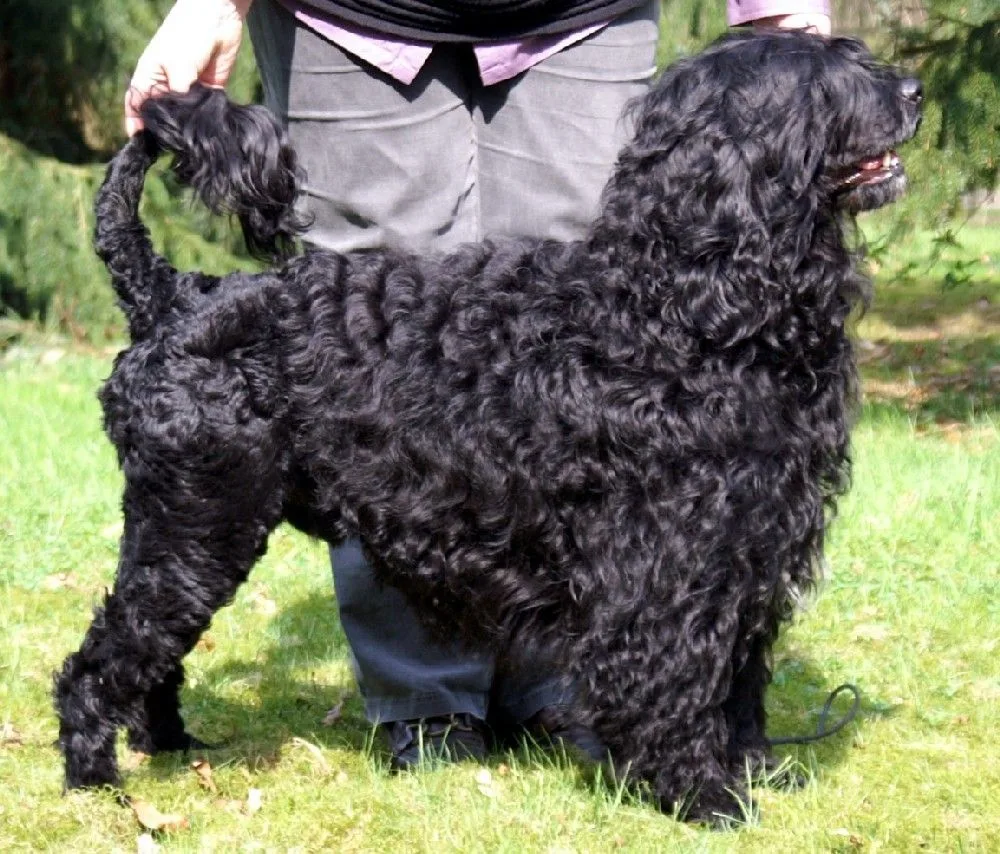
The Portuguese Water Dog is a medium-sized, non-shedding working dog from Portugal that became one of the most talked-about breeds in the world when President Barack Obama's family chose one, named Bo, as the First Dog in 2009, followed by a second Portie, Sunny, in 2013. The White House connection generated enormous public interest in a breed that was previously known primarily to dedicated enthusiasts.
But the Portuguese Water Dog's qualities extend far beyond its celebrity moment: this is a genuine, hardworking, highly capable breed with a long and fascinating maritime history.
Origins: Portuguese Fishermen and the Atlantic
The Portuguese Water Dog has been a working companion to Portuguese fishermen for centuries, possibly over a thousand years, though documented history becomes reliable only from the medieval period. The breed was used by the fishing communities of the Algarve (southern Portugal) and later across the entire Portuguese coast in a variety of tasks that made it an indispensable member of the fishing crew:
- Herding fish into nets by swimming around schools and driving them toward the boat
- Retrieving fishing gear, tackle, and lines that fell overboard
- Swimming between boats to carry messages and items
- Acting as a guard dog on the vessel when in port
The Portuguese name for the breed, Cao de Agua (literally "dog of water"), reflects these working roles directly. The breed's physical characteristics are precisely suited to this work: a robust, muscular, waterproof-coated body capable of diving and sustained swimming in Atlantic conditions.
The breed nearly vanished in the 20th century as mechanized fishing replaced traditional methods and the need for working water dogs declined. By the 1930s, the breed's population had fallen to near-extinction.
Vasco Bensaude, a wealthy Portuguese shipping magnate, became the key figure in saving the breed; he established a breeding program using the remaining dogs found along the Portuguese coast and documented the breed's working abilities. The Clube Portugues de Canicultura recognized the breed in 1954.
American interest in the Portuguese Water Dog began in the 1960s, and the AKC recognized the breed in 1983. The breed's profile grew through the 1980s and 1990s, but the Obama family's selection in 2009 created an unprecedented spike in public awareness.
Physical Characteristics
The Portuguese Water Dog is a well-proportioned, robustly built working dog of medium size, neither too large to be agile in a boat nor too small to have the strength and stamina for sustained water work. Its most notable feature is its coat, available in wavy or curly varieties, and suitable for a retriever clip (hindquarters shaved, leaving natural coat over the front two-thirds of the body) or a lion clip (hindquarters and muzzle shaved).
| Physical Characteristic | Males | Females |
|---|---|---|
| Height | 50-57 cm (20-22.5 in) | 43-52 cm (17-20.5 in) |
| Weight | 16-25 kg (35-55 lbs) | 16-22 kg (35-48 lbs) |
| Build | Robust, muscular, well-proportioned | |
| Coat | Wavy or curly; single layer; waterproof | Same |
| Coat colors | Black, white, brown, black with white, brown with white | Same |
| Eyes | Medium-sized; black or brown; well-set | Same |
| Tail | Thick at base, tapering; carried in a curve above the topline | Same |
| Feet | Webbed, primary swimming adaptation | Same |
| Lifespan | 11-13 years | 11-13 years |
The Portuguese Water Dog's coat is a single layer with no undercoat; this is the basis for its classification as a low-shedding breed. Like the Poodle (a related breed sharing similar water-retrieval origins), the PWD's coat grows continuously and requires regular trimming rather than seasonal shedding. This characteristic makes it among the more suitable breeds for allergy-sensitive households.
The Obama Effect: Boom and Responsible Breeding
When Bo Obama arrived at the White House in April 2009, the Portuguese Water Dog instantly became one of the most sought-after breeds in America. The breed went from relative obscurity to household name within weeks. The Portie population in American shelters and rescues was minimal before 2009; by 2011, PWDs were appearing in shelters as the predictable consequence of demand-driven overbreeding.
The Obama situation illustrates a pattern that repeats with celebrity breeds throughout history: a sudden spike in demand rewards irresponsible breeders who produce puppies quickly without health testing or temperament selection, buyers make impulsive decisions, and the breed's welfare suffers. The Portuguese Water Dog Club of America responded with sustained education about responsible breeding and rescue support.
The most important message for anyone interested in a PWD because of the Obama dogs: choose a breeder who health-tests for PRA, JDCM, and GM1 gangliosidosis, has OFA hip certification, and participates in breed club health programs.
Temperament
The Portuguese Water Dog is an athletic, intelligent, and deeply people-oriented working dog. These are dogs that were bred to work closely with fishermen, taking direction, swimming long distances on command, responding reliably to signals in noisy, difficult maritime conditions.
The behavioral profile that successful working water dogs required maps directly to the companion dog temperament that PWD owners describe today: responsive, energetic, playful, biddable, and strongly bonded to their people.
"The Portuguese Water Dog's working history as a close maritime collaborator has produced a dog with genuine eagerness to work with its handler. Unlike independent hunting breeds, the PWD evolved to take direction from a human partner, a trait that makes it highly trainable and deeply engaged with its owner's activities." Portuguese Water Dog Club of America, Breed Characteristics (2022)
PWDs are energetic and need substantial daily exercise, but they are also tractable and manageable in the home when their needs are met. They are excellent with children, sociable with strangers when well-socialized, and typically fine with other dogs.
Health: Progressive Retinal Atrophy (PRA)
Progressive Retinal Atrophy in the PRCD form is present in Portuguese Water Dogs and represents a significant breeding concern. The PRCD-PRA mutation causes progressive degeneration of the retinal photoreceptors, leading to night blindness followed by complete blindness. A DNA test (OptiGen PRCD test) is commercially available.
Responsible breeders test all breeding stock. Mating two carriers produces 25% affected offspring. Mating a clear dog with a carrier produces 50% carriers (which do not develop the disease) and 50% clear dogs, no affected offspring.
| Health Condition | Prevalence/Notes | Screening |
|---|---|---|
| Progressive retinal atrophy (PRCD) | Present | DNA test available |
| Juvenile dilated cardiomyopathy (JDCM) | Fatal, puppies; DNA test critical | DNA test available |
| GM1 gangliosidosis | Fatal storage disease | DNA test available |
| Hip dysplasia | ~24% (OFA) | OFA/BVA X-ray |
| Follicular dysplasia (improper coat) | Reported | Visual |
| Storage disease (other forms) | Reported | DNA screening |
Health: Juvenile Dilated Cardiomyopathy (JDCM)
Juvenile dilated cardiomyopathy is one of the most devastating inherited diseases in the Portuguese Water Dog, a fatal cardiac condition that affects puppies between approximately 5 weeks and 7 months of age. Affected puppies develop sudden cardiac failure and die quickly; there is no effective treatment. The disease is caused by a homozygous mutation (two copies needed to produce an affected dog).
A DNA test is available and is one of the most critical health tests for PWD breeders. By testing all breeding stock and never mating two carriers, breeders can completely prevent the birth of affected puppies. This test is essential; it is not optional for responsible breeders.
"Juvenile dilated cardiomyopathy in the Portuguese Water Dog represents a breed health crisis that was significantly mitigated by the identification of the causative mutation and the implementation of mandatory DNA testing by progressive breeders. The lesson for all involved in canine health genetics is clear: DNA testing saves lives." Dr. Mark Oyama, DVM, DACVIM, University of Pennsylvania School of Veterinary Medicine
Health: GM1 Gangliosidosis
GM1 gangliosidosis is a lysosomal storage disease, a condition in which a critical enzyme (beta-galactosidase) is absent or deficient, causing toxic accumulation of complex carbohydrates (gangliosides) in nerve cells. Affected Portuguese Water Dog puppies develop progressive neurological deterioration starting at approximately 6 months, including ataxia, visual impairment, and behavioral changes, progressing to total disability and death by 2 years of age.
The disease is autosomal recessive; a DNA test is available. Responsible breeders test all breeding stock. As with JDCM, testing can completely prevent the production of affected dogs. For health and vaccination guidance see Dog Vaccination Schedule Explained.
Exercise and Activity Requirements
The Portuguese Water Dog is an athletic, energetic breed that needs substantial daily exercise. Adults require 60-90 minutes of vigorous activity daily. Swimming is particularly natural and ideal for the breed; they are typically enthusiastic and capable swimmers from a young age. Hiking, agility, obedience, and working retriever trials are all well-suited to the breed's capabilities.
For exercise guidance see Exercise Needs by Dog Breed and Portuguese Water Dog Care Guide. For comparison with related water-working retrievers see Labrador Retriever. For allergy-related breed comparisons see Best Dogs for Allergy Sufferers.
Coat Care
The Portuguese Water Dog's single-layer, continuously growing coat requires regular professional grooming, typically every 6-8 weeks for trimming, with at-home brushing two to three times weekly. The traditional working clips, the lion clip (muzzle and hindquarters shaved) and the retriever clip (coat trimmed to one inch over the entire body), are both acceptable for pet and show dogs.
Despite the low-shedding characteristic, the coat does require significant maintenance. The curly variety requires more frequent brushing to prevent matting than the wavy variety.
Summary
The Portuguese Water Dog is a breed of genuine working heritage, extraordinary swimming ability, and an adaptable, intelligent companion temperament. Its association with the Obama White House brought it deserved fame. The most critical health screenings are DNA testing for JDCM and GM1 gangliosidosis, both fatal diseases that can be entirely eliminated through responsible breeding.
PRA DNA testing and OFA hip certification are also essential. For active families or individuals who can meet its exercise needs and maintain its coat, the PWD is an exceptional companion.
References
Alroy, J., Orgad, U., Ucci, A.A., et al. (1985). Neuronal and visceral glycosphingolipid storage disease in a dog. Journal of the American Veterinary Medical Association, 187(9), 926-930. https://pubmed.ncbi.nlm.nih.gov/4055785/
Dambach, D.M., McLear, R.C., Acland, G.M., et al. (1999). Morphologic, immunohistochemical, and ultrastructural characterization of a distinctive renal lesion in dogs putatively associated with Borrelia burgdorferi infection: 49 cases (1987-1992). Veterinary Pathology, 36(6), 564-574.
Miyadera, K., Acland, G.M., & Aguirre, G.D. (2012). Genetic and phenotypic variations of inherited retinal diseases in dogs. Veterinary Journal, 194(3), 290-299. https://doi.org/10.1016/j.tvjl.2012.04.013
Orthopedic Foundation for Animals. (2023). Portuguese Water Dog statistics. https://www.ofa.org/diseases/hip-dysplasia/statistics/
American Kennel Club. (2023). Portuguese Water Dog breed information. https://www.akc.org/dog-breeds/portuguese-water-dog/
Portuguese Water Dog Club of America. (2022). Health testing guidelines. https://www.pwdca.org/health/
Frequently Asked Questions
Why did the Obamas choose a Portuguese Water Dog?
The Obama family chose a Portuguese Water Dog because their daughter Malia has allergies, and the PWD’s single-layer, low-shedding coat was considered more suitable for an allergy-sensitive household than most breeds. Bo arrived in April 2009 and became one of the most famous dogs in American presidential history. A second PWD, Sunny, joined the family in 2013.
What is juvenile dilated cardiomyopathy in Portuguese Water Dogs?
Juvenile dilated cardiomyopathy (JDCM) is a fatal inherited heart disease that kills PWD puppies between approximately 5 weeks and 7 months of age through sudden cardiac failure. It is caused by a recessive mutation, affected puppies inherit two copies. A DNA test is available that allows breeders to prevent the production of affected puppies entirely by ensuring they never mate two carriers.
Is the Portuguese Water Dog truly hypoallergenic?
No dog is truly hypoallergenic, but the Portuguese Water Dog is among the better options for allergy-sensitive households. Its single-layer coat does not shed significantly, reducing airborne dander dispersal. Many allergy sufferers live comfortably with PWDs. As with any breed, spending time with the specific dog before committing is advisable for allergy sufferers.
What is GM1 gangliosidosis in Portuguese Water Dogs?
GM1 gangliosidosis is a fatal lysosomal storage disease in which an enzyme deficiency causes toxic accumulation of gangliosides in nerve cells. Affected puppies develop progressive neurological deterioration from about 6 months, dying by around 2 years. It is autosomal recessive. A DNA test is available and should be used in all breeding decisions to prevent producing affected dogs.
How much exercise does a Portuguese Water Dog need?
Portuguese Water Dogs require 60-90 minutes of vigorous exercise daily. Swimming is natural and ideal for the breed. They also excel in agility, obedience, and working retriever activities. Without adequate exercise and mental stimulation, PWDs become restless and may develop destructive behaviors.
What are the working clips for the Portuguese Water Dog?
Two traditional clips are accepted in the breed: the lion clip, in which the hindquarters and muzzle are shaved while the front two-thirds of the body retains the natural coat; and the retriever clip, in which the entire coat is trimmed to approximately one inch. Both clips are seen in show rings and are practical for pet owners. The lion clip is the more traditional and historically associated working style.