
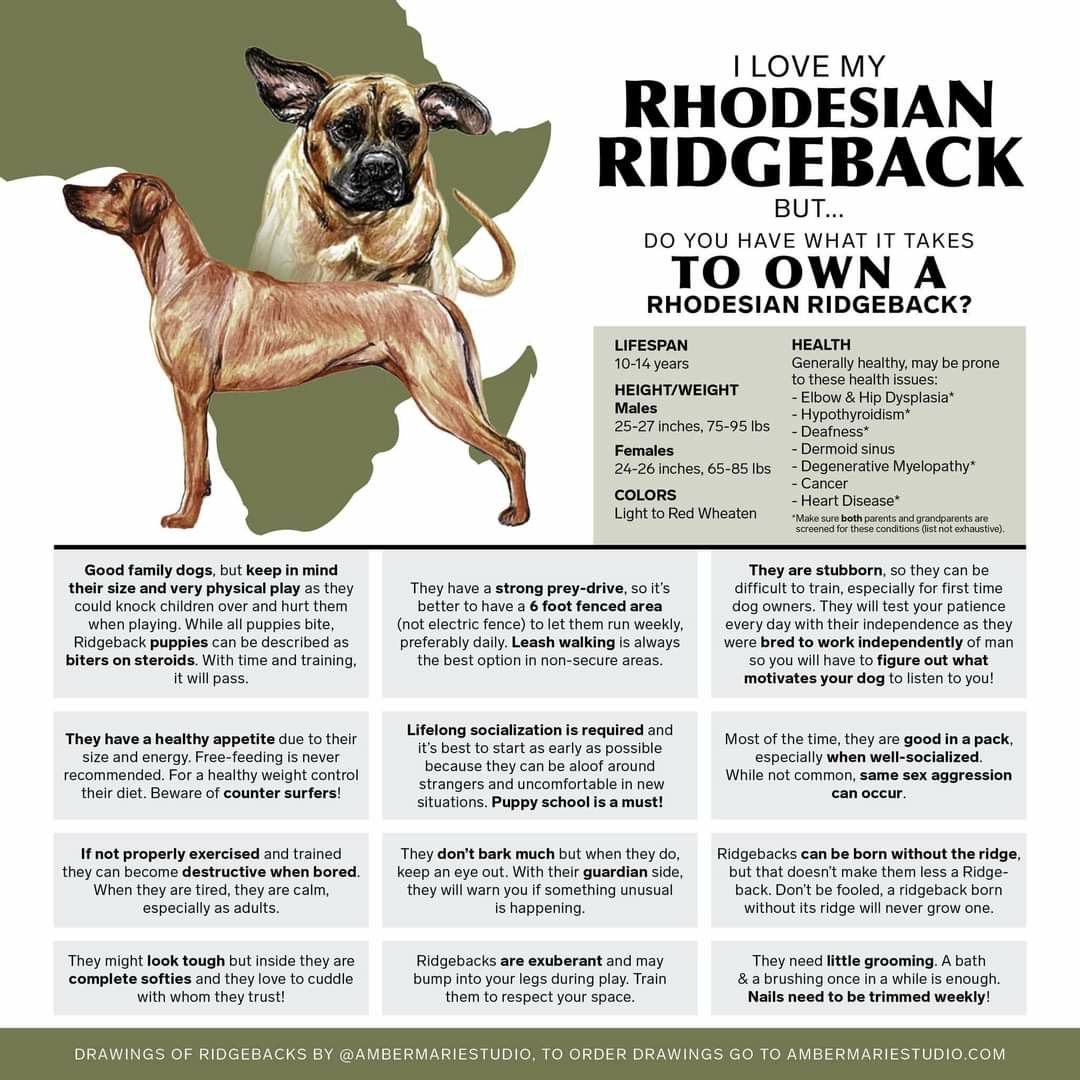
The Rhodesian Ridgeback is one of the most powerful, athletic, and distinctively marked dogs in the world, a South African breed developed by Boer settlers to serve as a versatile hunting companion and homestead guardian in the demanding terrain and climate of southern Africa.
Its most famous role is as the "lion dog" not a dog that killed lions, but one with the courage, speed, and intelligence to track lions across the African bush and hold them at bay until hunters arrived. The distinctive ridge of reversed hair along its spine is as unique in the canine world as the breed itself.
Origins: South Africa and the Khoikhoi Dog
The Rhodesian Ridgeback's history is a genuinely fascinating example of breed creation through need, an intentional and practical fusion of existing dog types that produced something new and extraordinarily capable.
When Dutch and German settlers (later known collectively as Boers) began colonizing southern Africa from the 17th century onward, they brought European dog breeds with them, Greyhounds, Bloodhounds, Great Danes, Terriers, and other working types. These dogs encountered a small, semi-feral dog kept by the indigenous Khoikhoi people, notable for the distinctive ridge of reversed hair growing along its spine.
This ridge, caused by a genetic mutation affecting the direction of hair follicle growth along the dorsal midline, was incorporated into the developing Boer hunting dog through crosses between European breeds and Khoikhoi dogs.
The resulting breed proved extraordinary for the conditions of sub-Saharan Africa: it could cope with the extreme heat, the long distances, the rough terrain, the presence of dangerous game, and the limited water sources that defeated most European breeds.
The Reverend Cornelius van Rooyen, a lion hunter in Rhodesia (now Zimbabwe) in the late 19th century, is credited with systematically developing and refining the breed for lion hunting. Van Rooyen's dogs became famous across Rhodesia and neighboring territories.
The Rhodesian Lion Dog, as it was called, was standardized in Bulawayo, Rhodesia in 1922, when a formal breed standard was established. The South African Kennel Union recognized the breed and it was brought to England and the United States from the 1930s onward. The AKC recognized the Rhodesian Ridgeback in 1955, placing it in the Hound Group.
The Lion Dog: Understanding the Real Role
The Rhodesian Ridgeback's role in lion hunting is widely misunderstood. The Ridgeback did not, and was not used to, attack or kill lions. A single dog or even a pack attacking a lion would simply be killed.
The Ridgeback's role was more sophisticated: to track lions over long distances using both scent and sight, to find and locate them, and then to engage them in a way that kept the lion's attention while remaining agile enough to avoid the lion's strikes, holding it in one place until the armed hunters could arrive.
This required a combination of qualities: the scenting ability and tracking instinct to follow a lion's trail; the speed and agility to harass a lion and avoid its attacks; the intelligence to know when to engage and when to retreat; and above all, the extraordinary physical courage to face one of the world's most dangerous predators at close quarters, alone or in small groups.
"The working behavior of Ridgebacks with lions is best described as controlled harassment; they were not attacking, they were drawing the lion's focused attention and preventing escape until the hunters could approach. This required a level of instinctive strategic judgment that is remarkable in any animal." Van Rooyen, F. (2001). The History of the Rhodesian Ridgeback, Pietermaritzburg: National Books of South Africa.
This history explains much about the modern Rhodesian Ridgeback's character: the independence (a dog that needed to think for itself when working far from its handler), the physical courage and confidence, the strong prey drive, and the athleticism.
Rhodesian Ridgeback Physical Characteristics
The Rhodesian Ridgeback is a large, athletic, well-muscled dog of balanced proportions, built for both speed and stamina. Its most distinctive feature is the ridge along its back.
| Physical Characteristic | Males | Females |
|---|---|---|
| Height | 63-69 cm (25-27 in) | 61-66 cm (24-26 in) |
| Weight | 36-41 kg (79-90 lbs) | 29-34 kg (64-75 lbs) |
| Build | Muscular, balanced, athletic; symmetrical | |
| Coat | Short, dense, sleek, glossy | Same |
| Coat color | Light wheaten to red wheaten; white markings on chest and toes permissible | Same |
| The Ridge | Fan of reversed hair from behind the shoulders to the hips; clearly defined; two identical crowns at the top | Same |
| Eyes | Round, bright; color harmonizing with coat (brown to amber) | Same |
| Nose | Black or brown (liver) | Same |
| Lifespan | 10-12 years | 10-12 years |
The ridge itself is the breed's defining characteristic. It is formed by a strip of hair growing in the opposite direction to the surrounding coat, forward rather than backward, and typically includes two identical whorls (crowns) at the top. The ridge should be well-defined, of equal width from crowns to a point that does not exceed the hips.
Ridgeback puppies born without a ridge (ridgeless) occur occasionally; in the breed's history, ridgeless puppies were routinely euthanized, but most modern breeders place them as pets.
The Ridge and Dermoid Sinus
The ridge gene is linked to one of the most significant health conditions in the Rhodesian Ridgeback: dermoid sinus. A dermoid sinus is a tube-like invagination of the skin that extends from the surface downward toward the spinal cord. It is a neural tube defect, the neural tube failed to close completely during embryonic development, leaving a channel that can trap hair, skin cells, and debris.
The dermoid sinus is genetically associated with the ridge gene: ridged dogs have significantly higher rates of dermoid sinus than ridgeless dogs, and breeds without the ridge gene do not develop the condition. The exact genetic mechanism linking the ridge gene and dermoid sinus risk is an area of ongoing research.
Affected dogs can have sinuses ranging from superficial (relatively easily surgically removed) to deep (extending to the dural meningeal layer surrounding the spinal cord, extremely dangerous if infected). Early identification and surgical removal before the sinus becomes infected is critical. Any Rhodesian Ridgeback puppy should be carefully examined for dermoid sinuses by an experienced veterinarian or breeder at birth.
| Health Condition | Prevalence/Notes | Screening |
|---|---|---|
| Dermoid sinus | Associated with ridge gene; all puppies should be examined | Physical examination at birth |
| Hip dysplasia | ~13% (OFA) | OFA/BVA X-ray |
| Elbow dysplasia | Present | OFA X-ray |
| Hypothyroidism | Reported | Thyroid panel |
| Degenerative myelopathy | Present, SOD1 mutation | DNA test |
| Bloat/GDV | Present (deep-chested) | Prophylactic gastropexy optional |
Health: Hip Dysplasia and Other Conditions
Hip dysplasia occurs in Rhodesian Ridgebacks at approximately 13% in OFA data, moderate but significant for a large breed. OFA or BVA hip certification of both parents is recommended before purchasing a puppy. Hypothyroidism (reduced thyroid hormone production) occurs in the breed and should be managed with thyroid hormone supplementation when diagnosed.
Degenerative myelopathy, the progressive spinal cord disease caused by the SOD1 mutation, has been found in Rhodesian Ridgebacks. A DNA test is available. Breeding stock should be tested.
"Dermoid sinus in the Rhodesian Ridgeback is perhaps the most important single birth defect to be examined for in any litter. The condition is directly associated with the ridge gene itself, the characteristic that defines the breed, and this creates a specific genetic and ethical complexity for breeders who must balance breed identity with health outcomes." Salmon Hillbertz, N.H., et al. (2007). Human Genetics
Temperament: Independent, Loyal, Athletic
The Rhodesian Ridgeback's temperament reflects its working heritage: it is a dog of remarkable confidence and independence, deeply loyal to its family, and possessed of significant drive and athleticism. This is not a breed that needs or particularly seeks constant approval or direction from its owner; it is a dog that thinks for itself and is capable of making independent decisions.
This independence makes Rhodesian Ridgebacks challenging to train through traditional command-compliance methods and more responsive to approaches that engage their intelligence and offer meaningful rewards. They are not Labradors; they will not do things simply because they are told; they need to understand what is wanted and find it rewarding to comply.
With their own families, Ridgebacks are typically affectionate, loyal, and calm. They are gentle with children within their family. They can be reserved with strangers and may be intolerant of unfamiliar dogs, particularly of the same sex. Extensive early socialization is important.
See How to Socialize a Dog for socialization guidance and Rhodesian Ridgeback Training Guide for training resources. For exercise planning see Exercise Needs by Dog Breed. For a breed comparison see Golden Retriever.
Exercise: Built for Speed and Endurance
The Rhodesian Ridgeback is one of the most athletic dog breeds in existence. Designed to track lions across the African savanna, it combines a greyhound-like burst speed with the endurance to sustain effort over long distances in extreme heat. Adults need 60-90 minutes of vigorous exercise daily, and many benefit from significantly more.
Running, hiking, cycling alongside, and off-lead play in secure areas suit the breed well. They are outstanding distance running companions for active owners. Lure coursing and fast CAT events appeal to the breed's prey drive and speed.
The Ridgeback's heat tolerance, superior to most breeds of comparable size, makes it particularly well-suited to hot and warm climates. See Best Dogs for Hot Climates for additional guidance.
The Ridge as Identity and Responsibility
The presence or absence of the ridge in a Rhodesian Ridgeback litter creates an ethical consideration unique to this breed. The ridge gene is associated with dermoid sinus, a health problem. Some geneticists have argued that selection pressure toward ridgeless breeding would reduce dermoid sinus incidence. Breed clubs have historically resisted this, and the ridge remains the defining characteristic of the breed.
The responsible path is mandatory examination of all puppies by experienced hands at birth for dermoid sinus, followed by surgical removal when detected and appropriate placement (typically as non-breeding pets) of affected individuals. DNA screening programs are being developed and refined as research into the ridge/dermoid sinus genetic relationship progresses.
Living Conditions for a Rhodesian Ridgeback
The Rhodesian Ridgeback is suitable for:
- Active owners who can provide 60-90+ minutes of vigorous daily exercise
- Homes with securely fenced yards (the breed has significant prey drive and can cover ground very quickly)
- Owners experienced with independent, strong-willed breeds
- Warm and hot climate regions
The breed is not well-suited to:
- Sedentary households
- First-time dog owners without guidance
- Households with cats or small dogs unless raised together from puppyhood
- Very small living spaces without access to exercise areas
Summary
The Rhodesian Ridgeback is a breed of authentic working heritage, distinctive appearance, and extraordinary physical ability. The lion dog of Africa brings courage, loyalty, and athleticism to those owners who can meet its requirements. Health priorities include mandatory dermoid sinus examination of all puppies, OFA hip certification, degenerative myelopathy DNA testing, and early extensive socialization.
For active, experienced owners in warm climates, the Rhodesian Ridgeback is one of the most impressive and rewarding breeds in the world.
References
Salmon Hillbertz, N.H., Isaksson, M., Karlsson, E.K., et al. (2007). Duplication of FGF3, FGF4, FGF19 and ORAOV1 causes hair ridge and predisposition to dermoid sinus in Ridgeback dogs. Human Genetics, 122(1), 23-28. https://doi.org/10.1007/s00439-007-0396-5
Awano, T., Johnson, G.S., Wade, C.M., et al. (2009). Genome-wide association analysis reveals a SOD1 mutation in canine degenerative myelopathy. Proceedings of the National Academy of Sciences, 106(8), 2794-2799. https://doi.org/10.1073/pnas.0812297106
Orthopedic Foundation for Animals. (2023). Rhodesian Ridgeback breed statistics. https://www.ofa.org/diseases/hip-dysplasia/statistics/
Haddon, R.A. (2004). The Complete Rhodesian Ridgeback (2nd ed.). Howell Book House.
American Kennel Club. (2023). Rhodesian Ridgeback breed information. https://www.akc.org/dog-breeds/rhodesian-ridgeback/
Rhodesian Ridgeback Club of the United States. (2022). Health and breeding recommendations. https://www.rrcus.org/health/
Frequently Asked Questions
Did Rhodesian Ridgebacks actually hunt lions?
Yes, but not by attacking them. Rhodesian Ridgebacks were used to track lions across the African bush and then to harass and hold the lion’s attention, keeping it focused in one place through controlled engagement while remaining agile enough to avoid injury, until armed hunters arrived. This role required extraordinary courage, speed, and intelligence without the suicidal aggression of actually attacking.
What is the ridge on a Rhodesian Ridgeback?
The ridge is a strip of hair along the Ridgeback’s spine that grows in the opposite direction to the surrounding coat, forward rather than backward. It typically includes two symmetrical whorls (crowns) at the top and extends from behind the shoulders to the hips. It is caused by a genetic mutation affecting hair follicle orientation and is the breed’s defining characteristic.
What is dermoid sinus in Rhodesian Ridgebacks?
Dermoid sinus is a tube-like channel that extends from the skin surface inward toward the spinal cord, caused by incomplete neural tube closure during embryonic development. It is genetically linked to the ridge gene. Affected channels can trap debris and become severely infected, potentially causing meningitis. All Ridgeback puppies should be examined at birth by an experienced hand; affected dogs require surgical correction.
Are Rhodesian Ridgebacks good with children?
Rhodesian Ridgebacks are typically gentle and affectionate with the children in their own family. They are large, powerful dogs, so supervision with very young children is advisable. Their reserved nature with strangers means early socialization is important for dogs that will encounter many different children and people.
How much exercise does a Rhodesian Ridgeback need?
Rhodesian Ridgebacks need a minimum of 60-90 minutes of vigorous daily exercise, and many benefit from more. They are outstanding running partners and excel in activities that engage their speed and endurance. Their heat tolerance makes them excellent companions for exercise in warm climates. Without adequate exercise, they can become destructive and difficult to manage.
Are Rhodesian Ridgebacks good for first-time dog owners?
Rhodesian Ridgebacks are generally not recommended for first-time dog owners. Their independence, strong prey drive, physical power, and tendency to test their handler’s resolve require an owner who understands confident, consistent training and can provide appropriate structure. They are not naturally compliant dogs and respond best to handlers who earn their respect through clear, fair, positive-reinforcement training.