
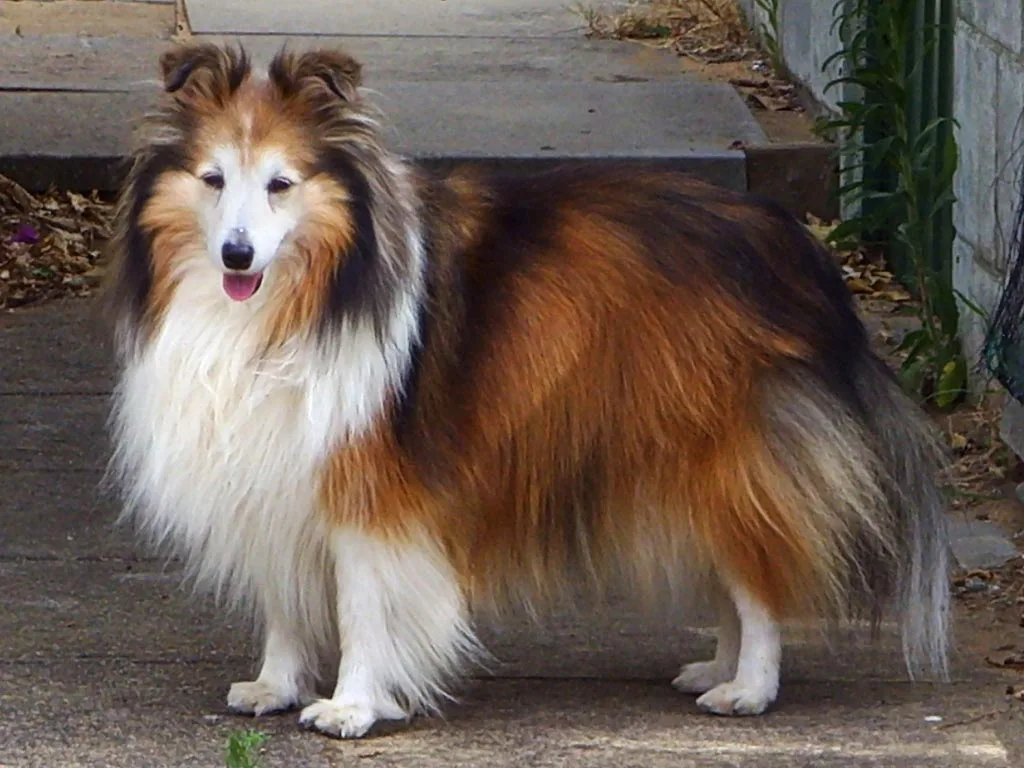
The Shetland Sheepdog, universally known as the Sheltie, is one of the most intelligent and versatile dog breeds in existence. Frequently mistaken for a miniature Rough Collie, the Sheltie is in fact a distinct breed with its own proud history, developed on the remote Shetland Islands off the northern coast of Scotland.
Behind its beautiful, flowing coat and elegant appearance lies a working dog of extraordinary mental capability, ranked sixth among all dog breeds in intelligence by canine psychologist Dr. Stanley Coren.
Origins on the Shetland Islands
The Shetland Sheepdog's development is inseparable from the geography and economy of the Shetland Islands, an archipelago lying 170 kilometers northeast of the Scottish mainland. The islands' harsh climate, rugged terrain, and relative isolation produced a distinctive ecosystem: everything on Shetland tends to be smaller than its mainland equivalent. The native Shetland Pony is a famous example; the Shetland Sheepdog represents the same miniaturization principle applied to working dogs.
The exact ancestry of the Sheltie is not fully documented, but the breed is thought to have developed from rough-coated working collies brought to the islands, with possible influence from the King Charles Spaniel (brought by whalers and fishermen who stopped at the islands) and Scandinavian breeds via Norse traders.
The harsh conditions of island farming required a dog that could work closely with shepherds to control and manage the small, nimble Shetland sheep without the aggressive herding tactics that might work with larger mainland sheep.
By the early 20th century, interest in the breed had spread beyond the islands. The Shetland Sheepdog Club was formed in 1908, and the breed received Kennel Club recognition in 1909. The first standard was controversial, some breeders advocated explicitly for a "Toonie dog" (a dog resembling a small Rough Collie) while others emphasized the working heritage.
The breed that emerged leans strongly toward the Rough Collie in appearance, though its character and working abilities reflect its island heritage.
The Sheltie should not be confused with a miniature Rough Collie. While the two breeds share similar appearance and are related, the Shetland Sheepdog is a distinct breed with its own standards, gene pool, and breed history. Breeding a Sheltie to a Rough Collie would be a cross-breeding event, not within-breed breeding.
Physical Characteristics
The Shetland Sheepdog is a small to medium breed, substantially more robust than its elegant appearance might suggest. The head is refined and wedge-shaped, with almond-shaped eyes of medium size, dark in color for most color varieties (blue merle dogs may have one or both blue eyes). The expression is intelligent and gentle, mirroring the breed's temperament.
| Physical Characteristic | Measurement |
|---|---|
| Height | 33-41 cm (13-16 inches) |
| Weight | 6-12 kg (13-27 lbs) |
| Body type | Well-balanced, slightly longer than tall |
| Coat type | Harsh outer coat, soft, thick undercoat |
| Standard colors | Sable, blue merle, tricolor, black-and-white, black-and-tan |
| Ears | Semi-erect, tipping forward |
| Tail | Set low, reaching to hock |
| Lifespan | 12-13 years |
The double coat is one of the breed's most striking features. The outer coat is long, straight, and harsh; the undercoat is so dense that it lifts and parts the outer coat. The mane and frill around the neck and chest are particularly abundant. Seasonal shedding can be dramatic, particularly in unspayed females who shed heavily following heat cycles.
Standard colors include sable (which ranges from golden to deep mahogany), blue merle (a silver-grey marbled pattern with black), tricolor (black, white, and tan), and less common variations. White factoring, the proportion of white markings, varies considerably within color patterns and does not affect the dog's ability or temperament.
Exceptional Intelligence
The Shetland Sheepdog's intelligence is one of its defining characteristics and a major reason for the breed's popularity among dog sports competitors, trainers, and working dog enthusiasts. In Dr. Stanley Coren's ranking of breed intelligence based on working and obedience intelligence, the Shetland Sheepdog ranks sixth out of 138 breeds evaluated.
"The Shetland Sheepdog demonstrated the ability to learn new commands in five or fewer repetitions and respond correctly on the first command 95% of the time or better. This places the Sheltie in an elite group of breeds that learn with extraordinary efficiency and retain training reliably over time." Dr. Stanley Coren, The Intelligence of Dogs (1994)
This intelligence is not merely theoretical. Shelties consistently perform at the highest levels in competitive obedience, agility, herding, and rally obedience. They have an intuitive understanding of handler cues and an eagerness to engage with training that makes them exceptional performance dogs.
However, this intelligence comes with responsibilities. Shelties require regular mental stimulation, without enough to occupy their minds, they can become anxious, obsessive, or destructive. This is not a breed that thrives when left alone all day with nothing to do. For a broader discussion of canine intelligence see How Smart Are Dogs.
Herding Instinct and Behavior
Despite being kept almost exclusively as companion and sport dogs today, Shelties retain strong herding instincts. This manifests in several behaviors that owners should be aware of:
Chasing and circling: Shelties will attempt to herd children, other pets, bicycles, and anything else that moves. This is not aggression; it is a genuine expression of hardwired herding behavior.
Barking: Shelties use their voice as a herding tool and can be vocal dogs. Barking at movement, visitors, and perceived disturbances is natural to the breed. Training can modify excessive barking but will not eliminate the instinct.
Eye: Like Border Collies, Shelties use an intense, focused gaze to control the animals they are working with. This can come across as staring behavior directed at other pets or children.
Sensitivity to movement: Fast movement, running children, cars, bicycles, can trigger strong instinctive responses in Shelties, including chasing. This means a secure, fenced yard and reliable recall are important for the breed's safety.
Health Considerations
The Shetland Sheepdog is generally a healthy breed but carries several heritable conditions that should be screened for in breeding programs. Understanding these conditions is essential for owners and breeders alike. Full details at Shetland Sheepdog Health Problems.
Collie Eye Anomaly (CEA): A congenital eye defect affecting the development of the choroid, retina, and sclera. CEA ranges from subclinical (detectable only by ophthalmological examination, with no functional impact) to severe (causing retinal detachment and blindness). DNA testing is available and allows breeders to identify and avoid producing severely affected offspring. CEA is inherited as an autosomal recessive trait with significant prevalence in the breed.
MDR1 (ABCB1) mutation: Shelties share with Collies and Australian Shepherds a mutation in the MDR1 gene (now more precisely called the ABCB1-1Delta mutation) that affects the function of P-glycoprotein, a protein that normally pumps certain drugs out of the brain.
Dogs with two copies of the mutant gene are severely sensitive to ivermectin, loperamide, and several other drugs that can reach toxic concentrations in the brain at doses safe for normal dogs. DNA testing is widely available and should be done for all Shelties used in breeding and ideally all pet Shelties before any drug prescriptions.
Dermatomyositis (DM): An inflammatory disease affecting the skin and muscles, with autosomal dominant inheritance in Shelties and Collies. Affected dogs develop skin lesions, particularly on the face, ear tips, and tail tip, in puppyhood, along with muscle atrophy. Severity varies widely. There is no cure; management focuses on sun protection, immunosuppressive therapy in severe cases, and dietary support.
| Health Condition | Inheritance | DNA Test | Recommended Action |
|---|---|---|---|
| Collie Eye Anomaly | Autosomal recessive | Yes | Test all breeding stock |
| MDR1 mutation | Autosomal recessive | Yes | Test all dogs before drug therapy |
| Dermatomyositis | Autosomal dominant | Research stage | Avoid breeding affected dogs |
| Hip dysplasia | Polygenic | OFA/BVA X-ray | Screen breeding stock |
| Epilepsy | Complex | No | Monitor; report to breed club |
Hip dysplasia: While not as prevalent as in larger breeds, hip dysplasia affects approximately 6% of Shelties assessed by the Orthopedic Foundation for Animals. Breeding dogs should have hip evaluations.
Epilepsy: Idiopathic epilepsy occurs in Shelties at a higher rate than in many other breeds. The genetic basis is not fully characterized, making screening challenging, but affected dogs should not be used in breeding programs.
Training and Exercise
The Shetland Sheepdog's intelligence and biddability make it one of the most rewarding breeds to train. Positive reinforcement training, using food rewards, toys, and praise, works excellently with Shelties. Their sensitivity means they respond poorly to harsh corrections; punishment-based training can damage the trust between dog and handler and create anxiety.
For comprehensive guidance see Shetland Sheepdog Training Guide. Exercise requirements are discussed in detail at Exercise Needs by Dog Breed.
Shelties need daily vigorous exercise, typically 45-60 minutes minimum. They excel in and genuinely enjoy agility, competitive obedience, herding trials (which can be done with ducks or sheep), and rally obedience. Mental stimulation through training sessions, puzzle feeders, and novel learning tasks is as important as physical exercise for keeping a Sheltie happy and well-behaved.
Comparison with the Border Collie
The Sheltie is often compared with the Border Collie, which ranks first in Coren's intelligence rankings. Both are herding breeds with high intelligence, but they differ meaningfully:
- Border Collies are larger (14-20 kg vs. 6-12 kg for Shelties)
- Border Collies have an even more intense working drive and require more exercise
- Shelties are generally better suited to suburban and family environments due to their smaller size and slightly more adaptable temperament
- Both share the Collie Eye Anomaly and MDR1 mutation concerns
Summary
The Shetland Sheepdog is a beautiful, highly intelligent, and deeply loyal companion dog with a proud working heritage. Its exceptional trainability and performance in dog sports make it a favorite among active owners, while its gentle temperament makes it excellent with families.
Owners should be prepared for significant grooming demands, vocal behavior, herding instincts around children and other pets, and the need for consistent mental and physical stimulation. Health screening for CEA and MDR1 is essential for responsible breeding. A well-cared-for Sheltie is one of the most rewarding dogs a committed owner can have.
References
Coren, S. (1994). The Intelligence of Dogs: A Guide to the Thoughts, Emotions, and Inner Lives of Our Canine Companions. Free Press. ISBN 9780029066836.
Mellersh, C.S., Boursnell, M.E., Pettitt, L., Ryder, E.J., Holmes, N.G., Grafham, D., et al. (2006). Canine RPGRIP1 mutation establishes cone-rod dystrophy in miniature longhaired dachshunds as a homologue of human Leber congenital amaurosis. Genomics, 88(3), 293-301. https://doi.org/10.1016/j.ygeno.2006.05.004
Mealey, K.L., Bentjen, S.A., Gay, J.M., & Cantor, G.H. (2001). Ivermectin sensitivity in collies is associated with a deletion mutation of the mdr1 gene. Pharmacogenetics, 11(8), 727-733. https://doi.org/10.1097/00008571-200111000-00012
Hargis, A.M., & Mundell, A.C. (1992). Familial canine dermatomyositis. Compendium on Continuing Education for the Practicing Veterinarian, 14(7), 855-865. https://pubmed.ncbi.nlm.nih.gov/1521069/
Orthopedic Foundation for Animals. (2023). Hip dysplasia statistics by breed. https://www.ofa.org/diseases/hip-dysplasia/statistics/
Frequently Asked Questions
Is the Shetland Sheepdog the same as a miniature Rough Collie?
No. The Shetland Sheepdog and Rough Collie are distinct breeds. They share similar appearance and some ancestry, but the Sheltie developed independently on the Shetland Islands over many generations. They are not interchangeable and breeding between the two would be crossbreeding.
How intelligent is the Shetland Sheepdog?
The Shetland Sheepdog ranks 6th in Dr. Stanley Coren’s breed intelligence survey. Shelties learn new commands in five or fewer repetitions and obey on the first command 95% of the time or better, placing them in the top tier of dog intelligence.
What is the MDR1 mutation and why does it matter for Shelties?
The MDR1 (ABCB1) mutation affects how the brain processes certain drugs. Dogs with two copies of the mutant gene can experience serious neurological toxicity from drugs like ivermectin at doses safe for other dogs. All Shelties should be DNA tested for this mutation before being prescribed any potentially affected medications.
Do Shetland Sheepdogs herd children?
Yes, this is common. Shelties retain strong herding instincts and will attempt to herd children, other pets, and moving objects. This is normal breed behavior, not aggression. Training can redirect the behavior but will not eliminate the instinct entirely.
How much exercise does a Sheltie need?
Shelties need at least 45-60 minutes of vigorous exercise daily, plus mental stimulation. They are high-energy dogs that thrive when given a job or a sport to participate in. Without adequate exercise and mental engagement, they can become anxious or develop problem behaviors.
Are Shetland Sheepdogs good for first-time dog owners?
Shelties can be good for first-time owners who are committed to training and exercise, but they are not a low-maintenance breed. Their intelligence means they need consistent, thoughtful training. Their coat requires significant grooming. And their herding instincts and vocal nature require management.