
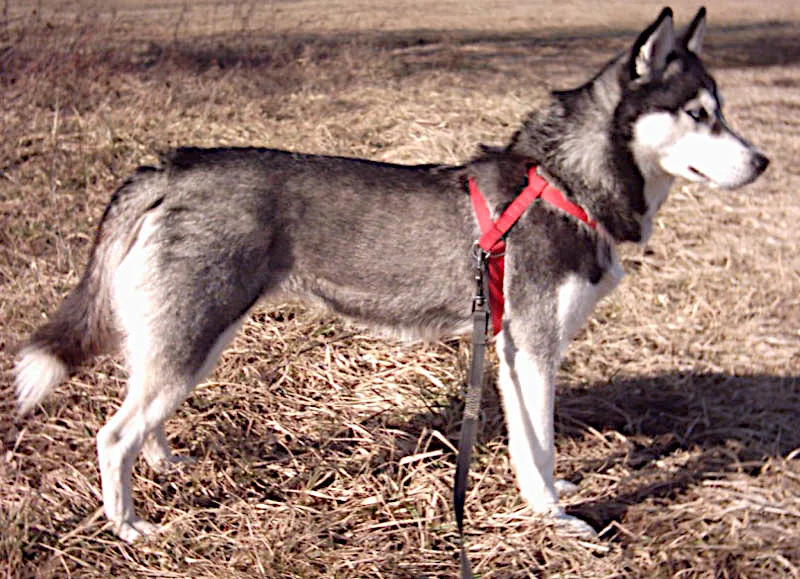
The Siberian Husky is one of the most visually striking and biologically specialised dog breeds in existence. Developed over thousands of years by the Chukchi people of northeastern Siberia as an endurance sled dog, the Husky is built for distances and conditions that no other domestic dog breed can match. Its thick double coat insulates to -60°C. Its metabolism is calibrated for sustained output on minimal fuel.
Its padded, furred paws distribute weight across snow and ice. Its eyes, blue, brown, or heterochromatic, function effectively in conditions of low Arctic light. These are not aesthetic features; they are functional adaptations that collectively define one of the most purpose-built animals humans have ever created.
The same qualities that make the Siberian Husky extraordinary as a sled dog make it a demanding companion animal. The breed's high drive, exceptional escape capability, need for sustained vigorous exercise, and independence of mind create challenges that reliably overwhelm owners who have not researched the breed carefully. Siberian Husky rescues across North America and Europe are consistently full.
This guide presents the breed completely and honestly, covering its history, physical specialisations, temperament, health conditions, exercise requirements, training approach, and the realistic picture of what Husky ownership entails.
Origins and History
The Chukchi people of the Chukotka Peninsula in northeastern Siberia developed the Siberian Husky over a period estimated at thousands of years. The Chukchi were semi-nomadic hunter-gatherers who relied on their dogs for transportation across vast distances of frozen terrain in conditions of extreme cold.
Dogs that could not cover long distances efficiently, that could not survive on minimal food between hunts, or that could not withstand extreme cold were not bred. The result, over many generations of this rigorous practical selection, was a dog of unusual physiological efficiency.
Modern genetic analysis confirms that Siberian Huskies are among the breeds most genetically similar to ancient wolf populations, carrying a higher proportion of ancient genomic heritage than many other domestic breeds. A landmark study published in Science by vonHoldt et al. (2010) placed the Siberian Husky among the breeds with the oldest genetic signatures, confirming the Chukchi's multi-millennium breeding program.
The Siberian Husky reached Alaska in the early 20th century via the All Alaska Sweepstakes sled dog racing community. A Siberian trader and dog breeder named William Goosak imported a team of Chukchi dogs to Nome, Alaska in 1909 to compete in the All Alaska Sweepstakes.
These smaller, faster-moving dogs from Siberia were initially dismissed by Alaskan mushers accustomed to larger dogs, but Goosak's team finished third in a race of 657 kilometres, an extraordinary performance that changed the American sled dog racing world.
The 1925 diphtheria antitoxin relay from Nenana to Nome, Alaska is the Siberian Husky's defining moment in North American cultural history. A diphtheria outbreak threatened Nome's population of approximately 1,400 people during a period when the town was inaccessible by sea (frozen) and by air (early aviation could not reliably operate in Arctic winter conditions at the time).
A relay of 20 mushers and approximately 150 sled dogs carried the serum 1,085 kilometres in 5 days, 7 hours, and 30 minutes in temperatures reaching -51°C. The final relay team, led by Gunnar Kaasen and his lead dog Balto (a Siberian Husky mix), completed the last 85-kilometre leg to Nome. A bronze statue of Balto stands in Central Park, New York City.
The AKC recognised the Siberian Husky in 1930. The Siberian Husky Club of America was established in 1938 and remains the primary breed steward in North America.
Physical Characteristics and Adaptations
The Siberian Husky is a medium-sized dog, notably smaller than the Alaskan Malamute it is often confused with. The Husky's size is a deliberate functional feature: a lighter dog requires less fuel and can run faster over long distances than a heavier one.
| Measurement | Male | Female |
|---|---|---|
| Height at withers | 53-60 cm (21-23.5 in) | 51-56 cm (20-22 in) |
| Weight | 20-27 kg (45-60 lb) | 16-23 kg (35-50 lb) |
| Build | Medium, well-balanced, athletic | Slightly smaller, equally athletic |
The double coat consists of a soft, dense undercoat that provides insulation, and a straight, smooth outer guard coat that repels moisture and wind. The coat insulates effectively to approximately -60°C. The coat comes in all colours from pure white to jet black, with a wide range of markings and facial patterns. The breed moults its undercoat twice a year in heavy seasonal blows, periods of 2 to 4 weeks when undercoat shedding is dramatic and requires daily brushing to manage.
The eyes deserve specific attention. Huskies can have two blue eyes, two brown eyes, one of each (complete heterochromia), or two eyes that are each partially blue and partially brown (sectoral heterochromia). All of these variations are normal, genetically determined, and carry no health implications.
The blue eye colour in Huskies has been traced to a duplication on chromosome 18 near the ALX4 gene in a study published in PLOS Genetics (Ekenstedt et al., 2019), a genetic pathway distinct from the eye colour determination in humans.
The feet are oval and compact, with fur growing between the toes providing insulation and traction on snow and ice. The pads are thick and tough. Huskies naturally gait in an effortless, smooth trot that can be maintained for hours without apparent fatigue, the movement is described in the breed standard as "free and easy, seemingly effortless."
The Husky's metabolic efficiency is a documented physiological specialty. Research by Michael Davis at Oklahoma State University College of Veterinary Medicine has shown that racing Huskies activate fatty acid metabolism pathways at sustained high-intensity exercise levels that would push other dogs into anaerobic metabolism and exhaustion. Huskies essentially switch metabolic modes mid-race to burn fat more efficiently, sustaining performance levels that non-adapted dogs could not maintain.
Temperament
The Siberian Husky's temperament is a direct product of its social and working history. Chukchi sled dogs lived in close-knit teams, required to work cooperatively and efficiently for long distances. They were not guard dogs, not territorial warning systems, and not close-bonded to a single human handler in the way that herding and protection breeds are.
They were pack animals, socially gregarious, tolerant of strangers and other dogs, independent enough to make decisions when the musher could not guide them.
These characteristics persist in the modern Siberian Husky. The breed is typically friendly with strangers, which makes them poor guard dogs, highly social with other dogs, and genuinely independent of mind. They do not naturally look to their owner for permission before acting on what interests them. This independence creates training challenges for owners accustomed to more handler-oriented breeds.
The Husky howl is a defining characteristic. The breed communicates through howling as a pack vocalization; it is a deeply ingrained behaviour that cannot be trained out and should not be expected to disappear. Huskies can also be "talkative," producing a range of vocalizations, talking, grumbling, and yodelling, that many owners find endearing and neighbours may not. This vocal quality must be considered in multi-unit dwelling settings.
"The Siberian Husky is a breed whose temperament and behaviour are inseparable from its working history. It was selected for independence, for efficiency, and for cooperation with other dogs, not for responsiveness to a single human handler. Understanding this is the first step toward successful Husky ownership." Siberian Husky Club of America, Breed Education materials, 2022.
The breed is typically excellent with children and with other dogs. They have a genuine prey drive toward small animals, cats, rabbits, rodents, that may not be manageable even with long-term socialisation in some individuals. This is a genetic trait, not a training failure.
Escape behaviour is one of the most reported challenges in Husky ownership. The breed can jump fences up to 1.8 metres, dig under fence lines, and squeeze through gaps that seem impossibly small. An adult Husky should never be considered reliably contained by a standard residential fence.
Underground fence systems (e-collars activated by a buried wire perimeter) are generally ineffective with Huskies, many will cross the buried wire despite the correction. Physical containment with a 1.8 to 2-metre solid fence with a dig guard at the base, or a fully enclosed kennel run, is the practical solution.
Off-lead exercise in any unsecured area is a safety risk. A Husky that catches a scent will run, far, fast, and without looking back. Recall in open environments is unreliable in most Huskies, even well-trained ones.
Health: Key Conditions and Statistics
The Siberian Husky is generally a robust breed with fewer genetically fixed health problems than many of the more highly inbred show breeds. Its relative genetic diversity and the practical selection pressure of sled dog work have maintained reasonable population health. Lifespan averages 12 to 14 years.
| Health Condition | Prevalence | Notes |
|---|---|---|
| Progressive retinal atrophy (X-linked PRA) | Significant in breed | X-linked mode; DNA test available |
| Juvenile cataracts (hereditary) | Common in breed | Distinct from age-related cataracts; DNA test available |
| Hip dysplasia | ~6% of evaluated dogs | Lower than many breeds; OFA data |
| Zinc-responsive dermatosis | Breed-specific | Impaired zinc absorption; dietary supplementation required |
| Autoimmune thyroiditis | Elevated breed prevalence | Annual monitoring recommended |
| Autoimmune conditions (uveodermatological syndrome) | Breed-predisposed | Eye and skin depigmentation |
Progressive retinal atrophy in the Siberian Husky presents in an X-linked form, the mode of genetic inheritance differs from PRA in most other affected breeds. Because the condition is X-linked, males are more commonly affected than females (females must inherit two copies of the mutant allele; males need only one). DNA testing through the Cornell University Baker Institute is available. Affected dogs experience progressive vision loss beginning as young as 2 to 3 years, leading to blindness.
Juvenile hereditary cataracts occur in Huskies independently of the X-linked PRA gene. A separate DNA test identifies carriers and affected dogs. Both conditions underscore the importance of eye examination (CAER certification) and DNA health testing in Siberian Husky breeding programs.
Zinc-responsive dermatosis is a unique condition in the breed: Huskies have an impaired ability to absorb dietary zinc from the gut, leading to zinc deficiency symptoms including crusting, scaling, and hair loss around the face and footpads despite apparently adequate dietary zinc levels. Supplementation with zinc in forms appropriate for veterinary use (not over-the-counter human zinc supplements without veterinary guidance) typically produces rapid resolution.
"The Siberian Husky's relatively low hip dysplasia rate compared to many large and medium breeds likely reflects the sustained physical performance demands historically placed on the breed. Dogs with significant orthopaedic disease could not perform sled work and were not perpetuated in working lines." Orthopedic Foundation for Animals, Breed Health Statistics commentary, 2023.
Training
Training a Siberian Husky is one of the most frequently discussed challenges in purebred dog ownership, and the difficulties are real. The breed is intelligent; it learns quickly, but its intelligence is applied in service of its own agenda rather than the handler's. A Husky will learn a new command rapidly and then decide, on a given day, whether executing it is worth the effort.
Effective training strategies for Siberian Huskies:
Manage expectations: A Husky is not a Golden Retriever. It will not defer to its handler automatically. It will not execute commands reliably under high distraction. These are not training failures; they are breed characteristics. Set realistic goals.
Use positive reinforcement with high-value rewards: Huskies are food-motivated when food is high enough value. Dry kibble as a training reward will not compete with an interesting smell. Real meat, cheese, or commercial high-value treats are necessary in any training context with significant distraction.
Be consistent: The Husky is expert at identifying and exploiting inconsistencies. If a behaviour is sometimes reinforced and sometimes corrected and sometimes ignored, the Husky will identify and repeat the pattern that produces the most advantageous outcome for itself.
Start recall training on a long line: Off-lead recall should be built from the earliest possible age on a long line (15 to 30 metres), in low-distraction environments, with extremely high-value reinforcers. Reliability in open environments is achievable in some individuals but should never be assumed without extensive evidence.
Channel energy into work: Huskies that participate in structured activities, bikejoring, canicross, skijoring, recreational mushing, or dog sports, are markedly easier to live with than Huskies whose energy and drive have no outlet.
See also: Siberian Husky Care Guide and How Dogs Evolved from Wolves.
Exercise
The Siberian Husky needs more exercise than almost any other breed commonly kept as a companion dog. The breed was developed to run 160 kilometres per day in extreme cold. While a companion Husky does not need to run 160 kilometres daily, it does need sustained vigorous exercise to be comfortable and well-behaved.
Minimum exercise for an adult Siberian Husky: 2 hours of active exercise daily. This should include at least one period of sustained, high-energy activity, running alongside a cyclist (bikejoring), off-lead running in a fully secured space, or dog-sport work, rather than just leash walks.
Huskies do not exercise themselves in a yard and should not be expected to. A yard provides space but not motivation. Without a human-directed exercise session, a Husky in a yard will either sleep or find its own entertainment in the form of digging, fence-testing, and escape attempts.
Seasonal exercise management: Huskies are cold-weather dogs and do not thermoregulate as efficiently in warm conditions as in cold. In summer temperatures above 20°C (68°F), strenuous exercise should be limited to early morning and evening. The coat should not be shaved, the undercoat provides insulation against both cold and solar heat, and shaving disrupts its function and may cause permanent coat texture changes.
See also: Exercise Needs by Dog Breed and Best Dogs for Cold Weather.
Grooming
The Siberian Husky's double coat is self-cleaning to a significant degree, dirt and mud typically dry and fall away, and the breed produces minimal doggy odour. However, the seasonal moult events are substantial and require active management.
Between moults: Weekly brushing with a slicker brush and metal comb is sufficient for most of the year. The outer coat does not tangle easily, but the undercoat can mat at the skin if not brushed out regularly.
During moults: Daily brushing with a slicker brush, metal comb, and undercoat rake or de-shedding tool is necessary. A single brushing session during a moult can remove extraordinary volumes of undercoat. High-velocity dryer use after bathing significantly accelerates the blowing of the coat and reduces the total duration of the moult period.
Bathing: Every 6 to 8 weeks or as needed. The coat's water-repellent outer layer means baths require thorough penetration with shampoo and complete drying afterward. The thick undercoat retains moisture close to the skin if not fully dried, creating conditions for skin infection.
Ears, nails, and teeth: Weekly ear inspection, nail trimming every 3 to 4 weeks, and daily dental brushing complete the routine.
Never shave a Siberian Husky. The double coat provides critical thermal regulation in both cold and heat.
Feeding
Siberian Huskies have a notably efficient metabolism. Racing Huskies in sustained work can consume 12,000 or more kilocalories per day; a companion Husky in moderate exercise typically requires significantly less food than its size would suggest compared to other breeds of equivalent weight.
| Life Stage and Activity | Approximate Daily Calories |
|---|---|
| Adult Husky (22 kg, moderate activity) | 900-1,200 kcal/day |
| Active/working Husky | 1,400-2,000+ kcal/day |
| Senior Husky (reduced activity) | 750-1,000 kcal/day |
| Puppy (under 6 months) | 1,000-1,200 kcal/day in 3 meals |
The Husky's efficient metabolism means overfeeding is a genuine risk. Because their caloric requirements are lower than expected for their size, owners accustomed to feeding other breeds of similar weight may overestimate appropriate portions. Body condition scoring (visible waist when viewed from above, easily palpable ribs without pressing firmly) is the practical guide.
Zinc-responsive dermatosis should be discussed with a veterinarian if skin and coat symptoms develop, as dietary zinc adjustment or supplementation may be required.
References
vonHoldt, B. M., Pollinger, J. P., Lohmueller, K. E., et al. (2010). Genome-wide SNP and haplotype analyses reveal a rich history underlying dog domestication. Nature, 464, 898-902. https://doi.org/10.1038/nature08837
Ekenstedt, K. J., Ruble, K., Urbanski, J. M., et al. (2019). Variant in PRICKLE2 associated with hereditary ataxia in Siberian Husky dogs. PLOS Genetics, 15(12), e1008242. https://doi.org/10.1371/journal.pgen.1008242
Orthopedic Foundation for Animals. (2023). Siberian Husky Hip Dysplasia Statistics. Retrieved from https://ofa.org
Siberian Husky Club of America. (2022). Health and Genetics Committee: Eye Testing and DNA Resources. Retrieved from https://www.shca.org/health/
Davis, M. S., Willard, M. D., Williamson, K. K., & Steiner, J. M. (2007). Sustained strenuous exercise increases intestinal permeability in racing Alaskan sled dogs. Journal of Veterinary Internal Medicine, 21(2), 322-325. https://doi.org/10.1892/0891-6640(2007)21[322:SSEIII]2.0.CO;2
O'Brien, D. P., Johnson, G. S., Schnabel, R. D., et al. (2005). Genetic mapping of canine multiple system degeneration and ectodermal dysplasia loci. Journal of Heredity, 96(7), 727-734. [XLPRA genetics context] https://doi.org/10.1093/jhered/esi090
Frequently Asked Questions
Why do Siberian Huskies have blue eyes?
Siberian Huskies can have blue eyes, brown eyes, one eye of each colour (complete heterochromia), or eyes that are partially blue and partially brown (sectoral heterochromia). All variations are genetically normal and carry no health implications.
The blue eye colour in Huskies was traced in a 2019 study published in PLOS Genetics to a duplication near the ALX4 gene on chromosome 18, a genetic mechanism distinct from blue eye colour in humans or merle-patterned dogs. Having blue eyes does not indicate blindness, deafness, or any other health condition in this breed.
Can a Siberian Husky be kept in a hot climate?
Siberian Huskies can live in warmer climates with appropriate management, but they are genuinely cold-weather dogs and require specific accommodations in heat. Strenuous exercise must be restricted to early morning and evening hours when temperatures are cooler. Indoor air conditioning during summer heat is important. The double coat should never be shaved; it provides insulation against solar heat as well as cold, and shaving disrupts this function.
Fresh water must always be available. Heat exhaustion risk is real in temperatures above 25 degrees C during any sustained activity. Many Huskies adapt to moderate climates well; extreme heat is the primary limiting factor.
How much do Siberian Huskies shed?
Siberian Huskies shed year-round at a moderate level, with two heavy seasonal moults per year, typically in spring and autumn, during which undercoat loss is dramatic. During a moult, daily brushing with a slicker brush and undercoat rake is necessary to manage the volume of loose hair. Outside of moult periods, weekly brushing is sufficient.
The Husky coat is odour-resistant and self-cleaning to some degree, dirt and mud dry and fall away without bathing, but the seasonal shedding volume is very significant and requires owners who are prepared to manage it consistently.
Are Siberian Huskies good off-lead?
Most Siberian Huskies should not be trusted off-lead in unsecured areas. The breed has a strong prey drive and an inclination to run and explore that overrides even well-trained recall responses under high-distraction conditions. A Husky that catches an interesting scent or spots a small animal will run, far and fast, without looking back. Off-lead running should take place only in fully enclosed, escape-proof spaces.
Standard residential fences are inadequate for most Huskies, which can jump 1.8-metre fences or dig under fence lines. Underground electronic fence systems are generally not effective with this breed.
Do Siberian Huskies make good guard dogs?
Siberian Huskies make poor guard dogs. The breed was developed by the Chukchi people for cooperative sled work, not for territorial protection or alarm barking at strangers. As a result, Huskies are typically friendly and non-territorial with strangers, and they do not naturally alert-bark at unusual sounds or unfamiliar people with the vigilance of guarding breeds.
While they are vocal (they howl, talk, and vocalise extensively), their vocalisation is not directed at territorial threats. Anyone seeking a dog for property protection should consider breeds specifically developed for that role.
What health tests should a Siberian Husky have?
The recommended health testing for Siberian Huskies covers their most significant hereditary conditions. Eye testing: annual CAER (Companion Animal Eye Registry) examination with a board-certified veterinary ophthalmologist to screen for hereditary cataracts and progressive retinal atrophy (PRA). DNA testing: X-linked PRA (available through the Cornell Baker Institute) and hereditary cataracts. Hip evaluation: OFA or PennHIP radiograph.
Thyroid evaluation: annual monitoring is recommended due to the breed’s predisposition to autoimmune thyroiditis. Reputable breeders provide documentation of eye, DNA, and hip clearances for both parents of a litter.