
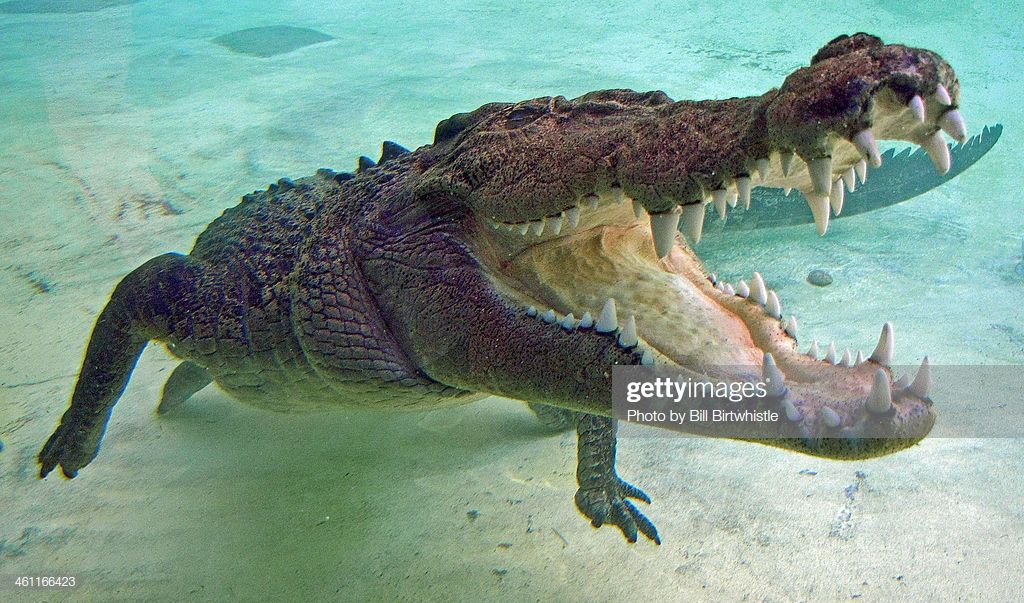
The saltwater crocodile is the largest living reptile on Earth, the most powerful biter of any measured living animal, and the only crocodilian that routinely crosses open ocean.
Crocodylus porosus is an apex predator across a vast range stretching from the coastal rivers of eastern India through the mangroves of Southeast Asia, across the island archipelagos of Indonesia and the Philippines, into the estuaries of northern Australia, New Guinea, and the Solomon Islands.
It is simultaneously a conservation success story - pulled back from near-extermination in a single human generation - and one of the few predators on the planet that still regularly kills and eats people.
This guide covers every major aspect of saltwater crocodile biology and ecology: size and proportion, sensory systems, bite mechanics, hunting behaviour, diet, reproduction, ocean-crossing dispersal, longevity, conservation status, and the fraught relationship between salties and the humans who share their rivers. It is a reference entry, not a summary - so expect specifics: kilograms, kilometres, newtons, populations, incubation temperatures, and verified records.
Etymology and Classification
The scientific name Crocodylus porosus was coined by the German naturalist Johann Gottlob Schneider in 1801. The species epithet porosus refers to the small pitted scales (osteoderms) scattered across the neck and snout - one of the most reliable field characters separating salties from other crocodiles in the region.
The common name "saltwater crocodile" reflects the animal's tolerance for full marine conditions, but it is slightly misleading: the species lives and breeds equally well in purely freshwater rivers hundreds of kilometres inland. Across the range it is also known as the estuarine crocodile, Indo-Pacific crocodile, marine crocodile, and in Australia simply as the "saltie".
Genetic and morphological analysis places C. porosus within the true crocodile family Crocodylidae, closely related to the Nile crocodile (C. niloticus) and the slightly smaller New Guinea crocodile (C. novaeguineae).
The lineage that produced modern Crocodylus diverged from other crocodilians roughly 25 million years ago, but the general crocodilian body plan - elongated armoured trunk, laterally flattened muscular tail, long tooth-lined jaws, raised eyes and nostrils - has persisted largely unchanged for more than 80 million years.
Saltwater crocodiles shared freshwater ecosystems with non-avian dinosaurs during the late Cretaceous and outlived them.
Size and Physical Description
Saltwater crocodiles are the largest living reptile by every measure: length, weight, and mass. Sexual dimorphism is pronounced - males may grow to twice the length and six times the weight of mature females.
Males:
- Length: 4.3-5.5 metres typical in mature adults
- Record length: 6.17 metres (Lolong, Philippines, captured 2011)
- Weight: 400-1,000 kg in most adults
- Record weight: 1,075 kg (Lolong)
Females:
- Length: 2.3-3.5 metres at maturity
- Weight: 100-300 kg
- Rarely exceed 4 metres
Hatchlings:
- Length: 25-30 cm at emergence
- Weight: 60-80 grams
Historical claims of 7-metre or larger crocodiles appear throughout nineteenth- and twentieth-century colonial literature, but none are backed by physical remains or controlled measurement. Lolong, captured in Agusan del Sur, Philippines in September 2011 after two fatal attacks in the region, remains the largest fully authenticated individual. He died in captivity in 2013.
The skeleton of Cassius, a living crocodile held at Marineland Melanesia in Queensland, exceeds 5.48 metres and is still growing at an estimated age above 120 years.
Body shape is engineered for ambush. The trunk is wide and armoured with bony plates called osteoderms set into the skin of the back and flanks. The skull is long, heavy, and broader than in most crocodilians, with eyes, ears, and nostrils arranged on a single raised plane so the animal can lie almost totally submerged while keeping all three senses above water.
The tail is laterally flattened into a vertical oar that makes up roughly half of total length. The limbs are short but powerful, with webbed hind feet used primarily for fine underwater manoeuvring rather than active swimming.
Colour varies with age and environment. Hatchlings are pale yellow with black bands, fading by the second year to the adult's dark olive-brown or nearly black back with a creamy yellow underside. Older crocodiles in tannin-stained mangrove rivers often appear completely black.
Jaws, Teeth, and Bite Mechanics
Saltwater crocodiles bite harder than any other animal science has ever directly measured. In 2012 a research team at Florida State University placed bite-force transducers in the jaws of wild saltwater crocodiles in Australia and recorded a peak of 16,460 newtons - roughly 3,700 psi - from a 5.2-metre male. Scaling the relationship to the record-size animals observed in the wild produces estimated bite forces above 27,000 newtons.
The mechanism is straightforward: the jaw-closing adductor muscles, primarily the pterygoideus, are enormous and attach high on the skull, giving tremendous leverage. By contrast, the jaw-opening muscles are small and weak - weak enough that researchers and handlers routinely secure the mouth of an adult saltwater crocodile with ordinary tape once the jaws are closed.
Teeth are arranged in a single row on each jaw, with roughly 64 to 68 total teeth depending on age. The dentition is thecodont (each tooth set in a socket) and polyphyodont (replaced throughout life). Each tooth position can be replaced up to 50 times over an animal's lifespan, for a per-individual total of roughly 3,000 teeth.
New teeth develop in a pocket beneath each functional tooth and push it out when ready. This is why saltwater crocodiles do not die of worn teeth the way most large mammals eventually do.
Crocodilians cannot chew. Prey is swallowed whole, dismembered by the death roll, or torn apart by two crocodiles pulling in opposite directions.
Senses and Nervous System
Saltwater crocodiles have some of the most sophisticated sensory systems of any reptile:
- Vision. Binocular forward vision with a vertical slit pupil that opens to a wide circle in low light. A reflective tapetum lucidum doubles sensitivity in the dark. Underwater vision is slightly blurred; above-water vision is sharp.
- Hearing. Keen across a wide range of frequencies. Hatchlings call to their mother from inside the egg and she responds by opening the nest.
- Dome pressure receptors. Thousands of tiny black sensory organs (integumentary sense organs) cover the jaws, face, and much of the body, detecting minute pressure changes in water - fingertip-scale sensitivity to ripples made by passing fish or approaching prey.
- Chemoreception. Strong sense of smell both in air and water, used for locating carcasses, recognising territory markings, and detecting other crocodiles.
- Electrosensitivity. Weak but present, particularly in murky water.
These systems combine to make saltwater crocodiles some of the most alert ambush predators on Earth. A submerged adult can detect a human stepping into shallow water tens of metres away from the change in surface pressure alone.
Heart, Lungs, and Diving Physiology
Despite being cold-blooded ectotherms, crocodilians have a fully four-chambered heart - a trait they share only with birds and mammals among modern vertebrates. Their heart features a unique structure called the foramen of Panizza, together with a "cog-tooth" valve in the right ventricle, that allows oxygen-poor blood to bypass the lungs during long dives and recirculate through the body.
This arrangement makes saltwater crocodiles extraordinary divers. An adult can:
- Remain submerged for 1-2 hours in resting ambush posture
- Survive up to 7 hours underwater under cold, controlled conditions
- Drop its heart rate to 2-3 beats per minute while submerged
- Tolerate blood acidity levels that would kill most mammals
The diving response is aggressive and well-regulated. Because crocodiles can shut blood away from the lungs, they do not accumulate toxic waste in vital tissues the way a mammal would. They also store substantial oxygen in their muscle tissue as myoglobin.
Salt glands on the tongue actively excrete concentrated sodium chloride, allowing the species to live in full seawater indefinitely. Freshwater species of crocodile lack these glands and die if kept in marine conditions for more than a few weeks.
Hunting and Diet
Saltwater crocodiles are generalist apex predators whose diet shifts with age:
Hatchlings and juveniles (<1.5 m):
- Insects, crustaceans, frogs, small fish
- High-risk life stage with heavy predation by birds, goannas, snakes, fish, and adult crocodiles
Sub-adults (1.5-3 m):
- Fish, crabs, mud lobsters, water birds, small mammals, turtles
Adults (>3 m):
- Wallabies, kangaroos, wild pigs, feral buffalo, cattle, dogs, monkeys
- Sharks, stingrays, large fish, sea snakes, sea turtles
- Humans, in a small but real fraction of encounters
Hunting techniques:
- Submerged ambush. The crocodile floats motionless at the surface, eyes and nostrils barely breaking water, or lies fully submerged beside a game trail, drinking site, or tidal creek mouth. When prey steps into range, the strike takes under half a second.
- Underwater stalking. In murky water the crocodile pursues fish or crabs by sight, scent, and pressure-wave detection.
- High-water ambush. During seasonal floods, salties position themselves at natural bottlenecks where prey is funnelled.
- Tail-lunge. Near riverbanks, a crocodile braces on the bottom and launches most of its body length vertically with a single thrust of its tail, snatching birds, bats, or small mammals from overhanging branches.
Once prey is in the jaws, the death roll reduces it to manageable pieces. The crocodile spins its body rapidly around its long axis while maintaining the bite. The torsional force tears off limbs, twists heads from bodies, and dismembers carcasses too large to swallow whole. Large prey is often drowned first by being dragged under and held. Smaller prey is swallowed whole, sometimes head-first with a distinctive upward head-flip to toss the food into the gullet.
Saltwater crocodiles have famously slow metabolisms. A single large meal - a 30-40 kg pig, for example - can sustain an adult for weeks, and laboratory studies suggest large salties can survive a year or more between meals under low-activity conditions.
Reproduction and Life Cycle
Saltwater crocodile reproduction is keyed tightly to the tropical wet season.
Courtship and mating:
Breeding occurs during the warm build-up and early rains, typically October through January in Australia and similar months through Southeast Asia. Dominant territorial males advertise with low infrasonic bellows, audible head-slaps on the water, and body posturing. Females approach tolerated males and courtship involves snout-rubbing and synchronised swimming. Mating takes place in shallow water and lasts 15-30 minutes.
Nesting:
Females build large mounded nests from vegetation, mud, and soil on raised riverbanks or floating mats. A typical nest is 1.5-2 metres across and 60-80 cm tall. The female lays 40-90 eggs, typically 50-60, each weighing about 110 grams. She guards the nest continuously across the incubation period.
Incubation and sex determination:
- Duration: 80-98 days
- Sex is determined by nest temperature, not genetics
- At 31-32 C, hatchlings are predominantly male
- At lower or higher temperatures (<30 C or >33 C), hatchlings are predominantly female
Hatching:
Hatchlings call from inside the egg as they approach hatching. The mother responds by opening the nest with her claws and jaws, then carries her newly hatched babies - sometimes one at a time, sometimes several at once - inside her mouth to the water. She will guard the young for up to several months, responding to their distress calls.
Juvenile survival:
First-year mortality is brutal - estimates suggest 75-99% of hatchlings die before their first birthday. Losses come from fish, snakes, goannas, raptors, feral pigs, cannibalistic adult crocodiles, flooding, and drought. Most surviving juveniles disperse widely within a year or two.
Sexual maturity is reached at roughly 16 years in males (3.3 m length) and 12-14 years in females (2.2 m length). Breeding life extends for decades.
Movement, Territory, and Oceanic Travel
Adult male saltwater crocodiles are intensely territorial and exclude other large males from preferred river systems through a mix of display, chase, and serious fighting. Territories along major rivers can stretch for 15 kilometres of river length or more. Sub-dominant animals - mainly smaller males and juveniles - are forced into marginal habitat, including open coastline and small tributary creeks, which drives dispersal.
Oceanic travel:
Unlike any other crocodilian, C. porosus routinely crosses stretches of open sea. Satellite-tracking studies published in the Journal of Animal Ecology (Campbell et al., 2010) documented long-distance travel strategies in wild Australian salties:
| Metric | Value |
|---|---|
| Longest continuous ocean movement | 590 km in 25 days |
| Typical daily swim speed | 0.5-1.5 km/h (current-assisted) |
| Short-burst speed in water | up to 29 km/h |
| Maximum dive depth observed | ~15 metres |
| Documented single dive duration | >1 hour (resting) |
Rather than swim actively, long-distance travellers time their movements to surface tidal currents, riding favourable flows and waiting on the bottom when tides reverse. This current-surfing strategy is highly energy-efficient and explains how the species has successfully colonised islands across the Indo-Pacific. Vagrants have been recorded as far east as Fiji and as far north as southern Japan.
Population and Range
Saltwater crocodiles occupy the widest geographical range of any crocodilian. They are recorded across 17 countries:
| Country | Population status | Approximate adult population |
|---|---|---|
| Australia | Robust, stable | ~100,000 |
| Papua New Guinea | Robust, stable | ~80,000 |
| Indonesia | Recovering, data-limited | Tens of thousands |
| Malaysia (Sabah/Sarawak) | Recovering | Several thousand |
| Solomon Islands | Stable, small population | ~3,000-5,000 |
| India | Fragile, localised (Bhitarkanika) | ~1,700 |
| Sri Lanka | Declining | <500 |
| Philippines | Endangered, highly localised | <250 |
| Vietnam, Thailand, Cambodia | Critically low or extirpated | Tens to low hundreds |
Australia's Northern Territory holds what is probably the densest wild population on the planet, with adult densities exceeding 5-10 crocodiles per kilometre of tidal river in prime mangrove habitat.
Conservation Status and History
The IUCN Red List classifies Crocodylus porosus as Least Concern with a stable global population trend, reflecting a dramatic recovery from mid-twentieth-century collapse.
Between 1945 and 1971, commercial hunting for high-grade belly skins drove populations across the range down by an estimated 90-99%. Australian salties were reduced from perhaps 100,000 adults to fewer than 3,000. Protection measures gradually followed:
- 1969-1971: Progressive hunting bans across Australian states and territories
- 1981: Papua New Guinea implements sustainable ranching programme
- 1975 onward: CITES Appendix I listing for most populations, restricting international trade
- 1985 onward: Selected populations (Australia, PNG, Indonesia) transferred to Appendix II under sustainable-use programmes
The Australian recovery in particular is regarded as one of the clearest conservation success stories in reptile biology. Northern Territory populations grew from low thousands to roughly 100,000 adults in under 50 years, largely because the species was given strict legal protection combined with regulated ranching that gave local landowners an economic incentive to tolerate crocodiles on their land.
Ongoing threats vary by region:
- Habitat loss. Coastal development, mangrove clearing for aquaculture, and dam construction remove nesting habitat across Southeast Asia.
- Illegal harvest. Subsistence and commercial take persist in parts of Indonesia, Southeast Asia, and New Guinea.
- Human-wildlife conflict. Retaliatory killing after attacks on people or livestock remains widespread in rural areas.
- Climate change. Sea-level rise alters nesting beaches and tidal ranges; temperature shifts affect sex ratios because nest temperature determines offspring sex.
- Pollution. Heavy metals, pesticides, and microplastics accumulate in apex predators feeding in estuarine systems downstream of agriculture and urban centres.
Saltwater Crocodiles and Humans
Saltwater crocodiles kill more people annually than any other crocodilian and more than most large predators worldwide. The international attack database CrocBITE records roughly 1,000 known human attacks across the range between 2000 and 2022, of which around half were fatal.
Most incidents occur in rural Indonesia, Papua New Guinea, the Solomon Islands, the Philippines, and parts of northern Australia. Victims are usually fishing, bathing, collecting water, or crossing rivers at the edge of known crocodile habitat.
Northern Australia manages coexistence through the long-running "Be Crocwise" programme: public education, zoning, warning signage, selective removal of problem animals, and absolute rules against swimming in known crocodile waters. Fatal attacks in the Northern Territory average one to two per year despite population densities that would produce dozens of deaths if similar rules were ignored.
Saltwater crocodiles also feature heavily in the cultures of Indigenous Australian, Melanesian, and Southeast Asian peoples, often as ancestral beings, spiritual guardians, or totemic animals. Several Aboriginal language groups in northern Australia recognise the saltwater crocodile as a cultural relative with reciprocal obligations - a worldview that has shaped modern co-management of crocodile populations.
Commercial crocodile farming is now a significant industry in Australia, Papua New Guinea, and Cambodia. Skins go to luxury leather markets; meat is sold for food; and in Australia many farms cooperate with Indigenous landowners who collect wild eggs under a scientifically regulated quota in exchange for royalties that fund habitat protection.
Related Reading
- Nile Crocodile: Africa's Ambush Predator
- American Alligator: The Comeback Reptile
- Crocodilians of the World
- Reptiles vs Mammals: Who Really Lives Longer?
References
Relevant peer-reviewed and governmental sources consulted for this entry include the IUCN Crocodile Specialist Group status reviews (2021, 2023), the Australian Government Department of Climate Change, Energy, the Environment and Water national crocodile monitoring reports, the CrocBITE attack database maintained by Charles Darwin University, and published research in the Journal of Animal Ecology, the Journal of Zoology, and PLOS ONE.
Bite-force measurements are drawn from Erickson et al. (2012) in PLOS ONE. Oceanic dispersal data are drawn from Campbell et al. (2010) in the Journal of Animal Ecology. Population figures reflect the most recent consolidated estimates available as of the 2023-2024 IUCN Crocodile Specialist Group reporting cycle.
See also: Komodo Dragon vs Crocodile
Frequently Asked Questions
How big are saltwater crocodiles?
Adult male saltwater crocodiles (Crocodylus porosus) typically measure 4.3-5.5 metres in length and weigh 400-1,000 kg, making them the largest living reptile on Earth. Females are considerably smaller at 2.3-3.5 metres and 100-300 kg. The largest verified individual was Lolong, captured in Agusan del Sur, Philippines in 2011, who measured 6.17 metres and weighed 1,075 kg.
Historical reports of 7-metre animals exist from the nineteenth century but none are verifiable. Hatchlings emerge at about 30 cm and 70 grams, growing roughly 30 cm per year through their first decade before growth slows with age.
Where do saltwater crocodiles live?
Saltwater crocodiles have the widest geographic range of any crocodilian, inhabiting estuaries, rivers, mangrove swamps, and coastal seas from eastern India through Southeast Asia, Indonesia, New Guinea, the Solomon Islands, and across northern Australia. The species thrives in brackish tidal systems where freshwater rivers meet the sea, but individuals regularly travel hundreds of kilometres through open ocean between river systems.
Australia’s Northern Territory holds the densest known population, with roughly 100,000 adult saltwater crocodiles in its waterways. The name ‘saltwater’ is slightly misleading: these animals also live and breed in purely freshwater rivers hundreds of kilometres inland.
How strong is a saltwater crocodile's bite?
A 5.2-metre saltwater crocodile was measured exerting a bite force of 16,460 newtons (about 3,700 psi) in controlled research conditions - the strongest bite ever directly measured in any living animal, surpassing great white sharks, spotted hyenas, and African lions. Scaled up, the largest individuals on record likely produce bite forces above 27,000 newtons.
The jaw-closing muscles are enormous, but jaw-opening muscles are comparatively weak, which is why handlers can secure an adult crocodile’s jaws with ordinary tape. Saltwater crocodiles use this bite to crush turtle shells, skulls, and large bones, holding prey in a vice-like grip before performing the ‘death roll’ to dismember it.
What is the death roll?
The death roll is a hunting and dismemberment technique in which a saltwater crocodile clamps its jaws on a prey animal and then spins its entire body rapidly around its long axis. The twisting force tears off limbs or chunks of flesh that are too large for the crocodile to swallow whole, since crocodilians cannot chew. Rolls last one to three seconds and can exceed one full rotation.
The manoeuvre works underwater (drowning the prey in the process) and on the surface. It is used on large prey such as kangaroos, pigs, cattle, buffalo, sharks, and occasionally humans. Smaller prey is simply swallowed whole.
How long do saltwater crocodiles live?
Saltwater crocodiles have one of the longest lifespans of any reptile. Wild individuals are thought to live 70-100 years on average, with some males likely exceeding 110 years. Accurate ageing is difficult because crocodilians continue to grow slowly throughout life and growth-ring studies in bones are unreliable in old animals.
The oldest documented captive saltwater crocodile, Mr Freshie (actually a saltie, despite the nickname), died at an estimated 140 years old in Australia. Longevity is supported by continuous tooth replacement, slow metabolism, efficient immune systems, and the ability to survive long periods without food.
Are saltwater crocodiles endangered?
The IUCN Red List classifies Crocodylus porosus as Least Concern with a stable global population, a significant conservation success story. Historical commercial hunting between 1940 and 1971 for skins reduced populations by more than 90% across the species’ range.
Legal protection in Australia (1971), Papua New Guinea (1981), and most other range states, combined with sustainable farming and ranching programmes, allowed the species to recover in most regions. Populations are robust in Australia and Papua New Guinea, improving in Indonesia and Borneo, but still fragile or declining in Sri Lanka, parts of India, Vietnam, Thailand, and the Philippines.
Habitat loss, human-wildlife conflict, and illegal take remain region-specific threats.
Do saltwater crocodiles attack humans?
Yes. Saltwater crocodiles are responsible for more human fatalities than any other crocodilian species. CrocBITE, the international attack database, records roughly 20-30 fatal saltwater crocodile attacks per year across their range, concentrated in rural Indonesia, northern Australia, Papua New Guinea, the Philippines, and the Solomon Islands.
Unlike most large predators, salties readily treat adult humans as prey when opportunity and hunger align, and large territorial males are especially dangerous. Northern Australia has maintained public safety through ‘Croc Wise’ education, zoning, removal of problem animals, and strict no-swimming rules. Most attack victims are fishing, bathing, or collecting water at the edge of known crocodile habitat.
Can saltwater crocodiles really cross oceans?
Yes. Saltwater crocodiles possess functional salt-excreting glands on their tongue that allow them to live in full seawater indefinitely. Satellite-tagging studies published in the Journal of Animal Ecology documented individuals travelling more than 590 kilometres through open ocean by riding tidal surface currents - a highly energy-efficient strategy in which the crocodile floats passively when currents flow in its preferred direction and waits on the bottom when they reverse.
This oceanic dispersal explains how the species colonised islands across the Indo-Pacific and is occasionally found as a vagrant in places such as Fiji, the Cocos Islands, and even as far as Japan and New Caledonia on rare occasions.