
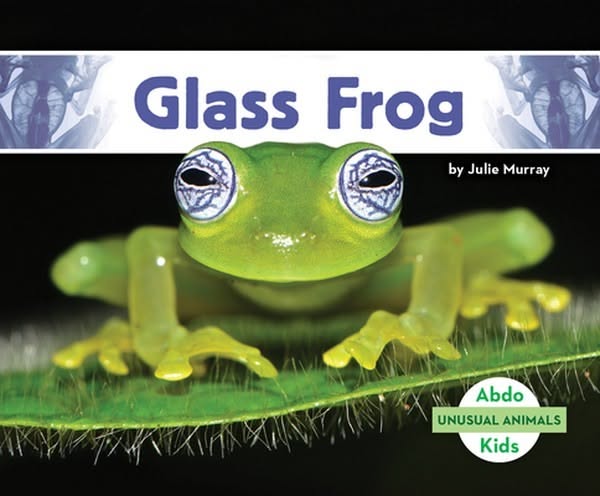
The glass frog is one of the very few back-boned animals on Earth whose internal anatomy is directly visible through its own skin. Pressed flat against the underside of a leaf in a Central American rainforest, a sleeping glass frog looks less like a living amphibian and more like a tiny piece of coloured glass. The heart beats. The liver pulses. Food moves through the intestines in slow, visible peristaltic waves.
No illustration can substitute for the experience of seeing one in person - and no other vertebrate group has perfected the trick to the degree that members of family Centrolenidae have.
This guide covers every major aspect of glass frog biology and ecology: transparency and the 2022 red blood cell discovery that finally explained it, rainforest canopy life, male parental care, egg clutches on leaves over running streams, and the conservation pressures facing a family of roughly one hundred and sixty species spread across the Neotropics.
The representative species throughout is Fleischmann's glass frog, Hyalinobatrachium fleischmanni, which is the most widely distributed glass frog and the animal used in the 2022 study that transformed our understanding of vertebrate transparency.
Etymology and Classification
The family name Centrolenidae was coined by the Argentine herpetologist Eugenio Taylor in 1951 from the Greek kentron ('point' or 'spur') and olene ('elbow'), referring to a small humeral spine present on the forelimbs of adult males. The common English name 'glass frog' dates to the early twentieth century and describes exactly what it says: a frog through which light passes.
Glass frogs are classical anurans - tailless amphibians with long hind limbs, webbed feet, and a typical two-stage life cycle of aquatic tadpole and terrestrial adult. Within Anura they sit inside the superfamily Hyloidea, closely related to true tree frogs (Hylidae) and less closely to poison dart frogs (Dendrobatidae).
The family Centrolenidae is currently divided into twelve genera, the largest of which are Hyalinobatrachium, Centrolene, Cochranella, and Espadarana. The representative species for this entry is Hyalinobatrachium fleischmanni, named after the German naturalist Carl Fleischmann, who collected specimens in Costa Rica in the late nineteenth century.
Although this site groups glass frogs under 'reptiles/frogs' for navigation purposes, biologically they are amphibians, not reptiles - a distinction that matters for skin structure, reproduction, and conservation. Amphibians have moist, permeable skin that exchanges water and gas directly with the environment, which is precisely why transparency is possible in the first place.
Size and Physical Description
Glass frogs are small even by frog standards. Adult snout-vent length ranges from roughly 2 to 3 cm in most species, with outliers reaching 7.5 cm in a few large Centrolene species. Fleischmann's glass frog averages close to 2.5 cm. Body mass is usually under a gram. A typical adult glass frog fits comfortably on a human fingernail.
Males:
- Length: roughly 2.0-2.7 cm snout-vent
- Possess paired humeral spines on the forearm used in territorial combat
- Generally slightly smaller than females
- Vocal sacs expand under the chin during calling
Females:
- Length: roughly 2.3-3.0 cm snout-vent
- Lack humeral spines
- Abdomen visibly swells with eggs before spawning
- Slightly heavier in proportion to length
Tadpoles:
- Bright red due to undisguised haemoglobin in thin body tissue
- Muscular, elongated, eel-like body
- Adapted for burrowing into gravel and leaf litter rather than open-water swimming
The dorsal surface of the adult frog is a pale lime green dusted with small white or yellow spots that blend into leaf surfaces from above. The flanks fade from green to translucent, and the ventral surface - the belly - is the defining feature of the family.
Depending on species, ventral transparency ranges from the dramatic glass-like clarity of Hyalinobatrachium (through which the heart is unmistakably visible) to the more diffuse translucency of Centrolene. The skin is thin, smooth, and only weakly pigmented on the underside, and the peritoneum and muscle layers beneath contain little of the opaque connective tissue that would normally hide internal organs.
Glass frogs have enlarged toe pads, typical of canopy-dwelling arboreal frogs, that allow them to cling to vertical and even upside-down leaf surfaces. Their eyes are set more forward-facing than those of a typical tree frog, producing the slightly stunned, doll-like appearance that makes them popular in nature documentaries. The iris ranges from golden-yellow to silvery-white depending on species.
The Transparency Trick
Transparency in animals is rare above a certain size. Many small invertebrates - jellyfish, salps, some shrimp - achieve it easily because they are largely water and contain few pigments. Transparency in vertebrates is almost unheard of, because vertebrates must carry oxygen using red blood cells, and red blood cells scatter light at the wavelengths the human eye is most sensitive to. A transparent animal with red blood is still a visible animal.
Glass frogs solve this problem in two ways. First, their dorsal (upper) surface is only translucent and is actively camouflaged with green pigment and iridophores that match leaf colour. Most of what hides the frog from above is ordinary camouflage, not transparency. Second, the ventral (under) surface relies on a specialised physiological trick that was not properly understood until 2022.
In December 2022, a team led by Carlos Taboada, Jesse Delia, and Sonke Johnsen published a paper in the journal Science titled 'Glassfrogs conceal blood in their liver to maintain transparency.' The researchers used photoacoustic microscopy - a technique that combines laser pulses and ultrasound detection - to track red blood cells inside living Fleischmann's glass frogs without harming them.
They found that during daytime sleep, when the frogs press themselves flat against a leaf, they actively sequester roughly 89% of their circulating red blood cells inside the liver. The liver is wrapped in a reflective sheet of guanine crystals that masks the stored blood from view. The remaining 11% of red cells circulate at such low concentration that they are nearly invisible from below.
The consequence is that a sleeping glass frog becomes up to twice as transparent as an active one, making it the most transparent back-boned animal ever measured. When the frog wakes at dusk to hunt, call, or defend its leaf, red cells redisperse through the bloodstream and transparency drops.
Clinically, this should not be possible. Packing red cells this densely in almost any other vertebrate would trigger fatal clotting within minutes. Glass frogs somehow avoid clotting during the daily sequestration-and-release cycle, and exactly how they manage this is now an active research area with potential implications for human medicine. Understanding glass frog haemostasis could inform treatment of deep vein thrombosis, stroke, and blood storage practices.
Habitat and Range
Glass frogs are restricted to the Neotropics. Their range stretches from southern Mexico through all of Central America and down the Andes and Amazon basin as far as Bolivia, Paraguay, and the Guianas. Within that range, they occupy a specific microhabitat: the mid-canopy and understorey of primary or late-secondary rainforest along permanent streams, creeks, or waterfalls.
The microhabitat requirements are strict:
- Relative humidity of at least 90% for most of the day
- Ambient temperature between roughly 18 and 26 degrees Celsius
- Continuous forest canopy overhead to buffer temperature and humidity
- Permanent or near-permanent running water within 10 metres
- Abundant overhanging vegetation with broad, smooth leaves
These requirements make glass frogs extremely sensitive to forest fragmentation. A road, pasture edge, or narrow clearcut along a stream can dry the microclimate enough to eliminate an entire local population without removing any large trees. This edge-effect sensitivity is a major reason glass frogs are used as indicator species for primary rainforest integrity.
Fleischmann's glass frog is one of the most widely distributed species in the family, occurring from southern Mexico to western Ecuador and reaching elevations up to roughly 1,500 metres. Other species are far more restricted; some Centrolene and Nymphargus species are known from a single valley or a few square kilometres of cloud forest.
Diet and Hunting
Glass frogs are nocturnal insectivores. Their diet consists almost entirely of small invertebrates found on and around the leaves they inhabit.
Typical prey:
- Fruit flies and other small Diptera
- Planthoppers and tiny leafhoppers
- Mites
- Small spiders
- Springtails
- Small moths and their larvae
Hunting behaviour is typical of sit-and-wait canopy frogs. The frog perches on a leaf surface, waits for movement, and catches prey with a quick tongue strike. Glass frogs have short, only moderately protrusible tongues compared with some other tree frogs, so they rely on ambushing close prey rather than long-distance strikes.
Their feeding rate is not especially high by amphibian standards, which is consistent with the low metabolic demands of a one-gram animal living at rainforest temperatures.
Life Cycle and Reproduction
Reproduction in glass frogs is closely tied to flowing water, and it is one of the most elaborate and closely studied areas of Centrolenidae biology.
Calling and courtship
Breeding begins in the rainy season. Male glass frogs establish leaf territories on the undersides of leaves overhanging streams or running water. From these leaves they call through the night - high, tinkling 'tink' or 'peep' notes, sometimes produced in pairs or triplets. Male call rate and call structure carry information about body size and vigour, and females appear to choose mates at least partly based on call properties.
When a female is ready to spawn she climbs to a calling male's leaf. The pair enters amplexus - the characteristic frog mating embrace - and the female deposits a gelatinous egg mass on the leaf underside. Clutch sizes are small, typically 18-30 eggs in Fleischmann's glass frog, and larger in some other species.
Egg guarding
In Hyalinobatrachium and several other genera, the male remains with the clutch for days to weeks after the female departs. He guards the eggs against predators, most importantly parasitoid wasps, katydids, and predatory fly larvae that lay their eggs inside amphibian clutches.
He also rehydrates the clutch on dry nights by sitting against the eggs and releasing water from his urinary bladder through the skin - a behaviour that keeps the eggs from desiccating during brief rain gaps. Some males attend multiple clutches on the same leaf simultaneously, meaning they have mated with several females in succession.
Paternal care this long is unusual in amphibians. In most frog species, parental investment ends with egg laying. Glass frogs are one of the clearest examples of prolonged paternal care in the animal kingdom outside of fish and birds.
Tadpole development
When the eggs finish development - typically after one to three weeks depending on species and temperature - the tadpoles wriggle free of the gelatinous matrix and drop directly into the water below. A single fall of one to several metres ends their terrestrial life.
Glass frog tadpoles are adapted for life in the stream substrate rather than the open water column. Their bodies are muscular and elongated, their tails powerful, and their colouration typically a deep reddish-brown that camouflages them against decaying leaves. They feed on detritus and small invertebrates in the gravel. Development to metamorphosis is slow - often six months or more - because stream temperatures are low and food availability varies.
Movement, Behaviour, and Sleep
Adult glass frogs are strongly arboreal. They rarely descend to the forest floor, and movement in the canopy is typically short and deliberate: a quick hop between leaves, a climb up a stem, occasional interleaf crossings using thin branches as bridges. They do not leap long distances like many tree frogs.
Sleep is the behaviour in which transparency becomes most dramatic. During the day, adult glass frogs press flat against the underside of a leaf, extend their limbs against the body, and enter a resting state that lasts 10 to 14 hours. During this period they sequester red blood cells in the liver, stop calling, reduce their heart rate, and effectively disappear into the leaf.
At dusk they wake, redisperse red blood cells into the circulation, and resume hunting, calling, and territorial behaviour through the night.
Territorial combat in males is one of the most theatrical behaviours in the family. When two males contest the same leaf, they wrestle using their forelimbs and the small humeral spines. Bouts can last several minutes and occasionally result in one frog being dislodged from the leaf altogether. The smaller male usually concedes and searches for an unclaimed leaf elsewhere.
Lifespan and Populations
Lifespan in the wild is estimated at 10 to 14 years for Hyalinobatrachium fleischmanni, though long-term field data are limited because recapturing an individual tagged frog in a rainforest canopy is extremely difficult. Captive specimens at specialist facilities have lived comparable spans when given appropriate humidity, flowing water, and a diverse invertebrate diet.
Population densities vary. Along productive streams in Costa Rica and Panama, Fleischmann's glass frog can reach densities of several calling males per ten metres of streambank during peak breeding season. In fragmented or disturbed forest, densities drop toward zero, often without the surrounding adult trees showing obvious damage - the animals vanish before the forest does.
Conservation Status and Threats
The IUCN Red List assesses Centrolenidae species individually. Across the family, many species are listed as Vulnerable, Endangered, or Critically Endangered. Some widely distributed species, including Fleischmann's glass frog, remain on the Least Concern list at the global level, although local populations have declined or disappeared in much of their former range.
The main threats are:
- Habitat loss. Rainforest clearance for cattle pasture, oil palm, road building, and gold mining is the primary driver of decline. Because glass frogs depend on a narrow strip of streamside canopy, they are affected even by small-scale logging and agriculture that leaves most of the forest standing.
- Chytrid fungus. Batrachochytrium dendrobatidis has devastated amphibian populations in Central and South America, and glass frogs are among the affected families. Some high-elevation species have declined sharply since the 1990s, and a handful may already be extinct.
- Climate change. Warming and drying in cloud-forest regions shift the elevational band of glass frog microhabitat upward. For species confined to narrow mountain ranges, there is nowhere to move.
- Pollution. Agricultural runoff, including fungicides and fertilisers, enters rainforest streams and can poison eggs and tadpoles.
- Illegal pet trade. Demand for transparent frogs - driven in part by viral video content - has produced a grey-market trade in wild-caught animals. Most wild-caught glass frogs die quickly in captivity, and many never leave the source country alive.
Conservation work focuses on protecting stream corridors within larger protected areas, on captive-breeding a handful of species for research and public education, and on bioacoustic monitoring programmes that track glass frog call activity as a measure of stream forest integrity.
Glass Frogs and Humans
Glass frogs play a small but growing role in human awareness of Neotropical rainforest diversity. Their visible hearts make them a favourite subject for wildlife photographers, eco-tourism operators, and educational media. Guided night walks in Costa Rica, Panama, Ecuador, and Colombia offer the chance to see glass frogs in the wild without disturbing them, and these tours provide direct economic incentives for local communities to protect stream forest.
The 2022 Taboada et al. study transformed glass frogs from a visually striking curiosity into a biomedical research subject. If researchers can identify the mechanism that allows glass frogs to safely pack red blood cells into their liver without clotting, the findings may inform the treatment of thrombosis, the design of new anticoagulant drugs, and the long-term storage of transfusion blood.
This is one of the clearest current examples of applied evolutionary biology: a small rainforest frog solving a problem that human medicine still struggles with, simply by being alive.
Glass frogs are poor pets. Their humidity, temperature, running-water, and live-invertebrate requirements are strict, and most wild-caught animals die within weeks of purchase. Responsible keepers work only with captive-bred lineages of a handful of commonly bred species. For most people, the right way to experience a glass frog is to travel to its rainforest and watch one breathe against a leaf.
Related Reading
- Glass Frogs: Transparent Bodies
- Poison Dart Frog
- Red-Eyed Tree Frog
- Frogs and Toads: The Amphibians Vanishing Before Our Eyes
References
Peer-reviewed and institutional sources consulted for this entry include the IUCN Red List assessments for Centrolenidae species, the AmphibiaWeb species account for Hyalinobatrachium fleischmanni, and published research in Science, Journal of Herpetology, Herpetologica, and Biotropica.
The transparency mechanism described here follows Taboada, Delia, Chen, Ma, Peng, Zhu, Wang, and Johnsen, 'Glassfrogs conceal blood in their liver to maintain transparency,' Science 378, 1315-1320 (2022). Population and distribution figures reflect published amphibian monitoring data from Costa Rica, Panama, Colombia, and Ecuador as of the most recent available assessments.
Frequently Asked Questions
Why is the glass frog transparent?
Glass frog transparency is concentrated on the ventral surface, where the skin, muscle, and peritoneum are unusually thin and lack pigment. Viewed from below, the heart, liver, and digestive tract are clearly visible. The dorsal side, by contrast, is pale lime green and opaque because of iridophores and chromatophores designed to match leaf colour from above.
A 2022 study published in Science (Taboada et al.) showed that during daytime sleep glass frogs become up to twice as transparent by actively sequestering roughly 89% of their red blood cells inside the liver, which is wrapped in a reflective layer of guanine crystals that hides the stored blood. The result is a camouflage effect: a sleeping glass frog pressed against a leaf appears to disappear into the surrounding light.
Where do glass frogs live?
Family Centrolenidae is restricted to the Neotropics - the humid rainforests of Central and South America from southern Mexico through Guatemala, Honduras, Nicaragua, Costa Rica, and Panama, south into Colombia, Ecuador, Venezuela, Peru, Bolivia, and the Amazon basin of Brazil. Most glass frogs live in the mid-canopy and understorey of primary rainforest along permanent streams, creeks, and waterfalls.
They require high humidity - typically 90% or more - moderate temperatures between 18 and 26 degrees Celsius, and intact vegetation overhanging running water, which is essential for breeding. Fleischmann’s glass frog (Hyalinobatrachium fleischmanni) is one of the most widely distributed species, ranging from Mexico to Ecuador.
How big is a glass frog?
Most glass frogs are tiny. Adult snout-vent length across the roughly 160 species in Centrolenidae ranges from about 2 to 3 cm, with most species falling around 2.5 cm. A few Centrolene species reach 7.5 cm, but these are the exception. Body mass is usually under a gram. Males are typically slightly smaller than females and possess enlarged forearms with humeral spines used in male-to-male territorial combat on leaves.
A typical Fleischmann’s glass frog can sit comfortably on a human fingernail, with its body weighing roughly the same as a small paperclip.
How do glass frogs reproduce and raise their young?
Reproduction in glass frogs is closely tied to running water. Males perch on the undersides of leaves overhanging streams during the rainy season and call through the night to attract females. A responsive female joins the male on the leaf, where the pair enters amplexus and the female deposits a small clutch - typically 18 to 30 eggs, sometimes more - in a gelatinous mass attached to the leaf underside.
In Hyalinobatrachium and several other genera, the male remains with the clutch for days to weeks. He rehydrates the eggs by pressing his wet belly against them, defends them from predatory wasps, katydids, and fly larvae, and may attend multiple clutches on the same leaf. When the tadpoles finish development they drop directly into the stream below, where they burrow into gravel and decaying leaves to finish growing.
What does the 2022 Science paper actually say?
The December 2022 paper by Carlos Taboada and colleagues, titled ‘Glassfrogs conceal blood in their liver to maintain transparency,’ solved a longstanding puzzle: how a living vertebrate can appear transparent when red blood cells would normally scatter light and ruin the effect.
Using photoacoustic microscopy on Hyalinobatrachium fleischmanni, the team showed that sleeping glass frogs actively pull roughly 89% of their circulating red blood cells out of their peripheral vessels and store them inside the liver. The liver is enclosed in a reflective capsule of guanine crystals that visually masks the packed red cells. When the frog wakes and resumes activity, the red blood cells redisperse into the circulation.
Clinically, packing red cells this densely would cause lethal clots in almost any other vertebrate, and why glass frogs can safely do this is now an active research question with potential implications for understanding blood clotting disorders in humans.
Are glass frogs endangered?
Conservation status varies sharply across the roughly 160 glass frog species. The IUCN Red List places many glass frogs in the Vulnerable, Endangered, or Critically Endangered categories, while some widely distributed species such as Fleischmann’s glass frog are still listed as Least Concern.
The two largest threats across the family are habitat loss - particularly the clearance of primary rainforest for cattle, palm oil, and roads - and chytrid fungus (Batrachochytrium dendrobatidis), a skin pathogen that has devastated amphibian populations worldwide. Glass frogs are especially vulnerable because they rely on narrow slivers of streamside habitat; losing a single stretch of forested stream can wipe out a local population.
Climate change and illegal pet-trade collection add further pressure on several species.
Do glass frogs make good pets?
Glass frogs are extremely poor pets and should generally not be kept outside of specialist research or conservation programmes. They require high humidity, live running water, a carefully balanced canopy-like vivarium, a diet of tiny live invertebrates, and consistent temperatures. Wild-caught animals often fail to adjust and die within weeks, and most international trade in Centrolenidae is either illegal or grey-market.
Responsible keepers work exclusively with captive-bred animals of a handful of commonly bred species, typically from the genera Hyalinobatrachium and Espadarana. Because most wild glass frog populations are shrinking or threatened, buyers who cannot verify a captive-bred lineage should not purchase the animal. Observing glass frogs on guided night walks in Costa Rica, Panama, or Ecuador remains the best way to experience them.
Are glass frog bones really green?
Yes. A defining feature of family Centrolenidae is green bones caused by high levels of biliverdin, a bluish-green bile pigment produced when the body breaks down haemoglobin. In most vertebrates biliverdin is quickly converted to yellow bilirubin and excreted; in glass frogs the enzyme that does this conversion is downregulated, so biliverdin circulates freely, deposits in tissues, and tints the skeleton green.
In a human or most other mammals, biliverdin at these levels would indicate serious liver disease. In glass frogs it is normal, and may contribute to the lime colour of the dorsal skin. The pigment is also suspected to have antioxidant or antiparasitic functions, although these hypotheses remain unconfirmed.