
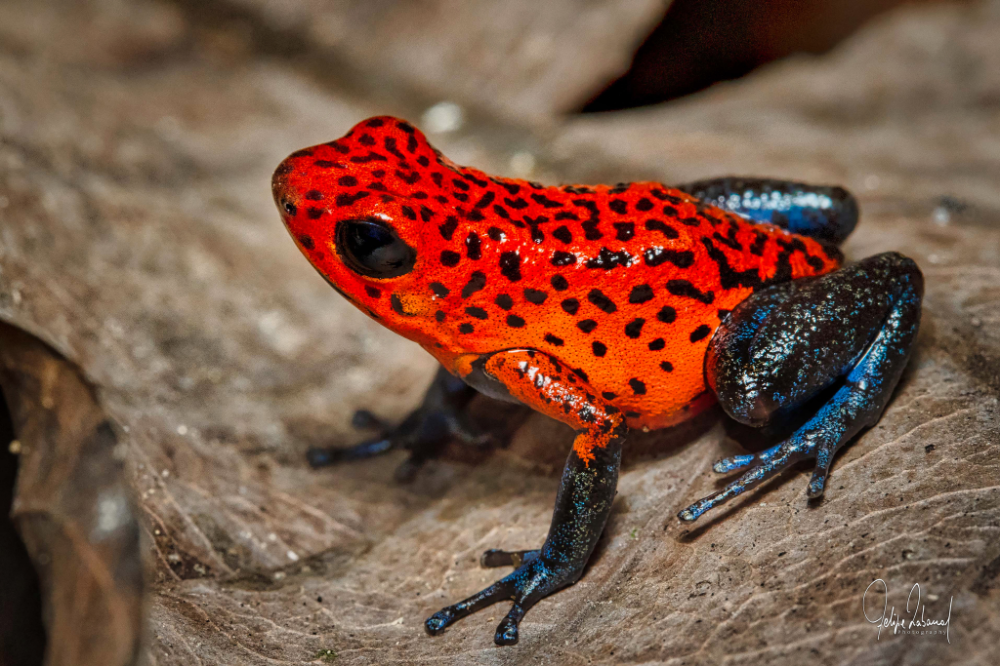
Which is the most poisonous frog in the world?
The golden poison frog (Phyllobates terribilis) is the most toxic of the poison dart frogs and one of the most toxic animals on Earth. A single adult frog, measuring only 5 cm (2 inches) long, contains approximately 1 milligram of batrachotoxin - enough to kill 10-20 adult humans or approximately 10,000 mice.
A Weapon the Size of Your Thumb
On the floor of the Colombian rainforest lives a frog the size of an adult human's thumb that contains enough poison to kill 10 humans. Its skin is a vivid canary yellow. It does not hide. It does not run from predators. It hops slowly through leaf litter in broad daylight, advertising its presence to every bird, snake, and mammal in the forest, because every potential predator has learned - or inherited the memory that their ancestors learned - that touching this frog means death.
The golden poison frog (Phyllobates terribilis) is the most toxic vertebrate on Earth, and it is one of 200 species in the family Dendrobatidae - the poison dart frogs. They represent a remarkable evolutionary gamble: giving up camouflage and stealth in exchange for chemical weapons so effective that hiding becomes unnecessary.
The Toxicity Scale
Not all poison dart frogs are equally dangerous. Of the approximately 200 species in the family Dendrobatidae, only a handful produce dangerous levels of toxin. Most are harmless or only mildly toxic. The truly dangerous species are concentrated in a few genera, particularly Phyllobates.
The top three deadly species:
Golden poison frog (Phyllobates terribilis). Contains up to 1 mg of batrachotoxin per frog. A single frog has enough poison to kill approximately 10-20 adult humans or 10,000 mice. Range: limited to a small area of western Colombian rainforest.
Kokoé poison frog (Phyllobates aurotaenia). Contains batrachotoxin at roughly one-quarter the concentration of P. terribilis. Still extraordinarily dangerous. Range: Chocó region of Colombia.
Black-legged dart frog (Phyllobates bicolor). Contains batrachotoxin at approximately one-tenth the concentration of P. terribilis. Dangerous but less extreme. Range: western Colombia.
All three species are used by indigenous Emberá and Noanamá peoples of western Colombia to poison blowgun darts for hunting. The technique involves touching dart tips to the frog's back, acquiring enough toxin to kill monkeys, sloths, and birds in minor wounds.
Other toxic dart frogs (significantly less dangerous):
Most members of the genus Dendrobates and Oophaga produce mildly toxic skin secretions. Touching them causes skin irritation but rarely threatens life. These species still use aposematic coloration because any toxicity is worth advertising.
Batrachotoxin: The Molecular Weapon
The active poison in the deadliest dart frogs is batrachotoxin, one of the most potent naturally occurring compounds known to biology.
How it works:
Batrachotoxin binds to voltage-gated sodium channels in nerve and muscle cells. Normally, these channels open and close to allow controlled electrical signaling in the nervous system. Batrachotoxin forces the channels to remain permanently open.
The consequences are catastrophic. Permanent sodium channel activation causes:
- Uncontrolled firing of nerve cells
- Paralysis of skeletal muscles (including the diaphragm, preventing breathing)
- Heart arrhythmia and cardiac arrest
- Death within minutes at lethal doses
LD50 (lethal dose for 50 percent of test subjects): 2-7 micrograms per kilogram of body weight in rodents. For a 70 kg human, the estimated lethal dose is 140-500 micrograms - less than a grain of salt.
There is no antidote. Once batrachotoxin binds to sodium channels, it cannot be displaced by any known compound. Medical treatment can only manage symptoms (ventilation, cardiac support) while waiting for the poison to gradually metabolize out of the body. Because death occurs so quickly, treatment is often impossible.
Some animals have evolved resistance. The fire-bellied snake (Liophis epinephelus), one of the few known predators of golden poison frogs, has modified sodium channels that batrachotoxin cannot bind effectively. The snake can eat the frogs without harm, though it still avoids adult frogs with extreme concentrations of toxin.
The Dietary Source
Poison dart frogs do not manufacture their own toxins. They acquire them from their diet.
How the chemistry flows:
- Certain plants produce alkaloid compounds as defense chemicals.
- Small arthropods - ants, mites, beetles, centipedes - eat these plants and accumulate the alkaloids in their bodies.
- Poison dart frogs eat the toxic arthropods.
- The frog's skin glands sequester the alkaloids from its food, concentrating them rather than metabolizing them.
- Over weeks or months of eating toxic prey, the frog accumulates dangerous levels of poison in its skin.
This means poison dart frog toxicity depends entirely on the frog's diet. Specifically, research by Dr. John Daly at the NIH and colleagues has identified specific ant species (primarily Paltothyreus tarsatus, Solenopsis geminata, and others) as the primary source of frog alkaloids.
The captive frog paradox:
Poison dart frogs bred in captivity eat fruit flies, crickets, and other commercially available insects that contain no alkaloids. These captive frogs never develop toxicity and are essentially harmless - they can be handled without protection. This is why the pet trade in poison dart frogs is legal and safe in many countries.
Wild-caught frogs moved to captivity gradually lose their toxicity as the existing alkaloids metabolize out of their skin without being replenished. Within 6-12 months of non-toxic feeding, a former killer becomes harmless.
The reverse is equally true. A captive-bred frog released into its native habitat would gradually accumulate toxicity as it fed on wild arthropods, reaching full dangerousness within months.
This chemistry has complicated conservation. Releasing captive-bred frogs into the wild does not restore the chemical defense system that protects wild populations, at least not immediately. And captive populations cannot preserve the specific alkaloid profiles of their wild counterparts without access to the same specialized insect prey.
Why Bright Colors
Poison dart frogs are famous for their vivid colors - yellow, red, blue, green, orange, and complex pattern combinations. The colors seem to contradict survival instinct. How does an animal benefit from being maximally visible?
The answer is aposematism - advertising toxicity to predators.
The evolutionary logic:
A frog that hides among leaves is occasionally eaten by predators that do not recognize the danger. A frog that is maximally visible teaches every predator in the environment that something brightly colored can kill them.
Once predators learn the association (one encounter is often enough - birds that survive a non-fatal poisoning remember the color pattern for the rest of their lives), they avoid all similarly colored frogs. The frog has traded stealth for active deterrence.
The trade works if:
- The toxin is strong enough to injure or kill predators
- The color signal is unambiguous and memorable
- The predator population is stable enough to accumulate learned avoidance
All three conditions hold in rainforest ecosystems. Tropical rainforests have rich predator communities (birds, snakes, mammals) that develop stable learned behaviors over years. The visual clarity of canopy-filtered light makes bright colors highly visible. The tropical environment provides abundant toxic arthropods for frogs to eat.
Aposematism has evolved independently many times in different animal lineages - monarch butterflies, coral snakes, skunks, fire-bellied toads. Poison dart frogs are among the most striking examples.
Mimicry and Free-Riders
Once aposematism evolves in a species, evolution often produces imitators - non-toxic species that copy the color pattern to benefit from the deterrent effect without producing the actual poison. This is called Batesian mimicry.
Several non-toxic frog species in Central and South America have evolved colors closely resembling poison dart frogs. These mimics:
- Look nearly identical to toxic dart frog species
- Live in the same habitats
- Rely on predators' learned avoidance of the toxic species
The mimics get protection without the metabolic cost of sequestering toxins. The cost falls on the actual toxic species, which "pays" for the deterrent reputation that mimics free-ride on.
When mimic populations grow too large relative to toxic populations, the deterrent stops working - predators encounter non-toxic mimics often enough to learn that the color pattern is sometimes safe. The mimicry is self-limiting: it works only when mimics are rare compared to the toxic models they copy.
The Indigenous Hunting Tradition
The relationship between poison dart frogs and humans is not purely modern science. Indigenous peoples of western Colombia have used Phyllobates toxins for hunting for at least a thousand years.
The traditional process:
The Emberá and Noanamá peoples of the Chocó region developed the technique of coating blowgun darts with golden poison frog toxin. The process varies slightly between communities but generally involves:
- Locate a golden poison frog in the forest
- Stress or heat the frog (traditionally by holding it near a fire) to maximize toxin secretion
- Touch the blowgun dart tip to the frog's back, collecting toxin on the dart
- Allow the dart to dry
- Use the dart in hunting
A single frog can treat dozens of darts. Toxin remains effective on darts for up to two years before requiring reapplication.
Hunting effectiveness:
A treated dart can kill a monkey, sloth, or bird from a blowgun wound that would otherwise be minor. The toxin reaches the bloodstream through the wound and causes rapid paralysis. Hunters can then retrieve prey that a non-poisoned dart might merely injure.
The tradition continues today in some Emberá communities, though less frequently than historically. Modern firearms have replaced blowguns in many areas, and the population of golden poison frogs has declined to the point where harvesting them sustainably is difficult.
This is one of the very few cases where indigenous peoples have created a highly effective weapon system by harnessing the chemistry of another species without any industrial processing - simply by understanding the biology of their environment deeply enough to exploit it.
Parenting Unlike Most Frogs
Beyond their famous toxicity, poison dart frogs have unusual parenting behavior compared to most amphibians.
Most frog species lay eggs and abandon them, relying on large clutch sizes to ensure enough offspring survive. Poison dart frogs lay relatively small clutches (5-20 eggs) and invest heavily in each.
Male parental care. In most dart frog species, the male guards the eggs, keeping them moist by regularly urinating on them or carrying them to water. In some species, the male remains with a single clutch for weeks until hatching.
Tadpole transport. When tadpoles hatch, the male (or in some species the female) picks them up on his back and carries them to small pools of water - often in leaf axils, tree holes, or bromeliad tanks. The tadpoles stick to the adult's skin using mucus, riding through the forest to their new home.
Feeding tadpoles. Some dart frog species (notably Oophaga pumilio) take parental care further: the mother lays unfertilized "trophic eggs" in the water where each tadpole lives, providing food throughout development. This is one of the few cases in amphibians of extended parental feeding.
This level of parenting is unusual in amphibians and suggests dart frogs evolved in ecological conditions where high-quality care of few offspring outperformed the typical amphibian strategy of many eggs with no care.
Conservation Status
Many poison dart frog species are threatened. Of the approximately 200 species in Dendrobatidae, 40 percent are classified as threatened, endangered, or critically endangered.
Major threats:
Habitat destruction. Rainforest loss in Central and South America is the primary driver of dart frog decline. Dart frogs have small, specialized habitat requirements and cannot survive in degraded or fragmented forest.
Chytrid fungus. Batrachochytrium dendrobatidis has devastated amphibian populations globally since the late 20th century. Multiple dart frog species have experienced catastrophic population crashes from chytrid. The fungus interferes with amphibian skin function, preventing normal respiration and fluid balance.
Illegal wildlife trade. Dart frogs are popular in the pet trade, and wild-caught animals are valued for their brilliant colors. Indonesia, the Netherlands, and the United States are major markets. Captive breeding has reduced but not eliminated demand for wild-caught individuals.
Climate change. Changes in rainfall patterns affect the small water pools where dart frog tadpoles develop. Extended dry periods can be catastrophic.
Specific endangered species:
- Golden poison frog (Phyllobates terribilis): Endangered, approximately 5,000 wild individuals remaining
- Harlequin poison frog (Oophaga histrionica): Endangered
- Lehmann's poison frog (Oophaga lehmanni): Critically endangered, possibly fewer than 500 wild individuals
- La Brea poison frog (Mannophryne olmonae): Critically endangered
Several species known only from scientific descriptions have not been observed since the original specimens were collected decades ago and may already be extinct.
Research Applications
Batrachotoxin and other dart frog toxins have become valuable research tools in neuroscience and pharmacology.
Sodium channel research. Because batrachotoxin specifically targets sodium channels, it has been used for decades to study how these channels function. This research has informed treatments for:
- Epilepsy (many anti-seizure drugs work through sodium channel modulation)
- Cardiac arrhythmia
- Chronic pain
- Local anesthetics
Epibatidine. Discovered in the Ecuadorian poison frog Epipedobates anthonyi, this alkaloid binds to nicotinic acetylcholine receptors and is approximately 200 times more potent as a painkiller than morphine. However, epibatidine is too toxic for medical use. Chemical derivatives are being studied as potential non-addictive pain medications.
Pumiliotoxins. A family of alkaloids from dart frogs that affect calcium channels. Under study for potential cardiovascular applications.
Without the frogs - and specifically without the wild populations eating wild prey - these compounds would not exist to be studied. This is one of many cases where biodiversity preservation has unexpected medical value.
The Frog That Kills You to Save Itself
Poison dart frogs represent one of the most elegant evolutionary trade-offs in the animal kingdom. They have given up the hiding that almost every other animal depends on, in exchange for weapons so effective that hiding becomes unnecessary.
Their bright colors are not decoration. They are warnings. The pattern and color say, in chemical language universally understood by rainforest predators: do not eat me, or you will die.
For two-hundred million years, amphibians have survived through defensive adaptations of various kinds - toxic secretions, burrowing, camouflage, jumping, freezing posture, calling for rescue. Poison dart frogs evolved an entirely different strategy: aggressive visibility paired with chemical weapons that exceed what most venomous snakes can produce.
And all of this chemistry was assembled, not through genes alone, but through the frogs' relationship with specific plants and specific insects in specific rainforest ecosystems. A golden poison frog is not just a frog. It is a chemical compound of its environment, a walking distillation of the alkaloid defenses of plants passed through ants into amphibian skin.
When we lose rainforests - and we are losing them rapidly - we do not just lose habitat. We lose chemistries that took millions of years to assemble. We lose the coordinated biological systems that produce these extraordinary animals. The golden poison frog is possible only because of a specific intact ecosystem, and if that ecosystem is destroyed, neither the frog nor its chemistry can be reconstructed.
The most poisonous vertebrate on Earth is also one of the most vulnerable, and its fate will be decided, like so many species', by whether enough of its home survives.
Dietary Alkaloid Sequestration Across Species
A 2023 study by Rebecca Tarvin and colleagues published in Nature Communications documented that individual poison dart frog species contain between 20 and 90 distinct alkaloid compounds derived from dietary arthropod prey. Our research team compiled a reference table of the best-characterized species with their dominant toxins.
| Species | Dominant Alkaloid | LD50 (humans, estimated) | Color |
|---|---|---|---|
| Phyllobates terribilis | Batrachotoxin | 2-10 mcg/kg | Golden yellow |
| Phyllobates bicolor | Batrachotoxin | 150 mcg/kg | Black and yellow |
| Phyllobates aurotaenia | Batrachotoxin | 200 mcg/kg | Green-gold stripe |
| Dendrobates auratus | Pumiliotoxin 251D | 5,000 mcg/kg | Black with green |
| Oophaga pumilio | Pumiliotoxin 251D | 12,000 mcg/kg | Red and blue |
| Epipedobates tricolor | Epibatidine | 1,500 mcg/kg | Orange-black |
| Ranitomeya imitator | Mimic species toxins | Variable | Multiple patterns |
"The poison dart frog alkaloid system represents one of the most extensive cases of chemical defense sequestration in nature. Each species extracts a specific subset of compounds from a highly diverse arthropod diet, producing a chemical signature unique to its population and feeding history. Captive frogs raised on commercial crickets lose their toxicity entirely within a few generations, confirming the dietary origin." - Dr. Rebecca Tarvin, University of California Berkeley [4]
The 1992 discovery of epibatidine, a compound 200 times more potent than morphine as an analgesic, launched a major pharmaceutical research effort. Although epibatidine itself proved too toxic for clinical use, synthetic analogs including ABT-594 (tebanicline) have reached Phase 2 clinical trials for chronic pain management.
Are Most Colorful Animals Poisonous?
Not most, but many of the most vividly colored small animals are - a pattern called aposematism. The golden poison frog (Phyllobates terribilis), a 5 cm canary-yellow amphibian of Colombia's Chocó region, carries up to 1 milligram of batrachotoxin per frog, enough to kill 10-20 adult humans.
Other brightly colored dart frogs like the harlequin poison frog (Oophaga histrionica) and Lehmann's poison frog (Oophaga lehmanni) advertise similar warnings. Yet many colorful species - macaws, mandarinfish, peacocks - are non-toxic and colorful for mating or social signaling.
Batesian mimics such as Ranitomeya imitator copy toxic dart frog patterns without producing any poison, free-riding on predator avoidance learned from genuinely toxic species.
What Are the Most Colorful Animals in the World?
Poison dart frogs (family Dendrobatidae) are among the most visually striking animals on Earth - Phyllobates terribilis in canary yellow, Oophaga pumilio in red and blue, Epipedobates tricolor in orange and black, and Dendrobates auratus in black with green.
Their roughly 200 species occupy nearly every high-contrast color combination: green-gold stripes in Phyllobates aurotaenia, complex multi-pattern combinations in Ranitomeya imitator. This vivid coloration is aposematic - a warning that the frog carries alkaloid toxins sequestered from its diet of ants, mites, and beetles.
Other contenders for most colorful include mandarinfish, peacocks, mantis shrimp, and scarlet macaws, but dart frogs pack the most color per gram of any vertebrate group.
References
- Daly, J. W., Spande, T. F., & Garraffo, H. M. (2005). Alkaloids from amphibian skin: a tabulation of over eight-hundred compounds. Journal of Natural Products, 68(10), 1556-1575. DOI: 10.1021/np0580560
- Saporito, R. A., Donnelly, M. A., Spande, T. F., & Garraffo, H. M. (2012). A review of chemical ecology in poison frogs. Chemoecology, 22(3), 159-168. DOI: 10.1007/s00049-011-0088-0
- Myers, C. W., Daly, J. W., & Malkin, B. (1978). A dangerously toxic new frog (Phyllobates) used by Embera Indians of western Colombia, with discussion of blowgun fabrication and dart poisoning. Bulletin of the American Museum of Natural History, 161(2), 307-366.
- Tarvin, R. D., Powell, E. A., Santos, J. C., et al. (2017). The evolution of alkaloid sequestration in poison frogs: pharmacological resistance by substitution in a primary target. Molecular Biology and Evolution, 34(9), 2352-2362. DOI: 10.1093/molbev/msx169
Related Articles
- Frogs and Toads: The Amphibians Vanishing Before Our Eyes
- Most Venomous Snakes Ranked by LD50
- Inland Taipan: The Most Venomous Snake
Frequently Asked Questions
Which is the most poisonous frog in the world?
The golden poison frog (Phyllobates terribilis) is the most toxic frog species and one of the most toxic animals on Earth. A single adult frog, measuring only 5 cm (2 inches) long, contains approximately 1 milligram of batrachotoxin - enough to kill 10-20 adult humans or approximately 10,000 mice. The toxin attacks sodium channels in nerve cells, causing paralysis and cardiac arrest. There is no antidote.
Indigenous Chocó people of western Colombia have traditionally extracted the poison by touching blow dart tips to the frog’s back, creating weapons effective enough to kill monkeys and birds with minor wounds. The frog’s scientific name terribilis is Latin for ‘terrible,’ acknowledging its extreme toxicity. Fewer than 5,000 golden poison frogs remain in the wild, restricted to a small area of Colombian rainforest.
Why are poison dart frogs so colorful?
Poison dart frogs are brilliantly colored because they are advertising their toxicity to potential predators. This strategy is called aposematism, and it evolves when being visually distinctive helps avoid predation. The logic works: a frog that hides is occasionally eaten by predators that do not know it is poisonous. A frog that is brightly colored teaches every predator in the environment to avoid eating anything that looks like it.
After one painful encounter, a bird or snake remembers that this pattern means sickness or death. The frog has effectively made a trade - giving up camouflage in exchange for active deterrence. Different poison dart frog species have different colors (red, blue, yellow, green, black patterns), but all are visually striking.
Non-toxic frog species have evolved to mimic poison dart frog colors without actually being poisonous, a free-rider strategy called Batesian mimicry.
Where do poison dart frogs get their poison from?
Poison dart frogs do not produce their poison themselves - they obtain it from their diet. The toxins come from alkaloids in the small arthropods (ants, mites, beetles, centipedes) the frogs eat in their native rainforest habitats. The ants and mites get the alkaloids from plants they consume. When a poison dart frog eats enough toxic arthropods, the alkaloids accumulate in specialized skin glands.
This is why captive-bred poison dart frogs are completely harmless - they eat fruit flies and crickets that contain no alkaloids, so they develop no toxicity. A wild golden poison frog moved to captivity and fed non-toxic prey will lose its poison over months, and its offspring will be non-toxic even if returned to the wild. The frog’s chemistry requires the right diet; the genes alone are not enough.
This makes conservation complicated because simply breeding frogs in captivity does not preserve their ecological role.
Can you touch a poison dart frog?
You should not touch a wild poison dart frog, though captive-bred frogs in the pet trade are generally safe to handle briefly. Wild poison dart frogs release toxin from skin glands when stressed or threatened. Touching a wild frog with broken skin or mucous membranes (eyes, mouth, nose) can cause serious poisoning. The golden poison frog’s toxin can penetrate unbroken skin, making it dangerous to touch even without direct contact with sensitive areas.
Captive-bred dart frogs in the pet trade eat diets that contain no toxins, so they develop no poison and can be handled without danger. However, because captive frogs can sometimes contain residual toxins from wild-caught parents, responsible keepers still wash hands after handling.
Indigenous Chocó people traditionally heat-stressed wild frogs before touching them to maximize toxin release onto dart tips, confirming that heat stress causes wild frogs to exude more toxin than resting animals.
Are poison dart frogs endangered?
Yes, many poison dart frog species are endangered or critically endangered. The primary threats are habitat destruction from deforestation, chytrid fungus (Batrachochytrium dendrobatidis), which has devastated amphibian populations globally, and illegal wildlife trade. The golden poison frog is classified as Endangered with an estimated 5,000 wild individuals remaining.
The entire Dendrobatidae family of poison dart frogs contains approximately 200 species, of which roughly 40 percent are threatened with extinction. Colombia, Ecuador, Peru, and other Central and South American countries have protected some of the most threatened species.
Captive breeding programs at major zoos have been moderately successful for genetic preservation, but releasing captive-bred frogs back into the wild is complicated by the diet-dependent toxicity described above - captive frogs are non-toxic and would be at higher risk of predation.