
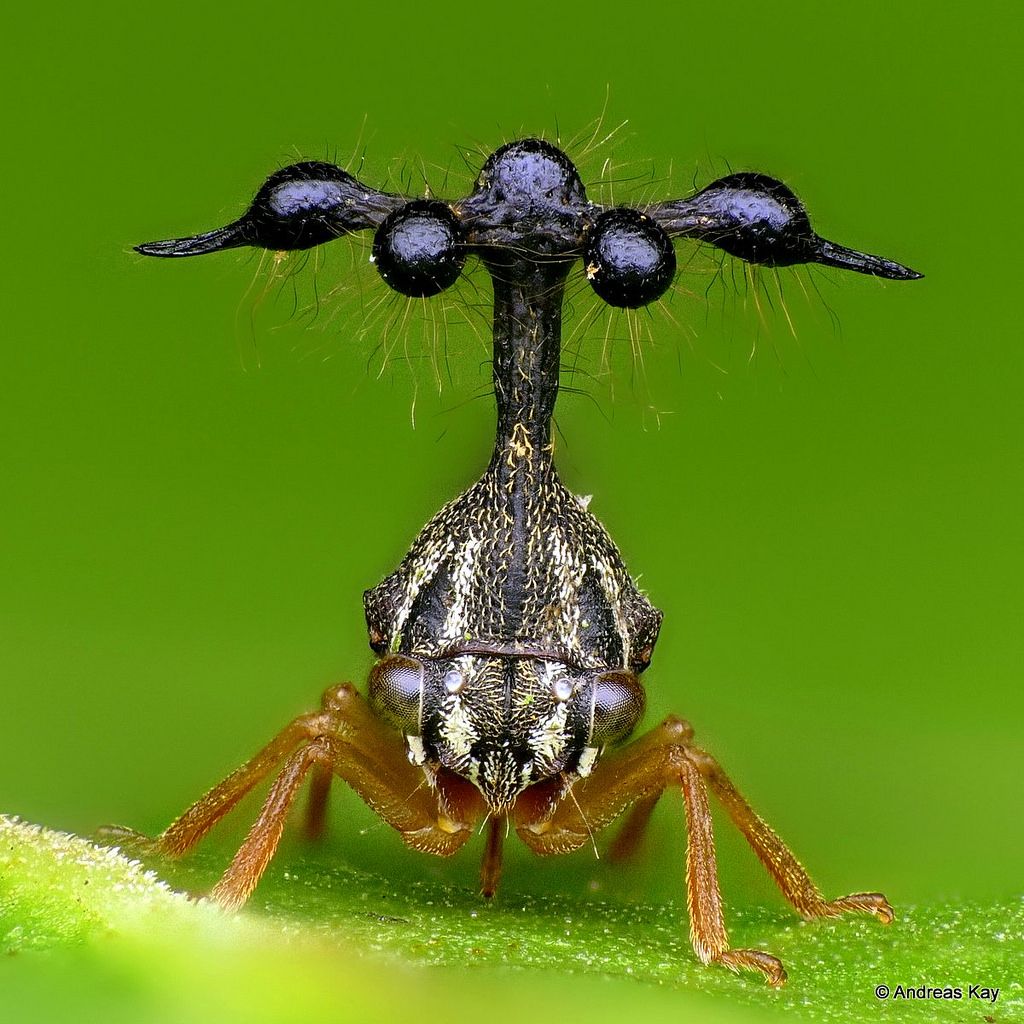
Quick Answer: Bocydium globulare, known as the Brazilian treehopper, is a small, highly distinctive insect native to South America. Recognized for its unusual globular appendages that resemble tiny spheres mounted on stalks, this species is a member of the Membracidae family. Its bizarre appearance has intrigued entomologists and inspired the nickname “helicopter insect.” The function of its ornate structures remains a subject of scientific inquiry, with hypotheses including predator deterrence and camouflage.
The Brazilian treehopper stands out in the insect world for its extraordinary morphology. Its spherical appendages, which look like miniature balloons or orbs on stilts, have made it a frequent subject of fascination in both scientific circles and popular media. These structures are not found in most other insects, making Bocydium globulare a prime example of evolutionary novelty.
Despite its small size, typically less than a centimeter long, this treehopper draws attention wherever it is found in the forests of Brazil and neighboring regions. The insect’s peculiar form has sparked debates about the evolutionary pressures that could have led to such an adaptation.
Unlike many insects that rely on cryptic coloration or mimicry, the Brazilian treehopper’s ornamentation is overt and conspicuous. This raises questions about its ecological role and the selective advantages conferred by its unique appearance. Some researchers propose that the globular structures may serve to confuse predators, while others suggest they could play a role in intraspecific communication.
The lack of direct evidence for these functions highlights the ongoing mysteries in the study of insect adaptations. The Brazilian treehopper’s life cycle, feeding habits, and interactions with host plants are also areas of active research, contributing to a growing body of knowledge about Neotropical biodiversity.
Taxonomy and Defining Features of Bocydium globulare
Bocydium globulare is a species of treehopper in the family Membracidae, which is characterized by its elaborate pronotal extensions. The genus Bocydium is distinguished by the presence of globular, stalked appendages on the pronotum, a trait that sets it apart from other membracid genera. These appendages are not functional limbs but are instead rigid, chitinous outgrowths.
Bocydium globulare was first described in the 19th century and has since become an iconic example of morphological diversity within the Hemiptera order.
The term Membracidae refers to a family of sap-sucking insects within the order Hemiptera, known for their often exaggerated and ornate pronotal structures. In Bocydium globulare, these structures take the form of several spherical bulbs mounted on thin stalks, which arch over the insect’s body. The species is sometimes referred to as the “helicopter insect” due to the resemblance of its appendages to rotor blades.
This unique morphology is not only visually striking but also taxonomically significant, aiding in the identification and classification of the species among entomologists.
The defining features of Bocydium globulare include:
- A small, compact body usually measuring 5–7 mm in length
- Multiple globular, chitinous spheres mounted on rigid stalks extending from the pronotum
- Short, robust legs adapted for clinging to plant stems
- A cryptic coloration that ranges from brown to olive, providing some camouflage among twigs and leaves
Key Insight: The globular appendages of Bocydium globulare are unique among treehoppers and are not found in any other insect family, making this species a subject of evolutionary and ecological interest.
For more detailed taxonomic information, see the Wikipedia page on Bocydium globulare and the Britannica entry on treehoppers.
Evolutionary Origins and Adaptive Significance
The evolutionary origins of Bocydium globulare’s distinctive globular appendages are a subject of ongoing scientific debate. These structures are believed to have evolved as a result of selective pressures unique to the Neotropical ecosystems where the species is found. Unlike the simple, helmet-like pronota of many treehoppers, Bocydium globulare’s appendages are elaborate and seemingly non-functional, prompting questions about their adaptive value.
One leading hypothesis suggests that the appendages serve as a form of predator deterrence. The globular structures may mimic the appearance of fungal growths or galls, making the insect less appealing to visually oriented predators such as birds and lizards.
Alternatively, the appendages could act as a form of disruptive camouflage, breaking up the outline of the insect’s body and making it harder for predators to recognize it as prey. This concept is supported by the observation that many treehoppers exhibit a wide range of pronotal modifications, often correlated with their ecological niches.
Another possibility is that the globular appendages play a role in intraspecific communication. In some membracid species, pronotal structures are used in visual displays during courtship or territorial disputes. While direct evidence for this function in Bocydium globulare is lacking, the conspicuousness of the appendages suggests they may have a signaling role within the species.
This would be consistent with the broader trend in the Membracidae family, where pronotal ornamentation is often linked to social behaviors.
Key Takeaway: The adaptive significance of Bocydium globulare’s globular appendages remains unresolved, but leading theories include predator deterrence, camouflage, and intraspecific signaling.
The evolutionary pathway that led to such extreme morphological novelty is likely complex, involving a combination of genetic drift, sexual selection, and ecological specialization. Comparative studies of related treehopper species provide valuable insights into how such traits can arise and persist in natural populations. For a broader context on insect evolution, see Britannica’s article on insect evolution.
Life Cycle and Reproductive Behavior
The life cycle of Bocydium globulare follows the typical pattern of hemipteran insects, with distinct egg, nymph, and adult stages. Females lay eggs on the stems or leaves of host plants, often in concealed locations to reduce the risk of predation. The eggs hatch into nymphs, which resemble miniature adults but lack fully developed pronotal appendages. As the nymphs grow, they undergo several molts, gradually acquiring the characteristic globular structures that define the adult form.
Hemimetabolous development is the process by which insects like Bocydium globulare transition from nymph to adult without a pupal stage. This contrasts with holometabolous insects, such as butterflies, which undergo complete metamorphosis. The nymphal stages are critical for growth and the gradual emergence of adult features, including the ornate pronotum. The duration of each stage can vary depending on environmental conditions such as temperature, humidity, and food availability.
Reproductive behavior in Bocydium globulare is not as well-studied as in some other treehopper species. However, it is likely that adults engage in mate-finding behaviors facilitated by chemical and possibly visual cues. In many membracids, males use vibrational signals transmitted through plant stems to attract females, a strategy that may also be employed by Bocydium globulare.
The role of the globular appendages in courtship displays remains speculative but is a potential area for future research.
- Egg-laying typically occurs on the underside of leaves or in plant crevices
- Nymphs feed on plant sap, using specialized mouthparts to pierce vascular tissue
- Adults are sedentary and spend most of their lives on or near their host plants
The reproductive strategies of treehoppers are shaped by their interactions with host plants and natural enemies. For a detailed overview of insect reproductive strategies, consult the University of Florida’s entomology resources.
Ecological Role and Interactions with Host Plants
Bocydium globulare, like other treehoppers, is a phytophagous insect, meaning it feeds on plant sap. It primarily inhabits the understory and mid-canopy of tropical forests, where it selects specific host plants for feeding and reproduction. The choice of host plant is critical, as it influences the insect’s survival, development, and reproductive success.
Treehoppers use their piercing-sucking mouthparts to tap into the phloem of plants, extracting nutrients necessary for growth. This feeding activity can have a range of effects on the host plant, from minor damage to more significant impacts if populations are high.
In some cases, treehopper feeding may induce the formation of galls or other plant responses, although Bocydium globulare is not known to cause extensive harm. The relationship between treehoppers and their host plants is often mediated by chemical cues, which guide egg-laying and nymphal development.
Ecological Insight: Bocydium globulare plays a role in the energy flow of tropical ecosystems by transferring plant-derived nutrients to higher trophic levels, including predators and parasitoids.
In addition to their direct interactions with plants, treehoppers are often involved in mutualistic relationships with ants. Some species secrete honeydew, a sugary waste product that attracts ants, which in turn provide protection from predators.
While there is limited evidence of such associations in Bocydium globulare, the potential for mutualism remains an area of interest for ecologists studying Neotropical insect communities. For more on plant-insect interactions, see Britannica’s entry on plant-insect relationships.
Defensive Strategies and Predator Avoidance
The bizarre appearance of Bocydium globulare is widely interpreted as a defensive adaptation. The globular appendages may serve to confuse or deter potential predators by making the insect appear unpalatable or difficult to handle. In the dense, visually complex environment of the rainforest, such adaptations can be crucial for survival.
Predators of treehoppers include birds, spiders, and predatory insects. The globular structures of Bocydium globulare may mimic inedible objects such as fungal spores or plant galls, reducing the likelihood of attack. Alternatively, the appendages could function as a form of Batesian mimicry, where a harmless species evolves to resemble something distasteful or dangerous.
The effectiveness of these defenses is difficult to quantify, but the persistence of such traits in the population suggests a selective advantage.
- Disruptive camouflage: The appendages break up the insect’s outline
- Mimicry: Resemblance to inedible or harmful objects
- Behavioral defenses: Remaining motionless when threatened
Key Takeaway: The defensive strategies of Bocydium globulare are multifaceted, combining morphological, behavioral, and possibly chemical mechanisms to reduce predation risk.
Comparative studies with other treehopper species indicate that pronotal modifications are often associated with reduced predation rates. For a broader discussion of mimicry and defensive adaptations in insects, see the Wikipedia article on mimicry.
Distribution and Habitat Preferences
Bocydium globulare is native to the tropical and subtropical forests of South America, with a range that includes Brazil, parts of the Amazon Basin, and neighboring countries. The species is most commonly found in humid, shaded environments where host plants are abundant. Its distribution is patchy, reflecting the availability of suitable microhabitats and host plant species.
The preferred habitat of Bocydium globulare includes the understory and lower canopy of primary and secondary forests. The insect’s small size and cryptic coloration make it difficult to detect, contributing to the scarcity of detailed distribution data. However, field observations suggest that the species is locally common in areas with high plant diversity and minimal disturbance.
- Found in Brazil, Peru, Ecuador, and other Amazonian countries
- Inhabits forest edges, clearings, and areas with dense understory vegetation
- Sensitive to habitat loss and fragmentation due to deforestation
The conservation status of Bocydium globulare has not been formally assessed by the IUCN, but habitat destruction in the Amazon poses a potential threat to its populations. For more information on the Amazon rainforest and its biodiversity, refer to Britannica’s overview of the Amazon Rainforest.
Comparative Morphology: Bocydium globulare and Other Treehoppers
The Membracidae family is renowned for its morphological diversity, with species exhibiting a wide range of pronotal modifications. Bocydium globulare is exceptional even within this group, as its globular appendages are unlike the spines, horns, or helmet-like structures seen in other treehoppers. Comparative analysis highlights the evolutionary plasticity of the pronotum in this family.
| Species | Pronotal Structure | Geographic Range | Distinctive Features |
|---|---|---|---|
| Bocydium globulare | Globular stalked spheres | Brazil, Amazon Basin | Unique globular appendages |
| Membracis mexicana | Flat, shield-like helmet | Central America | Broad, flattened pronotum |
| Umbonia crassicornis | Large, horn-like spine | South America | Prominent dorsal horn |
| Enchenopa binotata | Simple, rounded helmet | North America | Host-plant specialization |
Comparative Insight: Bocydium globulare’s morphology represents an extreme form of pronotal modification, illustrating the evolutionary flexibility and adaptive potential of treehoppers.
This diversity is thought to be driven by a combination of ecological factors, including predator pressure, host plant availability, and sexual selection. The study of comparative morphology in treehoppers provides valuable insights into the mechanisms of evolutionary innovation in insects.
Human Perceptions and Scientific Curiosity
The striking appearance of Bocydium globulare has made it a subject of fascination not only for entomologists but also for the general public. Images of the insect frequently circulate on social media, often accompanied by speculation about its origins and function. The nickname “helicopter insect” reflects the imaginative responses elicited by its globular appendages.
From a scientific perspective, Bocydium globulare exemplifies the importance of curiosity-driven research in biology. The species challenges conventional ideas about form and function, prompting new questions about the limits of adaptation and the diversity of life. Its unusual morphology serves as a reminder that evolution can produce solutions that are both effective and aesthetically remarkable.
Key Reflection: The Brazilian treehopper’s bizarre form underscores the value of studying even the most obscure organisms, as they can reveal fundamental principles of evolution and adaptation.
Educational institutions and museums often use Bocydium globulare as an example in exhibits about biodiversity and evolutionary biology. Its popularity in science communication highlights the role of charismatic microfauna in fostering public interest in conservation and natural history.
Ongoing Mysteries and Future Research Directions
Despite decades of study, many aspects of Bocydium globulare’s biology remain poorly understood. The precise function of its globular appendages, the details of its reproductive behavior, and its interactions with other species are all areas ripe for further investigation. Advances in imaging technology, molecular genetics, and field ecology are likely to shed new light on these questions in the coming years.
- What selective pressures maintain the globular appendages in wild populations?
- How do nymphs and adults communicate, and what role do visual signals play?
- Are there undiscovered mutualistic relationships with ants or other insects?
Research Outlook: Continued study of Bocydium globulare promises to enhance our understanding of adaptation, speciation, and the complexity of tropical ecosystems.
The species serves as a model for exploring the interplay between form, function, and environment in the evolution of insect diversity. As new discoveries emerge, Bocydium globulare will likely remain a touchstone for discussions about the limits of biological imagination.
The Enduring Fascination of the Brazilian Treehopper
Bocydium globulare endures as one of the most visually arresting insects in the world. Its globular appendages, while enigmatic, symbolize the power of natural selection to generate extraordinary forms. The species’ continued survival depends on the health of tropical forests, highlighting the connection between biodiversity and conservation.
As scientists probe deeper into the mysteries of Bocydium globulare, each new finding enriches our appreciation for the complexity of life. The Brazilian treehopper reminds us that even the smallest creatures can inspire wonder and drive scientific discovery. Its story is a testament to the endless possibilities of evolution and the importance of preserving the habitats that sustain such remarkable diversity.
Frequently Asked Questions
Why does Bocydium globulare have globular appendages?
The globular appendages likely serve as predator deterrents or camouflage, though their exact function remains under scientific investigation.
Are Brazilian treehoppers dangerous to humans or crops?
Brazilian treehoppers are harmless to humans and generally do not cause significant damage to crops or plants.
Where can Bocydium globulare be found in the wild?
Bocydium globulare is found in the tropical forests of Brazil and neighboring South American countries, mainly in humid, shaded habitats.
How large does the Brazilian treehopper grow?
The Brazilian treehopper typically measures between 5 and 7 millimeters in length as an adult.
What do Brazilian treehoppers eat?
Brazilian treehoppers feed on plant sap, using their specialized mouthparts to extract nutrients from host plants.
Do Brazilian treehoppers have any natural predators?
Yes, their predators include birds, spiders, and predatory insects, which their unique appendages may help deter.