
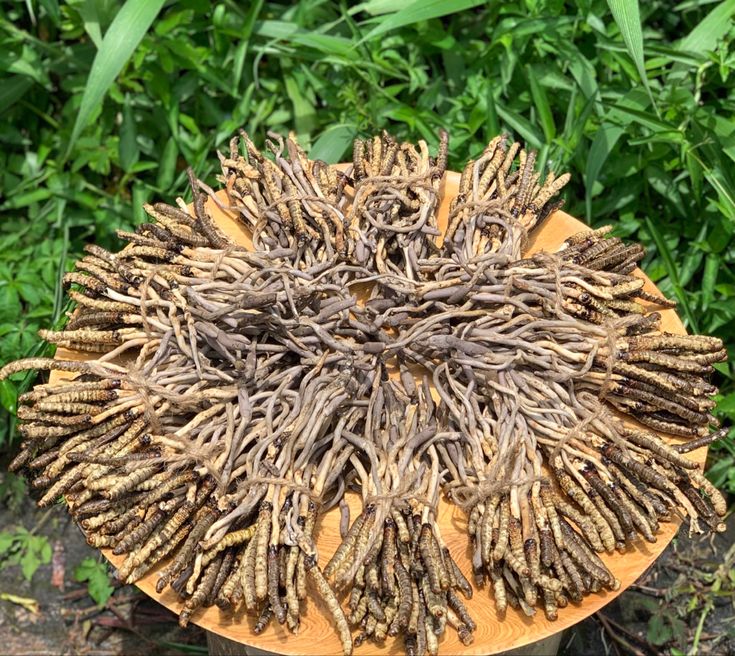
Quick Answer: Cordyceps unilateralis is a parasitic fungus known for infecting and manipulating the behavior of ants, particularly those in the Camponotini tribe. This so-called “zombie-ant fungus” compels its host to leave the colony, climb vegetation, and attach itself before dying, allowing the fungus to grow and release spores. The life cycle of Cordyceps unilateralis demonstrates a remarkable example of host manipulation in nature.
Cordyceps unilateralis, often referred to as the “zombie-ant fungus,” has fascinated scientists and naturalists for over a century. Its ability to manipulate the behavior of its insect hosts, especially ants, has made it a subject of intense study in the fields of entomology, mycology, and evolutionary biology. The fungus is most commonly found in tropical forests, where it plays a significant role in shaping ant populations and, by extension, the broader ecosystem.
The fungus’s notoriety stems from its dramatic impact on the behavior and fate of infected ants. Once infected, ants abandon their normal routines, leaving the safety of their colonies to embark on a fatal climb up vegetation. There, the ant clamps onto a leaf or twig in a characteristic “death grip,” a behavior that maximizes the fungus’s chances of successful reproduction. This manipulation is so precise that it has been described as a form of “mind control.”
The life cycle of Cordyceps unilateralis is a complex interplay between parasite and host, involving chemical, physiological, and behavioral changes. The fungus’s ability to override the ant’s natural instincts has provided researchers with a unique window into the mechanisms of parasitic manipulation. As a result, Cordyceps unilateralis is not only a subject of biological curiosity but also a model for understanding the broader phenomenon of host-parasite interactions in nature.
The Biology of Cordyceps unilateralis
Cordyceps unilateralis is a species of parasitic fungus in the family Ophiocordycipitaceae, best known for infecting ants in tropical forest ecosystems. The fungus is part of the larger genus Ophiocordyceps, which contains many species that parasitize various insects and arthropods. Cordyceps unilateralis is highly specialized, targeting primarily ants of the Camponotini tribe, such as Camponotus leonardi.
The fungus begins its life cycle when spores land on the exoskeleton of a suitable ant host. The spores germinate, producing thread-like hyphae that penetrate the ant’s cuticle and begin to colonize its body. As the fungus proliferates inside the host, it consumes non-vital tissues, allowing the ant to remain alive and mobile for a significant portion of the infection. This strategy ensures that the ant can be manipulated to move to an optimal location for fungal reproduction.
Cordyceps unilateralis exhibits a remarkable degree of host specificity, with different strains adapted to infect specific ant species. This specialization is thought to result from co-evolution between the fungus and its hosts, leading to a finely tuned relationship. The fungus is not known to infect humans or vertebrates, and its effects are limited to certain insects.
The reproductive structure of Cordyceps unilateralis, known as the stroma, emerges from the back of the dead ant’s head or neck. This structure releases spores into the environment, where they can infect new hosts. The entire process, from infection to spore release, can take several weeks, depending on environmental conditions such as humidity and temperature. For further reading on the biology and taxonomy of this species, see the Wikipedia entry on Ophiocordyceps unilateralis.
Key Insight: Cordyceps unilateralis is a highly specialized parasite, with each fungal strain often adapted to a single ant species, highlighting the complexity of host-parasite co-evolution.
The Infection Process: From Spore to Zombie Ant
The infection process of Cordyceps unilateralis is a multi-stage phenomenon that begins with the dispersal of spores from the fungal stroma. These spores are sticky and adhere easily to the exoskeleton of passing ants. Once attached, the spore germinates and penetrates the ant’s cuticle using a combination of mechanical pressure and enzymatic degradation.
This initial stage is critical, as the ant’s immune system is capable of mounting a defense against many pathogens, but Cordyceps unilateralis has evolved strategies to evade or suppress these defenses.
After breaching the cuticle, the fungus invades the ant’s hemocoel (body cavity), where it proliferates as yeast-like cells. These cells consume the ant’s internal resources, but avoid vital organs to keep the host alive and mobile. During this period, the ant may exhibit subtle behavioral changes, such as leaving the colony or wandering erratically. These changes are believed to be the result of fungal metabolites affecting the ant’s nervous system.
The most dramatic phase of the infection occurs when the fungus induces the ant to climb vegetation and attach itself to the underside of a leaf or twig. This behavior, known as the “death grip,” is characterized by the ant biting down with its mandibles in a fixed position.
The location and orientation of the grip are highly specific, typically occurring at heights and microclimates optimal for fungal growth and spore dispersal. The ant then dies, and the fungus continues to grow, eventually producing the stroma that emerges from the ant’s body.
The entire infection process is finely tuned to maximize the reproductive success of Cordyceps unilateralis. The fungus’s ability to manipulate the host’s behavior is a striking example of extended phenotype, where the genes of one organism influence the phenotype of another. For a detailed review of the infection process and behavioral manipulation, refer to the Britannica entry on Cordyceps.
Behavioral Manipulation: How the Fungus Controls Its Host
One of the most extraordinary aspects of Cordyceps unilateralis is its capacity to manipulate the behavior of its ant hosts. This phenomenon, often described as “mind control,” has been the subject of extensive scientific investigation. The fungus does not simply kill its host; instead, it orchestrates a series of precise behavioral changes that culminate in the ant’s death at a location ideal for fungal reproduction.
The mechanisms underlying this behavioral manipulation are complex and not yet fully understood. Current research suggests that Cordyceps unilateralis produces a suite of bioactive compounds that interfere with the ant’s nervous system. These compounds may alter neurotransmitter levels, disrupt neural circuits, or modulate gene expression in the host’s brain.
Notably, the fungus does not invade the brain directly, but instead surrounds it, releasing chemicals that influence behavior from the outside.
Behavioral changes induced by the fungus include:
- Desertion of the ant colony
- Erratic wandering and disorientation
- Climbing to elevated positions on vegetation
- Biting down on leaves or twigs in the “death grip”
- Remaining motionless until death
These behaviors are highly stereotyped and occur in a predictable sequence, indicating a sophisticated level of control. The “death grip” is particularly significant, as it anchors the ant in place, providing a stable platform for the fungus to grow and release spores. The specificity of this behavior suggests that Cordyceps unilateralis has evolved to exploit the ant’s own neural pathways for its benefit.
Key Takeaway: The behavioral manipulation exhibited by Cordyceps unilateralis exemplifies the concept of the extended phenotype, where a parasite’s genes can influence the behavior of its host to enhance its own reproductive success.
Ecological Impact and Role in Tropical Forests
Cordyceps unilateralis plays a significant role in the ecology of tropical forests, particularly in regulating ant populations. By selectively infecting and killing certain ant species, the fungus acts as a natural population control agent. This dynamic can influence the structure of ant communities, which are themselves key players in forest ecosystems due to their roles in soil aeration, seed dispersal, and predation.
The presence of Cordyceps unilateralis can create “epidemics” within local ant populations, leading to noticeable declines in the abundance of susceptible species. However, these outbreaks are typically self-limiting, as the fungus relies on a healthy population of hosts for its continued survival. Over time, this interaction can drive evolutionary changes in both the fungus and its ant hosts, leading to an ongoing arms race of adaptation and counter-adaptation.
Ant colonies have developed various defenses against the fungus, including grooming behaviors, removal of infected individuals, and the use of antimicrobial compounds. These strategies can reduce the spread of infection, but are not always effective against highly specialized fungal strains. The interplay between Cordyceps unilateralis and its hosts exemplifies the complexity of ecological relationships in tropical forests.
For more information on the ecological role of parasitic fungi, see the Encyclopedia of Life entry on Cordyceps.
Evolutionary Arms Race: Adaptations in Fungus and Host
The relationship between Cordyceps unilateralis and its ant hosts is a classic example of co-evolution, where each party exerts selective pressure on the other. Over evolutionary time, the fungus has developed highly specialized mechanisms for infecting and manipulating specific ant species. In response, ants have evolved behavioral and physiological defenses to reduce the risk of infection.
Adaptations in Cordyceps unilateralis include the production of enzymes that degrade the ant’s cuticle, the synthesis of immunosuppressive compounds, and the ability to time its reproductive phase to coincide with optimal environmental conditions. The fungus’s host specificity is itself an adaptation, as it ensures efficient transmission within particular ant populations.
Ants, on the other hand, have evolved behaviors such as social grooming, which helps remove spores from the body before they can germinate. Some ant species are known to recognize and isolate infected individuals, preventing the spread of the fungus within the colony. There is also evidence that certain ants produce antimicrobial secretions that inhibit fungal growth.
Key Insight: The evolutionary arms race between Cordyceps unilateralis and its ant hosts drives continual adaptation, resulting in a dynamic balance that shapes both parasite and host populations.
Cordyceps unilateralis in Scientific Research
Cordyceps unilateralis has become a model organism for studying host-parasite interactions, behavioral manipulation, and evolutionary biology. Its dramatic effects on ant behavior provide a unique opportunity to explore the molecular and neurological mechanisms underlying parasitic control. Researchers have used advanced imaging techniques, genetic analysis, and behavioral experiments to unravel the intricacies of this relationship.
The fungus has also attracted attention for its potential applications in biotechnology and medicine. Some compounds produced by Cordyceps species exhibit antimicrobial, antiviral, or immunomodulatory properties, making them candidates for drug development. However, the primary focus of research remains on understanding the basic biology of host manipulation.
A notable aspect of Cordyceps unilateralis research is the interdisciplinary collaboration between mycologists, entomologists, neuroscientists, and evolutionary biologists. This collaborative approach has yielded insights not only into the fungus itself, but also into broader questions about the evolution of parasitism and the mechanisms of behavioral change. For an overview of current research directions, consult the Harvard University Ophiocordyceps Project.
Human Perceptions and Cultural Significance
The striking imagery of “zombie ants” controlled by a parasitic fungus has captured the public imagination and inspired numerous works of fiction, documentaries, and popular science writing. Cordyceps unilateralis is frequently cited as an example of nature’s complexity and the sometimes unsettling strategies employed by parasites.
In popular culture, the fungus has been featured in television programs, video games, and literature, often as a metaphor for loss of autonomy or the dangers of infection. While these portrayals are often exaggerated for dramatic effect, they reflect genuine scientific phenomena and contribute to public interest in mycology and entomology.
It is important to distinguish between the real-world biology of Cordyceps unilateralis and fictionalized accounts. The fungus poses no threat to humans or vertebrates, and its effects are limited to specific insect hosts. Nevertheless, its story serves as a powerful reminder of the intricate relationships that shape the natural world.
Comparison with Other Parasitic Fungi
Cordyceps unilateralis is just one member of a diverse group of parasitic fungi that manipulate the behavior of their hosts. The genus Ophiocordyceps contains many species, each adapted to infect different insects, including caterpillars, beetles, and spiders. Some related fungi, such as Ophiocordyceps sinensis, are notable for their use in traditional medicine rather than behavioral manipulation.
| Fungus Species | Primary Host | Behavioral Manipulation | Geographic Range |
|---|---|---|---|
| Cordyceps unilateralis | Ants (Camponotini) | Yes | Tropical forests |
| Ophiocordyceps sinensis | Caterpillars | No | Tibetan Plateau |
| Ophiocordyceps australis | Beetles | Yes | South America |
| Entomophthora muscae | Flies | Yes | Worldwide |
While Cordyceps unilateralis is the most famous example of a “zombie” fungus, similar strategies have evolved independently in other fungal lineages. These convergent adaptations underscore the evolutionary advantages of host manipulation in parasite life cycles. For more details on related fungi, see the Wikipedia entry on Cordyceps.
Conservation and Environmental Considerations
The conservation status of Cordyceps unilateralis is not currently of concern, as the fungus is widespread in suitable habitats and relies on abundant ant populations for reproduction. However, the health of tropical forests, where the fungus thrives, is threatened by deforestation, habitat fragmentation, and climate change. These environmental pressures can impact both the fungus and its ant hosts, potentially altering the dynamics of their interaction.
Preserving the biodiversity of tropical forests is essential for maintaining the ecological roles played by organisms like Cordyceps unilateralis. The loss of ant diversity or changes in forest microclimates could disrupt the delicate balance that supports the fungus’s life cycle. Conservation efforts aimed at protecting forest ecosystems indirectly benefit the myriad parasitic species that inhabit them.
Key Takeaway: The survival of specialized parasites like Cordyceps unilateralis is closely tied to the health of their ecosystems, highlighting the interconnectedness of biodiversity and ecological stability.
The Enduring Fascination with the Zombie-Ant Fungus
Cordyceps unilateralis stands as one of nature’s most compelling examples of parasitic manipulation. Its ability to commandeer the behavior of ants, orchestrating a sequence of actions that benefit the fungus at the expense of the host, has made it a subject of enduring scientific and public fascination. The intricate interplay between parasite and host, shaped by millions of years of co-evolution, underscores the complexity of life in tropical forests.
Research on Cordyceps unilateralis continues to reveal new insights into the mechanisms of behavioral control, the evolutionary dynamics of host-parasite relationships, and the ecological roles of specialized fungi. As scientists deepen their understanding of this remarkable organism, they also illuminate broader principles that govern the natural world.
The story of the zombie-ant fungus is a testament to the power of adaptation and the ongoing dance between life forms in the struggle for survival. For those intrigued by the mysteries of parasitism, Cordyceps unilateralis offers a window into a world where the boundaries between self and other are blurred, and where the will of one organism can shape the destiny of another.
Frequently Asked Questions
Can Cordyceps unilateralis infect humans or pets?
No, Cordyceps unilateralis is highly specific to certain ant species and does not infect humans or vertebrates.
How does the fungus find and infect new ants?
Spores released from the fungal stroma land on passing ants, initiating infection if the ant is a suitable host.
Are there any practical uses for Cordyceps unilateralis?
While some Cordyceps species have medicinal uses, Cordyceps unilateralis is primarily studied for its role in behavioral manipulation.
What happens to an ant colony during a Cordyceps outbreak?
Ant colonies may lose members to infection, but often develop behaviors to isolate or remove infected individuals to limit spread.
Is Cordyceps unilateralis endangered or threatened?
Cordyceps unilateralis is not currently endangered, but its survival depends on healthy tropical forest ecosystems.
How long does it take for the fungus to kill an infected ant?
The process from infection to ant death typically takes several days to weeks, depending on environmental conditions.
What other animals are affected by similar parasitic fungi?
Other insects such as caterpillars, beetles, and flies can be infected by related fungi in the Ophiocordyceps and Entomophthora genera.