
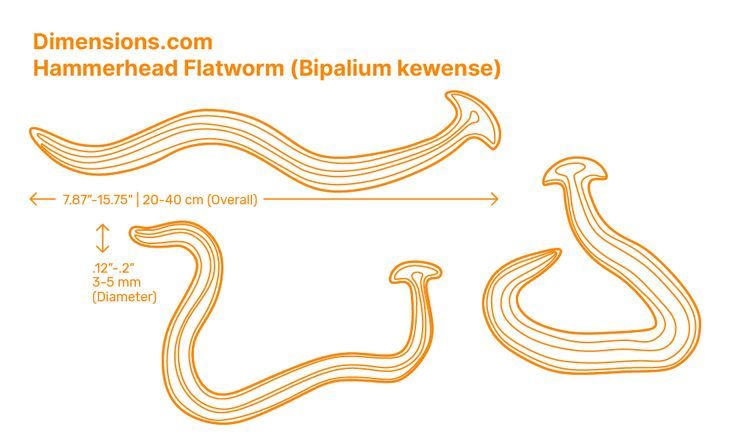
Quick Answer: The hammerhead flatworm, belonging to the genus Bipalium, is the world’s largest terrestrial flatworm, with some species exceeding 40 centimeters in length. Native to Southeast Asia but now invasive in many regions, these predatory land planarians are recognized for their distinct hammer- or shovel-shaped heads and their production of the potent neurotoxin tetrodotoxin. Their ecological impact, unique biology, and invasive tendencies make them a subject of scientific concern and fascination.
The hammerhead flatworm stands out not only for its remarkable size but also for its striking appearance and unusual behavior. These terrestrial flatworms are easily identified by their broad, flattened heads, which resemble the head of a hammer or shovel. This distinctive shape is not merely ornamental; it serves a functional purpose, enhancing the worm’s sensory abilities and aiding in the detection of prey.
The body is elongated, slimy, and often displays vivid stripes or patterns, making the flatworm both conspicuous and unmistakable in its environment.
Unlike most native soil invertebrates, hammerhead flatworms are voracious predators, primarily targeting earthworms and other soft-bodied invertebrates. Their feeding habits have significant ecological implications, especially in regions where they have been introduced as invasive species.
By consuming large numbers of native earthworms, hammerhead flatworms can disrupt soil health, nutrient cycling, and the broader ecosystem. Their presence has raised concerns among ecologists and gardeners alike, as earthworms play a vital role in maintaining fertile and aerated soil.
The spread of hammerhead flatworms beyond their native range is closely tied to human activity. International trade in plants and soil has inadvertently transported these flatworms to new continents, where they often thrive in gardens, greenhouses, and natural habitats.
Their adaptability, combined with a lack of natural predators in many regions, has allowed them to establish persistent populations and outcompete native species. Understanding their biology and impact is crucial for developing effective management and mitigation strategies.
Taxonomy and Defining Features of Hammerhead Flatworms
The hammerhead flatworm is a terrestrial invertebrate belonging to the genus Bipalium, within the family Bipaliidae. This group is commonly referred to as land planarians, a term that encompasses a variety of flatworm species adapted to life on land.
The most distinctive feature of Bipalium species is their broad, semicircular or crescent-shaped head, which gives rise to the common name “hammerhead” or “shovel-headed” worm. This head shape is unique among land planarians and is used to distinguish them from other terrestrial flatworms.
Bipalium species are notable for their elongated, ribbon-like bodies, which can range from a few centimeters to over 40 centimeters in length. Some species, such as Bipalium kewense, are among the largest terrestrial flatworms in the world. The dorsal surface often displays striking color patterns, including longitudinal stripes, bands, or spots, which may serve as warning coloration or camouflage. The ventral surface is typically lighter and houses the creeping sole used for locomotion.
The head of the hammerhead flatworm is equipped with sensory organs that aid in the detection of chemical cues in the environment. These organs allow the flatworm to locate prey with remarkable efficiency. The mouth is located on the ventral side of the body, about one-third of the way down from the head, and is connected to a muscular, eversible pharynx used for feeding. This anatomical arrangement is characteristic of land planarians and distinguishes them from other flatworm groups.
Key Insight: The hammerhead flatworm’s head shape is an evolutionary adaptation that enhances its ability to sense and capture prey, setting it apart from other terrestrial invertebrates.
The taxonomy of hammerhead flatworms has been refined through both morphological and genetic studies. While Bipalium is the most widely recognized genus, related genera such as Humbertium and Diversibipalium share similar characteristics. Accurate identification is essential for ecological studies, particularly in regions where multiple invasive flatworm species may coexist. For further taxonomic details, the Wikipedia entry on Bipalium provides an accessible overview.
Distribution and Invasive Spread
Hammerhead flatworms are native to tropical and subtropical regions of Southeast Asia, where they inhabit moist forest floors and gardens. However, their current distribution extends far beyond their native range due to accidental introduction via the global trade of plants, soil, and horticultural materials. The movement of potted plants and soil is a primary vector for their spread, as eggs and juveniles can survive undetected in the substrate.
Invasive populations of hammerhead flatworms have been documented in North America, Europe, Australia, and parts of Africa. In the United States, Bipalium kewense and Bipalium adventitium are among the most commonly reported species.
These flatworms thrive in humid environments, including greenhouses, gardens, and urban parks, where they encounter abundant prey and few natural predators. Their ability to tolerate a range of temperatures and moisture levels contributes to their success as invaders.
The ecological impact of invasive hammerhead flatworms is significant. By preying on native earthworms and other soil invertebrates, they can alter soil structure, reduce nutrient cycling, and disrupt local food webs. The loss of earthworms, in particular, has cascading effects on soil fertility and plant growth. In some regions, the presence of hammerhead flatworms has been linked to declines in native earthworm populations and changes in soil health.
Hammerhead flatworms are considered one of the most problematic invasive flatworm species due to their adaptability and predatory behavior. Their spread is closely monitored by ecologists and agricultural agencies worldwide. For a comprehensive overview of their invasive status, see the IUCN Invasive Species Specialist Group.
Anatomy and Physiology: Adaptations for Terrestrial Life
The anatomical and physiological adaptations of hammerhead flatworms are central to their success as terrestrial predators. Their bodies are dorsoventrally flattened, which increases surface area for gas exchange and facilitates movement through narrow soil crevices. The outer surface is coated with a layer of mucus that prevents desiccation and aids in locomotion. This mucus also contains toxins that deter predators and assist in subduing prey.
The head of the hammerhead flatworm is equipped with chemoreceptors and mechanoreceptors that enable the detection of chemical signals and vibrations. These sensory adaptations allow the flatworm to track earthworms and other invertebrates with precision. The mouth, located on the ventral side, connects to a muscular pharynx capable of extending outward to engulf prey. Digestion is primarily extracellular, with enzymes secreted onto the prey before ingestion.
Hammerhead flatworms are hermaphroditic, possessing both male and female reproductive organs. Reproduction can occur sexually, through the exchange of gametes, or asexually via fragmentation. In favorable conditions, a single individual can regenerate lost body parts, making population control challenging. The ability to reproduce both sexually and asexually contributes to their rapid spread in new environments.
| Feature | Function | Adaptation |
|---|---|---|
| Hammer-shaped head | Enhanced sensory detection | Prey location |
| Mucus secretion | Prevents desiccation, aids movement, deters predators | Terrestrial survival |
| Eversible pharynx | Engulfs and digests prey | Efficient feeding |
| Hermaphroditism | Enables self-fertilization and population growth | Rapid colonization |
The regenerative capacity of hammerhead flatworms allows them to survive injury and environmental stress, further enhancing their invasiveness.
Feeding Behavior and Ecological Impact
Hammerhead flatworms are specialized predators, primarily feeding on earthworms, slugs, and other soft-bodied invertebrates. Their hunting strategy involves tracking chemical trails left by prey, followed by rapid pursuit and capture. Once an earthworm is located, the flatworm uses its muscular pharynx to attach to the prey and secrete digestive enzymes that liquefy tissues for ingestion.
The impact of hammerhead flatworm predation on native earthworm populations is profound. Earthworms are ecosystem engineers, responsible for aerating soil, decomposing organic matter, and facilitating nutrient cycling. The decline of earthworm populations due to flatworm predation can lead to reduced soil fertility, increased compaction, and diminished plant growth. These changes have long-term consequences for agriculture, horticulture, and natural ecosystems.
Hammerhead flatworms are capable of consuming prey much larger than themselves, thanks to their extendable pharynx and potent digestive enzymes. In addition to earthworms, they may consume insect larvae, snails, and other soil-dwelling organisms. This broad diet allows them to persist in a variety of habitats, from gardens to forests.
The ecological disruption caused by hammerhead flatworms is a growing concern in many regions. Their predatory behavior can lead to a decline in biodiversity and alter the balance of soil ecosystems. For more information on their ecological impact, refer to Britannica’s entry on invasive species.
Tetrodotoxin: The Potent Neurotoxin of Hammerhead Flatworms
A defining characteristic of several hammerhead flatworm species is their production of tetrodotoxin, a powerful neurotoxin also found in pufferfish and some amphibians. Tetrodotoxin blocks sodium channels in nerve cells, causing paralysis and, in high doses, death. In hammerhead flatworms, this toxin serves both as a defense mechanism and as a tool for subduing prey.
Tetrodotoxin is present in the mucus secreted by the flatworm, which coats its body and is delivered to prey during feeding. This toxin immobilizes earthworms and other invertebrates, making them easier to consume. The presence of tetrodotoxin also deters potential predators, as ingestion can cause severe neurological effects in vertebrates and invertebrates alike.
The origin of tetrodotoxin in hammerhead flatworms is not fully understood. It may be synthesized by the flatworm itself or acquired through symbiotic bacteria. Regardless of its source, the presence of this toxin has significant ecological and evolutionary implications. It allows the flatworm to occupy a unique niche as both predator and chemically defended organism.
Warning: While human cases of tetrodotoxin poisoning from hammerhead flatworms are rare, handling these worms without gloves is discouraged. The Wikipedia page on tetrodotoxin provides additional details on its effects and distribution.
Reproduction and Regeneration: Strategies for Survival
The reproductive strategies of hammerhead flatworms are remarkably versatile. As hermaphrodites, each individual possesses both male and female reproductive organs, allowing for self-fertilization or cross-fertilization with another individual. Sexual reproduction typically involves the exchange of sperm, followed by the deposition of egg capsules in moist soil or leaf litter. These capsules are resistant to desiccation and can remain dormant until favorable conditions arise.
Asexual reproduction occurs through fragmentation, in which a portion of the flatworm’s body breaks off and regenerates into a complete individual. This process enables rapid population expansion, especially in environments with abundant resources. The regenerative abilities of hammerhead flatworms are among the most advanced in the animal kingdom. Even small fragments can develop into fully functional worms, complicating efforts to control their spread.
Regeneration is not limited to reproduction; it also serves as a survival mechanism. Injured flatworms can regrow lost body parts, including the head, tail, and internal organs. This capacity for regeneration is mediated by pluripotent stem cells, which proliferate and differentiate to replace damaged tissues. The study of flatworm regeneration has contributed to our understanding of stem cell biology and tissue repair in other animals.
The combination of sexual and asexual reproduction, along with extraordinary regenerative abilities, makes hammerhead flatworms exceptionally resilient invaders.
Identification and Differentiation from Other Flatworms
Correctly identifying hammerhead flatworms is crucial for monitoring and managing their spread. The most reliable distinguishing feature is the broad, flattened head, which is absent in other land planarians. Color patterns, such as longitudinal stripes or bands, can also aid in identification, though these may vary between species and populations.
Other terrestrial flatworms, such as those in the genera Microplana and Caenoplana, lack the hammer-shaped head and often display different coloration and body proportions. Hammerhead flatworms are generally larger and more robust than native flatworm species. The presence of a muscular, eversible pharynx and the secretion of copious mucus are additional diagnostic features.
| Feature | Hammerhead Flatworm | Other Land Flatworms |
|---|---|---|
| Head shape | Hammer/shovel-shaped | Rounded or pointed |
| Body length | Up to 40+ cm | Usually <10 cm |
| Coloration | Striped/banded | Uniform or mottled |
| Mucus secretion | Abundant, toxic | Less abundant, non-toxic |
Accurate identification is essential for effective management and prevention of further spread. For visual guides and species keys, refer to academic resources such as university extension services and the University of Florida’s EDIS publication on land planarians.
Management and Control Strategies
Controlling hammerhead flatworm populations is challenging due to their regenerative abilities and resistance to many conventional pesticides. Mechanical removal, such as hand-picking and destruction, is the most effective method for small infestations. Gloves should always be worn to avoid contact with tetrodotoxin-laden mucus. Flatworms should be placed in sealed containers with salt or vinegar to ensure complete destruction, as even small fragments can regenerate.
Chemical control options are limited, as most pesticides are ineffective against flatworms and may harm non-target organisms. Biological control is not currently feasible, as there are few natural predators of hammerhead flatworms outside their native range. Prevention remains the best strategy, emphasizing the inspection and quarantine of plants and soil before transport.
Public awareness and reporting are critical components of management. Gardeners, horticulturists, and ecologists are encouraged to report sightings to local authorities and participate in monitoring programs. Early detection and rapid response can prevent the establishment of invasive populations and minimize ecological damage.
Key Takeaway: Prevention, early detection, and manual removal are currently the most reliable methods for managing hammerhead flatworm invasions.
Human and Animal Health Considerations
While hammerhead flatworms are not considered a direct threat to human health, their production of tetrodotoxin warrants caution. Accidental ingestion or contact with mucous secretions can cause mild to severe neurological symptoms in susceptible individuals. Pets and small animals may be at greater risk if they ingest or mouth the flatworms.
There is no evidence that hammerhead flatworms transmit diseases to humans or livestock. However, their impact on soil health and earthworm populations can indirectly affect agriculture and horticulture. The loss of earthworms may lead to poorer crop yields and increased reliance on artificial soil amendments.
Handling hammerhead flatworms should always be done with gloves, and hands should be washed thoroughly after contact with soil in infested areas. For more on tetrodotoxin safety, see the Britannica entry on tetrodotoxin.
The Hammerhead Flatworm in Scientific Research and Education
Hammerhead flatworms have attracted scientific interest for their regenerative abilities, unique neurotoxin production, and invasive ecology. Research on their stem cells and regeneration has provided insights into cellular differentiation and tissue repair, with potential applications in regenerative medicine. The presence of tetrodotoxin in a terrestrial invertebrate has also spurred investigations into toxin biosynthesis and ecological interactions.
Educational programs often use hammerhead flatworms as examples of invasive species and biological adaptation. Their striking appearance and unusual biology make them effective ambassadors for teaching about biodiversity, invasive species management, and the importance of soil health. Museums, botanical gardens, and nature centers may feature live specimens or preserved examples in educational displays.
The hammerhead flatworm serves as a model organism for studying regeneration, chemical ecology, and the consequences of biological invasions. Its prominence in research and education underscores its significance beyond its ecological impacts.
Understanding the Hammerhead Flatworm’s Role in a Changing World
The hammerhead flatworm exemplifies the complex interplay between biological adaptation, human activity, and ecological change. Its success as an invader is rooted in its unique anatomy, versatile reproduction, and chemical defenses. As global trade and climate change continue to alter species distributions, the hammerhead flatworm’s story serves as a cautionary tale about the unintended consequences of species introductions.
Efforts to manage and mitigate the impact of hammerhead flatworms must balance ecological, agricultural, and public health considerations. Continued research into their biology, distribution, and control methods is essential for protecting native biodiversity and maintaining healthy soils. Public engagement and education play a vital role in early detection and response to new invasions.
The presence of hammerhead flatworms in non-native regions is a reminder of the importance of biosecurity and the need for coordinated action to preserve ecological balance. Their ongoing study offers valuable lessons for invasive species management and environmental stewardship.
Frequently Asked Questions
How can you safely remove hammerhead flatworms from your garden?
Wear gloves, manually collect the flatworms, and destroy them in a sealed container with salt or vinegar to prevent regeneration.
Are hammerhead flatworms dangerous to pets or humans?
Hammerhead flatworms produce tetrodotoxin, which can cause neurological symptoms if ingested or handled without protection, especially for pets.
What should you do if you find hammerhead flatworms in your area?
Report sightings to local agricultural or environmental authorities and avoid moving soil or plants that may contain eggs or juveniles.
Do hammerhead flatworms have any natural predators?
In their native range, some birds and invertebrates may prey on them, but in invaded regions, natural predators are rare or absent.
Can hammerhead flatworms harm earthworm populations?
Yes, hammerhead flatworms prey on earthworms and can significantly reduce their populations, impacting soil health and ecosystem function.
How do hammerhead flatworms reproduce so quickly?
They reproduce both sexually and asexually, with the ability to regenerate from small body fragments, enabling rapid population growth.