
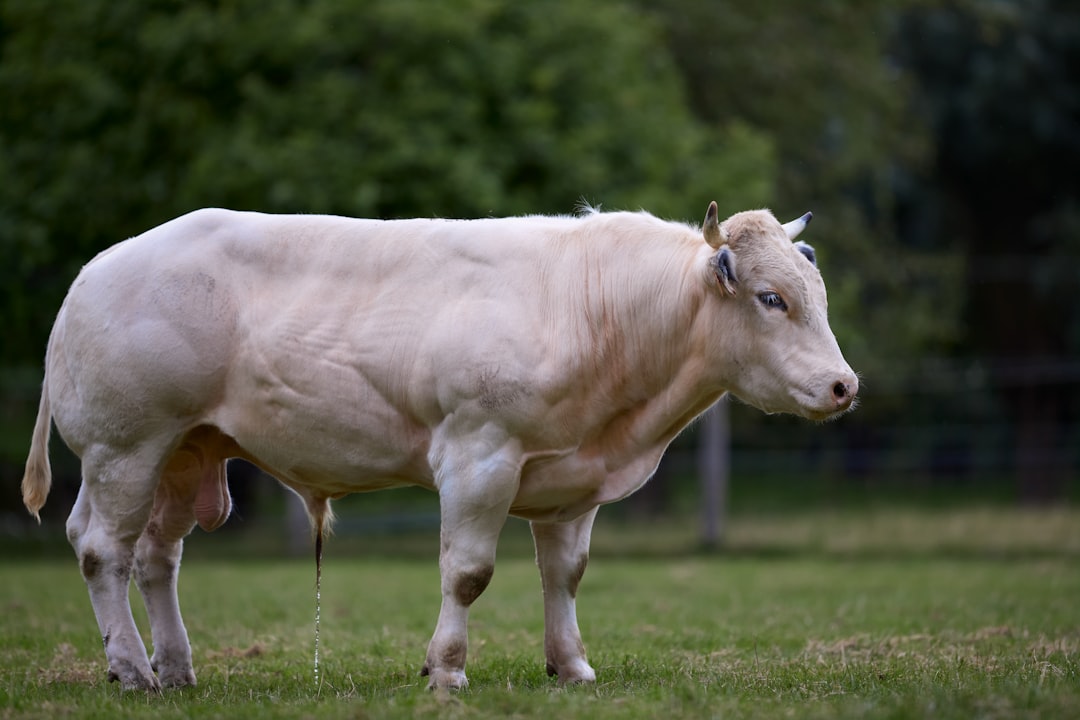
Quick Answer: Belgian Blue cattle are a distinctive breed of beef cattle renowned for their pronounced muscle development, a result of a natural mutation in the myostatin gene. This mutation leads to a condition known as “double muscling,” producing cattle with exceptional muscle mass and lean meat yields. Belgian Blues are widely recognized for their unique appearance, rapid growth rates, and significant influence on modern cattle breeding and meat production worldwide.
Belgian Blue cattle stand out in the agricultural world for their remarkable physical characteristics and genetic background. Known colloquially as the “super cow,” this breed is easily identified by its muscular physique, which is far more pronounced than that of typical cattle breeds. Farmers and scientists alike have been fascinated by the breed’s rapid growth and high meat yield, making Belgian Blues a subject of extensive study and debate within animal science and livestock management.
The breed’s origins trace back to Belgium, where selective breeding practices in the 19th and 20th centuries emphasized both dairy and beef traits before focusing predominantly on meat production. The intense muscle development seen in Belgian Blues is not a product of artificial enhancement but is instead rooted in a naturally occurring genetic mutation. This mutation has profound implications for the physiology, management, and welfare of the animals, as well as for the beef industry at large.
Belgian Blues have had a significant impact on global cattle breeding, with their genetics being introduced into herds in Europe, the Americas, and beyond. The breed’s influence extends beyond meat production, raising important questions about animal welfare, genetic diversity, and the future of livestock breeding. As a result, Belgian Blue cattle serve as a focal point for discussions on the balance between productivity and ethical considerations in modern agriculture.
The Origins and Development of Belgian Blue Cattle
The history of Belgian Blue cattle is deeply intertwined with the agricultural evolution of Belgium. In the late 1800s, Belgian farmers began selectively breeding local cattle for both milk and meat production. Over time, breeders noticed that some animals exhibited unusually well-developed musculature. By the mid-20th century, the focus shifted almost exclusively to beef traits, leading to the formal establishment of the Belgian Blue breed.
Belgian Blue cattle are a breed of beef cattle that originated in Belgium and are characterized by their extreme muscle development, commonly referred to as “double muscling.” The breed was officially recognized in the 1970s, but its genetic foundation had been laid decades earlier through careful selection for size, growth, and muscle mass. The breed’s name reflects its typical coat color, which ranges from white to blue-grey, though black variants also exist.
The defining characteristic of Belgian Blues, their double muscling, was initially observed as a desirable trait for meat production. Breeders capitalized on this by selecting bulls and cows that displayed the most pronounced musculature, thereby reinforcing the trait in subsequent generations. This process was facilitated by the use of artificial insemination, which allowed breeders to propagate the genetics of particularly muscular animals across a wide population.
The breed’s development was not without controversy. Some agriculturalists expressed concern about the potential health and welfare implications of such intense muscle growth. However, the economic benefits of increased meat yield and feed efficiency drove widespread adoption of Belgian Blue genetics, both within Belgium and internationally.
Today, Belgian Blue cattle are found in over 50 countries, and their genetics have been incorporated into various crossbreeding programs to enhance beef production.
Key Insight: The rise of the Belgian Blue breed exemplifies how targeted selection for specific traits can dramatically alter the physiology and productivity of domestic animals, with far-reaching consequences for agriculture and animal welfare.
The Myostatin Mutation: Genetic Basis of Double Muscling
At the heart of the Belgian Blue’s unique appearance lies a single genetic alteration. The breed’s signature double muscling is caused by a mutation in the myostatin gene (also known as GDF-8), which normally regulates muscle growth in mammals. In Belgian Blues, this gene is disrupted, resulting in uncontrolled muscle fiber development and hypertrophy.
Myostatin is a protein that acts as a negative regulator of muscle growth. In most cattle, myostatin limits the number and size of muscle fibers, ensuring balanced development. The mutation found in Belgian Blues leads to a loss of function in the myostatin gene, removing this regulatory brake. As a result, affected animals develop up to twice the normal muscle mass, a phenomenon termed “double muscling.”
This genetic mutation is inherited in an autosomal recessive manner, meaning that both parents must carry the mutated gene for offspring to exhibit the full double-muscled phenotype. The implications of this mutation extend beyond appearance; it influences growth rates, feed conversion, and carcass composition. Belgian Blues are renowned for their high lean meat yield, with some animals achieving carcass yields of up to 80%, compared to 60-65% in conventional beef breeds.
The discovery of the myostatin mutation in Belgian Blues has had a profound impact on animal genetics and biotechnology. Researchers have studied this gene extensively, not only for its agricultural applications but also for its potential relevance to muscle-wasting diseases in humans. The breed has become a model organism for understanding muscle development and genetic regulation in mammals (Wikipedia: Myostatin).
| Trait | Conventional Cattle | Belgian Blue |
|---|---|---|
| Muscle Mass | Normal | Double |
| Myostatin Function | Present | Mutated |
| Carcass Yield (%) | 60-65 | 70-80 |
| Fat Content | Moderate | Low |
Key Takeaway: The myostatin mutation in Belgian Blue cattle represents one of the most striking examples of how a single gene can dramatically alter an animal’s physiology and commercial value (Britannica: Belgian Blue).
Physical Characteristics and Physiology of Belgian Blue Cattle
Belgian Blue cattle are instantly recognizable due to their extraordinary musculature and imposing stature. The breed typically displays a broad back, rounded rump, and prominent shoulders, with muscle definition visible even beneath the skin. Calves are born with well-developed muscles, and this trait becomes increasingly pronounced as the animals mature.
The coat color of Belgian Blues varies from white to blue-grey, with occasional black markings. The skin is thin and elastic, which helps accommodate the rapid muscle growth. Adult bulls can weigh between 1,100 and 1,250 kilograms, while cows generally range from 850 to 950 kilograms. Despite their size, Belgian Blues are known for their docile temperament, making them manageable for handlers.
The breed’s physiology is marked by several unique features:
- Double Muscling: Extreme muscle hypertrophy, especially in the hindquarters and shoulders.
- Low Fat Content: Carcasses yield a high proportion of lean meat with minimal intramuscular fat.
- Rapid Growth: Calves grow quickly, reaching market weight faster than many other breeds.
- Feed Efficiency: Belgian Blues convert feed into muscle with exceptional efficiency, reducing production costs.
- Calving Challenges: The large size of calves often necessitates cesarean deliveries to prevent complications.
Despite their advantages, Belgian Blues face certain physiological challenges. The double-muscled phenotype can lead to reduced fertility, increased risk of lameness, and greater susceptibility to respiratory issues. Calving difficulties are particularly notable, with a high percentage of births requiring surgical intervention. These factors have prompted ongoing research into balancing productivity with animal welfare (University of California, Davis).
Key Insight: The physical attributes of Belgian Blue cattle are a testament to the power of selective breeding, but they also highlight the trade-offs between productivity and animal health in modern livestock management.
Meat Production, Quality, and Market Impact
Belgian Blue cattle have revolutionized beef production with their ability to yield high quantities of lean, tender meat. The breed’s carcasses are characterized by a high proportion of valuable cuts, such as the loin and rump, and a low percentage of waste fat. This has made Belgian Blue beef highly sought after in markets that prioritize lean meat and efficient production.
The meat quality of Belgian Blues is shaped by several factors. The low intramuscular fat content results in beef that is exceptionally lean, with a fine texture and mild flavor. While some consumers prefer the marbling found in traditional beef breeds, others value the health benefits and appearance of Belgian Blue beef. The breed’s rapid growth rates and feed efficiency also translate into lower production costs and higher profitability for producers.
Belgian Blue genetics have been introduced into crossbreeding programs worldwide to enhance the muscle development and carcass yield of local cattle populations. This has been particularly impactful in countries with intensive beef production systems, such as the United States, Brazil, and Australia. However, the breed’s unique physiology requires careful management to ensure animal welfare and meat quality standards are maintained.
| Aspect | Belgian Blue Beef | Conventional Beef |
|---|---|---|
| Lean Meat Yield (%) | 70-80 | 60-65 |
| Intramuscular Fat | Low | Moderate-High |
| Tenderness | High | Variable |
| Flavor Profile | Mild | Richer |
Key Takeaway: Belgian Blue cattle have set new benchmarks for meat yield and efficiency, but their success has also sparked debates about the balance between productivity and traditional beef quality (IUCN Red List: Bos taurus).
Animal Welfare, Health, and Ethical Considerations
The rise of Belgian Blue cattle has prompted significant discussion regarding animal welfare and ethical breeding practices. The breed’s double-muscled phenotype, while economically advantageous, introduces several health challenges that require careful management. Chief among these is the high incidence of calving difficulties, which often necessitate cesarean sections to deliver calves safely.
Other health concerns associated with Belgian Blues include reduced fertility, increased risk of metabolic disorders, and greater susceptibility to certain infections. The breed’s large muscle mass can place additional strain on the skeletal and respiratory systems, potentially affecting mobility and overall well-being. These issues have led some animal welfare organizations to question the long-term sustainability of breeding for extreme traits.
Ethical considerations extend beyond individual animal health to broader questions about the direction of livestock breeding. The pursuit of ever-greater productivity must be weighed against the responsibility to ensure humane treatment and quality of life for farm animals. Regulatory agencies in some countries have introduced guidelines to address these concerns, emphasizing the need for balanced breeding objectives and improved management practices.
Critical Perspective: The Belgian Blue breed serves as a case study in the complexities of modern animal agriculture, where economic incentives and ethical responsibilities often intersect and sometimes conflict (RSPCA Knowledgebase).
Global Distribution and Influence on Cattle Breeding
Belgian Blue cattle, initially confined to Belgium, have become a global phenomenon in the beef industry. Their genetics have been exported to over 50 countries, where they are used both as purebreds and in crossbreeding programs to enhance local cattle populations. The breed’s impact is particularly notable in regions with intensive beef production, such as North America, South America, and Australia.
The introduction of Belgian Blue genetics has led to significant improvements in carcass yield and meat quality in various commercial herds. Crossbreeding with local breeds allows producers to capitalize on the double-muscled trait while mitigating some of the associated health and management challenges. This approach has been especially successful in terminal crossbreeding systems, where Belgian Blue bulls are bred with cows of other breeds to produce offspring destined for meat production.
However, the global spread of Belgian Blue genetics has also raised concerns about genetic diversity and the potential for unintended consequences. Overreliance on a single breed or genetic trait can reduce the resilience of cattle populations to disease, environmental changes, and market fluctuations.
As a result, many breeders are now seeking to balance productivity gains with the need to preserve genetic variation and adaptability in livestock populations (University of Edinburgh Roslin Institute).
Comparison with Other Double-Muscled Breeds
While Belgian Blue cattle are the most famous example of double-muscled cattle, they are not unique in this regard. Other breeds, such as the Piedmontese from Italy and the Parthenais from France, also exhibit double muscling due to similar mutations in the myostatin gene. However, the degree of muscle development and the associated management challenges vary among breeds.
| Breed | Origin | Double Muscling | Carcass Yield (%) | Calving Ease |
|---|---|---|---|---|
| Belgian Blue | Belgium | Extreme | 70-80 | Low |
| Piedmontese | Italy | Moderate | 65-70 | Moderate |
| Parthenais | France | Moderate | 65-70 | Moderate |
| Limousin | France | Low | 60-65 | High |
Belgian Blues are distinguished by the extremity of their muscle development and the associated need for surgical intervention during calving. Piedmontese cattle, while also double-muscled, tend to have fewer calving difficulties and a slightly lower carcass yield. The Parthenais breed occupies an intermediate position, with moderate muscle development and improved calving ease compared to Belgian Blues.
These differences highlight the importance of breed selection and management strategies in achieving desired production outcomes while minimizing health and welfare concerns. Producers must weigh the benefits of increased meat yield against the practical challenges and ethical considerations associated with each breed.
Advances in Genetic Engineering and Future Prospects
The discovery of the myostatin mutation in Belgian Blue cattle has opened new avenues for genetic engineering and biotechnology in livestock production. Researchers are exploring ways to harness and modify the myostatin pathway to improve muscle growth, feed efficiency, and disease resistance in various animal species.
Techniques such as gene editing and marker-assisted selection offer the potential to introduce desirable traits without some of the negative side effects seen in traditional breeding.
One area of active research involves using gene editing tools like CRISPR to precisely modify the myostatin gene in cattle and other livestock. This approach aims to replicate the beneficial aspects of the Belgian Blue mutation while reducing the incidence of health problems such as calving difficulties. Early results are promising, but ethical, regulatory, and consumer acceptance issues remain to be addressed before widespread adoption is possible.
The Belgian Blue breed continues to serve as a model for understanding the genetic and physiological basis of muscle development. Insights gained from studying this breed have implications not only for agriculture but also for human medicine, particularly in the context of muscle-wasting diseases and regenerative therapies.
Key Insight: The legacy of Belgian Blue cattle extends beyond the farm, shaping the future of animal breeding, biotechnology, and even medical research (Nature: Myostatin and Muscle Growth).
Common Misconceptions and Public Perception
Belgian Blue cattle often attract public attention due to their striking appearance, leading to several misconceptions about their origins and management. A common belief is that the breed’s muscle development is the result of artificial enhancement or genetic modification. In reality, the double-muscled trait arose from a natural mutation that was subsequently propagated through selective breeding.
Another misconception is that Belgian Blues are inherently unhealthy or suffer constantly due to their physiology. While the breed does face specific health challenges, responsible management and breeding practices can mitigate many of these issues. The welfare of Belgian Blue cattle depends largely on the expertise and care provided by farmers and veterinarians.
Public perception of Belgian Blue beef varies by region and cultural preference. In some markets, the lean, tender meat is highly valued, while in others, consumers prefer the marbling and flavor of traditional beef breeds. Education and transparent communication about the breed’s genetics, management, and welfare are essential for fostering informed opinions and consumer confidence.
The Role of Belgian Blue Cattle in Sustainable Agriculture
As concerns about environmental sustainability and resource efficiency grow, Belgian Blue cattle offer both opportunities and challenges for the future of agriculture. The breed’s exceptional feed conversion and high lean meat yield make it an attractive option for producers seeking to maximize output while minimizing inputs. These traits can contribute to reduced greenhouse gas emissions and lower resource use per unit of beef produced.
However, the breed’s specific management needs, including the frequent requirement for cesarean deliveries and specialized care, can offset some of these advantages. Sustainable agriculture requires a holistic approach that considers not only productivity but also animal welfare, genetic diversity, and environmental impact.
Integrating Belgian Blue genetics into crossbreeding programs can help balance these factors by combining the breed’s strengths with the resilience and adaptability of local cattle populations. Ongoing research and innovation in breeding, management, and technology will play a crucial role in shaping the future contributions of Belgian Blue cattle to sustainable food systems.
Belgian Blue Cattle: Balancing Innovation and Responsibility
Belgian Blue cattle exemplify the remarkable potential of genetics and selective breeding to transform livestock production. The breed’s unique characteristics have driven advances in meat yield, efficiency, and scientific understanding, making it a cornerstone of modern beef agriculture. However, the success of Belgian Blues also underscores the importance of balancing innovation with ethical responsibility and animal welfare.
The ongoing evolution of the breed, coupled with advances in genetic engineering and biotechnology, presents both opportunities and challenges for farmers, researchers, and policymakers. Ensuring the long-term sustainability and acceptability of Belgian Blue cattle will require continued attention to animal health, genetic diversity, and transparent communication with the public.
As the agricultural landscape evolves, Belgian Blue cattle will remain at the forefront of discussions about the future of food production, animal welfare, and the responsible use of genetic technology in agriculture.
Frequently Asked Questions
Why do Belgian Blue cattle require cesarean sections for calving?
Belgian Blue calves are often too large for natural birth due to double muscling, so cesarean sections are commonly used to ensure the safety of both cow and calf.
Is Belgian Blue beef genetically modified?
No, Belgian Blue cattle are not genetically modified; their double muscling results from a natural mutation in the myostatin gene propagated through selective breeding.
Are Belgian Blue cattle used for dairy production?
Belgian Blue cattle are primarily bred for beef production, and their milk yield is generally lower than that of specialized dairy breeds.
How does Belgian Blue beef compare nutritionally to other beef?
Belgian Blue beef is typically leaner with less intramuscular fat than conventional beef, making it lower in calories and fat content.
Can Belgian Blue genetics be used in crossbreeding?
Yes, Belgian Blue genetics are widely used in crossbreeding programs to enhance muscle development and carcass yield in other cattle breeds.
What is the lifespan of a Belgian Blue cow?
Belgian Blue cows generally have a lifespan of 8 to 12 years, though this can vary depending on management and health factors.