
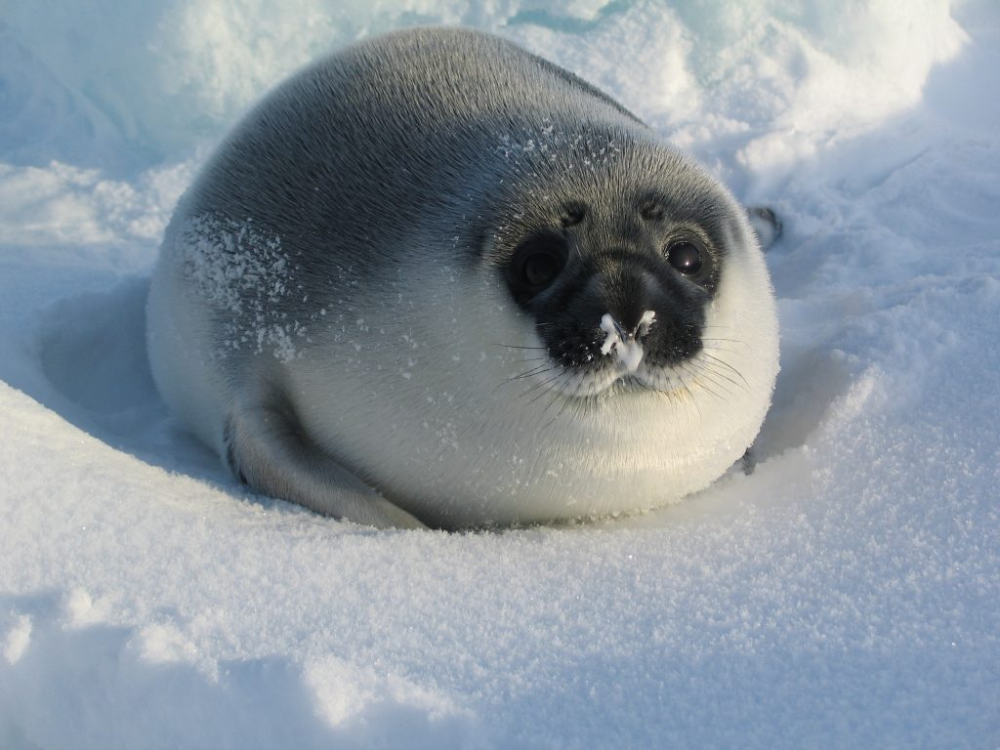
Quick Answer: The hooded seal (Cystophora cristata) is a large Arctic marine mammal renowned for its unique inflatable nasal membrane, or “hood.” This specialized structure, found in adult males, expands dramatically during social displays and serves roles in communication and mating competition. Hooded seals are powerful swimmers, deep divers, and are found primarily in the North Atlantic and Arctic Oceans. Their populations face threats from climate change and human activities.
The hooded seal stands out among Arctic pinnipeds for its remarkable nasal adaptation. Adult males possess an elastic nasal sac, or “hood,” which they inflate over their heads and nostrils. This anatomical feature is not merely ornamental; it plays a crucial role in the animal’s behavioral ecology.
When threatened or during mating season, males inflate the hood to produce visual and auditory signals that can deter rivals or attract potential mates. The visual spectacle of a fully inflated hood, often accompanied by a red septal membrane ballooned from one nostril, is unique in the animal kingdom and has fascinated biologists for centuries.
Beyond their distinctive appearance, hooded seals are among the most robust and wide-ranging of the Arctic seals. They inhabit the frigid waters of the North Atlantic and adjacent Arctic seas, migrating vast distances between breeding and feeding grounds. Their life cycle is closely tied to the seasonal formation and melting of pack ice, which provides critical habitat for pupping and molting.
Hooded seals have adapted to extreme cold and deep, prolonged dives, allowing them to exploit rich but challenging marine environments. Their diet is varied, consisting mainly of fish and invertebrates, and they are capable of diving to depths exceeding 1,000 meters in search of prey.
The conservation status of hooded seals has become a concern in recent decades. While not currently classified as endangered, their numbers have declined in some regions, particularly in the Northeast Atlantic. Factors such as climate change, which reduces sea ice habitat, and historical commercial hunting have impacted populations. Ongoing research and international cooperation are essential for monitoring their status and ensuring the long-term survival of this extraordinary species.
Anatomy and Physical Characteristics of the Hooded Seal
The hooded seal is a large, robust pinniped distinguished by its unique inflatable nasal membrane, known as the “hood.” This structure is present only in adult males and is absent in females and juveniles. The hood is an elastic sac located over the head and upper nostrils, which can be inflated to form a prominent, balloon-like display. The function and structure of this adaptation are central to the species’ identity and have been the subject of extensive scientific study.
Adult male hooded seals can reach lengths of up to 2.6 meters and weigh as much as 400 kilograms, making them one of the largest seal species in the North Atlantic. Females are generally smaller, averaging around 2.2 meters in length and 300 kilograms in weight. The body is torpedo-shaped, with a thick layer of blubber providing insulation against the Arctic cold. The fur is typically silvery-gray with irregular dark spots, though coloration can vary among individuals and with age.
The most striking feature of the male hooded seal is the inflatable hood, which is composed of a specialized nasal septum and surrounding tissue. When deflated, the hood appears as a wrinkled area above the nostrils. During displays, the male closes one nostril and forcefully exhales through the other, inflating the hood over the head.
In addition, a bright red septal membrane can be everted from one nostril, creating an even more dramatic visual effect. This dual-display system is unique among mammals and is used in both competitive and courtship contexts.
Hooded seals possess large, forward-facing eyes adapted for low-light conditions in deep water. Their limbs are modified into flippers, with the foreflippers being relatively short and the hind flippers long and webbed, aiding in powerful swimming. The dental formula is adapted for a carnivorous diet, with sharp canines and molars suited for grasping slippery prey.
Sexual dimorphism is pronounced, with males being significantly larger and possessing the characteristic hood, while females lack this feature entirely.
The inflatable nasal hood of the male hooded seal is a specialized anatomical adaptation unparalleled among marine mammals, serving both social and reproductive functions.
| Feature | Males | Females |
|---|---|---|
| Length | Up to 2.6 meters | Up to 2.2 meters |
| Weight | Up to 400 kg | Up to 300 kg |
| Inflatable Hood | Present | Absent |
| Fur Color | Silvery-gray with dark spots | Silvery-gray with dark spots |
The Inflatable Nose Balloon: Structure and Function
The nasal balloon or “hood” of the hooded seal is a complex, elastic structure that serves as a key feature in the animal’s communication repertoire. This adaptation is found exclusively in mature males and is used primarily during the breeding season. The hood is formed from an extension of the nasal septum and associated tissues, which can be inflated with air to form a large, dome-shaped balloon over the head.
Inflation of the hood is achieved by closing one nostril and exhaling forcefully through the other, causing the tissue to expand. This process is often accompanied by the eversion of a bright red septal membrane from one nostril, which can be inflated separately to form a secondary balloon.
The combined visual effect is striking and is believed to function as both a threat display to rival males and an attractant to females. The display is often accompanied by vocalizations, including grunts and roars, which are amplified by the inflated hood.
The physiological mechanisms underlying the inflation and deflation of the hood involve specialized muscles and elastic connective tissue. The hood can be inflated and deflated rapidly, allowing males to adjust their displays in response to social cues. The structure is highly vascularized, which may enhance its coloration and facilitate rapid changes in size.
The red septal membrane, in particular, is thought to serve as a signal of health and vigor, with larger and more colorful displays indicating higher fitness.
The inflatable hood and septal membrane of the hooded seal are unique among mammals and represent a specialized adaptation for social signaling in a highly competitive environment.
Research suggests that the evolution of the nasal balloon is closely linked to the species’ polygynous mating system, where males compete intensely for access to females. The ability to produce large, conspicuous displays likely confers an advantage in these contests, reducing the need for physical combat and allowing males to establish dominance hierarchies visually and acoustically. For more on the biology of pinnipeds, see Britannica’s entry on pinnipeds.
Distribution and Habitat Preferences
Hooded seals are primarily found in the cold waters of the North Atlantic and adjacent Arctic Ocean. Their range extends from the eastern coast of Canada and Greenland across the Atlantic to Norway and the Barents Sea. The species is highly migratory, with individuals traveling thousands of kilometers annually between breeding, molting, and feeding areas.
The distribution of hooded seals is closely tied to the availability of pack ice, which provides essential habitat for key life history events.
During the breeding season, hooded seals congregate on drifting pack ice to give birth and mate. Major breeding areas include the Gulf of St. Lawrence, the Davis Strait, the Greenland Sea, and the White Sea. After breeding, seals disperse to feeding grounds, which may be located far from their pupping sites. The species is capable of long-distance movements, with satellite tracking studies documenting migrations of over 2,000 kilometers in a single season.
Pack ice is critical for hooded seals, providing a stable platform for pupping, nursing, and molting. The timing of these events is synchronized with the seasonal formation and melting of sea ice. Loss of ice due to climate warming poses a significant threat to hooded seal populations, particularly in the southern portions of their range. In years with reduced ice cover, pup mortality rates increase, and suitable habitat becomes scarce.
Hooded seals are among the most ice-dependent of all Arctic marine mammals, and their survival is closely linked to the persistence of pack ice habitats.
For detailed information on the species’ distribution, see the IUCN Red List entry for Cystophora cristata.
Life Cycle and Reproduction
The life cycle of the hooded seal is characterized by extreme adaptations to the Arctic environment. Breeding occurs on pack ice in late winter or early spring, with females giving birth to a single pup after a gestation period of about 11 months. Pups are born with a distinctive blue-gray coat, earning them the nickname “bluebacks.” This coat is shed after a few weeks as the pup grows rapidly.
Nursing in hooded seals is among the shortest of any mammal, lasting just 3 to 5 days. During this period, the mother’s milk is exceptionally rich in fat, allowing the pup to double its weight before weaning. After weaning, the mother departs, and the pup must quickly learn to swim and hunt independently. This rapid transition is an adaptation to the unstable and temporary nature of pack ice habitats.
Mating occurs shortly after weaning, with males competing for access to females through displays involving the inflatable hood and septal membrane. Dominant males may mate with multiple females, while less successful males may not breed at all. The species exhibits delayed implantation, with the fertilized egg remaining dormant for several months before development resumes. This strategy ensures that pupping coincides with optimal ice conditions the following year.
The hooded seal’s brief nursing period and rapid pup development are remarkable adaptations to the harsh and unpredictable Arctic environment.
Juvenile hooded seals undergo a period of dispersal after weaning, traveling long distances to feeding grounds. Sexual maturity is reached at 3 to 6 years of age, with males maturing later than females. The average lifespan in the wild is estimated at 25 to 35 years, though mortality rates are high in the first year of life.
Feeding Ecology and Diving Behavior
Hooded seals are opportunistic predators with a diet that varies by region and season. Their primary prey includes a wide range of fish and invertebrates, such as cod, herring, redfish, squid, and crustaceans. The species is capable of deep and prolonged dives, often descending to depths of 600 meters and occasionally exceeding 1,000 meters in search of food. These diving abilities allow hooded seals to exploit prey resources unavailable to many other marine mammals.
The foraging behavior of hooded seals is adapted to the dynamic and patchy nature of Arctic marine ecosystems. Seals use their sensitive vibrissae (whiskers) to detect prey in low-visibility conditions, and their large eyes enhance vision at depth. Feeding typically occurs at night or during twilight, when many prey species migrate vertically in the water column.
Hooded seals can remain submerged for over 30 minutes, thanks to physiological adaptations such as high blood volume, elevated myoglobin concentrations, and the ability to reduce heart rate during dives.
The deep-diving capabilities of hooded seals enable them to access prey in mesopelagic and bathypelagic zones, reducing competition with other predators.
Feeding strategies may vary between males and females, with some evidence suggesting that males undertake longer and deeper foraging trips. Seasonal changes in prey availability and ice cover also influence diet composition and foraging locations. For more on marine mammal diving physiology, see Britannica’s entry on marine mammal adaptations.
Social Behavior and Communication
Hooded seals are generally solitary outside the breeding season, but social interactions become intense during the brief period when they gather on pack ice to breed and molt. Males establish territories on the ice and use their inflatable hoods and vocalizations to communicate with rivals and potential mates. These displays serve to advertise dominance, deter intruders, and attract females.
The acoustic repertoire of the hooded seal includes a range of vocalizations, such as grunts, roars, and underwater pulses. The inflated hood acts as a resonating chamber, amplifying these sounds and making them more effective as long-distance signals. Visual displays, including the inflation of the hood and septal membrane, are used in combination with vocalizations to convey information about the male’s size, health, and status.
The combination of visual and acoustic signals in hooded seals represents a sophisticated communication system adapted to the challenges of the Arctic environment.
Aggressive encounters between males are common, but physical fights are often avoided through ritualized displays. Females may also use vocalizations to communicate with their pups, especially during the brief nursing period. Outside the breeding season, hooded seals are rarely seen in groups, and little is known about their social structure during foraging migrations.
Conservation Status and Threats
The conservation status of the hooded seal varies across its range. According to the IUCN Red List, the species is currently listed as “Vulnerable” in the Northeast Atlantic but is considered of “Least Concern” globally. Population estimates suggest there are several hundred thousand individuals, but numbers have declined in some regions due to a combination of natural and anthropogenic factors.
Major threats to hooded seals include:
- Loss of sea ice habitat due to climate warming
- Historical commercial hunting for pelts and oil
- Bycatch in fishing operations
- Pollution, including heavy metals and persistent organic pollutants
- Disturbance from shipping and industrial activities
Climate change is the most significant long-term threat, as reductions in sea ice directly affect breeding and pupping success. In the Northwest Atlantic, populations have been more stable, but in the Northeast Atlantic, numbers have dropped sharply since the mid-20th century. International agreements, such as the Convention for the Conservation of Antarctic Seals, provide some protection, but continued monitoring and research are needed.
The vulnerability of hooded seals to climate-driven habitat loss highlights the broader impacts of environmental change on Arctic marine ecosystems.
Research and Scientific Significance
Hooded seals have been the focus of scientific research for their unique anatomical adaptations and their role as indicators of Arctic ecosystem health. The inflatable nasal hood is of particular interest to biologists studying sexual selection and animal communication. Studies of hooded seal diving physiology have contributed to our understanding of mammalian adaptations to extreme environments.
The species is also used as a sentinel for monitoring changes in the Arctic, as shifts in distribution, reproductive success, and health can signal broader ecological changes. Research on contaminant levels in hooded seals has provided insights into the movement of pollutants through marine food webs. The rapid development of hooded seal pups is studied as a model for understanding lactation strategies and energy transfer in mammals.
The hooded seal serves as a valuable model for investigating the effects of environmental change on Arctic marine mammals and their ecosystems.
For more on the biology and conservation of Arctic seals, see the Wikipedia entry on hooded seals.
The Hooded Seal in Human Culture and History
Throughout history, hooded seals have played a role in the cultures of Arctic peoples, who have hunted them for meat, oil, and pelts. The distinctive appearance of the male’s inflated hood has been depicted in art and folklore, and the animal features in the traditional knowledge of Inuit and other northern communities. Commercial hunting of hooded seals peaked in the 19th and 20th centuries, with pelts prized for their durability and unique coloration.
International regulations have greatly reduced commercial hunting, but subsistence hunting continues in some regions. The cultural significance of the hooded seal persists, with the animal symbolizing the resilience and adaptability of Arctic life. Public interest in the species has grown as awareness of climate change and its impacts on Arctic wildlife increases.
The hooded seal’s remarkable adaptations have inspired fascination and respect among the peoples of the North, reflecting the close relationship between humans and the Arctic environment.
Looking Ahead: The Future of the Hooded Seal
The future of the hooded seal is closely tied to the fate of the Arctic pack ice. Continued climate warming is expected to further reduce the extent and stability of sea ice, with potentially severe consequences for breeding and pup survival. Conservation efforts must focus on mitigating climate impacts, protecting critical habitats, and reducing other human-induced threats.
International collaboration is essential for monitoring hooded seal populations and ensuring their long-term survival. Advances in satellite tracking, genetic studies, and remote sensing are improving our understanding of the species’ ecology and responses to environmental change. Public education and engagement can also play a role in supporting conservation initiatives.
The survival of the hooded seal will depend on global efforts to address climate change and safeguard the Arctic ecosystem for future generations.
Frequently Asked Questions
What is the purpose of the hooded seal's inflatable nose?
The inflatable nose, or hood, is used by male hooded seals for social displays during mating and to deter rivals through visual and acoustic signals.
How long do hooded seal pups nurse before being weaned?
Hooded seal pups nurse for only 3 to 5 days, one of the shortest nursing periods among mammals, before becoming independent.
Where can hooded seals be found?
Hooded seals inhabit the North Atlantic and Arctic Oceans, especially areas with seasonal pack ice, such as the Gulf of St. Lawrence and Greenland Sea.
Are hooded seals endangered?
Globally, hooded seals are not endangered, but they are considered vulnerable in the Northeast Atlantic due to declining populations and habitat loss.
What do hooded seals eat?
Hooded seals primarily eat fish and invertebrates, including cod, herring, squid, and crustaceans, and are capable of deep dives to find prey.
How deep can hooded seals dive?
Hooded seals can dive to depths exceeding 1,000 meters, allowing them to access deep-water prey not available to many other marine mammals.
What threats do hooded seals face?
Major threats include climate-driven loss of sea ice, historical hunting, bycatch in fisheries, pollution, and disturbance from human activities.