
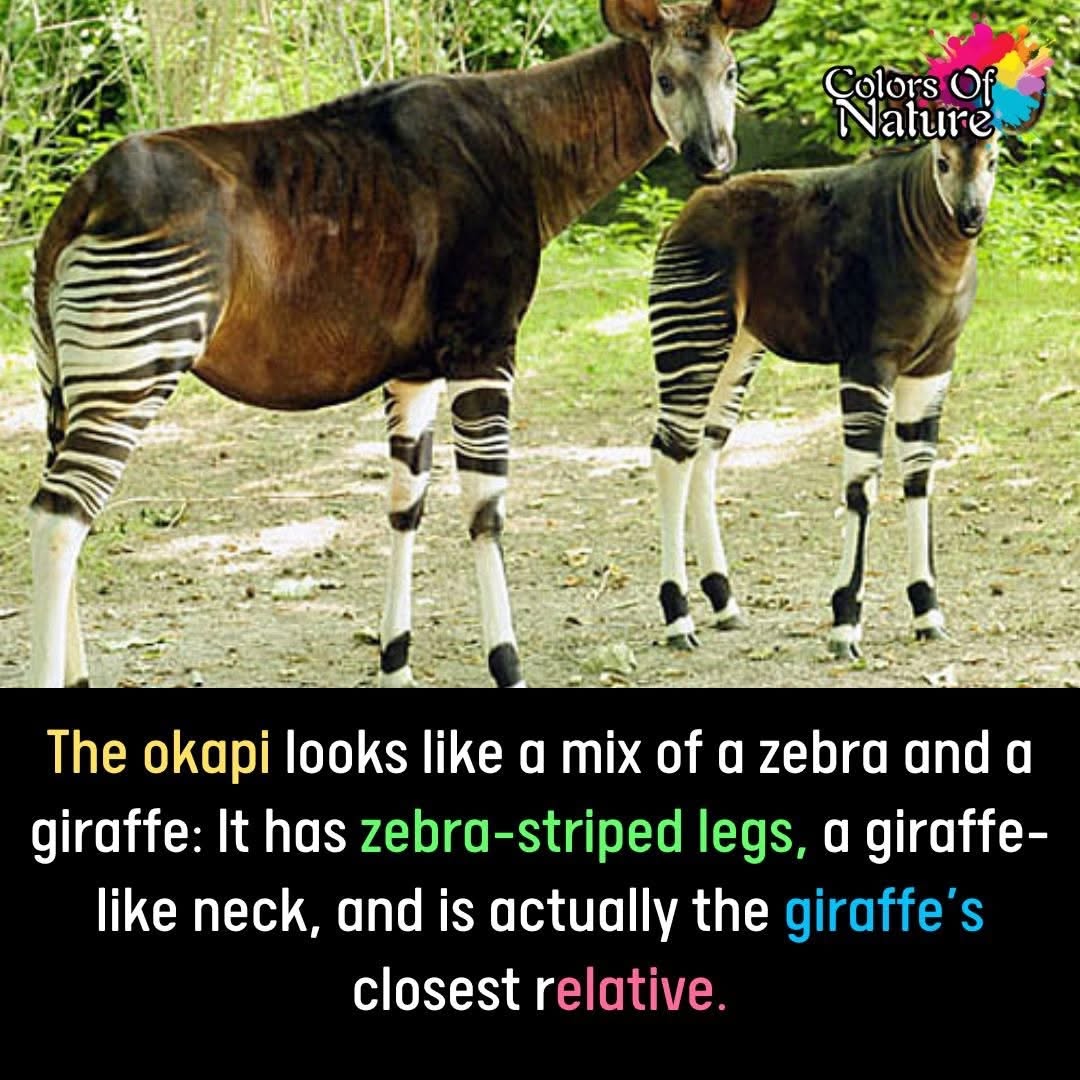
Quick Answer: The okapi (Okapia johnstoni), often called the “forest giraffe,” is a rare, hoofed mammal native to the dense rainforests of the Democratic Republic of the Congo. Distinguished by its velvety brown coat and zebra-like striped legs, the okapi is the only living relative of the giraffe. This elusive species is adapted for a solitary life in the understory, where it feeds on leaves, buds, and fruits.
The okapi stands as one of the most enigmatic large mammals of Central Africa. With its striking appearance, a blend of giraffe-like body and zebra-striped legs, it has fascinated scientists and explorers since its formal discovery in the early 20th century. The okapi’s habitat is restricted to the Ituri Forest, a vast and biodiverse region in the northeastern Congo Basin.
Its elusive nature and preference for dense, remote forests have contributed to its “hidden” status among the world’s large mammals.
Despite its giraffe ancestry, the okapi’s short neck and compact body allow it to move easily through thick vegetation. Its large, flexible ears help detect predators, while its long, prehensile tongue is perfectly adapted for grasping foliage. The okapi’s solitary habits and highly specialized diet make it particularly sensitive to environmental changes and human encroachment. Conservation efforts are critical, as habitat loss and poaching have placed the okapi on the brink of extinction.
Taxonomy and Evolutionary Relationships
The okapi (Okapia johnstoni) is a large, hoofed mammal belonging to the family Giraffidae, which it shares only with the giraffe (Giraffa camelopardalis). This family is characterized by long-legged, ruminant herbivores with unique skeletal and dental adaptations. The okapi’s closest living relative is the giraffe, but the two species diverged millions of years ago, leading to distinct evolutionary paths.
The okapi was first described scientifically in 1901, although it had been known to local Congolese communities for centuries. Its discovery by Western science caused a sensation, as it was one of the last large mammals to be described in modern times. The okapi’s scientific name, Okapia johnstoni, honors Sir Harry Johnston, the British explorer who played a pivotal role in its identification. The species is so unique that it occupies its own genus, Okapia, within Giraffidae.
Fossil evidence indicates that giraffids were once widespread across Eurasia and Africa. The okapi and giraffe are the only surviving members of this once-diverse group. The okapi’s evolutionary adaptations for forest life, such as its shorter neck and camouflaged coat, contrast with the giraffe’s long neck and open savanna habitat. These differences illustrate how divergent evolution can shape closely related species to thrive in distinct environments.
Key Insight: The okapi’s evolutionary history reveals a lineage that split from the giraffe’s ancestors, resulting in specialized traits for forest dwelling rather than open plains.
Molecular studies have confirmed the close genetic relationship between the okapi and giraffe, supporting their shared family status. Despite their differences in appearance and habitat, both species exhibit similar reproductive anatomy and unique ossicones (skin-covered horn-like structures).
The okapi’s evolutionary story is a testament to the adaptive power of natural selection in response to environmental pressures. For further reading on the okapi’s taxonomy, see the Okapi Wikipedia page and Britannica’s entry on okapi.
Physical Characteristics and Adaptations
The okapi’s appearance is a striking combination of features that serve both camouflage and functional purposes. Its body is covered in a dense, velvety chocolate-brown coat, which helps it blend into the shadowy understory of the rainforest. The most distinctive feature is the bold white stripes and rings on its legs and hindquarters, which resemble those of a zebra.
These markings are believed to provide disruptive camouflage, breaking up the animal’s outline and making it harder for predators to spot in dappled light.
Zebra-striped legs are not just for camouflage; they also serve as a visual cue for calves to follow their mothers through the dense forest. The okapi’s face is lighter in color, with a white cheek patch and a flexible, dark muzzle. Its large, mobile ears can rotate independently, allowing the animal to detect sounds from multiple directions, an essential adaptation for avoiding stealthy predators like leopards.
One of the okapi’s most remarkable adaptations is its long, prehensile tongue, which can extend up to 18 inches (45 cm). This tongue is used to strip leaves, buds, and fruit from branches, as well as to groom its own eyes and ears. The okapi’s tongue is also dark blue or purple, which may protect it from sunburn and injury while foraging. The animal’s legs are long and muscular, enabling it to move quietly and swiftly through tangled vegetation.
| Feature | Adaptation Purpose | Example/Benefit |
|---|---|---|
| Striped legs | Camouflage, calf guidance | Disrupts outline, aids following |
| Velvety coat | Concealment | Blends with forest shadows |
| Large ears | Predator detection | Rotates to pick up faint sounds |
| Long tongue | Foraging, grooming | Reaches high leaves, self-clean |
The okapi’s hooves are broad and flexible, providing stability on muddy or uneven terrain. Unlike giraffes, okapis have relatively short necks, which are well-suited for browsing at lower levels. Sexual dimorphism is subtle; males possess short, skin-covered ossicones, while females lack these structures. The okapi’s unique suite of adaptations exemplifies how evolution shapes organisms to fit their ecological niches.
Habitat and Geographic Range
The okapi is endemic to the rainforests of the northeastern Democratic Republic of the Congo, with its range centered in the Ituri Forest and surrounding areas. This region is characterized by dense, evergreen and semi-deciduous forests, abundant rainfall, and a rich diversity of plant and animal life. The okapi’s habitat is typically at altitudes between 500 and 1,500 meters, where the forest canopy provides deep shade and a stable microclimate.
Okapis are highly specialized for life in the understory, where they navigate narrow trails and feed on a variety of leaves, shoots, fruits, and fungi. The dense vegetation offers both food and protection from predators. Okapis are rarely seen in open areas, preferring the cover of thick foliage. Their home ranges can be quite large, with individuals traveling several kilometers in search of food and mineral-rich clay deposits.
Key Insight: The okapi’s survival depends on the integrity of its rainforest habitat, making it highly vulnerable to deforestation and human encroachment.
The Ituri Forest is one of the world’s most important biodiversity hotspots, but it faces significant threats from logging, mining, and agricultural expansion. Okapis are considered an indicator species for forest health, as their presence reflects the quality and continuity of the ecosystem. For more information on the okapi’s habitat and conservation status, see the IUCN Red List entry for Okapia johnstoni.
Behavior and Social Structure
Okapis are solitary and elusive animals, with most interactions occurring between mothers and their calves. Adult males and females maintain overlapping but distinct home ranges, which they mark using scent glands on their feet. Encounters between adults are rare outside of the breeding season, and aggressive interactions may occur if territories are infringed upon.
The okapi’s solitary lifestyle is an adaptation to the patchy distribution of food resources in the rainforest. By foraging alone, individuals reduce competition and increase their chances of finding sufficient nutrition. Okapis are crepuscular, meaning they are most active during the early morning and late afternoon hours. This activity pattern helps them avoid the heat of midday and reduces the risk of encountering predators.
Communication among okapis is subtle and relies heavily on scent marking and body language. Vocalizations are infrequent but can include low-frequency “chuff” sounds, which may serve as contact calls between mothers and calves. Calves are hidden in dense vegetation for the first few weeks of life, where they remain motionless to avoid detection. Mothers visit their calves only to nurse, minimizing the risk of attracting predators.
| Social Trait | Description |
|---|---|
| Solitary | Adults live and forage alone |
| Scent marking | Used to define home ranges |
| Calf hiding | Young hidden in dense cover for protection |
| Crepuscular | Most active at dawn and dusk |
The okapi’s behavioral adaptations reflect the challenges of surviving in a complex and competitive rainforest environment. Their secretive habits have made them difficult to study, and much of what is known comes from field observations and camera trap studies. These insights contribute to a growing understanding of rainforest ecology and the importance of cryptic species.
Diet and Foraging Strategies
The okapi is a selective browser, feeding on more than 100 species of plants, many of which are toxic to other animals. Its diet consists primarily of leaves, buds, shoots, fruits, and fungi found in the forest understory. The okapi’s long, prehensile tongue enables it to reach high branches and strip foliage with precision. This feeding adaptation allows the okapi to exploit a wide range of plant resources throughout the year.
Okapis are known to seek out mineral-rich clay deposits, known as salt licks, which provide essential nutrients not found in their plant-based diet. These licks are important for maintaining health, particularly for lactating females and growing calves. Okapis have a complex, four-chambered stomach typical of ruminants, which allows them to digest fibrous plant material efficiently.
Foraging is a solitary activity, with individuals covering large areas in search of preferred food sources. The okapi’s ability to consume a variety of plants helps buffer against seasonal fluctuations in food availability. However, their dependence on specific plant species makes them vulnerable to habitat degradation and changes in forest composition.
Key Insight: The okapi’s specialized diet and foraging behavior highlight its role as a keystone herbivore in the Congo rainforest ecosystem.
The okapi’s feeding habits also influence forest dynamics by shaping plant community structure and facilitating seed dispersal. For a detailed overview of the okapi’s diet and ecological role, refer to Britannica’s okapi article and the Smithsonian National Zoo’s okapi profile.
Reproduction and Life Cycle
Okapi reproduction is characterized by a solitary mating system, with males and females coming together only briefly during the breeding season. Females signal their readiness to mate through scent cues and behavioral displays. After mating, the gestation period lasts approximately 14 to 16 months, resulting in the birth of a single calf.
Calves are born in secluded locations, where they remain hidden for up to two months. During this period, the mother visits the calf only to nurse, minimizing the risk of predation. The calf’s rapid growth and ability to stand within 30 minutes of birth are crucial for survival in the dense forest. Weaning occurs at around six months, but calves may remain with their mothers for up to a year.
Sexual maturity is reached at about two to three years of age. Okapis have a lifespan of 20 to 30 years in captivity, though wild lifespans are likely shorter due to predation and environmental stressors. The slow reproductive rate and extended parental care make population recovery challenging in the face of ongoing threats.
| Life Stage | Duration/Characteristic |
|---|---|
| Gestation | 14–16 months |
| Calf hiding | Up to 2 months |
| Weaning | Around 6 months |
| Sexual maturity | 2–3 years |
| Lifespan | 20–30 years (captive); shorter in wild |
The okapi’s reproductive biology underscores the importance of stable, undisturbed habitats for successful breeding and calf survival. Conservation breeding programs in zoos play a role in safeguarding genetic diversity, but protecting wild populations remains the top priority.
Conservation Status and Threats
The okapi is classified as Endangered on the IUCN Red List, with population estimates suggesting fewer than 10,000 individuals remain in the wild. Major threats include habitat loss due to logging, mining, and agricultural expansion, as well as poaching for bushmeat and skin. Political instability and armed conflict in the Congo Basin further complicate conservation efforts.
Protected areas such as the Okapi Wildlife Reserve have been established to safeguard critical habitat, but enforcement is challenging in remote and conflict-prone regions. Community engagement and anti-poaching patrols are essential components of effective conservation strategies. International collaboration and funding are also vital for supporting research, monitoring, and education initiatives.
Key Insight: The okapi’s endangered status reflects broader challenges facing tropical rainforest conservation, where complex socio-economic factors intersect with biodiversity protection.
Captive breeding programs in accredited zoos contribute to the species’ survival by maintaining healthy, genetically diverse populations. However, the long-term future of the okapi depends on preserving large, contiguous tracts of rainforest and addressing the root causes of habitat degradation. For more on conservation efforts, see the Okapi Conservation Project.
Cultural Significance and Human Interactions
The okapi holds a special place in the cultural heritage of the Congo Basin’s indigenous peoples, who have known and respected the animal for generations. Local names for the okapi, such as “attii,” reflect its importance in traditional knowledge and folklore. The okapi’s elusive nature has inspired myths and stories, often portraying it as a symbol of mystery and the hidden treasures of the forest.
The formal discovery of the okapi by Western science in the early 20th century captured the public imagination, leading to its nickname “African unicorn.” The okapi quickly became an icon of Central African wildlife and a flagship species for rainforest conservation. Its image appears on Congolese currency and stamps, underscoring its national significance.
Human interactions with okapis are generally limited due to the animal’s secretive habits and remote habitat. However, habitat encroachment and hunting have brought people and okapis into closer contact, sometimes with negative consequences. Conservation programs increasingly involve local communities, recognizing that sustainable livelihoods and education are key to protecting both the okapi and its forest home.
Okapi and the Giraffe: A Comparative Perspective
Although the okapi and giraffe share a common ancestry, their adaptations reflect contrasting ecological strategies. The giraffe’s long neck and legs are suited for browsing high in the savanna canopy, while the okapi’s compact form enables it to maneuver through dense rainforest. Both species possess ossicones, but only male okapis have these structures, whereas both male and female giraffes do.
| Trait | Okapi | Giraffe |
|---|---|---|
| Habitat | Rainforest | Savanna |
| Neck length | Short | Very long |
| Body size | Medium | Large |
| Ossicones | Males only | Both sexes |
| Social structure | Solitary | Herds |
| Coat pattern | Stripes (legs) | Patches (body) |
Despite their differences, both species exhibit similar reproductive anatomy and ruminant digestive systems. The okapi’s evolutionary divergence from the giraffe highlights the adaptive flexibility of the Giraffidae family. Comparative studies of these two species provide valuable insights into the processes of speciation, adaptation, and ecological specialization. For further reading, consult the Giraffidae Wikipedia page.
The Okapi’s Role in Rainforest Ecology
As a large browser, the okapi plays a crucial role in shaping the structure and composition of the Congo rainforest. By feeding on a wide variety of plants, okapis influence plant community dynamics and promote forest regeneration. Their selective browsing can reduce the dominance of certain species, allowing for greater biodiversity.
Okapis also contribute to seed dispersal, particularly for fruiting plants. By consuming fruits and excreting seeds in different locations, they facilitate the spread of plant species throughout the forest. This ecological service is vital for maintaining the health and resilience of the rainforest ecosystem.
Key Insight: The okapi’s presence is an indicator of a healthy, functioning rainforest, and its decline signals broader environmental problems.
Predators of the okapi include leopards and, occasionally, humans. However, the greatest threats to the species are indirect, stemming from habitat destruction and ecosystem disruption. Protecting the okapi helps safeguard a wide array of other species that depend on intact rainforest habitats.
Looking Ahead: The Future of the Okapi
The okapi’s survival hinges on effective conservation strategies that address both ecological and human dimensions. Protecting large tracts of rainforest, supporting community-based conservation, and strengthening law enforcement are critical steps. International cooperation and sustained funding are necessary to ensure the long-term viability of okapi populations.
Scientific research continues to uncover new aspects of okapi biology, behavior, and ecology, informing adaptive management approaches. Advances in remote sensing, camera trapping, and genetic analysis are enhancing our ability to monitor populations and assess threats. Public awareness and education efforts, both locally and globally, are essential for building support for okapi conservation.
The okapi stands as a symbol of the Congo rainforest’s unique biodiversity and the urgent need to protect it. By safeguarding the okapi, we also preserve the intricate web of life that sustains one of the world’s most important ecosystems.
Frequently Asked Questions
Why does the okapi have zebra-like stripes on its legs?
The okapi’s leg stripes provide camouflage in the rainforest and help calves follow their mothers through dense vegetation.
How does the okapi’s tongue help it survive?
The okapi’s long, prehensile tongue allows it to grasp leaves and buds high in the forest understory and groom hard-to-reach areas.
What are the main threats to the okapi’s survival?
Habitat loss, poaching, and political instability in the Congo Basin are the primary threats to the okapi’s continued existence.
How do okapis communicate with each other?
Okapis communicate mainly through scent marking and subtle body language, with occasional low-frequency vocalizations between mothers and calves.
Are okapis related to giraffes or zebras?
Okapis are closely related to giraffes and share the family Giraffidae; their stripes are a form of camouflage, not a sign of relation to zebras.
Where can okapis be seen outside the wild?
Okapis are kept in select accredited zoos worldwide, where they participate in conservation breeding programs.