
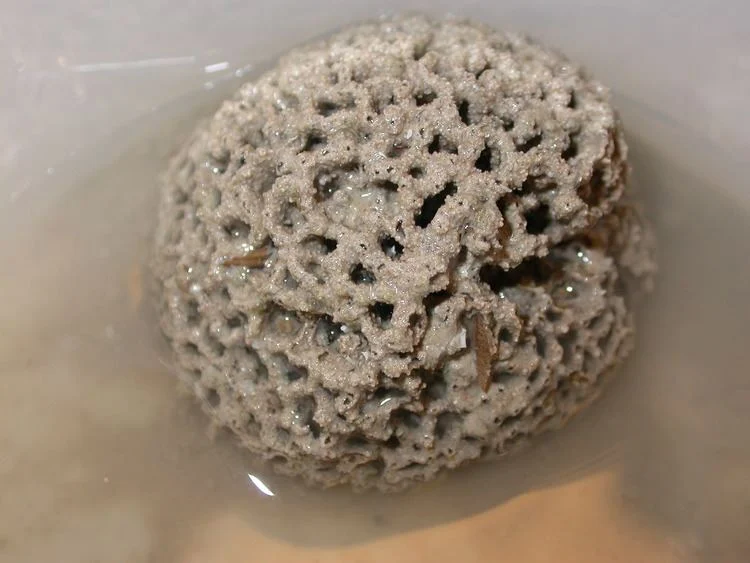
Quick Answer: Syringammina fragilissima is a remarkable deep-sea organism recognized as one of the largest known single cells on Earth. Belonging to the group of xenophyophores, this protist can reach sizes up to 20 centimeters across, forming intricate, sand-encrusted structures on the ocean floor. Its unique biology, ecological role, and extraordinary size make it a key subject in marine biology and deep-sea research.
Syringammina fragilissima stands as a symbol of the ocean’s hidden complexity. Discovered in the late 19th century, this organism shattered expectations about the limits of single-cell life. Unlike most single-celled creatures, which are microscopic, S. fragilissima can be seen with the naked eye and even handled, though it is extremely delicate. Its presence in the deep sea has challenged scientists to reconsider what is possible for unicellular life.
The deep-sea environment where Syringammina fragilissima thrives is characterized by high pressure, low temperatures, and minimal light. These extreme conditions have shaped the evolution of xenophyophores, a group of large, multinucleate foraminifera.
Their ability to construct elaborate external structures, or tests, from sediment particles enables them to survive and even flourish in habitats where few other organisms can persist. This adaptation is not only a marvel of biology but also a crucial factor in the ecology of the deep-sea floor.
The study of Syringammina fragilissima has provided insights into the diversity and adaptability of life in the ocean’s depths. Its discovery has prompted new questions about the role of giant single cells in marine ecosystems, their interactions with other organisms, and their potential as indicators of environmental change. The organism’s complex structure and behavior continue to intrigue scientists, making it a focal point for ongoing research in marine biology and protistology.
The Xenophyophore: Defining the Giant Single Cell
Xenophyophore is a term used to describe a group of large, multinucleate, single-celled protists found primarily in deep-sea environments. These organisms, including Syringammina fragilissima, are notable for their extraordinary size and for building intricate external structures called tests. The tests are composed of sediment particles, shells, and other debris cemented together by organic secretions, forming often elaborate and fragile shapes.
Unlike most protists, which are microscopic, xenophyophores can reach sizes of several centimeters to over 20 centimeters. This is exceptional among single-celled organisms and has led to their classification as some of the largest single cells known to science. The multinucleate nature of xenophyophores means that, while each organism is technically a single cell, it contains many nuclei distributed throughout its cytoplasm. This allows the cell to maintain its vast size and complex structure.
The biology of xenophyophores is adapted to the challenges of the deep sea. Their tests provide protection from predators and environmental hazards, as well as a stable platform for feeding. Xenophyophores are primarily detritivores, absorbing nutrients from organic particles trapped within their tests or from the surrounding sediment. The tests themselves create microhabitats for other small organisms, contributing to the biodiversity of the deep-sea floor.
Key Insight: The presence of xenophyophores like Syringammina fragilissima demonstrates that single-celled life can achieve remarkable complexity and size, rivaling that of some multicellular organisms.
Xenophyophores are classified within the foraminifera, a group of amoeboid protists known for their chambered shells. However, xenophyophores differ from typical foraminifera in both size and structure, possessing unique adaptations for life in the deep ocean. Their ability to construct large, sediment-encrusted tests is a defining feature, setting them apart from other foraminiferans and highlighting the diversity of protist life.
For further background, see the Wikipedia entry on Xenophyophore and the Britannica article on foraminiferans.
Discovery and Taxonomy of Syringammina fragilissima
Syringammina fragilissima was first described in 1882 by British marine biologist Henry Bowman Brady, based on specimens collected from the North Atlantic. Its name, meaning “very fragile pipe sand,” reflects both its delicate structure and the composition of its test. The discovery of such a large single-celled organism was unprecedented at the time and sparked significant interest in the scientific community.
The taxonomic classification of Syringammina fragilissima is as follows:
| Rank | Name |
|---|---|
| Domain | Eukaryota |
| Kingdom | Protista |
| Phylum | Foraminifera |
| Class | Xenophyophorea |
| Order | Psamminida |
| Family | Syringamminidae |
| Genus | Syringammina |
| Species | S. fragilissima |
This classification places S. fragilissima firmly within the xenophyophores, a subgroup of foraminifera. The genus Syringammina includes only a few recognized species, all of which share the characteristic of building large, sediment-based tests. S. fragilissima remains the best-known and most extensively studied member of the group.
The initial specimens were collected from depths of about 1,200 to 1,800 meters off the coast of Scotland, in an area now known as the Rockall Trough. Subsequent research has found S. fragilissima in other deep-sea locations, indicating a wider distribution than initially thought. Its fragile nature makes it difficult to collect intact specimens, which has limited the availability of material for detailed study.
Syringammina fragilissima is recognized as a model organism for studying the biology and ecology of xenophyophores. Its discovery contributed to the understanding of deep-sea biodiversity and the potential for extreme adaptations among protists. The species has been referenced in numerous scientific publications and is frequently cited in discussions of giant single-celled organisms.
For more on its discovery and classification, consult the World Register of Marine Species (WoRMS) entry and the Encyclopedia of Life.
Structure and Morphology: The Architecture of a Giant Cell
The structure of Syringammina fragilissima is both intricate and fragile, reflecting its adaptation to the deep-sea environment. The organism forms a test that can reach up to 20 centimeters in diameter, making it easily visible to the naked eye. This test is composed of sand grains, sponge spicules, and other small particles cemented together by organic secretions produced by the cell.
Inside the test, the cell’s cytoplasm is distributed through a network of branching tubes called granellare. These tubes contain the cell’s multiple nuclei and are responsible for nutrient absorption, waste removal, and other metabolic functions. The granellare system allows the cell to maintain communication and coordination across its large size, ensuring efficient operation despite being a single cell.
Syringammina fragilissima’s test is perforated by numerous small openings, or apertures, through which cytoplasmic extensions can reach out to interact with the surrounding sediment. These extensions, known as pseudopodia, are used for feeding, movement, and environmental sensing. The organism’s ability to manipulate its environment through these extensions is a key factor in its survival and ecological role.
Key Takeaway: The remarkable size and complexity of Syringammina fragilissima’s test are made possible by its multinucleate organization and the efficiency of its internal transport systems.
The fragility of the test means that intact specimens are rarely recovered from the deep sea. Most samples are damaged during collection, making detailed morphological studies challenging. However, advances in deep-sea imaging and remotely operated vehicles have allowed scientists to observe living specimens in their natural habitat, providing new insights into their structure and behavior.
Life in the Abyss: Habitat and Distribution
Syringammina fragilissima inhabits the deep-sea floor, typically at depths ranging from 1,200 to over 6,000 meters. Its preferred habitats are soft sediments on continental slopes, abyssal plains, and oceanic trenches. The environmental conditions in these areas are extreme, with high hydrostatic pressure, low temperatures (usually near 2°C), and complete darkness.
The distribution of S. fragilissima is patchy, with populations concentrated in areas where suitable sediment and organic material are available. The organism’s test provides a stable platform in otherwise unstable environments, allowing it to persist where other forms of life are scarce. Its presence is often associated with increased biodiversity, as the tests create microhabitats for small invertebrates and microorganisms.
Deep-sea xenophyophores like Syringammina fragilissima are important indicators of environmental conditions. Their sensitivity to changes in sediment composition, organic content, and water chemistry makes them valuable for monitoring the health of deep-sea ecosystems. The widespread but uneven distribution of S. fragilissima reflects both the challenges of the deep sea and the adaptability of this remarkable organism.
Key Insight: The occurrence of Syringammina fragilissima in diverse deep-sea locations underscores the resilience and ecological importance of giant single-celled protists.
For more on deep-sea habitats, see the Britannica entry on deep-sea ecosystems and the Wikipedia article on abyssal plains.
Feeding Strategies and Ecological Role
Syringammina fragilissima is primarily a detritivore, feeding on organic particles that settle on the deep-sea floor. Its extensive network of pseudopodia allows it to capture and absorb nutrients from the surrounding sediment. The organism’s test acts as a trap for organic matter, concentrating food resources in an otherwise nutrient-poor environment.
The feeding process involves the movement of cytoplasm through the granellare system, transporting nutrients to different parts of the cell. Multiple nuclei within the cell coordinate metabolic activities, ensuring efficient energy use across its large volume. S. fragilissima’s feeding strategy is well suited to the slow, steady rain of organic material that characterizes the deep-sea environment.
Beyond its own survival, Syringammina fragilissima plays a significant ecological role. Its tests provide habitat for a variety of small animals, including worms, crustaceans, and other microorganisms. The presence of these secondary inhabitants increases local biodiversity and contributes to the overall functioning of the deep-sea ecosystem.
- Key ecological functions of S. fragilissima:
- Concentrating organic matter for consumption
- Providing shelter for other organisms
- Stabilizing sediment structure
- Serving as a food source for specialized predators
Key Takeaway: The ecological impact of Syringammina fragilissima extends beyond its own biology, shaping the structure and diversity of deep-sea communities.
Reproduction and Growth: Unraveling the Life Cycle
The reproduction and growth of Syringammina fragilissima remain subjects of ongoing research. As a multinucleate protist, S. fragilissima does not reproduce in the same way as most multicellular organisms. Instead, it is believed to propagate through a process known as schizogony, in which the cytoplasm divides to form multiple daughter cells, each inheriting a portion of the parent’s nuclei and cytoplasm.
Growth occurs as the organism accumulates more sediment and expands its test. The addition of new material is coordinated by the cell’s multiple nuclei, allowing the test to grow in size and complexity. The rate of growth is influenced by the availability of sediment, organic matter, and environmental conditions such as pressure and temperature.
The exact mechanisms of reproduction are difficult to observe, given the organism’s fragility and the inaccessibility of its deep-sea habitat. However, genetic studies and observations of related xenophyophores suggest that both sexual and asexual reproduction may occur. The ability to rapidly colonize new areas following disturbances indicates a high degree of reproductive flexibility.
- Growth and reproduction in S. fragilissima:
- Schizogony (multiple fission) as the primary mode of reproduction
- Expansion of the test through sediment accumulation
- Potential for both sexual and asexual reproduction
- High adaptability to changing environmental conditions
Adaptations to Extreme Environments
Surviving in the deep sea requires a suite of specialized adaptations, and Syringammina fragilissima exemplifies the ingenuity of life in extreme conditions. The organism’s multinucleate structure allows it to maintain metabolic functions across a vast cellular volume, overcoming the limitations of diffusion that constrain most single-celled organisms.
The test, constructed from local sediment, provides both physical protection and camouflage. By incorporating materials from its environment, S. fragilissima reduces its visibility to potential predators and stabilizes its position on the soft sea floor. The ability to secrete organic cements enables the organism to bind particles together, forming a cohesive and durable structure despite the high pressure and low temperatures of the deep sea.
S. fragilissima also displays physiological adaptations, such as tolerance to low oxygen levels and the ability to utilize a wide range of organic materials for nutrition. These traits are essential for survival in environments where resources are scarce and conditions are harsh. The organism’s resilience is further enhanced by its capacity for rapid recovery following disturbances, such as sediment slumping or changes in water chemistry.
Key Takeaway: The success of Syringammina fragilissima in the deep sea is a testament to the power of adaptation and the potential for life to thrive in even the most challenging environments.
Scientific Importance and Ongoing Research
Syringammina fragilissima has become a model organism for the study of deep-sea biology, protist evolution, and the limits of single-celled life. Its extraordinary size and complexity challenge traditional views of what is possible for unicellular organisms, prompting new research into the mechanisms underlying cell growth, organization, and adaptation.
The organism is also of interest to researchers studying the impact of human activities on the deep sea. Xenophyophores are sensitive to disturbances such as trawling, mining, and pollution, making them valuable indicators of ecosystem health. Monitoring populations of S. fragilissima can provide early warning of environmental changes and inform conservation efforts for deep-sea habitats.
Recent advances in molecular biology and deep-sea exploration technology have opened new avenues for studying S. fragilissima. Genetic analyses are shedding light on the evolutionary relationships between xenophyophores and other foraminifera, while high-resolution imaging is revealing previously unknown aspects of their structure and behavior.
For more on the significance of deep-sea protists, see the Smithsonian Ocean Portal.
Common Misconceptions About Syringammina fragilissima
A number of misconceptions persist regarding Syringammina fragilissima and xenophyophores in general. One common error is the belief that all single-celled organisms are microscopic. In reality, S. fragilissima and its relatives demonstrate that single cells can reach macroscopic sizes, rivaling or exceeding those of small animals.
Another misconception is that the tests of xenophyophores are simple or inert structures. In fact, the tests are dynamic, living extensions of the cell, involved in feeding, protection, and environmental interaction. The complexity of these structures reflects the sophisticated biology of the organism.
Some sources have incorrectly described S. fragilissima as a colonial organism. While it contains multiple nuclei, it remains a single cell, not a colony of individual cells. This distinction is important for understanding its biology and evolutionary significance.
Key Insight: Recognizing Syringammina fragilissima as a true single cell, despite its size and complexity, is essential for appreciating the diversity of life in the deep sea.
Syringammina fragilissima in the Context of Deep-Sea Biodiversity
Syringammina fragilissima is just one example of the extraordinary diversity found in the deep sea. The discovery of such organisms has expanded our understanding of the range of forms and strategies employed by life in extreme environments. Xenophyophores contribute significantly to the structure and function of deep-sea ecosystems, influencing nutrient cycling, sediment stability, and habitat complexity.
The presence of giant single cells like S. fragilissima challenges assumptions about the limitations of cellular organization and the boundaries between unicellular and multicellular life. These organisms occupy a unique position in the tree of life, bridging the gap between simple protists and more complex animals.
Ongoing exploration of the deep sea continues to reveal new species and unexpected adaptations. Syringammina fragilissima serves as a reminder that much remains to be discovered about the ocean’s depths and the potential for life to thrive under extreme conditions.
Looking Ahead: The Future of Deep-Sea Exploration and Study
As technology advances, the study of Syringammina fragilissima and other deep-sea protists is poised to enter a new era. Improved submersibles, remotely operated vehicles, and molecular tools are making it possible to observe, sample, and analyze these organisms in unprecedented detail. These developments promise to answer longstanding questions about their biology, ecology, and evolution.
The continued discovery of large, complex single cells in the deep sea has implications for our understanding of life’s potential elsewhere in the universe. If such organisms can thrive in the extreme conditions of Earth’s oceans, similar life forms might exist on other planets or moons with subsurface oceans.
Key Takeaway: The study of Syringammina fragilissima not only enriches our knowledge of Earth’s biodiversity but also informs the search for life beyond our planet.
Beyond the Limits: What Syringammina fragilissima Reveals About Life
The existence of Syringammina fragilissima compels scientists to rethink the boundaries of single-cell biology. Its ability to grow to macroscopic sizes, construct complex structures, and adapt to the harshest environments on Earth demonstrates the remarkable versatility of life. The organism’s study has influenced fields ranging from marine ecology to evolutionary biology and astrobiology.
S. fragilissima’s story is a testament to the power of adaptation and the potential for discovery in the most unlikely places. As research continues, this giant single cell will remain a focal point for understanding the deep sea and the fundamental principles that govern life on our planet.
Frequently Asked Questions
How does Syringammina fragilissima differ from other single-celled organisms?
Syringammina fragilissima is much larger than typical single-celled organisms, reaching up to 20 centimeters, and builds complex sediment-based structures.
Can Syringammina fragilissima be seen without a microscope?
Yes, Syringammina fragilissima is visible to the naked eye due to its large size, making it one of the few single-celled organisms that can be handled directly.
What role does Syringammina fragilissima play in its ecosystem?
It provides habitat for other organisms, concentrates organic matter, and stabilizes sediment, enhancing deep-sea biodiversity.
Are xenophyophores like Syringammina fragilissima endangered?
While not currently classified as endangered, xenophyophores are sensitive to deep-sea disturbances and can be impacted by human activities.
How do scientists study such fragile deep-sea organisms?
Researchers use remotely operated vehicles and advanced imaging technology to observe and sample Syringammina fragilissima in its natural habitat.
Is Syringammina fragilissima a colonial organism?
No, despite having multiple nuclei, Syringammina fragilissima is a single cell, not a colony of individual cells.