
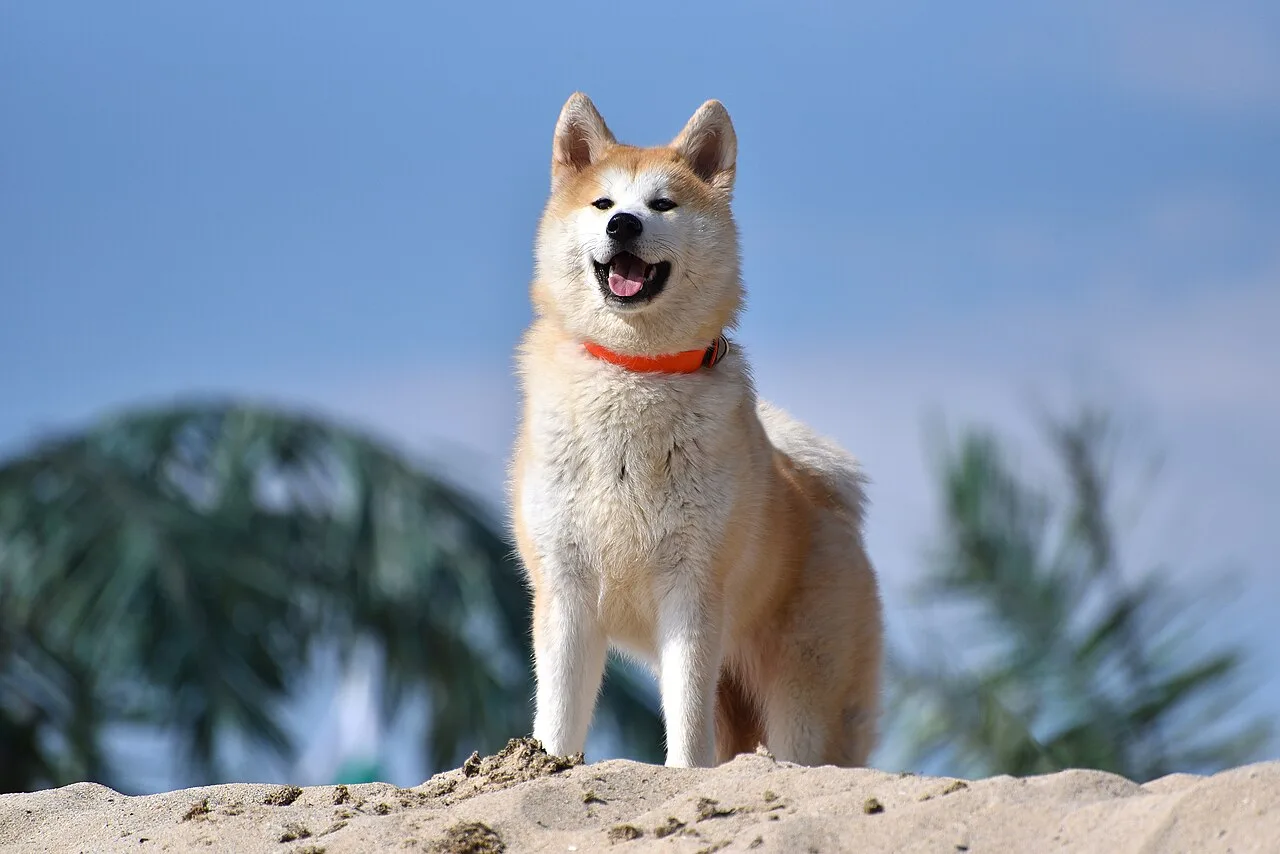
The Akita is Japan's national dog, a symbol of good health, happiness, and long life so deeply embedded in Japanese culture that small Akita figurines are traditionally given to new parents, the sick, and the newly married as tokens of good fortune.
The breed's combination of power, dignity, loyalty, and independent intelligence has made it a revered figure in Japanese life for centuries, and the story of Hachiko, the Akita who waited at Shibuya Station in Tokyo every day for nearly ten years after his owner's death, has made the breed known worldwide as the ultimate expression of canine fidelity.
The Akita is a large, powerful spitz-type dog, the largest of the six native Japanese dog breeds (Nihon Ken).
It exists in two distinct types: the original Japanese Akita (Akita Inu, or Akita Ken), maintained under Japanese breed standards, and the American Akita (sometimes called the Great Japanese Dog), which developed separately in the United States after the Second World War and has diverged substantially in size, head type, and colour.
Both are recognised by the American Kennel Club as a single breed under the Working Group, while the Federation Cynologique Internationale recognises them as separate breeds.
Origins and History
The Akita's documented history in the Akita Prefecture of northern Honshu extends back to at least the 17th century, where dogs of this type were maintained by the ruling daimyo (feudal lords) of the Akita region for hunting large game, bear, boar, and deer, in the mountainous terrain.
The breed was used specifically for holding the quarry at bay until the hunter arrived, a function requiring a dog of substantial size, courage, and the capacity to act independently in the field without close handler direction.
The breed's name comes directly from Akita Prefecture, its region of origin. The first breed organisation, the Akita Inu Hozonkai (Society for the Preservation of the Japanese Akita Dog, commonly abbreviated AKIHO), was founded in 1927, specifically to preserve the breed from dilution through crossing with German Shepherd Dogs and other European breeds that had occurred during the previous decades.
Helen Keller is credited with introducing the Akita to the United States. During her visit to Japan in 1937, she was presented with an Akita puppy as a gift, the first Akita brought to America. After the Second World War, American servicemen returning from Japan brought more Akitas to the United States, where the breed gradually developed the heavier, more bear-like conformation of the American type.
The American Kennel Club recognised the Akita in the Working Group in 1972. The breed is among the most popular large breeds in Japan and has a significant following internationally.
Physical Characteristics
The Akita is a large, powerful, well-boned dog. The Japanese and American types differ in several physical characteristics, with the Japanese type being slightly more refined and the American type being heavier and more bear-like in the head.
| Characteristic | Japanese Akita | American Akita |
|---|---|---|
| Height (males) | 64-70 cm (25-27 in) | 66-71 cm (26-28 in) |
| Height (females) | 58-64 cm (23-25 in) | 61-66 cm (24-26 in) |
| Weight (males) | 32-45 kg (70-100 lb) | 45-59 kg (100-130 lb) |
| Weight (females) | 23-32 kg (50-70 lb) | 32-45 kg (70-100 lb) |
| Lifespan | 10-13 years | 10-13 years |
The double coat is thick, harsh on the outer surface, and profusely soft on the undercoat. The coat is weather-resistant and provides excellent insulation in cold conditions. Shedding is heavy, particularly during the twice-yearly coat blow (spring and autumn), when the undercoat sheds in substantial quantities requiring daily brushing. Between coat blows, weekly brushing is adequate for most Akitas.
The Japanese Akita standard restricts colours to red fawn, sesame (red fawn with black-tipped hairs), brindle, and white, always with urajiro markings. The American Akita accepts all colours without restriction, including pinto patterns and black masks, which are not accepted in the Japanese standard.
Hachiko: The Most Famous Akita
No discussion of the Akita is complete without the story of Hachiko. Hachiko was born in 1923 and given as a puppy to Professor Hidesaburo Ueno of the University of Tokyo. Each day, Hachiko accompanied Professor Ueno to Shibuya Station, and each afternoon returned to meet the professor's train. In May 1925, Professor Ueno suffered a cerebral haemorrhage and died while at work. He never returned to Shibuya Station.
Hachiko returned to the station every day for the next 9 years, 9 months, and 15 days, until his own death in March 1935, waiting for a train that never came.
Hachiko's daily vigil attracted national attention in Japan during his lifetime. A bronze statue was erected at Shibuya Station in 1934, a year before his death, with Hachiko present at the unveiling. The statue (the original melted down for the war effort and replaced by the current statue in 1948) remains one of Tokyo's most popular meeting places. Hachiko has been the subject of multiple films, including the 1987 Japanese film Hachi-Ko and the 2009 American film Hachi: A Dog's Tale.
Temperament
The Akita's temperament is defined by the combination of power, dignity, and profound loyalty. The breed is deeply devoted to its family but reserved, often to the point of apparent indifference, with strangers. This is not shyness; it is the measured composure of a dog that does not offer its social engagement lightly.
The Akita is not appropriate for first-time dog owners. The breed is large, powerful, independent, and has a strong prey drive. Without consistent, experienced handling and extensive early socialisation, Akitas can develop aggression toward other dogs, and some lines show elevated inter-dog aggression, particularly between dogs of the same sex.
This is a breed characteristic, the Akita was historically kept singly, not in packs, and it must be managed through careful socialisation and supervised introduction protocols.
"The Akita presents a combination of characteristics that requires experienced ownership: substantial physical size and strength, significant independence of judgment in the field of situations, strong loyalty to the primary family unit combined with reserve toward outsiders, and a prey drive appropriate to a dog bred for large game hunting.
These are not characteristics that should be underestimated or assumed to have been moderated by the transition to companion life." American Kennel Club. (2023). Working Group: Akita Breed Standard. Retrieved from https://www.akc.org/dog-breeds/akita/
The Akita is extremely clean in its domestic habits, like the Shiba Inu and the cat, it self-grooms and maintains a fastidious personal cleanliness. It is generally quiet indoors, though it does vocalize with a range of grumbles, moans, and occasional bold barks.
Health Conditions
The Akita has several hereditary health conditions that prospective owners should research and that responsible breeders should test for.
| Health Condition | Prevalence / Notes |
|---|---|
| Hip dysplasia | ~13% prevalence (OFA data), moderate for a large breed |
| Autoimmune diseases | Elevated breed prevalence; Vogt-Koyanagi-Harada-like syndrome (uveodermatological syndrome, UDS) is breed-associated |
| Hypothyroidism | Common in the breed; thyroid function testing recommended |
| Progressive retinal atrophy | DNA testing recommended for breeding stock |
| Bloat/GDV | Risk present in large, deep-chested breed |
Uveodermatological syndrome (UDS), also called Vogt-Koyanagi-Harada-like syndrome in dogs, is an autoimmune disease affecting the eyes, skin, and nervous system that has elevated prevalence in Akitas. The immune system attacks melanocytes (pigment-producing cells), causing progressive uveitis (inflammation inside the eye that can lead to glaucoma and blindness), depigmentation of the nose and lips, and skin lesions.
Early diagnosis and immunosuppressive treatment are essential to preserve vision. Any Akita showing ocular changes, depigmentation of the nose or muzzle, or skin lesions should be evaluated promptly.
"Uveodermatological syndrome in the Akita is one of the breed-associated autoimmune conditions that exemplifies the genetic basis of immune dysregulation in certain dog breeds. The condition closely parallels Vogt-Koyanagi-Harada syndrome in humans in its clinical presentation, pathological mechanisms, and response to immunosuppressive therapy." Carter, W. J., & Crispin, S. M. (2002).
An investigation of breed-associated uveodermatological syndrome in the Akita. Veterinary Ophthalmology, 5(3), 145-149. https://doi.org/10.1046/j.1463-5224.2002.00238.x
See also Shiba Inu for the smaller Japanese spitz breed, How to Socialize a Dog for socialisation techniques essential for this breed, and How Dogs Evolved from Wolves for genetic context on basal breeds.
Training and Socialisation
Training an Akita is a long-term commitment that begins the moment the puppy arrives. The breed is intelligent, observant, and capable of complex learning. The challenge is motivation, the Akita does not have the eager-to-please quality of retriever breeds and must see compelling reason to comply with training requests.
Positive reinforcement with high-value food rewards is the most reliable training approach. Training sessions should be engaging, varied, and not repetitively drill-based. The Akita respects clear, consistent leadership expressed through calm confidence rather than force.
Early and extensive socialisation is non-negotiable for this breed. An Akita that has not been exposed to varied people, dogs, children, and environments from 8 weeks of age can develop serious aggression issues as an adult. The socialisation window in dogs is brief, and every day of the first 16 weeks matters for this breed.
See also Best Dogs for First-Time Owners, the Akita does not appear on this list for the reasons described above.
Exercise
Adult Akitas need approximately 1 to 2 hours of moderate exercise daily. The breed's size and strength mean that exercise should include substantial walking and structured activity, but Akitas are not as high-energy as working breeds such as Border Collies or Belgian Malinois. They need regular outdoor activity for both physical condition and mental stimulation, but do not require the continuous engagement of true working breeds.
Off-lead exercise in securely fenced areas is appropriate for Akitas with reliable training. The breed's prey drive and inter-dog aggression potential mean that dog parks and off-lead areas with multiple unknown dogs are not appropriate settings for most Akitas.
References
Carter, W. J., & Crispin, S. M. (2002). An investigation of breed-associated uveodermatological syndrome in the Akita. Veterinary Ophthalmology, 5(3), 145-149. https://doi.org/10.1046/j.1463-5224.2002.00238.x
Orthopedic Foundation for Animals. (2023). Breed Health Statistics: Akita. Retrieved from https://ofa.org
Sakurai, M. (2009). Hachiko: The True Story of a Loyal Dog. Scholastic.
American Kennel Club. (2023). Akita Breed Standard and History. Retrieved from https://www.akc.org/dog-breeds/akita/
Parker, H. G., Kim, L. V., Sutter, N. B., et al. (2004). Genetic structure of the purebred domestic dog. Science, 304(5674), 1160-1164. https://doi.org/10.1126/science.1097788
Masuda, K., et al. (1997). Characteristics of canine uveodermatological syndrome (Vogt-Koyanagi-Harada syndrome) in Japan. Journal of Veterinary Internal Medicine, 11(2), 82-87. https://doi.org/10.1111/j.1939-1676.1997.tb00073.x
Frequently Asked Questions
Who was Hachiko?
Hachiko was an Akita born in 1923 and owned by Professor Hidesaburo Ueno of the University of Tokyo. Each day, Hachiko accompanied the professor to Shibuya Station and met his return train in the afternoon. When Professor Ueno died suddenly of a cerebral haemorrhage in May 1925, Hachiko continued returning to Shibuya Station every day for nearly 10 years until his own death in March 1935, waiting for his owner’s train.
His vigil attracted national attention, and a bronze statue erected at Shibuya Station in 1934, while Hachiko was still alive, remains one of Tokyo’s most recognisable landmarks. The story is a cultural touchstone in Japan and has been the subject of multiple films.
What is the difference between Japanese and American Akitas?
The Japanese Akita (Akita Inu) and American Akita diverged following the Second World War, when American servicemen brought Akitas to the United States and selected for different traits than Japanese breeders. Japanese Akitas are slightly smaller and more refined, with a restricted colour palette (red fawn, sesame, brindle, and white with urajiro markings).
American Akitas are heavier and more bear-like in head structure, and accept all colours including pinto patterns and black masks. The Federation Cynologique Internationale recognises them as separate breeds; the AKC recognises both under a single breed standard. Many Japanese breed preservationists and the Japanese Akita Inu Hozonkai (AKIHO) maintain that the American type should be considered a separate breed.
Are Akitas good with other dogs?
Akitas have elevated inter-dog aggression, particularly with dogs of the same sex, and can be dog-selective in ways that make off-lead dog park settings genuinely unsafe. This is a breed characteristic rooted in the Akita’s history as a dog kept singly rather than in packs; it was not bred for cooperative living with other dogs.
With careful, extensive early socialisation and structured introductions, many Akitas can live peacefully with a known companion dog. Dog parks, off-lead areas with multiple unknown dogs, and unsupervised interaction with unfamiliar dogs are not appropriate settings for this breed. Potential owners with existing dogs should conduct a carefully managed introduction before acquisition.
What is uveodermatological syndrome in Akitas?
Uveodermatological syndrome (UDS) is an autoimmune disease with elevated prevalence in Akitas, in which the immune system attacks melanocytes (pigment-producing cells). Clinical signs include progressive uveitis (inflammation inside the eye causing pain, redness, and vision loss that can progress to glaucoma and blindness), depigmentation of the nose, lips, and skin around the eyes, and skin lesions.
Early diagnosis and treatment with immunosuppressive medications are essential to preserve vision and manage skin symptoms. Any Akita showing ocular inflammation, sudden changes in pigmentation of the nose or muzzle, or unexplained skin lesions should be evaluated by a veterinarian promptly.
Why are Akitas not suitable for first-time owners?
Akitas present several characteristics that require experienced dog ownership: substantial physical size and strength that can become difficult to manage if training is not established early; significant independence that requires consistent, confident handling; strong inter-dog aggression potential that demands careful socialisation and management; a prey drive that requires secure fencing; and a loyalty structure that may not extend to strangers or non-family members in ways that require management in social situations.
First-time owners who acquire an Akita and do not establish clear, positive leadership from the outset, or who do not commit to extensive socialisation during puppyhood, risk producing an aggressive or unmanageable adult dog.
How much does an Akita shed?
Akitas have a thick double coat that sheds heavily twice yearly, during coat blows in spring and autumn, and moderately throughout the rest of the year. The coat blows are substantial events: the dense undercoat sheds in large quantities and requires daily brushing for several weeks to manage the volume. A slicker brush and deshedding tool (such as an undercoat rake) are essential equipment. Between coat blows, weekly brushing is adequate.
The Akita’s coat is self-cleaning to a significant degree, the outer coat repels dirt and water reasonably well, and the dog actively grooms itself. Professional grooming is not typically required for coat maintenance, though some owners use professional services during the heaviest shedding periods.