
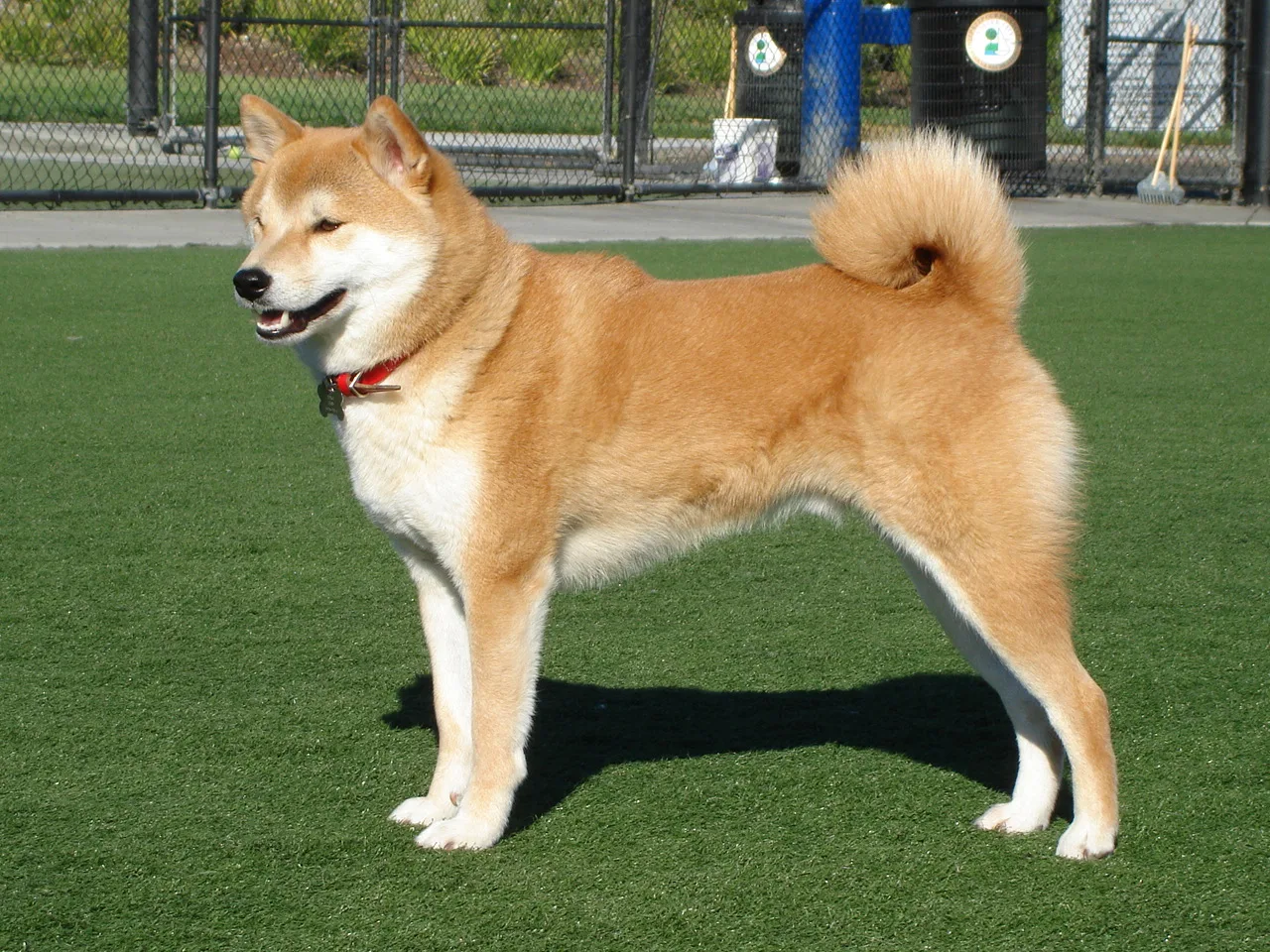
The Shiba Inu is Japan's most popular companion dog and the most registered of the six native Japanese dog breeds collectively known as the Nihon Ken (Japanese dogs).
It is also, since the early 2010s, one of the most internationally recognised dog breeds on earth, a distinction owed in part to the Doge internet meme, which launched the image of a Shiba Inu's quizzical, slightly smug expression into cultural ubiquity.
Behind the meme is a dog of genuine substance and considerable character: compact, agile, fastidiously clean, fiercely independent, and possessed of one of the most dramatic vocal repertoires in the canine world.
The Shiba Inu is a spitz-type dog, a member of the group of primitive, northern-heritage breeds characterised by upright ears, curled or bushy tails, and a tendency toward independence that reflects thousands of years of semi-autonomous function. Like the Akita, the Chow Chow, and the Afghan Hound, the Shiba Inu is a genetically ancient breed. Its essential character has been preserved for centuries in the mountains and dense forests of Japan, where it was used to flush birds and small game.
Shiba Inu Origins and History
The Shiba Inu is one of six native Japanese dog breeds recognised by the Japan Kennel Club: the Shiba Inu (small), Kishu Ken (medium), Shikoku Ken (medium), Kai Ken (medium), Hokkaido Ken (medium), and Akita Inu (large). The Shiba is by far the most numerous and widely distributed.
The name Shiba Inu translates variously as "brushwood dog" (a reference to the brushwood terrain the dog was bred to hunt in), "small dog," or, in a folk etymology, "fiery dog," referencing the breed's spirited character and the reddish-gold colour of its most typical coat.
The Shiba Inu was used historically as a hunting dog in the mountainous regions of central Honshu, primarily for flushing birds and small game including wild boar. The breed's small size and agility made it adept at working in dense undergrowth that larger breeds could not navigate.
The breed nearly became extinct during World War II, when distemper epidemics and the bombing of civilian areas decimated Japan's dog population. Post-war reconstruction of the breed from the survivors of three surviving regional lines, the Shinshu Shiba, the Mino Shiba, and the Sanin Shiba, produced the modern Shiba Inu. The breed was designated a Japanese Natural Monument in 1936.
The first documented importation of Shiba Inus to the United States occurred in 1954. The American Kennel Club recognised the breed as a member of the Non-Sporting Group in 1992.
Physical Characteristics
The Shiba Inu has the classic spitz appearance: a compact, well-muscled body; upright triangular ears; dark, almond-shaped eyes; a thick double coat; and a curled tail carried over the back. The overall impression is of a small fox, an impression enhanced by the breed's characteristic reddish coat and sharp, alert expression.
| Characteristic | Measurement |
|---|---|
| Height (males) | 35-43 cm (14-17 in) |
| Height (females) | 33-41 cm (13-16 in) |
| Weight (males) | 8-11 kg (18-24 lb) |
| Weight (females) | 6.8-9 kg (15-20 lb) |
| Lifespan | 13-16 years |
| AKC Group | Non-Sporting |
The double coat consists of a soft, thick undercoat and a straight, stiff outer coat that provides weather resistance. The most common coat colour is red, the colour associated with the breed internationally. Other recognised colours include black and tan, sesame (red with black-tipped hairs), and cream.
A characteristic marking called urajiro, creamy white colouring on the sides of the muzzle, cheeks, inside the ears, chest, belly, and underside of the tail, is a required marking in the Japanese breed standard and is present in all colour varieties.
The Shiba Inu sheds heavily twice yearly, seasonal coat blows in spring and autumn during which the undercoat is shed in large quantities. Weekly brushing during non-shedding periods and daily brushing during the coat blow manages the shedding, though owners should expect hair on clothing, furniture, and surfaces during these periods.
Shiba Inu Temperament
The Shiba Inu's temperament is described in the Japanese standard by three terms: kan-i (spirited boldness), ryosei (good nature), and soboku (simplicity and artlessness). These qualities, together, describe a dog that is confident and alert, fundamentally good-natured, and unpretentious in its directness.
In practice, this translates to a dog that is bold, independent, fastidious (the breed self-grooms like a cat and takes great pains to keep itself clean), reserved with strangers, and deeply attached to its family on its own terms.
The "Shiba scream" is one of the breed's most discussed characteristics: an extremely dramatic, high-pitched vocalization produced when the dog is restrained, groomed in an unwelcome manner, or subjected to something it finds objectionable. The sound is remarkable both for its volume and for the operatic quality of its distress expression. It can alarm inexperienced owners and neighbours alike.
Importantly, the Shiba scream is not a sign of pain or injury; it is an emphatic expression of displeasure from a dog that has strong opinions about its own autonomy.
"The Nihon Ken group, of which the Shiba Inu is the most representative member, carries a distinctive behavioural profile: high independence, strong territorial instinct, reserved social behaviour with unfamiliar individuals, and a pronounced self-cleaning tendency. These characteristics are broadly consistent with the phenotype of dogs that underwent minimal domestication pressure in terms of human social bonding, dogs selected for working function in semi-autonomous roles rather than for close cooperative behaviour with handlers." Ostrander, E. A., & Kruglyak, L. (2000). Unleashing the canine genome. Genome Research, 10(9), 1271-1274. https://doi.org/10.1101/gr.161700
Shiba Inu Health Conditions
The Shiba Inu is generally a healthy breed with a long lifespan. The breed has not been subject to the extreme conformation selection that creates structural health problems in many modern breeds, and the small gene pool recoveries following World War II introduced some selection for hardiness. Nonetheless, specific hereditary conditions are present in the breed.
| Health Condition | Prevalence / Notes |
|---|---|
| Hip dysplasia | ~11% prevalence (OFA data), relatively low compared to many breeds |
| Patellar luxation | Present in the breed; varies in severity |
| Progressive retinal atrophy (PRCD) | DNA test available; progressive vision loss leading to blindness |
| Allergies (atopic dermatitis) | Common, skin allergies present in the breed |
| Glaucoma | Elevated breed prevalence; regular ophthalmic screening recommended |
Progressive retinal atrophy (PRA) in the progressive rod-cone degeneration form (PRCD) is the most important hereditary condition for breeders to test for. PRCD is caused by an autosomal recessive mutation. A DNA test is commercially available (Optigen, PennGen) and should be performed on all breeding stock. Carriers can be bred only to genetically clear animals to prevent the production of affected offspring.
Dogs that are genetically affected with PRCD will develop progressive visual loss beginning typically in mid-life, eventually resulting in complete blindness.
See also Dog Vaccination Schedule Explained for preventive healthcare scheduling, and How Dogs Evolved from Wolves for genetic context on ancient breeds like the Shiba Inu.
Training
Training a Shiba Inu requires the acceptance of a fundamental principle: this is not a breed that works for human approval in the way a Golden Retriever or Border Collie does. The Shiba Inu was bred for semi-autonomous hunting function, not for close cooperation with handlers. Its relationship with humans is characterised by mutual respect rather than deference.
Positive reinforcement using food rewards is the most consistently effective training approach. The Shiba Inu is intelligent and learns quickly, but it will assess training requests and perform them when it perceives adequate motivation, and may decline when the motivation is insufficient. Punitive methods or corrections produce anxiety and defensive behaviour rather than compliance.
Early socialisation is critical. A Shiba Inu that has not been extensively socialised in puppyhood, exposed to varied people, environments, sounds, and animals, can develop significant social anxiety and reactivity. The breed's natural reserve with strangers becomes pronounced fearfulness in under-socialised individuals. Socialisation should begin at 8 weeks and continue through the first year.
Recall training is essential and must be practised consistently in safe environments before any off-lead access. The Shiba Inu has a prey drive that, when engaged, can override recall training. Off-lead exercise should only occur in securely fenced areas.
See also Best Dogs for Apartments for apartment suitability guidance, and Akita for comparison with Japan's larger native breed.
Exercise
Shiba Inus are active dogs with moderate exercise requirements. An adult Shiba needs approximately 45 to 60 minutes of exercise daily. The breed is agile, fast, and enjoys varied, interesting walks. Nose work, tracking games, and urban exploration on lead are well-suited to the Shiba Inu's active, curious nature.
The breed's predatory instincts make off-lead exercise in unfenced areas inadvisable regardless of training level. Many experienced Shiba Inu owners never allow off-lead access outside of securely fenced areas, and this is a prudent policy for the breed.
References
Parker, H. G., Kim, L. V., Sutter, N. B., et al. (2004). Genetic structure of the purebred domestic dog. Science, 304(5674), 1160-1164. https://doi.org/10.1126/science.1097788
Orthopedic Foundation for Animals. (2023). Breed Health Statistics: Shiba Inu. Retrieved from https://ofa.org
Japan Kennel Club. (2023). Standard: Shiba Inu. Retrieved from https://www.jkc.or.jp
Acland, G. M., Aguirre, G. D., Ray, J., et al. (2001). Gene therapy restores vision in a canine model of childhood blindness. Nature Genetics, 28(1), 92-95. https://doi.org/10.1038/ng0501-92
American Kennel Club. (2023). Shiba Inu Breed Standard. Retrieved from https://www.akc.org/dog-breeds/shiba-inu/
Ostrander, E. A., & Kruglyak, L. (2000). Unleashing the canine genome. Genome Research, 10(9), 1271-1274. https://doi.org/10.1101/gr.161700
Frequently Asked Questions
What is the Shiba scream?
The Shiba scream is an extremely dramatic, high-pitched vocalization that Shiba Inus produce when restrained, subjected to unwelcome handling (such as nail trimming or bathing), or confronted with something they find objectionable. The sound is remarkable for both its volume and its emotional quality; it has been compared to a human scream or a theatrical cry of distress.
Despite how alarming it sounds, the Shiba scream is not a sign of pain or injury in most cases. It is the Shiba Inu expressing strong displeasure in the most emphatic terms available to it. Desensitisation training, gradually habituating the dog to handling through positive reinforcement from puppyhood, reduces but rarely eliminates the behaviour entirely in dramatic individuals.
Are Shiba Inus good for first-time dog owners?
Shiba Inus are generally not recommended for first-time dog owners. The breed’s strong independence, resistance to conventional compliance-based training, significant prey drive, and potential for reactivity if under-socialised create challenges that are best navigated by owners with prior dog experience.
First-time owners who acquire a Shiba Inu typically need to significantly adjust their expectations about training responsiveness and on-lead behaviour, and should invest in a professional positive reinforcement trainer early in the dog’s life. The breed is deeply rewarding for owners who understand and appreciate shibas on their own terms, but frustrating for owners expecting a biddable, eager-to-please companion.
How much does a Shiba Inu shed?
Shiba Inus have a thick double coat that sheds moderately year-round and heavily twice yearly during seasonal coat blows in spring and autumn. During shedding season, the undercoat comes out in large quantities, clumps of dense, soft hair that accumulate on floors, furniture, and clothing. Daily brushing during the coat blow, using a slicker brush and deshedding tool, manages the volume. Between coat blows, weekly brushing is sufficient for most Shibas.
The outer coat repels dirt and moisture reasonably well, and the breed is fastidiously clean, but the heavy seasonal shedding is a practical reality that prospective owners should prepare for.
Can Shiba Inus live with cats?
Some Shiba Inus coexist peacefully with cats, particularly when raised alongside them from puppyhood. The breed does have a prey drive for small, fast-moving animals, and an unfamiliar cat that runs can trigger a chase response. The key factors are: early socialisation with cats from puppyhood; the individual dog’s prey drive intensity; and the cat’s confidence level.
A Shiba Inu that has grown up with cats typically recognises them as household members rather than prey. Introductions of adult Shibas to resident cats should be managed carefully with the dog on lead, allowing the cat to control proximity. Supervision is recommended until the relationship is well-established.
What is urajiro in Shiba Inus?
Urajiro is the Japanese term for the characteristic creamy white markings required in all Shiba Inu colour varieties by the breed standard. The urajiro markings appear on the sides of the muzzle, the cheeks, the inside of the ears, the chest and belly, and the underside of the tail. The pattern is consistent across the red, black-and-tan, sesame, and cream colour varieties.
In red Shibas, the contrast between the rich orange-red coat and the cream urajiro is particularly striking. The urajiro is considered a defining visual characteristic of the authentic Shiba Inu type.
How long do Shiba Inus live?
Shiba Inus typically live 13 to 16 years, which is long for a dog of their size and reflects the breed’s generally good health and absence of extreme conformational problems. Several factors support longevity in the breed: genetic hardiness preserved through centuries of relatively natural selection; moderate size; and absence of the structural issues seen in brachycephalic or giant breeds.
Key factors affecting longevity at the upper end of the range include: maintaining a healthy weight throughout life; regular veterinary screening for glaucoma and PRA as the dog ages; proactive dental care; and ensuring adequate exercise to maintain muscular and cardiovascular condition.