
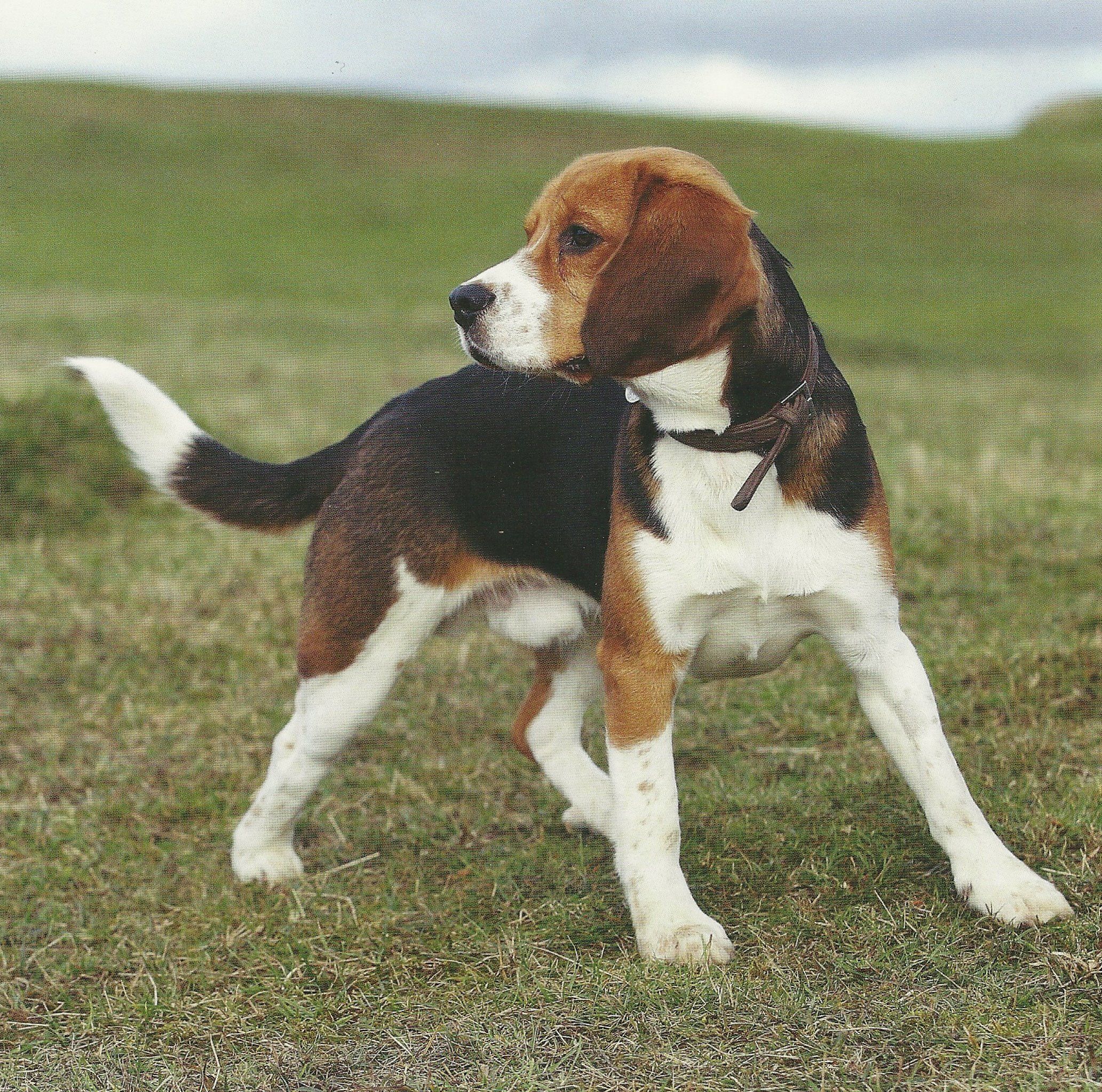
The Beagle is a compact, sturdy scent hound with one of the finest noses in the entire canine world, a voice designed to be heard across open country, and a personality that has made it one of the most consistently popular family dogs in the United States for decades.
AKC registration data has placed the Beagle in the top ten most popular breeds for every year since records began tracking rankings, with the breed reaching the number one spot in the 1950s through 1970s and remaining in the top ten even in an era when French Bulldogs and Golden Retrievers have dominated the upper rankings.
The Beagle's nose, with 225 million scent receptors compared to a human's 5 million, is specialised equipment refined over centuries of rabbit-hunting work. That same nose has made the breed one of the primary tools used by the United States government for biosecurity inspections at international ports of entry.
The Beagle is simultaneously a working detection dog, a beloved family companion, and one of the most commonly used laboratory animals in biomedical research - a breadth of human uses that reflects both the breed's physical reliability and the complications of its popularity.
Origin and History
The Beagle's direct ancestry is somewhat unclear in the historical record, but the type has been documented in England since at least the 1400s. Small pack hounds used for hunting rabbits and hares on foot - small enough that hunters could follow on foot rather than horseback - were kept across England and Wales from medieval times. Elizabethan records reference "pocket Beagles" small enough, allegedly, to fit in a glove, though these diminutive specimens are now extinct.
The modern standardised Beagle breed emerged in England in the 1800s, shaped by the interests of rabbit hunters who wanted a reliable, consistent-sized hound with a strong nose, good stamina, and a distinctive voice that could be tracked across fields and woods. The word "beagle" may derive from the Old French word begueule (meaning open throat or loudmouth) or from the Celtic word beag (small), and both origins are plausible given the breed's characteristic vocalisations and compact size.
The American Kennel Club recognised the Beagle in 1885. The AKC standard recognises two size varieties: the 13-inch variety (dogs under 33 cm at the withers) and the 15-inch variety (dogs between 33 and 38 cm). Both varieties are judged in the Hound Group. In the United Kingdom, the Kennel Club recognises a single size standard. The National Beagle Club of America was founded in 1888 and has maintained breed trials and standards since then.
The practice of beagling - following a pack of Beagles on foot while they hunt rabbit by scent - has been practiced in England since at least the 1500s. Today beagling packs operate in England and Ireland, and the sport has formal rules and an active social structure, though its future is complicated by the Hunting Act 2004 which banned fox hunting with dogs; Beagle packs typically hunt rabbit, which is not covered by the same prohibition.
Physical Characteristics
The Beagle is a compact, solidly built dog with a slightly domed skull, a long muzzle relative to facial length (an important functional feature for housing the olfactory apparatus), long floppy ears, and a tail that is typically held upright and flagged with a white tip when the dog is working. The white tip was selectively retained as a practical feature: it allows hunters to track the dog's tail above long grass.
| Characteristic | 13-inch Variety | 15-inch Variety |
|---|---|---|
| Height | Under 33 cm | 33-40 cm |
| Weight | 9-11 kg | 11-14 kg |
| AKC Group | Hound | Hound |
| Lifespan | 12-15 years | 12-15 years |
| Coat type | Short, dense, double | Short, dense, double |
| Tail feature | White-tipped | White-tipped |
The body is muscular and compact with a level topline, deep chest (which houses the large lung capacity needed for long-distance scenting work), and a moderately long neck. The coat is short, dense, and weather-resistant - a double coat with a softer undercoat. Accepted colours are any true hound colour, with tricolour (black, tan, and white) and red-and-white being the most common in the show ring. Lemon-and-white, blue tick, and other combinations also occur.
The pendulous ears, while visually characteristic, are functional: they hang low and help funnel air currents carrying scent particles toward the dog's nose when the head is down in a tracking posture. The broad, open nostrils allow maximum airflow to the olfactory surfaces inside.
The Nose: 225 Million Scent Receptors
The Beagle's olfactory system is the defining biological feature of the breed. Dogs as a species have far more scent receptor cells than humans - estimates place the average dog's scent receptor count at 100-300 million compared to approximately 5 million in humans, giving dogs a sense of smell estimated at 10,000 to 100,000 times more sensitive to certain compounds than the human nose. The Beagle is at the upper end of the canine distribution with approximately 225 million scent receptor cells.
The practical consequences of this olfactory capacity are extensive:
- A Beagle can detect a specific rabbit trail laid hours earlier across varied terrain
- Beagles can discriminate individual animals' scent trails from the scent of other members of the same species
- The olfactory cortex of the dog brain - the neural tissue devoted to processing scent information - is proportionally 40 times larger than the equivalent structure in human brains
- Beagles have been documented detecting certain cancers, specific agricultural pests, and contraband substances in controlled studies
The most formally structured application of Beagle scent ability is the Beagle Brigade, operated by the United States Department of Agriculture's Animal and Plant Health Inspection Service (APHIS). Beagle Brigade teams have been deployed at international airports and ports of entry since 1984 to detect prohibited agricultural products, foods, and plant materials in passenger baggage and cargo.
The program uses Beagles specifically because the breed is effective at detection work, small enough to move comfortably through baggage claim areas without intimidating passengers, and visually approachable in a way that encourages the public to cooperate with inspections.
As of 2023, Beagle Brigade teams operated at more than 20 major international US airports and ports. USDA data indicates the program intercepts millions of prohibited agriculture items annually, preventing potential introduction of foreign pests and diseases.
For more on canine scent capabilities see How Far Can Dogs Smell.
Voice: Bred to Be Heard
The Beagle has three distinct vocalisations used in hunting contexts: a bark, a bay (a prolonged, resonant call used while on scent), and a howl. The bay in particular is a distinctive sound bred into the dog over centuries - it is loud enough to carry across fields at distance, resonant enough to locate in three dimensions, and consistent enough for experienced hunters to recognise whether their pack is on scent or has lost it.
This vocality is one of the most important practical considerations for prospective Beagle owners. The bay and howl are not trainable-out behaviours in the meaningful sense: they are deeply instinctive responses to specific triggers (isolation, detecting an interesting scent, or the excitement of tracking). Training can reduce frequency and can teach a "quiet" command for shorter periods, but training cannot eliminate the underlying drive.
Beagles left alone for extended periods often bay and howl in response to isolation distress. This is not defiance - it is the breed doing what it was selected to do, which is to vocalise. Prospective owners in apartments or in close proximity to neighbours should carefully consider whether they can meet this breed's social and exercise needs in ways that prevent isolation baying.
Temperament and Behaviour
Beagles are consistently described as curious, merry, determined, and friendly. They are typically outgoing with both familiar people and strangers, making them poor guard dogs but excellent family companions. Their pack-hunting history means they tend to get along well with other dogs and often prefer canine company. They are generally patient with children, though as with all dogs, supervision is recommended with very young children.
The trait that surprises new owners most often is the Beagle's capacity for selective hearing when scent is involved. A Beagle that has detected an interesting smell enters a focused state in which its recall reliability drops dramatically. This is not stubbornness in the human sense; it is the breed functioning exactly as it was designed.
Off-leash recall training requires significant investment, and many Beagle owners and trainers recommend keeping the dog on leash or in a securely fenced area in open environments.
For guidance on managing these traits see Beagle Training Guide. The breed's child-friendliness and social nature make it one of the top recommendations for families; for a broader look at family-suitable breeds see Best Dogs for Families with Kids.
| Temperament Trait | Typical Assessment |
|---|---|
| Affection with family | High |
| Friendliness with strangers | High |
| Energy level | Moderate to high |
| Barking / howling tendency | High |
| Off-leash reliability | Low without extensive training |
| Good with other dogs | High |
| Good with children | High |
| Trainability | Moderate (food-motivated, but scent-driven distraction) |
Health: What Beagle Owners Need to Know
Beagles are a relatively hardy breed with fewer breed-specific health problems than many popular breeds. The lifespan of 12-15 years is longer than the average for dogs and significantly longer than comparably sized brachycephalic breeds.
Epilepsy: Beagles have a higher-than-average rate of idiopathic epilepsy (seizures with no identifiable structural cause). Studies have found epilepsy rates in Beagles ranging from 2.3% to 3.1% of the population, compared to 0.75% in dogs as a whole. Seizure management typically involves anticonvulsant medication once a dog has had two or more episodes within a six-month period.
Intervertebral disc disease (IVDD): Beagles are classified as chondrodystrophic dogs - their cartilage development genes predispose them to premature calcification of intervertebral discs. Disc herniation can cause pain, nerve damage, and in severe cases paralysis. While Beagles are less severely affected than Dachshunds, the risk is meaningful and owners should be aware of signs: reluctance to jump, back pain, wobbling, or sudden hindlimb weakness.
Hypothyroidism: The thyroid gland underproducing thyroid hormone is more common in Beagles than in most breeds. Signs include weight gain despite normal appetite, lethargy, cold intolerance, and coat changes. It is manageable with daily oral thyroid hormone supplementation and does not significantly affect lifespan when treated.
Neonatal cerebellar cortical degeneration (NCC, or "Funny Puppy" disease): A hereditary condition specific to Beagles in which affected puppies show cerebellar dysfunction from birth - wobbling, falling, difficulty standing. Severely affected puppies are typically euthanased. A genetic test is available to identify carriers, and responsible breeders screen breeding stock.
Patellar luxation and cherry eye (nictitating membrane prolapse) are also more common in Beagles than in the average dog population.
"In Beagles, idiopathic epilepsy is a significant welfare concern that owners and breeders should discuss proactively. The breed-specific prevalence is approximately three times the all-breed average, and genetic factors are strongly suspected though specific gene variants have not yet been confirmed." - Bhatti SFM et al., Idiopathic epilepsy in dogs and cats: A systematic review, Journal of Veterinary Internal Medicine, 2015
Exercise and Mental Stimulation
Beagles require a moderate amount of exercise - typically 45-60 minutes of active exercise per day for an adult. They are energetic and were bred for sustained work, but they are not as high-drive as working retrievers or herding dogs. Regular walking, hiking, and play sessions are appropriate. Mental stimulation through scent work - nose work classes, sniff trails, puzzle feeders - is particularly valuable for a breed whose brain is fundamentally wired for olfactory engagement.
Without adequate exercise and enrichment, Beagles tend to develop problem behaviours including destructive chewing, excessive howling, and weight gain. Obesity is common in Beagles because they are highly food-motivated and opportunistic feeders. Their food drive, while an asset in training with high-value treats, makes free feeding inappropriate; measured meals and body condition monitoring are essential.
Beagle vaccinations should follow a standard schedule appropriate to local disease risks. For reference see Dog Vaccination Schedule Explained. For a full discussion of Beagle-specific medical conditions see Beagle Health Problems.
The Beagle in Research
One of the more complex aspects of the Beagle's profile is its role as the most commonly used dog breed in biomedical and pharmaceutical research. Beagles are used extensively in toxicology, pharmacology, and surgical research, primarily because their size (suitable for housing and handling), consistent temperament (docile and tolerant), reproductive reliability, and well-documented physiology make them predictable research subjects.
Estimates from US industry and regulatory data suggest that tens of thousands of Beagles are used annually in research in the United States alone. The National Institutes of Health and the FDA both publish data on animal use in federally funded and regulated research.
Animal welfare organisations including the Humane Society of the United States have campaigned actively for reductions in Beagle research use and for the adoption of research Beagles following study completion. Several pharmaceutical companies have established post-research adoption programs, and state-level legislation in the United States has increasingly mandated that research facilities make dogs available for adoption rather than euthanasing them at the conclusion of studies.
References
Bhatti SFM, De Risio L, Muñana K, et al. International Veterinary Epilepsy Task Force consensus proposal: medical treatment of canine epilepsy in Europe. BMC Veterinary Research. 2015;11:176. https://doi.org/10.1186/s12917-015-0464-z
McGreevy PD, Georgevsky D, Carrasco J, Valenzuela M, Duffy DL, Serpell JA. Dog behavior co-varies with height, bodyweight and skull shape. PLOS ONE. 2013;8(12):e80529. https://doi.org/10.1371/journal.pone.0080529
United States Department of Agriculture, Animal and Plant Health Inspection Service. Beagle Brigade Program Overview. https://www.aphis.usda.gov/pet-travel/beagle-brigade
Schalke E, Ott SA, Von Gaertner AM, Hackbarth H, Mittmann A. Is breed-specific legislation justified? Study of the results of the temperament test of Lower Saxony. Journal of Veterinary Behavior. 2008;3(3):97-103. https://doi.org/10.1016/j.jveb.2007.09.001
American Kennel Club. Beagle Breed Standard and History. https://www.akc.org/dog-breeds/beagle/
Packer RMA, McGreevy PD, Salvin HE, Valenzuela MJ, Heath SE, Burn CC. Welfare in dog breeding: Correlating breed-specific welfare problems to the degree of selection for morphological and physiological traits. Veterinary Journal. 2019;250:14-23. https://doi.org/10.1016/j.tvjl.2019.06.004
Frequently Asked Questions
How good is a Beagle's sense of smell?
Beagles have approximately 225 million scent receptor cells in their noses, compared to roughly 5 million in humans. Dogs as a species already vastly outperform humans in scent detection, but Beagles are at the upper end of the canine distribution. The olfactory cortex of a dog’s brain, the section devoted to processing smell information, is proportionally 40 times larger than the equivalent human structure.
In practical terms, a Beagle can detect and follow a specific animal’s trail laid hours earlier, discriminate individual scent signatures, and detect certain substances at concentrations far below what any human technology can reliably match. This capacity is why the USDA uses Beagle Brigade teams at international airports to detect prohibited agricultural products.
Why do Beagles howl so much?
Beagles were bred over centuries to vocalise while tracking. The bay and howl serve a functional purpose in pack hunting: they tell human hunters where the dog is and whether it is actively on a scent trail. This vocalisation drive is deeply instinctive and cannot be trained away entirely. Beagles bay in response to scent detection, isolation, excitement, and boredom.
Training can reduce frequency and can establish quiet commands for short periods, but owners should understand before acquiring the breed that significant vocalisation is a normal breed characteristic rather than a correctable problem.
Are Beagles good family dogs?
Beagles are widely regarded as excellent family dogs due to their tolerant, friendly temperament with people of all ages, their compatibility with other dogs, their moderate size, and their generally good health and long lifespan of 12-15 years. They are typically patient with children and tend to enjoy the activity and company of family life.
The main practical challenges are their vocality when bored or isolated, their strong scent-driven instinct that reduces off-leash reliability, and their food motivation that requires measured feeding to prevent obesity.
What health problems do Beagles have?
Beagles are generally a healthy breed compared to many popular dogs. The most significant breed-specific concerns are idiopathic epilepsy, which affects approximately 2-3% of Beagles compared to 0.75% of dogs overall; intervertebral disc disease related to their chondrodystrophic spinal structure; hypothyroidism; and patellar luxation.
Neonatal cerebellar cortical degeneration (Funny Puppy disease) is a hereditary condition in the breed for which a genetic test exists. Obesity is a practical concern given the breed’s high food motivation. Overall, the Beagle’s health profile is considerably less problematic than that of many comparably popular breeds.
Can Beagles be trained easily?
Beagles are trainable dogs, especially with food rewards, but they present specific challenges that require patience and consistency. Their scent drive means they will prioritise tracking an interesting smell over responding to commands, making off-leash recall in open areas unreliable without extensive training. They are not considered a highly biddable breed in the way that Border Collies or Poodles are.
However, in structured training sessions with high-value food rewards, Beagles learn reliably and respond well to positive reinforcement methods. Their intelligence is practical rather than immediately compliant.
What is the Beagle Brigade?
The Beagle Brigade is a biosecurity inspection program operated by the United States Department of Agriculture’s Animal and Plant Health Inspection Service (APHIS). Beagle-and-handler teams are deployed at major international US airports and ports of entry to detect prohibited agricultural products, foods, and plant materials in passenger baggage and cargo. The program began in 1984 and by 2023 operated at more than 20 airports.
Beagles are specifically chosen because they are effective scent detectors, small enough to work comfortably in crowded baggage claim areas, and visually non-threatening to the public, which encourages cooperation with inspections.