
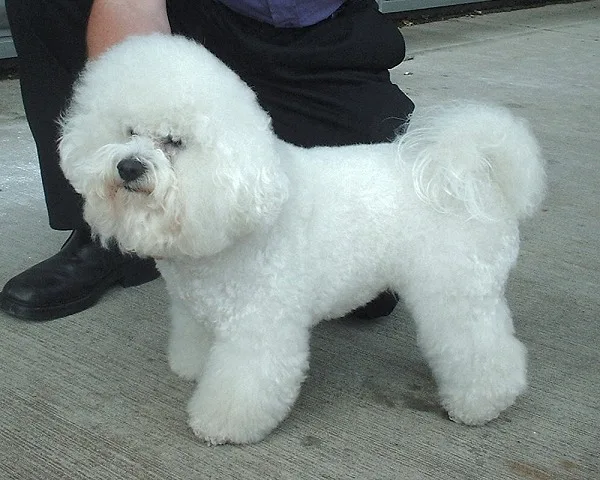
The Bichon Frise is one of the most cheerful, adaptable, and consistently appealing small dogs in existence, a white, powder-puff dog of Mediterranean ancestry that combines a genuinely joyful temperament with a low-shedding, curly coat that has made it one of the most popular choices for allergy-sensitive families.
Neither as ancient as the Maltese nor as flashy as the Papillon, the Bichon Frise nevertheless occupies a unique niche in the world of companion dogs: the ideal small dog for families who want personality, manageability, and a coat that stays where it belongs.
Origins: Mediterranean Water Spaniels
The Bichon Frise belongs to a family of small, curly-coated white companion dogs whose origins lie in the Mediterranean basin. The Bichon family, which includes the Maltese, the Bolognese, the Havanese, and the Coton de Tulear in addition to the Frisé, is thought to derive from small water spaniels that sailors and traders carried across Mediterranean trade routes beginning in the ancient period.
The name "Bichon Frisé" means literally "curly lap dog" or "curly small dog" in French, "bichon" being a term for a small, fluffy dog (derived from "barbichon," meaning small poodle), and "frisé" meaning curly.
The Bichon Frise as a distinct breed is most closely associated with the French and Belgian tradition, developed significantly during the 14th-16th centuries when the breed became fashionable in European courts. French nobility and later the court of Henry III of France (who reigned 1574-1589) are closely associated with the breed's development and promotion.
The Bichon was popular enough in France that it was known colloquially as the "Tenerife dog," believed to have been brought from the Canary Islands by Spanish sailors, though the precise geographic history is complex.
The breed's popularity waned significantly following the French Revolution, when noble associations became dangerous. The Bichon found a new existence as a circus and street performer dog, its intelligence, trainability, and appealing appearance making it effective at earning money through performances. This period is sometimes credited with reinforcing the breed's trainability.
Modern breed development resumed in France and Belgium in the early 20th century. The Société Centrale Canine formally recognized the breed in 1933, establishing the name "Bichon à poil frisé" (Bichon with curly hair). The AKC recognized the Bichon Frise in 1973, placing it in the Non-Sporting Group.
Bichon Frise Physical Characteristics
The Bichon Frise's appearance is defined by its coat, a pure white, densely curled double coat that stands away from the body to create the characteristic powder-puff silhouette. The outer coat is coarser and curly; the soft undercoat provides volume and substance. This coat structure is one of the Bichon's most celebrated features and its most demanding maintenance requirement.
| Physical Characteristic | Measurement |
|---|---|
| Height | 23-30 cm (9-12 in) |
| Weight | 5-10 kg (11-22 lbs) |
| Build | Compact, moderately boned |
| Head | Rounded; well-cushioned muzzle |
| Eyes | Large, round, dark, with black halos from pigmented eyelids |
| Coat | Dense double coat, curly outer coat, soft undercoat; pure white |
| Coat color | White (may have cream or apricot shadings in puppies, usually clearing to white with age) |
| Tail | Carried over the back |
| Lifespan | 14-15 years |
The distinctive black-pigmented skin around the eyes that creates the appearance of "halos" or "eye makeup" is a breed characteristic; these are the skin pigment rings, not actually the eye color. The effect gives the Bichon an expressive, almost dramatic facial look despite its small face.
Coat and the "Hypoallergenic" Question
The Bichon Frise is consistently listed among dogs described as suitable for allergy sufferers, and it is important to understand both the basis for and the limitations of this claim. No dog breed is truly hypoallergenic; the primary allergen to which dog-allergic humans react is a protein (Can f 1) found in dog saliva, urine, and dander (shed skin cells), not the hair itself.
However, breeds like the Bichon Frise produce less airborne dander than heavy-shedding breeds because their curly, low-shedding coat traps dead hair and dander close to the body rather than dispersing it into the environment. This means that a Bichon-allergic person may react less in a Bichon household than in a household with a high-shedding double-coated breed.
The practical implication: many allergy-sensitive individuals live comfortably with Bichons. However, prospective owners with dog allergies should spend time with the specific breed before committing, and should not assume "hypoallergenic" means "no allergic reaction possible."
For a guide to dog breeds commonly listed as allergy-suitable see Best Dogs for Allergy Sufferers.
Temperament: The Happy Dog
The Bichon Frise has a fundamentally cheerful, sociable temperament. These dogs are affectionate with their families, friendly with strangers, and playful with other dogs and children. They are the canine equivalent of an optimistic disposition, rarely given to anxiety, aggression, or excessive reserve. Their social confidence and adaptability make them highly versatile companion dogs.
"The Bichon Frise exhibits one of the most consistently positive-affect behavioral profiles of any toy breed. Their combination of sociability, low reactivity to novelty, affection toward familiar and unfamiliar humans, and playfulness with other dogs represents a particularly successful companion dog behavioral phenotype." Dr. Deborah Goodwin, Anthrozoology Institute, University of Southampton
Bichons are moderate-energy dogs that enjoy play and activity but are equally content with calmer household environments. They do not have the extreme exercise demands of sporting or working breeds. They coexist well in apartments provided their social needs are met, see Best Dogs for Apartments.
Health: Skin Allergies and Atopic Dermatitis
Atopic dermatitis (allergic skin disease driven by environmental allergens, pollens, dust mites, molds) is one of the Bichon Frise's most significant health challenges. The breed is among the most allergy-prone in veterinary dermatology statistics; it is frequently discussed in the veterinary literature as a breed with high atopic dermatitis prevalence.
Affected dogs typically show:
- Itching and scratching, particularly around the face, feet, ears, and armpits
- Recurrent ear infections (otitis externa with a secondary yeast or bacterial component)
- Red, inflamed skin in affected areas
- Skin and coat changes from chronic scratching and licking
Management involves identifying and minimizing exposure to offending allergens, medical management with antihistamines, corticosteroids, Apoquel (oclacitinib), or Cytopoint (lokivetmab) for itch control, and sometimes allergen-specific immunotherapy (allergy shots or sublingual drops) for long-term desensitization.
| Health Condition | Prevalence/Notes | Screening |
|---|---|---|
| Atopic dermatitis | High breed prevalence | Intradermal/serum allergy testing |
| Patellar luxation | Common | OFA examination |
| Ear infections (otitis) | Common, allergy-related | N/A |
| Bladder stones (calcium oxalate) | Reported | Urine analysis, radiographs |
| Cataracts | Hereditary form | Ophthalmological exam |
| Hip dysplasia | ~11% (OFA) | OFA X-ray |
| Dental disease | Common in small breeds | Regular dental exams |
Health: Bladder Stones
Calcium oxalate urolithiasis (bladder stones composed of calcium oxalate) occurs in Bichon Frises at higher rates than in many other breeds. These stones form in the bladder and can cause urinary straining, blood in the urine, and obstruction (particularly in males). Diagnosis is by radiography or ultrasound; treatment may require surgical removal (cystotomy) or other interventions depending on stone size and location.
Dietary management and increased water intake can reduce recurrence risk. Dogs that have had calcium oxalate stones should be fed a prescription urinary diet and have their urine monitored regularly.
Health: Cataracts and Eye Conditions
Hereditary cataracts occur in Bichon Frises, lens opacities that can progress to significant visual impairment. Posterior polar subcapsular cataracts are a specific form documented in the breed. Breeding stock should undergo ophthalmological examination by an ACVO-certified veterinary ophthalmologist; the BVA/KC Eye scheme (UK) or CAER exam (US) are the appropriate certification systems.
Grooming: The Powder-Puff Requires Commitment
The Bichon Frise's characteristic powder-puff appearance requires significant and regular professional grooming to maintain. The curly double coat grows continuously (like a Poodle), and without regular trimming and maintenance it will grow long, mat severely, and lose the distinctive rounded silhouette that defines the breed.
Most Bichon owners have their dogs professionally groomed every 4-6 weeks. Between appointments, brushing at least three times weekly prevents matting, particularly in friction areas (armpits, behind ears, under the chest). The coat must be kept clean, the white coat shows dirt and staining readily, and the face requires daily cleaning.
For detailed grooming guidance see Bichon Frise Grooming Guide. For comparison with a closely related breed see Havanese and Maltese.
Bichon Frise Exercise and Training
Bichon Frises have moderate exercise needs. Daily walks of 30-45 minutes and play sessions are sufficient for most individuals. They are not as high-drive as sporting breeds but do enjoy active play and benefit from off-lead time in safe areas. Their intelligence and trainability make them responsive to positive reinforcement training.
Housetraining can be challenging, toy breeds are generally slower to reliably housetrain than larger breeds, and consistency is paramount. Some Bichon owners supplement outdoor training with indoor pee pads, particularly in cold climates or high-rise buildings.
Summary
The Bichon Frise is a breed of excellent companion quality, sociable, adaptable, low-shedding, and genuinely cheerful. Its most significant health challenges are atopic dermatitis and skin allergies, bladder stones, and hereditary cataracts. The grooming requirement is substantial and should not be underestimated. For families and individuals seeking a small, sociable, relatively low-allergen dog with a joyful disposition, the Bichon Frise is a compelling choice.
References
Nuttall, T.J., & Cole, L.K. (2004). Ear cleaning: the UK and US perspective. Veterinary Dermatology, 15(2), 127-136. https://doi.org/10.1111/j.1365-3164.2004.00385.x
Picco, F., Zini, E., Nett, C., et al. (2008). A prospective study on canine atopic dermatitis and food-induced allergic dermatitis in Switzerland. Veterinary Dermatology, 19(3), 150-155. https://doi.org/10.1111/j.1365-3164.2008.00669.x
Lulich, J.P., Osborne, C.A., O'Brien, T.D., & Polzin, D.J. (1992). Canine renal failure: Unique aspects of mineral and organic solute metabolism. Veterinary Clinics of North America, 22(2), 399-414.
Orthopedic Foundation for Animals. (2023). Bichon Frise statistics. https://www.ofa.org/diseases/hip-dysplasia/statistics/
American Kennel Club. (2023). Bichon Frise breed information. https://www.akc.org/dog-breeds/bichon-frise/
Bichon Frise Club of America. (2022). Breed health information. https://www.bichon.org/health/
Frequently Asked Questions
Is the Bichon Frise hypoallergenic?
No dog is truly hypoallergenic, but the Bichon Frise is among the breeds most suitable for allergy-sensitive people. Its curly, low-shedding coat traps dead hair and dander close to the body rather than dispersing it into the environment. Many allergy sufferers live comfortably with Bichons, but individual reactions vary, spending time with the breed before adopting is advisable.
How often does a Bichon Frise need grooming?
Bichon Frises require professional grooming every 4-6 weeks to maintain their characteristic powder-puff appearance and prevent matting. Between appointments, brushing three times weekly is needed. The curly coat grows continuously and will mat severely without regular maintenance.
Are Bichon Frises prone to skin problems?
Yes. Atopic dermatitis (environmental allergies causing itchy skin) is one of the most significant health concerns in the Bichon Frise, with the breed among the most allergy-prone in veterinary statistics. Signs include chronic itching, recurrent ear infections, and inflamed skin. Management involves allergy testing, medical treatment, and sometimes allergen immunotherapy.
What are bladder stones in Bichon Frises?
Calcium oxalate bladder stones form in the Bichon Frise at higher rates than in many breeds. These stones cause urinary straining, blood in urine, and can cause dangerous obstruction. Diagnosis requires radiography or ultrasound; treatment may include surgical removal. Prescription urinary diets and increased water intake reduce recurrence risk.
Are Bichon Frises good with children?
Yes. Bichon Frises are excellent family dogs with a gentle, sociable temperament that suits children of most ages. Their moderate energy level means they enjoy play without being overwhelming. They are generally patient and adaptable. As with all dogs, interactions between young children and Bichons should be supervised.
What is the difference between the Bichon Frise and the Maltese?
Both are small white Mediterranean companion breeds, but they differ in coat type (Bichon has a curly double coat; Maltese has a straight, silky single coat), size (Bichon is slightly heavier at 5-10 kg vs Maltese under 3.2 kg), breed group (Bichon: Non-Sporting; Maltese: Toy), and overall appearance. The Maltese has a longer documented ancient history.