
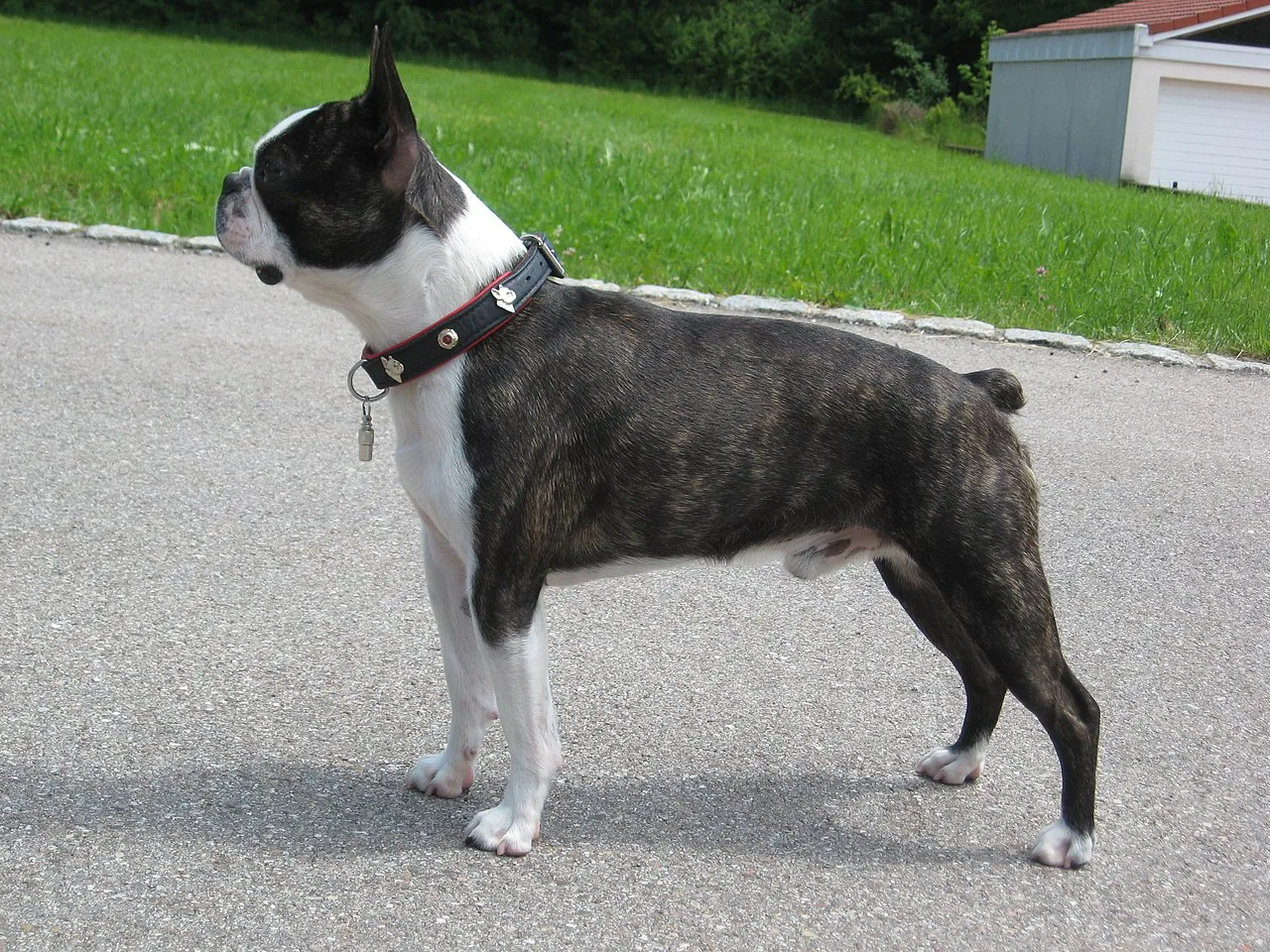
The Boston Terrier holds the distinction of being one of the few dog breeds genuinely native to the United States. Developed in Boston, Massachusetts, in the 1870s, it was the first non-sporting breed created in America and has been an enduringly popular companion dog ever since.
Its tuxedo-like black-and-white coat pattern earned it the nickname "The American Gentleman," a moniker that captures the breed's tidy appearance and genteel disposition. Compact, intelligent, and affectionate, the Boston Terrier suits a remarkable variety of households, but like all brachycephalic breeds, it requires owners who understand its specific health requirements.
All-American Origins
The Boston Terrier's origins trace to a single dog: Judge, a cross between an English Bulldog and a White English Terrier (a now-extinct breed) owned by Robert C. Hooper of Boston, Massachusetts, in 1870. The White English Terrier was a slim, elegant dog with an erect ear and white coat that was bred specifically for show during the Victorian era but had effectively disappeared by 1900.
The combination of the Bulldog's substance and the Terrier's refinement produced the foundation for the Boston Terrier breed.
Through subsequent crosses, primarily within the Boston area among enthusiasts who shared and traded breeding stock, a distinctive compact dog with smooth coat, short muzzle, and characteristic tuxedo markings was established. Breeders in Boston began referring to the type as the "Boston Bull Terrier," a name that was eventually simplified to avoid confusion with the unrelated Bull Terrier breed.
The Boston Terrier was admitted to the American Kennel Club in 1893 in the Non-Sporting Group, the first dog of American origin to receive AKC recognition. The breed has appeared on the state seal of Massachusetts and is the official state dog of Massachusetts, a recognition of its enduring cultural significance in its city of origin.
Physical Characteristics
The Boston Terrier is a compact, well-balanced, square-proportioned dog with a smooth coat and erect ears. The breed's most distinctive features are its flat, broad face with large, round, dark eyes widely set apart, and its characteristic black-and-white coat pattern. The expression is typically alert, kind, and intelligent.
| Physical Characteristic | Measurement |
|---|---|
| Height | 38-43 cm (15-17 inches) |
| Weight Class 1 | Under 6.8 kg (15 lbs) |
| Weight Class 2 | 6.8-9 kg (15-20 lbs) |
| Weight Class 3 | 9-11.3 kg (20-25 lbs) |
| Head | Flat on top, short muzzle, square jaw |
| Eyes | Large, round, widely set, dark brown |
| Ears | Small, thin, erect |
| Coat | Short, smooth, fine |
| Tail | Short, straight or screw |
| Lifespan | 11-13 years |
The breed standard specifies three weight classes rather than a single weight range, recognizing variation in size within the breed without creating separate varieties.
The characteristic marking pattern consists of white on the muzzle, between the eyes (blaze), on the forechest, and on forelegs and hindlegs, against black or seal (a dark color that appears black in most lighting but shows a reddish cast in bright sunlight). Brindle is also accepted. The symmetry and cleanliness of the markings are valued in the show ring.
Temperament and Character
The Boston Terrier is characteristically gentle, alert, and highly intelligent. It combines the playfulness and energy of a young terrier with the affectionate nature of a true companion dog. Boston Terriers are highly people-oriented and adapt well to a wide variety of living situations.
They are not typically aggressive, do not have strong prey drives compared to terrier breeds, and are generally reliable with children and other pets when properly socialized. Their moderate energy level, active and playful but not demanding, makes them well-suited to apartment life and to owners who cannot provide extensive daily exercise. For a comparison of urban-friendly breeds see Best Dogs for Apartments.
Boston Terriers are intelligent and respond well to positive reinforcement training. They have a streak of sensitivity that means they respond poorly to harsh corrections but engage enthusiastically with reward-based methods. Housetraining can occasionally take longer than with some other breeds, consistency and a regular schedule are the keys to success.
"The Boston Terrier represents an interesting case in breed development: an originally fighting-dog ancestry that has been thoroughly transformed through deliberate selection into one of the most gentle and family-friendly of small dogs. The breed's temperament today bears virtually no resemblance to its origins." Dr. Karen Overall, Diplomate ACVB, Research Associate, University of Pennsylvania School of Veterinary Medicine
Brachycephalic Anatomy and BOAS
The Boston Terrier is a brachycephalic breed, its skull is shortened front-to-back, producing the characteristic flat-faced appearance. All brachycephalic dogs share structural features that can compromise breathing: narrowed nostrils (stenotic nares), an elongated soft palate that partially obstructs the airway, and often a hypoplastic (underdeveloped) trachea. Together, these features constitute Brachycephalic Obstructive Airway Syndrome (BOAS).
Compared to the most severely affected brachycephalic breeds, the English Bulldog and the Pug, the Boston Terrier is generally less severely compromised. Many Boston Terriers function reasonably well in normal conditions. However, BOAS remains a significant concern and owners should be vigilant for signs of respiratory distress:
- Noisy, labored breathing, especially during exercise or excitement
- Exercise intolerance, tiring more quickly than expected
- Sleep apnea or loud snoring
- Gagging or regurgitation
- Blue tinge to gums or tongue (indicates severe oxygen deficit, emergency)
Boston Terriers should never be exercised vigorously in hot or humid weather, as their compromised airways limit heat dissipation through panting. BOAS surgery (correction of stenotic nares and soft palate) can significantly improve quality of life for affected dogs and is increasingly recommended for all but mildly affected individuals.
Eye Health: A Primary Concern
One of the most important health considerations specific to Boston Terriers is their eyes. The large, prominent eyes characteristic of the breed are beautiful but vulnerable. They protrude beyond the orbital rim to a degree that makes them susceptible to trauma: a scratch from a cat, a thorn, a poke from a child's finger, or an impact with furniture can cause corneal ulcers, painful abrasions of the corneal surface.
Corneal ulcers require prompt veterinary attention. If left untreated, they can progress to corneal perforation and permanent vision loss. Boston Terrier owners should develop the habit of examining their dog's eyes daily for any redness, squinting, discharge, or surface haziness. Access to veterinary care at the first sign of eye problems is essential. See When to See a Vet for Your Dog for guidance on recognizing urgent symptoms.
| Health Condition | Description | Management |
|---|---|---|
| BOAS | Breathing obstruction from brachycephalic anatomy | Surgical correction; avoid heat/exercise |
| Corneal ulcers | Eye surface damage due to prominent eyes | Prompt veterinary treatment |
| Patellar luxation | Kneecap slipping out of position | Surgical correction for severe cases |
| Deafness (BAER) | Hereditary deafness especially in blue/grey dogs | BAER testing; responsible breeding |
| Hemivertebrae | Malformed vertebrae causing spinal cord compression | Imaging; surgical decompression if severe |
| Brain tumors (glioma) | Higher incidence than many breeds | MRI diagnosis; chemotherapy/radiation |
Additional Health Conditions
Patellar luxation: The kneecap slipping in and out of its groove is common in small breeds, including the Boston Terrier. Mild cases may require no treatment; severe cases cause pain and mobility issues and may require surgical correction.
Deafness: Hereditary deafness occurs in Boston Terriers, with particular prevalence in dogs with a blue or grey coat color (caused by the dilute color gene, which is associated with hearing loss in multiple breeds). All Boston Terriers used in breeding programs should have BAER (Brainstem Auditory Evoked Response) testing to confirm normal hearing.
Hemivertebrae: Malformed (wedge-shaped) vertebrae occur in brachycephalic breeds, including the Boston Terrier, as a consequence of the same genetic mechanisms that produce the characteristic compact body shape. Single hemivertebrae may cause no clinical signs, but multiple or strategically located hemivertebrae can compress the spinal cord, causing weakness, incontinence, or paralysis.
Brain tumors (glioma): Boston Terriers and Boxers are documented to have a higher incidence of glioma (a brain tumor type arising from glial cells) than most other breeds. Studies indicate a genetic component specific to the brachycephalic dog group. Gliomas typically present in middle-aged to older dogs with signs including seizures, behavioral changes, and neurological deficits.
Boston Terriers and Other Flat-Faced Breeds
The Boston Terrier is frequently compared with two other brachycephalic breeds: the French Bulldog and the Bulldog. All three share the flat-faced appearance and many overlapping health concerns, but they differ in important respects:
- The Boston Terrier is generally healthier and more naturally athletic than the English Bulldog
- The French Bulldog has become overwhelmingly popular in recent decades, raising concerns about irresponsible breeding practices
- The Boston Terrier retains more of its original working athleticism and tends to be more energetic than the other two
- Boston Terriers are more variable in severity of BOAS than Bulldogs
Exercise and Daily Care
Boston Terriers need moderate daily exercise, typically 30-45 minutes divided across the day. They enjoy play sessions, short walks, and interactive activities with their owners. They are not suited to sustained, vigorous outdoor exercise in heat, and owners should be especially careful in summer months.
Mental stimulation through training, puzzle feeders, and interactive play is valuable for this intelligent breed. Boston Terriers enjoy learning tricks and respond very well to training games. They can participate in dog sports including agility, but participants should be selected for strong respiratory function and should not be pushed beyond their comfortable limits.
For comprehensive breed-specific health information see Boston Terrier Health Problems and Boston Terrier Care Guide.
Summary
The Boston Terrier is a quintessentially American dog, compact, spirited, adaptable, and deeply affectionate. Its tuxedo markings, large expressive eyes, and gentle character have made it a beloved companion for over 130 years. Like all brachycephalic breeds, it requires owners who understand and are prepared for its specific health requirements, particularly respiratory monitoring and eye protection.
For those who choose the breed with clear knowledge of its needs, the Boston Terrier is a wonderfully rewarding companion dog.
References
Grand, E., Thorburn, M., & Shelton, G.D. (2010). Hereditary diseases of the Boston Terrier. Veterinary Record, 167(23), 901-902.
Packer, R.M.A., Hendricks, A., Tivers, M.S., & Burn, C.C. (2015). Impact of facial conformation on canine health: Brachycephalic obstructive airway syndrome. PLOS ONE, 10(10), e0137496. https://doi.org/10.1371/journal.pone.0137496
Matiasek, L.A., Platt, S.R., Adams, V., et al. (2009). Clinical and magnetic resonance imaging characteristics of gliomas in Boston Terriers. Journal of Veterinary Internal Medicine, 23(4), 823-834. https://doi.org/10.1111/j.1939-1676.2009.0334.x
Strain, G.M. (2011). Deafness in Dogs and Cats. CABI Publishing. https://doi.org/10.1079/9781845937041.0000
American Kennel Club. (2023). Boston Terrier breed standard. https://www.akc.org/dog-breeds/boston-terrier/
Frequently Asked Questions
Are Boston Terriers brachycephalic and does it cause health problems?
Yes. Boston Terriers are brachycephalic (flat-faced), which can cause Brachycephalic Obstructive Airway Syndrome (BOAS). While generally less severely affected than English Bulldogs or Pugs, Boston Terriers can have breathing difficulties during exercise and hot weather. Surgical correction is available for affected dogs.
Why do Boston Terriers get eye problems?
The large, prominent eyes of Boston Terriers extend beyond the orbital rim, making them vulnerable to trauma and corneal ulcers. Even minor injuries can cause serious damage. Boston Terrier owners should check their dog’s eyes daily and seek prompt veterinary care for any redness, squinting, or discharge.
Are Boston Terriers good apartment dogs?
Yes. Boston Terriers are well-suited to apartments. They are compact, have moderate exercise needs, and adapt easily to smaller living spaces. Their brachycephalic nature actually reduces their need for vigorous extended exercise. They are social and do well with close human contact typical of apartment living.
What is the Boston Terrier's original purpose?
The Boston Terrier was developed from crosses of English Bulldogs and White English Terriers in Boston in the 1870s. Early specimens were used in dog fighting, but the breed was rapidly transformed through selective breeding into a companion dog. It was recognized by the AKC in 1893 as the first American-developed non-sporting breed.
Do Boston Terriers get along with other pets?
Generally yes. Boston Terriers are typically non-aggressive and get along with other dogs and cats when properly socialized from puppyhood. They have lower prey drive than many terrier breeds. Individual personalities vary, and early introduction to other pets is always beneficial.
Can Boston Terriers be left alone?
Boston Terriers prefer companionship and do not thrive when left alone for very long periods. They form strong bonds with their owners and can develop separation anxiety. They are better suited to households where someone is home for most of the day, or where a companion pet can provide company.