
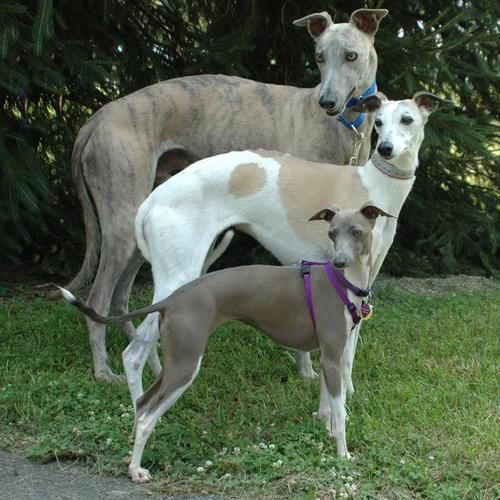
The Italian Greyhound is the smallest sighthound breed and one of the most ancient of all miniaturised dog breeds.
Skeletons of Italian Greyhound-type dogs have been found in ancient Egyptian tombs, and the breed appears in the artwork of ancient Turkey and Greece, suggesting that the miniaturisation of the sighthound form for companionship purposes occurred independently in multiple cultures across at least two and a half thousand years of Mediterranean civilisation.
Despite its delicate, porcelain-like appearance, the Italian Greyhound is a genuine sighthound, fast, agile, and possessed of the same explosive prey drive as its larger relatives, packaged in a body weighing 3.6 to 5 kilograms.
The Italian Greyhound reached its greatest popularity in Renaissance Italy, where it became a fixture of noble and aristocratic households. Its elegant miniaturised form was a subject for painters including Velazquez, van Dyck, and Pisanello, and the breed was closely associated with the Italian aristocracy of the 16th and 17th centuries, giving rise to the name by which it is known today in English, even though the breed predates Italian Renaissance culture by many centuries.
Italian Greyhound Origins and History
The Italian Greyhound is not a breed created by crossing Greyhounds with toy breeds; it is an ancient, naturally miniaturised sighthound type that predates the modern concept of deliberate breed miniaturisation. Archaeological evidence from Turkey (approximately 6000 years ago) and from ancient Egypt includes dogs of recognisable Italian Greyhound conformation.
Greek and Roman writers described small, elegant coursing dogs. By the time of the Roman Empire, miniature sighthounds were established luxury companion animals for wealthy households.
In Renaissance Europe, particularly in Italy, the breed became fashionable among nobility. Catherine the Great of Russia, Frederick the Great of Prussia, and Mary Queen of Scots were among the historical figures documented as Italian Greyhound owners. The Italian Greyhound appears in van Dyck's portraits of the Stuart court and in other aristocratic paintings as a symbol of refinement.
The American Kennel Club recognised the Italian Greyhound as a member of the Toy Group in 1886, an unusually early recognition that reflects the breed's already well-established presence in the United States by that time.
Physical Characteristics
The Italian Greyhound is a study in anatomical paradox: it appears extremely fragile, and in some respects it is, but it can run at speeds approaching 40 km/h and jump heights that would be impressive in a dog three times its size. The breed's slender legs, fine bone structure, and minimal body covering create a dog that is genuinely vulnerable to fractures from falls and rough handling, but that is athletically capable well beyond what its delicate appearance suggests.
| Characteristic | Measurement |
|---|---|
| Height | 33-38 cm (13-15 in) |
| Weight | 3.6-5 kg (8-11 lb) |
| Lifespan | 14-15 years |
| AKC Group | Toy |
| Body fat | Very low, same sighthound physiology as Greyhound |
| Coat | Short, fine, single-layer, minimal insulation |
The fine, single-layer coat common to all sighthound breeds is particularly significant in the Italian Greyhound given its small body mass. A Greyhound has some thermal mass to buffer cold exposure; an Italian Greyhound at 4 kilograms loses body heat very rapidly. Cold sensitivity in Italian Greyhounds is one of the most practically important management considerations in the breed.
In temperate climates, the dog needs a coat for outdoor exercise below approximately 15 degrees Celsius. In cold climates, an Italian Greyhound kept outdoors or in an unheated environment is at genuine risk of hypothermia.
The breed's bone structure is notably fine, particularly in the limbs. The radius and ulna of the forelegs are slender and vulnerable to fracture from falls at height, from a table, sofa, or owner's arms. Italian Greyhounds should not be in the arms of children or carried at heights from which a fall would produce serious bone injury. Adult supervision of all child-dog interactions is particularly important.
Coat colours include various shades of fawn, blue, black, grey, cream, red, and white, as well as parti-colour combinations. Blue-coloured Italian Greyhounds and fawn Italian Greyhounds are particularly prone to colour dilution alopecia (see Health Conditions).
Italian Greyhound Temperament
The Italian Greyhound has a temperament that is simultaneously deeply affectionate and notably independent. The breed forms very strong bonds with its primary human, seeking physical contact, warmth, and close proximity in a way that has been described as clingy. Many Italian Greyhounds prefer to burrow under blankets and sleep pressed against their owner, and this thermal-seeking behaviour has practical origins: the breed genuinely benefits from the warmth.
At the same time, the breed retains the essential sighthound independence. An Italian Greyhound that sights a small, fast-moving creature will follow it at full speed with the same disregard for recall commands as a full-sized Greyhound. The prey drive is not diminished by miniaturisation. Off-lead exercise must always occur in securely fenced areas.
"The Italian Greyhound maintains the full complement of sighthound behavioural characteristics in a miniaturised package. The prey drive, the visual orientation, the burst-sprint response; these are not scaled down with body size. The Italian Greyhound owner must manage a dog with Greyhound instincts and a Toy-group body." American Italian Greyhound Club. (2023). Breed Information: Temperament and Behaviour. Retrieved from https://www.italiangreyhound.org
Italian Greyhounds are typically reserved with strangers but deeply attached to their families. They can be timid or anxious if not well-socialised from puppyhood, and the combination of timidity and high reactivity can produce a dog that responds to novel stimuli with intense alarm. Early, broad socialisation, exposure to varied people, environments, sounds, and situations from the age of 8 weeks, is essential for developing a confident adult dog.
The breed is sensitive to emotional tension in the household and picks up on owner anxiety readily. Calm, consistent handling produces calmer dogs.
Italian Greyhound Health Conditions
The Italian Greyhound has specific health challenges that reflect both the sighthound physiology and breed-specific genetic conditions. The overall lifespan (14 to 15 years) is good by dog breed standards, reflecting the breed's small size, but specific conditions significantly affect quality of life if unmanaged.
| Health Condition | Prevalence / Notes |
|---|---|
| Dental disease | Most common health issue in the breed, small jaw with crowded teeth; professional cleaning from 2-3 years of age |
| Patellar luxation | Common, floating kneecap; ranges from occasional discomfort to surgical intervention |
| Leg fractures | Significant risk due to fine bone structure, falls from height are genuine injury events |
| Epilepsy | Elevated breed prevalence; seizures often begin between 2-5 years of age |
| Progressive retinal atrophy (PRA) | DNA test available; progressive vision loss |
| Colour dilution alopecia | Affects blue and fawn dogs, patchy hair loss from melanin concentration in hair shafts |
Dental disease is the Italian Greyhound's most prevalent health problem, and it is one that owners frequently underestimate because the signs develop gradually and the dog rarely communicates dental pain directly. The small jaw of the Italian Greyhound results in crowded teeth that accumulate tartar rapidly. By 2 to 3 years of age, many Italian Greyhounds have significant tartar buildup and gingivitis.
Untreated, this progresses to periodontal disease, bacterial infection of the gum, bone, and ligament structures supporting the teeth, with systemic consequences including bacterial seeding of the heart and kidneys.
Daily tooth brushing is the most effective preventive measure. Professional veterinary dental cleaning under anaesthesia is required once tartar accumulation exceeds what home care can manage, typically every 1 to 2 years for most Italian Greyhounds. See Dog Dental Care Complete Guide for detailed guidance.
"Small and toy breeds are disproportionately affected by periodontal disease compared to larger breeds, due to the increased crowding of teeth relative to jaw size. In Italian Greyhounds and other toy sighthounds, the problem is compounded by the breed's characteristic long, narrow jaw that creates specific sites of food and plaque accumulation between the premolars and molars." Niemiec, B. A. (2008). Periodontal disease. Topics in Companion Animal Medicine, 23(2), 72-80. https://doi.org/10.1053/j.tcam.2008.01.003
The anesthesia sensitivity of the sighthound family applies to Italian Greyhounds as it does to the Greyhound and Whippet. The combination of low body fat and the breed's particularly small body mass means that anesthetic management requires specific attention. Veterinarians who are not familiar with sighthound pharmacology should be informed of the breed before any procedure.
Care: Cold and Warmth Management
Cold management in Italian Greyhounds is not optional. The combination of minimal coat, no undercoat, very low body fat, and small body mass means that this is one of the most cold-sensitive dog breeds. Practical management requirements:
- Dog coat for outdoor exercise at temperatures below 15 degrees Celsius
- Warm, draft-free sleeping area; elevated beds (off cold floors) are preferred by the breed
- Thermal blankets or self-warming beds for dogs that will not be sleeping in a bed with their owner
- Post-bath drying must be thorough and immediate, a wet Italian Greyhound chills quickly
- Outdoor time in below-freezing temperatures should be brief and purposeful
The breed's preference for burrowing under blankets and pressing against warm bodies is a direct expression of thermoregulatory need. This should not be discouraged as spoiling; it is the dog managing its own thermal comfort appropriately.
Training
Italian Greyhounds can be trained, but the breed's combination of sighthound independence, sensitivity, and potential timidity creates a dog that requires patient, positive, consistent training methods above all else. Harsh methods, raised voices, or physical correction produce profound shutdown in Italian Greyhounds and make subsequent training more difficult rather than less.
Housetraining is frequently cited by Italian Greyhound owners as the most challenging aspect of the breed's training. The combination of small bladder capacity, cold sensitivity (the dog may refuse to go outside in cold or wet weather), and the sighthound's somewhat indifferent attitude toward pleasing their owner produces a breed that can be slow to housetrain reliably.
Consistency, a strict schedule, positive reinforcement for outdoor elimination, and cold-weather management (taking the dog outside in a coat) are the components of successful housetraining.
See also Best Dogs for Apartments for apartment suitability assessment, Greyhound and Whippet for related sighthound comparisons.
Exercise
Despite their small size and delicate appearance, Italian Greyhounds need regular exercise. The breed is athletic and genuinely fast, and restriction to minimal exercise produces boredom, hyperactivity, and anxiety. An adult Italian Greyhound needs 30 to 45 minutes of daily exercise, including periodic off-lead running in a safely fenced area.
The fine bone structure means that Italian Greyhounds should not be jogged on hard surfaces for extended distances, as the repetitive impact on the fine leg bones can cause stress fractures. Natural varied terrain, gentle walking and running, and play in grass-surfaced secure areas are appropriate exercise for the breed.
References
Niemiec, B. A. (2008). Periodontal disease. Topics in Companion Animal Medicine, 23(2), 72-80. https://doi.org/10.1053/j.tcam.2008.01.003
Orthopedic Foundation for Animals. (2023). Breed Health Statistics: Italian Greyhound. Retrieved from https://ofa.org
American Italian Greyhound Club. (2023). Health Issues in the Italian Greyhound. Retrieved from https://www.italiangreyhound.org/health
Robinson, E. P. (1983). Anesthesia of sighthound breeds. Journal of the American Veterinary Medical Association, 183(8), 857-860.
Vogt, A. H., Rodan, I., Brown, M., et al. (2010). AAFP-AAHA feline life stage guidelines. Journal of Feline Medicine and Surgery, 12(1), 43-54.
Muller, G. H., Kirk, R. W., & Scott, D. W. (1989). Small Animal Dermatology (4th ed.). W.B. Saunders. [Colour dilution alopecia section]
Frequently Asked Questions
Are Italian Greyhounds fragile?
Italian Greyhounds are genuinely fragile in one specific respect: their fine bone structure makes the forelegs vulnerable to fractures from falls at height. A fall from a table, sofa arm, or from a person’s arms can fracture a leg. This is not a trivial risk, Italian Greyhound leg fractures are one of the most common reasons for emergency veterinary visits in the breed.
For everything else, Italian Greyhounds are more robust than they appear: they are fast, agile, and athletically capable. The breed lives 14 to 15 years and maintains good health if properly managed. The key precautions are: never let the dog jump from heights, always supervise children handling the dog, and use ramps for furniture access.
Do Italian Greyhounds need dental care?
Dental care is the most important health management priority for Italian Greyhounds. The breed is disproportionately affected by dental disease due to the small jaw with crowded teeth that accumulate tartar rapidly. Without active dental management, most Italian Greyhounds develop significant periodontal disease by age 3 to 4. Daily tooth brushing is the gold standard of home care.
A soft-bristled dog toothbrush or finger brush with enzymatic dog toothpaste is the most effective approach. Professional veterinary dental cleaning under anaesthesia is typically needed every 1 to 2 years regardless of home care quality. Untreated dental disease causes pain, tooth loss, and bacterial infection that can affect the heart and kidneys.
Why do Italian Greyhounds shiver and burrow under blankets?
The shivering and burrowing behaviour in Italian Greyhounds reflects genuine cold sensitivity, not anxiety or melodrama (though both can also cause shivering). The breed’s short, fine, single-layer coat provides minimal insulation. The small body mass loses heat quickly. The very low body fat that is characteristic of all sighthound breeds provides no additional thermal buffering.
The result is a dog that is genuinely cold in temperatures that other breeds find comfortable. Providing warm dog coats for outdoor use below 15 degrees Celsius, warm sleeping areas, and allowing the dog to burrow under blankets are not indulgences; they are appropriate management of the breed’s genuine thermal limitations.
Are Italian Greyhounds good with children?
Italian Greyhounds can be good with gentle, older children who understand how to interact carefully with a small, fragile dog. The breed is not appropriate for households with very young children who may inadvertently drop the dog from height, grab the legs roughly, or behave unpredictably in ways that startle the dog. Italian Greyhounds are sensitive and can become anxious or timid if repeatedly exposed to rough or unpredictable interaction.
Adult supervision of all child-dog interactions is essential. The breed’s fine bone structure means that a fall or rough play can cause serious fractures, and this physical vulnerability must be part of any household assessment.
How do Italian Greyhounds compare to regular Greyhounds?
Italian Greyhounds and Greyhounds share the essential sighthound character, prey drive, speed, love of off-lead running, sighthound independence, and anesthesia sensitivity, but differ substantially in size and AKC group classification. Greyhounds (25-40 kg, Hound Group) are athletes capable of 68-72 km/h. Italian Greyhounds (3.6-5 kg, Toy Group) reach approximately 40 km/h.
The Italian Greyhound’s small size makes it more vulnerable to fractures and more cold-sensitive, but also more suited to apartment living in terms of space requirements. Both breeds need secure fencing for off-lead exercise and regular dental care, but dental disease is a more acute issue in the smaller breed.
What is colour dilution alopecia in Italian Greyhounds?
Colour dilution alopecia (CDA) is a skin condition affecting dogs with dilute coat colours, particularly blue and fawn Italian Greyhounds. The condition is caused by abnormal clumping of melanin granules in the hair shafts, which weakens the hair structure and leads to progressive patchy hair loss, typically on the trunk. Affected areas may also develop recurrent bacterial skin infections (folliculitis) due to the compromised skin barrier.
CDA is not curable, but the symptoms can be managed with regular gentle skin care, medicated shampoos for folliculitis, and protecting affected areas from sun exposure. Dogs with CDA should not be bred from, as the condition is hereditary.