
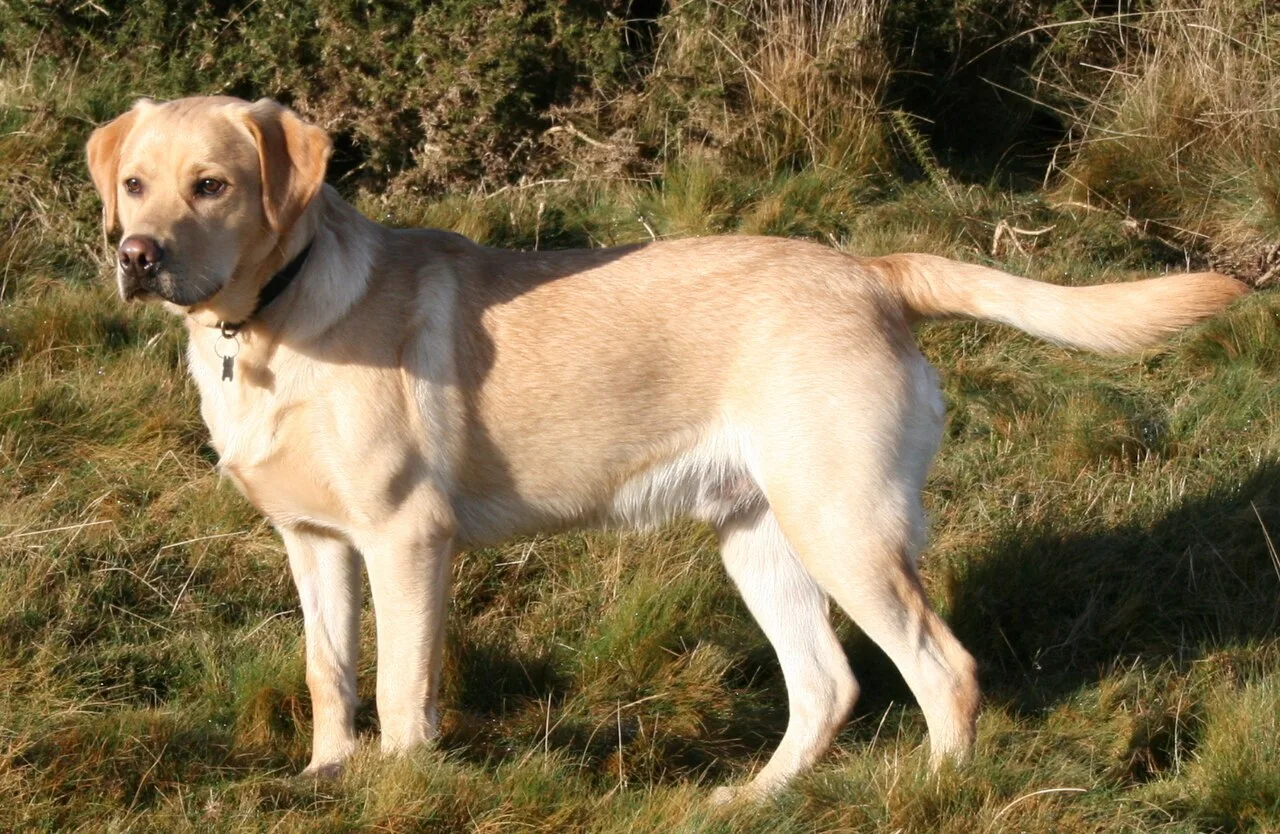
The Labrador Retriever is one of the most thoroughly studied dog breeds in veterinary medicine. Decades of health surveys, genome-wide association studies, and orthopedic foundation data have produced a detailed picture of the conditions most likely to affect these dogs. That depth of research is both a warning and an advantage: owners and breeders who engage with the data can make decisions that genuinely extend healthy lifespan.
This article covers the most significant health conditions documented in Labrador Retrievers, the genetic tests available for each, OFA screening statistics, what questions to ask a breeder before purchasing a puppy, and practical management strategies for affected dogs.
Summary Health Table
| Condition | Estimated Prevalence | Screening / Genetic Test | OFA Database |
|---|---|---|---|
| Hip dysplasia | 12-14% (OFA data) | OFA/PennHIP radiograph at 24 months | Yes |
| Elbow dysplasia | 11-17% (OFA data) | OFA elbow radiograph at 24 months | Yes |
| Exercise-induced collapse (EIC) | ~30% carriers; ~3% affected | DNA test (DNM1 gene) | Yes |
| Progressive retinal atrophy (PRCD-PRA) | ~1% affected; ~6% carriers | DNA test (PRCD gene) | Yes |
| Obesity | 25-40% of adult Labs | Body condition scoring (BCS) | No |
| Hereditary nasal parakeratosis | Low; carriers ~6-10% (estimated) | DNA test (SUV39H2 gene) | No |
| Tricuspid valve dysplasia | Low, breed predisposition noted | Cardiac auscultation / echocardiogram | Yes |
| Mast cell tumour | Elevated breed risk | Biopsy | No |
Hip Dysplasia
Hip dysplasia (HD) is one of the most reported musculoskeletal conditions in Labrador Retrievers. The Orthopedic Foundation for Animals (OFA) has evaluated hip radiographs from over 200,000 Labrador Retrievers in its database, and approximately 12-14% of evaluated dogs are rated dysplastic. This figure likely underestimates true prevalence because many dogs with poor hips are never submitted for evaluation.
Hip dysplasia is a developmental condition in which the femoral head does not fit tightly within the acetabulum (hip socket). The resulting instability causes cartilage wear, inflammation, and progressive osteoarthritis. Signs typically appear in one of two patterns: a young dog (6-12 months) showing difficulty rising and reduced exercise tolerance, or a middle-aged to older dog showing progressive hindlimb stiffness after exercise.
"The heritability of hip dysplasia in Labrador Retrievers is estimated at 0.25-0.45, indicating that genetic selection can substantially reduce prevalence over generations." Distl O. et al., The Genetics of Canine Hip Dysplasia, Veterinary Journal, 2004 (PMID: 15325902)
Screening
Two established methods exist for screening breeding stock:
OFA evaluation: Plain radiographs taken at 24 months under general anaesthesia or heavy sedation. Three radiologists score hips as Excellent, Good, Fair, Borderline, Mild, Moderate, or Severe. Only Excellent, Good, and Fair hips receive an OFA number. Preliminary evaluations can be done at 12 months but carry no OFA number.
PennHIP: Distraction radiographs measure the distraction index (DI), which quantifies hip laxity on a scale from 0 (no laxity) to 1 (full subluxation). A DI below the breed's 50th percentile is considered low-risk. PennHIP can be performed from 16 weeks of age and is considered more sensitive than OFA for detecting laxity in young dogs.
Both the Labrador Retriever Club (UK) and the Labrador Retriever Club of America recommend breeding only from dogs with clear hip scores. Environmental factors, particularly rapid growth, overfeeding of puppies, and excessive exercise during skeletal development, significantly influence whether a genetically predisposed dog develops clinical dysplasia.
Management
Mild to moderate hip dysplasia is managed with controlled exercise (leash walks, swimming preferred over jumping and ball-throwing), weight management, physiotherapy, and non-steroidal anti-inflammatory drugs (NSAIDs) as needed. Nutraceuticals including omega-3 fatty acids and glucosamine/chondroitin have supportive evidence for joint comfort, though the magnitude of effect is modest.
Severe cases may be candidates for surgical intervention: femoral head and neck excision (FHO), triple pelvic osteotomy (TPO) in young dogs, or total hip replacement (THR) for advanced osteoarthritis.
Elbow Dysplasia
Elbow dysplasia is a collective term for several developmental conditions of the elbow joint, most commonly fragmented medial coronoid process (FMCP), osteochondrosis dissecans (OCD) of the medial humeral condyle, and ununited anconeal process (UAP). In Labradors, FMCP is the dominant presentation.
OFA elbow statistics for the Labrador Retriever show approximately 11-17% of submitted radiographs graded as dysplastic (Grades I, II, or III). Males are more commonly affected than females. Dogs typically present between 4 and 12 months of age with forelimb lameness that is often worse after rest.
"Elbow dysplasia accounts for the majority of forelimb lameness in large-breed dogs, and the Labrador Retriever is among the most frequently affected breeds in all published European and North American surveys." Krotscheck U. and Bottcher P., Veterinary Clinics of North America: Small Animal Practice, 2017
Screening is by OFA elbow radiographs at 24 months. Advanced CT evaluation can detect coronoid pathology not visible on plain films and is increasingly used in specialist practice. Arthroscopy allows simultaneous diagnosis and treatment: fragmented coronoid processes can be removed and cartilage lesions debrided.
Exercise-Induced Collapse
Exercise-induced collapse (EIC) is a unique condition in Labrador Retrievers caused by a recessive mutation in the DNM1 gene, which encodes dynamin-1, a protein involved in vesicle recycling at neuromuscular junctions. Dogs homozygous for the mutation (genotype ee/ee) experience episodic hindlimb weakness or complete collapse after intense exercise, typically lasting 5-25 minutes of high-drive activity such as field retrieves, agility, or sustained running.
Episodes typically begin between 5 months and 3 years of age. The affected dog appears normal before exercise, develops a rocking gait and hindlimb weakness within 5-20 minutes of strenuous work, and may collapse completely. Mental awareness is maintained throughout. Recovery usually occurs within 5-30 minutes of rest. Severe episodes can be fatal.
"The EIC mutation was identified using a genome-wide association study in field trial Labradors and found to be a simple autosomal recessive disorder caused by a missense mutation in DNM1." Patterson EE et al., Nature Genetics, 2008 (DOI: 10.1038/ng.224)
Carrier frequency in the Labrador population is substantial: some population surveys estimate that approximately 30% of Labradors carry one copy of the mutation (Nn), with approximately 3% homozygous affected (nn). A DNA cheek-swab test is available through multiple veterinary genetic laboratories. The Labrador Retriever Club of America recommends testing all breeding stock.
Affected dogs should avoid high-intensity exercise in hot and humid conditions. Many affected dogs live normal lives with appropriate exercise modification. There is no pharmacological treatment, though anecdotal reports suggest that phenobarbital reduces episode frequency in some dogs.
Progressive Retinal Atrophy
Progressive retinal atrophy (PRA) refers to a group of inherited retinal degenerations. The form most prevalent in Labrador Retrievers is progressive rod-cone degeneration (prcd-PRA), caused by a recessive mutation in the PRCD gene. Affected dogs (homozygous recessive) experience gradual loss of rod photoreceptors beginning in mid-life, followed by cone degeneration, resulting in progressive night blindness and eventual complete blindness.
Clinical signs typically become apparent between 3 and 7 years of age. Early signs include difficulty navigating in dim light; the dog may be reluctant to enter dark rooms or navigate stairs at night. Ophthalmoscopic examination reveals tapetal hyperreflectivity, retinal vessel attenuation, and optic nerve pallor. Electroretinography (ERG) can detect functional rod loss before clinical signs appear.
The OFA Eye Registry (formerly CERF) maintains records of annual ophthalmic examinations. A DNA test for prcd-PRA is available and allows breeders to identify carriers before breeding. Two carriers should not be mated; at minimum, one parent should be DNA-clear.
There is currently no treatment to halt or reverse prcd-PRA progression. Affected dogs adapt remarkably well to blindness when home environments are kept consistent and owners learn to communicate through verbal cues and scent markers.
Obesity and the POMC Mutation
Obesity is the most prevalent health problem in the Labrador Retriever population and is a root cause or aggravating factor for many other conditions, including joint disease, diabetes, respiratory compromise, and reduced lifespan. Studies in UK veterinary practices suggest that 25-40% of adult Labs are overweight or obese.
The Labrador's extreme food motivation is not simply a behavioral quirk. A 2016 study published in Cell Metabolism identified a deletion in the pro-opiomelanocortin (POMC) gene in a significant proportion of Labrador Retrievers. The POMC protein generates beta-MSH and beta-endorphin, peptides involved in satiety signalling in the hypothalamus.
Dogs carrying one or two copies of the deletion fail to produce these peptides normally and show persistent hunger signals even after consuming adequate calories.
"The POMC deletion was strongly associated with increased food motivation, higher body weight, and greater adiposity in Labrador Retrievers and was found in approximately 23% of pet Labradors and 76% of Labradors trained as assistance dogs, suggesting a possible selection effect." Raffan E. et al., Cell Metabolism, 2016 (DOI: 10.1016/j.cmet.2016.04.012)
Assistance dog programs have inadvertently selected for the POMC deletion because dogs carrying it are more food-motivated and therefore easier to train with food rewards. This same drive makes them more likely to overeat when given free access to food.
Weight management in Labs requires structured, measured feeding, ideally twice daily with no free-feeding, and strict control of treats and table scraps. Body condition scoring (a 9-point scale comparing rib palpability and waist appearance to reference images) should be assessed monthly. A score of 4/9 or 5/9 is ideal. Many veterinary practices and veterinary nurse clinics offer free or low-cost weight management support.
Hereditary Nasal Parakeratosis
Hereditary nasal parakeratosis (HNPK) is a skin condition specific to Labrador Retrievers caused by a recessive mutation in the SUV39H2 gene. Affected dogs develop dry, rough, grey-brown crusting on the nasal planum (the surface of the nose) beginning at 6-12 months of age. The crusting can crack, causing pain and secondary bacterial infection.
A DNA test is available to identify carriers and affected dogs. The condition is not life-threatening but causes discomfort and chronic management. Topical emollients and petroleum-based ointments help soften and remove crusts. Breeders should DNA-test and avoid mating two carriers.
Tricuspid Valve Dysplasia
Tricuspid valve dysplasia (TVD) is a congenital cardiac malformation in which the tricuspid valve, controlling blood flow from the right atrium to the right ventricle, is malformed. This results in varying degrees of tricuspid regurgitation (blood leaking backwards) and right-sided heart volume overload. The Labrador Retriever has a documented breed predisposition to TVD.
Severely affected dogs may show exercise intolerance, ascites (fluid accumulation in the abdomen), and reduced lifespan. Mildly affected dogs may remain asymptomatic for years. Diagnosis is by echocardiography. The OFA cardiac database maintains a separate evaluation category for congenital cardiac defects.
Breeding stock should undergo cardiac auscultation by a board-certified veterinary cardiologist before breeding. Dogs with audible murmurs should have echocardiographic evaluation before any breeding decision.
Cancer
Labrador Retrievers have an elevated risk for several cancer types compared to the average dog population. Mast cell tumours (MCTs) are among the most common, and Labs also show elevated rates of soft tissue sarcomas, lipomas (benign but worth monitoring), and haemangiosarcomas. The Morris Animal Foundation's Golden Retriever Lifetime Study and parallel Lab-specific health surveys consistently rank cancer as the leading cause of death in dogs over 9 years of age across retriever breeds.
Routine physical examination twice annually after age 7 is recommended. Any new lump should be evaluated by fine-needle aspiration before assuming it is benign. Mast cell tumours in particular can appear innocuous, small, rubbery, skin-level nodules, but some are aggressive and early excision with clean margins is curative.
Ear Infections (Otitis Externa)
Labrador Retrievers, and chocolate Labs in particular, have elevated rates of recurrent otitis externa (outer ear canal infection). Contributing factors include the pendulous ear flap that limits air circulation, the dense hair within the ear canal, the breed's affinity for swimming (which introduces moisture), and, in chocolate Labs, a narrowed gene pool associated with skin and ear conditions identified in the 2018 Canine Genetics and Epidemiology study.
"Chocolate Labradors showed significantly higher odds of otitis externa and pyotraumatic dermatitis compared to black and yellow Labradors, independent of coat colour genes per se, likely reflecting the effect of restricted gene pool selection." Packer RMA et al., Canine Genetics and Epidemiology, 2018 (DOI: 10.1186/s40575-018-0064-x)
Ear hygiene is the primary preventive measure: drying the ears thoroughly after swimming, routine cleaning with a veterinarian-recommended ear cleanser, and monitoring for head shaking, odour, or discharge. Chronic otitis that does not respond to medical management may require investigation for underlying hypothyroidism, food allergy, or environmental atopy, all of which are associated with secondary ear infections in Labs.
Screening Recommendations for Breeding Stock
| Test | Method | Minimum Age | Governing Body |
|---|---|---|---|
| Hip evaluation | OFA radiograph or PennHIP | 24 months (OFA); 16 weeks (PennHIP) | OFA / PennHIP |
| Elbow evaluation | OFA radiograph | 24 months | OFA |
| EIC DNA test | Cheek swab | Any age | OFA, GenSol, Embark, Orivet |
| prcd-PRA DNA test | Cheek swab | Any age | OFA, GenSol, Embark |
| HNPK DNA test | Cheek swab | Any age | Multiple labs |
| Cardiac auscultation | Physical exam by cardiologist | Before first breeding | OFA Cardiac |
| Annual eye exam | Ophthalmoscopy by ACVO diplomate | Annual (breeding dogs) | OFA Eye Registry |
What to Ask a Breeder
Responsible Labrador Retriever breeders test for multiple conditions before breeding. Prospective buyers should request documentation, not verbal assurances, of the following:
- OFA or PennHIP hip scores for both parents, showing Good or Excellent (OFA) or DI below breed median (PennHIP)
- OFA elbow scores of Normal for both parents
- EIC DNA results for both parents (N/N clear preferred; N/n carrier acceptable if mated to N/N clear)
- prcd-PRA DNA results for both parents (clear or carrier of known status)
- HNPK DNA results (clear or carrier of known status)
- Evidence of annual cardiac auscultation by a cardiologist
- Annual eye examination clearances (OFA Eye)
All OFA results are publicly searchable at ofa.org. A breeder who declines to provide documentation or whose dogs do not appear in the OFA database should be considered a significant risk.
Lifespan and Longevity
Labrador Retrievers have a median lifespan of approximately 10-12 years in population studies. The 2018 UK study referenced above reported median longevity of 12.1 years for black and yellow Labs and 10.7 years for chocolate Labs. Factors associated with longer lifespan include maintenance of lean body weight throughout life, early identification and management of joint disease, and avoidance of known toxins and environmental hazards.
A 2013 UK PDSA/University of Nottingham study identified obesity as a significant predictor of reduced lifespan across breeds; Labs maintained at ideal body condition from puppyhood to old age lived an average of 1.8 years longer than their overweight counterparts in long-term study cohorts.
For practical guidance on day-to-day dog care including vaccination schedules, dental care, and parasite prevention, see the dog dental care guide and related articles in the health-care section. For information on which dog breeds are best suited to different household types, see best dogs for families with kids.
References
- Distl O. The genetics of canine hip dysplasia. Veterinary Journal. 2004;168(3):243-247. PMID: 15325902
- Patterson EE, Minor KM, Tchernatynskaia AV, et al. A canine DNM1 mutation is highly associated with the syndrome of exercise-induced collapse. Nature Genetics. 2008;40(10):1235-1239. DOI: 10.1038/ng.224
- Raffan E, Dennis RJ, O'Donovan CJ, et al. A deletion in the canine POMC gene is associated with weight and appetite in obesity-prone Labrador retriever dogs. Cell Metabolism. 2016;23(5):893-900. DOI: 10.1016/j.cmet.2016.04.012
- Packer RMA, Hendricks A, Volk HA, Shihab NK, Burn CC. How long and low can you go? Effect of conformation on the risk of thoracolumbar intervertebral disc extrusion in domestic dogs. PLoS ONE. 2013. DOI: 10.1371/journal.pone.0069650
- Packer RMA, O'Neill DG, Fletcher F, Farnworth MJ. Great expectations, inconvenient truths, and the paradoxes of the dog-owner relationship for owners of brachycephalic dogs. PLoS ONE. 2018. DOI: 10.1371/journal.pone.0193086
- Packer RMA et al. Chocolate Labradors at increased health risk. Canine Genetics and Epidemiology. 2018;5:4. DOI: 10.1186/s40575-018-0064-x
- Orthopedic Foundation for Animals. Breed Statistics: Labrador Retriever. ofa.org. Accessed 2025.
- Labrador Retriever Club of America Health Committee. LRCA Health Survey. 2020.
- Krotscheck U, Bottcher P. Elbow dysplasia: a critical review of current knowledge. Veterinary Clinics of North America: Small Animal Practice. 2017;47(4):883-911.
- Morris Animal Foundation. Golden Retriever Lifetime Study. morrisanimalfoundation.org. Ongoing (enrolled 2012).
Frequently Asked Questions
What is the most common health problem in Labrador Retrievers?
Obesity is the most prevalent health problem in the breed, affecting an estimated 25-40% of adult Labradors. A 2016 study in Cell Metabolism identified a deletion in the POMC gene present in roughly 23% of pet Labs that impairs normal satiety signalling, making affected dogs feel persistently hungry.
Hip dysplasia and elbow dysplasia are the most significant inherited structural problems, affecting approximately 12-14% and 11-17% of OFA-evaluated dogs respectively.
What genetic tests should Labrador Retriever breeders perform?
Responsible breeders should test for: exercise-induced collapse (EIC/DNM1 gene), progressive rod-cone degeneration PRA (PRCD gene), hereditary nasal parakeratosis (SUV39H2 gene), plus OFA hip and elbow radiographs and annual cardiac auscultation. DNA tests are available via cheek swab through OFA, Embark, GenSol, and other accredited veterinary genetic laboratories. Results for OFA evaluations are publicly searchable at ofa.org.
Why do chocolate Labradors have shorter lifespans?
A 2018 study in Canine Genetics and Epidemiology found that chocolate Labradors have a median lifespan of 10.7 years compared to 12.1 years for black and yellow Labs. The researchers attributed this not to the chocolate colour gene itself but to a narrowed gene pool created by selective breeding for the recessive bb genotype required to produce chocolate coats.
This restricted breeding pool increases the frequency of genes associated with skin conditions, ear infections, and possibly other health problems.
What is exercise-induced collapse in Labradors?
Exercise-induced collapse (EIC) is a condition caused by a recessive mutation in the DNM1 gene. Dogs with two copies of the mutation experience episodic hindlimb weakness or full collapse after 5-25 minutes of intense exercise. Mental awareness is maintained throughout episodes, and most dogs recover within 5-30 minutes of rest. Severe episodes can be fatal. A DNA test identifies carriers and affected dogs.
Affected Labs should avoid high-intensity exercise, particularly in hot or humid conditions.
At what age does progressive retinal atrophy appear in Labradors?
The form of PRA common in Labradors, prcd-PRA, typically becomes clinically apparent between 3 and 7 years of age. Early signs are difficulty seeing in low light (night blindness). The condition progresses to complete blindness over months to years. A DNA test identifies clear, carrier, and affected dogs before clinical signs appear. There is no treatment, but affected dogs adapt well to blindness when their environment remains consistent.
How can I prevent hip dysplasia in my Labrador puppy?
While hip dysplasia has a genetic component with heritability estimated at 0.25-0.45, environmental factors significantly influence whether a genetically predisposed dog develops clinical disease.
Key prevention strategies include: avoiding overfeeding during puppyhood (growth rate matters), limiting high-impact activities such as jumping and ball-throwing before 12-18 months of age, maintaining lean body weight throughout life, and providing low-impact exercise like swimming. Purchasing from breeders who provide OFA or PennHIP documentation for both parents substantially reduces genetic risk.