
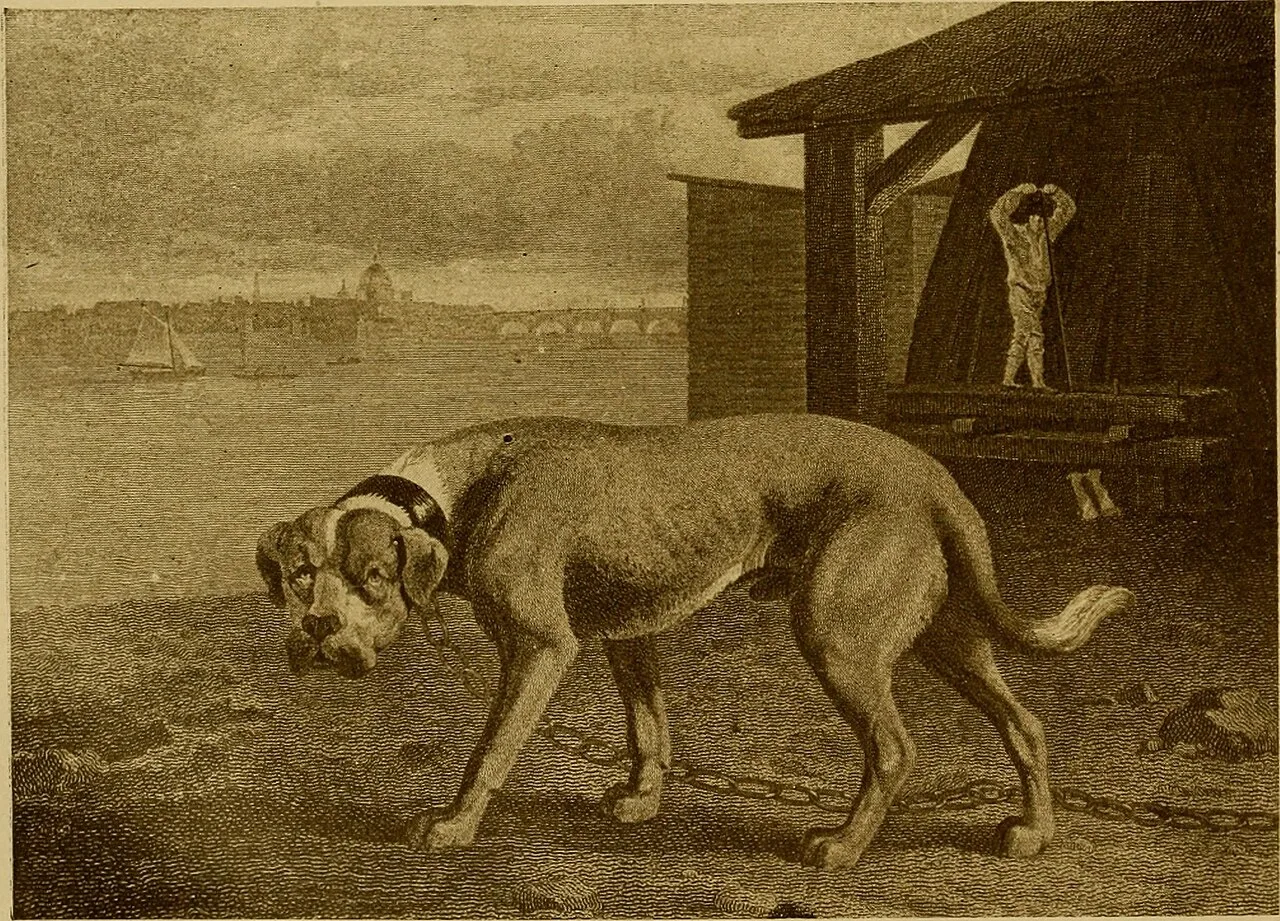
The Mastiff, known formally as the English Mastiff to distinguish it from other mastiff-type breeds, is one of the heaviest and most ancient dog breeds in existence. A dog of overwhelming physical presence, the Mastiff combines extraordinary size with a disposition of remarkable gentleness, patience, and loyalty. It is the embodiment of the gentle giant archetype.
However, its great size comes with significant health considerations and a shorter lifespan than most breeds, facts that every prospective owner must understand before welcoming this magnificent dog into their home.
Ancient Origins
Mastiff-type dogs are among the oldest recognizable dog types in human history. Images of massive, heavy-jowled dogs being used in hunting and warfare appear in Assyrian stone reliefs dating to approximately 700 BCE, showing dogs recognizably similar in type to the modern Mastiff. Egyptian art and ancient Babylonian records contain similar depictions.
The Mastiff was present in Britain before the Roman conquest. Julius Caesar is reported in various ancient accounts to have been impressed by the large, fearless dogs kept by British warriors, who fought alongside their masters in battle. Roman records document the export of British war dogs, "pugnaces Britanniae" to Rome, where they were used in arena combat against lions, bears, and gladiators.
Through the medieval period, the Mastiff served as a guard dog on English estates, where individual dogs were valuable enough to be mentioned by name in wills and inventories. The breed was used in bear-baiting, bull-baiting, and lion-baiting, all blood sports that were part of English popular entertainment until the Cruelty to Animals Act of 1835. These uses required the combination of physical power and bold temperament that characterizes the breed.
By the latter half of the 19th century, organized breeding efforts were underway. The Old English Mastiff Club was founded in 1883, and the first breed standard was established. The breed survived near-extinction twice, after World War I and again after World War II, when the wartime food shortage made it impossible for many breeders to feed such large dogs, each time being rebuilt from a small number of surviving individuals, with some North American blood introduced after World War II.
Physical Characteristics
The English Mastiff is among the heaviest breeds recognized by major kennel clubs. Its structure is massive and powerful: a broad, flat skull with a defined stop, heavy, wrinkled forehead, and a short, broad muzzle with deep flews (loose lips) that contribute to the breed's characteristic jowly appearance. The body is broad, deep-chested, and heavily muscled.
| Physical Characteristic | Males | Females |
|---|---|---|
| Minimum height (AKC) | 76 cm (30 in) | 70 cm (27.5 in) |
| Typical weight range | 73-100 kg (160-220 lbs) | 54-77 kg (120-170 lbs) |
| Head | Massive, broad, wrinkled | |
| Muzzle | Short, broad, blunt | |
| Coat type | Short, straight, dense | |
| Standard colors | Apricot, fawn, brindle; with black mask | |
| Jowls | Heavy, drooping; significant drool | |
| Lifespan | 6-10 years |
The heaviest verified dog on record was an English Mastiff named Zorba, who weighed 155.58 kg (343 lbs) at peak weight, as recorded in the Guinness Book of World Records in 1989. While extreme specimens like Zorba are not typical, and extreme size is not a breed goal among responsible breeders, the figures illustrate the upper range of what this breed can achieve in size.
The characteristic color combinations are fawn (a light golden-tan), apricot (a warmer reddish-gold), and brindle (dark stripes on a fawn or apricot base). All should have a black mask on the muzzle, ears, and around the eyes. A dark nose and dark eyes are also specified in the standard.
Temperament: Calm, Loyal, Protective
The English Mastiff's temperament is one of the most remarkable aspects of the breed. Given its ancient history in combat and blood sports, one might expect an aggressive or dangerous dog. Instead, generations of selection for use as a guard dog, which requires a dog that deters intruders through intimidating presence without attacking unnecessarily, produced a breed of considerable restraint and self-control.
The Mastiff is calm, patient, and deeply affectionate with its family. It is particularly gentle with children, whom it tolerates with the forbearance of a dog that knows its own power and chooses not to use it carelessly. The breed forms deep, loyal bonds with its family and is characteristically reluctant to harm unless it perceives a genuine threat.
"The Mastiff represents one of the most complete examples of behavioral neoteny in the domestic dog, a breed that has retained, through selection, the docile and patient social behavior of a juvenile wolf while growing to a body size that exceeds any wild canid. The combination of maximum size with minimum aggression is the breed's defining paradox." Dr. Raymond Coppinger, Professor Emeritus of Biology, Hampshire College, Massachusetts, in Dogs: A New Understanding of Canine Origin, Behavior and Evolution (2001)
However, the Mastiff's size must be taken seriously. A fully grown male can weigh 90+ kg, and even a gentle dog of this size can cause injury through simple accidents, stumbling, turning quickly, or greeting with uncontrolled enthusiasm.
Obedience training from puppyhood is essential, not because the breed is difficult to train, but because a 90-kg dog that pulls on the leash, jumps up, or does not reliably come when called presents genuine safety challenges. For detailed care guidance see Mastiff Care Guide.
Drooling: An Unavoidable Reality
Prospective Mastiff owners should be fully prepared for significant drooling. The Mastiff's heavy flews and jowls produce copious saliva, particularly around feeding time, when drinking water, during warm weather, and when the dog is relaxed and panting. Long strings of drool are a routine feature of Mastiff ownership.
This is not a manageable behavior problem but a fundamental consequence of the breed's anatomy. Those who find drooling unacceptable or difficult to manage should honestly reconsider whether the Mastiff is the right breed for their household.
Health Concerns
The Mastiff's great size comes at a significant health cost, and its lifespan of 6-10 years reflects the well-documented relationship between body size and longevity in dogs. Larger breeds age faster at a cellular and organ level than smaller breeds, and the Mastiff's exceptional size makes this effect particularly pronounced.
Hip dysplasia: The Orthopedic Foundation for Animals data shows that approximately 26% of English Mastiffs evaluated have hip dysplasia, one of the higher rates among recognized breeds. Hip dysplasia causes pain, lameness, and reduced mobility. Responsible breeders evaluate all breeding dogs with OFA or PennHIP hip evaluation and do not breed from dogs with moderate or severe dysplasia.
Elbow dysplasia: Approximately 21% of English Mastiffs evaluated by OFA have elbow dysplasia, conditions affecting the elbow joint's development, including fragmented coronoid process, osteochondrosis of the elbow, and ununited anconeal process. All cause pain and lameness and may require surgical intervention.
Bloat (GDV): Gastric dilatation-volvulus is a life-threatening emergency in which the stomach fills with gas and rotates on its axis, trapping the gas and cutting off blood supply to the stomach and spleen. Deep-chested, large breeds including the Mastiff are at high risk. Signs include unproductive retching, a distended abdomen, and restlessness. GDV requires emergency surgery.
Prophylactic gastropexy (surgical tacking of the stomach) is increasingly recommended for Mastiffs and other high-risk breeds. See How Long Do Dogs Live for context on giant breed lifespans.
Cancer: Like many large breeds, Mastiffs have elevated cancer rates. Osteosarcoma (bone cancer), lymphoma, and cardiomyopathy (heart muscle disease) are all more common in Mastiffs than in the general dog population.
Hypothyroidism: Low thyroid hormone production is common in many large breeds, including the Mastiff. Signs include weight gain, lethargy, cold intolerance, and skin and coat changes. Management with daily oral medication is effective.
Cystinuria: A metabolic condition causing cystine amino acid to accumulate in urine, forming stones in the kidneys and bladder. DNA testing is available in some countries for a form of cystinuria documented in Mastiffs.
| Health Condition | OFA/Study Prevalence | Management |
|---|---|---|
| Hip dysplasia | ~26% | Breeding screening, pain management, surgery |
| Elbow dysplasia | ~21% | Breeding screening, surgery |
| Bloat/GDV | Elevated (giant breed) | Gastropexy; emergency surgery |
| Osteosarcoma | Elevated (giant breed) | Amputation/chemotherapy/palliative |
| Hypothyroidism | Elevated | Daily levothyroxine |
| Cardiomyopathy | Elevated | Cardiac monitoring, medication |
For detailed health information see Mastiff Health Problems.
Exercise and Space Requirements
Despite their great size, Mastiffs are not high-energy dogs. They are built for power and endurance over short bursts rather than sustained athletic performance. Adult Mastiffs typically need 30-45 minutes of moderate exercise per day, two good walks and the opportunity to move around a reasonably sized space. They are not suitable for vigorous sustained running, particularly in warm weather, due to their size and susceptibility to overheating.
However, during puppyhood, which extends to around 18-24 months, Mastiff growth plates take longer to close than in smaller breeds, and high-impact exercise should be limited to protect developing joints. Rapid weight gain from overfeeding in puppies increases developmental orthopedic disease risk. Food portions should be carefully controlled, and large-breed puppy formula food is recommended during growth. Nutritional guidance for older dogs can be found at Senior Dog Nutrition Guide.
Space requirements are significant. A Mastiff takes up substantial physical space in a home, and a house with a securely fenced yard (fencing should be at least 1.8 meters high for a breed of this size) is strongly preferred. They are not suitable for small apartments, though they are calm enough indoors that a large apartment with dedicated daily outdoor time could theoretically work for a very well-exercised Mastiff with a committed owner.
The Mastiff and Family Life
The Mastiff's combination of large size, gentle temperament, and deep loyalty makes it well-suited to family life in households that can accommodate its physical requirements. It is notably good with children it has been raised with, displaying the patient forbearance characteristic of the breed. Its natural guarding instinct provides a deterrent effect to intruders that no other breed can match on appearance alone.
The Mastiff is not suited to very active households expecting a running partner, nor to households with very young children who might be accidentally bowled over by an uncoordinated puppy or a dog simply turning around. The Mastiff that grows up with children who understand boundaries and show proper respect is a calm, loyal, and profoundly impressive companion.
For comparison with another giant breed see Great Dane.
Summary
The English Mastiff is one of the most ancient, most massive, and most immediately striking breeds in the world. Its gentle temperament and profound loyalty make it a remarkable companion for those who can meet its physical requirements.
The realities of Mastiff ownership, significant drooling, high space requirements, very high veterinary costs, and a short lifespan of 6-10 years with high cancer and orthopedic disease rates, must be fully understood before choosing this breed. For those who go in fully informed, the Mastiff offers an experience of canine companionship unlike any other breed.
References
Orthopedic Foundation for Animals. (2023). Hip and elbow dysplasia statistics, English Mastiff. https://www.ofa.org/diseases/hip-dysplasia/statistics/
Glickman, L.T., Glickman, N.W., Schellenberg, D.B., Raghavan, M., & Lee, T.L. (2000). Non-dietary risk factors for gastric dilatation-volvulus in large and giant breed dogs. Journal of the American Veterinary Medical Association, 217(10), 1492-1499. https://doi.org/10.2460/javma.2000.217.1492
Coppinger, R., & Coppinger, L. (2001). Dogs: A New Understanding of Canine Origin, Behavior and Evolution. University of Chicago Press. ISBN 9780226115627.
Dobson, J.M. (2013). Breed-predispositions to cancer in pedigree dogs. ISRN Veterinary Science, 2013, 941275. https://doi.org/10.1155/2013/941275
Guinness World Records. (1989). Heaviest dog ever. https://www.guinnessworldrecords.com/world-records/heaviest-dog
Frequently Asked Questions
How heavy do English Mastiffs get?
Male Mastiffs typically weigh 73-100 kg (160-220 lbs); females 54-77 kg (120-170 lbs). The heaviest verified dog on record was Zorba, an English Mastiff who weighed 155.58 kg (343 lbs) as recorded by Guinness World Records in 1989, though this is far above average.
Are Mastiffs aggressive?
No. Despite their ancient history in combat and guard work, English Mastiffs are characteristically calm, gentle, and non-aggressive without genuine provocation. They are bred to deter intruders through presence and alert their owners, not to attack indiscriminately. Properly raised Mastiffs are among the most even-tempered of large breeds.
Do Mastiffs drool a lot?
Yes, significantly. The Mastiff’s heavy jowls and loose lips (flews) produce copious saliva, particularly around meal time, when drinking, during warm weather, and when relaxed and panting. This is unavoidable anatomy, not a treatable behavior issue. Prospective owners who find drooling unacceptable should choose a different breed.
How long do Mastiffs live?
The average Mastiff lifespan is 6-10 years, which is short even for a large breed. Giant breed dogs age faster at a cellular level than smaller dogs. Cancer (especially osteosarcoma) and orthopedic issues are major causes of premature death. Some Mastiffs live to 10-12 years but this is exceptional.
Are Mastiffs good with children?
Yes, when raised with them. Mastiffs are characteristically patient and gentle with children they know. However, their size means very young children can be accidentally knocked over. Supervision is always advisable, and children should be taught to respect the dog’s space.
How much space does a Mastiff need?
Mastiffs require substantial space. A house with a securely fenced yard (at least 1.8m high) is strongly recommended. Their large body takes up significant space indoors. Small apartments are generally not appropriate for this breed, though they are calm enough that a very large apartment with committed daily outdoor exercise is a theoretical possibility.