
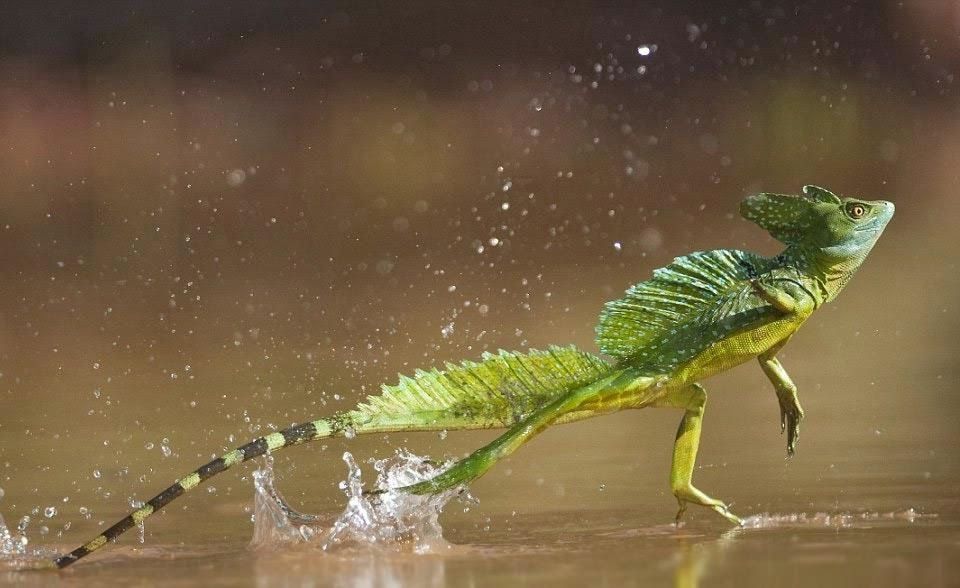
Quick Answer: The Jesus Christ lizard, also known as the common basilisk (Basiliscus basiliscus), is a remarkable reptile native to Central and South America. Famous for its ability to run across water surfaces, this lizard achieves its feat through specialized adaptations in its hind limbs and tail. The common basilisk inhabits humid lowland forests near rivers and streams, where it escapes predators by sprinting upright over water for several meters before swimming or submerging.
The Jesus Christ lizard, a name inspired by its water-walking prowess, captures the imagination of both scientists and nature enthusiasts. With a striking appearance marked by a tall crest and vibrant coloration, the common basilisk is a master of survival in the lush rainforests of Central and South America. Its ability to dash across water is not a magic trick, but a product of evolutionary specialization that allows it to evade predators and exploit a unique ecological niche.
This extraordinary behavior is only one aspect of the basilisk’s fascinating biology. The lizard’s daily life is shaped by the interplay of anatomy, habitat, diet, and social dynamics. Its presence along riverbanks and forest edges brings it into contact with a diverse array of species, making it a key player in the ecosystems it inhabits. Understanding how the basilisk achieves its feats requires a closer look at its physical structure, environmental needs, and evolutionary history.
The basilisk’s notoriety as the ‘lizard that runs on water’ has led to extensive study and admiration. Observers are often amazed to witness juveniles and adults sprinting upright across ponds and streams, sometimes covering distances of up to 20 meters before sinking or swimming. This spectacle is not only a defense mechanism but also a testament to the complexity and adaptability of reptilian life in tropical forests.
The Basilisk: Defining the Jesus Christ Lizard
Basiliscus basiliscus is a species of large, semi-aquatic lizard belonging to the family Corytophanidae. The common name “Jesus Christ lizard” refers specifically to its ability to run across water, a trait that distinguishes it from most other reptiles. This species is characterized by a prominent dorsal crest, long limbs, and a laterally compressed tail, all of which contribute to its unique locomotion.
The genus Basiliscus encompasses four recognized species: B. basiliscus (common basilisk), B. plumifrons (plumed basilisk), B. vittatus (striped basilisk), and B. galeritus (brown basilisk). Each species exhibits adaptations for a semi-aquatic lifestyle, but the common basilisk is the most renowned for its water-running ability. Adults can reach lengths of up to 80 centimeters, with the tail accounting for nearly two-thirds of this measurement.
The Jesus Christ lizard is native to the rainforests and riverbanks of Central and South America, with a range extending from southern Mexico through Panama and into Colombia, Venezuela, and Ecuador. The species thrives in warm, humid environments where water is readily accessible. Its coloration varies from olive to brown, often with lighter stripes along the flanks and a pale underbelly.
Key Insight: The Jesus Christ lizard’s distinctive crest and elongated toes are evolutionary adaptations that support both display behaviors and rapid movement across various substrates, including water.
The basilisk’s reputation as a water-walker has made it a subject of fascination in both scientific and popular literature. Its physical and behavioral adaptations are a product of millions of years of evolution, shaped by the pressures of predation and competition in dynamic tropical ecosystems. For more on the taxonomy and biology of this genus, see the Wikipedia entry on Basiliscus.
Anatomy and Adaptations for Water Running
The basilisk’s ability to run on water is a direct result of several specialized anatomical features. The most significant of these is the structure of its hind feet, which possess elongated toes fringed with scales. When the lizard sprints, these toes spread wide, increasing surface area and allowing the animal to slap the water hard enough to generate lift. This action creates air pockets beneath the feet, momentarily supporting the lizard’s weight and preventing it from sinking.
A powerful, muscular tail acts as a counterbalance during upright running, providing stability and steering. The basilisk’s lightweight body further aids in minimizing downward force, allowing it to remain above the water for longer distances. Adults can typically run for 4-5 meters before gravity overcomes the lift generated by their strides, while juveniles, being lighter, can sometimes cover up to 20 meters.
The mechanics of water running have been studied extensively using high-speed cameras and biomechanical modeling. Researchers have determined that the basilisk must achieve a minimum speed of approximately 1.5 meters per second to maintain water-running locomotion. If the lizard slows down or loses balance, it transitions smoothly into swimming or diving, using its strong limbs and tail to propel itself beneath the surface.
| Adaptation | Function | Benefit |
|---|---|---|
| Elongated hind toes | Increase surface area | Generate lift on water |
| Fringed toe scales | Trap air, create pockets | Prevent immediate sinking |
| Muscular tail | Counterbalance and steering | Stability during upright running |
| Lightweight body | Reduces downward force | Extends water-running distance |
Key Takeaway: The basilisk’s water-running ability is not an illusion but a finely tuned interplay of anatomy and physics, allowing rapid escape from predators and access to resources unavailable to less specialized species.
For a detailed biomechanical analysis, refer to the Basilisk lizard article on Britannica.
Habitat and Distribution in the Wild
The Jesus Christ lizard is closely associated with tropical lowland forests, especially those adjacent to rivers, streams, and ponds. These habitats provide the essential combination of dense vegetation for cover and open water for escape. The lizard spends much of its time basking on branches or rocks near the water’s edge, ready to dash into the water at the first sign of danger.
Populations are most dense in areas with abundant rainfall and stable temperatures, such as the rainforests of Costa Rica, Panama, and northern South America. The species’ range overlaps with a variety of other reptiles, amphibians, and birds, contributing to a complex web of ecological interactions. Seasonal flooding and changes in water levels can influence the availability of suitable basking and nesting sites, impacting population dynamics.
The basilisk is a diurnal species, meaning it is active during the day. It relies on sunlight for thermoregulation, often seen basking in the morning before foraging or engaging in social behaviors. At night, the lizard seeks shelter in dense foliage or tree hollows to avoid nocturnal predators such as snakes and owls.
Ecological Note: The presence of basilisks along riverbanks can be an indicator of healthy riparian ecosystems, as these lizards require both clean water and intact forest cover to thrive.
Human activities, including deforestation and water pollution, pose significant threats to basilisk populations in some regions. However, the species remains relatively widespread and is currently listed as Least Concern by the IUCN Red List, reflecting its adaptability and broad distribution.
Diet and Feeding Behavior
The Jesus Christ lizard is an opportunistic omnivore, consuming a wide range of food items depending on availability and life stage. Its diet typically includes insects, spiders, small vertebrates, fruits, and flowers. Juveniles tend to focus on smaller prey such as ants, beetles, and flies, while adults can capture larger animals like small fish, frogs, or even other lizards.
Foraging occurs primarily on the ground or in low vegetation, with the lizard using its keen eyesight to detect movement. The basilisk employs a sit-and-wait strategy, remaining motionless until prey approaches before launching a rapid attack. This method conserves energy and reduces exposure to predators.
During the wet season, when insect populations are at their peak, basilisks may feed almost exclusively on arthropods. In drier periods, they shift to a more varied diet, including plant material and fallen fruit. This dietary flexibility supports survival in fluctuating environmental conditions and helps maintain stable populations.
Feeding Insight: The basilisk’s ability to exploit both animal and plant resources allows it to occupy a broad ecological niche and withstand seasonal changes in food availability.
Predation risk influences feeding behavior, with individuals often choosing foraging sites that provide quick access to water or dense cover. The lizard’s alertness and agility are crucial for balancing the need to feed with the constant threat of predators.
Social Structure and Reproduction
Basilisks exhibit a loose social structure, with individuals occupying overlapping home ranges along riverbanks and forest edges. Males are generally larger and more territorial, defending prime basking and foraging spots from rivals through displays of aggression and visual signaling. These displays often involve head-bobbing, dewlap extension, and crest erection, which serve to intimidate competitors and attract potential mates.
Breeding occurs throughout the year in equatorial regions, but may be seasonal in areas with pronounced wet and dry periods. Females lay clutches of 10-20 eggs in shallow nests dug into moist soil or sand near water. The eggs incubate for about 8-10 weeks, with hatchlings emerging fully independent and capable of water-running within hours.
Juvenile basilisks face high mortality rates due to predation by birds, snakes, and larger lizards. However, their small size and exceptional agility provide some protection, enabling rapid dispersal and colonization of new habitats. Growth is rapid during the first year, with individuals reaching sexual maturity by 18-24 months.
| Life Stage | Diet Focus | Predation Risk | Key Adaptation |
|---|---|---|---|
| Hatchling | Insects, small prey | Very high | Water-running, camouflage |
| Juvenile | Insects, small fish | High | Speed, alertness |
| Adult | Omnivorous | Moderate | Size, territoriality |
The reproductive success of basilisks is closely tied to environmental conditions, with rainfall and food abundance influencing clutch size and hatchling survival. This connection highlights the sensitivity of the species to habitat changes and underscores the importance of conservation efforts in tropical forests.
Predators, Threats, and Defense Mechanisms
Predation pressure has played a significant role in shaping the behavior and morphology of the Jesus Christ lizard. Natural predators include birds of prey, snakes, large fish, and mammals such as coatis and raccoons. The basilisk’s primary defense is its ability to escape rapidly by running across water, a tactic that few predators can match.
If escape by water is not possible, the basilisk may employ other strategies such as freezing in place to avoid detection, dropping from branches into water, or using its powerful tail to lash at attackers. The lizard’s cryptic coloration provides camouflage among leaf litter and riverbank debris, further reducing the risk of predation.
Human-induced threats, including habitat destruction, pollution, and collection for the pet trade, have localized impacts on some populations. However, the species’ adaptability and reproductive capacity have helped maintain stable numbers across much of its range. Conservation measures that protect riparian habitats and regulate trade are essential for ensuring the long-term survival of wild populations.
Survival Note: The basilisk’s combination of speed, agility, and behavioral flexibility exemplifies the evolutionary arms race between predator and prey in tropical ecosystems.
For more on predator-prey dynamics in reptiles, see the Britannica entry on lizard behavior.
Evolutionary Origins and Relatives
The evolutionary lineage of the basilisk traces back to the family Corytophanidae, which includes other crested lizards such as the helmeted iguana. Fossil evidence and genetic studies suggest that these lizards diverged from other iguanian reptiles during the Miocene, adapting to arboreal and semi-aquatic lifestyles in the neotropics.
Within the genus Basiliscus, species differentiation is driven by geographic isolation and ecological specialization. The plumed basilisk (Basiliscus plumifrons), for example, is distinguished by its vivid green coloration and elaborate head crest, while the striped basilisk (Basiliscus vittatus) features bold lateral stripes and a more terrestrial lifestyle. These variations reflect adaptations to different habitats and resource availability.
Comparative studies of limb morphology and locomotion among corytophanid lizards have provided insights into the origins of water-running behavior. While some relatives exhibit limited aquatic abilities, only the common and plumed basilisks are capable of sustained bipedal locomotion on water. This specialization is believed to have evolved in response to intense predation pressure and the need to exploit food resources inaccessible to less agile competitors.
The basilisk’s place in reptilian evolution highlights the diversity of adaptive strategies within the lizard clade. For a broader perspective on lizard evolution, see the Wikipedia entry on lizards.
The Science Behind Water-Walking: Physics and Biomechanics
The phenomenon of water-running in basilisks is a classic example of biological physics in action. To remain above water, the lizard must generate enough upward force with each foot slap to counteract its body weight before the foot sinks. This process involves three key phases: slap, stroke, and recovery.
During the slap phase, the foot strikes the water with high velocity, creating an air cavity and generating lift. The stroke phase involves pushing against the water to propel the body forward, while the recovery phase sees the foot withdrawn and repositioned for the next stride. Timing and coordination are critical, as any disruption can result in immediate sinking.
| Phase | Action | Purpose |
|---|---|---|
| Slap | Foot strikes water | Generates lift, creates cavity |
| Stroke | Pushes against water | Propels body forward |
| Recovery | Withdraws foot | Prepares for next stride |
The limits of this ability are set by the lizard’s mass, limb length, and speed. Juveniles, being lighter, can run farther before sinking, while larger adults are constrained by their greater weight. The basilisk’s feat has inspired biomimetic research in robotics and fluid dynamics, as scientists seek to replicate the principles of water-walking in engineered systems.
Scientific Note: The basilisk’s water-walking demonstrates how evolutionary pressures can drive the convergence of biological form and physical law, resulting in extraordinary adaptations.
For more on biomechanics in animal locomotion, consult academic resources such as the University of California Museum of Paleontology.
Basilisks in Culture and Popular Science
The Jesus Christ lizard has captured the public imagination, featuring prominently in documentaries, nature programs, and popular science writing. Its dramatic water-running display is often highlighted as one of the most spectacular behaviors in the animal kingdom. The lizard’s biblical nickname has contributed to its fame, drawing parallels between its abilities and the miracle of walking on water.
In local folklore, basilisks are sometimes regarded as symbols of agility, escape, and supernatural power. Their presence in indigenous stories reflects the deep connection between people and the wildlife of tropical forests. Modern media, including television and online platforms, have brought the basilisk’s unique lifestyle to global audiences, fostering appreciation for reptilian diversity and adaptation.
Scientific interest in the basilisk extends beyond its locomotion. Researchers study its physiology, reproductive biology, and ecological role to gain insights into the broader processes that shape tropical ecosystems. The lizard’s popularity has also led to increased demand in the pet trade, underscoring the need for responsible management and conservation education.
Cultural Reflection: The Jesus Christ lizard stands as both a symbol of nature’s ingenuity and a reminder of the intricate relationships that sustain life in the world’s rainforests.
Conservation Status and Human Impact
Despite its adaptability, the Jesus Christ lizard faces ongoing threats from habitat loss, pollution, and overcollection. Deforestation for agriculture and urban development reduces the availability of suitable habitat, while water contamination can disrupt breeding and feeding. The pet trade, though regulated in many countries, still poses risks to wild populations through unsustainable collection practices.
Conservation efforts focus on protecting riparian forests, enforcing trade regulations, and promoting habitat restoration. The species’ listing as Least Concern by the IUCN reflects its current stability, but continued vigilance is necessary to prevent future declines. Community-based initiatives that involve local stakeholders are particularly effective in safeguarding both the basilisk and the broader ecosystems it inhabits.
Education and ecotourism offer additional avenues for conservation, raising awareness of the basilisk’s ecological importance and generating support for habitat protection. Responsible tourism practices can provide economic incentives for preserving natural areas while minimizing disturbance to wildlife.
Conservation Insight: Protecting the Jesus Christ lizard requires a holistic approach that balances human needs with the preservation of tropical biodiversity and ecosystem services.
The Enduring Fascination with the Jesus Christ Lizard
The Jesus Christ lizard continues to inspire awe and curiosity among scientists, naturalists, and the general public. Its remarkable adaptations, from water-running to territorial displays, exemplify the extraordinary diversity of life in the tropics. Observing a basilisk in its natural habitat offers a glimpse into the complex interplay of evolution, ecology, and behavior that shapes the animal kingdom.
Ongoing research into the basilisk’s biology and biomechanics not only deepens our understanding of this species but also informs broader questions about adaptation and survival in changing environments. The lizard’s story is a testament to the power of natural selection and the resilience of life in the face of adversity.
As pressures on tropical ecosystems mount, the Jesus Christ lizard stands as both a symbol of nature’s ingenuity and a call to action for conservation. By appreciating and protecting this extraordinary reptile, we contribute to the preservation of the rich biological heritage that sustains our planet.
Frequently Asked Questions
How far can the Jesus Christ lizard run on water?
Juvenile basilisks can run up to 20 meters on water, while adults typically manage 4-5 meters before sinking or swimming.
What predators threaten the common basilisk?
Predators include birds of prey, snakes, large fish, and mammals such as raccoons and coatis, with predation risk highest for juveniles.
Is the Jesus Christ lizard endangered?
No, the common basilisk is currently classified as Least Concern by the IUCN due to its wide distribution and adaptability.
Can basilisks be kept as pets?
Basilisks are sometimes kept as exotic pets, but they require specialized care and large enclosures to thrive in captivity.
What is the lifespan of a Jesus Christ lizard in the wild?
In the wild, common basilisks typically live around 7-8 years, though many juveniles do not survive to adulthood due to predation.
How does the basilisk's water-running compare to other animals?
Basilisks are unique among large vertebrates in their ability to run across water; only some small insects exhibit similar locomotion.