
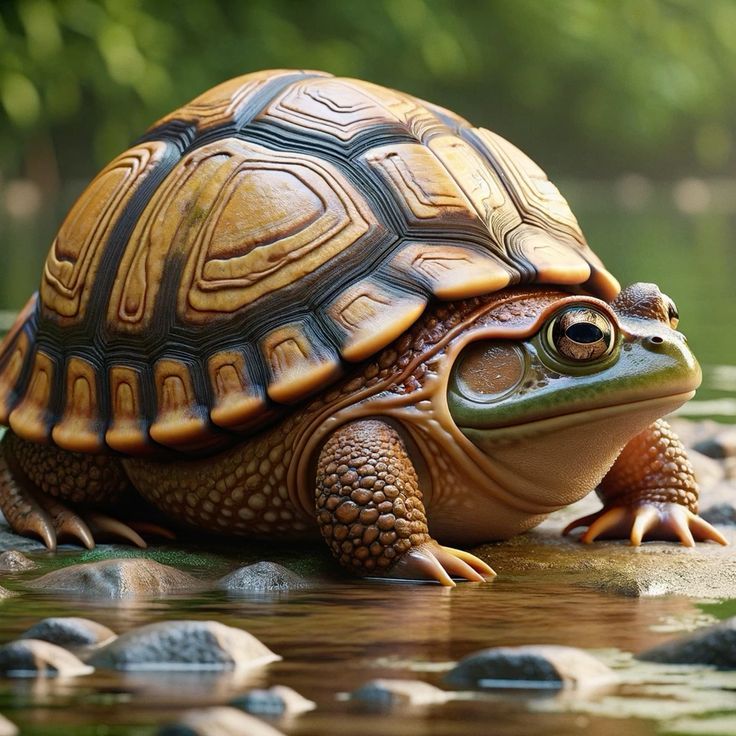
Quick Answer: The turtle frog (Myobatrachus gouldii) is a unique Australian burrowing frog recognized for its turtle-like appearance, stout body, and short limbs. Unlike most frogs, it spends much of its life underground, emerging mainly to breed after heavy rains. Adapted to arid environments, the turtle frog specializes in eating termites and has evolved remarkable physical and behavioral traits to thrive in Western Australia’s sandy habitats.
The turtle frog immediately captures attention with its unusual body shape, which more closely resembles a turtle than a typical frog. Native to the sandy soils of Western Australia, this species has evolved a suite of adaptations that allow it to survive in one of the continent’s most challenging environments. Its robust, rounded form and short, muscular limbs are not just for show; these features are critical for its subterranean lifestyle.
Unlike most frogs, which are associated with water and moist habitats, the turtle frog is a true specialist of arid and semi-arid regions. Its entire life cycle is adapted to a world beneath the surface, where it spends most of its time hidden from predators and extreme weather. This lifestyle is reflected in every aspect of its anatomy and behavior, from its powerful digging limbs to its reproductive strategies that bypass the need for standing water.
The turtle frog’s diet is another point of distinction. While many frogs are opportunistic feeders, Myobatrachus gouldii is highly specialized, feeding almost exclusively on termites. This dietary preference has influenced its morphology, leading to a narrow, pointed snout ideal for probing termite galleries. As a result, the turtle frog plays a unique ecological role in its native habitat, helping to regulate termite populations and contributing to the health of the ecosystem.
Distinctive Anatomy and Turtle-Like Appearance
The turtle frog (Myobatrachus gouldii) stands out among amphibians for its extraordinary resemblance to a turtle, a feature that is immediately apparent in its body structure. Unlike the streamlined bodies and long, slender legs typical of most frogs, the turtle frog has a stout, rounded form with extremely short, muscular limbs. This unusual physique is not a random quirk but a direct adaptation to its burrowing lifestyle.
The limbs of the turtle frog are particularly noteworthy. Both the forelimbs and hindlimbs are short and robust, equipped with strong, spade-like fingers. These adaptations enable the frog to dig headfirst into sandy soils, a behavior that sets it apart from most other burrowing frogs, which typically dig backwards using their hind legs. The turtle frog’s digging method is more reminiscent of a tortoise or turtle, further enhancing its turtle-like appearance.
A key anatomical feature is the frog’s small, pointed head and narrow snout. This design is perfectly suited for penetrating termite galleries, allowing the frog to access its primary food source with minimal resistance. The eyes are positioned high on the head, providing protection from sand and debris during digging. The skin is thick and granular, offering additional defense against the abrasive environment underground.
In terms of coloration, turtle frogs are usually a uniform pinkish-brown or reddish hue, which helps them blend into the sandy soils of their habitat. Unlike many amphibians, they lack the bright warning colors or patterns associated with toxicity. Instead, their best defense is their ability to remain hidden beneath the surface for extended periods.
Key Takeaway: The turtle frog’s turtle-like appearance is a direct result of evolutionary pressures favoring efficient burrowing and termite predation in arid environments.
Burrowing Behavior and Underground Life
The turtle frog is one of the most accomplished burrowers among amphibians. Its entire lifestyle revolves around the ability to excavate and inhabit subterranean tunnels, a skill that provides protection from predators, temperature extremes, and dehydration. This behavior is especially critical in the arid and semi-arid regions of Western Australia, where surface conditions can be harsh and unpredictable.
Unlike most burrowing frogs, which dig backwards using their hind limbs, the turtle frog employs a unique head-first digging technique. This method is facilitated by its muscular forelimbs and spade-like fingers, allowing it to push through loose sand with remarkable efficiency. The frog can create burrows up to 1.2 meters deep, where humidity and temperature remain relatively stable compared to the surface.
Life underground offers several advantages. By remaining below the surface, turtle frogs avoid the intense heat and aridity of the Australian summer. Their burrows also serve as refuges during periods of drought, enabling them to survive for months without emerging. This adaptation is essential for their survival in a region where rainfall is sporadic and unpredictable.
Burrows are not just shelters; they are also critical for reproduction. During the breeding season, males call from within their burrows to attract females. After mating, eggs are laid in specially prepared chambers deep underground, where they develop in a protected environment. This strategy eliminates the need for standing water, a rarity in the turtle frog’s habitat.
Insight: The turtle frog’s head-first burrowing technique is a rare adaptation among amphibians and is crucial for survival in sandy, arid habitats.
Specialized Diet: Termite Eater Extraordinaire
One of the most remarkable aspects of the turtle frog’s biology is its highly specialized diet. Unlike most frogs, which are generalist feeders, the turtle frog feeds almost exclusively on termites. This dietary specialization has shaped not only its behavior but also its anatomy and ecological role.
The turtle frog’s narrow, pointed snout is perfectly adapted for probing into termite galleries. Its powerful forelimbs allow it to break open termite nests and access the insects within. Once inside, the frog uses its sticky tongue to capture large numbers of termites quickly. This efficient feeding strategy enables the turtle frog to exploit a food resource that is abundant but difficult for most other predators to access.
Termites provide a reliable and energy-rich food source, especially in arid environments where other prey may be scarce. By focusing on termites, the turtle frog avoids competition with other insectivores and occupies a unique ecological niche. This specialization also has implications for the frog’s physiology, as it must process large amounts of chitin, the tough material that makes up termite exoskeletons.
The relationship between the turtle frog and termites is an excellent example of coevolution, where the adaptations of one species influence the evolution of another. By preying on termites, turtle frogs help regulate termite populations, which can have significant effects on soil structure and plant communities. This ecological interaction highlights the importance of the turtle frog within its ecosystem.
| Dietary Feature | Turtle Frog | Typical Frog |
|---|---|---|
| Main Food Source | Termites | Insects, arthropods |
| Feeding Adaptation | Pointed snout | Broad mouth |
| Foraging Method | Burrow probing | Surface hunting |
| Competition | Low | Moderate to high |
Reproductive Strategies in Arid Environments
Reproduction in arid environments presents unique challenges, and the turtle frog has evolved innovative solutions to ensure the survival of its offspring. Unlike most frogs, which lay eggs in water, the turtle frog completes its entire reproductive cycle underground. This adaptation is critical in regions where standing water is scarce or absent for much of the year.
During the breeding season, which typically follows heavy rains, males call from within their burrows to attract females. The calls are low-pitched and can be difficult to detect at the surface, but they are effective in drawing females to the burrow entrance. After mating, the female lays a clutch of large, yolk-rich eggs in a specially prepared chamber deep underground.
The development of turtle frog embryos is direct, meaning there is no free-swimming tadpole stage. Instead, the embryos develop entirely within the egg, emerging as fully formed froglets. This strategy eliminates the need for an aquatic larval phase and reduces the risks associated with predation and desiccation. The eggs are protected by the stable conditions of the burrow, where humidity and temperature are carefully regulated.
Key Insight: By bypassing the aquatic tadpole stage, the turtle frog ensures reproductive success in environments where water is unreliable or absent.
Distribution and Habitat of the Turtle Frog
The turtle frog is endemic to Western Australia, with its range extending from Geraldton in the north to the southern wheatbelt and coastal plains near Perth. This distribution is closely tied to the presence of deep, sandy soils, which are essential for the frog’s burrowing lifestyle. The species is most commonly found in open woodlands, heathlands, and shrublands, where termite populations are abundant.
Habitat selection is influenced by several factors, including soil type, vegetation cover, and the availability of prey. Sandy soils are preferred because they are easier to excavate and retain moisture better than rocky or clay substrates. Vegetation provides shade and helps maintain the microclimate of the soil, reducing surface temperatures and evaporation rates.
Although the turtle frog is well adapted to arid environments, it remains vulnerable to habitat loss and fragmentation. Agricultural development, urban expansion, and changes in land use can reduce the availability of suitable burrowing sites and disrupt termite populations. Conservation efforts focus on preserving large tracts of native vegetation and maintaining the integrity of sandy soil habitats.
For more on the habitat and conservation status of the turtle frog, see the IUCN Red List entry for Myobatrachus gouldii and the Western Australian Museum’s species profile.
Evolutionary Relationships and Taxonomy
The turtle frog belongs to the family Myobatrachidae, a diverse group of ground-dwelling frogs native to Australia and New Guinea. Within this family, Myobatrachus gouldii is the sole member of its genus, reflecting its highly specialized adaptations and unique evolutionary history. The species was first described in 1841 by John Edward Gray, who recognized its distinctiveness among Australian frogs.
Phylogenetic studies have revealed that the turtle frog is closely related to other burrowing frogs in the Myobatrachidae family, such as those in the genera Neobatrachus and Heleioporus. However, the turtle frog’s extreme morphological and behavioral specializations set it apart from its relatives. These differences are believed to have arisen in response to the unique challenges of life in arid, sandy environments.
The evolutionary history of the turtle frog provides valuable insights into the processes of adaptation and speciation. By comparing the turtle frog with related species, researchers can identify the genetic and developmental changes that underlie its distinctive traits. This research contributes to a broader understanding of amphibian evolution and the ways in which organisms adapt to extreme environments.
For a detailed overview of the turtle frog’s taxonomy and evolutionary relationships, see the Wikipedia article on Myobatrachus gouldii and the Australian Museum’s frog taxonomy resources.
Conservation Status and Threats
The conservation status of the turtle frog is currently listed as Least Concern by the IUCN, reflecting its relatively wide distribution and stable population. However, this status does not mean the species is free from threats. Habitat loss, fragmentation, and changes in land use pose ongoing risks to turtle frog populations, particularly in areas subject to agricultural development and urbanization.
The reliance on sandy soils and termite-rich habitats makes the turtle frog especially vulnerable to environmental changes. Clearing of native vegetation can reduce soil stability and moisture retention, making it more difficult for frogs to burrow and survive periods of drought. Pesticide use and changes in fire regimes may also impact termite populations, indirectly affecting the frog’s food supply.
Conservation efforts focus on protecting key habitats, maintaining native vegetation, and monitoring population trends. Public awareness campaigns and habitat restoration projects are important tools for ensuring the long-term survival of the turtle frog. Ongoing research is needed to better understand the species’ ecology and to develop effective management strategies.
Key Takeaway: The turtle frog’s survival depends on the preservation of sandy soil habitats and healthy termite populations, highlighting the interconnectedness of species and ecosystems.
Unique Adaptations: Survival in the Australian Outback
Surviving in the harsh conditions of the Australian outback requires a suite of specialized adaptations, and the turtle frog exemplifies this evolutionary ingenuity. Its thick, granular skin reduces water loss, allowing it to remain underground for extended periods without desiccation. The ability to enter a state of torpor during dry spells further enhances its resilience, enabling the frog to conserve energy and moisture until favorable conditions return.
The turtle frog’s reproductive strategy, which eliminates the need for standing water, is another key adaptation. By developing directly from egg to froglet within the safety of the burrow, the species avoids the risks associated with aquatic environments, such as predation and desiccation. This approach is shared by several other Australian frogs but is taken to an extreme in Myobatrachus gouldii.
Behavioral flexibility is also evident in the turtle frog’s response to environmental cues. The timing of breeding and emergence is closely linked to rainfall, ensuring that eggs are laid when soil moisture is sufficient to support development. This synchronization with environmental conditions is critical for reproductive success in an unpredictable climate.
| Adaptation | Benefit |
|---|---|
| Thick, granular skin | Reduces water loss |
| Head-first burrowing | Efficient excavation in sandy soils |
| Direct development | Offspring avoid aquatic predators/desiccation |
| Termite specialization | Reliable food source in arid environments |
Turtle Frog in Culture and Scientific Research
While the turtle frog is not as widely recognized as some of Australia’s more charismatic wildlife, it holds a special place in the scientific community. Its unique adaptations and evolutionary history make it a subject of ongoing research, particularly in the fields of evolutionary biology, ecology, and herpetology. Studies of the turtle frog have contributed to our understanding of adaptation, speciation, and the ecological roles of burrowing amphibians.
In Indigenous Australian cultures, frogs often feature in traditional stories and are associated with rain and fertility. Although the turtle frog does not have the same cultural prominence as some other species, its presence in the landscape is a reminder of the diversity and resilience of Australia’s native fauna. The species is occasionally featured in educational programs and conservation initiatives aimed at raising awareness of the importance of amphibian biodiversity.
For more on the cultural and scientific significance of Australian frogs, see the Britannica entry on Australian fauna and the Frogwatch program.
Looking Ahead: The Future of the Turtle Frog
The future of the turtle frog is closely tied to the health of its environment. As pressures from agriculture, urbanization, and climate change continue to mount, the need for effective conservation strategies becomes increasingly urgent. Protecting sandy soil habitats, maintaining native vegetation, and ensuring the availability of termite prey are essential steps in safeguarding this remarkable species.
Research into the turtle frog’s biology and ecology will play a vital role in informing conservation efforts. By understanding the species’ unique adaptations and ecological requirements, scientists and land managers can develop targeted strategies to mitigate threats and promote population stability. Public engagement and education are also crucial, fostering a sense of stewardship for one of Australia’s most distinctive amphibians.
The turtle frog serves as a powerful example of the extraordinary diversity and adaptability of life in Australia’s arid regions. Its continued survival will depend on the collective efforts of scientists, conservationists, and the broader community to protect the habitats and ecological processes that sustain it.
Frequently Asked Questions
How does the turtle frog survive long dry periods underground?
The turtle frog survives dry periods by burrowing deep into sandy soil, where it remains in a state of torpor, conserving water and energy until rain returns.
Why does the turtle frog look like a turtle?
The turtle frog’s turtle-like appearance results from evolutionary adaptations for burrowing, including a rounded body and short, strong limbs.
What makes the turtle frog different from other burrowing frogs?
Unlike most burrowing frogs, the turtle frog digs headfirst with its forelimbs and spends its entire life cycle underground, including egg development.
Is the turtle frog endangered?
The turtle frog is not currently endangered, but habitat loss and environmental changes could threaten its populations if not managed carefully.
What role do termites play in the turtle frog’s life?
Termites are the primary food source for the turtle frog, shaping its anatomy, foraging behavior, and ecological niche within its habitat.
Can turtle frogs be found outside Western Australia?
Turtle frogs are endemic to Western Australia and are not naturally found outside this region.